
Wolfgang Borchert
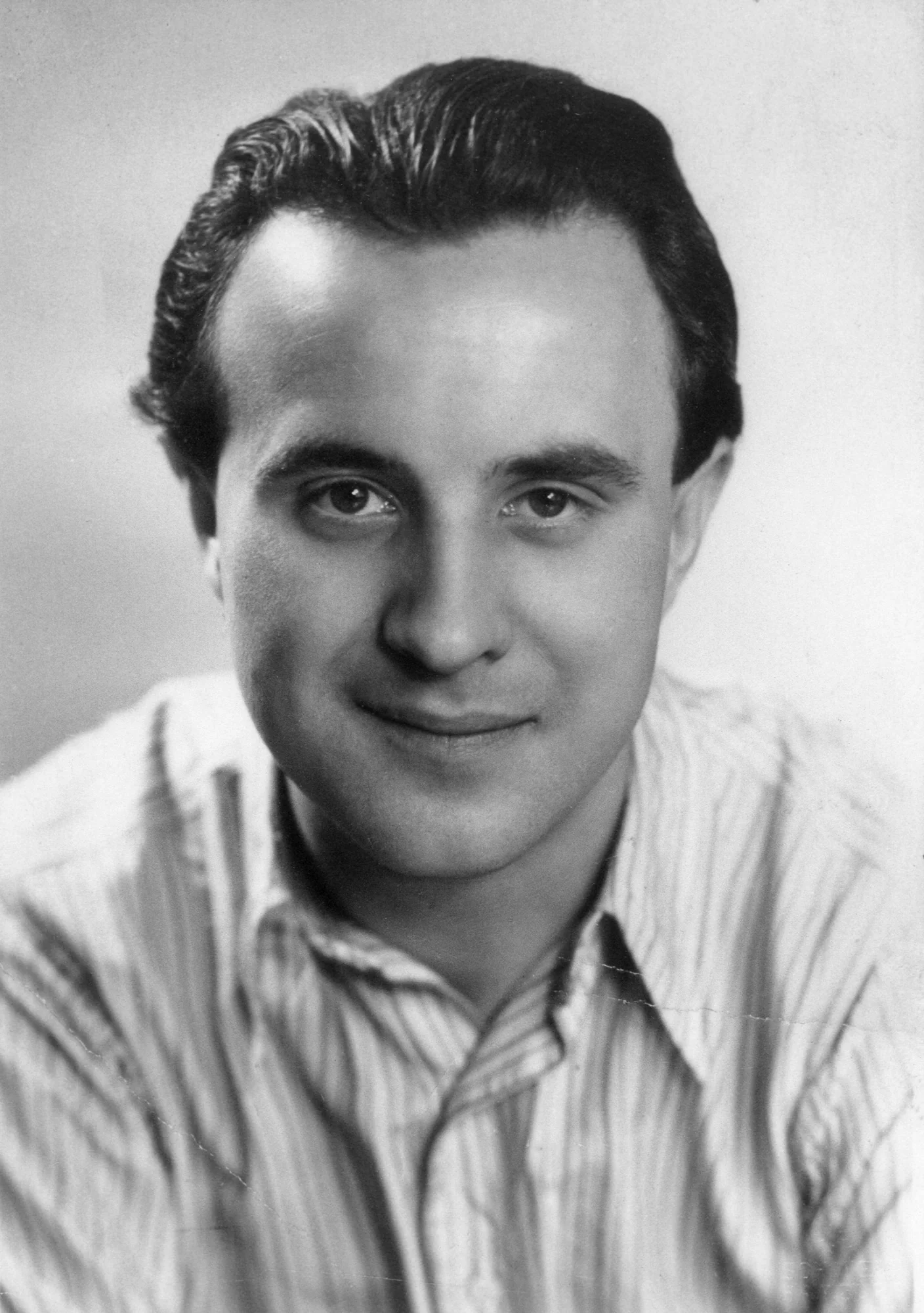
Image from Wikipedia
Image from Wikipedia
Wolfgang Borchert – The Burning Voice of Post-War Germany
An Artist Portrait: From Acting Dreams to Literary Icon of the Trümmerliteratur
Wolfgang Borchert (May 20, 1921, Hamburg – November 20, 1947, Basel) is one of the most compelling voices of German post-war literature. In just a few years, he shaped an unmistakable artistic development with short stories, poems, and a single play, whose impact resonates to this day. His returning soldier drama "Draußen vor der Tür" struck a chord in 1947 with a war-torn society; narratives like "Nachts schlafen die Ratten doch," "Das Brot," and "An diesem Dienstag" became school readings and shaped generations. His stage presence as a trained actor, his experience on the front lines, and his uncompromising sense of language combined to create literature that deals with pain, guilt, and hope with cutting clarity. ([de.wikipedia.org](https://de.wikipedia.org/wiki/Wolfgang_Borchert?utm_source=openai))
Early Years: Passion for Theater, Language, and Sense of Form
Borchert, born as the only child of a primary school teacher and a writing mother, grew up in an educationally-oriented, language-sensitive environment. As a youth, he wrote poetry while being irresistibly drawn to the stage. After training in acting, he took his first steps in touring theaters—experiences that shaped his later poetics: rhythm, dialogue, breath, the explosive power of the spoken word. This dual musical career of language—the inner, poetic "composition" and the outer, performative "performance"—sharpened his artistic signature. ([de.wikipedia.org](https://de.wikipedia.org/wiki/Wolfgang_Borchert?utm_source=openai))
Borchert experimented early with sound, alliteration, and repetition. His texts often read like finely scored compositions: short, abrupt sentences as a percussive pulse; sudden line breaks like bar lines; recurring figures as an obstinate bass. This formal economy condenses emotion into immediacy—a hallmark of his later short prose and the monological passages in his returning soldier drama. ([bae-hamburg.de](https://www.bae-hamburg.de/artikel_424.html?utm_source=openai))
War, Illness, Persecution: Biography as a Crucible of Themes
Drafted in 1941, Borchert experienced wounds, infections, and imprisonment on the Eastern Front. His regime-critical statements led to repeated trials and imprisonments—experiences of existential boundary that nourished his materials: guilt, silence, alienation, the muting of humanity. After the end of the war, he remained severely ill; liver damage confined him to bed. From this physical constraint arose an artistic radicality: maximum condensation, absolute truthfulness, zero tolerance for pathos. ([de.wikipedia.org](https://de.wikipedia.org/wiki/Wolfgang_Borchert?utm_source=openai))
Between January 1946 and autumn 1947, Borchert wrote with feverish productivity: over fifty prose texts and, in just eight days, his play "Draußen vor der Tür." The combination of biographical urgency and strict formal reduction created texts with unprecedented kinetic energy—literature as the "arrangement" of voices, silence, and shock. ([de.wikipedia.org](https://de.wikipedia.org/wiki/Drau%C3%9Fen_vor_der_T%C3%BCr?utm_source=openai))
"Draußen vor der Tür": The Returning Soldier Drama as Post-War Symphony
"Draußen vor der Tür" was initially broadcast as a radio play and immediately resonated: The radio version in 1947 brought Borchert widespread recognition; the theatrical premiere on November 21, 1947, in the Hamburger Kammerspiele—just one day after his death—turned the play into a symbol text for the returning soldier generation. The titular character, Beckmann, marked by war, trauma, and guilt, finds no more solace—an existential motif that contrasts the "inside" of society with the "outside" of the outcast. ([de.wikipedia.org](https://de.wikipedia.org/wiki/Drau%C3%9Fen_vor_der_T%C3%BCr?utm_source=openai))
The drama employs harsh cuts, bitter irony, and musical contrasts: lyrical tones abruptly shift into sarcasm; dialogues build up into monologues that expose the inner rhythm of despair. The rapid composition of the piece explains its eruptive energy; the stage becomes a resonance space for linguistic fragments, pauses for breath, and disturbing noises of a shaken conscience. The enduring history of reception—from new productions to live radio play formats—demonstrates its ongoing cultural influence. ([hamburger-kammerspiele.de](https://hamburger-kammerspiele.de/programm/draussen-vor-der-tuer-das-live-hoerspiel/?utm_source=openai))
Short Prose and Poems: Condensation as Ethics
Borchert's short stories are regarded as examples of classical short prose: maximum impact with minimal length. "Das Brot" unfolds a whole panorama of deprivation and tenderness with just a few gestures; "An diesem Dienstag" compresses the absurdity of military routine; "Nachts schlafen die Ratten doch" transforms comfort into linguistic delicacy. In dramaturgical terminology, one could say: His prose is chamber music—reduced in "arrangement," yet full of harmonic and dissonant overtones. ([de.wikipedia.org](https://de.wikipedia.org/wiki/Wolfgang_Borchert?utm_source=openai))
His poems also embody radical simplicity. They work with rhythmic markers, internal rhymes, cadences that are meant to be spoken rather than silently read. This creates what contemporaries perceived as the "speech music" of the rubble period: language that breathes, stumbles, resists—and thus formulates an ethics of brevity. ([bae-hamburg.de](https://www.bae-hamburg.de/artikel_424.html?utm_source=openai))
Poetics, Style, and Themes: Composition of Fragility
Borchert's "composition" is based on contrast: sharply cut scenes alternate with lyrical islands; humor flashes as a bitter ostinato; silence becomes a semantic event. He uses motifs—coldness, night, hunger, river—as thematic cells that reappear in varying "arrangements." The production conditions of his texts—illness, time pressure, radio studio, rehearsal space—shape their tempo and sonic economy. ([de.wikipedia.org](https://de.wikipedia.org/wiki/Drau%C3%9Fen_vor_der_T%C3%BCr?utm_source=openai))
Historically, Borchert’s tonal quality can be classified within the aesthetics of the post-war avant-garde: antipathy, fragment, disturbance. Literarily, he stands in the tradition of expressionistic aftershocks while also marking the beginning of a new sobriety. His characters do not carry grand arias; they speak in concise motifs. No one has expressed the "soft tones" of moral upheaval as poignantly as he did. ([de.wikipedia.org](https://de.wikipedia.org/wiki/Wolfgang_Borchert?utm_source=openai))
Reception, Impact, Authority: From Radio Wave to Cultural Cipher
The success of "Draußen vor der Tür" began with radio—a mass medium whose acoustic directness carried Borchert's tone ideally. Theater and press responded with a mix of shock and recognition; since then, Borchert has been part of the canon of German-language literature after 1945. Scholarly publications and editions have anchored his authority while new productions and school editions have ensured his presence in the public domain and education. ([de.wikipedia.org](https://de.wikipedia.org/wiki/Wolfgang_Borchert?utm_source=openai))
Internationally, Borchert is classified as the "most important voice" of the immediate post-war period; studies show how biography, early radio productions, and the 1949 published complete works shaped his image. In the book industry, publishers to this day position his texts as cornerstones of the Trümmerliteratur. This continuous editorial and theatrical cultivation permanently supports Borchert's authority. ([jstor.org](https://www.jstor.org/stable/10.7722/j.ctt81pw0?utm_source=openai))
"Then There Is Only One Thing! – Say No!": Pacifist Appeal as Legacy
His urgent peace speech "Then There Is Only One Thing! – Say No!" has developed into a moral cipher: it has been quoted at peace demonstrations and received as a warning "leitmotif" of civil society. Linguistically, the text is an intensified form of Borchert's short prose: a tour de force of anaphora, imperatives, intonational waves—a speech that wishes to resonate. Memorial sites in Hamburg explicitly recall this appeal. ([de.wikipedia.org](https://de.wikipedia.org/wiki/Dann_gibt_es_nur_eins%21?utm_source=openai))
The reception history of the text shows its timeless relevance: protests, pacifist initiatives, and cultural educational projects take up Borchert's "Say No!" Thus, his work remains not only a part of literary history but also a living present ethic—a stance that provides guidance in times of conflict. ([meine-kirchenzeitung.de](https://www.meine-kirchenzeitung.de/weimar/c-kirche-vor-ort/symbolfigur-der-friedensbewegung_a27483?utm_source=openai))
Legacy, Institutions, Remembrance: Infrastructure of Memory
The Wolfgang Borchert Archive at the State and University Library Hamburg preserves the estate, autographs, and documents; it is also the hub of the International Wolfgang Borchert Society. This institutional anchoring secures research, publication, performance practice, and public outreach—a sustainable "management" of his cultural heritage. ([sub.uni-hamburg.de](https://www.sub.uni-hamburg.de/zh/sammlungen/nachlass-und-autographensammlung/wolfgang-borchert-archiv.html?utm_source=openai))
Additionally, the Wolfgang Borchert Theater in Münster keeps the discourse on classical and contemporary drama alive; the venue signals, with regular programs and thematic seasons, how Borchert's name embodies engaged spoken theater. This stage thus acts as an aesthetic resonance space for his claim: art as the conscience of society. ([wolfgang-borchert-theater.de](https://www.wolfgang-borchert-theater.de/aktuelles/641-der-neue-spielplan.html?utm_source=openai))
Performances and Relevance: Continuity on Stage and in Radio Plays
Productions, live radio plays, and school versions continually bring "Draußen vor der Tür" to life anew. The formats emphasize the acoustic core of Borchert's writing—his texts function spoken, whispered, in the soft breaks of the voice. Thus, the work remains present: in municipal theaters, in independent groups, in educational contexts. ([hamburger-kammerspiele.de](https://hamburger-kammerspiele.de/programm/draussen-vor-der-tuer-das-live-hoerspiel/?utm_source=openai))
Even far from major stages, schools, city libraries, and associations maintain his legacy through readings, project weeks, and exhibitions. Borchert remains an author who accompanies people in experiences of extremes—with linguistic precision, ethical rigor, and a final trace of hope that does not extinguish even in the light of ruins. ([gymnasium-bondenwald.de](https://www.gymnasium-bondenwald.de/images/stories/pdf/Hamburg%20liest%20Borchert_Programmheft.pdf?utm_source=openai))
Overview of Works: Editions, Genres, Lines of Impact
Borchert's oeuvre—short stories, prose sketches, poems, and a drama—is slim yet canonical. His texts are featured in editions from renowned publishers, taught in schools, and extensively commented on in literary studies. The "discography" of his words—a symbolic series of text pieces—shows: Few, precisely placed "tracks" can define an epoch's resonance. ([penguin.de](https://www.penguin.de/autoren/wolfgang-borchert/736901?utm_source=openai))
Critical reception has emphasized for decades his formal rigor, empathy for the wounded, and insistent demand for responsibility. In German-speaking culture, Borchert is thus more than an author: He is a touchstone of humanity, a tuning fork of moral sensitivity in times of upheaval. ([jstor.org](https://www.jstor.org/stable/10.7722/j.ctt81pw0?utm_source=openai))
Conclusion: Why Read—and Experience—Wolfgang Borchert Today?
Because his texts speak, breathe, cut—and hit hard. Borchert's artistic evolution from actor to author, his experiences in war and illness, and the uncompromising poetics of condensation result in a work of rare authenticity. Those who hear or read "Draußen vor der Tür" understand how literature takes on responsibility—without pathos, with sound, with stance. ([de.wikipedia.org](https://de.wikipedia.org/wiki/Drau%C3%9Fen_vor_der_T%C3%BCr?utm_source=openai))
His short prose and poems are case studies in truthfulness; his peace speech remains a commitment. Borchert turns art into a matter of conscience while simultaneously offering comfort. Thus, it is worth rediscovering him—on stage, in the classroom, in quiet reading. Those who have the opportunity to attend a production will experience how his language resonates immediately in the space. ([de.wikipedia.org](https://de.wikipedia.org/wiki/Dann_gibt_es_nur_eins%21?utm_source=openai))
Official Channels of Wolfgang Borchert:
- Instagram: No official profile found
- Facebook: No official profile found
- YouTube: No official profile found
- Spotify: No official profile found
- TikTok: No official profile found
Sources:
- Wikipedia – Wolfgang Borchert
- State and University Library Hamburg – Wolfgang Borchert Archive
- Hamburger Kammerspiele – Draußen vor der Tür (Live Radio Play)
- Wikipedia – Draußen vor der Tür
- German History in Documents and Images – Writer and Stage Poet Wolfgang Borchert (1946)
- LeMO – House of History: Biography of Wolfgang Borchert
- Penguin Random House – Author Page Wolfgang Borchert
- Wikipedia – Dann gibt es nur eins!
- Wikipedia: Image and Text Source
Upcoming Events
Outsider by Wolfgang Borchert
New Globe Theater presents: Outside the Door
Schirrhof Nights: Outside the Door at the New Globe Theater
Outside the Door
Schirrhof Nights | NEW GLOBE THEATER presents: Outside the Door
Outside the Door – NEUES GLOBE THEATER Potsdam
Outside the Door at T-Werk
Schirrhof Nights: New Globe Theater - Outside the Door