
Wilfried Schmickler
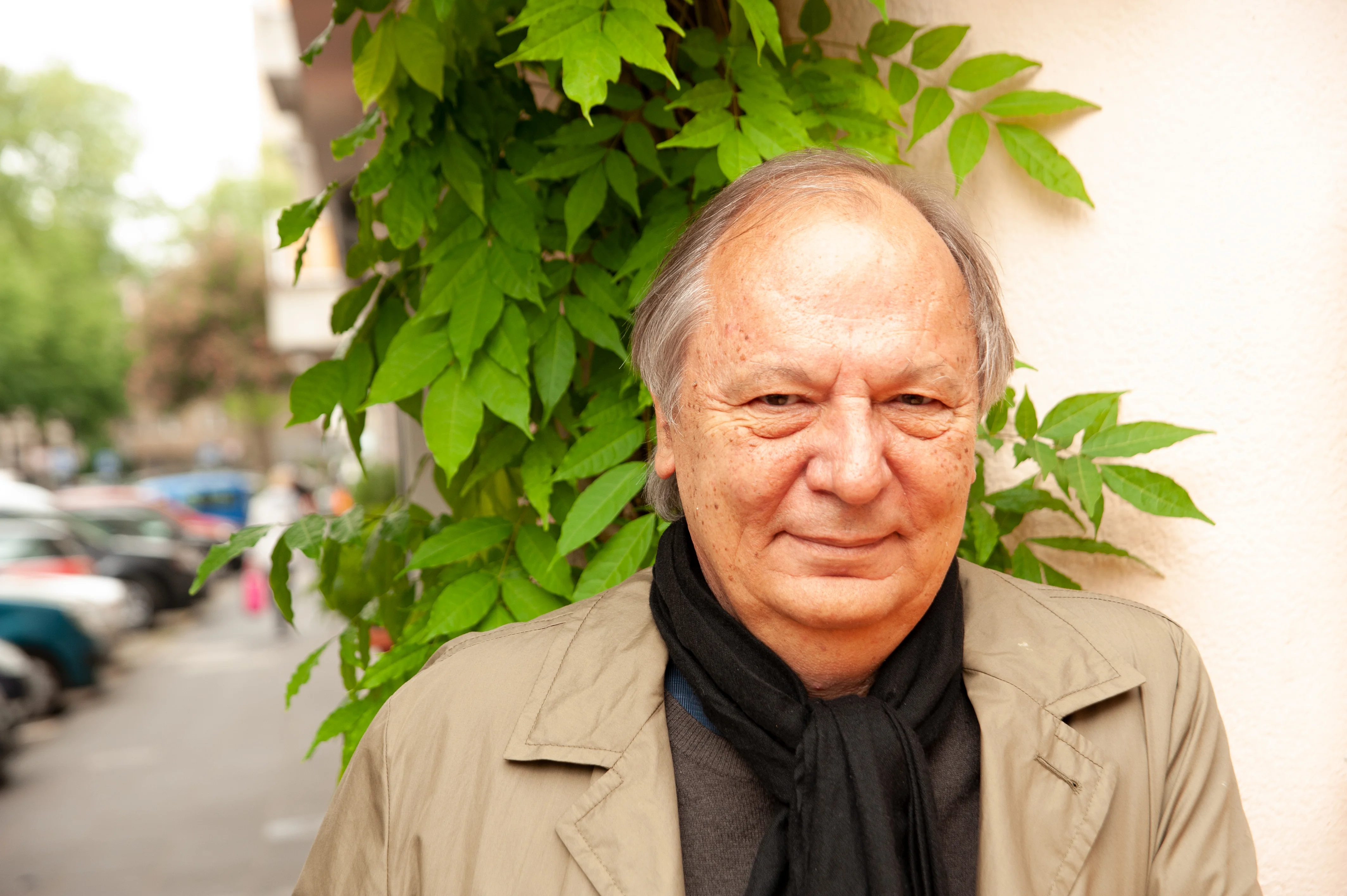
Image from Wikipedia
Image from Wikipedia
Wilfried Schmickler – Political Cabaret with Attitude, Heart, and Witty Language Art
A stage artist who makes the republic think – and laugh
Wilfried Theodor Schmickler, born on November 28, 1954, in Hitdorf (Leverkusen), has been shaping German-language cabaret for decades. With a sharp mind, precise language, and an unmistakable stage presence, he combines humor with analysis, outrage with empathy. His music career in a broader sense – as a satirical word artist with vocal performance, timing, and rhythmically articulated speech – unfolds on theater stages, in radio, and on television. Schmickler wields the power of language as an instrument: sometimes as a solo of anger, sometimes as a quiet ballad of reason – and always as an appeal to democratic vigilance.
Growing up in modest circumstances and politically and socially sensitized from an early age, he found his artistic home in political-literary cabaret. He gained nationwide recognition through his appearances on the WDR program Mitternachtsspitzen, where his instantly recognizable call, "Stop it, Mr. Becker! Stop it!" has long since become a catchphrase. Today, he tours across the country with full-length programs and regularly publishes his texts as live editions – a discography of spoken word that is unique in its consistency and depth of production.
Biography: From Hitdorf to the Big Stages
Schmickler grew up in Hitdorf and became actively involved in student government early on, wrote for the student newspaper, and completed his civil service after graduating from high school in 1973. From a speaking and theater group emerged his first ensembles; 1989 marked a pivotal moment when he joined the cabaret trio "3 Gestirn Köln 1." As a member, he received the German Cabaret Award in 2001 – an important career milestone that propelled his artistic development into an independent soloist. Since then, Schmickler has stood as a solo cabaret artist for linguistic precision, socio-political analysis, and a stage presence that relies on composition, arrangement, and the dynamics of words without props.
Alongside his theater and touring activities, he has continuously worked for WDR – in both television and radio. The continuity of this work, its craftsmanship, and clear stance shape his profile as one of the leading representatives of political cabaret in Germany. Engagements in schools, clubs, and initiatives show that his concept of art is always intertwined with civic spirit.
Career Path and Programs: The Dramaturgy of Escalation
Schmickler made his breakthrough as a solo artist with programs that consistently focus on text quality and dramatic escalation. His well-known titles include "Aufhören!" (2004), "Danke!" (2005), "Zum Dritten" (2007), "Es war nicht alles schlecht" (2009), "Weiter" (2010), "Ich weiß es doch auch nicht" (2012), "Das Letzte" (2015), "Kein zurück!" (2018), and "Es hört nicht auf" (2022). This series of works documents a continuous artistic development: from agitational fury to a finely balanced blend of satire, empathy, and deep social inquiry. Each program is carefully constructed – with exposition, thematic blocks, rhythmic buildups, and pointed closing passages that recur like refrains and structurally hold the evening together.
Currently, Schmickler is on tour with new stage evenings. Announced guest performances for 2025 and 2026 underline his ongoing presence at festival stages and in renowned venues. A notable leitmotif remains the "friendliness of the world" – a poetic formula that unites wit, anger, and compassion and defines his repertoire from mocking songs to lyrically dense cascades of text.
Mitternachtsspitzen and Radio Work: A School of Punctuation
Between 1992 and 2020, Schmickler shaped the WDR Mitternachtsspitzen – an institution of TV cabaret. There, he refined his timing, vocal nuances, and the tension between indignation and elegant formulation. The recurring collaboration with colleagues such as Jürgen Becker and Uwe Lyko sharpened the contrast between character and political cabaret, generating productive friction for his solo programs. In his radio formats – including satirical glosses and moderating the series "Hart an der Grenze" – he cultivated an acoustic cabaret that functions like a studio recording: clear in production, controlled in dynamics, precise in thought cutting.
This long-standing media work is more than reach. It serves as a laboratory for language: sentences are tightened, pauses composed, punchlines arranged in rhythmic sequences. This creates a cabaret soundscape whose inner musicality – rhythm, meter, cadence – gives Schmickler's evenings that energetic drive that makes them so distinctive.
Discography of the Spoken Word: WordArt, Live Editions, and Collections
Schmickler's discography documents his programs as audio releases – an archive of political diagnostics. This includes, among others, "Es hört nicht auf" (2023), "Kein zurück!" (Live, 2018), "Das Letzte" (2015), "Ich weiß es doch auch nicht" (Live, 2013), "Weiter" (2010), "Es war nicht alles schlecht" (2008), and "Zum Dritten!" (2007). In 2024, the extensive compilation "30 Jahre WortArt – Klassiker von und mit Wilfried Schmickler" was also released, making his oeuvre accessible in curated excerpts. These productions follow the logic of a live album: atmosphere, interludes of applause, spontaneous nuances of the voice – all capturing the aesthetic signature of an artist who regards the audience as a resonating body.
Content-wise, the recordings chart German and international politics, media criticism, everyday observations, and moral dilemmas. Craftsmanship convinces through a blend of coherent text direction, precise articulation, and a vibrant presence; the recording aesthetic retains a documentary character without smoothing out the performative energy. Those who experience Schmickler's programs through headphones hear the intricate mechanics of his rhetoric – from an impassioned tirade to an ironic pianissimo.
Awards and Recognition: Authority Through Quality
The list of his awards reflects the high regard he holds in the world of cabaret and small arts: German Cabaret Award (2001, as part of an ensemble; 2009, in the cabaret category), German Cabaret Prize (Main Prize, 2007), special prize "Reif & Bekloppt" at the Prix Pantheon (2007), the prestigious "Salzburger Stier" (2010), the honorary prize from "Tegtmeiers Erben" (2013), the Bavarian Cabaret Prize – Honorary Prize (2021), and the "Morenhovener Lupe" (2023). These awards mark both artistic maturity and the validation of a stance that intertwines linguistic wit with political responsibility.
For the music and cultural press, Schmickler remains a fixed point: Reviews highlight his rapid linguistic speed, analytical sharpness, and the dramatic density of his evenings. Especially in live mode arises that immediacy from which cabaret derives its power – the productive friction between current events, historical depth, and precise escalation.
Style and Artistic Development: Rhetoric as Sound Art
Schmickler's genre is political cabaret, but his working method follows principles reminiscent of music. He composes evenings: Opening chords set the theme, interludes modulate the tones of indignation, refrains ("Aufhören!") structure the form. The composition and arrangement of texts, the production on stage and in the studio, the interplay of crescendo and silence – all create a pull in which content imprints itself. He avoids showy effects: Instead of jokes per second, he relies on argumentative arches that allow punchlines and insights to merge.
His artistic development showcases a steady sharpening of the voice: from a furious debate speaker to a finely chiseled formulators who illuminates contradictions rather than merely caricaturing them. The stage presence is physical but never contrived: posture, gesture, eye direction, and pause work form a precise toolkit. Thus, a tone emerges that confronts yet invites.
Cultural Influence and Relevance: Cabaret as Democratic Practice
Schmickler's texts resonate beyond the evening: They provide linguistic tools for engaging in societal debates. His cabaret critiques the present with historical awareness – accessible for an audience seeking information, emotion, and perspective. His recurring collaborations with public broadcasters anchor him in the cultural memory. His choice to forgo traditional social media presence underscores the focus on stage, radio, and curated releases – channels that promote reliability and context.
Schmickler stands exemplary for the development of political cabaret in Germany: Stance over posturing, analysis over alarmism, entertainment as serious art. This mixture lends weight to his evenings – and explains why he maintains stable audience numbers and attendance over decades.
Current Projects 2024–2026: Tours, Festivals, New Evenings
In summer 2024, the comprehensive compilation "30 Jahre WortArt – Klassiker von und mit Wilfried Schmickler" launched, which consolidates his repertoire and makes it accessible for streaming audiences. In 2025 and 2026, Schmickler continues his extended live activity: schedule lists record ongoing guest performances from smaller cultural venues to open-air formats. Program information describes current evenings with a distinctive mix of spoken word, lyrical poetry, and mock songs – a trademark that connects contemporary issues, media criticism, and poetic intervention.
Thus, Schmickler stays in step with the times. His new texts respond to political shifts and societal conflict lines without losing the foundational stance: enlightenment, humanity, and humor. The artistic production does not shift to the internet but remains analog – live, immediate, and dialogical. For a cabaret culture that builds on resonance in the space, this is a conscious promise of quality.
Critical Reception: Precision over Pose
In press reviews, Schmickler is described as "word powerful," a master of the pointed, sometimes breathtakingly fast language. Editorial teams emphasize his refusal to resort to mere spontaneity; instead, he relies on the meticulously crafted script, whose argumentative density he unfolds live. His distance from social media is interpreted by observers as self-protection – and as a curatorial decision not to flatten debates into attention economies. These principles explain the long-lasting impact of his programs: they endure because they hold.
Music platforms also honor his work: The prominent presence of his albums and collections shows that cabaret recordings develop their own audience. Between live documents and literary readings emerges a catalog, which serves both as a cultural-historical reference and a point of entry for new listeners.
Conclusion: Why You Should Experience Wilfried Schmickler Now
Because he demonstrates how political cabaret can sound: clever, funny, uncompromisingly humane. Because his evenings are dramaturgically constructed like strong albums – with themes, motifs, breaks, and refrains. Because his artistic development exemplifies how experience, expertise, authority, and trustworthiness coalesce: EEAT on stage. And because the discography of the spoken word offers a unique access to four decades of contemporary diagnostics.
Those who experience Schmickler live hear more than punchlines: They hear a carefully composed performance whose rhythm directly addresses our thought. That’s why it’s worth choosing a date now – and enjoying an evening of the sound of clarity.
Official Channels of Wilfried Schmickler:
- Instagram: No official profile found
- Facebook: No official profile found
- YouTube: No official profile found
- Spotify: No official profile found
- TikTok: No official profile found
Sources:
- Wilfried Schmickler – Official Website
- Wilfried Schmickler – Tour & Dates (Management/Booking Information)
- Wikipedia – Wilfried Schmickler (Biography, Programs, Awards; as of October 20, 2025)
- Apple Music – Wilfried Schmickler (Albums & Compilation "30 Jahre WortArt", June 21, 2024)
- Pantheon Bonn – Prix Pantheon: Winners Overview (Special Prize "Reif & Bekloppt", 2007)
- WDR Press Lounge – 30 Years of "Mitternachtsspitzen" (Background, Portraits)
- DIE ZEIT – Wilfried Schmickler Turns 70: "I Can't Improvise" (November 28, 2024)
- Munzinger – Wilfried Schmickler (Biographical Data)
- Kulturwiesen 2026 – Program Info and Guest Performance Notice
Upcoming Events
Wilfried Schmickler - Mr. Schmickler please
Cabaret with Bite in Pantheon Bonn: 'Mr. Schmickler please' combines timing, stance, and great laughter. 28.03.2026, 20:00, from €25. Clear mind, full belly from laughter – secure your seats! #CabaretBonn
Wilfried Schmickler – He's Still Got It
Enjoy Wilfried Schmickler's political cabaret with sharp language and much stage presence on October 4 in Bochum.
Lantern Lighter Tour through Ruhrort
Experience Ruhrort in the Evening Light: The Lantern Lighter Tour combines history, humor, and harbor charm. On 10/16/2026, adults €15, children €7. #Duisburg
Wilfried Schmickler - He Still Does It
Bonn laughs and thinks along: Wilfried Schmickler serves up biting satire, strong punchlines, and plenty of attitude at Pantheon. 31.10.2026, from 27 €. #Cabaret
Lantern Lighting Tour through Ruhrort
Discover Ruhrort in evening mood: Mick leads as the lantern lighter through light history, harbor charm, and lively stories. 13.11.2026, from 18:30. Book now! #Duisburg
Wilfried Schmickler: He's still at it!
Düsseldorf gets cabaret with bite: Wilfried Schmickler stands at Kom(m)ödchen for an evening full of punchlines, satire, and stage presence. #Cabaret
Wilfried Schmickler: He's Still Got It!
Düsseldorf gets cabaret with a blade: Wilfried Schmickler at Kom(m)ödchen. Punchlines, conviction, and great live feeling on 17.12.2026. #Cabaret
No Nonsense Opera: To the Point
Bonn's opera house will become a stage for political cabaret with sharp punchlines and lots of energy on 07.05.2027. #Bonn #Cabaret #Comedy