
Werner von Fritsch
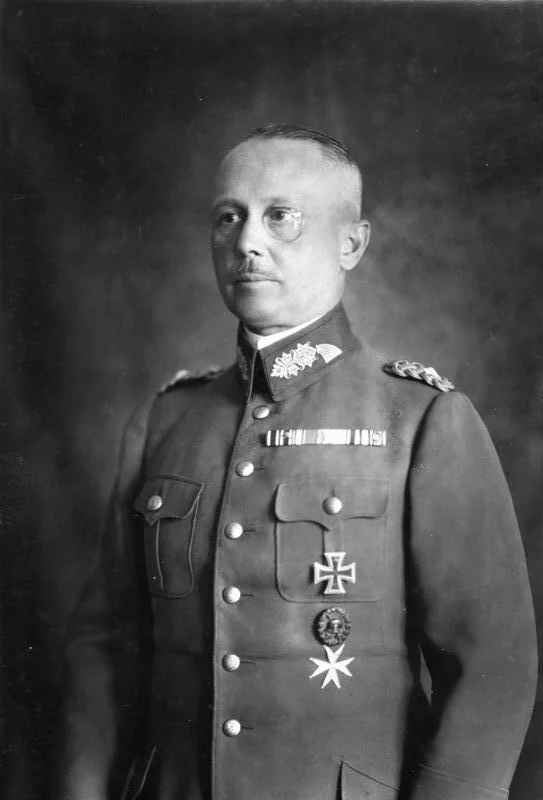
Image from Wikipedia
Image from Wikipedia
Werner von Fritsch – Career, Power, and Break in the Center of German Military History
A German General Field Marshal Between Rise, Influence, and Dramatic Fall
Werner Freiherr von Fritsch is one of the defining military figures of the interwar period in Germany. Born on August 4, 1880, in Benrath near Düsseldorf, he rose to the top of the Reichswehr and later the Wehrmacht during a time of profound political and military upheaval. His career links the authoritarian continuities of the Empire with the strategic reconfigurations of the Weimar Republic and the power struggles of the Nazi state. ([dhm.de](https://www.dhm.de/lemo/biografie/werner-freiherr-von-fritsch?utm_source=openai))
Background and Early Formation
Fritsch came from an aristocratic family and grew up in an environment characterized by a sense of duty, military discipline, and monarchical tradition. This socialization early on shaped his attitude towards the army, the state, and hierarchy. After his education, he joined the Prussian army and embarked on a career that quickly led him to the General Staff. Biographical sources emphasize his early professional strength, particularly in military history and tactics. ([vonfritsch.de](https://vonfritsch.de/page/personen/werner.html?utm_source=openai))
Rise in the Reichswehr and General Staff
In the years following World War I, Fritsch played a role in reorganizing the German army and quickly gained prominence within the Reichswehr. He held key staff and leadership positions in succession and became one of the central figures in the military reconstruction. In 1934, he was appointed Chief of the Army Command by Reich President Paul von Hindenburg; from 1935, he served as the Commander-in-Chief of the Army. In this role, Fritsch stood at a junction where military professionalism and political power increasingly intersected. ([dhm.de](https://www.dhm.de/lemo/biografie/werner-freiherr-von-fritsch?utm_source=openai))
Power Center of the Early Wehrmacht
As Commander-in-Chief of the Army, Fritsch embodied a type of officer who valued institutional autonomy and military order. In historical research, he is considered one of the individuals who decisively shaped the Army's self-understanding in the 1930s. His position also made him vulnerable, as in the power structure of the Nazi regime, military authority and personal loyalty could not be reconciled for long. ([dhm.de](https://www.dhm.de/lemo/biografie/werner-freiherr-von-fritsch?utm_source=openai))
The Blomberg-Fritsch Crisis and the Fall of 1938
The most dramatic turning point in his career occurred in 1938. In connection with the Blomberg-Fritsch crisis, Fritsch was ousted from office by Hitler. This affair marked a turning point in the internal power architecture of the regime as it weakened the influence of traditional military elites and intensified political control over the Wehrmacht. Fritsch thus remained a symbol of a broken generalship in memory: having risen high, he was then abruptly stripped of power. ([dhm.de](https://www.dhm.de/lemo/biografie/werner-freiherr-von-fritsch?utm_source=openai))
Military Reputation and Historical Context
In retrospect, Werner von Fritsch appears as a representative of a conservative, professionally oriented officer corps, whose scope for action became increasingly narrow in the Nazi state. The Rheinische Geschichte portal also points out that several barracks were named after him, underscoring the temporary military veneration of his person. At the same time, historical research shows that his fall was far more than a personal loss of power: it was a signal for the subordination of the army to political arbitrariness. ([rheinische-geschichte.lvr.de](https://rheinische-geschichte.lvr.de/Persoenlichkeiten/werner-von-fritsch/DE-2086/lido/57c6c0ff369070.75432190?utm_source=openai))
Contextualizing His Impact in German History
Fritsch’s life path exemplifies the tragedy of many German elites in the 20th century. He was not a man of the popular stage, but one of the quiet yet influential figures behind the scenes of power. This is exactly why his biography remains significant for historical writing: it illustrates how closely intertwined military career, state rationale, and dictatorial appropriation were. ([dhm.de](https://www.dhm.de/lemo/biografie/werner-freiherr-von-fritsch?utm_source=openai))
Later Years and Death
Werner von Fritsch died on September 22, 1939, near Praga, close to Warsaw, at the onset of World War II. His death marked the conclusion of a career characterized by institutional ascent, strategic responsibility, and political disempowerment. The available sources depict him as one of the notable figures of that German military history, which continues to be discussed controversially to this day. ([dhm.de](https://www.dhm.de/lemo/biografie/werner-freiherr-von-fritsch?utm_source=openai))
Discography and Current Projects
There is no discography, music release, or current artistic projects in the sense of a musical career for Werner von Fritsch. Instead, web research only confirms biographical, historical, and military historical sources. Moreover, official social media channels that could clearly be attributed to him are not traceable. ([dhm.de](https://www.dhm.de/lemo/biografie/werner-freiherr-von-fritsch?utm_source=openai))
Conclusion: A Biography About Power, System, and Historical Break
Werner von Fritsch fascinates through the tension between professional authority and political powerlessness. His career tells of ascent, influence, and the abrupt loss of military power in the shadow of a totalitarian system. It is precisely this mixture of historical significance, personal tragedy, and political explosiveness that makes him a key figure in German military history. Those interested in the dynamics of the Reichswehr, Wehrmacht, and Nazi rule will find in his biography an insightful, dense, and still relevant chapter. ([dhm.de](https://www.dhm.de/lemo/biografie/werner-freiherr-von-fritsch?utm_source=openai))
Official Channels of Werner von Fritsch:
- Instagram: No official profile found
- Facebook: No official profile found
- YouTube: No official profile found
- Spotify: No official profile found
- TikTok: No official profile found