
Valie Export
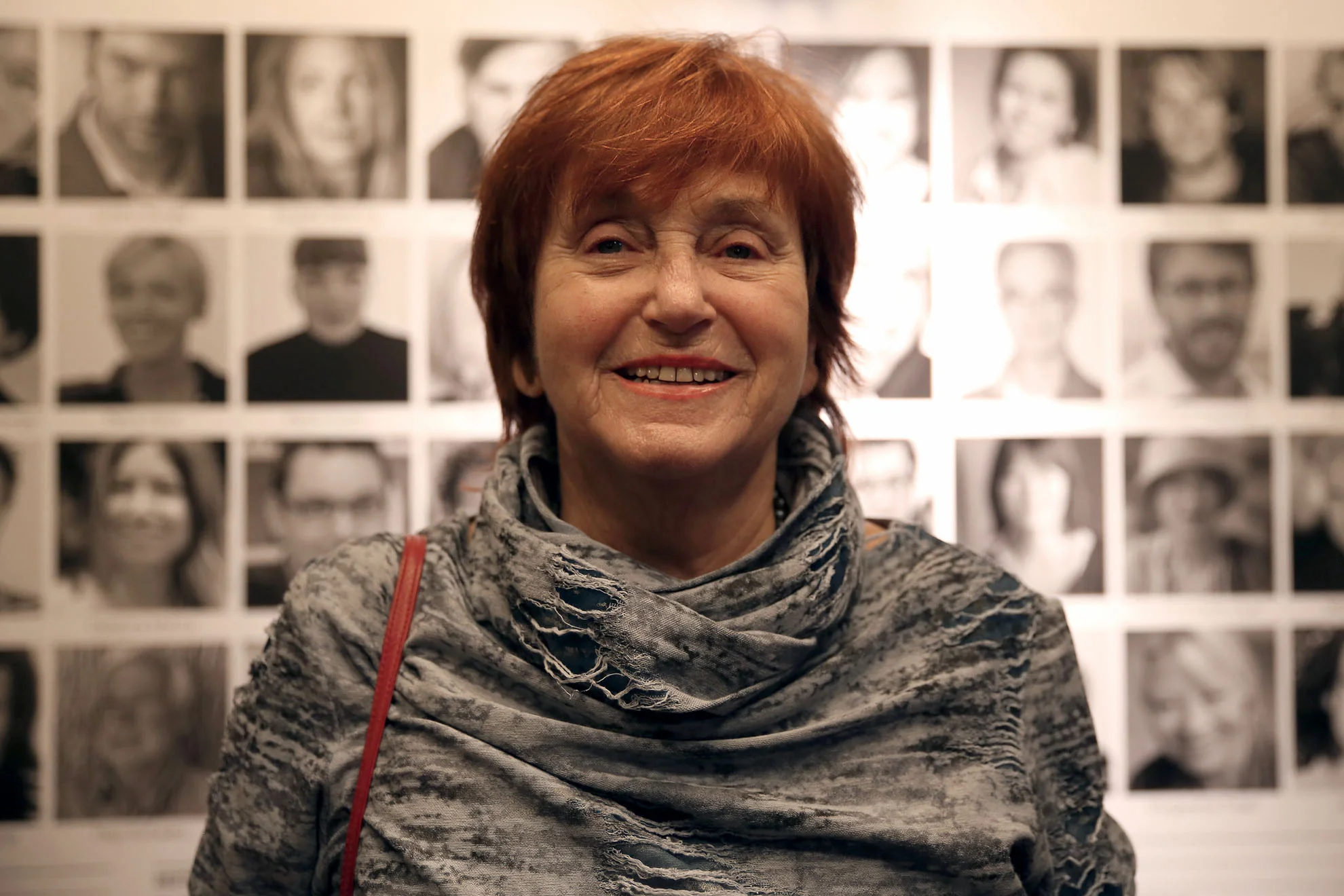
Image from Wikipedia
Image from Wikipedia
VALIE EXPORT – Icon of Feminist Media and Performance Art
Radical, Precise, Pioneering: How VALIE EXPORT Redefined Body, Image, and Public Space
VALIE EXPORT, born Waltraud Lehner in 1940 in Linz, is one of the most influential voices in international media and performance art. Since the late 1960s, she has created groundbreaking performances, films, and photographic works that focus on the female body, social power dynamics, and the role of media. Through her uncompromising artistic development and extraordinary stage presence in public spaces, she permanently changed the perception of art, feminism, and Expanded Cinema.
By consciously adopting the artist name VALIE EXPORT in 1967, she positioned herself as an independent brand and artistic concept. Her music career in the narrow sense does not exist; rather, she operates interdisciplinary between film, performance, photography, and installation. This crossing of boundaries – both aesthetic and political – continues to make her work a reference point for generations of artists worldwide.
Biography and Artistic Self-Empowerment
Growing up in Linz, VALIE EXPORT was drawn to film and image media at an early age. In 1967, she shed her civil name and established the uppercase artist name as a strategic act of self-empowerment. This step marks the beginning of an art-career analogous path: brand building, attitude, and recognizability. In Vienna and Munich, she shaped a body of work that deconstructs the media representation of the body and establishes new forms of public engagement. Her artistic development combined theory, composition of image sequences, cinematic montage, and performative arrangement into a clear, often confrontational visual language.
EXPORT always understood art as a space for social communication. Her early performances target an immediate action situation – without protective distance. She employs means of Expanded Cinema to dissolve rigid genre boundaries and actively involve the audience. This consistent opening up of the art space has shaped her international reputation and paved the way for her breakthrough in curatorial, museum, and festival contexts.
Breakthrough in Public Space: Performances that Made History
Between 1968 and 1971, the legendary “Tapp- und Tastkino” was created: EXPORT wore a miniature cinema model on her chest; passersby were invited to experience the "cinema" tactilely. The work reversed the visual voyeurism economy of cinema and made touch the medium – a radical arrangement that simultaneously addressed gender politics, regimes of sight, and media consumption. Reactions ranged from irritation to outrage, vividly demonstrating the cultural explosive nature of this performance.
In the same year, 1968, she made a strong statement against patriarchal attributions with “Aus der Mappe der Hundigkeit” by dramatically intensifying power and dependency relationships performatively together with Peter Weibel. Today, both works are considered key pieces of action and performance art; they showcase EXPORT’s extraordinary stage presence in urban spaces and her ability to inseparably intertwine aesthetic form and social analysis.
Cinematic Signature: Expanded Cinema, Montage, and the Political
EXPORT's film work – a “discography” of moving images in a broader sense – ranges from early experimental short films to essayistic video works and feature films. In “Syntagma” (1983), she investigates the construction of the female body through image technologies using overlays and doubles. This production showcases the precision of her composition and the dense interlinking of content and form – a case study for media-theoretically informed production.
With “Die Praxis der Liebe” (1985), EXPORT reached the competition of the Berlin International Film Festival. The political thriller combines narrative tension with a sharp analysis of power, intimacy, and societal structures. Previously, she translated perception, paranoia, and media noise into an atmospherically dense visual dramaturgy with “Unsichtbare Gegner” (1976). This filmography demonstrates a consistent expansion of cinema – in content, form, and spatiality.
Exhibitions, Institutions, Teaching
The international visibility of her work is evident in exhibitions and retrospectives at renowned institutions. As early as 1977, EXPORT was represented at the Documenta in Kassel; in 1980, she represented Austria alongside Maria Lassnig at the Venice Biennale. Museums such as MOCA Los Angeles, LENTOS, and international art centers have dedicated significant presentations to her work, solidifying her status in the canon.
Her expertise has also shaped academic training: positions at the University of Wisconsin–Milwaukee, the Universität der Künste Berlin, and since the mid-1990s, a professorship for Multimedia/Performance at the Kunsthochschule für Medien Köln demonstrate her lasting educational practice. In 2016, the city of Linz acquired her archive and established the VALIE EXPORT Center – a research institution that opens up, contextualizes, and carries her work into the future.
Awards and Recognition
The list of honors highlights EXPORT's authority in the field: the Roswitha Haftmann Prize (2019) as one of the most significant European art awards, the Golden Nica as "Visionary Pioneer of Feminist Media Art" at the Prix Ars Electronica (2020), and numerous state and municipal honors in Austria. These awards document both the cultural influence of her practice and the relevance of her theoretical contributions to media and performance art.
Film critics have also recognized her feature films: “Die Praxis der Liebe” garnered attention at the Berlinale competition in 1985. Curatorial programs – such as retrospectives and thematic series – regularly revisit her films and performances, making them accessible to younger generations.
Style, Genre, and Artistic Methodology
EXPORT’s works combine conceptual rigor with sensual immediacy. In her production vocabulary, she works with performative scores, precise image composition, montage techniques, and a controlled choreography of proximity and distance. The "arrangement" of the audience – whether on the street, in the cinema, or in the white cube – is an integral part of the works. Genre boundaries interest her primarily as material that she shifts, overlays, or penetrates.
Music in the narrower sense does not play the leading role, but her performances often possess a pronounced rhythmic structure: cadences of movement, breath, footsteps, and ritual gestures create a corporeal "score." From this perspective, EXPORT's work can be read as an intermedial ensemble – a composition of body, space, time, and medium.
Cultural Influence and Reception
As a pioneer of feminist media art, EXPORT opened discourse spaces that extend into today's image politics and online public spheres. Her analyses of regimes of sight, body norms, and media dispositifs form reference points for contemporary artists, filmmakers, and theorists. Museums, collections, and art academies anchor her work in curricula and collection strategies; exhibitions and publications demonstrate how strongly her artistic stance enables new narratives.
The reception remains dynamic: interviews and portraits from recent years emphasize her unwavering drive to critically question societal developments. Younger generations discover in her performances from the 1970s an instrumental approach to addressing the media reality and gender roles of the present. Thus, EXPORT's work acts as an open score for current artistic practice.
Current Activities and Projects (2024–2025)
In 2024 and 2025, VALIE EXPORT continued to be the focus of exhibitions, film series, and discussions. Institutions such as C/O Berlin revisited her film work; press reports and discussions highlighted her ongoing productivity and work on her archive. Austrian media also reported on planned film and documentation projects that shed new light on her life and work.
The VALIE EXPORT Center Linz serves as an active research center: tours, archive projects, and online offerings provide insights into her work, estate, and context. This structure ensures long-term reception, increases visibility in research and the public, and invites international visitors to study EXPORT's work firsthand.
Conclusion: Why Experience VALIE EXPORT Now?
VALIE EXPORT represents art that takes risks and shifts standards. Her performances alter the grammar of perception; her films unfold a clever, uncompromising visual language; her exhibitions and texts open discourses that are more relevant today than ever. Those who wish to understand the vibrancy of contemporary art engage with EXPORT's work: bold, analytical, sensual.
Experience VALIE EXPORT in cinema format, in museum spaces, or through the work of the research center in Linz. Live contexts – discussions, screenings, archive tours – present the power of her ideas most directly. These encounters make it clear: EXPORT's pioneering achievements are not a thing of the past, but a vital impulse for the present and future.
Official Channels of VALIE EXPORT:
- Instagram: No official profile found
- Facebook: No official profile found
- YouTube: No official profile found
- Spotify: No official profile found
- TikTok: No official profile found
Sources:
- Wikipedia – Valie Export
- VALIE EXPORT Center Linz – Official Site
- Prix Ars Electronica – Visionary Pioneer of Feminist Media Art (2020)
- Roswitha Haftmann Stiftung – Prize Winners 2019
- Berlinale – Program 1985 (Die Praxis der Liebe)
- C/O Berlin – Chats & Tracks with Valie Export
- Salzburger Nachrichten – Portrait/Interview (2025)
- Der Standard – Interview/Portrait (2025)
- sixpackfilm – TAPP und TASTKINO (Work Dataset)
- ALBERTINA – Press Information on VALIE EXPORT (Works/Performances)
- MOCA Los Angeles – Artist Profile
- Wikipedia – Die Praxis der Liebe (1985)
Upcoming Events
Strange? Notice it! Photographs from the BLMK Collection
Photography that irritates, surprises and remains in memory: Strange? Notice it! at BLMK Cottbus. #Photography #Art
Strange? Noticeable! Photographs from the Collection of BLMK
Irritating photography at BLMK Cottbus: strong images, new perspectives, and a museum experience full of questions. Until 31.5.2026. #Photography #BLMK
Strange? Mark correctly! Photographs from the BLMK Collection
Photography that makes you pause: At BLMK Cottbus, irritation meets art history. Experience Strange? Mark correctly! now. #BLMK #Photography #Cottbus
Strange? Remarkable! Photographs from the BLMK Collection
Wonder, irritation, knowledge at Diesel Power Plant Cottbus: Photo art from the BLMK collection. April 15, 2026, 11 AM – 7 PM, Admission 4 €, wheelchair accessible. Experience, reflect, remember. #BLMK
Strange? Remarkable! Photographs from the BLMK Collection
Entrance to the world of irritating photography at BLMK Cottbus: strong collection, clever curation, sensual work observation. 16.04.2026, 11–19 Uhr, 4 €. Discover, reflect, marvel. #BLMK
Strange? Meaningful! Photographs from the BLMK Collection
Photography that holds and rearranges the gaze: A powerful exhibition full of irritation, depth, and art history awaits you at the Diesel Power Plant Cottbus. #BLMK #Cottbus
Strange? Remarkable! Photographs from the BLMK Collection
Photography that tilts the gaze: At BLMK Cottbus, irritation, wonder, and collection strength come together. Experience it live now. #Photography #Art
Strange? Remarkable! Photographs from the BLMK Collection
Irritating images, clear curation: Experience photography that asks questions and inspires at BLMK Cottbus. 19.04.2026, 11 AM–7 PM, admission from €4. Sharpen your vision, Go now! #BLMK
Strange? Remarkable! Photographs from the BLMK Collection
Photography that changes the perspective: At BLMK Cottbus, irritation, wonder, and collection history come together. Discover now! #Cottbus #Photography
Strange? Remarkable! Photographs from the Collection of the BLMK
Photography that Challenges the Gaze: At BLMK Cottbus, Irritation, Collection, and Strong Image Worlds Converge. Discover now. #Art