
Queen (Band)
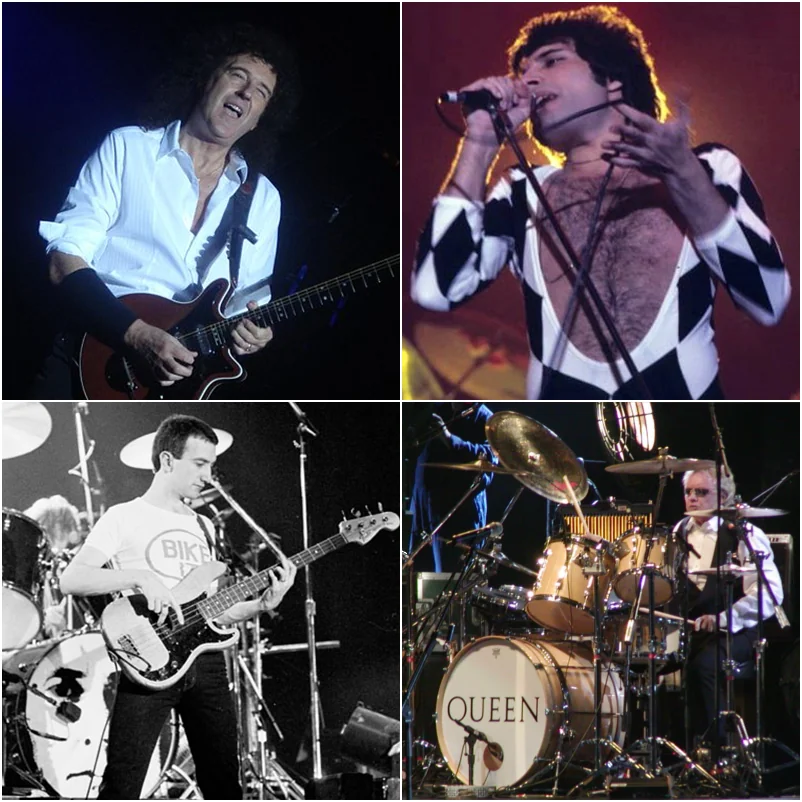
Image from Wikipedia
Image from Wikipedia
Queen – The British Rock Legend That Elevated Stadium Anthems, Operatic Drama, and Guitar Pathos to an Art Form
A Masterpiece of Stylistic Diversity and Grand Gestures
Queen is one of the most influential rock bands in music history. Since its founding in 1970 in London, the name has represented a musical career that translates glam rock, hard rock, pop, progressive elements, and baroque overwhelming artistry into an unmistakable language. The classic lineup of Freddie Mercury, Brian May, Roger Taylor, and John Deacon remained constant for over two decades, creating an artistic identity that is still instantly recognizable worldwide. (queenonline.com)
What sets Queen apart from many other rock bands is their boldness in exaggeration. The group did not rely on a narrow genre but instead on compositions with dramatic range, intricate arrangements, and extraordinary stage presence. It is from this that a work emerged that continues to captivate generations of listeners and serves as a reference point for stadium rock, music video aesthetics, and popular grand forms. (queenonline.com)
The Beginnings: London, Experimental Spirit, and Building a Unique Sound Universe
Queen formed from the circle of Brian May and Roger Taylor, before Freddie Mercury shaped the band into the iconic unit that would later make music history. From early on, there was an ambition to be more than just a classic hard rock band: Multi-part vocals, complex harmonies, and a meticulous production marked their early recordings. The band signed their first record deal with EMI in 1973, releasing their debut album Queen later that same year. (queenonline.com)
The early years were characterized by studio work, touring, and a rapid artistic intensification. By 1974, Queen II followed, and soon after Sheer Heart Attack, which accelerated their breakthrough in the UK and the US. The blend of hardness, melody, and theatrical gesture gave the band a profile that could not neatly fit into classic hard rock or pure pop. (queenonline.com)
The Breakthrough with Bohemian Rhapsody and the Birth of an Icon
In 1975, Queen achieved the artistic and commercial leap with A Night at the Opera and especially with Bohemian Rhapsody, which catapulted the band firmly to the top of the world scene. The song combined ballad, operatic exaggeration, and hard rock into a form that was almost unimaginable at the time. The accompanying video is considered one of the earliest defining music videos, turning Queen into a modern pop force visually as well. (queenonline.com)
Bohemian Rhapsody not only became the band's signature song but also proved that ambitious pop music could appeal to the masses. The track topped the UK singles chart in 1975 and returned to the top in 1991. Later accolades, including its designation as one of the most streamed songs of the 20th century, underline the extraordinary cultural impact of this title. (queenonline.com)
Songwriting as a Collective Achievement: Four Musicians, Four Handwriting Styles
A central feature of Queen was the distribution of creative powers among all four members. Freddie Mercury, Brian May, Roger Taylor, and John Deacon each contributed defining tracks, ensuring that the discography did not adopt a one-sided signature. This multi-voiced complexity is one reason Queen's albums feel so stylistically rich while functioning as a cohesive work. (de.wikipedia.org)
Some of the most well-known songs include We Are the Champions, We Will Rock You, The Show Must Go On, Another One Bites the Dust, I Want to Break Free, Radio Ga Ga, and A Kind of Magic. These titles showcase the range between anthemic stadium drama, funky grooves, melodic elegance, and existential grandeur. Queen's strength lay not only in the chorus but in the arrangement, the buildup of tension, and the way the band staged their songs for maximum impact. (de.wikipedia.org)
Discography, Charts, and Commercial Scale
Queen's discography is a lesson in sustained popularity. According to the official band chronicle, all studio albums released after their breakthrough in 1974 reached number one on the charts. The official charts in the UK also document the early success curve: With Seven Seas of Rhye and Killer Queen, the series of hit singles began, solidifying the band’s status as a crowd-puller. (queenonline.com)
Commercially, Queen ranks among the world's most successful bands with around 200 million albums sold. In the UK, the first Greatest Hits album alone sold more than five million copies; worldwide, the number surpasses 31 million copies. The single Another One Bites the Dust also became the band's top-selling song with over seven million units sold. (de.wikipedia.org)
In historical retrospect, it is particularly striking how permanently Queen’s catalog has remained in the public consciousness. The official chart archive points to the long-lasting success of the band, while the anniversary and reissue landscape shows that the work is constantly rediscovered, reevaluated, and re-marketed. The combination of album success, single hits, and global reusability has made Queen a brand with exceptional cultural durability. (officialcharts.com)
Stage Presence and Concert History: Queen as a Live Phenomenon
Queen was not just a studio phenomenon but above all, a live powerhouse. Over 16 years, the band played more than 700 concerts and developed a stage presence that understood rock as a communal experience. The blend of technical precision, visual focus, and the charismatic dominance of Freddie Mercury made the shows events that went far beyond mere music playback. (de.wikipedia.org)
Particularly legendary was their performance at Live Aid in 1985, which is still regarded as a benchmark for rock performance. Queen’s ability to induce collective ecstasy in a stadium stemmed from the perfect balance between song material, show, and audience interaction. This live quality explains why the band generates such resonance even decades later in tribute formats, reissues, and archival releases. (de.wikipedia.org)
Musical Development: From Glam Rock Heritage to Universal Pop-Rock Language
Queen's musical development was never linear but came in waves. The band started with progressive exuberance, increasingly opened up to pop, funk, and glam elements, while still maintaining the core of their sound identity: Brian May’s guitar-driven harmonies, Mercury’s dramatic vocal lines, Taylor’s impulsive drumming, and Deacon’s melodic bass thinking. This combination created works that sound exceptionally rich and accessible in pop music. (queenonline.com)
Particularly fascinating is their handling of structure and contrast. Queen loved the juxtaposition of intimacy and excess, of delicate ballads and eruptive rock moments, of classical concepts and ironic breaks. This is precisely where their enduring relevance lies: The songs are not just hits but compositional mini-dramas, functioning in radio, on stage, and in collective memory alike. (queenonline.com)
Cultural Influence, Media Impact, and Late Legacy
Queen's cultural influence extends far beyond rock audiences and nostalgia. The band shaped the aesthetics of music videos, redefined stadium anthems, and produced songs that repeatedly find new contexts in sports, advertising, cinema, and pop culture. The official band material and the ongoing media resonance show that Queen is firmly established in the canon of modern pop history. (queenonline.com)
Critics have always lauded the unique blend of ambition and accessibility. Specifically, Bohemian Rhapsody exemplifies this perception: a song that, with its form changes, theatrical build-up, and technical boldness became a template for what rock music can achieve at its best. Later accolades in music press and its enduring presence on charts affirm Queen's status as a historical exception in band history. (es.rollingstone.com)
Current Projects, Reissues, and the Present of the Queen Catalog
Even decades after their major studio years, Queen remains present. News about reissues, archival material, releases, and related projects appear continuously on the official website, including the new Queen II edition and accompanying mix and review content. Such releases keep the catalog alive and demonstrate the strong interest in Queen's original recordings, archival treasures, and careful reworking of the material. (queenonline.com)
Additionally, an official announcement stated that in mid-2024, the rights to music, merchandise, and secondary rights were sold to Sony Music Publishing. This step underscores the immense economic and cultural value of the catalog. Queen is therefore not only a chapter of music history but continues to be an active, highly relevant component of the international music industry. (de.wikipedia.org)
Conclusion: Why Queen Captivates to This Day
Queen remains fascinating because the band brought together the incompatible: virtuosity and mass appeal, theatricality and pop instinct, drama and immediate singability. Their songs do not just echo nostalgia but embody enduring musical architecture. Anyone trying to understand why rock music can create identity across generations cannot ignore Queen. (queenonline.com)
A live experience under the sign of Queen, whether in the archive, in a tribute context, or with material from the original catalog, remains an event of remarkable impact. This music possesses grandeur, body, and radiance that truly become visible in space. Those who experience Queen live or in a high-quality concert format encounter a band whose influence on music history and pop culture is still unbroken today. (de.wikipedia.org)
Official Channels of Queen:
- Instagram: https://www.instagram.com/officialqueenmusic/
- Facebook: https://www.facebook.com/Queen/
- YouTube: https://www.youtube.com/channel/UCiMhD4jzUqG-IgPzUmmytRQ
- X: https://x.com/QueenWillRock
- TikTok: No official profile found
- Spotify: No official profile found
Sources:
- QueenOnline.com – About The Band
- QueenOnline.com – The Official Queen Website
- QueenOnline.com – Press Release: Greatest Hits Becomes First Album To Reach 7 Million UK Chart Sales
- QueenOnline.com – YouTube Channel: 17 Million Subscribers
- QueenOnline.com – QUEEN II Out Now
- Official Charts – Queen songs and albums | full Official Chart history
- Wikipedia – Queen (Band)
- Wikipedia – Queen (Band)/Discography
- Linktree – Queen Official Social Channels
- X – Queen (@QueenWillRock)