
Niederdeutsches Theater Braunschweig
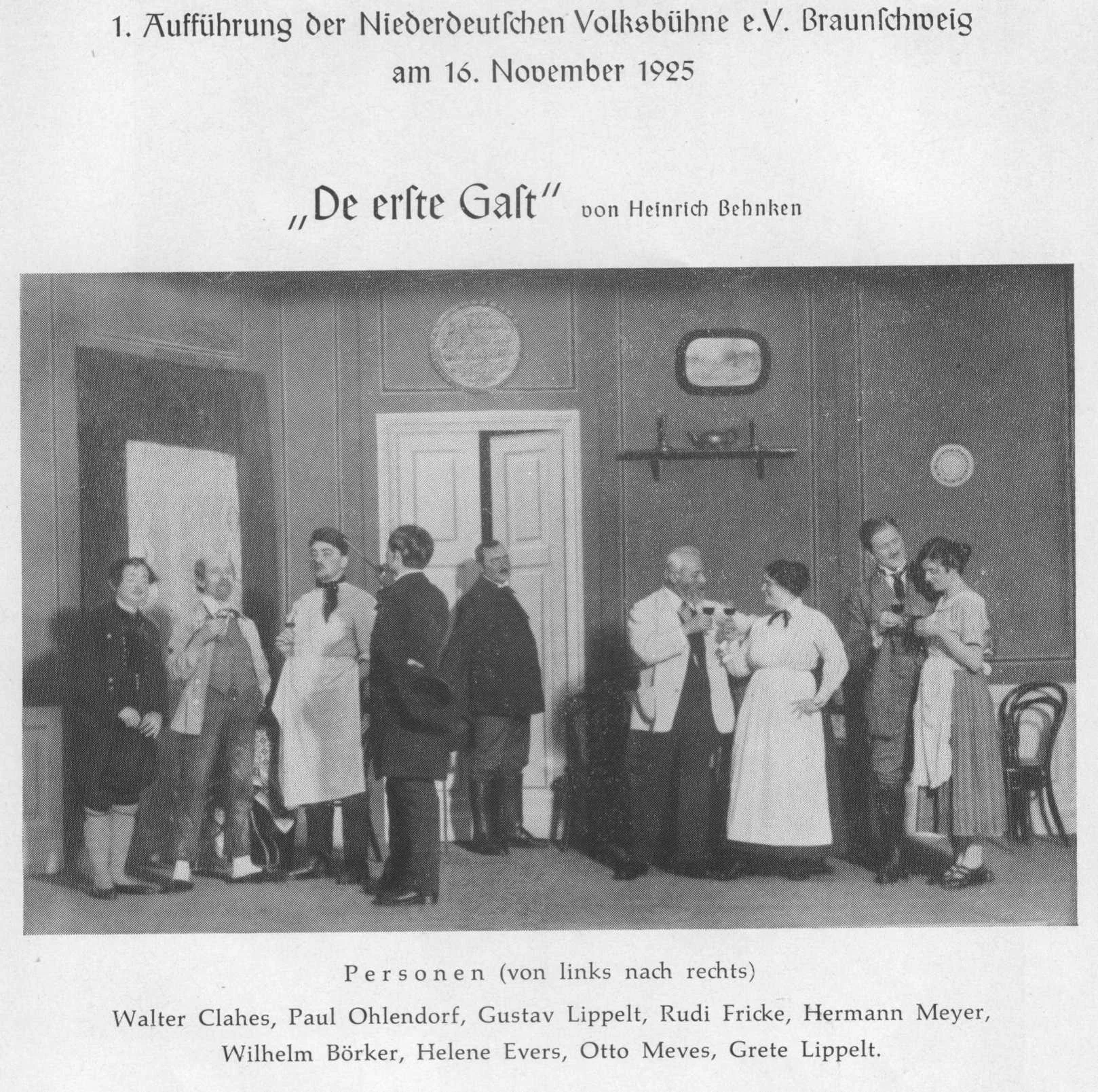
Image from Wikipedia
Image from Wikipedia
Low German Theater Braunschweig – Plattdeutsch Stage Culture with Heart, History, and Present
100 Years of Passion for Low German Theater: How a Braunschweig Stage Became a Cultural Home
Since 1925, the Low German Theater Braunschweig has shaped the cultural landscape of the City of Lions – as a traditional amateur stage, a lively association, and as the voice of Low German on stage. With its distinctive profile between comedy, farce, and contemporary drama, the theater stands for artistic development, regional identity, and grounded stage presence. In 2025, the ensemble celebrated its 100th anniversary, impressively confirming how powerfully theater in the local language connects people and makes stories tangible.
The stage, legally organized as a registered association, owes its longevity to the committed members, directing teams, and actors who unite production, arrangement, staging, and organization with a high standard of quality. As the second oldest theater in Braunschweig after the State Theater, it embodies a rich theater tradition and demonstrates with each season's program that artistic continuity and renewal do not exclude each other, but instead inspire one another.
Foundation, Breakthrough, and Early Successes (1925–1938)
On June 18, 1925, the Braunschweiger Allgemeine Anzeiger reported on the founding of a Low German amateur theater under the direction of study advisor Wilhelm Börker. This early phase of the theater's career – in terms of an institutional biography – was characterized by enthusiasm and development work: ensemble formation, repertoire development, and the moderate professionalization of production and direction set standards for the following decades. Even at this stage, the genre profile established itself: Low German comedy, pointed boulevard elements, but also serious plays with social and regional relevance.
The artistic development was supported by a self-understanding that views theater as a community. In rehearsal work, composition of the program, and arrangement of roles, an attitude emerged early on that considers Low German not as folklore, but as an expression of living everyday culture. Thus, a loyal audience base grew, which still constitutes the backbone of the stage today.
Restart after the War and the Helene Evers Era (1945–1966)
After World War II, Helene Evers took over the artistic direction, leading the stage through a phase of consolidation from 1945 to 1966. Repertoire maintenance, the transmission of Low German performance traditions, and a clear ensemble culture characterized these years. For the stage presence of the performers, this meant precise character study, careful text work, and a clear understanding of timing, punchlines, and character psychology.
The organizational form as a non-profit association remained an anchor of stability. It enabled sustainable work with young talent, short decision-making paths, and close ties to the audience – prerequisites that continue to influence the artistic signature in production and direction today.
Performance Venues, City Culture, and the “Red Hall”
For decades, the theater was based in the cultural center “Die Brücke” before the “Red Hall” in Braunschweig Castle became the central performance venue. This shift proved programmatic: The theater established itself spatially right in the midst of the urban cultural flow of the city. The Red Hall, with its clear acoustics and intimate proximity between stage and audience, favors a theatrical aesthetic of direct engagement – ideal for the local language of Low German.
Alongside the main stage, guest performances in the Braunschweig area shaped its external impact. Regular contact with associations, cultural houses, and festivals sharpened the profile of the theater as an ambassador of Low German culture – flexible in arrangement, precise in performance, and audience-friendly in moderation.
Management, Association, and Network
The recent history is closely associated with names like Reimer Hebbeln and Alexander Börger. Börger, as the theater director, is responsible for the artistic and organizational direction, supported by a team that unites both artistic expertise and association management. This dual proficiency is evident in the quality of planning for seasons, the dramaturgical balance between classics and contemporary works, and the continuous development of the ensemble.
As a member of the Low German Theater Association Niedersachsen and Bremen e. V., the theater benefits from interregional exchange. Training programs, play pools, and cooperative projects enhance artistic quality and ensure that aspects such as text adaptation, dialect accuracy, and contemporary staging techniques are continuously reflected upon.
Interruption, Resumption, and Audience Numbers
In August 2014, the theater temporarily suspended operations for personnel and financial reasons – a turning point that revealed both the vulnerability and resilience of an ensemble theater. In September 2015, the theater returned to the stage with “Dr. med. Hiob Prätorius” and demonstrated decisiveness in planning, acquisition, and ensemble management. The 2016 season saw 17 performances and 1,383 visitors – an important confirmation of the sustainability of the artistic course.
This restart led to concentrated program work with a clear focus on what Low German theater means today: scenic vibrancy, linguistic precision, and well-defined character depiction – all accompanied by the joy of shared laughter when comedy arises from characters rather than from slapstick.
Anniversary Year 2025: 100 Years of Theater in Low German
The year 2025 marked the 100th birthday of the theater – a milestone celebrated with programmatic highlights. The association seized its centenary as an opportunity to honor its own history while keeping a firm eye on the future: attracting new talent, accompanying play developments, expanding cooperations, and broadening audience horizons. The anniversary dramaturgy combined adaptations of classics, contemporary topics, and communicative formats – a curated offering that coherently linked tradition and present.
The motto “Theater is fun” took on a dual meaning: as an invitation to a diverse audience and as a programmatic promise that artistic quality and accessibility strengthen one another.
Current Productions and Artistic Profile
The recent productions underline the theater's wide range: With “Hogen Besöök” – a Low German adaptation of Dürrenmatt’s “The Visit of the Old Lady” – the ensemble demonstrates how canonical works can be cleverly translated into the regional language without losing dramatic impact. “Plattdüütsch för Anfängers” humorously addresses the friction points between integration, identity, and language cultures. “Op Hart un Neer” (The Kidney), on the other hand, focuses on chamber play: dense dialogue theater with finely drawn character psychology.
Stylistically, the theater opts for clear lines in direction and design: unembellished spatial concepts, precise lighting setups, clearly articulated performance, and a timing that draws from the linguistic rhythm of Low German itself. The production teams work with concentrated rehearsal practices, dramaturgical text sharpening, and an ensemble that is aware of the unique tonality of the local language and utilizes it for humor, melancholy, and subtleties.
Low German as Intangible Cultural Heritage
The Low German theater has been part of the nationwide register of intangible cultural heritage since 2014. This recognition honors not only a language but a performative practice: theater in the local language connects stage art, everyday communication, and regional storytelling traditions. For the Low German Theater Braunschweig, this means both responsibility and opportunity – preserving, passing on, and contemporaneously translating the language onto the stage.
In practice, this is evident in precise language maintenance, collaboration with authors, and projects that introduce young people to Low German. Thus, the theater remains a bridge between cultural memory and contemporary theater.
Repertoire, Dramaturgy, and Critical Reception
Historically, comedies and farces dominate, yet the theater consciously opens itself to serious performance. This dramaturgical balance strengthens the artistic authority of the ensemble: comedy is understood as character study, tragedy as social diagnosis, and both find their distinct tone in Low German. Local media and cultural platforms regularly highlight the theater's contribution to the city's society – as a place of encounter, language education, and communal experience.
The theater also affects beyond the city borders: guest performances in the surrounding area, exchanges in the theater association, and presence in cultural calendars demonstrate how the repertoire generates resonance. The fact that the theater is operated as a non-profit association additionally underscores its trustworthiness and embedding in the civil societal fabric.
Audience Proximity, Educational Mission, and Association Work
Audience proximity is not just a buzzword here, but a lived practice: moderated premieres, direct communication, clear information about dates and tickets. The ensemble demonstrates stage presence not only in performance but also in interaction with its audience – on-site, during guest performances, and through selected channels. Association structures promote participation, volunteer work, and nurturing of young talent – ensuring that artistic quality, organizational stability, and economic reason go hand in hand.
In terms of experience and expertise, the theater simultaneously conveys cultural techniques: from speaking in Low German to comedy performance techniques to scenic design in close spatial dramaturgy, the audience receives a school of seeing and hearing. Thus, trust grows – in a house that continuously proves artistic development.
Voices of the Fans
The reactions from fans clearly show: The Low German Theater Braunschweig captivates people in the region. On Facebook, a visitor writes: “Finally, theater in Platt again – so close, so warm-hearted, so well-played!” Another comment emphasizes: “Humor with heart and mind – every time a fantastic evening.” A long-time audience member summarizes: “100 years and not a bit tired: This stage keeps our language alive.”
Conclusion: Why This Theater is More Important Today than Ever
The Low German Theater Braunschweig unites tradition and present in an artistic language that reaches people directly. The mix of vibrant ensemble culture, clever dramaturgy, careful production, and an unmistakable local language makes every evening an authentic experience. Those who love theater as a communal experience will find a stage here that convinces with heart, craft, and attitude.
Visit a premiere, discover the diversity of the repertoire – and experience live how encounter, humor, and language come together. 100 years of history are a promise: The next acts will also be just as approachable, intelligent, and moving.
Official Channels of Low German Theater Braunschweig:
- Instagram: No official profile found
- Facebook: https://www.facebook.com/ntbraunschweig
- YouTube: No official profile found
- Spotify: No official profile found
- TikTok: No official profile found
Sources:
- Low German Theater Braunschweig – Official Website
- Low German Theater Braunschweig – Dates/Program
- Low German Theater Braunschweig – Imprint (Management, Association)
- Wikipedia – Low German Theater Braunschweig
- City of Braunschweig – Low German Theater Braunschweig
- BS-Net – Theater in Braunschweig: Low German Theater
- German UNESCO Commission – Entry Low German Theater (intangible cultural heritage)
- Wikipedia: Image and text source