
Milan Peschel
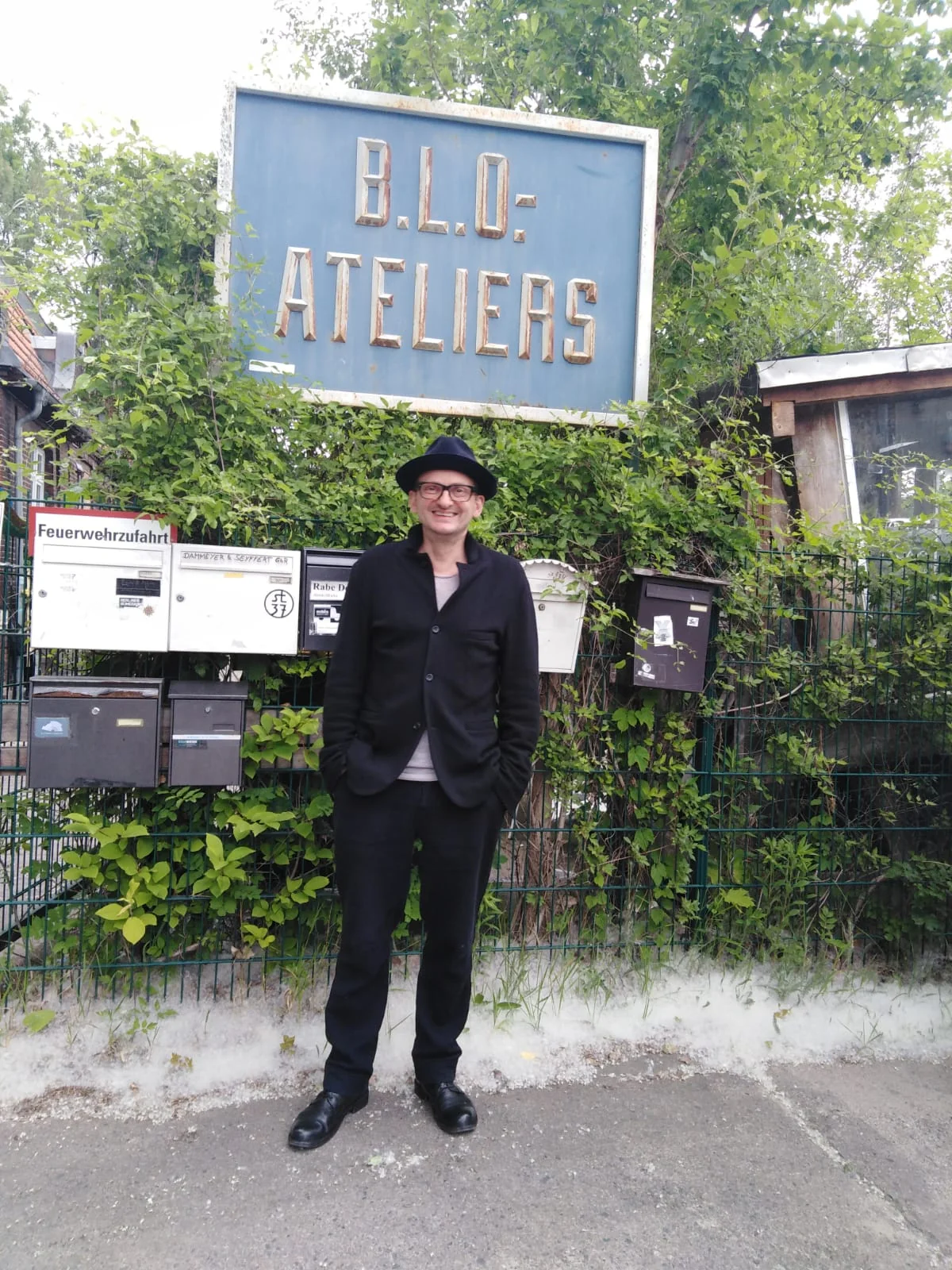
Image from Wikipedia
Image from Wikipedia
Milan Peschel – Character Actor, Director, Narrator: An Artist Biography with Depth
An Actor in Search of Human Truth
Milan Peschel, born on January 17, 1968, in East Berlin, is one of the most prominent faces in German film and theater. His music career may only resonate through radio play work and a vocal musical stage presence, but his artistic development as an actor and director reflects the precision, rhythm, and texture typically associated with music. In his major roles – from the quiet anti-hero to the existential struggler – he combines psychological accuracy, physical presence, and a keen sense for nuances. He has shaped film classics of recent German cinema while remaining true to theater as a laboratory of forms.
As a part of the Berlin cultural scene since the late 1990s, Peschel has collaborated with influential directors, cultivated a passionate stage presence, and developed a signature acting style that merges empathy, timing, and subtlety. His artistic journey took him from the Volksbühne to the camera and back again – always with the intention of portraying characters in complex, fragile, and truthful ways. For his performance in Andreas Dresen’s cancer drama "Halt auf freier Strecke," he was awarded the German Film Award for Best Actor in 2012 – a milestone that solidified his authority in German film art.
Early Years and Artistic Roots
Growing up in the culturally rich environment of East Berlin, Peschel found his way to the theater at an early age. The performative discipline he learned on stage shaped his understanding of composition and scene arrangement. Between text and subtext, pauses and punchlines, he developed his style: dramaturgically astute, physically precise, and vocally nuanced. This early professionalization led him increasingly in the mid-1990s to renowned ensembles and productions that allowed him to expand his repertoire of character profiles – from the poetic loser to the morally ambiguous.
The turn of the millennium marked his establishment in film. Even at this stage, Peschel's ability for what is termed "camera intimacy" became evident: a controlled, microscopic playing style that conveys nuances without losing energy. The relationship between character and mise-en-scène was for him not an abstract construct, but the result of meticulous work on posture, gaze, and inner pulse.
Breakthrough and Awards: "Halt auf freier Strecke"
The significant breakthrough came in 2011/2012 through his collaboration with Andreas Dresen. In "Halt auf freier Strecke," Peschel embodies a father diagnosed with an incurable brain tumor. The role demands reduction and courage for the unsaid – Peschel responds with a radically honest performance. Critics praised his harrowing authenticity, and his acting was honored with the Golden Lola for Best Actor at the German Film Award 2012. The Bavarian Film Award also recognized the production; from then on, Peschel's name became inextricably linked to one of the most significant German film achievements of the decade.
The artistic development during this phase is attributed not only to emotional depth but also to technical mastery: Peschel modulates speech pace, breath, and body tension with the precision of a musician controlling the flow and dynamics of phrases. The result: a character concept that brilliantly blurs the boundaries between documentary immediacy and scenic construction.
Repertoire in Film: From Art House to Mainstream Success
After the award-winning breakthrough, Peschel solidified his position in a broad spectrum of notable German and international productions. Art house gems and festival films were part of his portfolio, alongside audience hits. This range showcases his stylistic adaptability: as a character actor who shapes complex inner worlds, and as an ensemble partner who masters timing, reaction culture, and humorous precision. In historical narratives, contemporary dramas, or dark comedies – Peschel makes characters resonate, allowing them to breathe and seasoning them with fine irony when the tone calls for it.
His filmography reads like a cross-section of German film production from the 2000s and 2010s. Through consistent role selection, careful script reading, and astute coordination with directors and cinematographers, he establishes a signature that holds up even in international comparison. Thus, his profile grew steadily – supported by critical acclaim, industry awards, and an audience that values authenticity over glamour.
Theatrical Work: School of Precision, Motor of Renewal
Alongside film, Peschel remained connected to theater. His work in a permanent ensemble at a large Berlin house shaped his understanding of ensemble culture, the rhythm of an evening, and dramatic arcs. Theater provided him with what is rarely found in film: a long-term process of character development, a dialogue with direction, set design, and costumes, allowing the character to mature through rehearsals. This experience radiates into his film work: Peschel's camera performances carry the weight, discipline, and presence of a seasoned stage actor.
As a director, he is known for precise staging: clear scene architecture, thoughtfully set tempos, and sensitive work on the rhythm of language and physicality. Whether it’s a literary source, contemporary material, or classic tragicomedy – his productions develop atmosphere and thematic sharpness through a fine interplay of text, space, and play culture.
Voice, Language, Radio Play: The “Musical” Actor
Peschel's voice is an instrument: rough, warm, elastic. In radio play productions – often directed by distinguished radio artists – he uses timbre, articulation, and pauses as dramatic tools. This work sharpened his sensitivity to auditory dramaturgy, which remains unmistakable in film and theater. He phrases sentences like melodic arcs, emphasizes consonants as rhythmic accents, and gives quieter passages space for subtext to become audible. Thus, he creates the magnetic effect that characterizes his performance: intimate, attentive, compelling.
Even in readings and literary formats, Peschel impresses with precise text handling. He conceives language as music – not ornamental, but structural. This gives even small roles weight and transforms monologues into compact compositions with clear dynamics.
Current Projects and Recent Works
Between 2024 and 2026, Peschel will continue his stage and film work. In the 2024/25 season, he will direct productions that play with genre and style elements while seeking to connect crime tropes, everyday observations, and subtle comedy. For 2025/26, a new project signals the continuation of his directorial signature – as narrative theater with a clear pulse, humorous empiricism, and empathetic character development. Such productions showcase his role as an artistic motor: balancing ensemble leadership, rhythm work, and scenic precision.
Alongside, he remains visible in film and series formats. Peschel does not seek repetition but variations: characters with edges and nuances exploring moral gray areas. Whether as a tragicomical father, an ambiguous authority, or a quiet observer – he remains an actor who intensifies atmospheres and grounds stories in humanity.
Discography? Filmography! Works, Impact, Reception
Although classic discography entries are inherently absent for an actor, Peschel’s “catalog of works” in film has set benchmarks. Critics appreciate his understatement, controlled emotionality, and the depth of his character studies. Audience successes demonstrate that his presence also resonates in popular formats without lowering the expectations. The reception is remarkably unanimous: Peschel belongs to that group of character actors whose name stands for quality – for wise role selection, integral approach, and high ensemble culture.
Awards such as the German Film Award 2012 reinforce his authority. They are not mere trophies but recognition of a performance that the audience takes seriously. In a media landscape that often prioritizes effect, Peschel cultivates the subtle and precise – and thus has a more enduring impact.
Style, Method, Signature
Peschel’s style combines three constants: empathy, economy, rhythm. Empathy, because he never displays characters but seeks their inner motor. Economy, because he reduces gestures, glances, and sentences – everything superfluous falls away. Rhythm, because he intuitively grasps the pacing of a scene and builds tension through pauses, accentuation, and tempo changes. This “musical” precision makes his appearances recognizable without ever appearing schematic.
Methodologically, he works closely with the text and in close coordination with direction and partners. Improvisational openness meets structural clarity – a tension field that keeps his characters alive. In production, Peschel thinks beyond the character: he understands arrangement, light, camera perspective, and soundscape as part of the narrative composition, thus crafting dense, breathing scenes.
Cultural Context and Influence
In recent German film history, Peschel marks the type of integral character actor who bridges aesthetic ambition and audience success. His roles illustrate how closely tragedy and humor are linked and how much relevance lies in unspectacular life moments. In this, he stands in the tradition of those performers who view everyday realism not as reduction but as the art of precise observation.
His influence is also evident in ensemble processes: younger colleagues refer to his intelligent partnership that carries scenes and opens up spaces. At festivals and during award discussions, his name serves as a reference point for authentic acting – an authority fueled by experience, expertise, and a consistent dedication to craft.
Conclusion: Why Experience Milan Peschel?
Milan Peschel makes the fragility of the human experience visible – without sentimentality, with great affection. He liberates characters from clichés, listens to nuances, and composes scenes like finely tuned chamber pieces. Those who follow his work on stage or in film experience artistic development as an ongoing exploration of humanity. This seriousness, combined with humor and charm, makes him one of the most fascinating actors and directors of his generation.
A call to all lovers of acting: Experience Milan Peschel live whenever the opportunity arises. His stage evenings possess that immediacy that can only be found in theater, and his film roles leave traces – as precise, human, and sonorous memories.
Official Channels of Milan Peschel:
- Instagram: No official profile found
- Facebook: No official profile found
- YouTube: No official profile found
- Spotify: No official profile found
- TikTok: No official profile found
Sources:
- Wikipedia – Milan Peschel
- German Film Award – Award Winners 2012
- German Film Award – Halt auf freier Strecke (Film Page)
- ZEIT ONLINE – Bavarian Film Award 2012, Report
- Süddeutsche Zeitung – German Film Award 2012, Report
- RambaZamba Theater – Direction & Team: Milan Peschel (Productions 2024/25, 2025/26)
- filmfriend – Person Profile: Milan Peschel
- Majestic – Press Kit "Huck Finn" (Biographical Information)
- Wikipedia (EN) – Milan Peschel
- Okofilm – Press Kit "My Brother My Love" (Short Biography with Awards)
Upcoming Events
I Will Love You