
Matthias Glasner
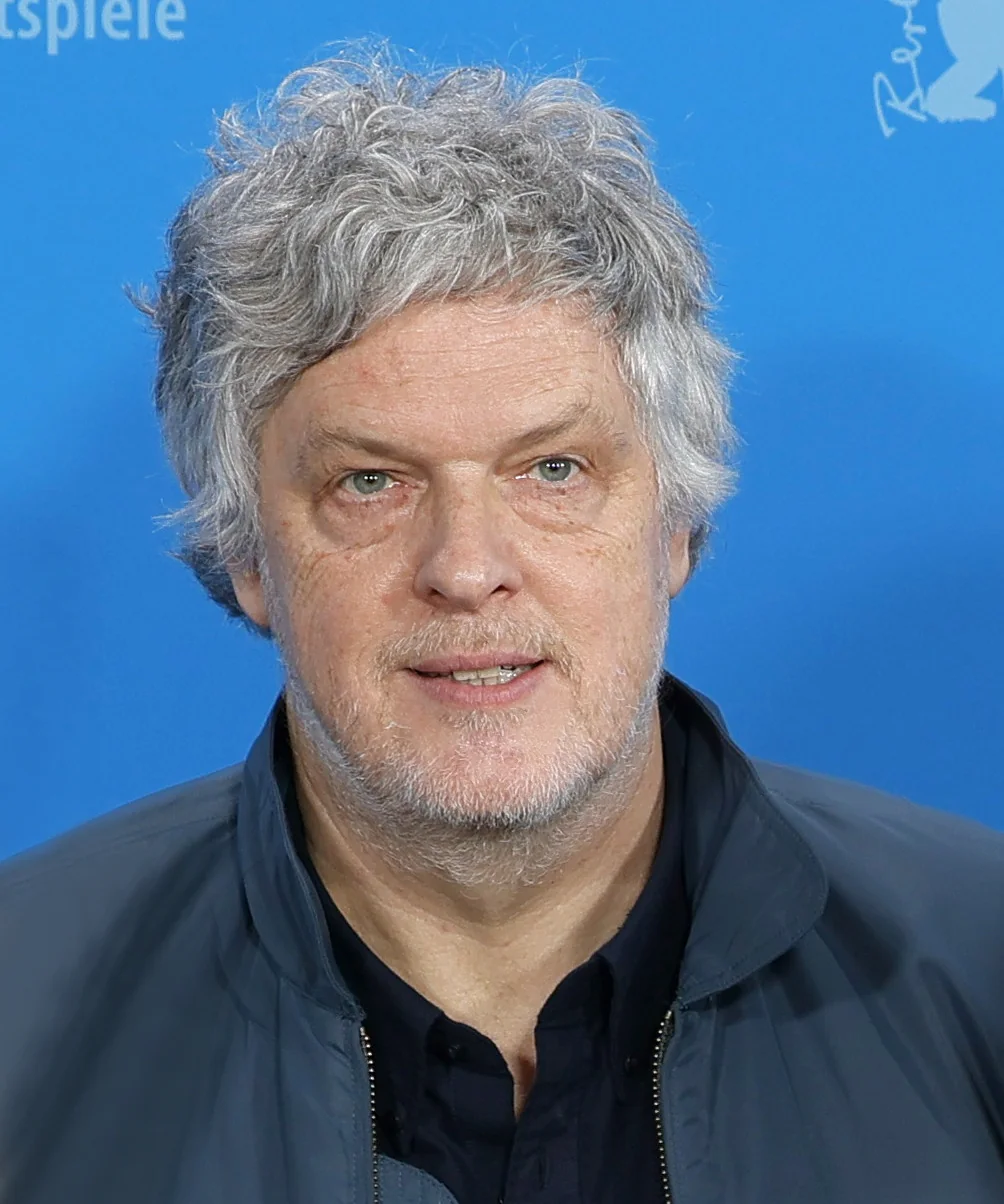
Image from Wikipedia
Image from Wikipedia
Matthias Glasner – Film Director, Author, Producer, and Musician
A Director Who Transforms Pain into Poetry – The Life and Work Story of Matthias Glasner
Matthias Glasner, born on January 20, 1965, in Hamburg, has influenced the German-language film culture with uncompromising material, precise character development, and a consistent authorial style. His music career, early work at the Hamburg State Opera and as a projectionist, the founding of his own production companies, and ultimately, his international breakthrough as a director build the coordinates of an artistic development that revolves consistently around responsibility, guilt, forgiveness, and human fragility. As an author-director with a strong stage presence behind the camera, he combines dramatic rigor, stylistic clarity, and a special sensitivity for acting – qualities that anchor his work in the history of European cinema.
Glasner is considered a representative of author cinema that does not seek to provoke for the sake of provocation but instead explores radical emotional truths through composition, arrangement, and precise production. Since at least Der freie Wille (2006) and Gnade (2012), his name has stood for films that fuel the discourse on morality and empathy just as much as they captivate cinematically. With Sterben (2024), he finally achieved a milestone that consolidates his oeuvre and carries it into the present.
Biographical Beginnings: From Hamburg to the World
Growing up in Hamburg, Glasner gained practical experience in the opera business and in cinema at an early age. This proximity to music, stage, and projection sharpened his sense of rhythm, timing, and visual dramaturgy – elements that later influenced his directorial work. Before he fully dedicated himself to film, he also worked as a musician in the band “homesweethome” and founded Jack Film & Music Production in 1993. This dual engagement in film and music explains why his productions often have a pronounced sonic architecture: music for Glasner is not mere accompaniment but an integral part of the scenic breath.
He gained an international perspective through stays abroad, including in Russia and Texas. The resulting aesthetic openness is palpable in his work: characters often find themselves in boundary areas where culture, morality, and intimacy are renegotiated. Even early short films and debut works indicated that Glasner does not shy away from conflicts but rather shapes them with formal concentration – an attitude that made him unmistakable early on in the German directing landscape.
Foundations, Partnerships, and the School of Producing
In 1996, Glasner co-founded Schwarzweiss Filmproduktion with his long-time companion Jürgen Vogel. This partnership acted like a laboratory for his signature style: material development, production, rehearsal work, and editing could take place in close creative feedback. Already in Sexy Sadie (1996), the uncompromising character work that made Glasner well-known crystallized. He understood production not as administration but as creative enabling – a fundamental attitude that later supported him in ambitious projects like Sterben (2024).
The ability to balance production reality and artistic ambition became a hallmark. This allowed Glasner to realize projects that are unusual in their thematic impact while also relying on precision of execution: casting, camera, sound track, color dramaturgy, and the textures of spaces work together compositionally. This holistic production culture ensures that his films have a distinctive sound.
Career Path: From Debut to Canon
With Die Mediocren (1995) and Sexy Sadie (1996), Glasner established himself as a chronicler of existential borderline cases. Fandango – Members Only (2000) expanded the palette to include pop culture references and pointed observations of urban environments. By the time of Der freie Wille (2006) – awarded at the Berlinale with the Gilde deutscher Filmkunsttheater prize – he showcased his mastery: a film about guilt, instinct, and the (im)possibility of reintegration, told with dramatic audacity and ethical precision.
Gnade (2012), Glasner’s second invitation to the Berlinale competition, relocates the moral experiment to a polar landscape whose cold, clear images reflect the internal tensions of the characters. In television and streaming, he made striking contributions: he directed episodes of KDD – Kriminaldauerdienst, Tatort, Polizeiruf 110 and was responsible for four episodes of the elaborate series Das Boot in 2020. He also worked as a producer, for example, on Die kommenden Tage (2010), showcasing a keen sense for material developments that combine relevance and cinematic energy.
Sterben (2024): Composition of a Family Concert
With Sterben (2024), Glasner’s thematic universe culminates: a family drama that narrates loss, repression, love, and responsibility as a polyphonic weave – structured like a symphony in several movements. The casting and rehearsal work generated an authenticity that unfolds its emotional impact in long, breathing takes. The composition of the scenes intertwines dialogue, sharply drawn character arcs, and a sound track that enhances internal tensions rather than illustrating them.
The response was accordingly: world premiere in competition at the 74th Berlin International Film Festival on February 16, 2024; Silver Bear for Best Screenplay in the same year. At the German Film Awards in early May 2024, Sterben received the Golden Lola for Best Feature Film – a rare double success that underscores the authority of Glasner’s signature and firmly establishes him in the forefront of German-language author cinema.
Style and Signature: Between Moral Drama and Formal Rigor
Glasner’s films connect a clear ethical question with a mise-en-scène that organizes space and time precisely. Musical terms like phrasing, crescendo, or dissonance describe how he rhythms scenes: dialogues build up like motifs, pauses and lines of sight act as fermatas, and surprising emotional outbursts serve as dynamic accents. His visual design relies on precise horizon lines, controlled depth of field, and a color dramaturgy that makes psychological states visible.
In the composition of his screenplays, he often works polyphonically: parallel narrative strands, reflections, and echo effects allow motifs to reappear, yet each time in a different tonal quality. This writing and directing style creates emotional resonance spaces that only fully reveal themselves in the echo. Critics and audiences perceive this as a rare combination of intellectual precision and existential weight.
Collaboration with Actors
Recurring collaborations – foremost with Jürgen Vogel – shape Glasner’s discography of character portrayals: characters are not “played,” but explored. In Sterben, Corinna Harfouch, Lars Eidinger, and Lilith Stangenberg carry this exploratory work, allowing ambivalence and not smoothing over breaks. Glasner creates working spaces on set where willingness to take risks, honesty, and sensitive listening are part of the creative standard – a reason why his films often gather outstanding ensemble performances.
His directing style demands precision in nuances: the glance, the millimeter in the cut, the whisper offscreen – everything is part of an overall score. This artistic development is the result of years of practice and a trust in the joint search, not in quick punchlines. Thus, performances are created that are regularly recognized as outstanding in trade publications.
Television, Streaming, and Long Tension Arcs
In serial storytelling, Glasner also demonstrates dramatic sovereignty. In Das Boot (Season 2, 2020) and in TV works like KDD – Kriminaldauerdienst, Tatort: Die Ballade von Cenk und Valerie, and Polizeiruf 110: Demokratie stirbt in Finsternis, he develops tension arcs that remain scenically dense and morally charged. Instead of pure cliffhanger economics, he relies on atmospheric density, psychological accuracy, and a sound track that drives the drama.
Series allow him to negotiate themes such as loyalty, betrayal, and guilt in longer arcs. This further sharpens his artistic identity: the interplay of character work, visual composition, and musical texture, which extends beyond cinema and marks his authorship even in the streaming age.
Discography, Music, and Sound Aesthetics
Although Glasner primarily appears as a director, author, and producer, his musical origins are unmistakable. His work as a musician in the band “homesweethome” and the connection of film and music production in his early company foundation have shaped his understanding of rhythm, leitmotifs, and sonic dramaturgy. This experience flows into the production of his films: scores are not superimposed but understood as a counterpoint or reflection of the inner movement of the scenes.
In reception, it is often highlighted how carefully arranged his films are: the sound mixing supports the psychological detail, musical themes set accents without dominating the images, and silence is used as a consciously composed element. Thus, a cinematic soundscape is created that is as precisely organized as the visual composition.
Cultural Influence and Awards
Glasner’s work has significantly fueled the discussion about guilt, responsibility, and humanity in German-language cinema. Der freie Wille (Berlinale Prize of the Gilde deutscher Filmkunsttheater, 2006) remains a reference for the burdens and possibilities of moral storytelling. Gnade continued this examination in 2012 at the Berlinale competition, showing forgiveness not as a platitude but as hard, existential work. With Sterben, Glasner reached a culmination point in 2024: Silver Bear for Best Screenplay at the Berlinale and the Golden Lola for Best Feature Film at the German Film Awards.
These recognitions mark not only individual triumphs but also confirm the authority of his approach: uncompromising thematic choices, finely calibrated dramaturgy, a collaborative production culture, and exceptional ensemble leadership. For the history of German-language film, this is an important impulse that secures the claim of author cinema in international comparison.
Conclusion: Why Experience Matthias Glasner Now?
Because his films move without manipulating. Because his artistic development shows how uncompromising author cinema can be told with great empathy. And because Sterben possesses the energy of a late masterpiece: formally sovereign, emotionally precise, thematically universal. Those who wish to understand what contemporary German-language cinema is capable of should watch Glasner’s works – in theaters, on streaming platforms, and above all where his direction unfolds its full power: in a darkened hall, on the big screen.
His musicality as a former band musician sharpens the dramatic sound of his films; his experience as a producer strengthens attention to detail. This combination of experience, expertise, authority, and trustworthiness makes him one of the most reliable voices in contemporary cinema. Recommendation: view Sterben in the context of his earlier works – from Die Mediocren to Sexy Sadie, Der freie Wille, and Gnade – to hear and see the inner composition of his entire oeuvre.
Official Channels of Matthias Glasner:
- Instagram: No official profile found
- Facebook: No official profile found
- YouTube: No official profile found
- Spotify: No official profile found
- TikTok: No official profile found
Sources:
- Wikipedia – Matthias Glasner
- filmportal.de – Matthias Glasner (Biography, Filmography, Production Background)
- Berlinale 2006 – Der freie Wille (Archive PDF, Context)
- DIE ZEIT – Silver Bear Screenplay Award for Sterben (February 24, 2024)
- Deutschlandfunk – Golden Lola for Sterben (May 6, 2024)
- FAZ – Berlinale: Questions to Matthias Glasner (2024)
- ZDF Press Portal – Silver Bear for Sterben (Berlinale 2024)
- fernsehserien.de – Filmography (Selection and TV Works)
- Wikipedia: Image and text source