
Mary Wigman
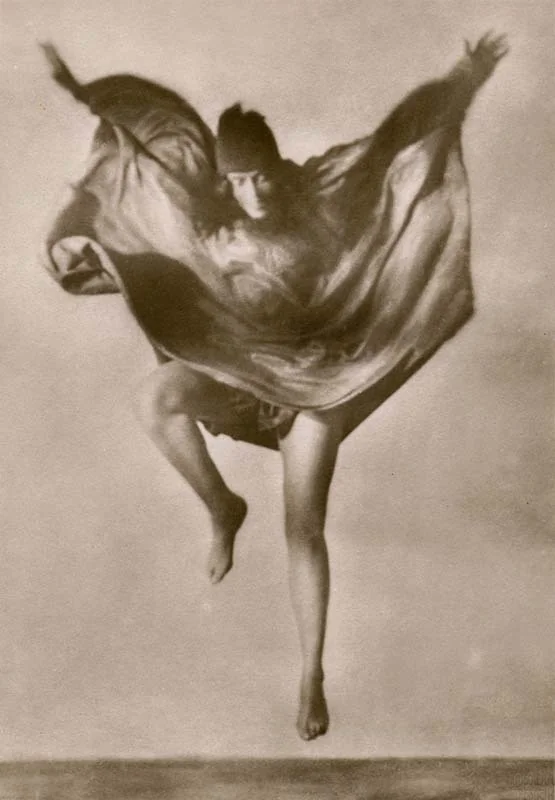
Image from Wikipedia
Image from Wikipedia
Mary Wigman – Icon of Expressionist Dance and Architect of "New German Dance"
How a visionary dancer with stage presence, artistic development, and pedagogical brilliance renewed dance in the 20th century
Mary Wigman, born on November 13, 1886, in Hanover and died on September 18, 1973, in West Berlin, is one of the most influential figures in modern dance. As a pioneer of expressionist dance, she combined body, space, and rhythm into a radically new language of dance that broke the conventions of classical ballet and significantly influenced the music culture of her era. Her artistic career as a performer includes solos, group works, opera choreography, and an impressive teaching practice: From Dresden, she trained generations of dancers and shaped the international dance scene. Her list of students – including Harald Kreutzberg, Yvonne Georgi, Margarethe Wallmann, and Hanya Holm – underscores her authority as a teacher, choreographer, and style setter.
Early Years, Education, and Artistic Spark
Wigman's artistic development began with influences from Émile Jaques-Dalcroze and rhythmic gymnastics in Dresden-Hellerau. The work with Rudolf von Laban was crucial: At Monte Verità and in his movement and space studies, she found the vocabulary to free dance from predetermined stepping patterns. This "sovereignty of dance" – independence from prescribed music, the primacy of breath, impulse, weight, and counterforce – became the foundation of her aesthetic. Improvisation, polyrhythmic structures, and an inner-driven phrasing formed the framework of her compositions, often accentuated only by drums or gongs.
Debut, "Hexentanz," and Breakthrough as a Soloist
In February 1914, Wigman presented her own solos in Munich, including an early version of "Hexentanz" – the iconic solo that she developed further throughout the 1910s and 1920s. The ascetic, gravity-bound movement style characterized by angular gestures, dark expressiveness, and the conscious play with silence and percussion created a magnetic stage presence. After World War I, she entered her true triumph phase: European guest performances, enthusiastic reviews, and a growing following of students made her a focal point of modern dance in Central Europe. Expressionist dance – received in international discourse as “German modern dance” – acquired a distinctive aesthetic core through Wigman's solo evenings.
The Wigman School in Dresden: A Laboratory for Chamber Dance and Movement Choir
In 1920, she opened a school for modern dance on Bautzner Straße in Dresden. This institution produced not only outstanding soloists but also served as a laboratory for composition, arrangement, and rehearsal methodologies: from chamber music-inspired small group formats to large-scale group studies. The school received state recognition in 1924, followed by the expansion of facilities with hall constructions in 1927. Wigman's chamber dance group thrilled audiences in Germany and the artistic metropolises of Europe; simultaneous branch schools were established in Munich and Berlin. Her teaching method combined spatial design, tension management, phrasing, and form awareness – a professionalized technique beyond classical vocabulary, trained in breath, weight, rhythm, and the plastic line in space.
Student Network and International Impact
Among Wigman's most renowned students are Harald Kreutzberg and Yvonne Georgi, who shaped the school's repertoire with their virtuosity and dramatic presence. Hanya Holm systematized Wigman's approach and brought it to a New York branch school starting in 1931; this lineage grew into one of the cornerstones of American modern dance, influencing Broadway productions and independent pedagogy. Margarethe (Margherita) Wallmann, Gret Palucca, and other artists from Wigman's circle expanded the spectrum from solo performances to grand opera choreography – a network that carried aesthetic ideas far beyond Germany.
America Tours, New York Debut, and Reception
Between 1930 and 1933, Wigman toured the USA annually. The New York debut became a focal point for widespread reception: Critics recognized in her solos a radical alternative to classical dance and revue aesthetics. The Wigman School established by Hanya Holm in New York solidified this institutional impact. In public perception, German modernity was associated with a corporeal depth that understood movement as an existential statement – beyond decorative virtuosity.
1933 to 1945: Turning Point, Pressure to Adapt, and Withdrawal
The political upheavals beginning in 1933 placed Wigman's work in Germany under severe pressure. Restrictions, cultural political constraints, and interventions also affected the educational operations. The situation led to closures, restructuring, and the artist's withdrawal from the public stage. Despite this turning point, her pedagogical and artistic influence remained tangible; many students carried her ideas into other contexts, including theater, opera, and – in exile – international dance pedagogy.
Post-War Period: Opera, Ballet, and the Language of Dance
After 1945, Wigman returned to the cultural scene and established herself as a director and choreographer in opera houses. Her productions of works such as Gluck's "Orpheus and Eurydice" and choreographic contributions to Carl Orff's "Catulli Carmina" and "Carmina Burana" demonstrate her dramaturgical precision and sense of musical architecture. In 1949, she founded a new dance studio in Berlin-Dahlem, linked to a dance pedagogical seminar. Her memoir "The Language of Dance" (1963) consolidates experience, methodology, and aesthetic reflection – a key text of modernity that continues to be referenced in dance science and education.
Repertoire, Works Overview, and Aesthetic Profile
Wigman's discography in the narrow sense does not exist as a dancer; her "catalog of works" includes solo cycles, group pieces, and music-theatrical works. Formative solos include "Hexentanz," "Dances of the Night," "Bright Vibrations," "Swaying Landscape," "Evening Dances," and "The Sacrifice." Among the group dance works, "Dance of the Dead," "Spatial Songs," "The Celebration," "Women’s Dances," "Choral Studies," and "Seven Dances of Life" stand out. Her choreographic handwriting relies on a sound-oriented movement that translates musical structure into bodily time: offbeat weights, pauses as "resonant silence," polyrhythmic arm-body canonicity, dynamic contrasts between recoil and flow. Thus, composition becomes visible music, and the body itself becomes an orchestral medium.
Style Analysis: From Inner Impulse to Form-Conscious Composition
The essence of her style is the connection between inner necessity and formal rigor. Improvisation serves as a generator of the material, which is condensed into precise arrangements in rehearsal processes. The primacy of breath, earth-connectedness, and weight manifests in bent axes, spiral torso actions, thrusting accents, and abrupt changes of direction. This syntax operates musically without needing music – a reason why many solos are unaccompanied or structured solely by percussion. In performance practice, this reduction creates a high theatrical density and an experiential field in which emotion, gesture, and form merge into an expressive unity.
Cultural Influence, Image Politics, and Intermedial Effects
Wigman's relevance transcended the dance stage. Iconic photographs – such as those by Charlotte Rudolph or Hugo Erfurth – contributed to the image politics of expressionist dance. In the art world, painters and intellectuals reacted to the new corporeality; the cultural-historical contextualization identifies Wigman as a catalyst of a modern aesthetics, whose resonances endure across theater, opera, pedagogy, and international dance research. Her method shaped curricula, studios, and universities; in the USA, the Wigman–Holm lineage formed a foundational pillar of modern dance, influencing choreography, composition, and production on Broadway.
Awards, Institutions, and Legacy
Wigman was honored in Germany with high accolades, including the Grand Cross of the Order of Merit. She was a member of the Academy of Arts and remained active in teaching until her later years. A special role in preserving her legacy is played by the Dresden Villa, where she lived and worked from 1920 to 1942; it became a symbol of education, production, and performance of modern dance. The continuous reception of her solos – not least "Hexentanz" – in collections, reconstructions, and teaching events demonstrates how resilient and timeless her choreographic ideas remain.
Current Reception and Projects (2024–2026)
The Villa Wigman in Dresden has been used for several years as a production site for the free performing arts and is being structurally preserved. In January 2024, the ensemble was granted the status of "Cultural Property of National Significance" – a cultural political signal for the long-term safeguarding of this authentic site of expressionist dance. Meanwhile, research maintains the line of Wigman–Holm–US Modern Dance; international institutions and universities curate archives, teaching materials, and performance documents. Opera houses also commemorate Wigman's contribution to music-dramatic forms through reconstructions and programmatic references, thereby reaffirming her ongoing relevance to the present.
Conclusion: Why Mary Wigman Remains Essential Today
Mary Wigman represents an artistic development that redefined dance as an existential form of expression. Her stage presence, the consistent research work in the rehearsal space, and a pedagogy that strengthens the individual have set aesthetic standards – in composition, arrangement, and production. Those who want to understand the density and immediacy of modern dance encounter a language in Wigman's solos and group works that translates body, space, and time into compelling dramaturgies. Her legacy invites engagement with reconstructed pieces, current interpretations, and vibrant lines of instruction – and to experience expressionist dance anew in today’s performances.
Official Channels of Mary Wigman:
- Instagram: No official profile found
- Facebook: No official profile found
- YouTube: No official profile found
- Spotify: No official profile found
- TikTok: No official profile found
Sources:
- Encyclopaedia Britannica – Mary Wigman (updated March 6, 2026)
- Bavarian State Opera – Biography Mary Wigman
- Wikipedia (de) – Mary Wigman
- Wikipedia (de) – Villa Wigman (Status "Cultural Property of National Significance", 2024)
- University of Washington – Department of Dance: Mary Wigman
- Dance Collection Danse (Canada) – The Wigman School
- Saxon Biography – Hanya Holm (Connections to the Wigman School)
- Historical Portal Essen – Mary Wigman (Short Biography, Stages)
- Wikipedia: Image and text source
Upcoming Events
Dance Your Life – Dance Yourself. Dance Becomes Art (1918–1933) – Part 2: Highlights
Dance Your Life – Dance Yourself
Dance Your Life - Dance Yourself
Dance Your Life - Dance Yourself