
Kit Armstrong
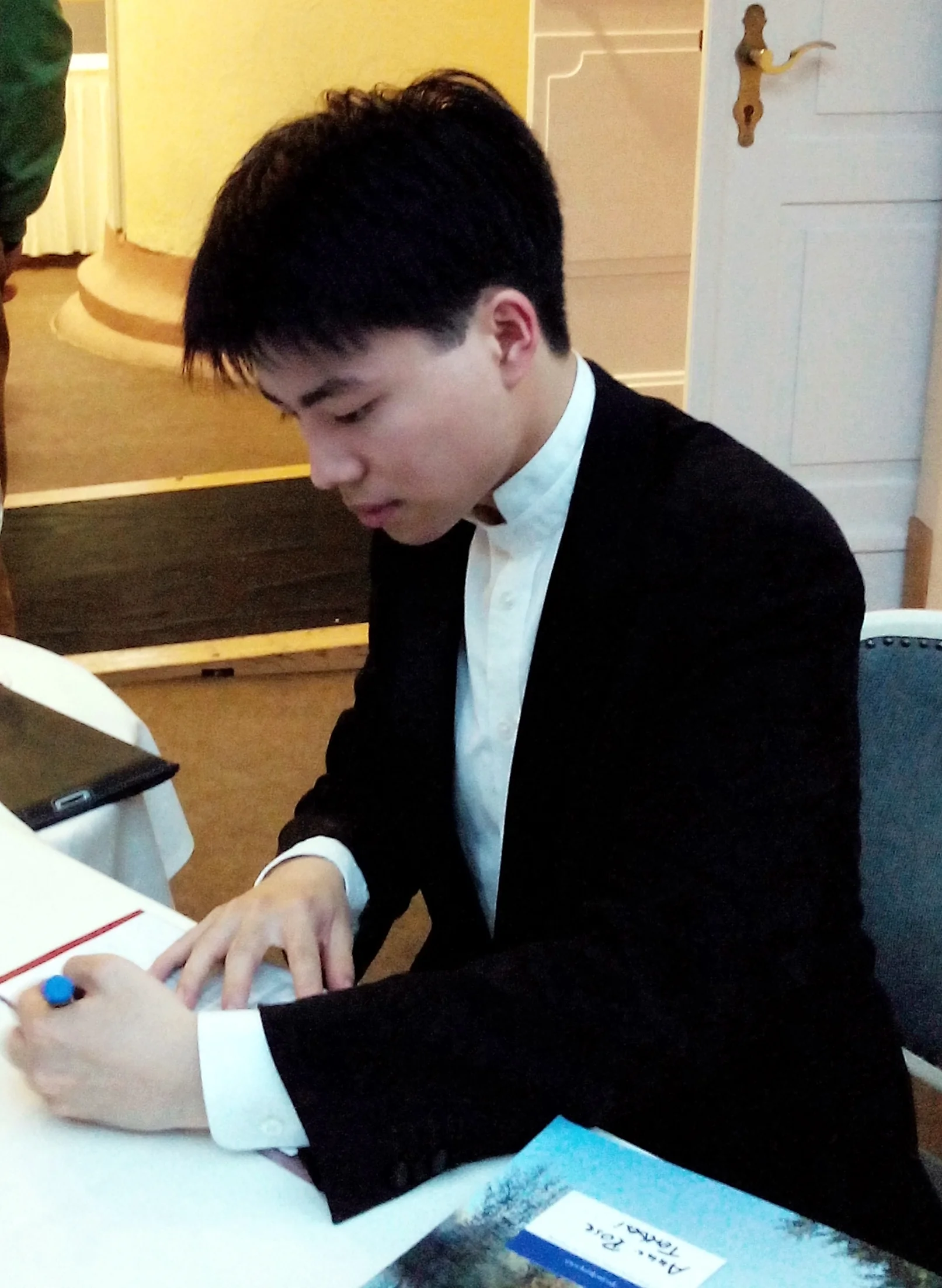
Image from Wikipedia
Image from Wikipedia
Kit Armstrong – Pianist, Organist, Composer: The Visionary Voice of a New Generation of Pianists
From Prodigy to Mature Sound Thinker: Why Kit Armstrong Sets Standards Today
Kit Armstrong, born on March 5, 1992, in Los Angeles, combines virtuosity, scholarship, and artistic development in his musical career, creating a distinctive profile. As a pianist, organist, and composer, he captivates with a stage presence that melds inner calm with passionate intensity. Having been nurtured from an early age and accompanied by the legendary Alfred Brendel since 2005, Armstrong has developed a stylistic sovereignty that engages Early Music, Classical, and Contemporary works in a vibrant dialogue. His repertoire spans from the English virginalists to Mozart—deepened by a discography that ranges from Sony Classical to Deutsche Grammophon and receives high praise in the music press.
Biography: Formative Years Between Science and Music
Growing up in California, Armstrong displayed exceptional talents in mathematics, natural sciences, and languages early on. Concurrently, his fascination with composition grew long before he had access to a piano. This dual talent shaped his artistic development: analytical acumen meets poetic sound imagination. He later studied piano at the Curtis Institute of Music under Eleanor Sokoloff and Claude Frank, while also pursuing academic studies in chemistry and mathematics. The integration of rigorous score study, interdisciplinary curiosity, and experienced performance practice continues to shape his interpretative approach to this day.
Mentor Alfred Brendel: School of Listening, School of Form
Alfred Brendel recognized Armstrong's exceptional talents early on and became his teacher and mentor. This artistic partnership sharpened Armstrong's awareness of structure, articulation, and sonic economy—qualities that influence both his composition and interpretation. From Brendel's school of concentrated listening emerged an interpretive signature that does not seek external effect but reveals the inner logic of the works. For years, press reports have acknowledged this combination of musical maturity and youthful audacity—a combination that underpins Armstrong's authority on international stages.
Repertoire and Style: From Byrd and Bull to Mozart—Historically Informed, Played with Contemporary Awareness
Armstrong's artistic development is closely linked to the rediscovery of Elizabethan piano music on the modern concert grand. His exploration of William Byrd and John Bull demonstrates how the sonic visions of the Renaissance and Early Baroque can breathe contemporarily on the piano. Analyzing the style of his recordings reveals a balance of textural transparency, contrapuntal precision, and color shading. At the same time, he presents Mozart with chamber-music clarity, rhythmic agility, and expressive legato—qualities that have made his recordings with violinist Renaud Capuçon reference recordings for the younger generation.
Discography: Curated Sound Worlds and Groundbreaking Projects
Armstrong's discography documents a clear artistic line. Following early releases on Sony (including "Bach, Ligeti, Armstrong," 2013, as well as a Liszt solo program in 2015), the double album "William Byrd · John Bull – The Visionaries of Piano Music" (Deutsche Grammophon, 2021) marked a discographic turning point. Critics praised his inner familiarity with the virginalists, the rhythmic elasticity, the calculated rubato, and the intelligent pedaling that allows polyphonic lines to shine without denying the sonic gravity of the modern piano. In 2023, a four-CD Mozart project with Renaud Capuçon (Sonatas for Violin and Piano) followed, documenting the partnership of the two artists and recognized in the specialized press as a lucid, chamber-musically balanced reference.
Composition, Arrangement, Production: Listening to Forms—Building Forms
In addition to his career as a pianist, Armstrong is establishing himself as a composer with works that connect counterpoint, thematic transformation, and architectural drama. Commissioned works from prestigious institutions and Edition Peters as the publisher of his compositions attest to the professional grounding of his creations. In his programs, his own pieces do not stand alone but exist in dialogue with historically significant works—a curatorial approach that organically connects his discography and live programs. The productions are characterized by a clear, unobtrusive idealism of sound, where articulation and voice leading take precedence.
Stage Presence: Chamber Music Partnerships and Song Recitals
Armstrong's stage presence combines technical poise with a fine camaraderie in chamber music. Song recitals with renowned singers and chamber music collaborations demonstrate the cultural-historical breadth of his programming. In recitals, he spans the range from early Baroque ornamentation to classical sonata rhetoric—always with an ear for sound balance, phrasing, and formal economy. This experience in ensemble also shapes his solo performances: the voice of the piano remains singing, dialogic, and breathing.
Artistic Space in Hirson: A Church Becomes a Sound Laboratory
A distinctive element of his artistic identity is the "Artistic Space Kit Armstrong" in Hirson (France), the repurposed church Sainte-Thérèse-de-l’Enfant-Jésus. There, Armstrong curates his own festivals and thematic concert cycles that make music history sensibly experienceable. The space acts as a cultural laboratory, where he brings together friends from international musical life—a place that embodies his artistic development. The programs connect rarely heard works, solo recitals, chamber music, and occasionally orchestral encounters into vibrant narratives about eras and styles.
Current Projects (2024–2026): New Concert Series and International Appearances
In the concert seasons of 2024/25 and 2025/26, Armstrong will deepen his international schedule with prominent recital series (including in Paris) while also making his Hirson Forum a focal point for thematic cycles. The Mozart recordings with Renaud Capuçon (2023) will have thematic follow-ups, such as in sequences of works that relate Baroque figurative speech to classical sonata principles. Further recitals in prominent venues are announced for 2026, with the tour calendar indicating targeted expansions toward Asia and central European hubs. In summary, Armstrong continues his curatorial line: historically focused programs, conceived soundly in the modern context.
Critical Reception: Precision, Imagination, and Integrity
The music press attests to Armstrong's exceptional integrity in dealing with score and sound. Reviews of "The Visionaries of Piano Music" highlight the rhythmically breathing articulation, contrapuntal clarity, and dramatic condensation. The Mozart project with Capuçon has been praised for its chamber-like naturalness and relaxed yet expressive sense of tempo. Armstrong's authority is grounded, not least, in a connection between technique and discernment: it is not the effect but the evidence of the form that matters. This stance makes him relevant for both connoisseurs and curious audiences alike.
Historical Context of Music: The Scholar at the Piano
Armstrong belongs to a lineage of pianistic thinking that argues from the understanding of the works. His approach to Byrd and Bull is tied to historically informed practice without denying the modern piano. Technical details—such as nuanced staccatos, microscopic tempo modulations, and pedal-light transparency—lead to a sonic grammar that clearly reveals polyphonic layers. In his performance of Mozart, a balance-conscious phrasing consciously builds the rhetorical tension of the form parts. Armstrong's work is thus not only interpretation but also a mediation of music history.
Voices of Fans
The reactions of fans clearly show: Kit Armstrong captivates people worldwide. A YouTube comment says it succinctly: "Rarely have I heard such clear-structured yet touching interpretations of Byrd and Bull – great art." Another listener writes: "Thinking of Mozart in such a chamber-musical way makes these sonatas timelessly fresh." And a classical music lover sums up: "Few pianists connect analytical precision and warm sound so naturally—more of this, please!"
Conclusion: Why Kit Armstrong is Indispensable Today
Kit Armstrong is compelling because he consistently understands artistic development as a research practice. His discography showcases curated projects with clear theses, and his stage presence connects technical sovereignty with intellectual openness. Anyone who experiences live how he makes textural nuances audible understands: Here is a musician who does not simply manage tradition but brings it to new life. Recommendation: Experience Armstrong in recital—best in a program that pairs Byrd/Bull with Mozart or Bach. There, his artistic vision unfolds in full depth.
Official Channels of Kit Armstrong:
- Instagram: No official profile found
- Facebook: No official profile found
- YouTube: https://youtube.com/channel/UC3AAWSpquf9yuHOn5ZZ_JgA
- Spotify: No official profile found
- TikTok: No official profile found
Sources:
- Kit Armstrong – Official Website
- Deutsche Grammophon – Artist Biography
- Deutsche Grammophon – William Byrd · John Bull: The Visionaries of Piano Music (2021)
- Deutsche Grammophon – Mozart: Sonatas for Violin and Piano (Capuçon/Armstrong, 2023)
- The Guardian – Alfred Brendel on Kit Armstrong (2011)
- C. Bechstein – Pianist Profile Kit Armstrong
- Philharmonie Luxembourg – Artist Brochure/Biography (PDF)
- Théâtre des Champs-Élysées – Season 2024/25: Recital by Kit Armstrong
- Ardennes Thiérache – 9th Musical Spring of Kit Armstrong (Hirson)
- Operabase – Kit Armstrong: Piano Recital (2026)
- Wikipedia (en) – Kit Armstrong
- Wikipedia (de) – Kit Armstrong
Upcoming Events
Creative Picture Book Cinema: Armstrong – the Adventurous Journey of a Mouse to the Moon
Piano Festival Ruhr: Kit Armstrong
Piano Evening with Katharina Thalbach and Kit Armstrong
Piano Matinee with Kit Armstrong
Kit Armstrong & Le Concert Olympique I
Beethovenfest 2026: Kit Armstrong & Le Concert Olympique I
Kit Armstrong & Le Concert Olympique III
Kit Armstrong & Le Concert Olympique II
Beethovenfest 2026: Kit Armstrong & Le Concert Olympique II