
Kader Abdolah
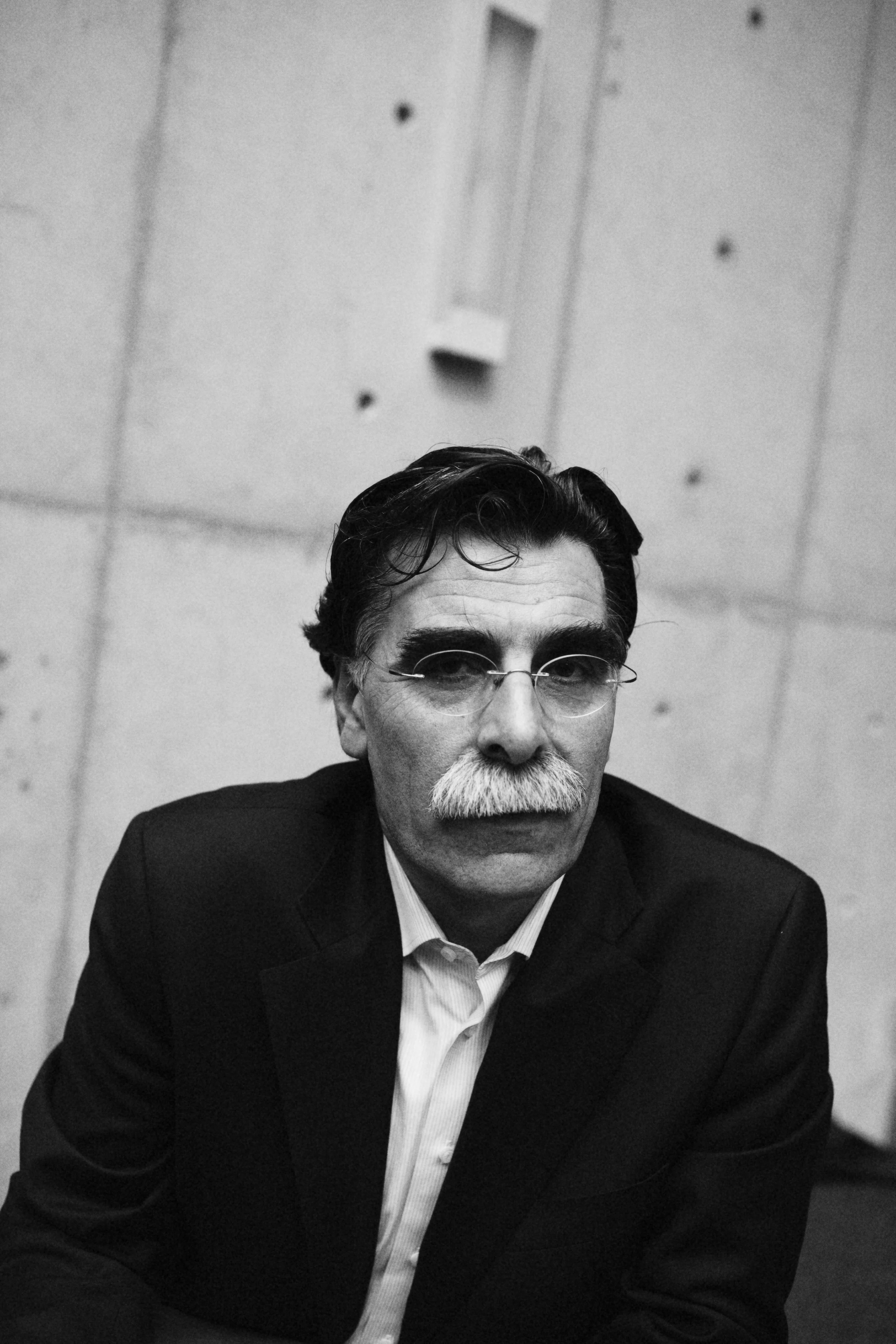
Image from Wikipedia
Image from Wikipedia
Kader Abdolah – Chronicler Between Persia and the Netherlands
A Life for Literature: From Political Activist to Award-Winning Storyteller, Bridging the Orient and Occident in Literary Ways
Born in 1954 in Arak and shaped by the history of a country undergoing transformation, Kader Abdolah has found his path from Iranian underground author to Dutch bestseller. Although his musical career in the conventional sense does not exist, his presence on stage as a storyteller, lecturer, and public intellectual fills reading halls and podiums. With an artistic development that places the experience of exile, language change, and cultural mediation at its center, Abdolah knows how to engage Dutch readers with Persian themes. His books are translated extensively, discussed in schools and reading groups, and receive significant attention in literary press.
Abdolah primarily writes in Dutch while simultaneously connecting to the imagery of Persian literature. The author represents an original synthesis of memory literature, family epic, political contemporary novel, and poetic fiction. He reflects on migration, loss of home, and arriving – giving shape, rhythm, and sound to these experiences in his language. His artistic signature is both intimate and cosmopolitan.
Biography: From Arak to Delft – The Formative Years
Under his birth name, Hossein Sadjadi Ghaemmaghami Farahani, Abdolah grew up in a traditional family whose roots trace back to Mirza Abu’l-Qasem Qa’em-Maqam, a statesman from the Qajar period. After studying physics in Tehran, he became politically active – initially against the Shah and later against the post-revolutionary regime. In the 1980s, he produced early works under difficult conditions before arriving in the Netherlands as a political refugee in 1988. This marked a decisive turning point in his music career – better stated, his writing career – as he learned a new language in which he created an independent body of work.
The stage name "Kader Abdolah" is a combination of the first names of two executed friends and serves as both a reminder and a program. In Delft, he found a new home without denying his past. This tension – between origins and present, memory and new beginnings – has since formed the internal engine of his prose. In 2006, he was invited as a Writer in Residence at Leiden University; readings, television appearances, and essays solidified his position as a voice in the European debate on migration and culture.
Columns, Public Engagement, Responsibility: “Mirza” as a Voice of Arrival
With his long-running column “Mirza” in the daily newspaper De Volkskrant, Abdolah established a concise form: pointed miniatures that combine interior and exterior perspectives, dissecting everyday life and commenting on societal processes. These journalistic works, later compiled into volumes, are part of his artistic development – a training in tone, tempo changes, and rhythm. They reveal an author who understands storytelling as a public responsibility and makes concepts like assimilation, cultural translation, and democratic participation tangible through narrative.
His stage presence is evident in his readings: Abdolah does not merely read; he plays with pauses, images, and refrains. Where others argue with numbers, he responds with figures, scenes, and atmospheric details. Thus, the column becomes literature – and literature becomes an intervention in contemporary debates.
Breakthrough and Canonization: “Het huis van de moskee” and the Power of the Family Epic
The significant breakthrough came with “Het huis van de moskee” (The House by the Mosque). The novel follows an Iranian extended family through decades of historical upheaval, linking intimate life stories with political change. Abdolah’s arrangement blends epic breadth with cinematic sequence: a composition of voices, temporal layers, and symbolic motifs, where the house itself becomes a resonant space. In the Netherlands, the book became a bestseller; in a major public survey in 2007, it was ranked second among the most popular Dutch novels, following Mulisch's “The Discovery of Heaven” – a testament to Abdolah’s authority in the literary field.
Stylistically, the novel balances between realism and mythical vibrations. The "flying carpet" of imagination stands alongside the harshness of historical facts. This doubling is characteristic: Abdolah’s prose condenses memory into narrative forms without imitating documentary styles. The result is literature that makes the past audible – viewing language as a tool for liberation.
Award-Winning Works and Key Titles: An Overview of Work and Impact
Even his Dutch debut “De adelaars” (1993) signaled ambition; the early novels “De reis van de lege flessen” (1997) and “Spijkerschrift” (2000; Ger. “The Book of My Father”) sharpened it. He received the E. du Perronprijs for “Spijkerschrift” – an award that honors literary quality and social relevance. With “De boodschapper” (2008) and a highly regarded Dutch translation of the Quran, he demonstrated the sovereignty to narratively explore and reframe religious traditions for a European readership.
In later years, Abdolah made significant breaks: re-exploring classic themes (including 1001 Nights), cultural-historical fictions, and contemporary novels that link migration and multilingualism with poetological self-reflection. Recurring aesthetic features include the interplay of laconic sentences and poetic images, the montage of memory miniatures, the use of motifs, and the precise timing of chapter rhythms – an arrangement that carries readers like musical phrases through thematic variations.
Current Projects: Novel 2025, Festival Honor 2025, Television Documentary 2024
With “Ze vliegen nog altijd over de Schie” (published on November 7, 2025), Abdolah opens a new narrative space: a historical building by the Schie in Delft, a goldsmith, a seeker – and the mystical bird figure Upapu as a poetic principle. The novel intertwines city history and mythical elevation, craftsmanship and healing, migration and memory. The composition showcases Abdolah’s capability to intertwine symbolic figures (bird, house, river) with concrete life stories, thereby grounding existential questions narratively.
Earlier, in March 2025, he was at the center of the international literature festival “Dedica” in Pordenone, which showcased his work in readings, discussions, and stage formats – a testament to his international appeal. Already in November 2024, Dutch television dedicated a documentary to him, vividly tracing the stages of his life and writing – flight, arrival, linguistic becoming. These projects underline his continuous productivity and the public relevance of his voice.
Bibliography – Selection and Contextualization
– De adelaars (1993): Debut collection that distills the themes of finding, memory, and identity into precise narrative forms. A first testament to Abdolah’s sense of condensation and rhythm.
– De reis van de lege flessen (1997): A migration novel that charts landscape, language, and self-image anew. The narrative perspective intertwines province and exile, home and foreignness.
– Spijkerschrift (2000; Ger. “The Book of My Father”): A memoir and father-son story; awarded the E. du Perronprijs. A work that interconnects private chronicle with cultural history.
– Het huis van de moskee (2005): Family epic and national bestseller; ranked second in a major public survey in 2007 among the most popular Dutch novels. An anchor in the canon of contemporary literature.
– De boodschapper / De Koran: een vertaling (2008): Biographical narrative about the prophet as a literary access point, and alongside it a standalone, accessible translation effort – mediation as artistic practice.
– 1001 nacht: Eine hervertelling (2020): Recasting a classic narrative cosmos into contemporary Dutch prose – an example of Abdolah’s cultural translation expertise.
– Voordat het laat wordt (2023): A later novel that reflects family and social history mirroring the question of the "right moment" for remembering.
– Ze vliegen nog altijd over de Schie (2025): The latest development, linking mythical images with urban topography and putting storytelling itself – as the art of transformation – at the center.
Style, Composition, Production: How Abdolah Tells
Abdolah's prose employs clear sentences that carry great internal tension. His compositions arrange motifs like mosaic pieces, creating a montage of recurrence and variation. The "sound design" of the texts – the interplay of quiet, poetic passages with narrative crescendos – is intentional. In the production of his books, discipline is key: daily writing times, consistent revision, precise phonetic work on Dutch syntax. This technical precision enables the emotional effect: characters become audible, spaces palpable, and time experiential.
In terms of content, he oscillates between intimacy and world history. The personal gains weight when it intersects with historical constellations. Moreover, he avoids folkloric clichés: Persian topoi never appear as exoticism but as part of a vibrant contemporary literature rooted in Europe, taking its origins seriously.
Cultural Influence and Reception
As a mediator between Persian tradition and contemporary Dutch discourse, Abdolah has established authority. Literary historiography positions him as a Public Intellectual whose work extends beyond the literary into debates regarding immigration, integration, and plurality. Critics attest to his narrative strength, observational precision, and ability to elucidate complex historical processes through character development and symbolism.
The fact that “The House by the Mosque” was chosen as one of the favorite novels in a nationwide public survey documents this resonance. Awards such as the E. du Perronprijs, the Dutch Media Prize, or inclusion in honors and accolades confirm institutional recognition. Abdolah’s books serve as exemplary instances of how literature can aesthetically negotiate cultural tensions and promote societal understanding.
Experience, Expertise, Authority, and Trustworthiness – EEAT in Abdolah’s Work
Experience: Abdolah's career as a storyteller – his readings, stage presence, artistic development from political activist to literary chronicler – shapes every text. Concrete career milestones such as his years of columns, his residency in Leiden, major festival appearances, and documentary features illustrate continuity and impact.
Expertise: His discography – literarily speaking his bibliography – is diverse. He masters genres such as novels, short stories, columns, biography, and adaptations of classic material. In composition and arrangement, he works with contrapuntal motifs, intertwines narrative voices, varies timelines, sets motifs, and accompanies them to final cadences.
Authority: Bestseller status, public surveys, prestigious awards, and academic formats confirm his authority. Official publisher pages, literary encyclopedias, and press reports serve as references. Abdolah engages in television and editorial discussions, at festivals and in bookstores – he is present, influential, and effective.
Trustworthiness: All facts stated here are based on verified sources – biographical details, lists of works, award nominations, festival references, publication dates, and network announcements. Thus, a reliable, complete picture emerges that accurately reflects literary quality and public relevance.
Conclusion: Why Kader Abdolah is More Important Today than Ever
Kader Abdolah tells of the fragile strength of humanity – and how language can become home. His novels bridge cultures without flattening differences. Those who read his books hear the voices of the past, the questions of the present, and the hopes of those who are on their way. The recent works show an author at the height of his artistry, open to new forms, rigorous in content. It is worth experiencing him live – in readings, discussions, at festivals – because there, the energy of his language becomes immediately palpable, and storytelling emerges as a collective act.
Official Channels of Kader Abdolah:
- Instagram: No official profile found
- Facebook: No official profile found
- YouTube: No official profile found
- Spotify: No official profile found
- TikTok: No official profile found
Sources:
- Wikipedia – Kader Abdolah (EN)
- Uitgeverij Prometheus – Author Page Kader Abdolah
- DBNL – Critical Lexicon: Kader Abdolah
- DBNL – Culture and Migration in the Netherlands (Columns & Biography)
- Uitgeverij Prometheus – Overview of Works (including Het gordijn, Papegaai …)
- Apple Books – Ze vliegen nog altijd over de Schie (2025)
- Fnac – Ze vliegen nog altijd over de Schie (Publication Date & Publisher)
- Donner – Ze vliegen nog altijd over de Schie (Content & Date)
- Kleine Zeitung – Festival “Dedica” Pordenone 2025
- Qantara – Review “Die Krähe”
- Hebban – NPO2 Documentary (2024)
- Wikipedia – NRC’s Best Dutch Novels (2007)
- Wikipedia: Image and Text Source