
Jost Baum
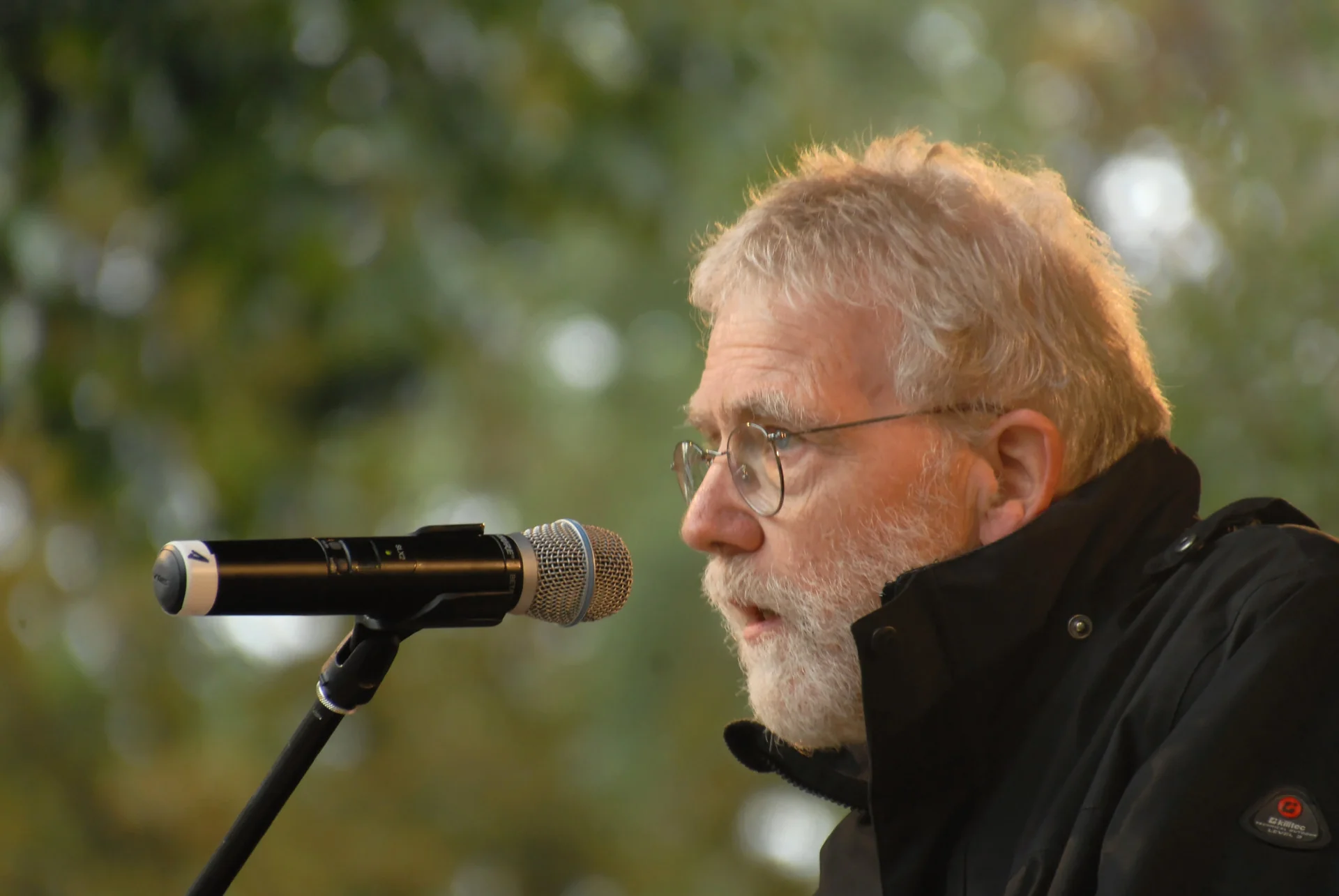
Image from Wikipedia
Image from Wikipedia
Jost Baum – German Crime Author Between the Ruhr Area, France, and Radio Art
Tension with Attitude: How Jost Baum Socially Sharpens and Narratively Renewed the Crime Novel
Jost Baum, born in 1954, is one of the defining voices of the German-speaking crime novel, combining social reality with literary ambition. Hailing from the Bergisches Land and rooted in Wuppertal, he has been leading his readers to crime scenes since the late 1980s, locations that are often closer than one might think: into the streets of the Ruhr area, into urban spaces full of history and present, but also to the art metropolis of Marseille. While he does not have a music career in the traditional sense, his stage presence as a reader, his artistic evolution from editor to author, his radio features, and a music-theater project reflect a focus on the sound of language, rhythm, tempo, and dramaturgy, akin to what one knows from music production. It is this precise "composition" of his texts that makes Baum's crime novels so distinctive and recognizable.
Biography: From Editor to Chronicler of Social Tensions
Baum studied social sciences and technology at the Bergische University Wuppertal and later sociology at the Université de Saint-Étienne. This dual perspective—technically oriented and socially analytical—became the foundation of his artistic development. After working as an editor at a textbook publishing house, as a teacher, and as an educational staff member, he began publishing crime novels. His debut "Computer weinen nicht" (1989)—a title that carries the ambivalence of technology, work, and humanity within its name—immersed readers into a world where crime can be read as a symptom of structural upheavals. Early on, he established the character of local reporter Eddie Jablonski from Bochum, a figure that combines research, social studies, and suspense—a constellation that merges journalistic perspective with literary finesse.
Career Path: Series, Locations, Characters
Baum's musicality lies in his narrative impulse: he arranges chapters like the movements of a suite, varies motifs, and modulates tempos. After his early Ruhr area crime novels, he created the art-lover and painter Commissaire Arnoult, a detective figure set in Marseille who views art theft through which society, politics, and aesthetics can be examined. The stylistic feature remains constant: precise dialogues, investigative momentum, clearly delineated environments. Simultaneously, Baum expanded his spectrum to include children and young adult crime fiction ("Die Feriendetektive") and wrote features and radio plays for broadcasters—contributions where his language is thought of in auditory terms: cuts, transitions, thematic refrains. This practice trains timing and dramaturgy, benefiting his later novels audibly.
Bibliography & Publications: A Selection with Recent Focuses
Baum's discography in a literal sense does not exist; however, his catalog reads like the setlist of a consistent narrator who revisits, varies, and re-instrumentals themes. Central titles include: "Computer weinen nicht" (1989), "68er Spätlese" (1991), "Schrebergarten Blues" (1992), "Sohle Sieben" (1996), and the Provence/Marseille complex concerning art and crime ("Picasso sehen und sterben," 2007). Recent publications showcase his ongoing artistic development: "Palmen an der Ruhr – A Science Fiction Thriller from the Ruhr Area" (2021), "Die Brise des Meeres" (2023), "Geständnisse im Morgengrauen" (2024), and "Die Toten von L'Estaque" (2026). Complementarily, non-fiction books on natural science, technology, and pedagogy have been published—a branch of work that grounds his novels with expertise and lends support to his research.
Current Projects (2024–2026): Retellings, Features, International Expansion
Since 2024, Baum has intensified his presence with new novels and readings. "Geständnisse im Morgengrauen" (Release date March 10, 2024) condenses a central theme of his storytelling: truth, guilt, reconciliation. An English edition ("Confessions at Dawn") will follow in 2025, making his themes accessible internationally. Simultaneously, he updated his work in radio: the SWR2 feature "Die Perle von Allenstein – Heimatsuche in Ostpreußen" (March 2024) marks a continuation of his acoustic narrative practice. "Die Toten von L'Estaque" announced for 2026 further develops the Marseille universe—with art, coast, and crime as a dramaturgical triad.
Style and Technique: Arrangement, Composition, the "Sound" of Prose
Baum's prose operates with musical parameters: he builds rhythms from short, focused scenes; uses pauses purposefully to maintain tension; and arranges motifs like themes in a score. The investigative drive resembles a variation technique, where clues are introduced sequentially, modulated, and polyphonically bundled toward the finale. Compositional features include the blend of journalistic precision and atmospheric density. The "arrangement" of characters—reporters, detectives, art dealers, collectors, border crossers—creates friction, counterpoint, and subtext. Technically, Baum works with clear cuts, a precise sense of timing, and an awareness of urban acoustics: street noise, factory sounds, harbor noises. The soundscape of locations becomes the metronome of the plot.
Places as Resonance Spaces: Ruhr Area, Wuppertal, Marseille
Baum's connection to the Ruhr area is integral to his identity. His novels read as topographies of social transformation—between structural change, migration, worker culture, and new urbanity. Wuppertal is the source and feedback point; Marseille serves as the counterpoint: Mediterranean light, art scenes, museums, the scent of salt and solvents in studios. This duality expands the genre tradition: the "regional crime novel" does not become a folklore format but a movable setting that raises questions about ownership, originality, forgery—and authenticity in general. This creates cultural value: Baum's crime literature addresses ethics and aesthetics in the same breath.
Formats Beyond the Book: Radio, Audio Play, Music Theater
His radio works—ranging from WDR to SWR2—shape Baum's narrative texture. Features on Hanna Reitsch or "Artificial Intelligence" (as early as 1987) document his long-term observation of technological and societal developments. Particularly notable is the music theater "Die Blues Boys in der Bronx" (1995, with music by Ralf Falk): here, textual dramaturgy intersects with musical form, stage and sound. This boundary-crossing enhances his authority as a narrator who thinks about production aesthetics beyond genre boundaries—a quality reflected in his later art-themed crime novels.
Critical Reception, Awards, Community
In the crime scene, Baum is a well-established figure: a member of the Bergisches KrimiKartell, actively participating in reading series and present in literary houses. In 2023, he received the Bosnian Children's Book Award "Die kleine Fee" for the translation of "Die Feriendetektive"—an indication of his international connectivity in the children and youth sector. Bookseller platforms consistently feature his new releases; publishers, magazines, and event organizers position him as a vigilant observer who understands crime fiction as a societal novel. This continuous resonance, complemented by numerous readings, attests to the lasting impact of a body of work that provides material for discussions and debates.
Placement in Genre History: Crime Fiction as Seismograph
Baum stands in the tradition of socially engaged crime literature that since the 1970s and 1980s has uncovered structures: labor, power, media, art markets. His texts draw on investigative and reporter figures who produce truth as a process—less as "genius ideas," more as methodical, team-oriented, and milieu-bound work. This attitude is reflected in prose that balances research, observation, dialogue, and atmosphere. The proximity to radio art and music theater gives the composition additional depth: the chapters resonate, motifs recur, until in the finale, the voices merge into a chord of enlightenment.
Conclusion: Why Read Jost Baum Now?
Because his crime novels offer more than puzzles and pace. Baum composes social realities that concern us: digitalization, work, art, migration, remembrance. He connects expertise—technology, sociology, pedagogy—with experience: stage presence during readings, long-term work on series characters, acoustic training through radio productions. The result is literature with attitude and pull. Those who experience the author live feel the rhythm of his language, the timing of his punchlines, the sharpness of his observations. Jost Baum awakens curiosity about places, people, and stories—and about what awaits behind the next street corner.
Official Channels of Jost Baum:
- Instagram: No official profile found
- Facebook: No official profile found
- YouTube: No official profile found
- Spotify: No official profile found
- TikTok: No official profile found
Sources:
- Jost Baum – Wikipedia
- LITon.NRW – Profile of Jost Baum
- Bergisches KrimiKartell – Jost Baum
- blickfeld – Literature House Series "Gegenlesen" with Jost Baum (2025)
- epubli – Geständnisse im Morgengrauen (2024)
- Thalia – Geständnisse im Morgengrauen (Release date 10.03.2024)
- Signum Literatur – New Releases & Events (Readings, Information on Baum)
- German Digital Library – Jost Baum
- Wikipedia: Image and text source