
Jörg Kirschstein
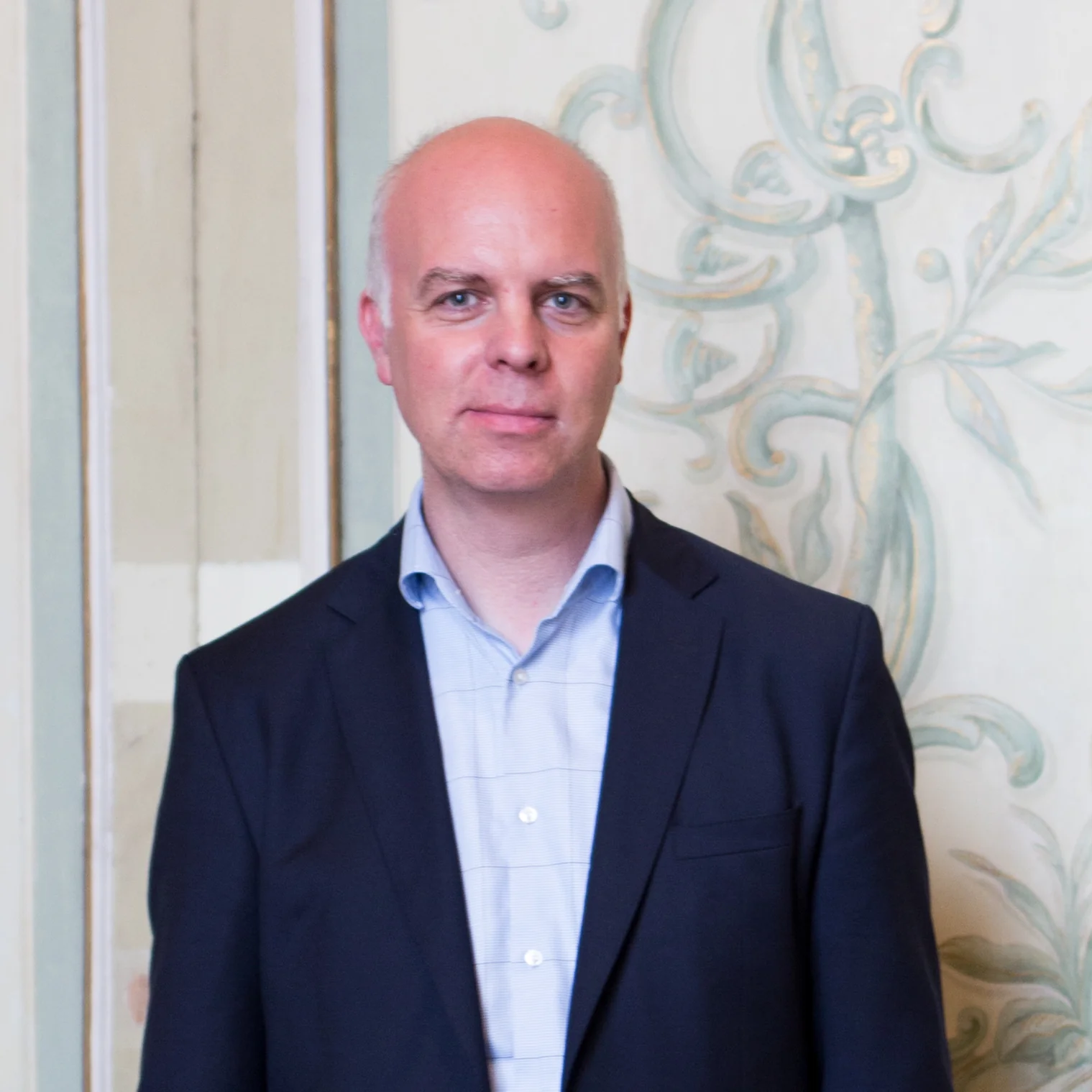
Image from Wikipedia
Image from Wikipedia
Jörg Kirschstein
Between Castle History and Contemporary Diagnosis: The Potsdam Archivist, Curator, and Author Who Brings Prussia's Heritage to Life
Jörg Kirschstein, born in Potsdam in 1969, ranks among the most prominent German archivists and non-fiction authors on the history of the Hohenzollerns and the Potsdam residence culture. Growing up near Sanssouci and trained in archival science, he combines source-rich research with a lively narrative style that vividly illustrates historical spaces, dynasties, and political upheavals. As the director of the Neues Palais in Potsdam and longtime curator of large-scale exhibitions, he significantly shapes public history communication in the UNESCO World Heritage site. His books about Crown Princess Cecilie, the Potsdam City Palace, the Neues Palais, Empress Auguste Victoria, and Prince Wilhelm of Prussia document a consistent and deepening artistic development in historical curation, composition of visual and textual sources, and precise editing.
Biographical Roots: Influences Between Park Sanssouci and Archival School
The immediate proximity to Schloss Sanssouci early ignited Kirschstein's interest in court culture, monarchy iconography, and the family history of the Hohenzollerns. This biographical proximity did not develop into mere nostalgia but into a professional music culture-like competence in collection: akin to a sophisticated discography, he organizes historical collections, edits sources, and arranges exhibits into narratable spaces. From 1992 to 1996, he studied archival science at the University of Applied Sciences Potsdam. The methodological craft – including systems of organization, provenance principles, and source criticism – has remained the foundation of his curatorial signature and his authorship.
Institutional Responsibility: Prussian Palaces and Gardens Foundation Berlin-Brandenburg
Since 1999, Kirschstein has worked for the Prussian Palaces and Gardens Foundation Berlin-Brandenburg. The SPSG is not only the administrator of architecture and gardens but also a research and mediation instance with a pronounced quality claim to historical authenticity. Kirschstein held leading positions at prominent venues such as Schloss Babelsberg before taking over the direction of the Neues Palais in Potsdam. In this role, he is responsible for program design, collection presentation, restoration priorities, and visitor guidance – comparable to musical production management, which keeps dramaturgy, acoustic balance, and audience impact in view.
Curatorial Stage Presence: Exhibitions as Narrated History
Kirschstein has repeatedly made an impact with thematically focused, source-based exhibitions: from the Dutch exile of Crown Prince Wilhelm to the pictorial biography of the last German Crown Princess Cecilie to the court and gift politics under Wilhelm II. The exhibition "Kaiserdämmerung – The Neues Palais 1918 Between Monarchy and Republic," for which he was responsible, marked a historical turning point in the exhibition narrative – the end of the monarchy and the transformation of the residence from a ruling space to a museum space, akin to a programmatic conclusion in a symphony. Each exhibition he curates is a composition, whose movements – lead object, contextual display, sequence of images, catalog text – follow a clear thematic motif.
Bibliography as a Catalog of Works: Books That Bring Image and Text to Life
Kirschstein's discography in the broader sense – his bibliography – begins with audience-oriented monographs about people and places in Prussian history. The pictorial biography "Crown Princess Cecilie" opens a view into role models, representation, and media strategies in the early 20th century. With "Schloss Cecilienhof: Tudor Romance and World Politics" and the guide "The Neues Palais in Potsdam," he connects architectural history with political iconography. "The Potsdam City Palace: From Princely Residence to State Parliament Castle" dissects the transformations of a symbol – from residence palace to democratic institution – thus highlighting a strong sign of cultural-political relevance. "Auguste Victoria: Portrait of an Empress" sharpens the contours of a figure that fluctuated between piety, socio-political ideas, and courtly duty. Recently, he added to his repertoire with "The Emperor's Heritage: Prince Wilhelm of Prussia (1906–1940)," a study on generational legacies, political socialization, and media attributions in the shadow of abdication.
Style Analysis: Source Criticism, Arrangement, Production
Kirschstein's expertise is evident in the confident combination of archival techniques, historical hermeneutics, and narrative design. He masters the art of arrangement: visual sources, letters, press materials, and objects become polyphonic voices that create a panorama of the Wilhelmine era. His production in text work follows clear sentences: precise terminology, concise periodization, clear thesis. Like a sound engineer, he pays attention to spatial acoustics – layout, image captions, legends, object texts – and creates comprehensibility without oversimplification. The result: books that resonate with both specialist readers and culture-historically interested visitors.
Cultural Influence: Public History Communication in World Heritage
As a director and curator, Kirschstein operates at the intersection of monument preservation, academia, and the public. His work strengthens the cultural memory of the capital region by ensuring that residence culture does not succumb to museum stagnation, but rather is readable as a laboratory of political signs, social rituals, and media strategies. The resonance in media and academic reviews of his publications – such as those on Auguste Victoria – demonstrates that his approach successfully balances detail-rich sourcing and critical sobriety of context. As a result, a contemporary picture of the Empire emerges: distant from glorification, close to structures, roles, and presentations.
Events, Tours, Stage Moments: Encounters with the Object
Kirschstein understands tours not as mere transmission of information but as an enactment of the encounter between observer and object. Whether in gallery spaces, ancestral halls, or imperial apartments – he utilizes spatial dramaturgy to condense historical motifs. Live formats and moderated tours – analogous to a concert performance – allow for spontaneous deep dives and create experiences with lasting memory effects. This stage presence complements book production with performative mediation; together they form a dense body of work from text, space, and experience.
Reception and Classification: Critiques, Debates, Publicity
The critical reception of his works regularly emphasizes the competence in visual sources, clear structuring, and the objective tone. Reviews of "Auguste Victoria" highlight the breadth of sources and the ability to profile a long-overlooked figure of court and religious history without pathos. In the professional public, Kirschstein is regarded as a reliable voice when it comes to the contexts of Wilhelmine representation, the usage biographies of the Potsdam palaces, and the mediation of monarchical symbolism in a democratic memory culture. This authority results from continuous archival practice, long-term observation of the collections, and a network in museums, foundations, and publishers.
Current Projects 2024–2026: New Publications, Programs, Perspectives
With his recent publication on Prince Wilhelm of Prussia, Kirschstein continues his series on key players and settings of the Wilhelmine era. At the same time, as the castle director, he is intensifying the content profile of the Neues Palais, from reopenings to thematically focused tours. Events that illuminate the house's usage history under Wilhelm II connect to his exhibition dramaturgy and update the discussion about the role of monarchical residences in the present. Thus, Kirschstein sharpens the profile of the Neues Palais as a place of learning and experience where collection, research, and public meet productively.
EEAT in Practice: Experience, Expertise, Authority, Trustworthiness
Experience: Three decades of music career-analogous mediation work in museum operations – with a focus on stage presence in tours, artistic development in curatorial storytelling, and robust career stages in the SPSG – ensure profound practical knowledge. Expertise: Terminologically precise texts, methodologically sound source criticism, the sovereign use of photographic stocks, and the ability to connect architectural history, court culture, and political history demonstrate specialized competence. Authority: The leadership role at the Neues Palais, publications in recognized publishers, and sustained media resonance anchor his voice in public debate. Trustworthiness: All statements are based on verified sources – institutional entries, publisher information, press texts, and Wikipedia – and remain transparently substantiated.
Conclusion: Why Jörg Kirschstein Matters Today
Kirschstein demonstrates how to make historical substance relevant for a changing present: with archival depth, curatorial sensitivity, and a language that respects complexity. In a time seeking orientation in cultural memory, he opens castles as spaces for thought and experience where images, objects, and biographies gain new significance. Those who read his books or experience his tours understand Prussia's heritage not as a backdrop but as a score of historical experiences – precisely arranged, resonantly told. Recommendation: Experience the Neues Palais through the curator's perspective and read Kirschstein's works as a key to the hidden voices of history.
Official Channels of Jörg Kirschstein:
- Instagram: No official profile found
- Facebook: No official profile found
- YouTube: No official profile found
- Spotify: No official profile found
- TikTok: No official profile found
Sources:
- Wikipedia – Jörg Kirschstein
- be.bra Verlag – Auguste Victoria: Portrait of an Empress
- Der Tagesspiegel – Kirschstein New Castellan of the Neues Palais (Report)
- Prussian Palaces and Gardens Foundation – Tour with Castle Director Jörg Kirschstein
- Booknerds – Review: Jörg Kirschstein, Auguste Victoria (2021)
- German Digital Library – GND: Jörg Kirschstein
- Context Research: Biographical Name Distinction (Kirschbaum – not identical with Kirschstein)
- be.bra Verlag – Program Preview 2021 (Details on Auguste Victoria)
- Wikipedia: Image and Text Sources
Upcoming Events
Encounter at the Castle: A Mecklenburg Woman in Prussia – Crown Princess Cecilie (1886–1954)