
Herbert Roth
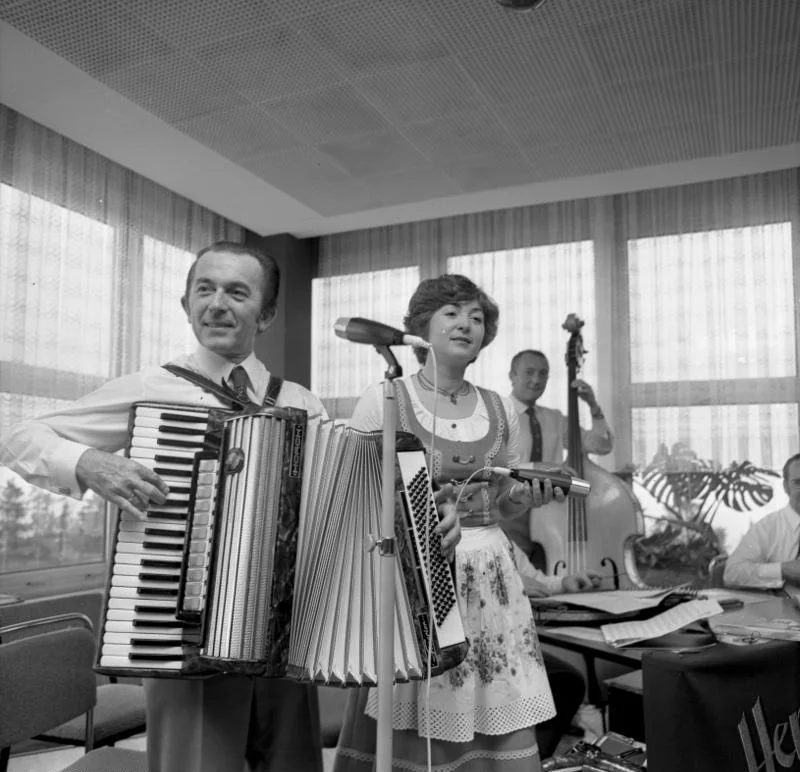
Image from Wikipedia
Image from Wikipedia
Herbert Roth – Composer, Accordionist and Voice of Suhl Folk Music
The Unofficial Anthem of Thuringia and a Life Dedicated to Folk Music
Herbert Roth shaped the folk music of the GDR like few others. Born on December 14, 1926, in Suhl and passing away there on October 17, 1983, he combined melodic sensitivity, narrative lyrics, and an unmistakable stage presence throughout his musical career. His "Rennsteiglied" became the musical calling card of Thuringia and a fixed point in an artistic development that influenced the musical life through radio, television, and touring stages for over three decades. In collaboration with long-time companions such as singer Waltraut Schulz and lyricist Karl "Kaschi" Müller, Roth created a discography that continues to be re-released, curated, and celebrated to this day.
Early Years and Musical Influences
Rooted in Suhl, Herbert Roth quickly gained access to home music, folk songs, and the sounds of the region. This background shaped his understanding of genre, composition, and arrangement: images of nature, wanderlust, and sounds of home became key motifs in his work. He began experimenting with the accordion as a melodic instrument early on and favored an ensemble that warmly framed the voice: accordion, zither, guitar, and double bass as an organically breathing ensemble. From these elements, he developed a distinctive style recognized by connoisseurs at the first chord break and one that allowed amateurs to join in singing immediately.
The Breakthrough with the Rennsteiglied (1951)
The defining moment came in April 1951: in the community hall of Hirschbach near Suhl, "Rennsteiglied" was performed publicly for the first time by Herbert Roth and Waltraut Schulz. The song struck a chord in the post-war era: romantic hiking, regional images, and a chorus that was instantly catchy in its melodic design. The song quickly developed into the "unofficial anthem of Thuringia," was immortalized on record, played in radio formats, and became the signature song of Roth's stage programs for decades. His artistic journey marked a milestone here: songs about landscape and life became the cultural narrative of an entire region.
Ensemble, Sound, and Production Techniques
"Herbert Roth and his instrumental group" created a clear, recognizable sound. In addition to two accordions, the zither characterized the soloistic nature—often electrically amplified and produced with subtle reverb and echo effects. The double bass remained a distinctive feature: Roth rejected the electric bass guitar and adhered to an acoustic foundation to preserve the natural vibrational space. In production, he focused on transparent arrangements, precise vocal lines, and a melody that prioritized lyric comprehensibility over layered effects. Thus, he combined traditional instrumentation with contemporary studio techniques to create an aesthetic that united folk musical authenticity with modern production.
Lyrics and Partnerships: Karl "Kaschi" Müller and Waltraut Schulz
The poetic handwriting of the songs is largely attributed to Karl "Kaschi" Müller, Roth's childhood friend and congenial lyricist. His imagery-rich, clear verses intertwined with Roth's melodies to form songs like "Kleines Haus am Wald," "Auf der Oberhofer Höh’," and "Berge der Heimat." By Roth's side was also Waltraut Schulz, whose voice shaped the duet sound and revitalized the folk song tradition with empathetic phrasing. This artistic alliance of composition, lyrics, and interpretation created a repertoire that was successful in live performances as well as on radio recordings and records.
Roth in Radio and Television of the GDR
Roth's stage presence extended well beyond concert halls. On the radio—such as on "Stimme der DDR"—programs regularly featured his titles, making them accessible to a mass audience. From the 1970s onwards, Roth became a regular performer on television: in formats like "Oberhofer Bauernmarkt" or the TV specials "Mit Rucksack, Hut und Wanderstock" and "Grüße vom Rennsteig," he combined music, images of nature, and regional identity into televised miniatures of home. This cross-media visibility professionalized his music career and solidified his authority as a key figure in folk music.
Discography: Albums, Singles, and Reissues
Roth's discography documents the stylistic continuity and thematic richness of his work. Early LPs like "Mit Herbert Roth durch’s Thüringer Land" (1963) established his sound, while later albums like "So klingt’s in den Bergen" (1968), "Grüße vom Rennsteig" (1974), and "Wandern durch den Winterwald" (1977) deepened his repertoire of seasonal songs, hiking imagery, and regional miniatures. Under the pseudonym Matthias Wendt, Roth also wrote entertainment titles like "Reisen, reisen, in die weite Ferne" (1967). Posthumous compilations and thematically curated editions continue to maintain and rediscover the catalog into the 2010s.
Style Analysis: Genre, Composition, and Arrangement
Musically, Roth intertwines folk music idiomaticity with song-like form. His compositions utilize clear periodicity, diatonic harmony, and melodic arcs that prioritize singability. The arrangement relies on doubling the melody line with accordion and zither, supportive voices from guitar and double bass, as well as targeted counterpoints in interludes. Production-wise, he utilized reverb spaces and echo applications without overshadowing the acoustic core. This balance of tradition and moderate studio usage explains the durability of his titles in radio rotations and reissues.
Cultural Influence and Reception
The "Rennsteiglied" early on transcended its status as a regional hit: it became a cultural marker for Thuringia, accompanying hiking events and tourism communication while serving as an identity-defining symbol. Roth's music experienced an ambivalent reception in the GDR—scrutinized critically by some members of the intellectual community, yet massively effective on radio and television. A turning point was a performance before Walter Ulbricht, after which public acceptance noticeably increased. To this day, exhibitions, memorial plaques, and city tours in Suhl honor the work of the composer; the city, associations, and museums keep the legacy alive.
Awards and Recognitions
Roth's authority is also bolstered by official honors: he received the Ernst-Moritz-Arndt Medal (1963), the Honorary Medal of the National Front (1976), as well as the Patriotic Order of Merit in Bronze (1978) and Gold (1983). These awards document the institutional recognition of his artistic achievement and his role as a cultural ambassador of Thuringia. Ongoing reissues and media tributes—including MDR documentaries—affirm the lasting relevance of his work for the history of folk music and regional memory culture.
Tour Life and Daily Work: Music Career on the Road
Popular demand was reflected in an intensive touring schedule: for many years, Roth and his ensemble covered tens of thousands of kilometers annually to perform in halls, cultural centers, and open-air stages. This rhythm sharpened their stage presence, solidified the musical balance of the lineup, and provided immediate feedback that flowed back into composition and arrangement. The ensemble remained consistent in its fundamental structure—a commitment to sound fidelity rather than changing trends.
Legacy: Museum, Memorials, and Urban Memory
Today, memorial plaques, a dedicated circular hiking trail, and a permanent exhibition in Suhl-Vesser guide visitors through Roth's life and sound world. City tours "In the Footsteps of Herbert Roth" connect biography, songs, and local topography. The official website, supported by the city and a friends' circle, consolidates materials, image documents, and news—from archival takeovers of historical tapes to anniversary celebrations. Thus, the artistic legacy remains accessible, contextualized, and relevant for new generations of listeners.
Current Editions, Anniversaries, and Digital Availability
Even decades after his death, Roth's music remains present: digital platforms list core works like the "Rennsteiglied" and thematically curated albums; new editions and compilation series keep the catalog alive. In 2021, Suhl celebrated the 70th anniversary of the "Rennsteiglied" with a large city festival; in 2025/26, associations and institutions marked the 75th anniversary of its premiere with thematic offerings and memorial formats. These activities connect cultural history with the present and demonstrate how deeply Roth's songs are rooted in the collective memory.
Conclusion: Why Herbert Roth Still Resonates Today
Herbert Roth's art resonates because it combines simplicity and depth: songs that one wants to sing along with immediately and images that do not glorify home but tell stories. His artistic journey from local musician to a formative composer of Suhl folk music exemplifies how consistent work on sound, lyrics, and production can lead to cultural longevity. Anyone who wants to understand why a folk song can become an anthem should listen to Roth's "Rennsteiglied" in the context of his discography—and experience the music where it originated: in Thuringia, on stages, at festivals, and along hiking trails.
Official Channels of Herbert Roth:
- Instagram: No official profile found
- Facebook: No official profile found
- YouTube: No official profile found
- Spotify: No official profile found
- TikTok: No official profile found
References:
- Wikipedia – Herbert Roth (accessed 2026)
- herbert-roth.de – Official Website (City of Suhl/Friends' Circle)
- DDR Museum – Beyond the Rennsteig: The Folk Musician Herbert Roth
- Thüringer Allgemeine – Herbert Roth’s Rennsteiglied Turns 70
- Rennsteigverein 1896 e.V. – History of the Rennsteiglied
- Apple Music – Rennsteiglied (Herbert Roth & Instrumental Group)
- Wikipedia – Rennsteiglied (Premiere, Context)
- Rennsteigverein Suhl – Suhl Rennsteig Messenger (Anniversary Context)
- Suhl Tourism – City Tours: In the Footsteps of Herbert Roth
- Wikipedia: Image and Text Source
Upcoming Events
Exhibition: Herbert Roth – on the 100th Birthday
Day of Hiking 2026 in the Green Heart of Germany – Hiking and Singing
26th Schneekopf Summit Meeting
26th Summit of Hikers