
Helmut Schüller
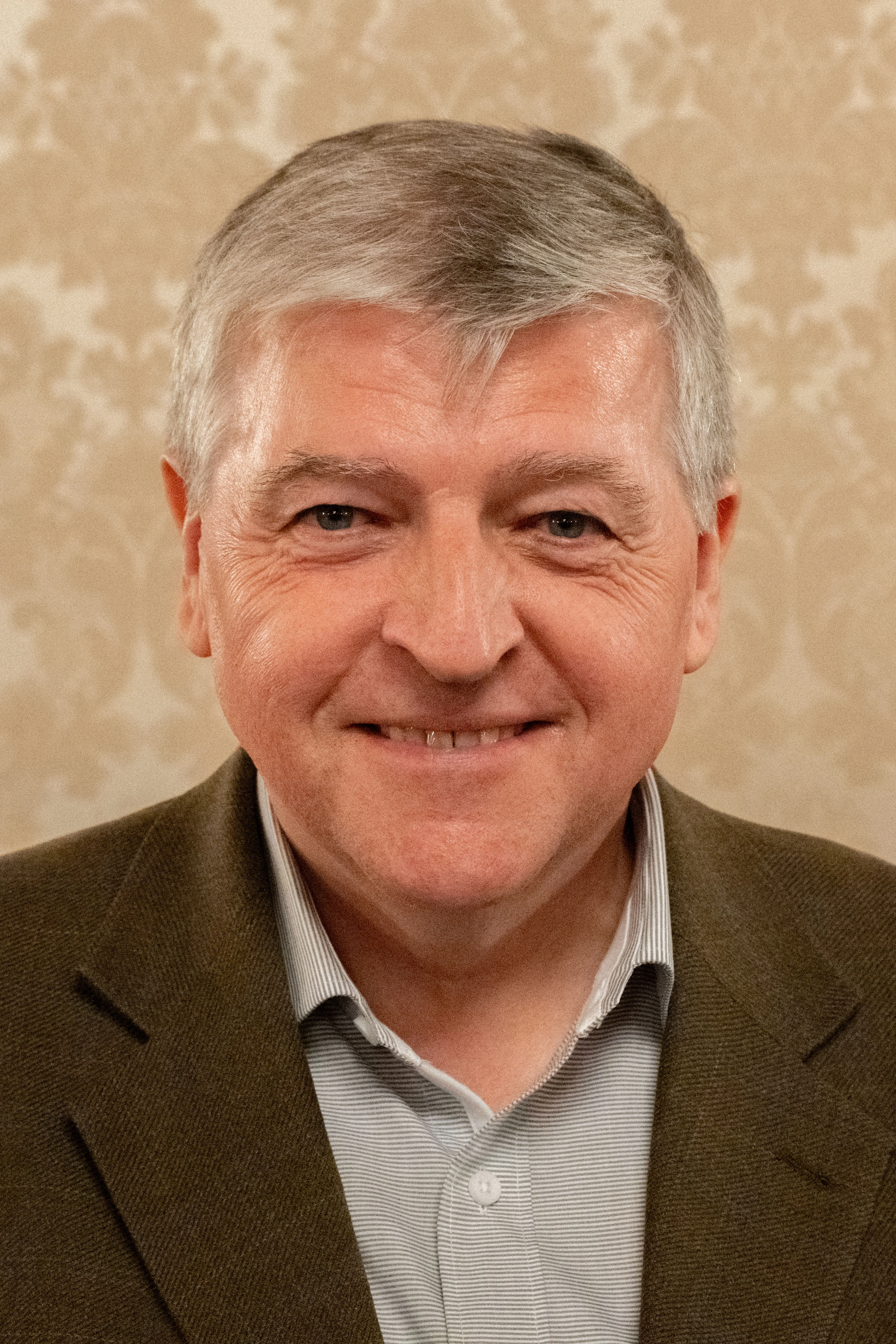
Image from Wikipedia
Image from Wikipedia
Helmut Schüller – Priest, Voice of Reform, and Influential Figure of the Austrian Church
An Engaged Voice that Triggers Debates and Connects Faith Practice with Social Responsibility
Helmut Schüller, born on December 24, 1952, in Vienna, has been one of the most distinguished figures of the Roman Catholic Church in Austria for decades. As a priest, former president of Caritas, and co-founder and chairman of the Priests' Initiative, he shapes the discourse on church reform, pastoral care, and the role of laypeople. His work combines pastoral experience with public impact – a mixture of grounded community work, precise analysis, and charismatic stage presence in lectures, interviews, and discussion formats. This portrait traces his artistic development in the broad sense of a communicative, rhetorical, and public practice, historically placing his contributions and demonstrating why his voice still resonates today.
Biography: From Vienna into Public Debate
Schüller's life path is closely intertwined with the Austrian Church. Growing up in Vienna and born there on Christmas Eve 1952, he chose the path to priesthood and served for many years as a pastoral caregiver in the Archdiocese of Vienna. Early on, he combined practical pastoral care with social engagement, which led him to the top of Caritas. This leadership role sharpened his awareness of social issues as well as structures in the church and society. In sermons, interviews, and public appearances, he developed a clear language – theologically grounded, dialogue-oriented, and always applicable to the reality of the congregations.
As a priest, he remained rooted in community contact. This daily "live setting" of pastoral work – visits, liturgy, conversations – shaped his musical career in a figurative sense: the art of listening to people, pinpointing issues, and carefully arranging liturgical "performances." His artistic development is reflected not in notes, but in the matured dramaturgy of arguments, the vocal delivery of a speech, and the wise balance between tradition and readiness for reform.
Career Path: Caritas, Priests' Initiative, and the International Stage
As president of Caritas, Schüller established himself as a bridge builder between the church, politics, and civil society. Later, he became the face of the Priests' Initiative, founded in 2006, which addresses the increasing shortage of priests, the merging of parishes, and the need for participatory pastoral care. The movement achieved a breakthrough in 2011 with the "Call to Disobedience": a programmatic text that spoke to reforms with pastoral sobriety and prophetic tone – from greater participation of laypeople to questions of offices and access to sacraments.
His voice also found international resonance. Long before "synodality" became a key term, Schüller toured as the spokesperson for the initiative, publicly discussing reform issues. A notable appearance was in Cleveland in 2013, where he sharply articulated the dynamics of conscience, obedience, and ecclesiastical responsibility. Such forums connected him with a wide audience – from believers to the media to church decision-makers – and solidified his authority as a strong arguer yet pastorally rooted reformer.
Current Positions: 2024–2025 as a Test of the Reform Agenda
The years 2024 and 2025 reveal how consistently Schüller maintains his stance. In interviews and TV appearances, he calls for transparent processes and forward-looking personnel decisions, criticizing interim solutions that, in his view, prolong uncertainties. At the same time, he places the papal transition and the tasks of the new pope in the context of open reform issues: greater lay participation, accountability of leadership, and the deepening of synodal processes. The Priests' Initiative supports this with statements that connect peace ethics, human rights, and an inner-church culture of dialogue.
These recent comments illustrate Schüller's dramaturgical sense in the public sphere: he does not respond in a politically agitated manner, but places clear, theologically and pastorally grounded markers. Thus, his artistic fingerprint remains recognizable – an arrangement of grassroots experience, systemic analysis, and the will to communicate.
Program and Concerns: Composition of Tradition and Renewal
To understand Schüller's contribution substantively, one must listen for three guiding motifs in his “composition.” First: closeness to the congregation as a tempo-setter – for him, pastoral care is not administration but relationship, presence, and attention. Second: the structural dimension of pastoral care – leadership, offices, and processes must correspond to the reality of the parishes. Third: the Gospel as a formative motif – justice, mercy, and human dignity are not optional additions, but part of the score of church action.
In this programmatic framework, Schüller employs music-related technical terms in a figurative sense: the “arrangements” of pastoral practice should be structured so that laypeople can participate, the “production” of church life involves the talents of many, and the “genre” of church resonates in its diversity. This approach explains why his interventions are effective both pastorally and theologically reflective.
Discography? Publications and Appearances instead of Records
A classic discography in the musical sense does not exist for Helmut Schüller. His “catalog numbers” are sermons, interviews, press conferences, panels, and lectures – from parish to television show. As the spokesperson for the Priests' Initiative, he has been responsible for a multitude of statements, leaving behind a body of work that is understood less through singles and albums and more through theses, position papers, and public debates.
Those wanting to trace his “back catalog” will find traces in press archives, church media, and event organizer documentation. Particularly notable are events where his stage presence and argumentation skills become evident: public interviews, TV debates, dialogue formats with believers and church decision-makers. These materials create a kind of live album of ecclesiastical diagnosis from a pastoral perspective.
Style and Rhetoric: Precision, Empathy, and Synodal Groove
Schüller's style thrives on precise language, empathetic tone, and a clear sense of the dramaturgy of conversation. He uses imagery that builds bridges – between canon law and conscience, between institution and grassroots. His arguments are composed like sentences in chamber music: themes are introduced, developed, and contrasted; counter-theses are given room before a conclusion is drawn. This rhetorical arrangement creates resonance without blurring the contours of his position.
Technically, he combines knowledge of church structures (“form analysis”) with pastoral experience (“performance practice”). The expertise stems from leadership roles, community work, and continuous engagement with reform movements. The synodal groove arises where he argues with nuance, identifies conflicts, yet always aims for consensus.
Critical Reception and Authority: Enduring Dissent, Opening Discourse
That Schüller's agenda polarizes is part of the nature of the matter. Critical voices sometimes complain of a focus on structures and refer to a need for spiritual deepening. Supporters emphasize the pastoral necessity of adapting rigid systems to the realities of congregations. Crucially, Schüller does not shy away from dissent and perceives discourse as a learning space. This attitude has granted him authority beyond Austria – not as an infallible soloist, but as a conductor of a multi-voiced debate.
His public role remains transparent: he speaks as a pastor with leadership experience, as chairman of a movement, and as a conversation partner in the media. Awards for him are less visible through chart successes or trophies but rather through the sustainable presence of his themes in bishop conferences, editorial offices, and parish councils.
Cultural and Ecclesiastical Influence: From Austria to Europe and Beyond
The Priests' Initiative has set impulses that extend well beyond Austria. In Germany, offshoots with similar concerns have formed; in many countries, the media has picked up the debates. Thus, from an Austrian movement grew a transnational field of ecclesiastical reform discourses. The cultural impact is evident not least in language: terms like “synodality,” “participation,” and “accountability” are now widely adoptable – a sign that Schüller and his collaborators have set themes that are being anchored in the church's “mainstream.”
In the interplay of tradition and change, Schüller acts as a translator: he conveys theological content in down-to-earth imagery, anchors reform ideas in concrete community situations, and balances loyalty to doctrine with pastoral wisdom. This balancing act explains his enduring influence – he is less a fireworks display and more a sustained sound that transforms spaces.
Experience, Expertise, Authority, Trustworthiness – The EEAT Perspective
Experience: Schüller's musical career in a figurative sense is rooted in decades of practical pastoral care and leadership responsibilities. His stage presence in media and events is based on real community experiences, not abstract theories. He identifies specific stations and issues – from the shortage of priests to questions of parish structures – and develops well-crafted, pastoral solutions from them.
Expertise: In his positions, he intertwines specialized knowledge of canon law and community leadership with pastoral-theological categories. His “composition” of programs, guiding principles, and statements shows methodical work: clear terms, well-structured arguments, and the ability to make complex matters understandable.
Authoritativeness: As a former president of Caritas, a priest, and chairman of a well-known reform movement, Schüller speaks with institutional and public legitimacy. Relevant media, ecclesiastical platforms, and event organizers document his contributions; his statements are received in news formats, debates, and expert contributions.
Trustworthiness: His factual basis is verifiable, his roles are documented, and his theses appear in traceable contexts. Openness in dealing with criticism – and the willingness to comment transparently on processes – further enhances his credibility.
Conclusion: Why Helmut Schüller Endures – and Why It Is Worth Listening to Him
Helmut Schüller is a churchman with endurance. He remains because he can endure complexity, because he understands reform not as a fashion topic but as a pastoral mandate, and because he finds language that is both clear, friendly, and binding. His work emerges live – in communities, in interviews, in discussions – and his soundscape is the church amid society.
Those who wish to understand the church in the 21st century should listen to Schüller. Not because he has all the answers, but because he persistently asks the right questions. His “performances” – sermon, conversation, speech – open spaces of resonance. It is worth experiencing him where he is at his strongest: in dialogue, close to the people, with a sense for the great score of faith.
Official Channels of Helmut Schüller:
- Instagram: No official profile found
- Facebook: No official profile found
- YouTube: No official profile found
- Spotify: No official profile found
- TikTok: No official profile found
Sources:
- Priests' Initiative – Board
- Priests' Initiative – About Us / Guiding Principles
- ORF.at – Schüller: Schönborn Succession "unnecessarily chaotic" (01/23/2025)
- katholisch.at – Schüller on Leo XIV.: Reform issues remain urgent (05/10/2025)
- City Club of Cleveland – Father Helmut Schuller (2013)
- Wikipedia – Priests' Initiative Austria
- Wikipedia – Helmut Schüller
- DOMRADIO.DE – Profile Helmut Schüller
- The Vienna Review – Helmut Schüller’s Call to Disobedience (2011)
- Wikipedia: Image and text source