Gerhard Gundermann
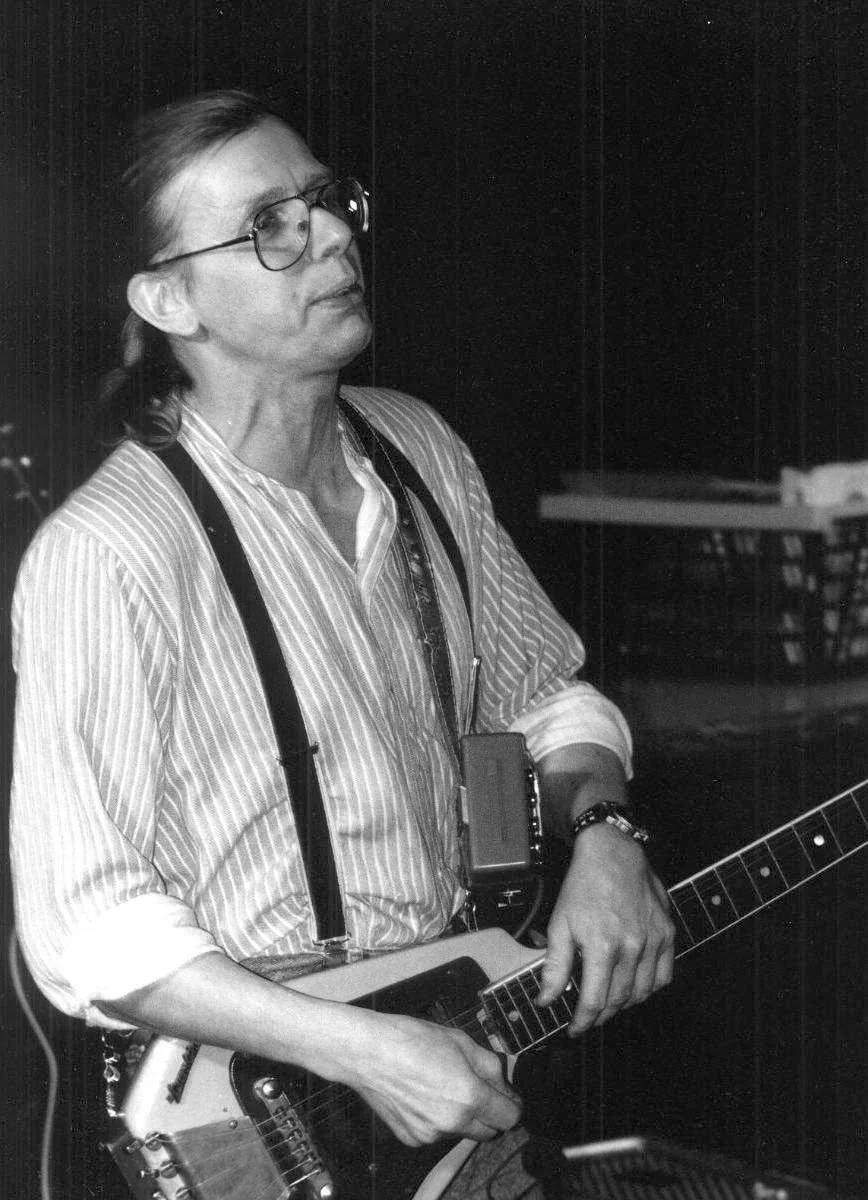
Image from Wikipedia
Image from Wikipedia
Gerhard Gundermann – Singer-Songwriter, Rock Musician, and Chronicler of Lusatia
A Voice from the Pit: How the "Singing Excavator" Set the Turnaround Years to Music
Gerhard Rüdiger "Gundi" Gundermann, born on February 21, 1955, in Weimar and died on June 21, 1998, in Spreetal, significantly shaped the musical landscape of East Germany as a singer-songwriter and rock musician. Coming from the working world of the Lusatian lignite mining region, he combined stage presence and a music career with a life between shift work, political friction, and poetic reflection. His songs, often infused with melancholy and laconic wit, speak of home, work, environment, loss, and hope – becoming an acoustic diary of transformation for many after 1990.
In the GDR, Gundermann was regarded as an unconventional artist whose artistic development remained closely tied to the regional culture of Lusatia. He worked for years as an excavator operator and consciously chose not to lead an exclusively artistic life, in order to preserve the authenticity of his perspective on everyday life, work, and social realities. This credible viewpoint is part of his cultural legacy and keeps his discography relevant even today.
Biography: From Hoyerswerda to the Stages of the Republic
In 1967, the family moved to Hoyerswerda. After graduating high school, Gundermann initially studied at the Officers' School of the Land Forces but was expelled in 1975. He found his professional home in lignite mining: from the mid-1970s, he worked as a laborer, qualified as a machine operator, and eventually operated a bucket-wheel excavator in the open pit. Simultaneously, his affinity for music grew – first in the Singing Club Hoyerswerda, later in the "Brigade Feuerstein," where he produced political songs, fairy tale programs, and concert tours.
The artistic development picked up pace with his first solo performances: in 1986, Gundermann began as a singer-songwriter, and in 1987, he won the main prize at the GDR Chanson Days – a significant career milestone. His biographical upheavals, his sober humor, and his keen observation of societal tensions led to a distinctive voice. After 1990, he opposed alienation, ecological wounds, and social upheavals in his songs – with linguistic precision, empathy, and a humanistic compass.
Musical Beginnings and "Brigade Feuerstein"
Initially, Gundermann experimented with forms of political chanson and developed his songwriting within a collective that transitioned between theater, fairy tales, and rock elements. The children's musical "Malvina" was performed with great acclaim in the early 1980s. At the same time, his proximity to the workers' culture of Lusatia shaped his vocabulary and choice of themes: the songs sought the concrete – places of life, shift plans, packed lunches, dusty air – to distill a poetic, sometimes sarcastic truth from them.
The separation from the Brigade marked a fresh start: Gundermann emancipated himself as a lyricist, singer, and frontman. He then worked with various musicians from the rock scene – a step that expanded his understanding of arrangement and production and paved the way to the studio.
Breakthrough with Band, Collaborations, and the "Seilschaft"
The debut album "Männer, Frauen und Maschinen" (1988) surprised with a rocky production. This was followed by solo works and gradually the formation of a stable band. Crucial impulses came from collaborating with Silly: Gundermann contributed lyrics to "Februar" (1989) and "Hurensöhne" (1993); in return, Silly musicians participated in "Einsame Spitze" (1992). These creative synergies added greater stylistic diversity and professional production aesthetics to his music.
With "Gundermann & Seilschaft," he achieved new popularity in the 1990s in the East. The Seilschaft gave his sometimes balladic, sometimes jagged songs a powerful, guitar-driven form that was characterized by energetic dynamics in live performances. The legendary 1994 opening act for Bob Dylan and Joan Baez marked a bridge between East German song tradition and international song culture.
Discography: Studio Albums, Live Documents, and Posthumous Releases
Gundermann's discography reflects a consistent artistic evolution: "Männer, Frauen und Maschinen" (1988) established his signature style between chanson and rock. "Einsame Spitze" (1992) sharpened his poetic analysis of the post-reunification period and expanded the sound. With "Der 7te Samurai" (1993) and "Frühstück für immer" (1995), he solidified a characteristic band structure with the Seilschaft. "Engel über dem Revier" (1997) combined introspective lyrics with crystalline production – a late masterpiece linking existential themes with precise everyday observations.
The aftereffects are carried by live and archival releases. "Krams – Das letzte Konzert" (1998) documents his final stage presence a week before his death, a poignant recording that makes the emotional tensions of his later years audible. Other editions – including "Live im Tränenpalast," "Unplugged" with Silly and Seilschaft, "Werkstücke" series, and compilation selections – ensure a multifaceted sound archive. Reissue initiatives and new releases keep the catalog alive and accessible.
Style, Themes, and Songwriting: Poetic Realism and Musical Condensation
Gundermann's compositions combine clear melodicism with textual sharpness. His songwriting employs narrative perspective shifts, metonymic images, and pointed refrains that condense socio-historical observations. In production, he favored an organic band aesthetic: guitars, saxophone colors, rhythmic grounding, occasionally folky nuances. This sound language underscores the semi-documentary tone of his lyrics – a form of musical realism that does not display emotions but rather precisely extracts them.
Content-wise, his songs revolve around home and origins ("Hier bin ich geboren"), work and alienation, ecological responsibility ("Engel über dem Revier"), and the fractures of reunification. The famous "Gras" (1992) encapsulates comfort, farewell, and persistence into a poetic cipher – emblematic of Gundermann's ability to address existential themes without pathos.
Cultural Influence and Reception in East and West
In the East, Gundermann was considered an authentic voice of the transformation society – a "mouthpiece" for Lusatia whose songs reflected collective experiences. In the West, he remained a well-kept secret for a long time but garnered a growing audience through tribute projects, theatrical productions, and film adaptations. The Seilschaft, cultural initiatives, and associations promote his work, archives collect recordings and memorabilia, and young musicians draw from motifs, figures, and lines of his songs.
Critically, his art was praised for its combination of political analysis, empathy, and literary economy. Awards like the annual prize of the Liederbestenliste attest to professional recognition. In the tradition of German-language song, Gundermann marks a pivotal point between chanson, rock, and socially critical poetry.
Controversial Biography and Artistic Integrity
The disclosure of his activity as an unofficial collaborator (1976–1984) created fractures in public perception in the mid-1990s. Gundermann confronted responsibility, error, and guilt – even in his lyrics. These conflict lines made his artistic development more vulnerable yet simultaneously more credible: the songs explore contradictions rather than smoothing them over. His decision to continue engaging in "real" work provided his stage presence with grounded authority, far from glamour.
His early death in 1998 – a stroke at the age of 43 – halted an exceptional music career. However, the work remains open to new interpretations and readings, gaining relevance in the context of current debates about social justice, ecology, and regional identities.
"Gundermann" (2018): Biopic, Soundtrack, and Renewed Visibility
The film "Gundermann" (directed by Andreas Dresen) refocused a German-wide audience's attention on the singer-songwriter in 2018. Actor Alexander Scheer embodied Gundermann not only with impressive physicality but also sang the songs himself – an artistic decision that enhanced the realism of the character. The soundtrack was released simultaneously, presenting the songs in a fresh yet respectful interpretation.
The film was awarded the Golden Lola at the German Film Awards; Scheer received the Lola for Best Lead Actor. Press and critics praised the musical performance and cinematic precision. This coincided with a wave of new reception: concert programs, tribute evenings, and tours carried the repertoire beyond the original scenes into theaters and large halls.
Current Editions, Reissues, and Catalog Maintenance (2023–2025)
The catalog maintenance keeps the oeuvre sonically present. In 2023, special editions of the late studio albums were released, making production, arrangement, and lyrics audible in contemporary formats. At the same time, relevant live documents were updated – including editorial supplements in booklets. In early 2025, "Einsame Spitze" was released together with "Der 7te Samurai" as a double LP – a sign of the ongoing demand for analog formats and an important signal of continued cultural relevance.
These re-releases are central for contextualizing the work: they make development lines in composition, band work, and lyrical work traceable – from the early, rougher approach to the concentrated late phase. For new listeners, the editions provide ideal entry points into a discography that encompasses both intimate solo moments and powerful rock arrangements.
Awards, Press Acclaims, and Music Journalistic Classification
Even before the reunification, Gundermann was artistically recognized: in 1987, he won the main prize of the GDR Chanson Days with his program and band, enabling the production of his debut. In the 1990s, he received the annual prize of the Liederbestenliste with the Seilschaft. Later, critics honored the film's rediscovery as well as the soundtrack – sometimes featured in best-of lists and interpreted as examples of successful reinterpretations of the songs.
Today, Gundermann is considered a link between political chanson, rock, and East German everyday culture in music history. His influence extends into theater, literature, and film; individual songs have become cultural reference points. The reception emphasizes his authenticity: he wrote from lived experience, with precise imagery and without false pathos – a stance that lends him authority and trustworthiness to this day.
Conclusion: Why Gerhard Gundermann Endures
Gerhard Gundermann endures because his songs are more than just time documents. They are condensed life stories in three to five minutes, artfully arranged and honestly told. Listening to his songs means hearing the landscapes of Lusatia, the pulse of the shift, the struggle for justice – and a tenderness that keeps the human element in view. His artistic evolution from the Singing Club to bandleader, from chanson to rock, serves as a lesson in authenticity, attitude, and musical language.
Anyone discovering Gundermann today uncovers a repertoire that breathes live and finds its greatest strength on stage. Recommendation: Listen to the songs in chronological order – and then definitely experience a tribute concert or a Seilschaft production. Where voices, guitars, and stories intersect, it becomes clear why this singer-songwriter is amongst the most important chroniclers of recent German music history.
Official Channels of Gerhard Gundermann:
- Instagram: No official profile found
- Facebook: No official profile found
- YouTube: No official profile found
- Spotify: No official profile found
- TikTok: No official profile found
Sources:
- Wikipedia – Gerhard Gundermann
- BuschFunk Music Publishing – Artist Page Gerhard Gundermann
- Wikipedia – Einsame Spitze (Album) – Information on the 2025 Double LP
- Wikipedia – Krams – Das letzte Konzert
- Wikipedia – Gras (Song)
- Wikipedia – Die Seilschaft
- Stern – German Film Award: "Gundermann" wins Golden Lola (2019)
- Neue Musikzeitung – Songs as a Reminder to the World (regarding the film and soundtrack, 2018)
- BuschFunk – Gundermann: The Music from the Film (Soundtrack Info)
- Apple Music – Gundermann: The Music from the Film (Alexander Scheer & Band, 2018)
- Deutsche Biographie – Gundermann, Gerhard
- Wikipedia: Image and Text Source
Upcoming Events
The Grass Keeps Growing Again – An Indefatigability with Texts and Songs by Gerhard Gundermann
Grass Keeps Growing – Gerhard Gundermann in Cottbus
Babelsberger Summer Film Evenings - Gundermann
Gundermann - Angels over the Region
Gundermann-Angel over the Region