
Felix Mendelssohn Bartholdy
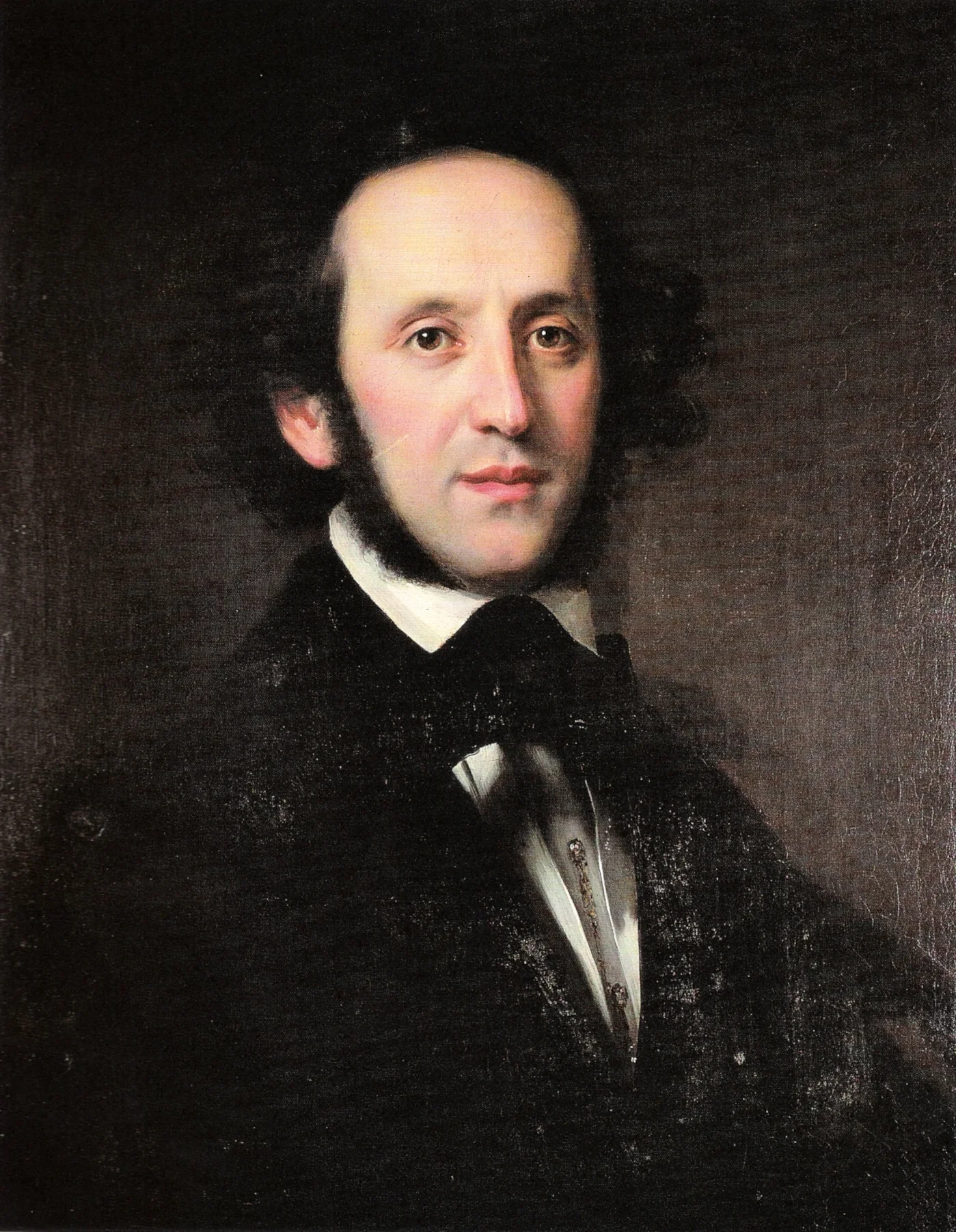
Image from Wikipedia
Image from Wikipedia
Felix Mendelssohn Bartholdy – Romanticist with a Classical Compass
The genius sound architect of the Romantic era who rediscovered Bach, modernized conducting, and fills concert halls to this day with radiant melody
Jakob Ludwig Felix Mendelssohn Bartholdy, born on February 3, 1809, in Hamburg and died on November 4, 1847, in Leipzig, is one of the defining figures of musical Romanticism. As a composer, pianist, organist, conductor, and teacher, he combined classical clarity of form with Romantic expression, shaped orchestral colors with sensitivity, and established a stage presence that fundamentally changed concert culture. His musical career represents artistic development at the highest level – from child prodigy to Gewandhaus conductor, from chamber musician to founder of the first German conservatory.
In an extraordinarily short lifespan, Mendelssohn created a body of work noted for its stylistic cohesion and melodic inventiveness. He became a favorite among audiences in England, inspired generations of performers, and with his historically conscious programming laid the groundwork for modern music preservation. His compositions – from the Lieder ohne Worte to the Violin Concerto in E minor – have become unshakeable pillars of the repertoire.
Early Years: Education, Family, and the Discovery of Talent
Mendelssohn grew up in an educated, art-loving family, the grandson of philosopher Moses Mendelssohn, son of banker Abraham Mendelssohn and Lea, née Salomon. In 1811, the family moved to Berlin, where he received a comprehensive humanistic education, piano lessons from Ludwig Berger, and composition lessons from Carl Friedrich Zelter. His artistic versatility was evident early: in addition to composition and piano playing, he drew, wrote knowledgeable letters, and developed a keen sense for literature and visual art. At the age of nine, he performed publicly, and the legendary Sunday music gatherings at the Mendelssohn home became a laboratory for his artistic development.
A formative experience was his encounter with Johann Wolfgang von Goethe: the twelve-year-old Felix played music for the poetic prince in Weimar and impressed with his virtuosic piano playing and musical understanding. This humanistic influence and the rigorous training under Zelter shaped his aesthetic: classically informed composition, inner discipline in form, texture, and counterpoint – a foundation on which he unfolded Romantic sound poetry.
Child Prodigy and Compositional Breakthrough: Octet Op. 20 and A Midsummer Night's Dream
Mendelssohn matured early into a master. At seventeen, he wrote the overture to A Midsummer Night's Dream – an orchestral wonder of transparency, rhythmic vitality, and delicate color. Just before, the String Octet in E-flat major Op. 20 demonstrated his sovereign handling of texture, motivic development, and scherzo character. These works mark his breakthrough: virtuosity in composition, poetic imagination, and a distinctive sense of form.
The overture sowed the seeds for the later incidental music, whose wedding march would later have a unique cultural career. Here, Mendelssohn combined compositional economy with sparkling orchestration, a sense of dramatic arcs, and a motivic logic that maintains classical balance while allowing Romantic atmospheres to breathe.
Travel as Sound Laboratory: Italian and Scottish Symphony
On his travels through England, Scotland, Italy, and the Alpine region, Mendelssohn gathered impressions that found their way into his symphonies and overtures. The Italian Symphony shines with dance-like energy, clear structural design, and sun-drenched themes; the Scottish Symphony unfolds a more austere, elegiac tone, characterized by modal shifts, finely breathing instrumentation, and symphonic poetic power.
The Hebrides Overture also transforms nature experience into a musical sea piece: rolling waves in the violas, condensing harmonies, a shaped arch-like architecture – composition and sound direction interlock perfectly. Thus, Mendelssohn's understanding of genre can be described: architecture and atmosphere form an inseparable unity.
Gewandhaus Conductor: The Birth of the Modern Conductor
In 1835, Mendelssohn took over the leadership of the Gewandhaus Orchestra in Leipzig and renewed concert practices there. He rehearsed systematically, shaped orchestral sound as an interpretative unit, and designed programmatic dramaturgies with historical depth. His presence on stage as a conductor combined authority, precision, and stylistic judgment – the cornerstones of a conducting tradition that continues to this day.
As a networker of music culture, he brought significant soloists to Leipzig, advocated for contemporaries like Robert Schumann, and connected repertoire preservation with artistic curiosity. In 1843, he founded the first German conservatory in Leipzig – a milestone in institutional music education that combined pedagogical excellence, ensemble culture, and craftsmanship in composition.
Historical Music Preservation: The Bach Renaissance and Cultural Memory
On March 11, 1829, Mendelssohn conducted in Berlin the first performance of Bach's St. Matthew Passion since Bach's death – an iconic moment in music history. With this, he opened the repertoire backward, shaped understanding of Baroque compositional principles, and embedded historical performance culture as part of a vibrant present.
This achievement radiated far beyond the moment: it strengthened awareness of musical genealogies, inspired editions, catalogs, and collections, and paved the way for the works of Bach (and Handel) back into concert halls. Mendelssohn thus became a co-founder of a conscious, reflective music history in the concert hall.
Oratorios and Sacred Music: Paul and Elijah
In the oratorios Paul (1836) and Elijah (1846), Mendelssohn combined Baroque choral tradition and contrapuntal technique with Romantic dramaturgy, characterizing leitmotifs, and richly orchestrated treatments. Choirs and solos stand in a tension-filled balance; recitatives obtain narrative plasticity; arias shine with song-like cantability.
Especially Elijah became a popular success, not least in England, where Mendelssohn regularly performed and was revered as a composer and conductor. His sacred music demonstrates compositional discipline, dramaturgical clarity, and emotional immediacy – a synthesis that continues to impress today.
Piano Art and "Lieder ohne Worte": Miniature Sound Speech
The Lieder ohne Worte are regarded as a poetic laboratory of Mendelssohn's piano aesthetics: singing melodic lines, clear periodicity, delicate accompanying figures – a compositional art that exceeds salon music and shapes the concert stage. Technically, the cycles connect cantabile legato, finely calibrated dynamics, and economical virtuosity.
Mendelssohn also had a formative influence as an organist: his organ works show Baroque contrapuntal awareness and Romantic register poetry. Together with the two piano concertos, this creates the image of a composer who mediates between intimate chamber music and symphonic gesture in piano music.
Violin Concerto in E Minor and Chamber Music: Masterpieces of the Romantic Repertoire
The Violin Concerto in E minor Op. 64 combines melodic accessibility with structural innovation: the soloist enters early, the movements connect attacca, and the cadence function is rethought dramaturgically. In the orchestral texture, there is transparent balance; woodwind colors and a tapestry of strings frame the solo voice in a sound-sensitive manner.
In chamber music – from the octet to quartets and piano trios – Mendelssohn achieves dense motivic work. His scherzi are characteristic: buoyant rhythms, motoric precision, finely adjusted articulation. These pieces are paradigmatic for his art of motivic condensation with simultaneous lightness.
Style, Composition, Production: Classical Order – Romantic Color
Mendelssohn's compositions show a profound understanding of classical forms (sonata form, variation, fugue) with Romantic thematic development and orchestral color dramaturgy. He thinks in clear blueprints, models contrasts through dynamics, registers, rhythm, and harmony, and uses phrasing as a semantic tool.
His production is marked by editorial conscientiousness: he thoroughly revised works before releasing them for publication. In orchestration, he prefers clear voice leading, prominent woodwinds, and homogeneous strings – a sound ideal that places elegance above showmanship and thus appears timeless.
Cultural Impact, Reception, and Memory
Mendelssohn was celebrated throughout Europe during his lifetime – particularly in England, where he won the favor of the court. After 1850, ideological hostility and anti-Semitic sentiments temporarily clouded his reception; in the 20th century – following his condemnation during the Nazi regime – sustained rehabilitation began. Today, his oeuvre is once again part of the core of international concert life.
The tradition of playing the wedding march from A Midsummer Night's Dream music at weddings has anchored his sound in cultural memory. Museums, memorials, festivals, and institutions – from the Mendelssohn House in Leipzig to international concert series – keep his legacy alive and repeatedly highlight his authority as a composer, conductor, and cultural mediator.
Works at a Glance: Symphony, Oratorios, Theatre, Chamber Music
Symphonies: Scottish (No. 3), Italian (No. 4), Reformation Symphony (No. 5); Overtures: The Hebrides (Fingal's Cave), Calm Sea and Prosperous Voyage, A Midsummer Night's Dream. Concertos: Violin Concerto in E minor Op. 64; two piano concertos. Sacred Works: Paul, Elijah, choral cantatas, motets. Chamber Music: String Octet Op. 20, string quartets, piano trios. Piano/Organ: Lieder ohne Worte, preludes, and fugues. This discography in a broader sense represents a stylistic range that spans from intimate song to grand symphonic gesture.
The critical reception acknowledges his melodic invention, formal economy, and interpretative intelligence. Where earlier judgments dismissed him as "pleasant," today’s research perceives his music as artistically constructed, dramaturgically precise, and technically refined sound speech – a finding supported by the variety of modern interpretations.
Present and Program Tradition (2024–2025): Festivals, Portraits, Renewal
Mendelssohn's music remains globally present – in concert programs, recording series, and curated festivals. In 2025, the Mendelssohn Festival Days in Leipzig will focus on his work with symphony concerts, chamber music, and discussion formats, supported by the Gewandhaus and the Mendelssohn House. Mendelssohn portraits also appear in the international program calendar – for example, as part of thematic cycles that bring together his chamber music and symphonic works.
Such formats emphasize the lasting brilliance of his music: top-level performers draw on Mendelssohn's repertoire because his scores precisely define musical roles, bring together ensemble culture, and provide space for Romantic expressive aesthetics without losing classical architecture. This makes his works programmatic anchor points even in current seasons.
Conclusion: Why Mendelssohn Electrifies Today
Mendelssohn fascinates because he pours Romantic sentiment into classical form: music as speaking architecture, simultaneously radiant and controlled, poetic and precise. His musical career embodies experience, expertise, and authority: from child prodigy to conductor, from Bach mediator to institution builder. His presence on stage as a conductor and pianist, his artistic development as a composer – all result in a body of work that speaks to both heart and mind.
Those who experience his music live can feel the organic dramaturgy of his movements, the eloquent phrasing, and the fine balance between timbre and structure. An evening concert with Mendelssohn is both an invitation and a promise: classical nobility, Romantic ardor – and a sound that reaches the present.
Official Channels of Felix Mendelssohn Bartholdy:
- Instagram: No official profile found
- Facebook: No official profile found
- YouTube: No official profile found
- Spotify: No official profile found
- TikTok: No official profile found
Sources:
- Wikipedia – Felix Mendelssohn Bartholdy
- Encyclopaedia Britannica – Felix Mendelssohn: Biography, Music, & Facts (updated on March 13, 2026)
- Mendelssohn-Haus Leipzig – FELIX! (Biography, Work, Context)
- Mendelssohn Festival Days Leipzig 2025 – Program and Framework
- Deutsche Grammophon – Felix Mendelssohn Bartholdy: Biography
- Elbphilharmonie Hamburg – International Mendelssohn Festival 2025 (Program Page)
- Boston Symphony Orchestra – Composer Profile: Felix Mendelssohn
- Wikipedia: Image and Text Source
Upcoming Events
Mendelssohn: Lobgesang – Symphony-Cantata
Mendelssohn: Lobgesang – Symphony-Cantata
Mendelssohn: Lobgesang – Symphony Cantata
Song of Praise in Bad Kissingen
4th Chamber Concert – Mendelssohn: Piano Trios op. 49 & op. 66
Paul
Singer-songwriter Feli rocks! in Braunschweig
Feli rocks in Braunschweig: Das KULT becomes a stage for heart, groove and accordion
Singer-songwriter Feli rocks!