
Ernst Busch (Schauspieler)
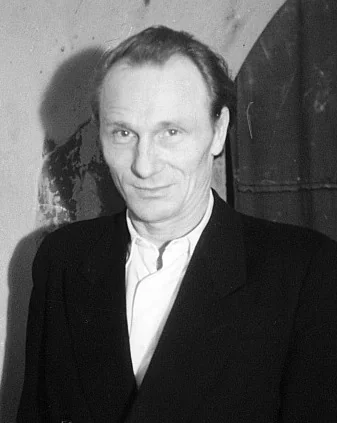
Image from Wikipedia
Image from Wikipedia
Ernst Busch – Voice of the Workers' Movement, Character Actor, Chronicler of a Century
From Kiel Shipyard Worker to Iconic Singer and Actor of the 20th Century
Friedrich Wilhelm Ernst Busch was born on January 22, 1900, in Kiel and passed away on June 8, 1980, in Bernburg. His journey took him from toolmaker and shipyard worker to a defining artistic personality with an unmistakable stage presence and a music career that shaped German cultural history. As a singer of political songs and an actor with a distinctive timbre, Busch became one of the most impressive voices of the workers' movement, whose echoes resound to this day. His artistic development intertwined biography, contemporary history, and music into a rare unity that fascinated both audiences and critics alike.
Busch's work spans theater and film of the Weimar Republic, through exile, the Spanish Civil War, persecution during National Socialism, to the cultural reconstruction in the post-war period. He interpreted poetry and protest songs with a combination of artistic rigor, humanist urgency, and vocal authority. His discography, roles, and commitment to a vibrant music culture make him a reference figure for interpretative art, political song, composition, and production.
Early Years and Artistic Influences
Growing up in the northern German working-class environment, Busch trained as a locksmith at the Kiel Germania shipyard. The experiences of the working world, the sounds of the shipyard, the solidarity of colleagues, and the political upheavals during and after World War I shaped his artistic development. He discovered singing and acting early on as forms of expression that could translate his life experiences into sound and form. This connection between craftsmanship and artistic precision remained a hallmark of his later stage presence.
In the 1920s, Busch moved to Berlin, where he worked at Volksbühne and political stages, shaping his voice. During this phase, the foundation for his later mastery in reciting ballads, moritaten, and workers' songs was established. The intense years of Weimar culture, where art, politics, and the avant-garde intermingled, provided him with an audience that appreciated his uncompromising clarity. Berlin's music culture offered him a network of composers, authors, and directors with whom he systematically expanded his means of expression.
Weimar Republic: Breakthrough Between Theater, Film, and Song
Busch's artistic breakthrough occurred in the final years of the Weimar Republic, where he connected theatrical works with musical projects. Particularly formative was his collaboration with authors and composers who, like him, sought a new, socially relevant art. In film, Busch made striking marks: his performance in a socially critical work of those years, whose music became a classic of workers' songs, is considered a highlight of singing, composition, and political cinema. The fusion of cinematic scene, clear melody, and Busch's declamatory intensity created an icon of music history.
His voice, often both rough and warm, blended with text and melody into a distinctive narrative stance. He did not sing "about" people; he sang "with" them. This technique of interpretation—straddling song performance, spoken word, and dramatic character—gave his recordings and stage performances an immediate impact. The early discography documents how closely Busch's singing was intertwined with contemporary diagnosis, arrangement, and dramatic construction.
Exile, Spanish Civil War, and Songs of the International Brigades
After 1933, Busch had to emigrate and became an artistic voice of the anti-fascist resistance. During the Spanish Civil War, he joined the International Brigades, gathering, singing, and spreading songs that articulated solidarity and hope. His repertoire from this time includes titles that circulated in multiple languages and are considered a musical chronicle of the fight against fascism. Simultaneously, these recordings stand for Busch's ability to merge documentary immediacy with artistic form.
In this phase, recordings were made that are still valued today for their historical aura, tonal quality, and clear textual understanding. Busch's interpretation of protest songs was characterized by articulate clarity, pointed phrasing, and an unobtrusive, rhythmically driven intensity. His voice became an acoustic symbol for the idea of a united front, whose musical signature shaped a world-famous song. Multiple sources document early record productions during the Civil War that capture Busch's role as a singer-publisher and chronicler.
Persecution, Imprisonment, and Liberation
The 1940s mark the darkest stage in Busch’s biography. After various stations in exile, he was arrested, interned, and handed over to German authorities. Trials and years of imprisonment bear witness to the brutality of Nazi terror against artists of resistance. That Busch survived can ultimately be attributed to the collapse of the regime and liberation by Allied troops. This biographical disruption left traces in his artistic stance: he increasingly connected singing with memory culture, dedication, and admonition.
The years of imprisonment sharpened his understanding of voice as testimony. Not pathos, but precision characterized his later performances. Where the texts invoked suffering, solidarity, and courage, Busch responded with controlled emphasis, precise breath, and concentrated tone production. This interpretative economy, rooted in experience and craftsmanship discipline, became the foundation of his post-war career.
New Beginning in the Post-War Era: Publishing, Labels, and Cultural Reconstruction
After 1945, Busch engaged in cultural reconstruction. With publishing vision, he initiated a record company that consolidated various labels for political songs, classical music, and dance music. This resulted in brands that played a central role in the music culture of the post-war period and produced a significant discography. The organizational and artistic concept showcased Busch's understanding of production as cultural infrastructure: the maintenance of repertoire, recording quality, and accessibility should not contradict but rather depend on one another.
With this step, Busch not only professionalized his own oeuvre but also created distribution channels for a new generation of interpreters. The label structure promoted recording aesthetics and repertoire breadth, from political song to classical music. Retrospective analyses and collections recognize this building achievement as a milestone in recording history that resonates to this day. Busch's dual role as artist and producer underscores his authority on matters of composition, arrangement, performance practice, and documentation.
Stage, Brecht Tradition, and Role Profile
On stage, Busch continued his career after 1945 with a serious role profile. His affiliation with epic theater and the Brecht tradition, in which song functioned as a dramatic tool, was particularly impactful. In demanding acting roles, he combined text analysis, choreography of gestures, and the "speaking" voice into a style-defining entity. Critics highlighted his ability to fuse intellectual sharpness with emotional presence.
His portrayals of great figures, even in scientific historical roles, combined historical knowledge with performative accuracy. This understanding of role—analytical, concentrated, yet never distant—made him a role model for subsequent generations of actors. Even in film work of the post-war period, song performance remained an integral part of his character portrayal.
Discography: Songs, Cycles, and Documented Interpretations
Busch’s discography includes workers' songs, protest songs, solidarity songs, ballads, and recitations. He maintained particularly close relationships with works by authors whose texts lent themselves to declamatory-melodic interpretation. The editions from his circle and later archives document a systematic documentation of these repertoires, including numerous recordings of songs from the International Brigades and works that were created in close artistic liaison with significant composers.
Sources and collections repeatedly emphasize titles that belong to the canon of political song culture: including compositions that were integrated into film music and achieved classic status as standalone songs. Archival discographies and later reissues illustrate the lasting demand for these recordings. Several publications and catalog entries list early and later editions as well as collections that make Busch's interpretations accessible in acoustically prepared form.
Style, Technique, and Musical Language
Busch's style is based on text-centered articulation, economical vibrato, clear line delivery, and a conscious balance between speaking and singing. His phrasing follows the semantic emphasis of the text; syllables are not "embellished," but semantically placed. This understanding of song as a scenic, almost documentary form makes his recordings exemplary models of interpretive storytelling. The arrangements often remained transparent to support clarity of words, rhythmic impulse, and rhetorical accent.
In performance practice, Busch stood for precision and attitude. He avoided vocal pathos in favor of a controlled expressiveness that allowed the content to breathe. This aesthetic influenced not just his own work but also singers and actors who sought to musically interpret political texts. Thus, Busch connected expertise in interpretation and production with cultural responsibility—a hallmark of his artistic development.
Resonance, Cultural Influence, and Awards
Busch's artistic weight is evident in the enduring reception of his songs and roles. Performances, retrospectives, and educational institutions bearing his name affirm his authority and the vibrant influence on the training and practice of the performing arts. His interpretations of political songs are considered a reference for music that translates social experience into artistic form.
State and institutional recognitions also document the impact of his art. Awards from the post-war period honored his contribution to the popularization of modern song art, particularly for texts associated with the history of the 20th century. The connection of artistic achievement, publishing activity, and cultural-political engagement remains a unique feature of his career.
Present: Preservation of Legacy and Current Editions
To this day, Busch's work is managed by associations, archives, and editions that curate, contextualize, and make his repertoire accessible anew. Events, documentary formats, and digitally prepared publications keep his oeuvre in discourse. Recent contributions address the historical contextualization of his interpretations and the connection between music, politics, and memory culture. Thus, his artistic legacy remains not only museum-like but also part of an active discourse about the societal role of music.
This preservation of legacy enhances the visibility of his discography and clarifies how Busch's voice functions as a historical source and aesthetic reference. In engaging with his recordings, listeners gain access to sound documents in which life paths, contemporary history, and art converge.
Conclusion: Why Ernst Busch Still Inspires Today
Ernst Busch fascinates because his art transforms experience into sound: the voice of a worker-singer, the precision of a character actor, the stance of a chronicler. His music career unites biography, composition, and production into a coherent narrative about art and responsibility. Those who listen to his songs encounter an aesthetic that inextricably links form and content—without pathos, with emphasis, from deep conviction.
As a singer of political songs and a distinguished actor, Busch remains an authority: for the understanding of text-centered interpretation, for smart arrangements, and for an artistic development that confronted the challenges of its time. Recommendation: Listen, compare, rediscover—and, where possible, attend performances, discussions, and editions that bring his work into the present.
Official Channels of Ernst Busch:
- Instagram: No official profile found
- Facebook: No official profile found
- YouTube: No official profile found
- Spotify: No official profile found
- TikTok: No official profile found
Sources:
- Ernst-Busch-Gesellschaft e. V. – Biography
- Ernst-Busch-Gesellschaft e. V. – Discography
- Ernst-Busch-Gesellschaft e. V. – Films
- Ernst-Busch-Gesellschaft e. V. – Current News
- Memorial to the German Resistance – Biography of Ernst Busch
- Wikipedia – Eterna (Record Label)
- Wikipedia – Amiga (Record Label)
- Wikipedia – Song of the Time
- MusicBrainz – Unity Front Song (Work Data)
- German Historical Museum / Zeughauskino – Kuhle Wampe
- Wikipedia (English) – Ernst Busch (actor)
- Wikipedia: Image and Text Source