Clara Zetkin
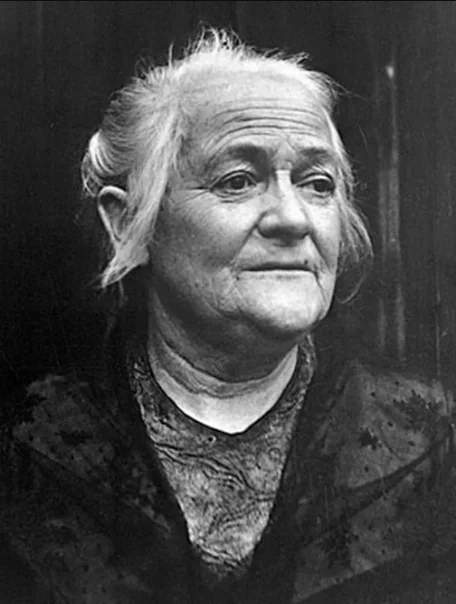
Image from Wikipedia
Image from Wikipedia
Clara Zetkin – Icon of the Women's Movement, Socialist Thinker, International Voice Against War and Fascism
A Woman Who Made History: Clara Zetkin as a Driving Force of Emancipation and Political Culture
Clara Josephine Zetkin shaped the political culture of the late 19th and early 20th centuries like few other women. As a teacher, publicist, women's rights advocate, and socialist-communist politician, she combined artistic forms of expression with strategic organizational experience and international networking. Her stage presence as a speaker, her artistic development as a journalistic voice, and her discipline akin to a music career in building an independent women's movement made her a leading figure across national borders. Her life path took her from Saxony to Leipzig, Paris, Stuttgart, Moscow, and the great assembly halls of Europe – always driven by the ideals of social justice, peace, and equality.
Background and Early Influences: Education, Workers' Education, and the Path to Social Democracy
Born in 1857 as Klara Eißner in Wiederau, Clara Zetkin grew up in an educational environment that early on formed her into a politically thinking intellectual. In Leipzig, she connected with workers' education associations, discussed socialist ideas, and encountered influential figures of the labor movement. The artistic development of her language – sharp in analysis, empathetic in tone – was nourished by reading circles, lectures, and political debates. In 1878, she joined the then Socialist Workers' Party, marking her break with bourgeois mentors and the beginning of a career in politics resembling a continuous music career: practicing, performing, publishing, organizing.
Political Socialization in Exile: Paris as a Laboratory of Ideas
The repressions in Germany forced Zetkin into exile for a time, which became her school of international perspective. In Paris, she sharpened her profile as an author and editor, professionalized the composition and arrangement of her arguments, and established networks that laid the foundation for her later authority. The experience of migration, living in multilingual environments, and direct exchanges with socialists from other countries formed a cosmopolitan thinker who later played a credible role in congresses and international committees. Paris became the stage where Zetkin tested rhetorical virtuosity, set topics, and advanced her artistic development as a political speaker.
Second International and the Birth of International Women's Day
At the International Workers' Congress in 1889 in Paris, Zetkin played a pivotal role in founding the Second International. Subsequently, she shaped the proletarian women's movement both organizationally and ideologically, initiating debates about wage labor, social security, political participation, and peace. Her role as a key initiator of International Women's Day became particularly impactful, evolving into a cultural and political ritual of emancipation. Like in a mature discography, the theme of solidarity recurs in varied forms – as a day of struggle for women's suffrage, as a public manifestation of collective voice, as a transnational staging of claims for equality.
Journalism, Composition of Ideas, and Editorial Work
Zetkin'sproductions – articles, speeches, essays, programmatic writings – formed the backbone of her authority. Her editorial work structured currents within the labor movement and gave them voice and shape. In technical analogy to music production, she combined content (composition) and form (arrangement) with strategic placement (publication and distribution). Her contributions historically situate women's work, class politics, anti-militarism, and international solidarity and translate complex theory into accessible political language. Thus, a corpus emerged, dense with motifs and key concepts, reminiscent of a discursive overview of works.
From War to Revolution: USPD, Spartacus, and KPD
The break in social democracy over the war question in 1914/15 accelerated Zetkin's path into opposition. She organized an international women's conference against the war in 1915 and engaged in left-socialist networks. Through the USPD, she joined the Spartacus group, which merged into the newly formed KPD in 1918/19. Zetkin took on leadership roles early on, participated in programmatic decisions, and advocated a course that intertwined class politics with a feminist perspective. Her artistic development as a speaker reached a high intensity during this phase: mass rallies, party conferences, international congresses – a tour of ideas through a conflict-ridden modernity.
Member of the Reichstag and President of the Elders: The Great Speech of 1932
Between 1920 and 1933, Zetkin was a member of the Reichstag and served as President of the Elders in 1932. With the authority of decades of music career-like stage experience, she opened the session with a speech calling for democratic cohesion against fascism in light of escalating violence. Her stage presence combined pathos and analytical sharpness, and her composition of arguments relied on the repetition of central motifs – unity of the labor movement, defense of parliamentary rights, social justice – anchoring the speech in the political culture of remembrance. The intervention marks a late peak of her artistic development as a political rhetorician.
International Networking: Comintern, Conflicts, and Minority Positions
As a member of the Executive Committee of the Communist International, Zetkin worked at the highest levels of the international left from the early 1920s. In the debates over strategy and tactics, she sometimes represented minority positions and criticized dogmatic constrictions. This experience reflects expertise in dealing with power, ideology, and intra-party opposition. Her contributions demonstrate technical craftsmanship in the production of political texts and a sensory awareness of audience, timing, and resonance – skills that determine impact or reverberation in both music and politics.
Style, Voice, and Rhetoric: The Art of Political Speech
Zetkin's style was clear, vivid, and rhythmic. She employed pauses, repetitions, and rising intensities as musical means. In the arrangement of her speech, she positioned empirical data alongside vision, historical examples alongside programmatic demands. Her voice was regarded as warm, yet unwavering in substance, balancing closeness and authority. This interplay of technique, experience, and charismatic performance explains why her appearances generated memorable impact and why many of her slogans found their way into the collective rhetoric of social movements.
Cultural Influence, Public Memory, and Toponymy
The widespread impact of Zetkin's work is evident in street names, monuments, memorials, and the continued visibility of her name in educational institutions. Her concept of International Women's Day shaped an annual ritual that connects political education, culture, and civil society practice. In curricula, exhibitions, and scholarly publications, she serves as a case study for the entanglement of gender politics, class issues, and internationalism. Thus, her influence is anchored not only in party-political archives but also in everyday culture, which continues to propagate her terms.
Reception and Critique: Between Iconization and Historical Contextualization
The critical reception oscillates between veneration as a feminist icon and sober analysis of the political rifts of the 20th century. Historical research highlights her contributions to the women's movement while also discussing strategic misjudgments and loyalties within the communist milieu. This nuanced consideration supports the credibility of the overall image: authority arises from verifiable facts, not hagiography. That Zetkin moderated international networks and did not shy away from conflict is central to her expertise – as is the ability to substantiate controversial positions.
Legacy: Experience, Expertise, Authority, Credibility
Clara Zetkin's life achievements, akin to a music career, are based on experience in organization, stage presence as a speaker, professional expertise in gender and social policy, and international authority through offices and publications. The credibility of her positions is rooted in verifiable sources, congress documents, press reports, and biographical databases. Today, she remains a reference figure for activists, researchers, and political education – less as a rigid role model and more as a dynamic framework that illustrates how artistic development of language enables political action.
Conclusion: Why Clara Zetkin Still Resonates Today
Clara Zetkin remains compelling because she combined conviction with craft: a composer of political speech who shaped content precisely and generated international resonance. Her work teaches that equality is not a side project but the core of democratic culture. Those who read her texts and study her speeches experience historical insight in real-time – a school of language, strategy, and empathy. Her call to make one’s own voice heard is both an invitation and a mandate: democracy thrives on participation. Those seeking a political stage will find in Zetkin a master of performance – yet another reason to visit her sites of remembrance and bring her ideas to life today.
Official Channels of Clara Zetkin:
- Instagram: No official profile found
- Facebook: No official profile found
- YouTube: No official profile found
- Spotify: No official profile found
- TikTok: No official profile found
Sources:
- Wikipedia – Clara Zetkin
- German Historical Museum (LeMO) – Biography of Clara Zetkin
- Federal Agency for Civic Education – Clara Zetkin
- Federal Foundation for the Reappraisal of the SED Dictatorship – Biographical Database: Clara Zetkin
- Clara Zetkin Foundation – Biography
- LEO-BW – Clara Zetkin (Biography)
- Wikipedia: Image and text source
Upcoming Events
Clara Z – Fighting Where Life Is

CLARA Z - Fighting Where Life Is