
Christoph Willibald Gluck
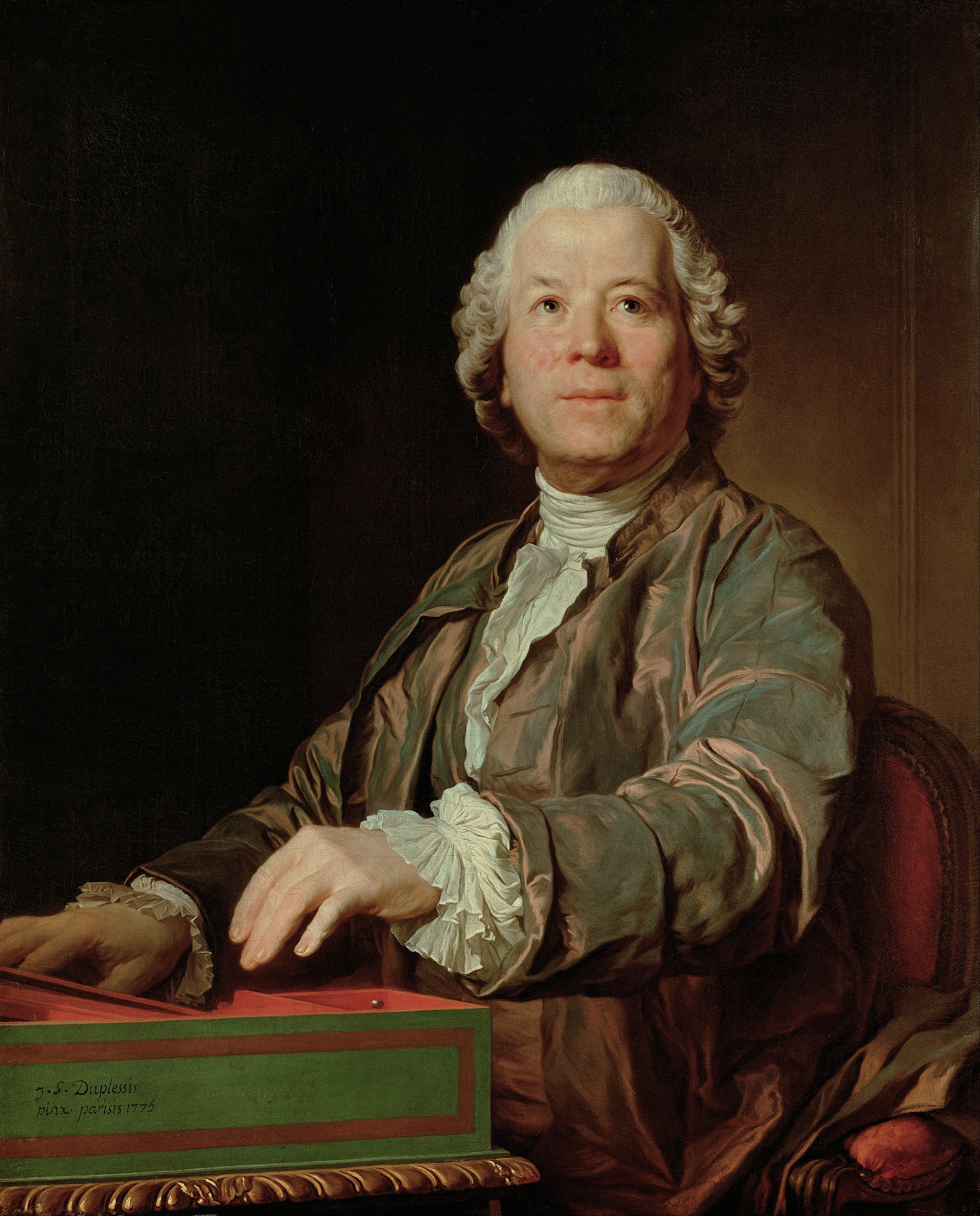
Image from Wikipedia
Image from Wikipedia
Christoph Willibald Gluck – The Opera Reformer Who Redefined Musical Theater
A Composer Between Italy, Vienna, and Paris – How Gluck's Artistic Development Permanently Changed Opera
Christoph Willibald Gluck, born on July 2, 1714, in Erasbach near Berching and died on November 15, 1787, in Vienna, is regarded as one of the most important opera composers of the 18th century. His musical career took him from his formative years in Italy through crucial stages in Vienna to the Parisian high culture. With an uncompromising vision of dramatic truth, clear arrangement, and vocal discipline, he questioned conventions and laid the foundations of classical opera. His stage presence as a musical storyteller emerges from the interplay of composition, text comprehension, and theatrical economy: music serves the drama in Gluck's works – not the other way around.
Gluck's artistic development shaped the repertoire from the reform work Orfeo ed Euridice to Alceste and the French tragédies lyriques such as Iphigénie en Aulide, Armide, and Iphigénie en Tauride. The discography reflects this importance with numerous recordings that reassess his orchestral colors, the balance between recitative, aria, and chorus, as well as elegant dramaturgy. Critics still highlight the consistency of his forms, the psychological precision of his characters, and the groundbreaking reduction of virtuosic self-indulgence.
Background, Education, and Early Years: From Erasbach to Italy
Growing up in an environment of frequent relocations, Gluck chose music early on and went – against his family's expectations – to Italy. There, he became acquainted with Italian opera practice firsthand, studied composition, and worked with prominent singers and impresarios. This early experience in the opera centers of Milan, Venice, Turin, and Naples sharpened his sense of genre, form typology, and vocal classification. Even in his Italian operas, he experimented with the integration of the chorus, the dramatically motivated overture, and a closer connection between scene and aria.
The formative years also shaped Gluck's compositional craft: clear periodicity, a concentrated, thematically coherent melodic line, and orchestration that precisely marks the emotions. In Gluck's works, the arrangement of the accompaniment serves to enhance the scene; coloratura remains a means to an end. This aesthetic foundational attitude forms the basis for his later reform operas, in which textual clarity and dramatic unity take precedence.
Years in Vienna: Patronage, Conductorship, and the Path to Reform
In Vienna, Gluck quickly found influential support and artistic roles. As concertmaster and later as kapellmeister, he established himself in the musical life of the residence city. The city provided him with a laboratory for his artistic development: court culture, theater practice, and a discerning audience encountered the European currents of the time. Here, he created central scores in which he recalibrated the relationship between recitative, aria, chorus, and ballet.
Vienna allowed Gluck to mature creatively, leading to a radical simplification: orchestral clarity, condensation of form, and the curtailment of mere virtuoso arias. His programmatic self-conception of thinking of opera as a dramatic unity became crucial. This artistic development culminated in Orfeo ed Euridice (1762) – a breakthrough that changed the European operatic stage.
The Opera Reform: Orfeo ed Euridice and Alceste as Turning Points
With Orfeo ed Euridice, Gluck articulated the principles of his reform with sonorous clarity: the chorus moves to the center of the action, the ballet music becomes dramaturgically functional, and the vocal lines are expressive yet never self-indulgent. The composition approaches the text with clear diction; coloraturas are governed by dramatic necessity. This new aesthetic unfolds an immediate impact: pain, hope, and redemption condense into a theatrical unity that communicates to the audience without mannered artistic tricks.
Alceste (1767) sharpened the reform: the famous preface emphasized that music must serve the poetry. Gluck understands composition, instrumentation, and staging as an organic whole. Arrangement and production follow one idea: to directly transmit the emotional essence of the drama. In doing so, he set standards that later masters referred to – classical opera gained new credibility and humanistic depth.
Paris and the French Tragédie Lyrique: Iphigénie, Armide, and the Expansion of Style
The Parisian years brought Gluck's reform impulses into dialogue with the Lully-Rameau tradition. With Iphigénie en Aulide (1774), the French version of Orphée et Eurydice (1774), Armide (1777), and Iphigénie en Tauride (1779), he combined French declamation, dance characteristics, and orchestral color with his idea of dramatic unity. The stage presence of his music is characterized by substantial choruses, distinctive woodwind timbres, and precise tempo dramaturgy.
At the same time, Gluck remained a pragmatist in dealing with voices and performance schedules: he adapted roles for specific singer profiles, refined recitatives, and shortened scenes wherever dramatic tension demanded it. This flexible, production-savvy working method reflects expertise in operatic production that extends far beyond mere composition – an early form of modern music dramaturgy.
Later Years, Health, and Impact
In his later years in Vienna, Gluck withdrew periodically but remained a respected authority. Colleagues, students, and conductors honored him as a pioneer of a true art of opera. Contemporary voices and obituaries emphasized his role in European musical life – as a mediator between Italian melodic lines, German text proximity, and French declamation. His death in 1787 marked not an end, but the beginning of a reception history that continues to influence repertoire, editorial practices, and performance aesthetics to this day.
Culturally, Gluck is seen as a composer who led opera from the virtuoso stage to music theater of ideas. Without his reform impulses, the dramatic concepts of Mozart, Cherubini, or Berlioz would be hardly conceivable. His authority is rooted in works that achieve a balance of human expression and classical form with unmistakable clarity.
Discography and Recordings: From Historical Editions to the Present
The discography related to Gluck includes Orfeo/Orphée, Alceste, Paride ed Elena, Iphigénie en Aulide, Armide, and Iphigénie en Tauride in numerous recordings. Historically informed interpretations highlight the transparency of strings and the articulation of woodwinds; modern orchestras emphasize dramatic contrasts and colorful soundscapes. Reviewers praise the coherence of the musical flow, sound-conscious choral direction, and the precision of recitatives with continuo or orchestral accompaniment.
Even in the digital age, Gluck remains present: curated essentials playlists, new releases, and carefully edited complete recordings keep his œuvre in public consciousness. Audiophile critiques emphasize the spatial representation and color palette of recent Orphée recordings, which unfold the tension between lament, choral music, and dance with palpable concentration. For newcomers, Orfeo/Orphée is recommended as the ideal starting point; connoisseurs delve deeper into Armide and Iphigénie, where declamation and orchestration masterfully merge.
Musical Language, Composition, and Style
Gluck's cross-genre competence is evident in the coherent linking of recitative, aria, chorus, and ballet. His compositions refrain from ornamentation as an end in itself; rather, he shapes emotions through harmonic clarity, thematic condensation, and timbral nuance. The instrumentation incorporates woodwinds as character bearers, while strings shape the texture and breath of the drama. Choral blocks serve as a commenting instance and as the driving force of the action.
In style analysis, the prosody of the text takes center stage: phrases follow the speech melody, cadences mark not the virtuosity of the singer but pauses in the action. This aesthetic attitude shapes the scenic credibility: the musical surface remains transparent, and the dramatic message is direct. In this way, Gluck achieves a classically influenced yet modern interpretation of music theater – a model for opera productions to this day.
Cultural Influence, Reception, and Awards in the Reflection of the Music Press
Gluck's influence extends beyond his own work: he became the benchmark for the unity of poetry and music, for the economy of means, and the ethical seriousness of staged events. Contemporary critiques acknowledge his relevance in today's opera landscape, where textual clarity, psychological motivation, and dramatic coherence are central quality criteria. Recent reviews of Orphée recordings attest to the timeless modernity of this music – a sound that builds on reduction, precision, and expressiveness.
Gluck's historical authority is also fueled by editorial pioneering work: large-scale complete editions and editorial projects provide a reliable foundation for research, repertoire maintenance, and production. This lends a source-critical grounding to the discussion of performance practice – from the basset horn to dance – which inspires interpretations and conveys the cultural value of his works sustainably.
Current Projects, Editions, and Performance Practice (2024–2026)
Even from 2024 to 2026, Gluck's music remains present. Festivals, concert halls, and labels are dedicating themselves to his reform operas with new scenic interpretations and fresh sound ideals. Program booklets and season previews feature works such as Orfeo/Orphée or excerpts from ballet music, while reviews illuminate the artistic development of today's ensembles in their engagement with Gluck's style. Particularly visible is the vibrant performance tradition in Gluck's Bavarian homeland and in prestigious opera centers that maintain the composer as a focal point of their repertoire.
Editions and publications focus on sources, variants, and early versions. A modern editorial practice clarifies contexts of creation, pitch levels, articulation signs, and practices of ornamentation. For production, this means greater safety in the interpretation of the works; for music criticism, new arguments for assessing arrangement, balance, and scenic economy. Thus, scholarly expertise combines with lived stage practice.
Conclusion: Why Gluck Still Enchants Today
Christoph Willibald Gluck fascinates because his operas unequivocally serve drama. The artistic journey from the traveler in Italy to the European reformer led to music characterized by clear form, psychological accuracy, and radiant instrumentation that touches the listener directly. His musical career demonstrates how determination, craftsmanship, and aesthetic vision create works of lasting brilliance. Those who experience Orfeo/Orphée, Alceste, or Iphigénie today are not only hearing history but also living music theater.
Especially live, Gluck's music unfolds its full power: the breath control of phrases, the dramaturgically timed tempos, the colorful woodwinds, and the solid chorus resonate in the space as if charged. A concert or opera visit featuring Gluck on the program is always worthwhile – for newcomers as well as connoisseurs. His reform idea is more relevant than ever: music as the truth of theater.
Official Channels of Christoph Willibald Gluck:
- Instagram: No official profile found
- Facebook: No official profile found
- YouTube: No official profile found
- Spotify: No official profile found
- TikTok: No official profile found
Sources:
- Wikipedia – Christoph Willibald Gluck
- Encyclopaedia Britannica – Christoph Willibald Gluck
- International Gluck Society – First Gluck Biography from 1786
- Gluck Festival – #GluckIsLuck
- Union of German Academies of Sciences – Gluck – Complete Works
- Apple Music Classical – Christoph Willibald Gluck Essentials
- connect – Music Tips Classical 2025: Orphée et Eurydice (Review)
- Cultural Foundation – Biography Christoph Willibald Gluck
- Wikipedia: Image and text source
Upcoming Events
Orpheus & Eurydice
Iphigenie in Aulis - Opera by Gluck
Iphigenie in Aulis
Iphigenia in Aulis
Paride ed Elena
Into the Underworld at the Marble Palace
Gluck: Orpheus