
Mausberg 1, Hahnbach
Mausberg 1, 92256 Hahnbach, Germany
Mausberg Pilgrimage Church | History & Mountain Festival
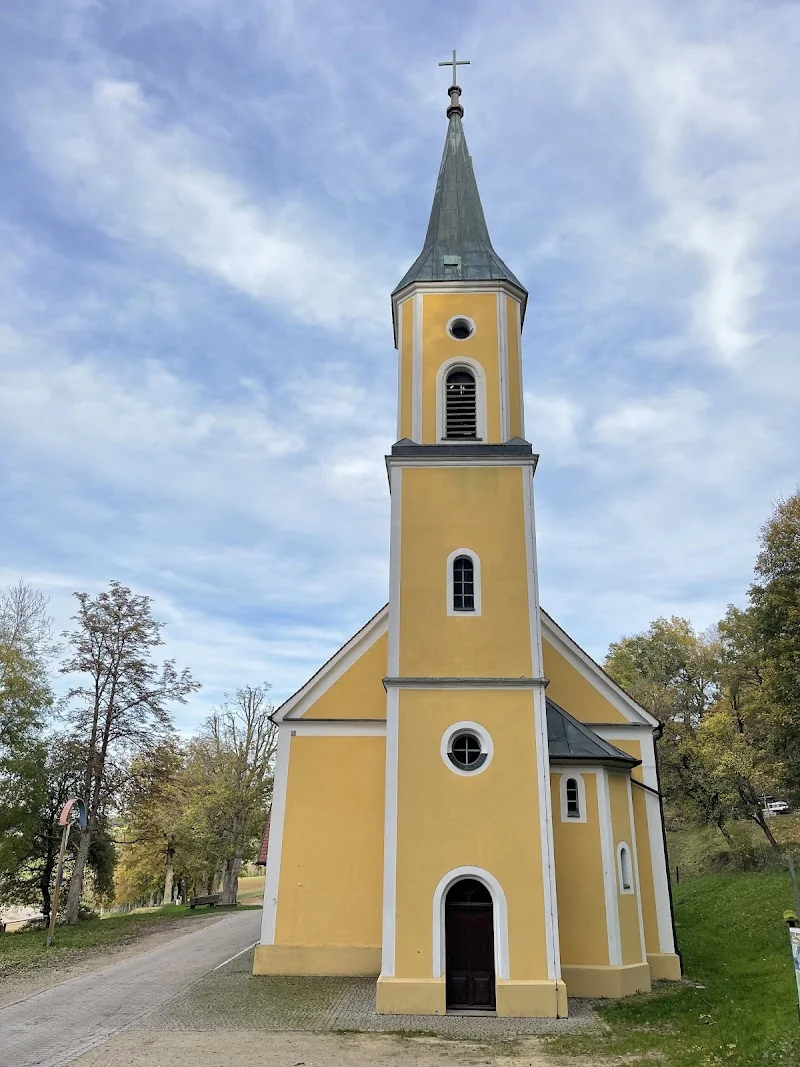
The Mausberg Pilgrimage Church is one of those places where landscape, history, and lived piety intertwine. South of Gebenbach, about one kilometer from the town, the church lies on the Mausberg, half-hidden among stately chestnut trees. The journey there is already part of the experience: From Gebenbach, a road leads through the meadow valley and then ascends gently over the mountain; Stations of the Cross accompany the path, turning the journey into a quiet pilgrimage. Those looking for a church with regional identity, a long tradition, and a vibrant festival culture will find here a place that is more than just a building. The pilgrimage began in 1700 with a recorded event involving the then pastor Sebastian Grün, and since then, the Mausberg has developed into a prominent Marian pilgrimage site in the region. Today, the character of the place is shaped by the festival week around the Nativity of Mary, regular services, renovations, the Stations of the Cross, and good accessibility. ([gebenbach.de](https://www.gebenbach.de/fileadmin/Dateiverzeichnis/Gemeinde_Gebenbach/Chronik/K-O/Mausberg_Geschichte.pdf))
How the Pilgrimage on the Mausberg Began
The history of the Mausberg does not begin with a major construction decision, but with a recorded event from 1700. The then pastor of Gebenbach, Sebastian Grün, rode at the Mausberg, where the church now stands, and fell from his horse. After invoking the Mother of God, he reportedly remained unharmed; this event is considered the starting point of the pilgrimage. The small place of grace initially became a rock cave with a Marian image, later a wooden chapel, and during the 18th century, a steadily expanded pilgrimage site. The chronicle reports a new wooden structure in 1744, a new image of grace in the Mausberg church in 1745, a canopy at the altar in 1748, the consecration of the chapel in 1750, discussions about the location in 1752, and the construction of the nave in 1753. As early as 1756, a carved Baroque frame for the image of grace and a new organ were mentioned. Even then, the development of reconstruction, expansion, and care for the building was closely linked to the pilgrimage. Sources also show that the place lived repeatedly from the approval of the population, the efforts of individual pastors, and the devotion of the faithful. ([gebenbach.de](https://www.gebenbach.de/fileadmin/Dateiverzeichnis/Gemeinde_Gebenbach/Chronik/K-O/Mausberg_Geschichte.pdf))
The decades that followed show how heavily visited the place was and how often it had to adapt to changing conditions. In 1762, a complete indulgence for the main feast of the Nativity of Mary was recorded, in 1766 two new side altars were added, in 1788 a new Funtz organ was delivered, and in 1819 the church received the high altar that still stands today. In 1836, the waterlogged ground necessitated a fundamental construction decision: The church had become so dilapidated that a new church on the mountain was considered. In the end, only the endangered walls were torn down, the presbytery and the north wall were rebuilt, and the foundations were reinforced; in 1843, the renewed church was blessed. In the following decades, further defining elements were added: In 1863, the path to the pilgrimage church was renewed with sandstone Stations of the Cross and flanking trees, in 1870 a massive bell tower was built, in 1871 the gallery, frescoes, and altar area were newly framed, in 1905 the Stations of the Cross were renewed, and in 1991 the church was consecrated again after extensive renovation. This development makes it clear that the Mausberg was not preserved as a static monument, but was carefully expanded again and again as a living pilgrimage site. ([gebenbach.de](https://www.gebenbach.de/fileadmin/Dateiverzeichnis/Gemeinde_Gebenbach/Chronik/K-O/Mausberg_Geschichte.pdf))
Mausberg Festival, Nativity of Mary, and the Lively Pilgrimage Week
When today the Mausberg is mentioned, it almost always refers to the festival week surrounding the Nativity of Mary on September 8. The municipality of Gebenbach explicitly states that the Mausberg festival, with its highlight on the Nativity of Mary, had an established place in the church year early on and was revitalized around 1980 on the initiative of Father Alfred Lindner and the parish council when the tradition was at risk of being forgotten. Since then, the festival has become a whole pilgrimage week that sets the place in motion anew every year. The programs show a clear structure: Services, confession opportunities, rosaries, family services, youth days, senior days, ecumenical celebrations, and musically designed devotions shape the course. Thus, the Mausberg is not only a place of quiet prayer but also a place of encounter across generations. Those looking for programs, festival weeks, or mountain festivals will find not only individual dates here but a grown tradition that takes on new forms with each edition while still retaining its historical core. ([gebenbach.de](https://www.gebenbach.de/buergerservice/kirchen-kapellen?cHash=0762b1a43c09232f2a2cd375c8cbf104&l=566))
The current festival programs for 2024 and 2025 also show how lively and organized the pilgrimage week is today. There are festival Sundays, concerts, lectures, and thematic services; on certain days, a shuttle bus service is even set up from the parking lot to the Mausberg church, making it easier for older visitors or larger pilgrimage groups to manage the way. Onetz describes the festival as a magnet for visitors and emphasizes that the pilgrimage has existed for over 300 years. For search queries like Mausberg festival, pilgrimage week, or Nativity of Mary, this mix of spirituality, community, and practical organization is particularly important. The official programs show that the place does not only rely on tradition but actively develops it: with youth services, senior offerings, children's word services, musical contributions, and liturgical highlights. Thus, the Mausberg remains visible in the region, not just as a church building, but as an annual meeting point for pilgrims, families, clubs, and people seeking a special form of festival and devotion. ([pfarrei-gebenbach.de](https://www.pfarrei-gebenbach.de/index.php/mausberg/mausbergfestwoche-2024.html))
Access, Parking, and the Way to the Pilgrimage Church
For visitors, the location of the Mausberg is as important as its history. The address is Mausberg 1, 92256 Hahnbach, and the site is located south of Gebenbach. The chronicle describes a road that leads from the Gebenbach train station through the meadow valley and then ascends gently to the church. This makes it clear that the Mausberg is not isolated on a hard-to-reach peak but is integrated into a developed network of paths from village, valley, and mountain. Those who visit the church on foot experience the way as part of the pilgrimage; those who come by car benefit from the infrastructural development of recent decades. The path to the church has been expanded and paved, making walking significantly more pleasant. This is particularly important for a pilgrimage site, as the ascent should remain an experience without becoming unnecessarily burdensome. ([veranstaltungen.meinestadt.de](https://veranstaltungen.meinestadt.de/hahnbach/location-detail/5483898?utm_source=openai))
Especially practical is the parking lot at the foot of the Mausberg, which was paved in 2011 on the church's own Brändleinwiese. In 2015, solar lights were added, improving usability in the evening hours. During the festival days, a shuttle bus service is additionally offered between the parking lot and the church, making the actual ascent easier to manage. The chronicle also mentions modern sanitary facilities behind the church and a connection to the sewer system, which is important for use during large events and services. Overall, this shows a place that successfully combines tradition preservation and practical visitor friendliness. For search queries like access, parking, or parking lot, the central message is clear: The Mausberg is accessible, prepared, and set up for repeat visits. Those who want to combine their visit to the church with a hike or a short walk will find a clearly described path; those who want to travel comfortably can use the parking lot and, if necessary, the shuttle. ([gebenbach.de](https://www.gebenbach.de/fileadmin/Dateiverzeichnis/Gemeinde_Gebenbach/Chronik/K-O/Mausberg_Geschichte.pdf))
Image of Grace, Stations of the Cross, and Church Furnishings
The spiritual center of the Mausberg is the image of grace of the Mother of God. Its origin is unfortunately not documented according to the parish; however, tradition mentions the possibility that it could be one of the Cranach replicas. A connection to other famous Marian images is also discussed. What is most important is that the image has been the reason for veneration, reconstruction, and expansion of the place from the very beginning. The early history initially describes a Marian image in a rock cave, later a wooden structure, and finally the development of the church, which was repeatedly related to the image of grace. For many visitors, this is the core of the Mausberg: not a museum, but a place where image, space, and prayer belong together. This makes the church interesting for those searching for the keyword image of grace Mausberg and who want to understand not just a location but the spiritual significance behind the image. ([pfarrei-gebenbach.de](https://www.pfarrei-gebenbach.de/index.php/kirchen-kapellen/gnadenbild-auf-dem-mausberg.html))
The rest of the furnishings also tell a story. The chronicle mentions the high altar still standing today from 1819, side altars from the 18th century, an organ from the late 18th century, frescoes, and a renewed pulpit in the 19th century, as well as a repeatedly maintained Stations of the Cross. Particularly significant are the structural interventions of the 19th and 20th centuries: The Stations of the Cross were renewed in 1863 with sandstone stations, again in 1905 with Gothic-style columns and copper plates, and later revised again. The path itself received trees, a spruce hedge, and over time modern additions such as sewer connections, sanitary facilities, and electrical supply. The combination of historical substance and practical maintenance makes the Mausberg church a place where the traces of centuries can still be read without the visit being burdensome. Those who pay attention to architecture, devotion, and liturgical furnishings will find many small details here that elevate the place far beyond a simple village church. ([gebenbach.de](https://www.gebenbach.de/fileadmin/Dateiverzeichnis/Gemeinde_Gebenbach/Chronik/K-O/Mausberg_Geschichte.pdf))
Images, Views, and Why the Mausberg is So Popular
Those searching for images of the Mausberg Pilgrimage Church usually want to gain an impression of the location, architecture, and atmosphere. This is precisely where the strength of the place lies: The community describes the church as half-hidden by stately chestnut trees, and on the pages of the community and parish, there are images and aerial photographs that show the mountain as a prominent religious and landscape point. This is particularly important for the search intent images of the Mausberg Pilgrimage Church, as here not only a church but a complete ensemble of mountain, path, layout, and festival site becomes visible. The location appears calm and at the same time inviting; it connects nature, sacred space, and regional history into a coherent overall picture. Those who want to orient themselves in advance receive exactly the visual impression that many seekers expect: not just facades, but a living place in its surroundings. ([gebenbach.de](https://www.gebenbach.de/fileadmin/Dateiverzeichnis/Gemeinde_Gebenbach/Chronik/K-O/Mausberg_Geschichte.pdf))
As a photographic motif, the Mausberg is also interesting because it combines sacred architecture, hillside location, and tree backdrop. The official pages use aerial images and exterior shots that show how closely the church is intertwined with the mountain. For visitors, this means: The place is suitable for both brief impressions and quiet, consciously taken moments. Those who enjoy collecting regional images will find here a mix of church, Stations of the Cross, path axis, and festival site that is typical yet distinctive in the Upper Palatinate. The popularity of the Mausberg is also related to its well-maintained surroundings. The chronicle mentions a newly created parking lot, renewed avenue trees, paved paths, and regularly maintained infrastructure. Additionally, the pilgrimage remains visible in conjunction with the festival calendar, services, and regional mountain festivals. A place like this does not only live from its past but also from being photographed, visited, celebrated, and passed on. Such pilgrimage sites belong to the cultural landscape in the Upper Palatinate: They are destinations for pilgrims, families, club groups, and all those seeking a mix of silence, tradition, and village festival. The Mausberg perfectly fulfills this profile. ([gebenbach.de](https://www.gebenbach.de/gemeinde-gebenbach/gemeindeteile/gebenbach?utm_source=openai))
Visiting Tips, Services, and Practical Information
A visit to the Mausberg is particularly worthwhile when one understands it not just as a church to look at but as a living pilgrimage site. The parish regularly informs about services, devotions, and the respective festival program. During the Mausberg festival week, there are stations for different groups, from children and families to seniors, youth, and the sick. This makes the place particularly accessible for visitors who want to connect spiritual offerings with regional culture. Those who just stop by can experience the short uphill path as a small break; those who stay longer will find enough points of connection for an extended stay with the Stations of the Cross, festival week, and quiet moments. Thus, the Mausberg becomes a destination suitable for both a conscious pilgrimage and a short excursion. ([pfarrei-gebenbach.de](https://pfarrei-gebenbach.de/index.php/mausberg))
For practical planning, it is helpful that there is a paved parking lot at the foot of the mountain, toilet facilities have been set up for festival days and weddings, and the access paths have been repeatedly improved in recent years. This speaks for good visitor organization without losing the character of the place. From an SEO perspective, several search intents can therefore be meaningfully addressed: history, access, parking, images, Stations of the Cross, and program. The Mausberg Pilgrimage Church is thus a location that remains attractive for both the religiously interested and for excursionists and regional explorers. Those planning a visit should best distinguish between quiet days and festival times: During the week, the quiet pilgrimage atmosphere is in the foreground, while the festival week with music, services, and many encounters makes the lively character of the Mausberg visible. This mix explains why the place has endured for centuries and still fulfills so many different search queries today. ([gebenbach.de](https://www.gebenbach.de/fileadmin/Dateiverzeichnis/Gemeinde_Gebenbach/Chronik/K-O/Mausberg_Geschichte.pdf))
Sources:
- Municipality of Gebenbach - Churches & Chapels ([gebenbach.de](https://www.gebenbach.de/buergerservice/kirchen-kapellen?cHash=0762b1a43c09232f2a2cd375c8cbf104&l=566))
- Parish of Gebenbach - Image of Grace on the Mausberg ([pfarrei-gebenbach.de](https://www.pfarrei-gebenbach.de/index.php/kirchen-kapellen/gnadenbild-auf-dem-mausberg.html))
- Parish of Gebenbach - Mausberg Festival 2025 ([pfarrei-gebenbach.de](https://pfarrei-gebenbach.de/index.php/mausberg))
- Municipality of Gebenbach - Chronicle of the Mausberg Pilgrimage (PDF) ([gebenbach.de](https://www.gebenbach.de/fileadmin/Dateiverzeichnis/Gemeinde_Gebenbach/Chronik/K-O/Mausberg_Geschichte.pdf))
- ONETZ - Current News on the Topic of Mausberg Gebenbach ([onetz.de](https://www.onetz.de/themen/mausberg-gebenbach?utm_source=openai))
- Oberpfalz.de - The Mountain Calls in the Amberg-Sulzbacher Land ([oberpfalz.de](https://www.oberpfalz.de/amberg-sulzbach-bergfeste/?utm_source=openai))
Mehr anzeigenWeniger anzeigen
Mausberg Pilgrimage Church | History & Mountain Festival
The Mausberg Pilgrimage Church is one of those places where landscape, history, and lived piety intertwine. South of Gebenbach, about one kilometer from the town, the church lies on the Mausberg, half-hidden among stately chestnut trees. The journey there is already part of the experience: From Gebenbach, a road leads through the meadow valley and then ascends gently over the mountain; Stations of the Cross accompany the path, turning the journey into a quiet pilgrimage. Those looking for a church with regional identity, a long tradition, and a vibrant festival culture will find here a place that is more than just a building. The pilgrimage began in 1700 with a recorded event involving the then pastor Sebastian Grün, and since then, the Mausberg has developed into a prominent Marian pilgrimage site in the region. Today, the character of the place is shaped by the festival week around the Nativity of Mary, regular services, renovations, the Stations of the Cross, and good accessibility. ([gebenbach.de](https://www.gebenbach.de/fileadmin/Dateiverzeichnis/Gemeinde_Gebenbach/Chronik/K-O/Mausberg_Geschichte.pdf))
How the Pilgrimage on the Mausberg Began
The history of the Mausberg does not begin with a major construction decision, but with a recorded event from 1700. The then pastor of Gebenbach, Sebastian Grün, rode at the Mausberg, where the church now stands, and fell from his horse. After invoking the Mother of God, he reportedly remained unharmed; this event is considered the starting point of the pilgrimage. The small place of grace initially became a rock cave with a Marian image, later a wooden chapel, and during the 18th century, a steadily expanded pilgrimage site. The chronicle reports a new wooden structure in 1744, a new image of grace in the Mausberg church in 1745, a canopy at the altar in 1748, the consecration of the chapel in 1750, discussions about the location in 1752, and the construction of the nave in 1753. As early as 1756, a carved Baroque frame for the image of grace and a new organ were mentioned. Even then, the development of reconstruction, expansion, and care for the building was closely linked to the pilgrimage. Sources also show that the place lived repeatedly from the approval of the population, the efforts of individual pastors, and the devotion of the faithful. ([gebenbach.de](https://www.gebenbach.de/fileadmin/Dateiverzeichnis/Gemeinde_Gebenbach/Chronik/K-O/Mausberg_Geschichte.pdf))
The decades that followed show how heavily visited the place was and how often it had to adapt to changing conditions. In 1762, a complete indulgence for the main feast of the Nativity of Mary was recorded, in 1766 two new side altars were added, in 1788 a new Funtz organ was delivered, and in 1819 the church received the high altar that still stands today. In 1836, the waterlogged ground necessitated a fundamental construction decision: The church had become so dilapidated that a new church on the mountain was considered. In the end, only the endangered walls were torn down, the presbytery and the north wall were rebuilt, and the foundations were reinforced; in 1843, the renewed church was blessed. In the following decades, further defining elements were added: In 1863, the path to the pilgrimage church was renewed with sandstone Stations of the Cross and flanking trees, in 1870 a massive bell tower was built, in 1871 the gallery, frescoes, and altar area were newly framed, in 1905 the Stations of the Cross were renewed, and in 1991 the church was consecrated again after extensive renovation. This development makes it clear that the Mausberg was not preserved as a static monument, but was carefully expanded again and again as a living pilgrimage site. ([gebenbach.de](https://www.gebenbach.de/fileadmin/Dateiverzeichnis/Gemeinde_Gebenbach/Chronik/K-O/Mausberg_Geschichte.pdf))
Mausberg Festival, Nativity of Mary, and the Lively Pilgrimage Week
When today the Mausberg is mentioned, it almost always refers to the festival week surrounding the Nativity of Mary on September 8. The municipality of Gebenbach explicitly states that the Mausberg festival, with its highlight on the Nativity of Mary, had an established place in the church year early on and was revitalized around 1980 on the initiative of Father Alfred Lindner and the parish council when the tradition was at risk of being forgotten. Since then, the festival has become a whole pilgrimage week that sets the place in motion anew every year. The programs show a clear structure: Services, confession opportunities, rosaries, family services, youth days, senior days, ecumenical celebrations, and musically designed devotions shape the course. Thus, the Mausberg is not only a place of quiet prayer but also a place of encounter across generations. Those looking for programs, festival weeks, or mountain festivals will find not only individual dates here but a grown tradition that takes on new forms with each edition while still retaining its historical core. ([gebenbach.de](https://www.gebenbach.de/buergerservice/kirchen-kapellen?cHash=0762b1a43c09232f2a2cd375c8cbf104&l=566))
The current festival programs for 2024 and 2025 also show how lively and organized the pilgrimage week is today. There are festival Sundays, concerts, lectures, and thematic services; on certain days, a shuttle bus service is even set up from the parking lot to the Mausberg church, making it easier for older visitors or larger pilgrimage groups to manage the way. Onetz describes the festival as a magnet for visitors and emphasizes that the pilgrimage has existed for over 300 years. For search queries like Mausberg festival, pilgrimage week, or Nativity of Mary, this mix of spirituality, community, and practical organization is particularly important. The official programs show that the place does not only rely on tradition but actively develops it: with youth services, senior offerings, children's word services, musical contributions, and liturgical highlights. Thus, the Mausberg remains visible in the region, not just as a church building, but as an annual meeting point for pilgrims, families, clubs, and people seeking a special form of festival and devotion. ([pfarrei-gebenbach.de](https://www.pfarrei-gebenbach.de/index.php/mausberg/mausbergfestwoche-2024.html))
Access, Parking, and the Way to the Pilgrimage Church
For visitors, the location of the Mausberg is as important as its history. The address is Mausberg 1, 92256 Hahnbach, and the site is located south of Gebenbach. The chronicle describes a road that leads from the Gebenbach train station through the meadow valley and then ascends gently to the church. This makes it clear that the Mausberg is not isolated on a hard-to-reach peak but is integrated into a developed network of paths from village, valley, and mountain. Those who visit the church on foot experience the way as part of the pilgrimage; those who come by car benefit from the infrastructural development of recent decades. The path to the church has been expanded and paved, making walking significantly more pleasant. This is particularly important for a pilgrimage site, as the ascent should remain an experience without becoming unnecessarily burdensome. ([veranstaltungen.meinestadt.de](https://veranstaltungen.meinestadt.de/hahnbach/location-detail/5483898?utm_source=openai))
Especially practical is the parking lot at the foot of the Mausberg, which was paved in 2011 on the church's own Brändleinwiese. In 2015, solar lights were added, improving usability in the evening hours. During the festival days, a shuttle bus service is additionally offered between the parking lot and the church, making the actual ascent easier to manage. The chronicle also mentions modern sanitary facilities behind the church and a connection to the sewer system, which is important for use during large events and services. Overall, this shows a place that successfully combines tradition preservation and practical visitor friendliness. For search queries like access, parking, or parking lot, the central message is clear: The Mausberg is accessible, prepared, and set up for repeat visits. Those who want to combine their visit to the church with a hike or a short walk will find a clearly described path; those who want to travel comfortably can use the parking lot and, if necessary, the shuttle. ([gebenbach.de](https://www.gebenbach.de/fileadmin/Dateiverzeichnis/Gemeinde_Gebenbach/Chronik/K-O/Mausberg_Geschichte.pdf))
Image of Grace, Stations of the Cross, and Church Furnishings
The spiritual center of the Mausberg is the image of grace of the Mother of God. Its origin is unfortunately not documented according to the parish; however, tradition mentions the possibility that it could be one of the Cranach replicas. A connection to other famous Marian images is also discussed. What is most important is that the image has been the reason for veneration, reconstruction, and expansion of the place from the very beginning. The early history initially describes a Marian image in a rock cave, later a wooden structure, and finally the development of the church, which was repeatedly related to the image of grace. For many visitors, this is the core of the Mausberg: not a museum, but a place where image, space, and prayer belong together. This makes the church interesting for those searching for the keyword image of grace Mausberg and who want to understand not just a location but the spiritual significance behind the image. ([pfarrei-gebenbach.de](https://www.pfarrei-gebenbach.de/index.php/kirchen-kapellen/gnadenbild-auf-dem-mausberg.html))
The rest of the furnishings also tell a story. The chronicle mentions the high altar still standing today from 1819, side altars from the 18th century, an organ from the late 18th century, frescoes, and a renewed pulpit in the 19th century, as well as a repeatedly maintained Stations of the Cross. Particularly significant are the structural interventions of the 19th and 20th centuries: The Stations of the Cross were renewed in 1863 with sandstone stations, again in 1905 with Gothic-style columns and copper plates, and later revised again. The path itself received trees, a spruce hedge, and over time modern additions such as sewer connections, sanitary facilities, and electrical supply. The combination of historical substance and practical maintenance makes the Mausberg church a place where the traces of centuries can still be read without the visit being burdensome. Those who pay attention to architecture, devotion, and liturgical furnishings will find many small details here that elevate the place far beyond a simple village church. ([gebenbach.de](https://www.gebenbach.de/fileadmin/Dateiverzeichnis/Gemeinde_Gebenbach/Chronik/K-O/Mausberg_Geschichte.pdf))
Images, Views, and Why the Mausberg is So Popular
Those searching for images of the Mausberg Pilgrimage Church usually want to gain an impression of the location, architecture, and atmosphere. This is precisely where the strength of the place lies: The community describes the church as half-hidden by stately chestnut trees, and on the pages of the community and parish, there are images and aerial photographs that show the mountain as a prominent religious and landscape point. This is particularly important for the search intent images of the Mausberg Pilgrimage Church, as here not only a church but a complete ensemble of mountain, path, layout, and festival site becomes visible. The location appears calm and at the same time inviting; it connects nature, sacred space, and regional history into a coherent overall picture. Those who want to orient themselves in advance receive exactly the visual impression that many seekers expect: not just facades, but a living place in its surroundings. ([gebenbach.de](https://www.gebenbach.de/fileadmin/Dateiverzeichnis/Gemeinde_Gebenbach/Chronik/K-O/Mausberg_Geschichte.pdf))
As a photographic motif, the Mausberg is also interesting because it combines sacred architecture, hillside location, and tree backdrop. The official pages use aerial images and exterior shots that show how closely the church is intertwined with the mountain. For visitors, this means: The place is suitable for both brief impressions and quiet, consciously taken moments. Those who enjoy collecting regional images will find here a mix of church, Stations of the Cross, path axis, and festival site that is typical yet distinctive in the Upper Palatinate. The popularity of the Mausberg is also related to its well-maintained surroundings. The chronicle mentions a newly created parking lot, renewed avenue trees, paved paths, and regularly maintained infrastructure. Additionally, the pilgrimage remains visible in conjunction with the festival calendar, services, and regional mountain festivals. A place like this does not only live from its past but also from being photographed, visited, celebrated, and passed on. Such pilgrimage sites belong to the cultural landscape in the Upper Palatinate: They are destinations for pilgrims, families, club groups, and all those seeking a mix of silence, tradition, and village festival. The Mausberg perfectly fulfills this profile. ([gebenbach.de](https://www.gebenbach.de/gemeinde-gebenbach/gemeindeteile/gebenbach?utm_source=openai))
Visiting Tips, Services, and Practical Information
A visit to the Mausberg is particularly worthwhile when one understands it not just as a church to look at but as a living pilgrimage site. The parish regularly informs about services, devotions, and the respective festival program. During the Mausberg festival week, there are stations for different groups, from children and families to seniors, youth, and the sick. This makes the place particularly accessible for visitors who want to connect spiritual offerings with regional culture. Those who just stop by can experience the short uphill path as a small break; those who stay longer will find enough points of connection for an extended stay with the Stations of the Cross, festival week, and quiet moments. Thus, the Mausberg becomes a destination suitable for both a conscious pilgrimage and a short excursion. ([pfarrei-gebenbach.de](https://pfarrei-gebenbach.de/index.php/mausberg))
For practical planning, it is helpful that there is a paved parking lot at the foot of the mountain, toilet facilities have been set up for festival days and weddings, and the access paths have been repeatedly improved in recent years. This speaks for good visitor organization without losing the character of the place. From an SEO perspective, several search intents can therefore be meaningfully addressed: history, access, parking, images, Stations of the Cross, and program. The Mausberg Pilgrimage Church is thus a location that remains attractive for both the religiously interested and for excursionists and regional explorers. Those planning a visit should best distinguish between quiet days and festival times: During the week, the quiet pilgrimage atmosphere is in the foreground, while the festival week with music, services, and many encounters makes the lively character of the Mausberg visible. This mix explains why the place has endured for centuries and still fulfills so many different search queries today. ([gebenbach.de](https://www.gebenbach.de/fileadmin/Dateiverzeichnis/Gemeinde_Gebenbach/Chronik/K-O/Mausberg_Geschichte.pdf))
Sources:
- Municipality of Gebenbach - Churches & Chapels ([gebenbach.de](https://www.gebenbach.de/buergerservice/kirchen-kapellen?cHash=0762b1a43c09232f2a2cd375c8cbf104&l=566))
- Parish of Gebenbach - Image of Grace on the Mausberg ([pfarrei-gebenbach.de](https://www.pfarrei-gebenbach.de/index.php/kirchen-kapellen/gnadenbild-auf-dem-mausberg.html))
- Parish of Gebenbach - Mausberg Festival 2025 ([pfarrei-gebenbach.de](https://pfarrei-gebenbach.de/index.php/mausberg))
- Municipality of Gebenbach - Chronicle of the Mausberg Pilgrimage (PDF) ([gebenbach.de](https://www.gebenbach.de/fileadmin/Dateiverzeichnis/Gemeinde_Gebenbach/Chronik/K-O/Mausberg_Geschichte.pdf))
- ONETZ - Current News on the Topic of Mausberg Gebenbach ([onetz.de](https://www.onetz.de/themen/mausberg-gebenbach?utm_source=openai))
- Oberpfalz.de - The Mountain Calls in the Amberg-Sulzbacher Land ([oberpfalz.de](https://www.oberpfalz.de/amberg-sulzbach-bergfeste/?utm_source=openai))
Mausberg Pilgrimage Church | History & Mountain Festival
The Mausberg Pilgrimage Church is one of those places where landscape, history, and lived piety intertwine. South of Gebenbach, about one kilometer from the town, the church lies on the Mausberg, half-hidden among stately chestnut trees. The journey there is already part of the experience: From Gebenbach, a road leads through the meadow valley and then ascends gently over the mountain; Stations of the Cross accompany the path, turning the journey into a quiet pilgrimage. Those looking for a church with regional identity, a long tradition, and a vibrant festival culture will find here a place that is more than just a building. The pilgrimage began in 1700 with a recorded event involving the then pastor Sebastian Grün, and since then, the Mausberg has developed into a prominent Marian pilgrimage site in the region. Today, the character of the place is shaped by the festival week around the Nativity of Mary, regular services, renovations, the Stations of the Cross, and good accessibility. ([gebenbach.de](https://www.gebenbach.de/fileadmin/Dateiverzeichnis/Gemeinde_Gebenbach/Chronik/K-O/Mausberg_Geschichte.pdf))
How the Pilgrimage on the Mausberg Began
The history of the Mausberg does not begin with a major construction decision, but with a recorded event from 1700. The then pastor of Gebenbach, Sebastian Grün, rode at the Mausberg, where the church now stands, and fell from his horse. After invoking the Mother of God, he reportedly remained unharmed; this event is considered the starting point of the pilgrimage. The small place of grace initially became a rock cave with a Marian image, later a wooden chapel, and during the 18th century, a steadily expanded pilgrimage site. The chronicle reports a new wooden structure in 1744, a new image of grace in the Mausberg church in 1745, a canopy at the altar in 1748, the consecration of the chapel in 1750, discussions about the location in 1752, and the construction of the nave in 1753. As early as 1756, a carved Baroque frame for the image of grace and a new organ were mentioned. Even then, the development of reconstruction, expansion, and care for the building was closely linked to the pilgrimage. Sources also show that the place lived repeatedly from the approval of the population, the efforts of individual pastors, and the devotion of the faithful. ([gebenbach.de](https://www.gebenbach.de/fileadmin/Dateiverzeichnis/Gemeinde_Gebenbach/Chronik/K-O/Mausberg_Geschichte.pdf))
The decades that followed show how heavily visited the place was and how often it had to adapt to changing conditions. In 1762, a complete indulgence for the main feast of the Nativity of Mary was recorded, in 1766 two new side altars were added, in 1788 a new Funtz organ was delivered, and in 1819 the church received the high altar that still stands today. In 1836, the waterlogged ground necessitated a fundamental construction decision: The church had become so dilapidated that a new church on the mountain was considered. In the end, only the endangered walls were torn down, the presbytery and the north wall were rebuilt, and the foundations were reinforced; in 1843, the renewed church was blessed. In the following decades, further defining elements were added: In 1863, the path to the pilgrimage church was renewed with sandstone Stations of the Cross and flanking trees, in 1870 a massive bell tower was built, in 1871 the gallery, frescoes, and altar area were newly framed, in 1905 the Stations of the Cross were renewed, and in 1991 the church was consecrated again after extensive renovation. This development makes it clear that the Mausberg was not preserved as a static monument, but was carefully expanded again and again as a living pilgrimage site. ([gebenbach.de](https://www.gebenbach.de/fileadmin/Dateiverzeichnis/Gemeinde_Gebenbach/Chronik/K-O/Mausberg_Geschichte.pdf))
Mausberg Festival, Nativity of Mary, and the Lively Pilgrimage Week
When today the Mausberg is mentioned, it almost always refers to the festival week surrounding the Nativity of Mary on September 8. The municipality of Gebenbach explicitly states that the Mausberg festival, with its highlight on the Nativity of Mary, had an established place in the church year early on and was revitalized around 1980 on the initiative of Father Alfred Lindner and the parish council when the tradition was at risk of being forgotten. Since then, the festival has become a whole pilgrimage week that sets the place in motion anew every year. The programs show a clear structure: Services, confession opportunities, rosaries, family services, youth days, senior days, ecumenical celebrations, and musically designed devotions shape the course. Thus, the Mausberg is not only a place of quiet prayer but also a place of encounter across generations. Those looking for programs, festival weeks, or mountain festivals will find not only individual dates here but a grown tradition that takes on new forms with each edition while still retaining its historical core. ([gebenbach.de](https://www.gebenbach.de/buergerservice/kirchen-kapellen?cHash=0762b1a43c09232f2a2cd375c8cbf104&l=566))
The current festival programs for 2024 and 2025 also show how lively and organized the pilgrimage week is today. There are festival Sundays, concerts, lectures, and thematic services; on certain days, a shuttle bus service is even set up from the parking lot to the Mausberg church, making it easier for older visitors or larger pilgrimage groups to manage the way. Onetz describes the festival as a magnet for visitors and emphasizes that the pilgrimage has existed for over 300 years. For search queries like Mausberg festival, pilgrimage week, or Nativity of Mary, this mix of spirituality, community, and practical organization is particularly important. The official programs show that the place does not only rely on tradition but actively develops it: with youth services, senior offerings, children's word services, musical contributions, and liturgical highlights. Thus, the Mausberg remains visible in the region, not just as a church building, but as an annual meeting point for pilgrims, families, clubs, and people seeking a special form of festival and devotion. ([pfarrei-gebenbach.de](https://www.pfarrei-gebenbach.de/index.php/mausberg/mausbergfestwoche-2024.html))
Access, Parking, and the Way to the Pilgrimage Church
For visitors, the location of the Mausberg is as important as its history. The address is Mausberg 1, 92256 Hahnbach, and the site is located south of Gebenbach. The chronicle describes a road that leads from the Gebenbach train station through the meadow valley and then ascends gently to the church. This makes it clear that the Mausberg is not isolated on a hard-to-reach peak but is integrated into a developed network of paths from village, valley, and mountain. Those who visit the church on foot experience the way as part of the pilgrimage; those who come by car benefit from the infrastructural development of recent decades. The path to the church has been expanded and paved, making walking significantly more pleasant. This is particularly important for a pilgrimage site, as the ascent should remain an experience without becoming unnecessarily burdensome. ([veranstaltungen.meinestadt.de](https://veranstaltungen.meinestadt.de/hahnbach/location-detail/5483898?utm_source=openai))
Especially practical is the parking lot at the foot of the Mausberg, which was paved in 2011 on the church's own Brändleinwiese. In 2015, solar lights were added, improving usability in the evening hours. During the festival days, a shuttle bus service is additionally offered between the parking lot and the church, making the actual ascent easier to manage. The chronicle also mentions modern sanitary facilities behind the church and a connection to the sewer system, which is important for use during large events and services. Overall, this shows a place that successfully combines tradition preservation and practical visitor friendliness. For search queries like access, parking, or parking lot, the central message is clear: The Mausberg is accessible, prepared, and set up for repeat visits. Those who want to combine their visit to the church with a hike or a short walk will find a clearly described path; those who want to travel comfortably can use the parking lot and, if necessary, the shuttle. ([gebenbach.de](https://www.gebenbach.de/fileadmin/Dateiverzeichnis/Gemeinde_Gebenbach/Chronik/K-O/Mausberg_Geschichte.pdf))
Image of Grace, Stations of the Cross, and Church Furnishings
The spiritual center of the Mausberg is the image of grace of the Mother of God. Its origin is unfortunately not documented according to the parish; however, tradition mentions the possibility that it could be one of the Cranach replicas. A connection to other famous Marian images is also discussed. What is most important is that the image has been the reason for veneration, reconstruction, and expansion of the place from the very beginning. The early history initially describes a Marian image in a rock cave, later a wooden structure, and finally the development of the church, which was repeatedly related to the image of grace. For many visitors, this is the core of the Mausberg: not a museum, but a place where image, space, and prayer belong together. This makes the church interesting for those searching for the keyword image of grace Mausberg and who want to understand not just a location but the spiritual significance behind the image. ([pfarrei-gebenbach.de](https://www.pfarrei-gebenbach.de/index.php/kirchen-kapellen/gnadenbild-auf-dem-mausberg.html))
The rest of the furnishings also tell a story. The chronicle mentions the high altar still standing today from 1819, side altars from the 18th century, an organ from the late 18th century, frescoes, and a renewed pulpit in the 19th century, as well as a repeatedly maintained Stations of the Cross. Particularly significant are the structural interventions of the 19th and 20th centuries: The Stations of the Cross were renewed in 1863 with sandstone stations, again in 1905 with Gothic-style columns and copper plates, and later revised again. The path itself received trees, a spruce hedge, and over time modern additions such as sewer connections, sanitary facilities, and electrical supply. The combination of historical substance and practical maintenance makes the Mausberg church a place where the traces of centuries can still be read without the visit being burdensome. Those who pay attention to architecture, devotion, and liturgical furnishings will find many small details here that elevate the place far beyond a simple village church. ([gebenbach.de](https://www.gebenbach.de/fileadmin/Dateiverzeichnis/Gemeinde_Gebenbach/Chronik/K-O/Mausberg_Geschichte.pdf))
Images, Views, and Why the Mausberg is So Popular
Those searching for images of the Mausberg Pilgrimage Church usually want to gain an impression of the location, architecture, and atmosphere. This is precisely where the strength of the place lies: The community describes the church as half-hidden by stately chestnut trees, and on the pages of the community and parish, there are images and aerial photographs that show the mountain as a prominent religious and landscape point. This is particularly important for the search intent images of the Mausberg Pilgrimage Church, as here not only a church but a complete ensemble of mountain, path, layout, and festival site becomes visible. The location appears calm and at the same time inviting; it connects nature, sacred space, and regional history into a coherent overall picture. Those who want to orient themselves in advance receive exactly the visual impression that many seekers expect: not just facades, but a living place in its surroundings. ([gebenbach.de](https://www.gebenbach.de/fileadmin/Dateiverzeichnis/Gemeinde_Gebenbach/Chronik/K-O/Mausberg_Geschichte.pdf))
As a photographic motif, the Mausberg is also interesting because it combines sacred architecture, hillside location, and tree backdrop. The official pages use aerial images and exterior shots that show how closely the church is intertwined with the mountain. For visitors, this means: The place is suitable for both brief impressions and quiet, consciously taken moments. Those who enjoy collecting regional images will find here a mix of church, Stations of the Cross, path axis, and festival site that is typical yet distinctive in the Upper Palatinate. The popularity of the Mausberg is also related to its well-maintained surroundings. The chronicle mentions a newly created parking lot, renewed avenue trees, paved paths, and regularly maintained infrastructure. Additionally, the pilgrimage remains visible in conjunction with the festival calendar, services, and regional mountain festivals. A place like this does not only live from its past but also from being photographed, visited, celebrated, and passed on. Such pilgrimage sites belong to the cultural landscape in the Upper Palatinate: They are destinations for pilgrims, families, club groups, and all those seeking a mix of silence, tradition, and village festival. The Mausberg perfectly fulfills this profile. ([gebenbach.de](https://www.gebenbach.de/gemeinde-gebenbach/gemeindeteile/gebenbach?utm_source=openai))
Visiting Tips, Services, and Practical Information
A visit to the Mausberg is particularly worthwhile when one understands it not just as a church to look at but as a living pilgrimage site. The parish regularly informs about services, devotions, and the respective festival program. During the Mausberg festival week, there are stations for different groups, from children and families to seniors, youth, and the sick. This makes the place particularly accessible for visitors who want to connect spiritual offerings with regional culture. Those who just stop by can experience the short uphill path as a small break; those who stay longer will find enough points of connection for an extended stay with the Stations of the Cross, festival week, and quiet moments. Thus, the Mausberg becomes a destination suitable for both a conscious pilgrimage and a short excursion. ([pfarrei-gebenbach.de](https://pfarrei-gebenbach.de/index.php/mausberg))
For practical planning, it is helpful that there is a paved parking lot at the foot of the mountain, toilet facilities have been set up for festival days and weddings, and the access paths have been repeatedly improved in recent years. This speaks for good visitor organization without losing the character of the place. From an SEO perspective, several search intents can therefore be meaningfully addressed: history, access, parking, images, Stations of the Cross, and program. The Mausberg Pilgrimage Church is thus a location that remains attractive for both the religiously interested and for excursionists and regional explorers. Those planning a visit should best distinguish between quiet days and festival times: During the week, the quiet pilgrimage atmosphere is in the foreground, while the festival week with music, services, and many encounters makes the lively character of the Mausberg visible. This mix explains why the place has endured for centuries and still fulfills so many different search queries today. ([gebenbach.de](https://www.gebenbach.de/fileadmin/Dateiverzeichnis/Gemeinde_Gebenbach/Chronik/K-O/Mausberg_Geschichte.pdf))
Sources:
- Municipality of Gebenbach - Churches & Chapels ([gebenbach.de](https://www.gebenbach.de/buergerservice/kirchen-kapellen?cHash=0762b1a43c09232f2a2cd375c8cbf104&l=566))
- Parish of Gebenbach - Image of Grace on the Mausberg ([pfarrei-gebenbach.de](https://www.pfarrei-gebenbach.de/index.php/kirchen-kapellen/gnadenbild-auf-dem-mausberg.html))
- Parish of Gebenbach - Mausberg Festival 2025 ([pfarrei-gebenbach.de](https://pfarrei-gebenbach.de/index.php/mausberg))
- Municipality of Gebenbach - Chronicle of the Mausberg Pilgrimage (PDF) ([gebenbach.de](https://www.gebenbach.de/fileadmin/Dateiverzeichnis/Gemeinde_Gebenbach/Chronik/K-O/Mausberg_Geschichte.pdf))
- ONETZ - Current News on the Topic of Mausberg Gebenbach ([onetz.de](https://www.onetz.de/themen/mausberg-gebenbach?utm_source=openai))
- Oberpfalz.de - The Mountain Calls in the Amberg-Sulzbacher Land ([oberpfalz.de](https://www.oberpfalz.de/amberg-sulzbach-bergfeste/?utm_source=openai))
Frequently Asked Questions
Reviews
Michael Knietsch
22. September 2024
Top!
Naturliebhaber
13. September 2025
A very beautiful pilgrimage church, and the village itself is lovely, with beautiful views. The mountain festival is also a great place to linger, and there's excellent food. I always enjoy coming back; it's just a shame there's no longer a tavern.
Peter Kniep
27. July 2025
This mountain festival still keeps the tradition alive. Sausages grilled on pine cones. Good beer. Excellent fried dough.
claus bauer
16. September 2025
A must for every pilgrim. I always attend the end of the mountain festivals in my area.
Sabine Hüttche
21. September 2025
A wonderful experience with Bavarian snacks at the Mausbergfest.