
Ursensollen
Vitusstraße 15, 92289 Ursensollen, Deutschland
St. Vitus Ursensollen | History & Services
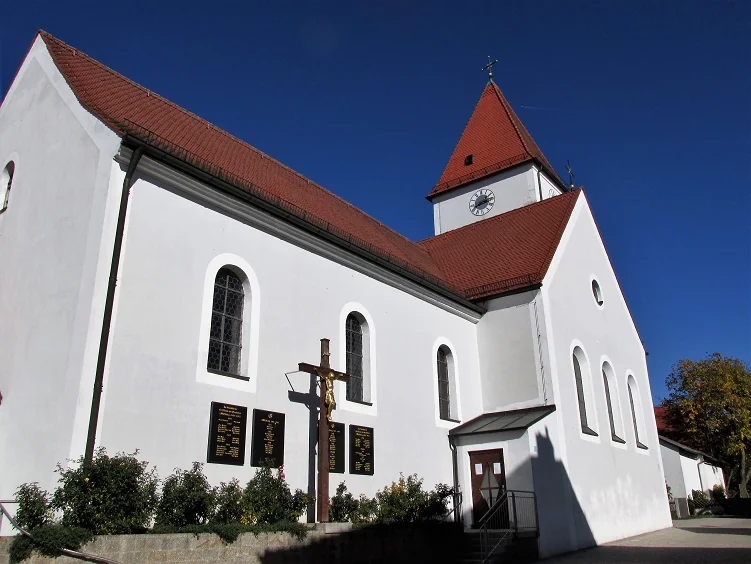
St. Vitus in Ursensollen is a church that is not only visited but experienced as part of the community. The parish church is located at Vitusstraße 15 and, together with the parish office at Vitusstraße 14, forms the spiritual center of the Catholic parish of Ursensollen in the parish association of Illschwang-Kastl-Ursensollen. Those who come to the town center quickly realize that faith, history, and everyday life are closely intertwined here: The church is a listed building, located near the village square, and is still regularly used for services, church festivals, and community events. This very mix makes St. Vitus so interesting for visitors, locals, and anyone looking for an authentic place with historical depth. ([pfarrverband-illschwang-kastl-ursensollen.bistum-eichstaett.de](https://pfarrverband-illschwang-kastl-ursensollen.bistum-eichstaett.de/pfarreien/pfarrei-ursensollen/))
St. Vitus is also a precise anchor point for inquiries related to history, services, parish office, directions, or parking. The building is not just any village church, but the main church of the parish, which belongs to the diocese of Eichstätt. At the same time, it is architecturally and art-historically significant: The church has older construction phases, was rebuilt in the 18th century, and has been altered several times since. This connects medieval roots with baroque furnishings and a vibrant present. To understand the church, one should not only see the building but also consider the place, the people, and the rhythm of the church year that continues to shape St. Vitus today. ([de.wikipedia.org](https://de.wikipedia.org/wiki/St._Veit_%28Ursensollen%29))
History of St. Vitus in Ursensollen
The history of St. Vitus goes back a long way. Historical records mention a Catholic house of worship in Ursensollen for the first time in 1323. At that time, it belonged to the parish of Pfaffenhofen near Kastl. In the 16th century, the Reformation significantly changed the confessional landscape of the region: Through the religious mandate of Ottheinrich on June 22, 1542, it was introduced in Pfalz-Neuburg, and the church in Ursensollen was included in this upheaval. It is noteworthy that the church is still used as a simultaneous church today. This historical coexistence of different traditions gives the place a special depth and explains why St. Vitus is interesting not only for the Catholic parish but also as part of the regional church history. ([de.wikipedia.org](https://de.wikipedia.org/wiki/St._Veit_%28Ursensollen%29))
The current building was constructed after the old church was demolished in 1712 and rebuilt by 1715. This is an important turning point as it shaped the character of today's house of worship. The monumental impression of the building, the three-bay nave, and the baroque orientation date back to this construction phase. Later, further developments followed: In 1856, a Catholic expositur was established in Ursensollen, and in 1922, the place became an independent parish. In 1955, an extension including a transept and choir tower was added, and in 1990, the church was renovated, and the church tower was raised by five meters. The site is also archaeologically significant, as findings from older construction phases and traces of predecessor buildings lie beneath and around the church. Thus, St. Vitus is a grown monument that tells its long history through stone, location, and use. ([de.wikipedia.org](https://de.wikipedia.org/wiki/St._Veit_%28Ursensollen%29))
Services, Parish Office, and Church Life
For many visitors, St. Vitus is primarily a vibrant place of worship. The official parish website lists regular Holy Masses in Ursensollen on Saturdays at 7:00 PM, in winter at 6:00 PM, and on Sundays at 9:00 AM; it is explicitly noted that the Saturday service does not take place every week. Those who wish to orient themselves will find the parish office directly next to the church at Vitusstraße 14. The current parish newsletter also states the office hours of the parish office on Wednesdays from 8:00 AM to 12:00 PM and Fridays from 8:30 AM to 12:00 PM. This makes it clear that St. Vitus is not only a historical building but also a reliable point of contact for pastoral care, registration, and community contact. ([pfarrverband-illschwang-kastl-ursensollen.bistum-eichstaett.de](https://pfarrverband-illschwang-kastl-ursensollen.bistum-eichstaett.de/pfarreien/pfarrei-ursensollen/?utm_source=openai))
The church life in Ursensollen goes far beyond the Sunday service. The parish newsletter and the communications from the parish association show a yearly cycle full of specific occasions: Holy Grave in Holy Week, Easter Vigil, Palm Sunday, St. Martin celebrations, Advent concerts, rosary and Stations of the Cross devotions, as well as offerings for seniors, families, and children. In current communications, the Holy Grave is explicitly mentioned to be set up again at the left side altar of the parish church, and school services are regularly held in the church. This mix of liturgy, tradition, and education makes St. Vitus a place where the village meets across generations. This is particularly important for families, former parish members, and guests from the surrounding area: The church is not a silent monument but a space where faith becomes visible and the annual calendar takes on a concrete form. ([pfarrverband-iku.de](https://www.pfarrverband-iku.de/.cm4all/uproc.php/0/Pfarrbriefe/2026/Pfarrbrief-April-2026.pdf?_=19d3ded3391&cdp=a&utm_source=openai))
Furnishings, Altars, and Holy Grave
The furnishings of St. Vitus are among the strongest arguments for a visit. The high altar from 1712 was created by Georg Wolfgang Donhauser from Lauterhofen, and the side altars are also considered outstanding examples of acanthus altars. The altar painting of the main altar depicts Saint Vitus, while the left altar features a painted wooden figure of Mary with the child, dating from around 1740. These elements make the church a vivid example of southern German baroque piety, where art, symbolism, and devotion work closely together. Upon entering the space, one sees not only decorative details but a consciously composed language of faith made of wood, color, and form. This is particularly remarkable in a village church, as it combines high artistic quality with a very personal, local character. ([de.wikipedia.org](https://de.wikipedia.org/wiki/St._Veit_%28Ursensollen%29))
Additionally, there are other pieces that make the interior distinctive. On the west wall, there are three tombstones, including the famous brass epitaph for Johann von Erckenprechtshausen, which is almost a meter high and is among the most significant memorials in the church. The organ is also noteworthy: The current instrument was built in 1958 by August Wilhelm Bittner II and has 15 registers on two manuals and pedal; thus, it is an important element of the musical life in the church. Among the special forms of devotion is also the Holy Grave, which is located under a side altar and is made visible during Holy Week. The diocese explicitly describes this tradition for Ursensollen and points out that the reclining figure of Christ appears after the removal of a wooden cover. This combination of furnishings, culture of remembrance, and living tradition makes St. Vitus attractive to both art enthusiasts and believers. ([de.wikipedia.org](https://de.wikipedia.org/wiki/St._Veit_%28Ursensollen%29))
Directions, Location, and Parking in the Town Center
The location of St. Vitus is very straightforward for visitors: The church is located at Vitusstraße 15 in the center of Ursensollen. Right next to it is the village square, and the historical surroundings make orientation easy. An article about the development of the town describes that the building is accessible from both Vitusstraße and Kirchplatz. For those visiting the church for the first time, this is practical: One moves not at the edge of the town but right in the town center, between the church, parish house, village square, and other facilities. This allows St. Vitus to be easily combined with a short walk through the center of Ursensollen. Those who want to combine church visits with a walk through the town will find a very compact and coherent structure here. ([pfarrverband-illschwang-kastl-ursensollen.bistum-eichstaett.de](https://pfarrverband-illschwang-kastl-ursensollen.bistum-eichstaett.de/pfarreien/pfarrei-ursensollen/))
There are also many advantages to parking in the town center. A municipal planning document describes that stationary traffic in the town center mainly focuses on the existing parking spaces in front of the town hall and at the new center, and that there are sufficient parking spaces available there. Furthermore, another report on the repurposing of the Hofmarkschloss mentions that new visitor parking spaces are to be created, which will bring synergy effects for visitors and events of the church. For St. Vitus, this means: Those coming for a service, a church celebration, or a visit to the town center generally have central parking spaces within walking distance. This combination of good location, short distances, and visible town center function makes the site so attractive for community life and guests. ([ursensollen.stadtentwicklung.live](https://ursensollen.stadtentwicklung.live/wp-content/uploads/sites/133/2024/11/2024-10-23_PGR_AHM_Ursensollen.pdf?utm_source=openai))
Why St. Vitus Shapes the Place
St. Vitus is more than just a beautiful church in Ursensollen. The building connects the long history of the place with the everyday life of the parish today. This is evident in many small and large things: in the parish office right next door, in the regular service times, in the seasonal customs, in the use for school and community services, and in the artistic furnishings that visitors immediately notice upon entering. At the same time, the monument list refers to the older construction phases and archaeological traces beneath the church. Thus, St. Vitus does not stand isolated in space but on a historically dense ground that has grown over centuries. Therefore, anyone visiting the church also experiences a piece of local history that has remained visible to this day. ([geodaten.bayern.de](https://geodaten.bayern.de/denkmal_static_data/externe_denkmalliste/pdf/denkmalliste_merge_371154.pdf))
Additionally, there is the significance of the parish association Illschwang-Kastl-Ursensollen, in which St. Vitus plays a clear role as the main church of Ursensollen. The church is used for major feasts, Holy Week, Advent, star singers' actions, mourning and thanksgiving celebrations, school services, and various parish events. This keeps it close to the people. It is not just a monument to be viewed but a place where the village gathers, celebrates, remembers, and prays. This connection of historical substance, church practice, and lived community is the reason why St. Vitus remains relevant in inquiries about history, services, directions, or the parish office. For Ursensollen, the church is a central point of identity, and for visitors, it is a quiet but very meaningful place. ([pfarrverband-iku.de](https://www.pfarrverband-iku.de/?utm_source=openai))
Sources:
- Parish Association Illschwang-Kastl-Ursensollen - Parish Ursensollen
- Parish Association Illschwang-Kastl-Ursensollen - Churches
- Diocese of Eichstätt - Tradition of the Holy Grave
- Bavarian State Office for Monument Preservation - Monument List
- Community Ursensollen - Town Center and Parking
- Parish Association Illschwang-Kastl-Ursensollen - Parish Newsletter March 2026
Mehr anzeigenWeniger anzeigen
St. Vitus Ursensollen | History & Services
St. Vitus in Ursensollen is a church that is not only visited but experienced as part of the community. The parish church is located at Vitusstraße 15 and, together with the parish office at Vitusstraße 14, forms the spiritual center of the Catholic parish of Ursensollen in the parish association of Illschwang-Kastl-Ursensollen. Those who come to the town center quickly realize that faith, history, and everyday life are closely intertwined here: The church is a listed building, located near the village square, and is still regularly used for services, church festivals, and community events. This very mix makes St. Vitus so interesting for visitors, locals, and anyone looking for an authentic place with historical depth. ([pfarrverband-illschwang-kastl-ursensollen.bistum-eichstaett.de](https://pfarrverband-illschwang-kastl-ursensollen.bistum-eichstaett.de/pfarreien/pfarrei-ursensollen/))
St. Vitus is also a precise anchor point for inquiries related to history, services, parish office, directions, or parking. The building is not just any village church, but the main church of the parish, which belongs to the diocese of Eichstätt. At the same time, it is architecturally and art-historically significant: The church has older construction phases, was rebuilt in the 18th century, and has been altered several times since. This connects medieval roots with baroque furnishings and a vibrant present. To understand the church, one should not only see the building but also consider the place, the people, and the rhythm of the church year that continues to shape St. Vitus today. ([de.wikipedia.org](https://de.wikipedia.org/wiki/St._Veit_%28Ursensollen%29))
History of St. Vitus in Ursensollen
The history of St. Vitus goes back a long way. Historical records mention a Catholic house of worship in Ursensollen for the first time in 1323. At that time, it belonged to the parish of Pfaffenhofen near Kastl. In the 16th century, the Reformation significantly changed the confessional landscape of the region: Through the religious mandate of Ottheinrich on June 22, 1542, it was introduced in Pfalz-Neuburg, and the church in Ursensollen was included in this upheaval. It is noteworthy that the church is still used as a simultaneous church today. This historical coexistence of different traditions gives the place a special depth and explains why St. Vitus is interesting not only for the Catholic parish but also as part of the regional church history. ([de.wikipedia.org](https://de.wikipedia.org/wiki/St._Veit_%28Ursensollen%29))
The current building was constructed after the old church was demolished in 1712 and rebuilt by 1715. This is an important turning point as it shaped the character of today's house of worship. The monumental impression of the building, the three-bay nave, and the baroque orientation date back to this construction phase. Later, further developments followed: In 1856, a Catholic expositur was established in Ursensollen, and in 1922, the place became an independent parish. In 1955, an extension including a transept and choir tower was added, and in 1990, the church was renovated, and the church tower was raised by five meters. The site is also archaeologically significant, as findings from older construction phases and traces of predecessor buildings lie beneath and around the church. Thus, St. Vitus is a grown monument that tells its long history through stone, location, and use. ([de.wikipedia.org](https://de.wikipedia.org/wiki/St._Veit_%28Ursensollen%29))
Services, Parish Office, and Church Life
For many visitors, St. Vitus is primarily a vibrant place of worship. The official parish website lists regular Holy Masses in Ursensollen on Saturdays at 7:00 PM, in winter at 6:00 PM, and on Sundays at 9:00 AM; it is explicitly noted that the Saturday service does not take place every week. Those who wish to orient themselves will find the parish office directly next to the church at Vitusstraße 14. The current parish newsletter also states the office hours of the parish office on Wednesdays from 8:00 AM to 12:00 PM and Fridays from 8:30 AM to 12:00 PM. This makes it clear that St. Vitus is not only a historical building but also a reliable point of contact for pastoral care, registration, and community contact. ([pfarrverband-illschwang-kastl-ursensollen.bistum-eichstaett.de](https://pfarrverband-illschwang-kastl-ursensollen.bistum-eichstaett.de/pfarreien/pfarrei-ursensollen/?utm_source=openai))
The church life in Ursensollen goes far beyond the Sunday service. The parish newsletter and the communications from the parish association show a yearly cycle full of specific occasions: Holy Grave in Holy Week, Easter Vigil, Palm Sunday, St. Martin celebrations, Advent concerts, rosary and Stations of the Cross devotions, as well as offerings for seniors, families, and children. In current communications, the Holy Grave is explicitly mentioned to be set up again at the left side altar of the parish church, and school services are regularly held in the church. This mix of liturgy, tradition, and education makes St. Vitus a place where the village meets across generations. This is particularly important for families, former parish members, and guests from the surrounding area: The church is not a silent monument but a space where faith becomes visible and the annual calendar takes on a concrete form. ([pfarrverband-iku.de](https://www.pfarrverband-iku.de/.cm4all/uproc.php/0/Pfarrbriefe/2026/Pfarrbrief-April-2026.pdf?_=19d3ded3391&cdp=a&utm_source=openai))
Furnishings, Altars, and Holy Grave
The furnishings of St. Vitus are among the strongest arguments for a visit. The high altar from 1712 was created by Georg Wolfgang Donhauser from Lauterhofen, and the side altars are also considered outstanding examples of acanthus altars. The altar painting of the main altar depicts Saint Vitus, while the left altar features a painted wooden figure of Mary with the child, dating from around 1740. These elements make the church a vivid example of southern German baroque piety, where art, symbolism, and devotion work closely together. Upon entering the space, one sees not only decorative details but a consciously composed language of faith made of wood, color, and form. This is particularly remarkable in a village church, as it combines high artistic quality with a very personal, local character. ([de.wikipedia.org](https://de.wikipedia.org/wiki/St._Veit_%28Ursensollen%29))
Additionally, there are other pieces that make the interior distinctive. On the west wall, there are three tombstones, including the famous brass epitaph for Johann von Erckenprechtshausen, which is almost a meter high and is among the most significant memorials in the church. The organ is also noteworthy: The current instrument was built in 1958 by August Wilhelm Bittner II and has 15 registers on two manuals and pedal; thus, it is an important element of the musical life in the church. Among the special forms of devotion is also the Holy Grave, which is located under a side altar and is made visible during Holy Week. The diocese explicitly describes this tradition for Ursensollen and points out that the reclining figure of Christ appears after the removal of a wooden cover. This combination of furnishings, culture of remembrance, and living tradition makes St. Vitus attractive to both art enthusiasts and believers. ([de.wikipedia.org](https://de.wikipedia.org/wiki/St._Veit_%28Ursensollen%29))
Directions, Location, and Parking in the Town Center
The location of St. Vitus is very straightforward for visitors: The church is located at Vitusstraße 15 in the center of Ursensollen. Right next to it is the village square, and the historical surroundings make orientation easy. An article about the development of the town describes that the building is accessible from both Vitusstraße and Kirchplatz. For those visiting the church for the first time, this is practical: One moves not at the edge of the town but right in the town center, between the church, parish house, village square, and other facilities. This allows St. Vitus to be easily combined with a short walk through the center of Ursensollen. Those who want to combine church visits with a walk through the town will find a very compact and coherent structure here. ([pfarrverband-illschwang-kastl-ursensollen.bistum-eichstaett.de](https://pfarrverband-illschwang-kastl-ursensollen.bistum-eichstaett.de/pfarreien/pfarrei-ursensollen/))
There are also many advantages to parking in the town center. A municipal planning document describes that stationary traffic in the town center mainly focuses on the existing parking spaces in front of the town hall and at the new center, and that there are sufficient parking spaces available there. Furthermore, another report on the repurposing of the Hofmarkschloss mentions that new visitor parking spaces are to be created, which will bring synergy effects for visitors and events of the church. For St. Vitus, this means: Those coming for a service, a church celebration, or a visit to the town center generally have central parking spaces within walking distance. This combination of good location, short distances, and visible town center function makes the site so attractive for community life and guests. ([ursensollen.stadtentwicklung.live](https://ursensollen.stadtentwicklung.live/wp-content/uploads/sites/133/2024/11/2024-10-23_PGR_AHM_Ursensollen.pdf?utm_source=openai))
Why St. Vitus Shapes the Place
St. Vitus is more than just a beautiful church in Ursensollen. The building connects the long history of the place with the everyday life of the parish today. This is evident in many small and large things: in the parish office right next door, in the regular service times, in the seasonal customs, in the use for school and community services, and in the artistic furnishings that visitors immediately notice upon entering. At the same time, the monument list refers to the older construction phases and archaeological traces beneath the church. Thus, St. Vitus does not stand isolated in space but on a historically dense ground that has grown over centuries. Therefore, anyone visiting the church also experiences a piece of local history that has remained visible to this day. ([geodaten.bayern.de](https://geodaten.bayern.de/denkmal_static_data/externe_denkmalliste/pdf/denkmalliste_merge_371154.pdf))
Additionally, there is the significance of the parish association Illschwang-Kastl-Ursensollen, in which St. Vitus plays a clear role as the main church of Ursensollen. The church is used for major feasts, Holy Week, Advent, star singers' actions, mourning and thanksgiving celebrations, school services, and various parish events. This keeps it close to the people. It is not just a monument to be viewed but a place where the village gathers, celebrates, remembers, and prays. This connection of historical substance, church practice, and lived community is the reason why St. Vitus remains relevant in inquiries about history, services, directions, or the parish office. For Ursensollen, the church is a central point of identity, and for visitors, it is a quiet but very meaningful place. ([pfarrverband-iku.de](https://www.pfarrverband-iku.de/?utm_source=openai))
Sources:
- Parish Association Illschwang-Kastl-Ursensollen - Parish Ursensollen
- Parish Association Illschwang-Kastl-Ursensollen - Churches
- Diocese of Eichstätt - Tradition of the Holy Grave
- Bavarian State Office for Monument Preservation - Monument List
- Community Ursensollen - Town Center and Parking
- Parish Association Illschwang-Kastl-Ursensollen - Parish Newsletter March 2026
Upcoming Events
No events found
Frequently Asked Questions
Reviews
No reviews found