
Neukirchen bei Sulzbach-Rosenberg
Hauptstraße 36, 92259 Neukirchen bei Sulzbach-Rosenberg, Deutschland
St. Peter and Paul Neukirchen | Services & Events
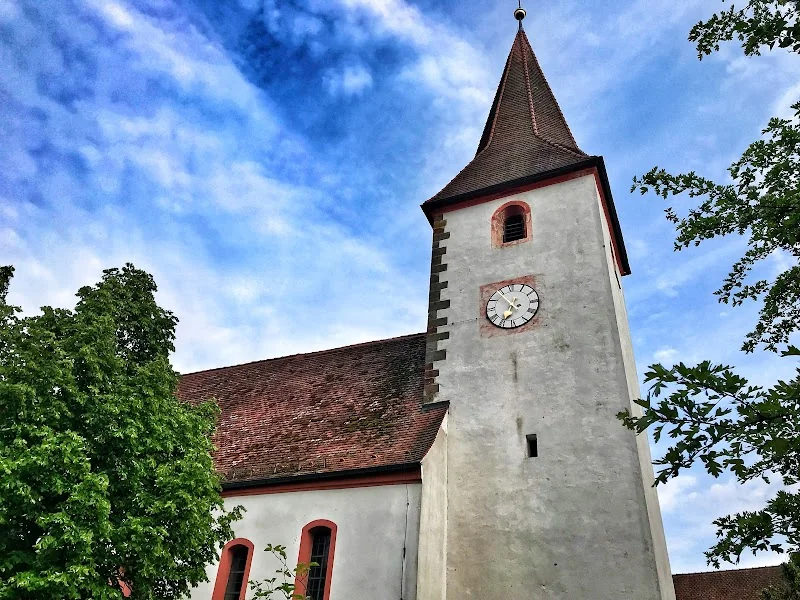
The Protestant parish church St. Peter and Paul in Neukirchen near Sulzbach-Rosenberg is much more than a historical building: it is the center of a community rooted in the western Upper Palatinate, which consciously sees itself as a lively, open, and welcoming church community. The community includes around 27 districts and villages in addition to the main town, totaling about 1,480 members. The official website also describes the community as a church with many places that stand in the midst of people's lives. This shapes the perception of this location: it connects deep-rooted tradition with an active contemporary profile that thrives on services, groups, pastoral care, community, and regional connectedness. Those looking for events, programs, church life, or a special atmosphere will find a place here that does not separate history and the present but naturally brings them together. The church is centrally located on the main street and is widely visible in the town. At the same time, it is embedded in a community environment that extends beyond the church space and forms a clear social and spiritual center with the parish office, group offerings, and events. ([neukirchen-evangelisch.de](https://www.neukirchen-evangelisch.de/gemeindeportrait/geschichte))
Services & Events
The most important search topic for St. Peter and Paul Neukirchen is the services and events. The community states on its official page a fixed rhythm: Generally, services are celebrated every Sunday at 9:00 AM. Additionally, there are special forms that intentionally create variety and address different target groups. Among other things, services in the inn, in the evening, in nature, and celebrations with musical accompaniment are mentioned. The community also particularly emphasizes the colorful church with children's programs, which is described as well-attended and lively. This shows: Those looking for programs in Neukirchen will not find an anonymous event house but a church center with regular services, special formats, and a calendar that transparently reflects community life. The events are therefore not just isolated individual dates but expressions of a continuous life on site. For seekers, this is important because terms like events, programs, or dates lead directly into the practical everyday life of the community. Even though the focus is on services, a wide spectrum becomes visible: spiritual offerings, musical celebrations, family-friendly formats, and communal meetings that keep the church year alive. The official event page refers to further entries in the calendar, showing that the offerings are regularly updated. ([neukirchen-evangelisch.de](https://www.neukirchen-evangelisch.de/gottesdienste))
For SEO consideration, this topic is particularly strong because search queries for events, programs, or service times are answered here with clear practical value. The church St. Peter and Paul is not a place with changing pop-up usage but a community with planable, reliable times and complementary special formats. Therefore, those wishing to attend an event should not only look at individual concert or special dates but always keep an eye on the community's event calendar. Particularly relevant is that the community does not present its offerings in isolation but as part of a larger community life, where services, children's offerings, youth, seniors, and musical formats intertwine. This mixture makes the place interesting for people who are looking for not just a space but a reliable point of contact. The difference between regular Sunday services and special formats is also useful for visitors: here, one finds both the familiar basic church offerings and creative variants that create new access. This is crucial for inquiries about programs, dates, and events because it shows that the church is vibrantly organized and addresses various life situations. ([neukirchen-evangelisch.de](https://www.neukirchen-evangelisch.de/gottesdienste))
Directions, Parish Office & Contact
For practical orientation, St. Peter and Paul Neukirchen includes not only the location of the church but also contact with the parish office. The church itself is located at Hauptstraße 36 in 92259 Neukirchen near Sulzbach-Rosenberg, and the parish office is at Hauptstraße 32. For inquiries, the community provides the phone number 09663 95055 and the email address pfarramt.neukirchen@elkb.de. The office is open on Tuesdays and Wednesdays from 9 AM to 12 PM. This information is particularly helpful for visitors because it creates a real point of contact and shows the location not just as a building but as a well-accessible church institution. Pastor Anja Matthalm is explicitly described on the contact page as a contact person for pastoral and religious matters. This makes it clear: Those with questions about services, special dates, weddings, baptisms, funerals, or pastoral care will find direct responsibilities here and no impersonal service hotline. The contact page also lists other members of the church council with responsibilities for services, church music, youth work, children and families, festivals and celebrations, buildings, finances, and public relations. For user-friendliness, this is a strong signal because it makes it clear to whom one can turn for which topic. The church is centrally located in the town, making access easier and marking the building as the center of the village. ([neukirchen-evangelisch.de](https://www.neukirchen-evangelisch.de/anfahrt-und-ansprechpartnerinnen))
Also for search queries like directions or parish office, this profile is relevant, as the official website offers a clear contact structure without unnecessary hurdles. The community refers to the direct route through the parish office, and this fits the character of the place: personal, manageable, and close to the people. Therefore, those planning a visit can quickly find the most important data for contacting. At the same time, the website shows that the church is not just a monument but part of a functioning community system with office hours, contact persons, and responsibilities. This is especially important for families, volunteers, those getting married, confirmands, and people with pastoral questions. The practical location on the main street also makes the church easily findable as a meeting point. In digital searches, such information is often summarized under the term directions; here, this means: a central address, a well-known parish office in immediate proximity, and transparent opening hours for inquiries. Even if no separate parking information is mentioned on the officially found pages, the practical accessibility through the central location and the clearly designated contact is already well documented. ([neukirchen-evangelisch.de](https://www.neukirchen-evangelisch.de/anfahrt-und-ansprechpartnerinnen))
History of the Church St. Peter and Paul
The history of St. Peter and Paul is one of the strongest reasons why this location is searched online. The parish looks back on a long tradition: the first Protestant services were celebrated as early as 1542, according to the official website, during the lifetime of Martin Luther. However, in the 17th century, there were repeated changes of confession in the Neukirchen area. It was not until 1656 that Duke Christian August, based in Sulzbach, enabled the recognition of both Catholic and Protestant teachings through the Cologne and Neuburg comparison. Since then, there has been a fixed Protestant community in Neukirchen. This is important for understanding the place because the church is embedded in a longer confessional and regional development that explains its current significance. The website also shows that both confessions celebrated services in one church until 1927 and that the Simultaneum officially ended only on January 25, 1929, after 276 years. These historical layers make the church a place where religious history is not abstract but spatially and architecturally tangible. Therefore, those searching for history here are not just looking for a year of construction but for a place with reformation, confessional history, and regional continuity. This is precisely why St. Peter and Paul is particularly suitable for content related to church history, community development, and historical peculiarities. ([neukirchen-evangelisch.de](https://www.neukirchen-evangelisch.de/gemeindeportrait/geschichte))
The current community is described on the website as open and inviting, wanting to give people in Neukirchen and the surrounding area a spiritual home. This self-understanding is not a marketing addition but part of the historical heritage: the church is understood here as a living community that brings together tradition and the present. The history of the church and the community thus stands not only for the past but also for a continuing profile in the place. It is exciting for visitors that the historical development of the community aligns with its current offerings. Old structures such as the church space, the patron saints Peter and Paul, or the long confessional history form the background for current services, children's offerings, youth groups, and spiritual formats. This creates a cultural added value that goes far beyond a mere description of the place. The history shows why this church has such a firm place in the community: it has grown, been rebuilt, adapted, and used over centuries. This continuity makes it relevant for search engine terms like history, church, or church in Neukirchen. Furthermore, it is a good example of how a regional church can become an identity-forming place for several villages and districts. ([neukirchen-evangelisch.de](https://www.neukirchen-evangelisch.de/gemeindeportrait/geschichte))
Church Space, Tower & Furnishings
The church space of St. Peter and Paul offers many details that are interesting for visitors and SEO alike. The basic substance of the church is traced back to a Romanesque house of worship from the 12th century. This is evidenced, among other things, by a small Romanesque round-arched window above the south door, which was uncovered during a renovation in the 1980s. Later alterations show the development of the building over several epochs: the high pointed arch windows of the eastern choir document Gothic changes, and the years 1715 and 1729 can be seen on the outside of the east choir, referring to baroque modifications. The current sacristy is also historically interesting, as it was built in place of the former ossuary. Additionally, it is important for the character of the space that in 1790 two upper longitudinal galleries had to be installed because the church had become too small for the Protestant community. These galleries were removed in 1934 and replaced by the current ones. Such details make it clear that the building has not only been preserved but actively adapted to the needs of the community. Particularly striking is the tower: according to the website, it is 42 meters high and has a spire drawn into an octagon. Thus, the silhouette of the church is present in the townscape from afar. ([neukirchen-evangelisch.de](https://www.neukirchen-evangelisch.de/gemeindeportrait/geschichte))
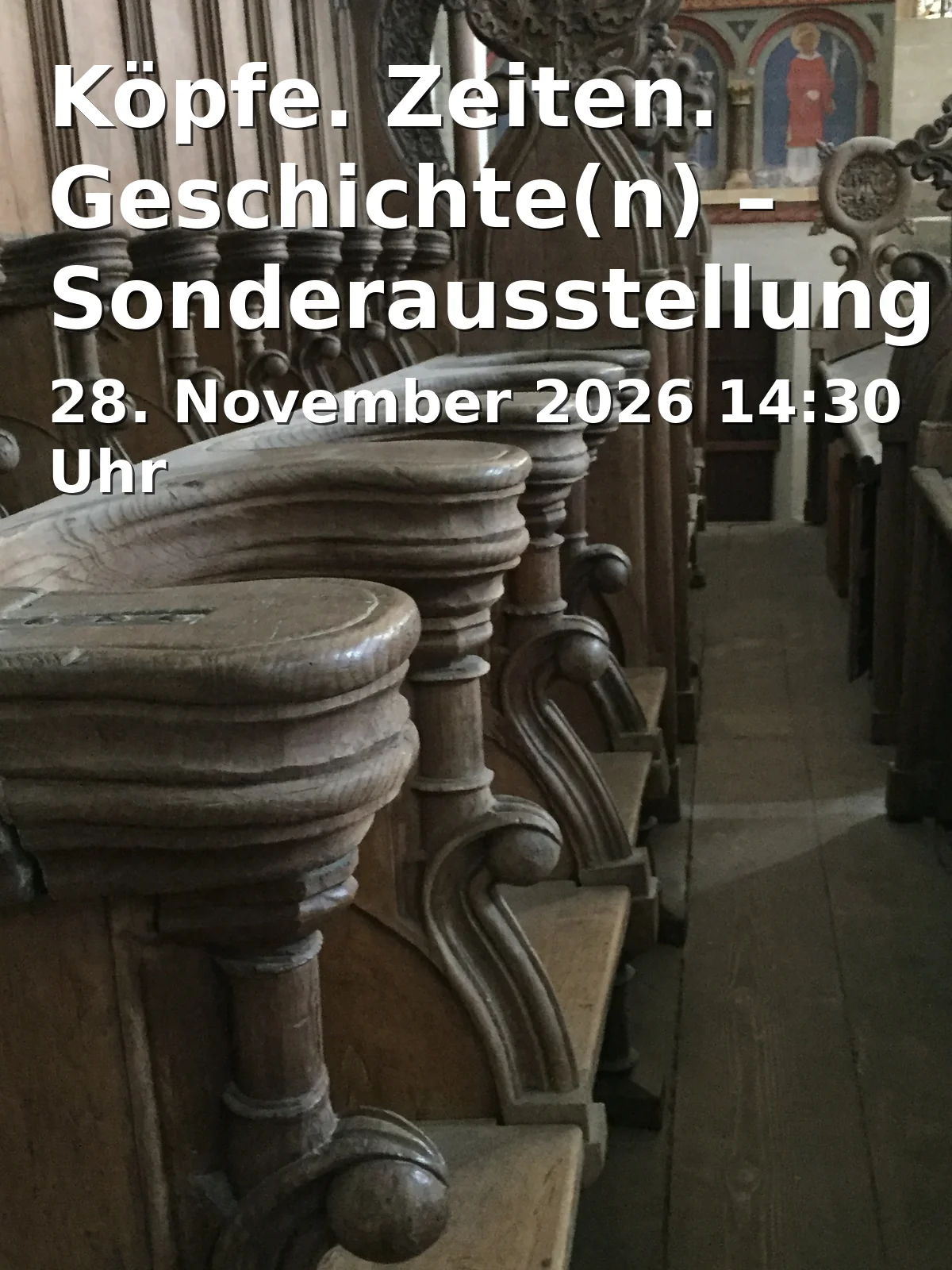
The furnishings of the church also carry their own history. The keystone of the ribbed vault in the choir bears a head of Christ, which symbolically marks the theological center of the church. The baptismal font is particularly noteworthy: it consists of a Romanesque baptismal bowl set on a fragment of a Gothic column capital, and the bowl is dated around 1150. Since 1998, a stone relief by the Etzelwanger artist and sculptor Peter Kuschel has adorned the south wall of the nave; it depicts the patron saints Peter and Paul. Additionally, there is an art-historical reminder of the change in the interior after the end of the Simultaneum: the Catholic community was allowed to take much of the interior with them, including the high altar with the altar painting of the patron saints. The Protestant community then acquired the altar from the former prayer room of the Sulzbach prison, whose image is a copy of Rubens' crucifixion group. This mixture of Romanesque substance, Gothic forms, baroque alterations, and later additions makes the church a multifaceted building with high historical and aesthetic density. ([neukirchen-evangelisch.de](https://www.neukirchen-evangelisch.de/gemeindeportrait/geschichte))
Church Tour & Community Life
If you want to get an impression before a visit, you will find a dedicated church tour with photos on the official website. There, the most important sightlines and details of the church are shown, including the view of the altar, the altar itself, the altar cross, the pulpit, the lectern, the gallery, the harvest crown, a tombstone, the door to the sacristy, and other decorative elements. The tour is particularly valuable for users because it makes the church experienceable not just as an address but as a space. Especially for those interested in seating, atmosphere, interior, or furnishings, a photo series is often the quickest way to orientation. The church thus becomes digitally accessible and can be better assessed even before the visit. This is helpful for search terms like church tour, furnishings, or seating area, even if no traditional seating plan is provided on the official page. The tour complements the historical information with a vivid level and shows that the building has a significant interior effect. In combination with the visible architecture, a complete impression of a place that is used both sacral and communally is created. ([neukirchen-evangelisch.de](https://www.neukirchen-evangelisch.de/gemeinde-im-blick/kirchenrundgang))
Community life also includes offerings that extend far beyond the church space. The official website mentions, among other things, a MiniClub for the youngest, offerings for seniors, a meeting for adults, rich church music, and various spiritual offerings. Youth work also has its place in the community house with a large rural youth group. This shows that St. Peter and Paul is not only used on Sundays but is anchored in the everyday life of the community. This structure is particularly interesting for people who do not just want to attend a single event but are looking for a continuous church environment. The community describes itself as lively and open and invites people to participate in services, groups, and personal conversations with the pastor. This makes the location a place of encounter. The variety of offerings also explains why search queries for community house, youth, seniors, pastoral care, or church musical formats are relevant. Not everything revolves around a single event; rather, it is about a whole living space that is regularly maintained and shaped together. For visitors and community members, this means: St. Peter and Paul is a place with history, but at the same time, it is a place where the present and community are actively lived. ([neukirchen-evangelisch.de](https://www.neukirchen-evangelisch.de/gemeindeportrait/geschichte))
Tickets, Dates & Practical Information
The keyword tickets is understood differently at this location than at a classic event hall. On the officially found pages of the parish, services, events, contact options, and the calendar are highlighted, but no separate ticket shop or booking system for regular visits is described. This fits the character of a parish church: the focus is on open services, community events, and firmly planned dates. Therefore, if you are looking for tickets, you should primarily think about whether there are any special notes for a specific date or if you can simply come to the specified service. The practical answer is therefore: Regular services take place at the known times, special dates can be found in the event calendar, and if in doubt, the parish office can help. This structure is sensible for users because it does not create unnecessary hurdles and simultaneously makes it clear that the church is primarily a spiritual and communal place. For many visitors, this is precisely the decisive difference from conventional ticket or pre-sale locations. ([neukirchen-evangelisch.de](https://www.neukirchen-evangelisch.de/gottesdienste))
For planning a visit, three points are particularly important: the location on the main street, the fixed service times, and the clearly stated contact routes. Additionally, there are the special forms of community life, such as the colorful church, services in the inn or in nature, and a look at the community calendar. Those preparing a visit can thus directly refer to the official information and do not have to search for complicated pre-sale routes. Especially for search queries like events, dates, or tickets, a realistic picture emerges: St. Peter and Paul is a church with a regular program, with personal contact in the parish office, and with a strong local rooting. For visitors, this means that an appointment here can often be planned simply and straightforwardly. Those additionally interested in history, architecture, and community life will find everything in one place: a historical church space, an active parish office, a comprehensible annual rhythm, and a community that transparently communicates its offerings. This makes St. Peter and Paul Neukirchen a location that not only informs but also builds trust. ([neukirchen-evangelisch.de](https://www.neukirchen-evangelisch.de/gottesdienste))
Sources:
- Evangelical-Lutheran Congregation Neukirchen - Homepage
- Evangelical-Lutheran Congregation Neukirchen - History
- Evangelical-Lutheran Congregation Neukirchen - Services
- Evangelical-Lutheran Congregation Neukirchen - Directions and Contacts
- Evangelical-Lutheran Congregation Neukirchen - Church Tour
- Evangelical-Lutheran Deanery Together One - Neukirchen b. S.-R.
Show moreShow less
St. Peter and Paul Neukirchen | Services & Events
The Protestant parish church St. Peter and Paul in Neukirchen near Sulzbach-Rosenberg is much more than a historical building: it is the center of a community rooted in the western Upper Palatinate, which consciously sees itself as a lively, open, and welcoming church community. The community includes around 27 districts and villages in addition to the main town, totaling about 1,480 members. The official website also describes the community as a church with many places that stand in the midst of people's lives. This shapes the perception of this location: it connects deep-rooted tradition with an active contemporary profile that thrives on services, groups, pastoral care, community, and regional connectedness. Those looking for events, programs, church life, or a special atmosphere will find a place here that does not separate history and the present but naturally brings them together. The church is centrally located on the main street and is widely visible in the town. At the same time, it is embedded in a community environment that extends beyond the church space and forms a clear social and spiritual center with the parish office, group offerings, and events. ([neukirchen-evangelisch.de](https://www.neukirchen-evangelisch.de/gemeindeportrait/geschichte))
Services & Events
The most important search topic for St. Peter and Paul Neukirchen is the services and events. The community states on its official page a fixed rhythm: Generally, services are celebrated every Sunday at 9:00 AM. Additionally, there are special forms that intentionally create variety and address different target groups. Among other things, services in the inn, in the evening, in nature, and celebrations with musical accompaniment are mentioned. The community also particularly emphasizes the colorful church with children's programs, which is described as well-attended and lively. This shows: Those looking for programs in Neukirchen will not find an anonymous event house but a church center with regular services, special formats, and a calendar that transparently reflects community life. The events are therefore not just isolated individual dates but expressions of a continuous life on site. For seekers, this is important because terms like events, programs, or dates lead directly into the practical everyday life of the community. Even though the focus is on services, a wide spectrum becomes visible: spiritual offerings, musical celebrations, family-friendly formats, and communal meetings that keep the church year alive. The official event page refers to further entries in the calendar, showing that the offerings are regularly updated. ([neukirchen-evangelisch.de](https://www.neukirchen-evangelisch.de/gottesdienste))
For SEO consideration, this topic is particularly strong because search queries for events, programs, or service times are answered here with clear practical value. The church St. Peter and Paul is not a place with changing pop-up usage but a community with planable, reliable times and complementary special formats. Therefore, those wishing to attend an event should not only look at individual concert or special dates but always keep an eye on the community's event calendar. Particularly relevant is that the community does not present its offerings in isolation but as part of a larger community life, where services, children's offerings, youth, seniors, and musical formats intertwine. This mixture makes the place interesting for people who are looking for not just a space but a reliable point of contact. The difference between regular Sunday services and special formats is also useful for visitors: here, one finds both the familiar basic church offerings and creative variants that create new access. This is crucial for inquiries about programs, dates, and events because it shows that the church is vibrantly organized and addresses various life situations. ([neukirchen-evangelisch.de](https://www.neukirchen-evangelisch.de/gottesdienste))
Directions, Parish Office & Contact
For practical orientation, St. Peter and Paul Neukirchen includes not only the location of the church but also contact with the parish office. The church itself is located at Hauptstraße 36 in 92259 Neukirchen near Sulzbach-Rosenberg, and the parish office is at Hauptstraße 32. For inquiries, the community provides the phone number 09663 95055 and the email address pfarramt.neukirchen@elkb.de. The office is open on Tuesdays and Wednesdays from 9 AM to 12 PM. This information is particularly helpful for visitors because it creates a real point of contact and shows the location not just as a building but as a well-accessible church institution. Pastor Anja Matthalm is explicitly described on the contact page as a contact person for pastoral and religious matters. This makes it clear: Those with questions about services, special dates, weddings, baptisms, funerals, or pastoral care will find direct responsibilities here and no impersonal service hotline. The contact page also lists other members of the church council with responsibilities for services, church music, youth work, children and families, festivals and celebrations, buildings, finances, and public relations. For user-friendliness, this is a strong signal because it makes it clear to whom one can turn for which topic. The church is centrally located in the town, making access easier and marking the building as the center of the village. ([neukirchen-evangelisch.de](https://www.neukirchen-evangelisch.de/anfahrt-und-ansprechpartnerinnen))
Also for search queries like directions or parish office, this profile is relevant, as the official website offers a clear contact structure without unnecessary hurdles. The community refers to the direct route through the parish office, and this fits the character of the place: personal, manageable, and close to the people. Therefore, those planning a visit can quickly find the most important data for contacting. At the same time, the website shows that the church is not just a monument but part of a functioning community system with office hours, contact persons, and responsibilities. This is especially important for families, volunteers, those getting married, confirmands, and people with pastoral questions. The practical location on the main street also makes the church easily findable as a meeting point. In digital searches, such information is often summarized under the term directions; here, this means: a central address, a well-known parish office in immediate proximity, and transparent opening hours for inquiries. Even if no separate parking information is mentioned on the officially found pages, the practical accessibility through the central location and the clearly designated contact is already well documented. ([neukirchen-evangelisch.de](https://www.neukirchen-evangelisch.de/anfahrt-und-ansprechpartnerinnen))
History of the Church St. Peter and Paul
The history of St. Peter and Paul is one of the strongest reasons why this location is searched online. The parish looks back on a long tradition: the first Protestant services were celebrated as early as 1542, according to the official website, during the lifetime of Martin Luther. However, in the 17th century, there were repeated changes of confession in the Neukirchen area. It was not until 1656 that Duke Christian August, based in Sulzbach, enabled the recognition of both Catholic and Protestant teachings through the Cologne and Neuburg comparison. Since then, there has been a fixed Protestant community in Neukirchen. This is important for understanding the place because the church is embedded in a longer confessional and regional development that explains its current significance. The website also shows that both confessions celebrated services in one church until 1927 and that the Simultaneum officially ended only on January 25, 1929, after 276 years. These historical layers make the church a place where religious history is not abstract but spatially and architecturally tangible. Therefore, those searching for history here are not just looking for a year of construction but for a place with reformation, confessional history, and regional continuity. This is precisely why St. Peter and Paul is particularly suitable for content related to church history, community development, and historical peculiarities. ([neukirchen-evangelisch.de](https://www.neukirchen-evangelisch.de/gemeindeportrait/geschichte))
The current community is described on the website as open and inviting, wanting to give people in Neukirchen and the surrounding area a spiritual home. This self-understanding is not a marketing addition but part of the historical heritage: the church is understood here as a living community that brings together tradition and the present. The history of the church and the community thus stands not only for the past but also for a continuing profile in the place. It is exciting for visitors that the historical development of the community aligns with its current offerings. Old structures such as the church space, the patron saints Peter and Paul, or the long confessional history form the background for current services, children's offerings, youth groups, and spiritual formats. This creates a cultural added value that goes far beyond a mere description of the place. The history shows why this church has such a firm place in the community: it has grown, been rebuilt, adapted, and used over centuries. This continuity makes it relevant for search engine terms like history, church, or church in Neukirchen. Furthermore, it is a good example of how a regional church can become an identity-forming place for several villages and districts. ([neukirchen-evangelisch.de](https://www.neukirchen-evangelisch.de/gemeindeportrait/geschichte))
Church Space, Tower & Furnishings
The church space of St. Peter and Paul offers many details that are interesting for visitors and SEO alike. The basic substance of the church is traced back to a Romanesque house of worship from the 12th century. This is evidenced, among other things, by a small Romanesque round-arched window above the south door, which was uncovered during a renovation in the 1980s. Later alterations show the development of the building over several epochs: the high pointed arch windows of the eastern choir document Gothic changes, and the years 1715 and 1729 can be seen on the outside of the east choir, referring to baroque modifications. The current sacristy is also historically interesting, as it was built in place of the former ossuary. Additionally, it is important for the character of the space that in 1790 two upper longitudinal galleries had to be installed because the church had become too small for the Protestant community. These galleries were removed in 1934 and replaced by the current ones. Such details make it clear that the building has not only been preserved but actively adapted to the needs of the community. Particularly striking is the tower: according to the website, it is 42 meters high and has a spire drawn into an octagon. Thus, the silhouette of the church is present in the townscape from afar. ([neukirchen-evangelisch.de](https://www.neukirchen-evangelisch.de/gemeindeportrait/geschichte))
The furnishings of the church also carry their own history. The keystone of the ribbed vault in the choir bears a head of Christ, which symbolically marks the theological center of the church. The baptismal font is particularly noteworthy: it consists of a Romanesque baptismal bowl set on a fragment of a Gothic column capital, and the bowl is dated around 1150. Since 1998, a stone relief by the Etzelwanger artist and sculptor Peter Kuschel has adorned the south wall of the nave; it depicts the patron saints Peter and Paul. Additionally, there is an art-historical reminder of the change in the interior after the end of the Simultaneum: the Catholic community was allowed to take much of the interior with them, including the high altar with the altar painting of the patron saints. The Protestant community then acquired the altar from the former prayer room of the Sulzbach prison, whose image is a copy of Rubens' crucifixion group. This mixture of Romanesque substance, Gothic forms, baroque alterations, and later additions makes the church a multifaceted building with high historical and aesthetic density. ([neukirchen-evangelisch.de](https://www.neukirchen-evangelisch.de/gemeindeportrait/geschichte))
Church Tour & Community Life
If you want to get an impression before a visit, you will find a dedicated church tour with photos on the official website. There, the most important sightlines and details of the church are shown, including the view of the altar, the altar itself, the altar cross, the pulpit, the lectern, the gallery, the harvest crown, a tombstone, the door to the sacristy, and other decorative elements. The tour is particularly valuable for users because it makes the church experienceable not just as an address but as a space. Especially for those interested in seating, atmosphere, interior, or furnishings, a photo series is often the quickest way to orientation. The church thus becomes digitally accessible and can be better assessed even before the visit. This is helpful for search terms like church tour, furnishings, or seating area, even if no traditional seating plan is provided on the official page. The tour complements the historical information with a vivid level and shows that the building has a significant interior effect. In combination with the visible architecture, a complete impression of a place that is used both sacral and communally is created. ([neukirchen-evangelisch.de](https://www.neukirchen-evangelisch.de/gemeinde-im-blick/kirchenrundgang))
Community life also includes offerings that extend far beyond the church space. The official website mentions, among other things, a MiniClub for the youngest, offerings for seniors, a meeting for adults, rich church music, and various spiritual offerings. Youth work also has its place in the community house with a large rural youth group. This shows that St. Peter and Paul is not only used on Sundays but is anchored in the everyday life of the community. This structure is particularly interesting for people who do not just want to attend a single event but are looking for a continuous church environment. The community describes itself as lively and open and invites people to participate in services, groups, and personal conversations with the pastor. This makes the location a place of encounter. The variety of offerings also explains why search queries for community house, youth, seniors, pastoral care, or church musical formats are relevant. Not everything revolves around a single event; rather, it is about a whole living space that is regularly maintained and shaped together. For visitors and community members, this means: St. Peter and Paul is a place with history, but at the same time, it is a place where the present and community are actively lived. ([neukirchen-evangelisch.de](https://www.neukirchen-evangelisch.de/gemeindeportrait/geschichte))
Tickets, Dates & Practical Information
The keyword tickets is understood differently at this location than at a classic event hall. On the officially found pages of the parish, services, events, contact options, and the calendar are highlighted, but no separate ticket shop or booking system for regular visits is described. This fits the character of a parish church: the focus is on open services, community events, and firmly planned dates. Therefore, if you are looking for tickets, you should primarily think about whether there are any special notes for a specific date or if you can simply come to the specified service. The practical answer is therefore: Regular services take place at the known times, special dates can be found in the event calendar, and if in doubt, the parish office can help. This structure is sensible for users because it does not create unnecessary hurdles and simultaneously makes it clear that the church is primarily a spiritual and communal place. For many visitors, this is precisely the decisive difference from conventional ticket or pre-sale locations. ([neukirchen-evangelisch.de](https://www.neukirchen-evangelisch.de/gottesdienste))
For planning a visit, three points are particularly important: the location on the main street, the fixed service times, and the clearly stated contact routes. Additionally, there are the special forms of community life, such as the colorful church, services in the inn or in nature, and a look at the community calendar. Those preparing a visit can thus directly refer to the official information and do not have to search for complicated pre-sale routes. Especially for search queries like events, dates, or tickets, a realistic picture emerges: St. Peter and Paul is a church with a regular program, with personal contact in the parish office, and with a strong local rooting. For visitors, this means that an appointment here can often be planned simply and straightforwardly. Those additionally interested in history, architecture, and community life will find everything in one place: a historical church space, an active parish office, a comprehensible annual rhythm, and a community that transparently communicates its offerings. This makes St. Peter and Paul Neukirchen a location that not only informs but also builds trust. ([neukirchen-evangelisch.de](https://www.neukirchen-evangelisch.de/gottesdienste))
Sources:
- Evangelical-Lutheran Congregation Neukirchen - Homepage
- Evangelical-Lutheran Congregation Neukirchen - History
- Evangelical-Lutheran Congregation Neukirchen - Services
- Evangelical-Lutheran Congregation Neukirchen - Directions and Contacts
- Evangelical-Lutheran Congregation Neukirchen - Church Tour
- Evangelical-Lutheran Deanery Together One - Neukirchen b. S.-R.
St. Peter and Paul Neukirchen | Services & Events
The Protestant parish church St. Peter and Paul in Neukirchen near Sulzbach-Rosenberg is much more than a historical building: it is the center of a community rooted in the western Upper Palatinate, which consciously sees itself as a lively, open, and welcoming church community. The community includes around 27 districts and villages in addition to the main town, totaling about 1,480 members. The official website also describes the community as a church with many places that stand in the midst of people's lives. This shapes the perception of this location: it connects deep-rooted tradition with an active contemporary profile that thrives on services, groups, pastoral care, community, and regional connectedness. Those looking for events, programs, church life, or a special atmosphere will find a place here that does not separate history and the present but naturally brings them together. The church is centrally located on the main street and is widely visible in the town. At the same time, it is embedded in a community environment that extends beyond the church space and forms a clear social and spiritual center with the parish office, group offerings, and events. ([neukirchen-evangelisch.de](https://www.neukirchen-evangelisch.de/gemeindeportrait/geschichte))
Services & Events
The most important search topic for St. Peter and Paul Neukirchen is the services and events. The community states on its official page a fixed rhythm: Generally, services are celebrated every Sunday at 9:00 AM. Additionally, there are special forms that intentionally create variety and address different target groups. Among other things, services in the inn, in the evening, in nature, and celebrations with musical accompaniment are mentioned. The community also particularly emphasizes the colorful church with children's programs, which is described as well-attended and lively. This shows: Those looking for programs in Neukirchen will not find an anonymous event house but a church center with regular services, special formats, and a calendar that transparently reflects community life. The events are therefore not just isolated individual dates but expressions of a continuous life on site. For seekers, this is important because terms like events, programs, or dates lead directly into the practical everyday life of the community. Even though the focus is on services, a wide spectrum becomes visible: spiritual offerings, musical celebrations, family-friendly formats, and communal meetings that keep the church year alive. The official event page refers to further entries in the calendar, showing that the offerings are regularly updated. ([neukirchen-evangelisch.de](https://www.neukirchen-evangelisch.de/gottesdienste))
For SEO consideration, this topic is particularly strong because search queries for events, programs, or service times are answered here with clear practical value. The church St. Peter and Paul is not a place with changing pop-up usage but a community with planable, reliable times and complementary special formats. Therefore, those wishing to attend an event should not only look at individual concert or special dates but always keep an eye on the community's event calendar. Particularly relevant is that the community does not present its offerings in isolation but as part of a larger community life, where services, children's offerings, youth, seniors, and musical formats intertwine. This mixture makes the place interesting for people who are looking for not just a space but a reliable point of contact. The difference between regular Sunday services and special formats is also useful for visitors: here, one finds both the familiar basic church offerings and creative variants that create new access. This is crucial for inquiries about programs, dates, and events because it shows that the church is vibrantly organized and addresses various life situations. ([neukirchen-evangelisch.de](https://www.neukirchen-evangelisch.de/gottesdienste))
Directions, Parish Office & Contact
For practical orientation, St. Peter and Paul Neukirchen includes not only the location of the church but also contact with the parish office. The church itself is located at Hauptstraße 36 in 92259 Neukirchen near Sulzbach-Rosenberg, and the parish office is at Hauptstraße 32. For inquiries, the community provides the phone number 09663 95055 and the email address pfarramt.neukirchen@elkb.de. The office is open on Tuesdays and Wednesdays from 9 AM to 12 PM. This information is particularly helpful for visitors because it creates a real point of contact and shows the location not just as a building but as a well-accessible church institution. Pastor Anja Matthalm is explicitly described on the contact page as a contact person for pastoral and religious matters. This makes it clear: Those with questions about services, special dates, weddings, baptisms, funerals, or pastoral care will find direct responsibilities here and no impersonal service hotline. The contact page also lists other members of the church council with responsibilities for services, church music, youth work, children and families, festivals and celebrations, buildings, finances, and public relations. For user-friendliness, this is a strong signal because it makes it clear to whom one can turn for which topic. The church is centrally located in the town, making access easier and marking the building as the center of the village. ([neukirchen-evangelisch.de](https://www.neukirchen-evangelisch.de/anfahrt-und-ansprechpartnerinnen))
Also for search queries like directions or parish office, this profile is relevant, as the official website offers a clear contact structure without unnecessary hurdles. The community refers to the direct route through the parish office, and this fits the character of the place: personal, manageable, and close to the people. Therefore, those planning a visit can quickly find the most important data for contacting. At the same time, the website shows that the church is not just a monument but part of a functioning community system with office hours, contact persons, and responsibilities. This is especially important for families, volunteers, those getting married, confirmands, and people with pastoral questions. The practical location on the main street also makes the church easily findable as a meeting point. In digital searches, such information is often summarized under the term directions; here, this means: a central address, a well-known parish office in immediate proximity, and transparent opening hours for inquiries. Even if no separate parking information is mentioned on the officially found pages, the practical accessibility through the central location and the clearly designated contact is already well documented. ([neukirchen-evangelisch.de](https://www.neukirchen-evangelisch.de/anfahrt-und-ansprechpartnerinnen))
History of the Church St. Peter and Paul
The history of St. Peter and Paul is one of the strongest reasons why this location is searched online. The parish looks back on a long tradition: the first Protestant services were celebrated as early as 1542, according to the official website, during the lifetime of Martin Luther. However, in the 17th century, there were repeated changes of confession in the Neukirchen area. It was not until 1656 that Duke Christian August, based in Sulzbach, enabled the recognition of both Catholic and Protestant teachings through the Cologne and Neuburg comparison. Since then, there has been a fixed Protestant community in Neukirchen. This is important for understanding the place because the church is embedded in a longer confessional and regional development that explains its current significance. The website also shows that both confessions celebrated services in one church until 1927 and that the Simultaneum officially ended only on January 25, 1929, after 276 years. These historical layers make the church a place where religious history is not abstract but spatially and architecturally tangible. Therefore, those searching for history here are not just looking for a year of construction but for a place with reformation, confessional history, and regional continuity. This is precisely why St. Peter and Paul is particularly suitable for content related to church history, community development, and historical peculiarities. ([neukirchen-evangelisch.de](https://www.neukirchen-evangelisch.de/gemeindeportrait/geschichte))
The current community is described on the website as open and inviting, wanting to give people in Neukirchen and the surrounding area a spiritual home. This self-understanding is not a marketing addition but part of the historical heritage: the church is understood here as a living community that brings together tradition and the present. The history of the church and the community thus stands not only for the past but also for a continuing profile in the place. It is exciting for visitors that the historical development of the community aligns with its current offerings. Old structures such as the church space, the patron saints Peter and Paul, or the long confessional history form the background for current services, children's offerings, youth groups, and spiritual formats. This creates a cultural added value that goes far beyond a mere description of the place. The history shows why this church has such a firm place in the community: it has grown, been rebuilt, adapted, and used over centuries. This continuity makes it relevant for search engine terms like history, church, or church in Neukirchen. Furthermore, it is a good example of how a regional church can become an identity-forming place for several villages and districts. ([neukirchen-evangelisch.de](https://www.neukirchen-evangelisch.de/gemeindeportrait/geschichte))
Church Space, Tower & Furnishings
The church space of St. Peter and Paul offers many details that are interesting for visitors and SEO alike. The basic substance of the church is traced back to a Romanesque house of worship from the 12th century. This is evidenced, among other things, by a small Romanesque round-arched window above the south door, which was uncovered during a renovation in the 1980s. Later alterations show the development of the building over several epochs: the high pointed arch windows of the eastern choir document Gothic changes, and the years 1715 and 1729 can be seen on the outside of the east choir, referring to baroque modifications. The current sacristy is also historically interesting, as it was built in place of the former ossuary. Additionally, it is important for the character of the space that in 1790 two upper longitudinal galleries had to be installed because the church had become too small for the Protestant community. These galleries were removed in 1934 and replaced by the current ones. Such details make it clear that the building has not only been preserved but actively adapted to the needs of the community. Particularly striking is the tower: according to the website, it is 42 meters high and has a spire drawn into an octagon. Thus, the silhouette of the church is present in the townscape from afar. ([neukirchen-evangelisch.de](https://www.neukirchen-evangelisch.de/gemeindeportrait/geschichte))
The furnishings of the church also carry their own history. The keystone of the ribbed vault in the choir bears a head of Christ, which symbolically marks the theological center of the church. The baptismal font is particularly noteworthy: it consists of a Romanesque baptismal bowl set on a fragment of a Gothic column capital, and the bowl is dated around 1150. Since 1998, a stone relief by the Etzelwanger artist and sculptor Peter Kuschel has adorned the south wall of the nave; it depicts the patron saints Peter and Paul. Additionally, there is an art-historical reminder of the change in the interior after the end of the Simultaneum: the Catholic community was allowed to take much of the interior with them, including the high altar with the altar painting of the patron saints. The Protestant community then acquired the altar from the former prayer room of the Sulzbach prison, whose image is a copy of Rubens' crucifixion group. This mixture of Romanesque substance, Gothic forms, baroque alterations, and later additions makes the church a multifaceted building with high historical and aesthetic density. ([neukirchen-evangelisch.de](https://www.neukirchen-evangelisch.de/gemeindeportrait/geschichte))
Church Tour & Community Life
If you want to get an impression before a visit, you will find a dedicated church tour with photos on the official website. There, the most important sightlines and details of the church are shown, including the view of the altar, the altar itself, the altar cross, the pulpit, the lectern, the gallery, the harvest crown, a tombstone, the door to the sacristy, and other decorative elements. The tour is particularly valuable for users because it makes the church experienceable not just as an address but as a space. Especially for those interested in seating, atmosphere, interior, or furnishings, a photo series is often the quickest way to orientation. The church thus becomes digitally accessible and can be better assessed even before the visit. This is helpful for search terms like church tour, furnishings, or seating area, even if no traditional seating plan is provided on the official page. The tour complements the historical information with a vivid level and shows that the building has a significant interior effect. In combination with the visible architecture, a complete impression of a place that is used both sacral and communally is created. ([neukirchen-evangelisch.de](https://www.neukirchen-evangelisch.de/gemeinde-im-blick/kirchenrundgang))
Community life also includes offerings that extend far beyond the church space. The official website mentions, among other things, a MiniClub for the youngest, offerings for seniors, a meeting for adults, rich church music, and various spiritual offerings. Youth work also has its place in the community house with a large rural youth group. This shows that St. Peter and Paul is not only used on Sundays but is anchored in the everyday life of the community. This structure is particularly interesting for people who do not just want to attend a single event but are looking for a continuous church environment. The community describes itself as lively and open and invites people to participate in services, groups, and personal conversations with the pastor. This makes the location a place of encounter. The variety of offerings also explains why search queries for community house, youth, seniors, pastoral care, or church musical formats are relevant. Not everything revolves around a single event; rather, it is about a whole living space that is regularly maintained and shaped together. For visitors and community members, this means: St. Peter and Paul is a place with history, but at the same time, it is a place where the present and community are actively lived. ([neukirchen-evangelisch.de](https://www.neukirchen-evangelisch.de/gemeindeportrait/geschichte))
Tickets, Dates & Practical Information
The keyword tickets is understood differently at this location than at a classic event hall. On the officially found pages of the parish, services, events, contact options, and the calendar are highlighted, but no separate ticket shop or booking system for regular visits is described. This fits the character of a parish church: the focus is on open services, community events, and firmly planned dates. Therefore, if you are looking for tickets, you should primarily think about whether there are any special notes for a specific date or if you can simply come to the specified service. The practical answer is therefore: Regular services take place at the known times, special dates can be found in the event calendar, and if in doubt, the parish office can help. This structure is sensible for users because it does not create unnecessary hurdles and simultaneously makes it clear that the church is primarily a spiritual and communal place. For many visitors, this is precisely the decisive difference from conventional ticket or pre-sale locations. ([neukirchen-evangelisch.de](https://www.neukirchen-evangelisch.de/gottesdienste))
For planning a visit, three points are particularly important: the location on the main street, the fixed service times, and the clearly stated contact routes. Additionally, there are the special forms of community life, such as the colorful church, services in the inn or in nature, and a look at the community calendar. Those preparing a visit can thus directly refer to the official information and do not have to search for complicated pre-sale routes. Especially for search queries like events, dates, or tickets, a realistic picture emerges: St. Peter and Paul is a church with a regular program, with personal contact in the parish office, and with a strong local rooting. For visitors, this means that an appointment here can often be planned simply and straightforwardly. Those additionally interested in history, architecture, and community life will find everything in one place: a historical church space, an active parish office, a comprehensible annual rhythm, and a community that transparently communicates its offerings. This makes St. Peter and Paul Neukirchen a location that not only informs but also builds trust. ([neukirchen-evangelisch.de](https://www.neukirchen-evangelisch.de/gottesdienste))
Sources:
- Evangelical-Lutheran Congregation Neukirchen - Homepage
- Evangelical-Lutheran Congregation Neukirchen - History
- Evangelical-Lutheran Congregation Neukirchen - Services
- Evangelical-Lutheran Congregation Neukirchen - Directions and Contacts
- Evangelical-Lutheran Congregation Neukirchen - Church Tour
- Evangelical-Lutheran Deanery Together One - Neukirchen b. S.-R.
Frequently Asked Questions
Reviews
No reviews found