
Deutsche Schulgasse 2, Amberg
Deutsche Schulgasse 2, 92224 Amberg, Germany
School Church Amberg | Organ & Services
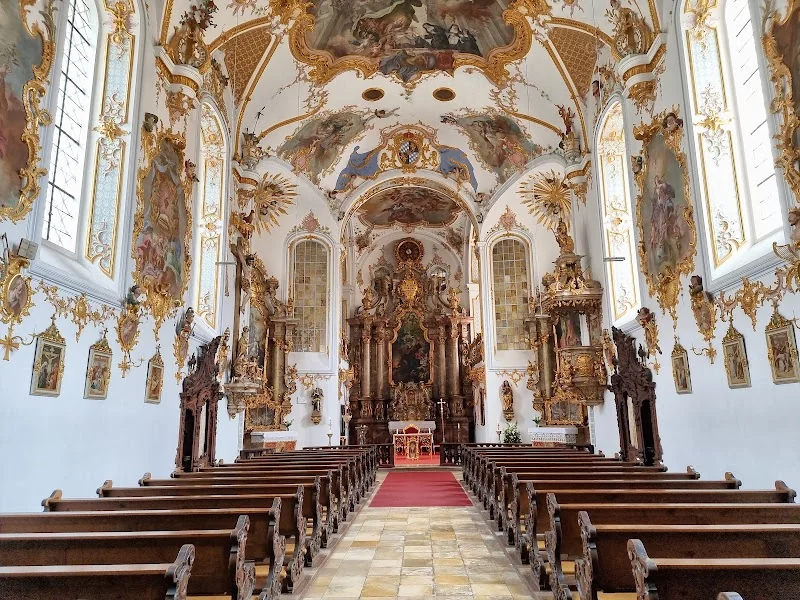
The School Church Amberg is much more than a quiet church space in the old town: it is a historic landmark, a vibrant place of worship, and a cultural address that attracts attention far beyond Amberg with its Rococo furnishings, organ music, and unique atmosphere. The sacred building at Deutsche Schulgasse 2 dates back to the years 1697 to 1699 and was initially built as a convent church for the Salesian Sisters; later it became a school church and remained closely connected with education, faith, and the history of the city. Today, visitors experience not only architectural history here but also a place where religious practice, music, and monument preservation come together. That the city and parish describe the building as one of the most significant Rococo churches in Germany is not just a cliché, but an expression of its extraordinary rank. Therefore, those who visit the School Church receive a rare mix of art historical depth, lived tradition, and quiet proximity to the city. This is exactly why so many people search for School Church Amberg, for services, organ, photos, directions, parking, and tours. ([amberg.de](https://amberg.de/kultourismus/heimat-tradition/bauten-denkmaeler/kirchen/schulkirche))
Organ Concerts in the School Church: Amberg Organ Music and Sound Culture
The most well-known cultural use of the School Church is the concert series Amberg Organ Music. According to the parish, approximately 30-minute organ concerts take place every Saturday afternoon at 12:00 PM from July to mid-September. The series has established itself over more than ten years as a regular break in everyday life and enjoys great popularity. It is organized by the Organ Building Association Project Organ St. Martin e.V. together with the parish; admission is free, and voluntary donations are reinvested into the project after deducting financing costs. For many visitors, this mix is crucial: the short duration, open accessibility, high musical quality, and the unusual setting of a Baroque church, where music is experienced not as a side note but as the main act. Therefore, those searching for school church amberg organ or amberg organ music school church are essentially looking for a musical moment that can easily be integrated into a city visit. Particularly pleasant is that the concerts take place on Saturday afternoons, making them easily accessible for both locals and day visitors. However, the parish also points out that seating can be limited; those who want to be sure should arrive a little earlier. ([amberg-st-martin.de](https://www.amberg-st-martin.de/orgelkonzerte-516015.html))
The organ itself is also part of the fascination. The official organ page of the parish describes that the instrument has 50 speaking registers and a total of 4,832 pipes. The pipes are made of wood, tin, and copper; the smallest tin pipe is about the size of a pencil, while the largest copper pipe measures 5.50 meters and weighs around 100 kilograms. The parish also outlines a long history of the organ from the first instruments in St. Martin through various new constructions to the current installation. For the School Church, this means: The building stands not only for historical architecture but also for a well-maintained, active organ location where music care is visible and audible. This is an important signal for visitors looking for school church amberg organ or organ concert: This is not a museum with silent inventory but a place where the organ regularly sounds and the sacred space is acoustically truly lived. ([amberg-st-martin.de](https://www.amberg-st-martin.de/orgel.html))
Services and Liturgical Times Throughout the Year
The School Church is not just a pure excursion destination but a genuine liturgical space. The parish page of St. Martin explicitly points out that services are celebrated in the School Church from April to October, while from November to March, the Basilica of St. Martin is used. This seasonal division shows how closely the School Church is integrated into parish life. Additionally, there are regular forms of prayer and piety such as the rosary on Saturdays, as well as special major feasts and specific service times on holidays. The church's description of the School Church also mentions three main feasts: the feast of St. Francis de Sales on January 24, the feast of St. Augustine on August 28, and the feast of the Patronage of the Sacred Heart of Jesus on the Friday after the octave of Corpus Christi. These dates are important because they make the School Church visible not only as a monument but also as a theological and spiritual place. Therefore, those searching for school church amberg services will not find a tourist backdrop here but a church with a vibrant community life and clear liturgical order. ([amberg-st-martin.de](https://www.amberg-st-martin.de/gottesdienstzeiten-515994.html))
For the visit, this also means: The School Church is differently present throughout the year. In the warmer months, it comes more to the forefront because services are celebrated there, and cultural offerings such as the organ concerts are enjoyed. In the cooler months, it remains part of church life, but the main services shift to the Basilica. Additionally, it is interesting that the School Church is also used as a place for special church formats and for religious school life. The Dr. Johanna Decker Schools, located at the same address, refer to their School Church, making it clear that the building is not only monumentally preserved but also pedagogically and communally integrated. Therefore, those researching school church amberg city or school church amberg address will quickly discover that church, school, and historical city structure interconnect here. This connection shapes the atmosphere: The School Church is a place of tranquility during the day and a space for liturgy, music, and encounters in the evening or on weekends. ([djds.de](https://www.djds.de/unsere-schulkirche/))
History and Rococo Furnishings: From Convent Church to Landmark
The history of the School Church begins with the Salesian Sisters, who arrived in Amberg shortly before the construction. The monastery complex was built between 1692 and 1696, and in 1697 the construction of the church began according to plans by Wolfgang Dientzenhofer, who also oversaw the construction. In 1699, the Bishop of Regensburg consecrated the church. Even this early phase shows how strongly the church was embedded in the Baroque urban development of Amberg. Almost exclusively Amberg artists and craftsmen worked on the interior; Master Carlone was responsible for the stucco work, and in the later expansion, another stucco artist, Anton Landes, joined. A particularly defining contribution was made by the Augsburg court painter Gottfried Bernhard Götz, who created the ceiling and side wall frescoes. In 1758, the originally round building underwent a comprehensive redesign, through which the Rococo style firmly established itself in Amberg. The School Church thus tells not only a church history but also a story of art and craftsmanship, where local masters, supra-regional influences, and spiritual functions converge. This mixture makes it fascinating to this day. ([amberg.de](https://amberg.de/kultourismus/heimat-tradition/bauten-denkmaeler/kirchen/schulkirche))
Especially exciting is that the history continues to evolve after secularization without emptying the place. The former convent passed to the so-called German School Foundation along with the church, and later the building became the church of the Poor School Sisters of Our Lady. This path alone explains why the name School Church has remained alive to this day. It connects the spiritual origin with educational use and makes the church a building with a dual identity. Those interested in school church amberg history often seek exactly this layer of building history, order history, and urban development. The city of Amberg and the parish both emphasize the special rank of the building; the city lists the School Church as an important church site, and the parish explicitly ranks it among the most significant Rococo churches in Germany. For visitors, this means: Here stands not just a beautiful church but a work of art that has grown in several phases and whose interior still tells of this development. Especially in a city with many historic churches, the School Church is one of the places that one does not just see but understands when one knows its history. ([amberg.de](https://amberg.de/kultourismus/heimat-tradition/bauten-denkmaeler/kirchen/schulkirche))
Directions, Location, and Parking in the Amberg Old Town
The School Church is located at Deutsche Schulgasse 2 in 92224 Amberg and thus right in an area that is easily accessible on foot. Those searching for school church amberg directions or school church amberg parking will encounter two important facts: First, there is no designated parking space directly at the church on the official church and school pages; second, the city of Amberg provides numerous parking options close to the old town. For practical visits, this is the crucial information. Particularly relevant are the parking garage at Ziegeltor with 257 spaces and the parking garage at Kurfürstenbad with 242 spaces, both designated as close to the old town. Additionally, there are the Altstadtgarage, the Theatergarage, the Marienstraße parking garage, and further parking spaces around the city center. The 636 parking spaces in the old town itself are also interesting for short visits. The city of Amberg also explicitly points out that mobile parking is possible throughout the old town area. Therefore, those arriving by car should plan the School Church as the center of a walkable visit to the old town instead of searching for a parking space directly at the church building. This makes access uncomplicated: park nearby, then walk the last stretch and enjoy the historic surroundings. ([djds.de](https://www.djds.de/unsere-schulkirche/))
Particularly helpful is the connection of location and orientation. The Tourist Information Amberg lists the School Church as a destination for city tours and explicitly names the church itself as the meeting point. This shows that the place is firmly anchored in the city's visitor guide. For the year 2026, a themed tour of the School Church is even listed on the official tourism page, with a meeting point in front of the church, a duration of about 1.5 hours, and ticket sales at the Tourist Information. Therefore, those planning a visit can easily incorporate the School Church into a walk through the old town and combine it with other sights. This makes the place interesting for people searching for school church amberg tour or school church amberg events. Instead of just targeting a single stop, one experiences the School Church best as part of a historical tour through the old town of Amberg. This also applies to motorcyclists, as the city explicitly names parking areas for motorcycles in several places, including Hallplatz and Malteserplatz. This keeps the journey flexible without unnecessarily burdening the historic city center. ([tourismus.amberg.de](https://tourismus.amberg.de/stadtfuehrungen/))
Photos, Overview, and Tours: Experience the School Church Today
Those searching for school church amberg photos or school church amberg tour will find a very useful answer on the parish page: There is a virtual 360-degree overview of the School Church. This is not only practical for initial orientation but also provides an impression of how cohesive and rich the interior design is. Especially in a Rococo church, the view of stucco, frescoes, and spatial effect is crucial, and the digital overview helps to grasp the architectural dramaturgy even before the visit. At the same time, it becomes clear that the School Church is interesting not only for quiet devotion but also for visual exploration. Those who later stand on site understand the spatial effect better and can specifically pay attention to details that may be easily overlooked at first glance. This is precisely where the added value of photos and overviews lies: they are not just a mere addition but a real entry point into the perception of the building. ([amberg-st-martin.de](https://www.amberg-st-martin.de/schulkirche.html))
Furthermore, the School Church regularly appears in the cultural and church programs of the city. It is explicitly listed as part of Amberg's church and cultural life at events such as the Night of Open Churches, and city tours also present it as a specific focus. For visitors, this means: The School Church is not just a destination for targeted specialists but open to different approaches. Those who come for the organ experience the acoustic side of the place; those who come for the history discover the role of Dientzenhofer, the Salesian Sisters, and the Rococo furnishings; those who come for photos find the suitable digital entry point; and those who come for a tour receive the history explained in the urban context. This multi-layeredness is rare and makes the place so sought after. Even short visits do not feel fleeting here, as architecture, music, and liturgical use reinforce each other. Therefore, the School Church Amberg is a classic example of how a historic sacred building can remain vibrant in the 21st century without losing its dignity. For travelers, culture enthusiasts, and believers, it is thus a worthwhile destination. ([amberg.de](https://amberg.de/nacht-der-offenen-gotteshaeuser?utm_source=openai))
In summary, the School Church Amberg shows why search queries like school church amberg, school church amberg services, school church amberg organ, school church amberg photos, school church amberg directions, and school church amberg parking can be so well connected. The church is a place with a clear identity: historically significant, architecturally outstanding, musically vibrant, and practically well accessible. Therefore, those visiting the building should not only pay attention to the main portal or the interior but also to the paths leading there, the seasonal service calendar, the concert dates, and the surroundings in the old town. This mixture makes a visit coherent. The School Church is not a hard-to-access monument but an open, yet venerable place that brings culture and faith together in a rare form. Those who want to understand Amberg should start here or at least take a break here. Because at hardly any other place in the city can history, music, and present be so directly connected. ([amberg.de](https://amberg.de/kultourismus/heimat-tradition/bauten-denkmaeler/kirchen/schulkirche))
Sources:
Mehr anzeigenWeniger anzeigen
School Church Amberg | Organ & Services
The School Church Amberg is much more than a quiet church space in the old town: it is a historic landmark, a vibrant place of worship, and a cultural address that attracts attention far beyond Amberg with its Rococo furnishings, organ music, and unique atmosphere. The sacred building at Deutsche Schulgasse 2 dates back to the years 1697 to 1699 and was initially built as a convent church for the Salesian Sisters; later it became a school church and remained closely connected with education, faith, and the history of the city. Today, visitors experience not only architectural history here but also a place where religious practice, music, and monument preservation come together. That the city and parish describe the building as one of the most significant Rococo churches in Germany is not just a cliché, but an expression of its extraordinary rank. Therefore, those who visit the School Church receive a rare mix of art historical depth, lived tradition, and quiet proximity to the city. This is exactly why so many people search for School Church Amberg, for services, organ, photos, directions, parking, and tours. ([amberg.de](https://amberg.de/kultourismus/heimat-tradition/bauten-denkmaeler/kirchen/schulkirche))
Organ Concerts in the School Church: Amberg Organ Music and Sound Culture
The most well-known cultural use of the School Church is the concert series Amberg Organ Music. According to the parish, approximately 30-minute organ concerts take place every Saturday afternoon at 12:00 PM from July to mid-September. The series has established itself over more than ten years as a regular break in everyday life and enjoys great popularity. It is organized by the Organ Building Association Project Organ St. Martin e.V. together with the parish; admission is free, and voluntary donations are reinvested into the project after deducting financing costs. For many visitors, this mix is crucial: the short duration, open accessibility, high musical quality, and the unusual setting of a Baroque church, where music is experienced not as a side note but as the main act. Therefore, those searching for school church amberg organ or amberg organ music school church are essentially looking for a musical moment that can easily be integrated into a city visit. Particularly pleasant is that the concerts take place on Saturday afternoons, making them easily accessible for both locals and day visitors. However, the parish also points out that seating can be limited; those who want to be sure should arrive a little earlier. ([amberg-st-martin.de](https://www.amberg-st-martin.de/orgelkonzerte-516015.html))
The organ itself is also part of the fascination. The official organ page of the parish describes that the instrument has 50 speaking registers and a total of 4,832 pipes. The pipes are made of wood, tin, and copper; the smallest tin pipe is about the size of a pencil, while the largest copper pipe measures 5.50 meters and weighs around 100 kilograms. The parish also outlines a long history of the organ from the first instruments in St. Martin through various new constructions to the current installation. For the School Church, this means: The building stands not only for historical architecture but also for a well-maintained, active organ location where music care is visible and audible. This is an important signal for visitors looking for school church amberg organ or organ concert: This is not a museum with silent inventory but a place where the organ regularly sounds and the sacred space is acoustically truly lived. ([amberg-st-martin.de](https://www.amberg-st-martin.de/orgel.html))
Services and Liturgical Times Throughout the Year
The School Church is not just a pure excursion destination but a genuine liturgical space. The parish page of St. Martin explicitly points out that services are celebrated in the School Church from April to October, while from November to March, the Basilica of St. Martin is used. This seasonal division shows how closely the School Church is integrated into parish life. Additionally, there are regular forms of prayer and piety such as the rosary on Saturdays, as well as special major feasts and specific service times on holidays. The church's description of the School Church also mentions three main feasts: the feast of St. Francis de Sales on January 24, the feast of St. Augustine on August 28, and the feast of the Patronage of the Sacred Heart of Jesus on the Friday after the octave of Corpus Christi. These dates are important because they make the School Church visible not only as a monument but also as a theological and spiritual place. Therefore, those searching for school church amberg services will not find a tourist backdrop here but a church with a vibrant community life and clear liturgical order. ([amberg-st-martin.de](https://www.amberg-st-martin.de/gottesdienstzeiten-515994.html))
For the visit, this also means: The School Church is differently present throughout the year. In the warmer months, it comes more to the forefront because services are celebrated there, and cultural offerings such as the organ concerts are enjoyed. In the cooler months, it remains part of church life, but the main services shift to the Basilica. Additionally, it is interesting that the School Church is also used as a place for special church formats and for religious school life. The Dr. Johanna Decker Schools, located at the same address, refer to their School Church, making it clear that the building is not only monumentally preserved but also pedagogically and communally integrated. Therefore, those researching school church amberg city or school church amberg address will quickly discover that church, school, and historical city structure interconnect here. This connection shapes the atmosphere: The School Church is a place of tranquility during the day and a space for liturgy, music, and encounters in the evening or on weekends. ([djds.de](https://www.djds.de/unsere-schulkirche/))
History and Rococo Furnishings: From Convent Church to Landmark
The history of the School Church begins with the Salesian Sisters, who arrived in Amberg shortly before the construction. The monastery complex was built between 1692 and 1696, and in 1697 the construction of the church began according to plans by Wolfgang Dientzenhofer, who also oversaw the construction. In 1699, the Bishop of Regensburg consecrated the church. Even this early phase shows how strongly the church was embedded in the Baroque urban development of Amberg. Almost exclusively Amberg artists and craftsmen worked on the interior; Master Carlone was responsible for the stucco work, and in the later expansion, another stucco artist, Anton Landes, joined. A particularly defining contribution was made by the Augsburg court painter Gottfried Bernhard Götz, who created the ceiling and side wall frescoes. In 1758, the originally round building underwent a comprehensive redesign, through which the Rococo style firmly established itself in Amberg. The School Church thus tells not only a church history but also a story of art and craftsmanship, where local masters, supra-regional influences, and spiritual functions converge. This mixture makes it fascinating to this day. ([amberg.de](https://amberg.de/kultourismus/heimat-tradition/bauten-denkmaeler/kirchen/schulkirche))
Especially exciting is that the history continues to evolve after secularization without emptying the place. The former convent passed to the so-called German School Foundation along with the church, and later the building became the church of the Poor School Sisters of Our Lady. This path alone explains why the name School Church has remained alive to this day. It connects the spiritual origin with educational use and makes the church a building with a dual identity. Those interested in school church amberg history often seek exactly this layer of building history, order history, and urban development. The city of Amberg and the parish both emphasize the special rank of the building; the city lists the School Church as an important church site, and the parish explicitly ranks it among the most significant Rococo churches in Germany. For visitors, this means: Here stands not just a beautiful church but a work of art that has grown in several phases and whose interior still tells of this development. Especially in a city with many historic churches, the School Church is one of the places that one does not just see but understands when one knows its history. ([amberg.de](https://amberg.de/kultourismus/heimat-tradition/bauten-denkmaeler/kirchen/schulkirche))
Directions, Location, and Parking in the Amberg Old Town
The School Church is located at Deutsche Schulgasse 2 in 92224 Amberg and thus right in an area that is easily accessible on foot. Those searching for school church amberg directions or school church amberg parking will encounter two important facts: First, there is no designated parking space directly at the church on the official church and school pages; second, the city of Amberg provides numerous parking options close to the old town. For practical visits, this is the crucial information. Particularly relevant are the parking garage at Ziegeltor with 257 spaces and the parking garage at Kurfürstenbad with 242 spaces, both designated as close to the old town. Additionally, there are the Altstadtgarage, the Theatergarage, the Marienstraße parking garage, and further parking spaces around the city center. The 636 parking spaces in the old town itself are also interesting for short visits. The city of Amberg also explicitly points out that mobile parking is possible throughout the old town area. Therefore, those arriving by car should plan the School Church as the center of a walkable visit to the old town instead of searching for a parking space directly at the church building. This makes access uncomplicated: park nearby, then walk the last stretch and enjoy the historic surroundings. ([djds.de](https://www.djds.de/unsere-schulkirche/))
Particularly helpful is the connection of location and orientation. The Tourist Information Amberg lists the School Church as a destination for city tours and explicitly names the church itself as the meeting point. This shows that the place is firmly anchored in the city's visitor guide. For the year 2026, a themed tour of the School Church is even listed on the official tourism page, with a meeting point in front of the church, a duration of about 1.5 hours, and ticket sales at the Tourist Information. Therefore, those planning a visit can easily incorporate the School Church into a walk through the old town and combine it with other sights. This makes the place interesting for people searching for school church amberg tour or school church amberg events. Instead of just targeting a single stop, one experiences the School Church best as part of a historical tour through the old town of Amberg. This also applies to motorcyclists, as the city explicitly names parking areas for motorcycles in several places, including Hallplatz and Malteserplatz. This keeps the journey flexible without unnecessarily burdening the historic city center. ([tourismus.amberg.de](https://tourismus.amberg.de/stadtfuehrungen/))
Photos, Overview, and Tours: Experience the School Church Today
Those searching for school church amberg photos or school church amberg tour will find a very useful answer on the parish page: There is a virtual 360-degree overview of the School Church. This is not only practical for initial orientation but also provides an impression of how cohesive and rich the interior design is. Especially in a Rococo church, the view of stucco, frescoes, and spatial effect is crucial, and the digital overview helps to grasp the architectural dramaturgy even before the visit. At the same time, it becomes clear that the School Church is interesting not only for quiet devotion but also for visual exploration. Those who later stand on site understand the spatial effect better and can specifically pay attention to details that may be easily overlooked at first glance. This is precisely where the added value of photos and overviews lies: they are not just a mere addition but a real entry point into the perception of the building. ([amberg-st-martin.de](https://www.amberg-st-martin.de/schulkirche.html))
Furthermore, the School Church regularly appears in the cultural and church programs of the city. It is explicitly listed as part of Amberg's church and cultural life at events such as the Night of Open Churches, and city tours also present it as a specific focus. For visitors, this means: The School Church is not just a destination for targeted specialists but open to different approaches. Those who come for the organ experience the acoustic side of the place; those who come for the history discover the role of Dientzenhofer, the Salesian Sisters, and the Rococo furnishings; those who come for photos find the suitable digital entry point; and those who come for a tour receive the history explained in the urban context. This multi-layeredness is rare and makes the place so sought after. Even short visits do not feel fleeting here, as architecture, music, and liturgical use reinforce each other. Therefore, the School Church Amberg is a classic example of how a historic sacred building can remain vibrant in the 21st century without losing its dignity. For travelers, culture enthusiasts, and believers, it is thus a worthwhile destination. ([amberg.de](https://amberg.de/nacht-der-offenen-gotteshaeuser?utm_source=openai))
In summary, the School Church Amberg shows why search queries like school church amberg, school church amberg services, school church amberg organ, school church amberg photos, school church amberg directions, and school church amberg parking can be so well connected. The church is a place with a clear identity: historically significant, architecturally outstanding, musically vibrant, and practically well accessible. Therefore, those visiting the building should not only pay attention to the main portal or the interior but also to the paths leading there, the seasonal service calendar, the concert dates, and the surroundings in the old town. This mixture makes a visit coherent. The School Church is not a hard-to-access monument but an open, yet venerable place that brings culture and faith together in a rare form. Those who want to understand Amberg should start here or at least take a break here. Because at hardly any other place in the city can history, music, and present be so directly connected. ([amberg.de](https://amberg.de/kultourismus/heimat-tradition/bauten-denkmaeler/kirchen/schulkirche))
Sources:
School Church Amberg | Organ & Services
The School Church Amberg is much more than a quiet church space in the old town: it is a historic landmark, a vibrant place of worship, and a cultural address that attracts attention far beyond Amberg with its Rococo furnishings, organ music, and unique atmosphere. The sacred building at Deutsche Schulgasse 2 dates back to the years 1697 to 1699 and was initially built as a convent church for the Salesian Sisters; later it became a school church and remained closely connected with education, faith, and the history of the city. Today, visitors experience not only architectural history here but also a place where religious practice, music, and monument preservation come together. That the city and parish describe the building as one of the most significant Rococo churches in Germany is not just a cliché, but an expression of its extraordinary rank. Therefore, those who visit the School Church receive a rare mix of art historical depth, lived tradition, and quiet proximity to the city. This is exactly why so many people search for School Church Amberg, for services, organ, photos, directions, parking, and tours. ([amberg.de](https://amberg.de/kultourismus/heimat-tradition/bauten-denkmaeler/kirchen/schulkirche))
Organ Concerts in the School Church: Amberg Organ Music and Sound Culture
The most well-known cultural use of the School Church is the concert series Amberg Organ Music. According to the parish, approximately 30-minute organ concerts take place every Saturday afternoon at 12:00 PM from July to mid-September. The series has established itself over more than ten years as a regular break in everyday life and enjoys great popularity. It is organized by the Organ Building Association Project Organ St. Martin e.V. together with the parish; admission is free, and voluntary donations are reinvested into the project after deducting financing costs. For many visitors, this mix is crucial: the short duration, open accessibility, high musical quality, and the unusual setting of a Baroque church, where music is experienced not as a side note but as the main act. Therefore, those searching for school church amberg organ or amberg organ music school church are essentially looking for a musical moment that can easily be integrated into a city visit. Particularly pleasant is that the concerts take place on Saturday afternoons, making them easily accessible for both locals and day visitors. However, the parish also points out that seating can be limited; those who want to be sure should arrive a little earlier. ([amberg-st-martin.de](https://www.amberg-st-martin.de/orgelkonzerte-516015.html))
The organ itself is also part of the fascination. The official organ page of the parish describes that the instrument has 50 speaking registers and a total of 4,832 pipes. The pipes are made of wood, tin, and copper; the smallest tin pipe is about the size of a pencil, while the largest copper pipe measures 5.50 meters and weighs around 100 kilograms. The parish also outlines a long history of the organ from the first instruments in St. Martin through various new constructions to the current installation. For the School Church, this means: The building stands not only for historical architecture but also for a well-maintained, active organ location where music care is visible and audible. This is an important signal for visitors looking for school church amberg organ or organ concert: This is not a museum with silent inventory but a place where the organ regularly sounds and the sacred space is acoustically truly lived. ([amberg-st-martin.de](https://www.amberg-st-martin.de/orgel.html))
Services and Liturgical Times Throughout the Year
The School Church is not just a pure excursion destination but a genuine liturgical space. The parish page of St. Martin explicitly points out that services are celebrated in the School Church from April to October, while from November to March, the Basilica of St. Martin is used. This seasonal division shows how closely the School Church is integrated into parish life. Additionally, there are regular forms of prayer and piety such as the rosary on Saturdays, as well as special major feasts and specific service times on holidays. The church's description of the School Church also mentions three main feasts: the feast of St. Francis de Sales on January 24, the feast of St. Augustine on August 28, and the feast of the Patronage of the Sacred Heart of Jesus on the Friday after the octave of Corpus Christi. These dates are important because they make the School Church visible not only as a monument but also as a theological and spiritual place. Therefore, those searching for school church amberg services will not find a tourist backdrop here but a church with a vibrant community life and clear liturgical order. ([amberg-st-martin.de](https://www.amberg-st-martin.de/gottesdienstzeiten-515994.html))
For the visit, this also means: The School Church is differently present throughout the year. In the warmer months, it comes more to the forefront because services are celebrated there, and cultural offerings such as the organ concerts are enjoyed. In the cooler months, it remains part of church life, but the main services shift to the Basilica. Additionally, it is interesting that the School Church is also used as a place for special church formats and for religious school life. The Dr. Johanna Decker Schools, located at the same address, refer to their School Church, making it clear that the building is not only monumentally preserved but also pedagogically and communally integrated. Therefore, those researching school church amberg city or school church amberg address will quickly discover that church, school, and historical city structure interconnect here. This connection shapes the atmosphere: The School Church is a place of tranquility during the day and a space for liturgy, music, and encounters in the evening or on weekends. ([djds.de](https://www.djds.de/unsere-schulkirche/))
History and Rococo Furnishings: From Convent Church to Landmark
The history of the School Church begins with the Salesian Sisters, who arrived in Amberg shortly before the construction. The monastery complex was built between 1692 and 1696, and in 1697 the construction of the church began according to plans by Wolfgang Dientzenhofer, who also oversaw the construction. In 1699, the Bishop of Regensburg consecrated the church. Even this early phase shows how strongly the church was embedded in the Baroque urban development of Amberg. Almost exclusively Amberg artists and craftsmen worked on the interior; Master Carlone was responsible for the stucco work, and in the later expansion, another stucco artist, Anton Landes, joined. A particularly defining contribution was made by the Augsburg court painter Gottfried Bernhard Götz, who created the ceiling and side wall frescoes. In 1758, the originally round building underwent a comprehensive redesign, through which the Rococo style firmly established itself in Amberg. The School Church thus tells not only a church history but also a story of art and craftsmanship, where local masters, supra-regional influences, and spiritual functions converge. This mixture makes it fascinating to this day. ([amberg.de](https://amberg.de/kultourismus/heimat-tradition/bauten-denkmaeler/kirchen/schulkirche))
Especially exciting is that the history continues to evolve after secularization without emptying the place. The former convent passed to the so-called German School Foundation along with the church, and later the building became the church of the Poor School Sisters of Our Lady. This path alone explains why the name School Church has remained alive to this day. It connects the spiritual origin with educational use and makes the church a building with a dual identity. Those interested in school church amberg history often seek exactly this layer of building history, order history, and urban development. The city of Amberg and the parish both emphasize the special rank of the building; the city lists the School Church as an important church site, and the parish explicitly ranks it among the most significant Rococo churches in Germany. For visitors, this means: Here stands not just a beautiful church but a work of art that has grown in several phases and whose interior still tells of this development. Especially in a city with many historic churches, the School Church is one of the places that one does not just see but understands when one knows its history. ([amberg.de](https://amberg.de/kultourismus/heimat-tradition/bauten-denkmaeler/kirchen/schulkirche))
Directions, Location, and Parking in the Amberg Old Town
The School Church is located at Deutsche Schulgasse 2 in 92224 Amberg and thus right in an area that is easily accessible on foot. Those searching for school church amberg directions or school church amberg parking will encounter two important facts: First, there is no designated parking space directly at the church on the official church and school pages; second, the city of Amberg provides numerous parking options close to the old town. For practical visits, this is the crucial information. Particularly relevant are the parking garage at Ziegeltor with 257 spaces and the parking garage at Kurfürstenbad with 242 spaces, both designated as close to the old town. Additionally, there are the Altstadtgarage, the Theatergarage, the Marienstraße parking garage, and further parking spaces around the city center. The 636 parking spaces in the old town itself are also interesting for short visits. The city of Amberg also explicitly points out that mobile parking is possible throughout the old town area. Therefore, those arriving by car should plan the School Church as the center of a walkable visit to the old town instead of searching for a parking space directly at the church building. This makes access uncomplicated: park nearby, then walk the last stretch and enjoy the historic surroundings. ([djds.de](https://www.djds.de/unsere-schulkirche/))
Particularly helpful is the connection of location and orientation. The Tourist Information Amberg lists the School Church as a destination for city tours and explicitly names the church itself as the meeting point. This shows that the place is firmly anchored in the city's visitor guide. For the year 2026, a themed tour of the School Church is even listed on the official tourism page, with a meeting point in front of the church, a duration of about 1.5 hours, and ticket sales at the Tourist Information. Therefore, those planning a visit can easily incorporate the School Church into a walk through the old town and combine it with other sights. This makes the place interesting for people searching for school church amberg tour or school church amberg events. Instead of just targeting a single stop, one experiences the School Church best as part of a historical tour through the old town of Amberg. This also applies to motorcyclists, as the city explicitly names parking areas for motorcycles in several places, including Hallplatz and Malteserplatz. This keeps the journey flexible without unnecessarily burdening the historic city center. ([tourismus.amberg.de](https://tourismus.amberg.de/stadtfuehrungen/))
Photos, Overview, and Tours: Experience the School Church Today
Those searching for school church amberg photos or school church amberg tour will find a very useful answer on the parish page: There is a virtual 360-degree overview of the School Church. This is not only practical for initial orientation but also provides an impression of how cohesive and rich the interior design is. Especially in a Rococo church, the view of stucco, frescoes, and spatial effect is crucial, and the digital overview helps to grasp the architectural dramaturgy even before the visit. At the same time, it becomes clear that the School Church is interesting not only for quiet devotion but also for visual exploration. Those who later stand on site understand the spatial effect better and can specifically pay attention to details that may be easily overlooked at first glance. This is precisely where the added value of photos and overviews lies: they are not just a mere addition but a real entry point into the perception of the building. ([amberg-st-martin.de](https://www.amberg-st-martin.de/schulkirche.html))
Furthermore, the School Church regularly appears in the cultural and church programs of the city. It is explicitly listed as part of Amberg's church and cultural life at events such as the Night of Open Churches, and city tours also present it as a specific focus. For visitors, this means: The School Church is not just a destination for targeted specialists but open to different approaches. Those who come for the organ experience the acoustic side of the place; those who come for the history discover the role of Dientzenhofer, the Salesian Sisters, and the Rococo furnishings; those who come for photos find the suitable digital entry point; and those who come for a tour receive the history explained in the urban context. This multi-layeredness is rare and makes the place so sought after. Even short visits do not feel fleeting here, as architecture, music, and liturgical use reinforce each other. Therefore, the School Church Amberg is a classic example of how a historic sacred building can remain vibrant in the 21st century without losing its dignity. For travelers, culture enthusiasts, and believers, it is thus a worthwhile destination. ([amberg.de](https://amberg.de/nacht-der-offenen-gotteshaeuser?utm_source=openai))
In summary, the School Church Amberg shows why search queries like school church amberg, school church amberg services, school church amberg organ, school church amberg photos, school church amberg directions, and school church amberg parking can be so well connected. The church is a place with a clear identity: historically significant, architecturally outstanding, musically vibrant, and practically well accessible. Therefore, those visiting the building should not only pay attention to the main portal or the interior but also to the paths leading there, the seasonal service calendar, the concert dates, and the surroundings in the old town. This mixture makes a visit coherent. The School Church is not a hard-to-access monument but an open, yet venerable place that brings culture and faith together in a rare form. Those who want to understand Amberg should start here or at least take a break here. Because at hardly any other place in the city can history, music, and present be so directly connected. ([amberg.de](https://amberg.de/kultourismus/heimat-tradition/bauten-denkmaeler/kirchen/schulkirche))
Sources:
Upcoming Events
Amberger Organ Music in Amberg: Sound Hour in the School Church
A special midday moment in Amberg: The Amberger Organ Music brings sound, calm, and Rococo atmosphere into the School Church. August 1, 2026, 12 PM, free admission. #Amberg #OrganMusic

Johannes Berger in the Amberg School Church
An afternoon full of sound magic in Amberg: Johannes Berger brings the School Church to life. August 1, 2026 at 12 o'clock, free admission. #OrganMusic #Amberg
Amberg Organ Music: Lunch Concert in the School Church on August 22, 2026
A quiet summer moment in Amberg: Amberg Organ Music brings 30 minutes of sound art to the School Church on 22.08.2026. Admission free. #Amberg #OrganMusic

Sebastian Brandl: Amberg Organ Music in the School Church
Amberg will experience a special organ concert in the School Church on 22.08.2026: freely accessible, powerful in sound, and historically rich. 12 PM, 30 minutes, #Amberg #OrganMusic
Frequently Asked Questions
Reviews
Globetrotting Gary
18. May 2025
Lovely Baroque Church, occasionally hosting concerts and events ⛪
Zuzana Vavrova
13. May 2018
Beautiful!!! You can study everything about late baroque (rococo) architecture here. Rich decorated interior. Great place to sit and think about yourself...
Fabienne Lindner
5. December 2019
Mega
Marek Słomianowski
19. August 2022
On a side street called Schulgasse in Amberg stands an inconspicuous-looking, small church. This is the former church of St. Augustine, belonging to the Salesian Sisters, known locally as the Visitationists. They were brought to Amberg by the foundation of Princess Henriette Adelaide of Savoy, who, upon marrying the Electoral Prince, committed to establishing two convents for the aforementioned sisters. Construction of the entire project began in 1692, designed by Wolfgang Deintzenhofer, and was completed in 1696. Construction of the monastery church began a year later, in 1697, and its consecration took place in 1699. Nearly sixty years later, the next Mother Superior, Viktoria von Orban, began a major renovation. Only the chancel and two side chapels remained of the old church. The rest was rebuilt by craftsmen and artists from Amberg. They also created the church's Rococo furnishings. The magnificent stucco and frescoes are the work of two foreign masters. The stucco work was done by Antoni Landes, and the paintings were painted by the imperial court painter, Gottfried Bernard Goz. The church's splendor was short-lived. The year 1803 brought so-called secularization. A school was established in the place of the monastery, and the church became a school church. Over time, the Poor School Sisters of Our Lady took over its care. Today, St. Augustine's Church is considered one of the most important Bavarian monuments of the late Baroque and Rococo periods. Unfortunately, the magnificent interior, with its exquisite altars, is closed off from visitors by a wrought iron, highly ornate grille. And here, the description must stop, as it's difficult to admire the art from a distance of several meters, and believe me, there is much to admire. Perhaps someone in whose hands the decision to open and close the church rests will read these words and open its doors for future visitors. Because it is in the Latin tradition that the Lord's House should always be open, no matter what is happening around!!!
Jens Krone
4. January 2020
A somewhat hidden church, rather inconspicuous from the outside, with a great interior, unfortunately closed off by a door, but still worth a visit.