
Sulzbach-Rosenberg
Im Schloss 1, 92237 Sulzbach-Rosenberg, Deutschland
Chapel of St. Nicholas | History & Parking
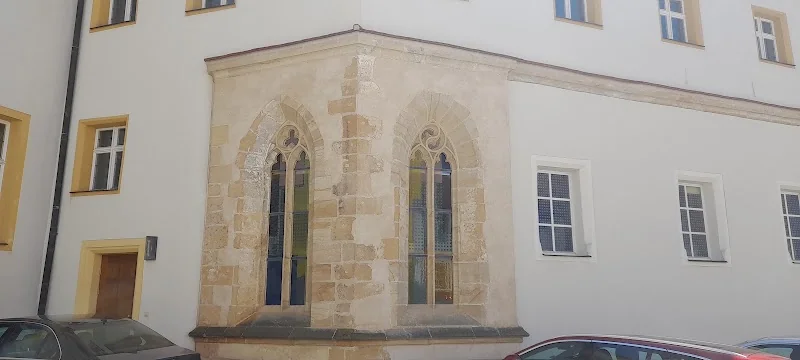
Those searching for Chapel of St. Nicholas, St. Nicholas Chapel, or Chapel Sankt Nikolaus will find themselves in Sulzbach-Rosenberg at a location that is much more than a single sacred space. The official tourist information describes the chapel as a building with origins in the early 9th century; part of the Carolingian structure has been preserved to this day. At the same time, the chapel is located in the midst of the Sulzbach Castle, in a complex that has been rebuilt, expanded, temporarily secularized, and later restored over the centuries. This connection of early history, residential architecture, and vibrant contemporary use makes the site exciting for city walks, historical tours, and cultural events. Visitors to the chapel do not just see a single building but a whole ensemble with a castle courtyard, palace, stair tower, visible archaeological traces in the pavement, and a history that spans from early medieval rule to restoration around the turn of the millennium. The Nicholas Chapel is also mentioned today as a venue, further emphasizing its character between monument and cultural space. ([tourismus.suro.city](https://tourismus.suro.city/schlossshykapelle-st-nikolaus/))
History of the Chapel of St. Nicholas and its Carolingian Beginnings
The historical depth of this chapel is unusually rich. The municipal tourist information places its origins in the early 9th century and emphasizes that Carolingian building substance has survived to this day. North of the church, there was also an early medieval high nobility cemetery from the 9th and 10th centuries; in the 11th century, this area was covered with a memorial chapel. It is particularly illustrative that the markings for this early use have been made visible in the pavement of the upper castle courtyard. For visitors, this is more than a detail: it shows that a later castle with a chapel was not simply built here, but that the place itself has been regarded as sacred and lordly for a very long time. Around 1300, the Romanesque apse was converted into a choir in the Gothic style. This gave the building a new architectural face without losing its historical depth. It is precisely this mixture of Carolingian core, early medieval memorial function, and Gothic transformation that makes the Chapel of St. Nicholas a rare example of the layering of European building and usage history at a single location. ([tourismus.suro.city](https://tourismus.suro.city/schlossshykapelle-st-nikolaus/))
From Romanesque Building to Gothic Choir: Renovations, Secularization, and Restoration
The history of the chapel is not only old but also eventful. During the Counter-Reformation in Sulzbach, it played a special role as it was used by Protestants for services. This directly points to the confessional tensions and changes in the region. Later, the building lost its ecclesiastical function: in 1807, St. Nicholas was secularized and repurposed for non-church use, and after 1862, it was even converted for residential purposes. In the process, the Gothic choir vault was destroyed, which seems particularly painful from today’s perspective, but at the same time documents the deep interventions of the 19th century. The official castle history adds that Count Palatine August fundamentally rebuilt the castle from 1618 to 1620 and restored the chapel, which had not been used since 1542. A connecting building linked the choir of the chapel with the palace. In 1663, Count Palatine Christian August even added a second floor to the chapel and made further changes to the residential complex. Around 2000, archaeological investigations, a general renovation, and a partial reconstruction with modern redesign followed. This made the chapel not museum-like but readable as a historical testimony. Therefore, those who see the building today experience not a single epoch but the traces of many centuries simultaneously. ([tourismus.suro.city](https://tourismus.suro.city/schlossshykapelle-st-nikolaus/))
Sulzbach Castle, Castle Courtyard, and the Integration of the Chapel into the Complex
The Chapel of St. Nicholas only fully unfolds its effect in connection with the entire castle area. The tourist information describes Sulzbach Castle as one of the earliest medieval complexes in Bavaria; the East Bavaria Tourism Association even calls it the largest castle in Northern Bavaria. According to the official representation, the history of the castle and palace dates back to the 8th to 12th centuries, a time when Sulzbach was a significant center of power in the Nordgau. In this long development, the chapel was not treated as an isolated space but was repeatedly linked with the palace, gates, staircases, and other building parts. This is precisely what makes its charm: it stands not only for piety but also for representation, rule, and the spatial organization of a seat of power. Today, the castle area also hosts various public uses. The official castle website lists, among others, the State Building Authority Amberg-Sulzbach, the city library, the municipal singing and music school, the police station Sulzbach-Rosenberg, and a depot of the State Archive Amberg. This means: the castle is not a closed museum but a historically grown ensemble with a present. Therefore, walking through the castle courtyard creates a rare tension between monument, administration, culture, and urban history. It is precisely in this tension that the perception of the chapel as a special place within a vibrant castle lies. ([tourismus.suro.city](https://tourismus.suro.city/sulzbacher-schloss/))
Guided Tours, Events, and Cultural Use in Sulzbach Castle
The Chapel of St. Nicholas is not only a historical relic but also part of an active cultural offering. In the official city tours of Sulzbach-Rosenberg, there is, for example, the tour Through the Castle with Knorr von Rosenroth. It explicitly states that visitors can view the chapel, the castle garden, the high hall, and the Romanesque keep. This is an important note for anyone looking for tours, programs, or experiential formats: the chapel is embedded in a larger historical tour and is therefore interesting not only from the outside. The event portal Oberpfalz also lists the Nicholas Chapel in Sulzbach Castle as a venue. For example, a historical event about Bertha of Sulczpach was announced for February 2026, where the Nicholas Chapel was explicitly mentioned as a location. Such entries show that the space is used for lectures, historical formats, and cultural programs. This is attractive for visitors because it makes history not only explained but also experienceable in an authentic ambiance. At the same time, it is always advisable to check current event notices before a visit, as the place can be part of a program depending on the date. This multiple role is typical for many monuments in Sulzbach-Rosenberg: they are, on the one hand, historical sites, and on the other hand, platforms for education, culture, and urban identity. The Chapel of St. Nicholas exemplifies the connection between monument preservation and lived present. ([suro.city](https://www.suro.city/wp-content/uploads/2020/03/stadtfuehrungen-web.pdf))
Parking and Directions to the Chapel of St. Nicholas in the Old Town
The location in the castle area is practically well-placed for access, as the chapel is listed under the address Im Schloss 1 in 92237 Sulzbach-Rosenberg. The city provides several options on its official parking page. Particularly relevant is the castle garage at Luitpoldplatz with 220 spaces. The first hour is free; each additional started hour costs 1.00 Euro, and the maximum daily rate is 5.00 Euro. Special rates apply for the night. Additionally, the city lists free short-term spaces with a parking duration of 1 hour for the area Im Schloss 7. Therefore, anyone wanting to visit the chapel or attend an appointment at the castle will find a suitable solution directly in the old town area. Other options include the large parking lot on Bayreuther Straße, public parking spaces in the old town, and a P&R offer between Sulzbach and Rosenberg. For people with disabilities, the city designates several reserved parking spaces. Since January 2026, the castle garage has also been equipped with a ticketless system: license plates are automatically recorded, the first hour remains free, and payment is made at the machine via the license plate. This is a practical advantage for visitors, as access has become easier. Therefore, those arriving by car can choose between a direct short-term solution and a larger underground garage and easily combine their visit to the chapel with a stroll through the old town. ([oberpfalz.de](https://www.oberpfalz.de/veranstaltungsort/nikolauskapelle-im-schloss-sulzbach-sulzbach-rosenberg/))
Visiting Tips for a Historical Tour in Sulzbach-Rosenberg
Those who truly want to experience the Chapel of St. Nicholas should take time for the context. The most exciting impressions arise where the building history becomes readable: in the upper castle courtyard, at the markings of the early medieval high nobility cemetery, at the connection between chapel building and palace, and at the medieval wall sections that have remained despite many renovations. The official tourist information describes the chapel as simply worth seeing, and that is exactly how one should view it: not only as a single object but as part of a whole historical fabric. It is particularly sensible to combine the visit with a castle tour or a stroll through the old town, as the complex and the city history in Sulzbach-Rosenberg are closely intertwined. Those interested in architecture can trace the transition from early medieval remains through Romanesque and Gothic elements to the interventions of modern times. Those interested in regional history can recognize in the chapel the Reformation and Counter-Reformation history of the city as well as later secular uses and modern monument preservation. And those looking for cultural events will find a lively house within a historical ensemble by looking at current programs. It is precisely this complexity that makes the Chapel of St. Nicholas a place that one does not just "visit" but, ideally, discovers step by step. ([tourismus.suro.city](https://tourismus.suro.city/schlossshykapelle-st-nikolaus/))
Sources:
- Tourist Information Sulzbach-Rosenberg – Chapel of St. Nicholas ([tourismus.suro.city](https://tourismus.suro.city/schlossshykapelle-st-nikolaus/))
- Tourist Information Sulzbach-Rosenberg – Sulzbach Castle ([tourismus.suro.city](https://tourismus.suro.city/sulzbacher-schloss/))
- City of Sulzbach-Rosenberg – Parking ([suro.city](https://www.suro.city/buergerservice/wichtige-informationen/parken/))
- City of Sulzbach-Rosenberg – City Tours PDF ([suro.city](https://www.suro.city/wp-content/uploads/2020/03/stadtfuehrungen-web.pdf))
- Oberpfalz – Bertha von Sulczpach - Empress Irene in Byzantium ([oberpfalz.de](https://www.oberpfalz.de/veranstaltungen/bertha-von-sulczpach-kaiserin-irene-in-byzanz/?utm_source=openai))
- Oberpfalz – Chapel of St. Nicholas (Sulzbach-Rosenberg) ([oberpfalz.de](https://www.oberpfalz.de/veranstaltungsort/nikolauskapelle-im-schloss-sulzbach-sulzbach-rosenberg/))
Mehr anzeigenWeniger anzeigen
Chapel of St. Nicholas | History & Parking
Those searching for Chapel of St. Nicholas, St. Nicholas Chapel, or Chapel Sankt Nikolaus will find themselves in Sulzbach-Rosenberg at a location that is much more than a single sacred space. The official tourist information describes the chapel as a building with origins in the early 9th century; part of the Carolingian structure has been preserved to this day. At the same time, the chapel is located in the midst of the Sulzbach Castle, in a complex that has been rebuilt, expanded, temporarily secularized, and later restored over the centuries. This connection of early history, residential architecture, and vibrant contemporary use makes the site exciting for city walks, historical tours, and cultural events. Visitors to the chapel do not just see a single building but a whole ensemble with a castle courtyard, palace, stair tower, visible archaeological traces in the pavement, and a history that spans from early medieval rule to restoration around the turn of the millennium. The Nicholas Chapel is also mentioned today as a venue, further emphasizing its character between monument and cultural space. ([tourismus.suro.city](https://tourismus.suro.city/schlossshykapelle-st-nikolaus/))
History of the Chapel of St. Nicholas and its Carolingian Beginnings
The historical depth of this chapel is unusually rich. The municipal tourist information places its origins in the early 9th century and emphasizes that Carolingian building substance has survived to this day. North of the church, there was also an early medieval high nobility cemetery from the 9th and 10th centuries; in the 11th century, this area was covered with a memorial chapel. It is particularly illustrative that the markings for this early use have been made visible in the pavement of the upper castle courtyard. For visitors, this is more than a detail: it shows that a later castle with a chapel was not simply built here, but that the place itself has been regarded as sacred and lordly for a very long time. Around 1300, the Romanesque apse was converted into a choir in the Gothic style. This gave the building a new architectural face without losing its historical depth. It is precisely this mixture of Carolingian core, early medieval memorial function, and Gothic transformation that makes the Chapel of St. Nicholas a rare example of the layering of European building and usage history at a single location. ([tourismus.suro.city](https://tourismus.suro.city/schlossshykapelle-st-nikolaus/))
From Romanesque Building to Gothic Choir: Renovations, Secularization, and Restoration
The history of the chapel is not only old but also eventful. During the Counter-Reformation in Sulzbach, it played a special role as it was used by Protestants for services. This directly points to the confessional tensions and changes in the region. Later, the building lost its ecclesiastical function: in 1807, St. Nicholas was secularized and repurposed for non-church use, and after 1862, it was even converted for residential purposes. In the process, the Gothic choir vault was destroyed, which seems particularly painful from today’s perspective, but at the same time documents the deep interventions of the 19th century. The official castle history adds that Count Palatine August fundamentally rebuilt the castle from 1618 to 1620 and restored the chapel, which had not been used since 1542. A connecting building linked the choir of the chapel with the palace. In 1663, Count Palatine Christian August even added a second floor to the chapel and made further changes to the residential complex. Around 2000, archaeological investigations, a general renovation, and a partial reconstruction with modern redesign followed. This made the chapel not museum-like but readable as a historical testimony. Therefore, those who see the building today experience not a single epoch but the traces of many centuries simultaneously. ([tourismus.suro.city](https://tourismus.suro.city/schlossshykapelle-st-nikolaus/))
Sulzbach Castle, Castle Courtyard, and the Integration of the Chapel into the Complex
The Chapel of St. Nicholas only fully unfolds its effect in connection with the entire castle area. The tourist information describes Sulzbach Castle as one of the earliest medieval complexes in Bavaria; the East Bavaria Tourism Association even calls it the largest castle in Northern Bavaria. According to the official representation, the history of the castle and palace dates back to the 8th to 12th centuries, a time when Sulzbach was a significant center of power in the Nordgau. In this long development, the chapel was not treated as an isolated space but was repeatedly linked with the palace, gates, staircases, and other building parts. This is precisely what makes its charm: it stands not only for piety but also for representation, rule, and the spatial organization of a seat of power. Today, the castle area also hosts various public uses. The official castle website lists, among others, the State Building Authority Amberg-Sulzbach, the city library, the municipal singing and music school, the police station Sulzbach-Rosenberg, and a depot of the State Archive Amberg. This means: the castle is not a closed museum but a historically grown ensemble with a present. Therefore, walking through the castle courtyard creates a rare tension between monument, administration, culture, and urban history. It is precisely in this tension that the perception of the chapel as a special place within a vibrant castle lies. ([tourismus.suro.city](https://tourismus.suro.city/sulzbacher-schloss/))
Guided Tours, Events, and Cultural Use in Sulzbach Castle
The Chapel of St. Nicholas is not only a historical relic but also part of an active cultural offering. In the official city tours of Sulzbach-Rosenberg, there is, for example, the tour Through the Castle with Knorr von Rosenroth. It explicitly states that visitors can view the chapel, the castle garden, the high hall, and the Romanesque keep. This is an important note for anyone looking for tours, programs, or experiential formats: the chapel is embedded in a larger historical tour and is therefore interesting not only from the outside. The event portal Oberpfalz also lists the Nicholas Chapel in Sulzbach Castle as a venue. For example, a historical event about Bertha of Sulczpach was announced for February 2026, where the Nicholas Chapel was explicitly mentioned as a location. Such entries show that the space is used for lectures, historical formats, and cultural programs. This is attractive for visitors because it makes history not only explained but also experienceable in an authentic ambiance. At the same time, it is always advisable to check current event notices before a visit, as the place can be part of a program depending on the date. This multiple role is typical for many monuments in Sulzbach-Rosenberg: they are, on the one hand, historical sites, and on the other hand, platforms for education, culture, and urban identity. The Chapel of St. Nicholas exemplifies the connection between monument preservation and lived present. ([suro.city](https://www.suro.city/wp-content/uploads/2020/03/stadtfuehrungen-web.pdf))
Parking and Directions to the Chapel of St. Nicholas in the Old Town
The location in the castle area is practically well-placed for access, as the chapel is listed under the address Im Schloss 1 in 92237 Sulzbach-Rosenberg. The city provides several options on its official parking page. Particularly relevant is the castle garage at Luitpoldplatz with 220 spaces. The first hour is free; each additional started hour costs 1.00 Euro, and the maximum daily rate is 5.00 Euro. Special rates apply for the night. Additionally, the city lists free short-term spaces with a parking duration of 1 hour for the area Im Schloss 7. Therefore, anyone wanting to visit the chapel or attend an appointment at the castle will find a suitable solution directly in the old town area. Other options include the large parking lot on Bayreuther Straße, public parking spaces in the old town, and a P&R offer between Sulzbach and Rosenberg. For people with disabilities, the city designates several reserved parking spaces. Since January 2026, the castle garage has also been equipped with a ticketless system: license plates are automatically recorded, the first hour remains free, and payment is made at the machine via the license plate. This is a practical advantage for visitors, as access has become easier. Therefore, those arriving by car can choose between a direct short-term solution and a larger underground garage and easily combine their visit to the chapel with a stroll through the old town. ([oberpfalz.de](https://www.oberpfalz.de/veranstaltungsort/nikolauskapelle-im-schloss-sulzbach-sulzbach-rosenberg/))
Visiting Tips for a Historical Tour in Sulzbach-Rosenberg
Those who truly want to experience the Chapel of St. Nicholas should take time for the context. The most exciting impressions arise where the building history becomes readable: in the upper castle courtyard, at the markings of the early medieval high nobility cemetery, at the connection between chapel building and palace, and at the medieval wall sections that have remained despite many renovations. The official tourist information describes the chapel as simply worth seeing, and that is exactly how one should view it: not only as a single object but as part of a whole historical fabric. It is particularly sensible to combine the visit with a castle tour or a stroll through the old town, as the complex and the city history in Sulzbach-Rosenberg are closely intertwined. Those interested in architecture can trace the transition from early medieval remains through Romanesque and Gothic elements to the interventions of modern times. Those interested in regional history can recognize in the chapel the Reformation and Counter-Reformation history of the city as well as later secular uses and modern monument preservation. And those looking for cultural events will find a lively house within a historical ensemble by looking at current programs. It is precisely this complexity that makes the Chapel of St. Nicholas a place that one does not just "visit" but, ideally, discovers step by step. ([tourismus.suro.city](https://tourismus.suro.city/schlossshykapelle-st-nikolaus/))
Sources:
- Tourist Information Sulzbach-Rosenberg – Chapel of St. Nicholas ([tourismus.suro.city](https://tourismus.suro.city/schlossshykapelle-st-nikolaus/))
- Tourist Information Sulzbach-Rosenberg – Sulzbach Castle ([tourismus.suro.city](https://tourismus.suro.city/sulzbacher-schloss/))
- City of Sulzbach-Rosenberg – Parking ([suro.city](https://www.suro.city/buergerservice/wichtige-informationen/parken/))
- City of Sulzbach-Rosenberg – City Tours PDF ([suro.city](https://www.suro.city/wp-content/uploads/2020/03/stadtfuehrungen-web.pdf))
- Oberpfalz – Bertha von Sulczpach - Empress Irene in Byzantium ([oberpfalz.de](https://www.oberpfalz.de/veranstaltungen/bertha-von-sulczpach-kaiserin-irene-in-byzanz/?utm_source=openai))
- Oberpfalz – Chapel of St. Nicholas (Sulzbach-Rosenberg) ([oberpfalz.de](https://www.oberpfalz.de/veranstaltungsort/nikolauskapelle-im-schloss-sulzbach-sulzbach-rosenberg/))
Chapel of St. Nicholas | History & Parking
Those searching for Chapel of St. Nicholas, St. Nicholas Chapel, or Chapel Sankt Nikolaus will find themselves in Sulzbach-Rosenberg at a location that is much more than a single sacred space. The official tourist information describes the chapel as a building with origins in the early 9th century; part of the Carolingian structure has been preserved to this day. At the same time, the chapel is located in the midst of the Sulzbach Castle, in a complex that has been rebuilt, expanded, temporarily secularized, and later restored over the centuries. This connection of early history, residential architecture, and vibrant contemporary use makes the site exciting for city walks, historical tours, and cultural events. Visitors to the chapel do not just see a single building but a whole ensemble with a castle courtyard, palace, stair tower, visible archaeological traces in the pavement, and a history that spans from early medieval rule to restoration around the turn of the millennium. The Nicholas Chapel is also mentioned today as a venue, further emphasizing its character between monument and cultural space. ([tourismus.suro.city](https://tourismus.suro.city/schlossshykapelle-st-nikolaus/))
History of the Chapel of St. Nicholas and its Carolingian Beginnings
The historical depth of this chapel is unusually rich. The municipal tourist information places its origins in the early 9th century and emphasizes that Carolingian building substance has survived to this day. North of the church, there was also an early medieval high nobility cemetery from the 9th and 10th centuries; in the 11th century, this area was covered with a memorial chapel. It is particularly illustrative that the markings for this early use have been made visible in the pavement of the upper castle courtyard. For visitors, this is more than a detail: it shows that a later castle with a chapel was not simply built here, but that the place itself has been regarded as sacred and lordly for a very long time. Around 1300, the Romanesque apse was converted into a choir in the Gothic style. This gave the building a new architectural face without losing its historical depth. It is precisely this mixture of Carolingian core, early medieval memorial function, and Gothic transformation that makes the Chapel of St. Nicholas a rare example of the layering of European building and usage history at a single location. ([tourismus.suro.city](https://tourismus.suro.city/schlossshykapelle-st-nikolaus/))
From Romanesque Building to Gothic Choir: Renovations, Secularization, and Restoration
The history of the chapel is not only old but also eventful. During the Counter-Reformation in Sulzbach, it played a special role as it was used by Protestants for services. This directly points to the confessional tensions and changes in the region. Later, the building lost its ecclesiastical function: in 1807, St. Nicholas was secularized and repurposed for non-church use, and after 1862, it was even converted for residential purposes. In the process, the Gothic choir vault was destroyed, which seems particularly painful from today’s perspective, but at the same time documents the deep interventions of the 19th century. The official castle history adds that Count Palatine August fundamentally rebuilt the castle from 1618 to 1620 and restored the chapel, which had not been used since 1542. A connecting building linked the choir of the chapel with the palace. In 1663, Count Palatine Christian August even added a second floor to the chapel and made further changes to the residential complex. Around 2000, archaeological investigations, a general renovation, and a partial reconstruction with modern redesign followed. This made the chapel not museum-like but readable as a historical testimony. Therefore, those who see the building today experience not a single epoch but the traces of many centuries simultaneously. ([tourismus.suro.city](https://tourismus.suro.city/schlossshykapelle-st-nikolaus/))
Sulzbach Castle, Castle Courtyard, and the Integration of the Chapel into the Complex
The Chapel of St. Nicholas only fully unfolds its effect in connection with the entire castle area. The tourist information describes Sulzbach Castle as one of the earliest medieval complexes in Bavaria; the East Bavaria Tourism Association even calls it the largest castle in Northern Bavaria. According to the official representation, the history of the castle and palace dates back to the 8th to 12th centuries, a time when Sulzbach was a significant center of power in the Nordgau. In this long development, the chapel was not treated as an isolated space but was repeatedly linked with the palace, gates, staircases, and other building parts. This is precisely what makes its charm: it stands not only for piety but also for representation, rule, and the spatial organization of a seat of power. Today, the castle area also hosts various public uses. The official castle website lists, among others, the State Building Authority Amberg-Sulzbach, the city library, the municipal singing and music school, the police station Sulzbach-Rosenberg, and a depot of the State Archive Amberg. This means: the castle is not a closed museum but a historically grown ensemble with a present. Therefore, walking through the castle courtyard creates a rare tension between monument, administration, culture, and urban history. It is precisely in this tension that the perception of the chapel as a special place within a vibrant castle lies. ([tourismus.suro.city](https://tourismus.suro.city/sulzbacher-schloss/))
Guided Tours, Events, and Cultural Use in Sulzbach Castle
The Chapel of St. Nicholas is not only a historical relic but also part of an active cultural offering. In the official city tours of Sulzbach-Rosenberg, there is, for example, the tour Through the Castle with Knorr von Rosenroth. It explicitly states that visitors can view the chapel, the castle garden, the high hall, and the Romanesque keep. This is an important note for anyone looking for tours, programs, or experiential formats: the chapel is embedded in a larger historical tour and is therefore interesting not only from the outside. The event portal Oberpfalz also lists the Nicholas Chapel in Sulzbach Castle as a venue. For example, a historical event about Bertha of Sulczpach was announced for February 2026, where the Nicholas Chapel was explicitly mentioned as a location. Such entries show that the space is used for lectures, historical formats, and cultural programs. This is attractive for visitors because it makes history not only explained but also experienceable in an authentic ambiance. At the same time, it is always advisable to check current event notices before a visit, as the place can be part of a program depending on the date. This multiple role is typical for many monuments in Sulzbach-Rosenberg: they are, on the one hand, historical sites, and on the other hand, platforms for education, culture, and urban identity. The Chapel of St. Nicholas exemplifies the connection between monument preservation and lived present. ([suro.city](https://www.suro.city/wp-content/uploads/2020/03/stadtfuehrungen-web.pdf))
Parking and Directions to the Chapel of St. Nicholas in the Old Town
The location in the castle area is practically well-placed for access, as the chapel is listed under the address Im Schloss 1 in 92237 Sulzbach-Rosenberg. The city provides several options on its official parking page. Particularly relevant is the castle garage at Luitpoldplatz with 220 spaces. The first hour is free; each additional started hour costs 1.00 Euro, and the maximum daily rate is 5.00 Euro. Special rates apply for the night. Additionally, the city lists free short-term spaces with a parking duration of 1 hour for the area Im Schloss 7. Therefore, anyone wanting to visit the chapel or attend an appointment at the castle will find a suitable solution directly in the old town area. Other options include the large parking lot on Bayreuther Straße, public parking spaces in the old town, and a P&R offer between Sulzbach and Rosenberg. For people with disabilities, the city designates several reserved parking spaces. Since January 2026, the castle garage has also been equipped with a ticketless system: license plates are automatically recorded, the first hour remains free, and payment is made at the machine via the license plate. This is a practical advantage for visitors, as access has become easier. Therefore, those arriving by car can choose between a direct short-term solution and a larger underground garage and easily combine their visit to the chapel with a stroll through the old town. ([oberpfalz.de](https://www.oberpfalz.de/veranstaltungsort/nikolauskapelle-im-schloss-sulzbach-sulzbach-rosenberg/))
Visiting Tips for a Historical Tour in Sulzbach-Rosenberg
Those who truly want to experience the Chapel of St. Nicholas should take time for the context. The most exciting impressions arise where the building history becomes readable: in the upper castle courtyard, at the markings of the early medieval high nobility cemetery, at the connection between chapel building and palace, and at the medieval wall sections that have remained despite many renovations. The official tourist information describes the chapel as simply worth seeing, and that is exactly how one should view it: not only as a single object but as part of a whole historical fabric. It is particularly sensible to combine the visit with a castle tour or a stroll through the old town, as the complex and the city history in Sulzbach-Rosenberg are closely intertwined. Those interested in architecture can trace the transition from early medieval remains through Romanesque and Gothic elements to the interventions of modern times. Those interested in regional history can recognize in the chapel the Reformation and Counter-Reformation history of the city as well as later secular uses and modern monument preservation. And those looking for cultural events will find a lively house within a historical ensemble by looking at current programs. It is precisely this complexity that makes the Chapel of St. Nicholas a place that one does not just "visit" but, ideally, discovers step by step. ([tourismus.suro.city](https://tourismus.suro.city/schlossshykapelle-st-nikolaus/))
Sources:
- Tourist Information Sulzbach-Rosenberg – Chapel of St. Nicholas ([tourismus.suro.city](https://tourismus.suro.city/schlossshykapelle-st-nikolaus/))
- Tourist Information Sulzbach-Rosenberg – Sulzbach Castle ([tourismus.suro.city](https://tourismus.suro.city/sulzbacher-schloss/))
- City of Sulzbach-Rosenberg – Parking ([suro.city](https://www.suro.city/buergerservice/wichtige-informationen/parken/))
- City of Sulzbach-Rosenberg – City Tours PDF ([suro.city](https://www.suro.city/wp-content/uploads/2020/03/stadtfuehrungen-web.pdf))
- Oberpfalz – Bertha von Sulczpach - Empress Irene in Byzantium ([oberpfalz.de](https://www.oberpfalz.de/veranstaltungen/bertha-von-sulczpach-kaiserin-irene-in-byzanz/?utm_source=openai))
- Oberpfalz – Chapel of St. Nicholas (Sulzbach-Rosenberg) ([oberpfalz.de](https://www.oberpfalz.de/veranstaltungsort/nikolauskapelle-im-schloss-sulzbach-sulzbach-rosenberg/))
Frequently Asked Questions
Reviews
No reviews found