
Schmidmühlen
Hauptstraße 19, 92287 Schmidmühlen, Deutschland
Parish Church of St. Aegidius | Photos & Reviews
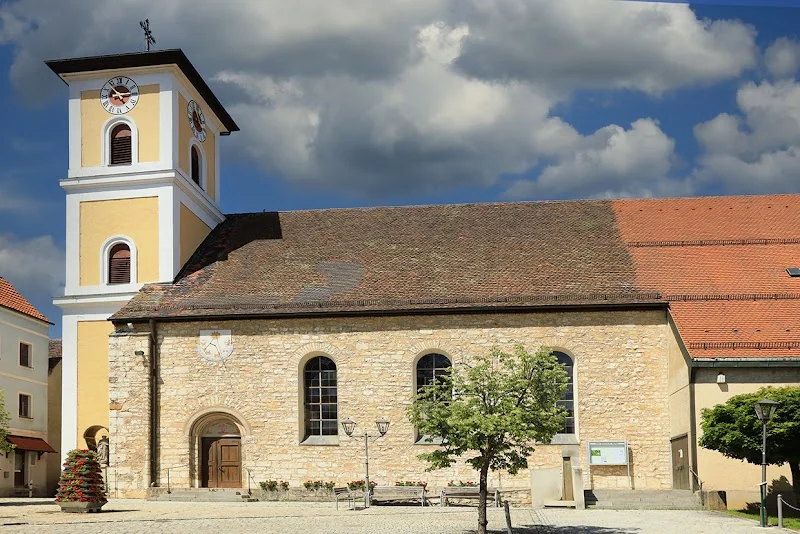
The Parish Church of St. Aegidius is one of the defining places in the market town of Schmidmühlen and is much more than just a house of worship on the outskirts of local events. It is a visible symbol of history, faith, and identity at the center of the town. Those searching for photos quickly discover that the church, with its clear silhouette, distinctive tower, and strong walls, has a high recognition value. Those looking for reviews usually want to know if a visit is worthwhile, what the overall impression is, and why this building is so important to the town. This is where the special strength of St. Aegidius lies: the church combines a comparatively young new building from the 20th century with older historical layers that date back to the late Middle Ages. The current structure was built in 1933 by Hans Döllgast in the neo-Romanesque style and expanded in 1972; at the same time, a reused stone from 1486 recalls the Gothic predecessor building. The tower dates from 1834, and the bells are among the most interesting historical chimes in the Vilstal. Thus, St. Aegidius is a place where architecture, local history, and a vibrant parish community are closely intertwined. ([ostbayern-tourismus.de](https://www.ostbayern-tourismus.de/attraktionen/kirche-st.-aegidius-b14e34c5f9))
Photos and First Impressions of the Parish Church of St. Aegidius
In photos, the Parish Church of St. Aegidius initially appears to be an older building than it actually is. This is due to the rubble stone walls, the massive round arch portal, and the deliberately traditional character of the neo-Romanesque style chosen by Hans Döllgast in 1933. This decision makes the first impression so strong: the church does not appear smooth or arbitrary, but earthy, solid, and rooted in the town. The building does not integrate into Schmidmühlen as an anonymous functional structure, but as a visible focal point that confidently positions itself within the historical surroundings. Exterior shots also highlight the tower with its Italian-style flat roof, which gives the silhouette an unusual, almost Mediterranean touch. Together with the light and dark contrasts of the facade, a picture emerges that is not loud but very characterful. This is exactly what makes the church interesting for photographic motifs: it does not provide a spectacular staging but rather a calm, credible, and very place-related aesthetic. ([ostbayern-tourismus.de](https://www.ostbayern-tourismus.de/attraktionen/kirche-st.-aegidius-b14e34c5f9))
The second look at photos is particularly worthwhile because the church convinces not only externally but also in its integration into Schmidmühlen. The MZ describes St. Aegidius as a building that defines the town center and continues to shape life in the town today. This is an important hint for visitors, as a good church photo here does not only rely on the architecture itself but also on the surroundings. The church symbolically stands for the grown center of the market, where faith, village history, and community life intertwine. Those with a camera will therefore find different motifs: the overall view with the tower, the details at the portal, the materiality of the rubble stone surfaces, and the strong contrast between the simple exterior and the historical furnishings inside. Even without spectacular decorations, a very photogenic impression is created. The church is not an overloaded ornate building but a structure with character that convinces through calmness, proportion, and historical depth. This is precisely why it is so frequently searched online when people look for images, impressions, and real atmosphere. ([mittelbayerische.de](https://www.mittelbayerische.de/lokales/stadt-amberg-und-landkreis-amberg-sulzbach/geschichten-ueber-marterln-und-wegkreuze-bei-schmidmuehlen-erzaehlt-16052667))
History from the Gothic Predecessor Church to the Current Building
The history of St. Aegidius goes back much further than the current appearance suggests. A reused stone with the year 1486 recalls the Gothic predecessor building that stood on the same site and marked the religious center of the town in earlier centuries. Such traces are particularly valuable for churches in Bavaria because they show that a building is never just a one-time erected body but often a repository of centuries. In the case of Schmidmühlen, this is clearly visible: the church carries older structural components and memories forward, even though the current building dates from the 20th century. This creates a connection between past and present that makes the place credible. The view of the year 1486 next to the portal is therefore more than just a historical detail. It is an indication that lived faith and local history have come together at this spot long before the current new building. ([ostbayern-tourismus.de](https://www.ostbayern-tourismus.de/attraktionen/kirche-st.-aegidius-b14e34c5f9))
The development of the tower and the later reorganization of the church building also tells a moving story. The church tower dates from 1834 and features a flat roof in the Italian style, which, according to tourism sites, was financed by King Ludwig I. The bells survived the collapse of the old church tower in 1807, except for the death bell, and could be reused in the new tower. These bells from the Gothic, Renaissance, and Baroque periods are now among the most interesting historical chimes in the Vilstal. The actual new construction of the church nave then took place in 1933 by Hans Döllgast in the neo-Romanesque style, and an extension was added in 1972. Thus, St. Aegidius shows in a special way how churches in rural areas grow, change, and yet retain their core over long periods. The house of worship is therefore not simply a single architectural style but a structure with multiple layers of time: medieval memory, a 19th-century tower, and a 20th-century church space. This layering makes its history so exciting and explains why the building is as relevant to history enthusiasts as it is to those simply looking for a place with character. ([ostbayern-tourismus.de](https://www.ostbayern-tourismus.de/attraktionen/kirche-st.-aegidius-b14e34c5f9))
Architecture, Tower, and Historical Bells
Architecturally, the Parish Church of St. Aegidius lives from a deliberately powerful, rather restrained form language. Hans Döllgast built it in 1933 in the neo-Romanesque style, which refers to older forms and creates a calm dignity with its round arches, heavy walls, and clear proportions. This language is particularly fitting in the Bavarian Jura, as the church, with its rubble stone walls and compact building body, appears almost to have grown out of the local rock. The round arch portal is a striking focal point of the facade and conveys, even before entering the interior, an impression of permanence. The 1972 extension did not destroy this character but further developed the complex. Next to the portal is also the reused stone from the predecessor building of 1486, which functions like a deliberately set memory marker. Thus, the architecture connects visible modernity with historical depth without relying on decorative exaggeration. ([ostbayern-tourismus.de](https://www.ostbayern-tourismus.de/attraktionen/kirche-st.-aegidius-b14e34c5f9))
The tower from 1834 is a special feature in itself. It was built in a form reminiscent of Italian models and stands out in the region with its flat roof. King Ludwig I financed this tower, and it is precisely this connection of royal patronage, regional building tradition, and unusual design that makes it architecturally interesting. Even more exciting is that the bells from different epochs survived the collapse of the old tower in 1807 and could be reused. That a chime combines elements from Gothic, Renaissance, and Baroque is not only acoustically appealing but also culturally historically remarkable. Therefore, when standing in front of the church, one reads a whole building history in the tower, sound, and facade shape. Inside, this impression continues, as the furnishings have not been arbitrarily modernized but older components have been consciously integrated. The tower, the bells, and the outer geometry together form the backbone of the entire complex. Therefore, St. Aegidius is not only a beautiful motif for photos but also a good example of how historical components and later additions can harmoniously interact in a village church ensemble. ([ostbayern-tourismus.de](https://www.ostbayern-tourismus.de/attraktionen/kirche-st.-aegidius-b14e34c5f9))
Furnishings, High Altar, and Side Altars
Inside, the Parish Church of St. Aegidius continues the historical thread. The side altars are from the Rococo period, giving the church space a lighter, more playful, and artistically finer note than the outer building body suggests. The high altar is a powerful classical column structure from 1846 and depicts the church patron Aegidius. This combination of Rococo and Classicism is typical for many Bavarian church spaces, but particularly impressive in Schmidmühlen because it deliberately sets accents in a comparatively sober church nave. According to the church guide, the furnishings come from the predecessor building and were retained rather than completely replaced. This creates a story of continuity inside: not everything was newly made, but much was taken along, preserved, and integrated into the later building. For visitors, this means that a look inside goes far beyond merely viewing an altar. It shows how a community deals with its history and how liturgical spaces are continued over generations. ([ostbayern-tourismus.de](https://www.ostbayern-tourismus.de/attraktionen/kirche-st.-aegidius-b14e34c5f9))
It is particularly interesting that the church is described not only as a monument but also as a spiritual space with a palpable presence. The Diocese of Regensburg reported during a confirmation that the Schmidmühlen Parish Church of St. Aegidius provides more seats for neighboring parishes. This is a practical hint about the size and usability of the space, but also about its importance in pastoral everyday life. The church space is therefore not merely museum-like but remains a place where people come together. In such contexts, the furnishings unfold their actual effect: the high altar forms a solid focus for the service, the side altars carry the historical depth of the space, and the entire arrangement supports liturgical use. For visitors looking for photos or reviews, this mixture is precisely what matters. One wants to understand whether the space appears rather simple or festive, whether it seems historical or modern, and whether it conveys a special atmosphere. In Schmidmühlen, the answer is clear: the church is rich in tradition, dignified, and has grown carefully in its furnishings. It shows that spiritual spaces can become not only visible but also tangible. ([ostbayern-tourismus.de](https://www.ostbayern-tourismus.de/attraktionen/kirche-st.-aegidius-b14e34c5f9))
Services, Corpus Christi, and Lived Parish Community
St. Aegidius is not a decommissioned monument but a living parish church. Local reporting describes it as a gathering place for Catholics that is used every weekend and thus continues to play a central role in community life. Major services also take place here, such as confirmations, where the church is intentionally open to neighboring parishes. This shows that the space is not conceived as too small but remains designed for communal use. Such details are important when considering the church not only from a photographic perspective but also from a cultural one. Because a building becomes particularly interesting when it not only carries history but also continues to have a social function. Schmidmühlen provides exactly this image: a parish church that shapes the everyday life of the community and offers a supportive stage for important sacramental occasions. The church is thus both a spiritual center and a social meeting point. ([mittelbayerische.de](https://www.mittelbayerische.de/lokales/stadt-amberg-und-landkreis-amberg-sulzbach/geschichten-ueber-marterln-und-wegkreuze-bei-schmidmuehlen-erzaehlt-16052667))
This role becomes particularly clear during Corpus Christi. In Schmidmühlen, the festival was celebrated festively in 2025, with a procession through the streets, many believers, associations, flag delegations, church administration, parish council, mayor, and municipal council. The brass band St. Aegidius provided the musical accompaniment, and an old custom, where a cannon was fired three times at the Gospel, was explicitly described as well-known for many years and probably unique in the Vilstal. The decorated houses along the procession route, the altars, and the accompanying children also show how strongly the church is integrated into local customs. Such elements are much more than folklore. They make it visible that St. Aegidius is equally present in everyday life, the annual cycle, and festive moments. Those who view the church only as architecture therefore see only half the story. Only the connection with processions, festive services, and the involvement of associations explains why this place remains so important for Schmidmühlen. It is not merely a backdrop but the lived center of the community. ([mittelbayerische.de](https://www.mittelbayerische.de/nachrichten/bayern/an-fronleichnam-in-schmidmuehlen-das-allerheiligste-durch-die-strassen-getragen-12093799?utm_source=openai))
Location in Schmidmühlen and Practical Visiting Tips
The Parish Church of St. Aegidius is well embedded in the town and is therefore easily perceivable as a focal point for both locals and visitors. The official tourism site lists the address as Pfarrer-Haertle-Straße 9 in 92287 Schmidmühlen, and the parish office of the market also lists the same street area. For practical orientation, this is a clear advantage, as the church is located not outside but in the grown town center. Those visiting Schmidmühlen are already moving in a market with historical depth: the community points to the castles, the local museum, and the character of the old town center. In this context, St. Aegidius is the spiritual and architectural focal point. This makes a visit pleasant: one experiences not just a single building but a place where history, village image, and community life converge. For arrival, it is usually sufficient to orient oneself to the center; the church is not a hidden object but a clearly visible part of the townscape. ([ostbayern-tourismus.de](https://www.ostbayern-tourismus.de/attraktionen/kirche-st.-aegidius-b14e34c5f9))
Practically, a visit is especially worthwhile when considering the church in connection with the town. Schmidmühlen lies on the Vils and the Lauterach, and the community describes its historical structure with castles, a local museum, and a grown town center. Thus, St. Aegidius is not only a destination for believers but also for those who wish to discover culture, architecture, and regional identity. Those searching for photos should view the church at different times of the day, as the light affects the rubble stone surfaces, the tower, and the portal differently. Those looking for reviews usually want to know if a detour is worthwhile. The honest answer is: Yes, especially if one appreciates quiet village images, historical layers, and a vibrant community life. It is not a place for grand staging but for quiet attention. Precisely in this lies its quality. The Parish Church of St. Aegidius is a building that does not impose but remains long in memory. Those who visit it quickly understand why it is so central to the town and why it repeatedly appears in photos, search queries, and memories. ([schmidmuehlen.de](https://www.schmidmuehlen.de/gemeinde-wirtschaft/geschichte/unsere-schloesser?utm_source=openai))
Why the Church is So Often Searched for Photos and Reviews
The search queries for photos and reviews show very well what expectations many visitors have of the Parish Church of St. Aegidius. They want to know in advance how the building appears, whether it is a rather simple village church or an architecturally interesting destination, and what atmosphere they can expect on site. Precisely because the church is externally restrained yet characterful, it fulfills this wish particularly well. The building is not spectacular in the sense of great Baroque splendor, but it is rich in meaning. The year 1486 on the old stone, the tower from 1834, the neo-Romanesque shape from 1933, the extension from 1972, the historical bells, and the retained altars together create an image that captivates visitors immediately. Those who inform themselves online often end up searching for exactly this mix of optics, history, and authenticity. St. Aegidius provides a clear, credible answer to that. It is not an interchangeable place but a building with character, sound, and memory. ([ostbayern-tourismus.de](https://www.ostbayern-tourismus.de/attraktionen/kirche-st.-aegidius-b14e34c5f9))
In addition, there is the role of the church in local life. When a church defines the town center, is regularly used for services, and plays a central role in festivals such as Corpus Christi or confirmations, it will also be searched for more frequently online. This is precisely the case in Schmidmühlen. The MZ emphasizes that the church is a gathering place for Catholics every weekend, and the diocese reports on its use for larger sacraments with additional seats for neighboring parishes. This lively use distinguishes St. Aegidius from many purely historical attractions. A visit is therefore worthwhile not only because of the facades and details but also because one experiences a genuine church life that still functions today. For travelers wanting to understand regional history, this is a strong argument. For photography enthusiasts, it is the connection between quiet architecture and lived tradition. For those searching for reviews, it is primarily a place that clearly exceeds expectations for a small local church. This is precisely why St. Aegidius remains in memory. ([mittelbayerische.de](https://www.mittelbayerische.de/lokales/stadt-amberg-und-landkreis-amberg-sulzbach/geschichten-ueber-marterln-und-wegkreuze-bei-schmidmuehlen-erzaehlt-16052667))
Sources:
- Church of St. Aegidius - East Bavaria Tourism
- Amberg-Sulzbacher Land - Church Guide PDF
- Market Schmidmühlen - Our Castles
- Mittelbayerische Zeitung - Stories about Wayside Shrines and Crosses in Schmidmühlen
- Diocese of Regensburg - Confirmation in Schmidmühlen
- Mittelbayerische Zeitung - Corpus Christi Festival in Schmidmühlen
Mehr anzeigenWeniger anzeigen
Parish Church of St. Aegidius | Photos & Reviews
The Parish Church of St. Aegidius is one of the defining places in the market town of Schmidmühlen and is much more than just a house of worship on the outskirts of local events. It is a visible symbol of history, faith, and identity at the center of the town. Those searching for photos quickly discover that the church, with its clear silhouette, distinctive tower, and strong walls, has a high recognition value. Those looking for reviews usually want to know if a visit is worthwhile, what the overall impression is, and why this building is so important to the town. This is where the special strength of St. Aegidius lies: the church combines a comparatively young new building from the 20th century with older historical layers that date back to the late Middle Ages. The current structure was built in 1933 by Hans Döllgast in the neo-Romanesque style and expanded in 1972; at the same time, a reused stone from 1486 recalls the Gothic predecessor building. The tower dates from 1834, and the bells are among the most interesting historical chimes in the Vilstal. Thus, St. Aegidius is a place where architecture, local history, and a vibrant parish community are closely intertwined. ([ostbayern-tourismus.de](https://www.ostbayern-tourismus.de/attraktionen/kirche-st.-aegidius-b14e34c5f9))
Photos and First Impressions of the Parish Church of St. Aegidius
In photos, the Parish Church of St. Aegidius initially appears to be an older building than it actually is. This is due to the rubble stone walls, the massive round arch portal, and the deliberately traditional character of the neo-Romanesque style chosen by Hans Döllgast in 1933. This decision makes the first impression so strong: the church does not appear smooth or arbitrary, but earthy, solid, and rooted in the town. The building does not integrate into Schmidmühlen as an anonymous functional structure, but as a visible focal point that confidently positions itself within the historical surroundings. Exterior shots also highlight the tower with its Italian-style flat roof, which gives the silhouette an unusual, almost Mediterranean touch. Together with the light and dark contrasts of the facade, a picture emerges that is not loud but very characterful. This is exactly what makes the church interesting for photographic motifs: it does not provide a spectacular staging but rather a calm, credible, and very place-related aesthetic. ([ostbayern-tourismus.de](https://www.ostbayern-tourismus.de/attraktionen/kirche-st.-aegidius-b14e34c5f9))
The second look at photos is particularly worthwhile because the church convinces not only externally but also in its integration into Schmidmühlen. The MZ describes St. Aegidius as a building that defines the town center and continues to shape life in the town today. This is an important hint for visitors, as a good church photo here does not only rely on the architecture itself but also on the surroundings. The church symbolically stands for the grown center of the market, where faith, village history, and community life intertwine. Those with a camera will therefore find different motifs: the overall view with the tower, the details at the portal, the materiality of the rubble stone surfaces, and the strong contrast between the simple exterior and the historical furnishings inside. Even without spectacular decorations, a very photogenic impression is created. The church is not an overloaded ornate building but a structure with character that convinces through calmness, proportion, and historical depth. This is precisely why it is so frequently searched online when people look for images, impressions, and real atmosphere. ([mittelbayerische.de](https://www.mittelbayerische.de/lokales/stadt-amberg-und-landkreis-amberg-sulzbach/geschichten-ueber-marterln-und-wegkreuze-bei-schmidmuehlen-erzaehlt-16052667))
History from the Gothic Predecessor Church to the Current Building
The history of St. Aegidius goes back much further than the current appearance suggests. A reused stone with the year 1486 recalls the Gothic predecessor building that stood on the same site and marked the religious center of the town in earlier centuries. Such traces are particularly valuable for churches in Bavaria because they show that a building is never just a one-time erected body but often a repository of centuries. In the case of Schmidmühlen, this is clearly visible: the church carries older structural components and memories forward, even though the current building dates from the 20th century. This creates a connection between past and present that makes the place credible. The view of the year 1486 next to the portal is therefore more than just a historical detail. It is an indication that lived faith and local history have come together at this spot long before the current new building. ([ostbayern-tourismus.de](https://www.ostbayern-tourismus.de/attraktionen/kirche-st.-aegidius-b14e34c5f9))
The development of the tower and the later reorganization of the church building also tells a moving story. The church tower dates from 1834 and features a flat roof in the Italian style, which, according to tourism sites, was financed by King Ludwig I. The bells survived the collapse of the old church tower in 1807, except for the death bell, and could be reused in the new tower. These bells from the Gothic, Renaissance, and Baroque periods are now among the most interesting historical chimes in the Vilstal. The actual new construction of the church nave then took place in 1933 by Hans Döllgast in the neo-Romanesque style, and an extension was added in 1972. Thus, St. Aegidius shows in a special way how churches in rural areas grow, change, and yet retain their core over long periods. The house of worship is therefore not simply a single architectural style but a structure with multiple layers of time: medieval memory, a 19th-century tower, and a 20th-century church space. This layering makes its history so exciting and explains why the building is as relevant to history enthusiasts as it is to those simply looking for a place with character. ([ostbayern-tourismus.de](https://www.ostbayern-tourismus.de/attraktionen/kirche-st.-aegidius-b14e34c5f9))
Architecture, Tower, and Historical Bells
Architecturally, the Parish Church of St. Aegidius lives from a deliberately powerful, rather restrained form language. Hans Döllgast built it in 1933 in the neo-Romanesque style, which refers to older forms and creates a calm dignity with its round arches, heavy walls, and clear proportions. This language is particularly fitting in the Bavarian Jura, as the church, with its rubble stone walls and compact building body, appears almost to have grown out of the local rock. The round arch portal is a striking focal point of the facade and conveys, even before entering the interior, an impression of permanence. The 1972 extension did not destroy this character but further developed the complex. Next to the portal is also the reused stone from the predecessor building of 1486, which functions like a deliberately set memory marker. Thus, the architecture connects visible modernity with historical depth without relying on decorative exaggeration. ([ostbayern-tourismus.de](https://www.ostbayern-tourismus.de/attraktionen/kirche-st.-aegidius-b14e34c5f9))
The tower from 1834 is a special feature in itself. It was built in a form reminiscent of Italian models and stands out in the region with its flat roof. King Ludwig I financed this tower, and it is precisely this connection of royal patronage, regional building tradition, and unusual design that makes it architecturally interesting. Even more exciting is that the bells from different epochs survived the collapse of the old tower in 1807 and could be reused. That a chime combines elements from Gothic, Renaissance, and Baroque is not only acoustically appealing but also culturally historically remarkable. Therefore, when standing in front of the church, one reads a whole building history in the tower, sound, and facade shape. Inside, this impression continues, as the furnishings have not been arbitrarily modernized but older components have been consciously integrated. The tower, the bells, and the outer geometry together form the backbone of the entire complex. Therefore, St. Aegidius is not only a beautiful motif for photos but also a good example of how historical components and later additions can harmoniously interact in a village church ensemble. ([ostbayern-tourismus.de](https://www.ostbayern-tourismus.de/attraktionen/kirche-st.-aegidius-b14e34c5f9))
Furnishings, High Altar, and Side Altars
Inside, the Parish Church of St. Aegidius continues the historical thread. The side altars are from the Rococo period, giving the church space a lighter, more playful, and artistically finer note than the outer building body suggests. The high altar is a powerful classical column structure from 1846 and depicts the church patron Aegidius. This combination of Rococo and Classicism is typical for many Bavarian church spaces, but particularly impressive in Schmidmühlen because it deliberately sets accents in a comparatively sober church nave. According to the church guide, the furnishings come from the predecessor building and were retained rather than completely replaced. This creates a story of continuity inside: not everything was newly made, but much was taken along, preserved, and integrated into the later building. For visitors, this means that a look inside goes far beyond merely viewing an altar. It shows how a community deals with its history and how liturgical spaces are continued over generations. ([ostbayern-tourismus.de](https://www.ostbayern-tourismus.de/attraktionen/kirche-st.-aegidius-b14e34c5f9))
It is particularly interesting that the church is described not only as a monument but also as a spiritual space with a palpable presence. The Diocese of Regensburg reported during a confirmation that the Schmidmühlen Parish Church of St. Aegidius provides more seats for neighboring parishes. This is a practical hint about the size and usability of the space, but also about its importance in pastoral everyday life. The church space is therefore not merely museum-like but remains a place where people come together. In such contexts, the furnishings unfold their actual effect: the high altar forms a solid focus for the service, the side altars carry the historical depth of the space, and the entire arrangement supports liturgical use. For visitors looking for photos or reviews, this mixture is precisely what matters. One wants to understand whether the space appears rather simple or festive, whether it seems historical or modern, and whether it conveys a special atmosphere. In Schmidmühlen, the answer is clear: the church is rich in tradition, dignified, and has grown carefully in its furnishings. It shows that spiritual spaces can become not only visible but also tangible. ([ostbayern-tourismus.de](https://www.ostbayern-tourismus.de/attraktionen/kirche-st.-aegidius-b14e34c5f9))
Services, Corpus Christi, and Lived Parish Community
St. Aegidius is not a decommissioned monument but a living parish church. Local reporting describes it as a gathering place for Catholics that is used every weekend and thus continues to play a central role in community life. Major services also take place here, such as confirmations, where the church is intentionally open to neighboring parishes. This shows that the space is not conceived as too small but remains designed for communal use. Such details are important when considering the church not only from a photographic perspective but also from a cultural one. Because a building becomes particularly interesting when it not only carries history but also continues to have a social function. Schmidmühlen provides exactly this image: a parish church that shapes the everyday life of the community and offers a supportive stage for important sacramental occasions. The church is thus both a spiritual center and a social meeting point. ([mittelbayerische.de](https://www.mittelbayerische.de/lokales/stadt-amberg-und-landkreis-amberg-sulzbach/geschichten-ueber-marterln-und-wegkreuze-bei-schmidmuehlen-erzaehlt-16052667))
This role becomes particularly clear during Corpus Christi. In Schmidmühlen, the festival was celebrated festively in 2025, with a procession through the streets, many believers, associations, flag delegations, church administration, parish council, mayor, and municipal council. The brass band St. Aegidius provided the musical accompaniment, and an old custom, where a cannon was fired three times at the Gospel, was explicitly described as well-known for many years and probably unique in the Vilstal. The decorated houses along the procession route, the altars, and the accompanying children also show how strongly the church is integrated into local customs. Such elements are much more than folklore. They make it visible that St. Aegidius is equally present in everyday life, the annual cycle, and festive moments. Those who view the church only as architecture therefore see only half the story. Only the connection with processions, festive services, and the involvement of associations explains why this place remains so important for Schmidmühlen. It is not merely a backdrop but the lived center of the community. ([mittelbayerische.de](https://www.mittelbayerische.de/nachrichten/bayern/an-fronleichnam-in-schmidmuehlen-das-allerheiligste-durch-die-strassen-getragen-12093799?utm_source=openai))
Location in Schmidmühlen and Practical Visiting Tips
The Parish Church of St. Aegidius is well embedded in the town and is therefore easily perceivable as a focal point for both locals and visitors. The official tourism site lists the address as Pfarrer-Haertle-Straße 9 in 92287 Schmidmühlen, and the parish office of the market also lists the same street area. For practical orientation, this is a clear advantage, as the church is located not outside but in the grown town center. Those visiting Schmidmühlen are already moving in a market with historical depth: the community points to the castles, the local museum, and the character of the old town center. In this context, St. Aegidius is the spiritual and architectural focal point. This makes a visit pleasant: one experiences not just a single building but a place where history, village image, and community life converge. For arrival, it is usually sufficient to orient oneself to the center; the church is not a hidden object but a clearly visible part of the townscape. ([ostbayern-tourismus.de](https://www.ostbayern-tourismus.de/attraktionen/kirche-st.-aegidius-b14e34c5f9))
Practically, a visit is especially worthwhile when considering the church in connection with the town. Schmidmühlen lies on the Vils and the Lauterach, and the community describes its historical structure with castles, a local museum, and a grown town center. Thus, St. Aegidius is not only a destination for believers but also for those who wish to discover culture, architecture, and regional identity. Those searching for photos should view the church at different times of the day, as the light affects the rubble stone surfaces, the tower, and the portal differently. Those looking for reviews usually want to know if a detour is worthwhile. The honest answer is: Yes, especially if one appreciates quiet village images, historical layers, and a vibrant community life. It is not a place for grand staging but for quiet attention. Precisely in this lies its quality. The Parish Church of St. Aegidius is a building that does not impose but remains long in memory. Those who visit it quickly understand why it is so central to the town and why it repeatedly appears in photos, search queries, and memories. ([schmidmuehlen.de](https://www.schmidmuehlen.de/gemeinde-wirtschaft/geschichte/unsere-schloesser?utm_source=openai))
Why the Church is So Often Searched for Photos and Reviews
The search queries for photos and reviews show very well what expectations many visitors have of the Parish Church of St. Aegidius. They want to know in advance how the building appears, whether it is a rather simple village church or an architecturally interesting destination, and what atmosphere they can expect on site. Precisely because the church is externally restrained yet characterful, it fulfills this wish particularly well. The building is not spectacular in the sense of great Baroque splendor, but it is rich in meaning. The year 1486 on the old stone, the tower from 1834, the neo-Romanesque shape from 1933, the extension from 1972, the historical bells, and the retained altars together create an image that captivates visitors immediately. Those who inform themselves online often end up searching for exactly this mix of optics, history, and authenticity. St. Aegidius provides a clear, credible answer to that. It is not an interchangeable place but a building with character, sound, and memory. ([ostbayern-tourismus.de](https://www.ostbayern-tourismus.de/attraktionen/kirche-st.-aegidius-b14e34c5f9))
In addition, there is the role of the church in local life. When a church defines the town center, is regularly used for services, and plays a central role in festivals such as Corpus Christi or confirmations, it will also be searched for more frequently online. This is precisely the case in Schmidmühlen. The MZ emphasizes that the church is a gathering place for Catholics every weekend, and the diocese reports on its use for larger sacraments with additional seats for neighboring parishes. This lively use distinguishes St. Aegidius from many purely historical attractions. A visit is therefore worthwhile not only because of the facades and details but also because one experiences a genuine church life that still functions today. For travelers wanting to understand regional history, this is a strong argument. For photography enthusiasts, it is the connection between quiet architecture and lived tradition. For those searching for reviews, it is primarily a place that clearly exceeds expectations for a small local church. This is precisely why St. Aegidius remains in memory. ([mittelbayerische.de](https://www.mittelbayerische.de/lokales/stadt-amberg-und-landkreis-amberg-sulzbach/geschichten-ueber-marterln-und-wegkreuze-bei-schmidmuehlen-erzaehlt-16052667))
Sources:
- Church of St. Aegidius - East Bavaria Tourism
- Amberg-Sulzbacher Land - Church Guide PDF
- Market Schmidmühlen - Our Castles
- Mittelbayerische Zeitung - Stories about Wayside Shrines and Crosses in Schmidmühlen
- Diocese of Regensburg - Confirmation in Schmidmühlen
- Mittelbayerische Zeitung - Corpus Christi Festival in Schmidmühlen
Parish Church of St. Aegidius | Photos & Reviews
The Parish Church of St. Aegidius is one of the defining places in the market town of Schmidmühlen and is much more than just a house of worship on the outskirts of local events. It is a visible symbol of history, faith, and identity at the center of the town. Those searching for photos quickly discover that the church, with its clear silhouette, distinctive tower, and strong walls, has a high recognition value. Those looking for reviews usually want to know if a visit is worthwhile, what the overall impression is, and why this building is so important to the town. This is where the special strength of St. Aegidius lies: the church combines a comparatively young new building from the 20th century with older historical layers that date back to the late Middle Ages. The current structure was built in 1933 by Hans Döllgast in the neo-Romanesque style and expanded in 1972; at the same time, a reused stone from 1486 recalls the Gothic predecessor building. The tower dates from 1834, and the bells are among the most interesting historical chimes in the Vilstal. Thus, St. Aegidius is a place where architecture, local history, and a vibrant parish community are closely intertwined. ([ostbayern-tourismus.de](https://www.ostbayern-tourismus.de/attraktionen/kirche-st.-aegidius-b14e34c5f9))
Photos and First Impressions of the Parish Church of St. Aegidius
In photos, the Parish Church of St. Aegidius initially appears to be an older building than it actually is. This is due to the rubble stone walls, the massive round arch portal, and the deliberately traditional character of the neo-Romanesque style chosen by Hans Döllgast in 1933. This decision makes the first impression so strong: the church does not appear smooth or arbitrary, but earthy, solid, and rooted in the town. The building does not integrate into Schmidmühlen as an anonymous functional structure, but as a visible focal point that confidently positions itself within the historical surroundings. Exterior shots also highlight the tower with its Italian-style flat roof, which gives the silhouette an unusual, almost Mediterranean touch. Together with the light and dark contrasts of the facade, a picture emerges that is not loud but very characterful. This is exactly what makes the church interesting for photographic motifs: it does not provide a spectacular staging but rather a calm, credible, and very place-related aesthetic. ([ostbayern-tourismus.de](https://www.ostbayern-tourismus.de/attraktionen/kirche-st.-aegidius-b14e34c5f9))
The second look at photos is particularly worthwhile because the church convinces not only externally but also in its integration into Schmidmühlen. The MZ describes St. Aegidius as a building that defines the town center and continues to shape life in the town today. This is an important hint for visitors, as a good church photo here does not only rely on the architecture itself but also on the surroundings. The church symbolically stands for the grown center of the market, where faith, village history, and community life intertwine. Those with a camera will therefore find different motifs: the overall view with the tower, the details at the portal, the materiality of the rubble stone surfaces, and the strong contrast between the simple exterior and the historical furnishings inside. Even without spectacular decorations, a very photogenic impression is created. The church is not an overloaded ornate building but a structure with character that convinces through calmness, proportion, and historical depth. This is precisely why it is so frequently searched online when people look for images, impressions, and real atmosphere. ([mittelbayerische.de](https://www.mittelbayerische.de/lokales/stadt-amberg-und-landkreis-amberg-sulzbach/geschichten-ueber-marterln-und-wegkreuze-bei-schmidmuehlen-erzaehlt-16052667))
History from the Gothic Predecessor Church to the Current Building
The history of St. Aegidius goes back much further than the current appearance suggests. A reused stone with the year 1486 recalls the Gothic predecessor building that stood on the same site and marked the religious center of the town in earlier centuries. Such traces are particularly valuable for churches in Bavaria because they show that a building is never just a one-time erected body but often a repository of centuries. In the case of Schmidmühlen, this is clearly visible: the church carries older structural components and memories forward, even though the current building dates from the 20th century. This creates a connection between past and present that makes the place credible. The view of the year 1486 next to the portal is therefore more than just a historical detail. It is an indication that lived faith and local history have come together at this spot long before the current new building. ([ostbayern-tourismus.de](https://www.ostbayern-tourismus.de/attraktionen/kirche-st.-aegidius-b14e34c5f9))
The development of the tower and the later reorganization of the church building also tells a moving story. The church tower dates from 1834 and features a flat roof in the Italian style, which, according to tourism sites, was financed by King Ludwig I. The bells survived the collapse of the old church tower in 1807, except for the death bell, and could be reused in the new tower. These bells from the Gothic, Renaissance, and Baroque periods are now among the most interesting historical chimes in the Vilstal. The actual new construction of the church nave then took place in 1933 by Hans Döllgast in the neo-Romanesque style, and an extension was added in 1972. Thus, St. Aegidius shows in a special way how churches in rural areas grow, change, and yet retain their core over long periods. The house of worship is therefore not simply a single architectural style but a structure with multiple layers of time: medieval memory, a 19th-century tower, and a 20th-century church space. This layering makes its history so exciting and explains why the building is as relevant to history enthusiasts as it is to those simply looking for a place with character. ([ostbayern-tourismus.de](https://www.ostbayern-tourismus.de/attraktionen/kirche-st.-aegidius-b14e34c5f9))
Architecture, Tower, and Historical Bells
Architecturally, the Parish Church of St. Aegidius lives from a deliberately powerful, rather restrained form language. Hans Döllgast built it in 1933 in the neo-Romanesque style, which refers to older forms and creates a calm dignity with its round arches, heavy walls, and clear proportions. This language is particularly fitting in the Bavarian Jura, as the church, with its rubble stone walls and compact building body, appears almost to have grown out of the local rock. The round arch portal is a striking focal point of the facade and conveys, even before entering the interior, an impression of permanence. The 1972 extension did not destroy this character but further developed the complex. Next to the portal is also the reused stone from the predecessor building of 1486, which functions like a deliberately set memory marker. Thus, the architecture connects visible modernity with historical depth without relying on decorative exaggeration. ([ostbayern-tourismus.de](https://www.ostbayern-tourismus.de/attraktionen/kirche-st.-aegidius-b14e34c5f9))
The tower from 1834 is a special feature in itself. It was built in a form reminiscent of Italian models and stands out in the region with its flat roof. King Ludwig I financed this tower, and it is precisely this connection of royal patronage, regional building tradition, and unusual design that makes it architecturally interesting. Even more exciting is that the bells from different epochs survived the collapse of the old tower in 1807 and could be reused. That a chime combines elements from Gothic, Renaissance, and Baroque is not only acoustically appealing but also culturally historically remarkable. Therefore, when standing in front of the church, one reads a whole building history in the tower, sound, and facade shape. Inside, this impression continues, as the furnishings have not been arbitrarily modernized but older components have been consciously integrated. The tower, the bells, and the outer geometry together form the backbone of the entire complex. Therefore, St. Aegidius is not only a beautiful motif for photos but also a good example of how historical components and later additions can harmoniously interact in a village church ensemble. ([ostbayern-tourismus.de](https://www.ostbayern-tourismus.de/attraktionen/kirche-st.-aegidius-b14e34c5f9))
Furnishings, High Altar, and Side Altars
Inside, the Parish Church of St. Aegidius continues the historical thread. The side altars are from the Rococo period, giving the church space a lighter, more playful, and artistically finer note than the outer building body suggests. The high altar is a powerful classical column structure from 1846 and depicts the church patron Aegidius. This combination of Rococo and Classicism is typical for many Bavarian church spaces, but particularly impressive in Schmidmühlen because it deliberately sets accents in a comparatively sober church nave. According to the church guide, the furnishings come from the predecessor building and were retained rather than completely replaced. This creates a story of continuity inside: not everything was newly made, but much was taken along, preserved, and integrated into the later building. For visitors, this means that a look inside goes far beyond merely viewing an altar. It shows how a community deals with its history and how liturgical spaces are continued over generations. ([ostbayern-tourismus.de](https://www.ostbayern-tourismus.de/attraktionen/kirche-st.-aegidius-b14e34c5f9))
It is particularly interesting that the church is described not only as a monument but also as a spiritual space with a palpable presence. The Diocese of Regensburg reported during a confirmation that the Schmidmühlen Parish Church of St. Aegidius provides more seats for neighboring parishes. This is a practical hint about the size and usability of the space, but also about its importance in pastoral everyday life. The church space is therefore not merely museum-like but remains a place where people come together. In such contexts, the furnishings unfold their actual effect: the high altar forms a solid focus for the service, the side altars carry the historical depth of the space, and the entire arrangement supports liturgical use. For visitors looking for photos or reviews, this mixture is precisely what matters. One wants to understand whether the space appears rather simple or festive, whether it seems historical or modern, and whether it conveys a special atmosphere. In Schmidmühlen, the answer is clear: the church is rich in tradition, dignified, and has grown carefully in its furnishings. It shows that spiritual spaces can become not only visible but also tangible. ([ostbayern-tourismus.de](https://www.ostbayern-tourismus.de/attraktionen/kirche-st.-aegidius-b14e34c5f9))
Services, Corpus Christi, and Lived Parish Community
St. Aegidius is not a decommissioned monument but a living parish church. Local reporting describes it as a gathering place for Catholics that is used every weekend and thus continues to play a central role in community life. Major services also take place here, such as confirmations, where the church is intentionally open to neighboring parishes. This shows that the space is not conceived as too small but remains designed for communal use. Such details are important when considering the church not only from a photographic perspective but also from a cultural one. Because a building becomes particularly interesting when it not only carries history but also continues to have a social function. Schmidmühlen provides exactly this image: a parish church that shapes the everyday life of the community and offers a supportive stage for important sacramental occasions. The church is thus both a spiritual center and a social meeting point. ([mittelbayerische.de](https://www.mittelbayerische.de/lokales/stadt-amberg-und-landkreis-amberg-sulzbach/geschichten-ueber-marterln-und-wegkreuze-bei-schmidmuehlen-erzaehlt-16052667))
This role becomes particularly clear during Corpus Christi. In Schmidmühlen, the festival was celebrated festively in 2025, with a procession through the streets, many believers, associations, flag delegations, church administration, parish council, mayor, and municipal council. The brass band St. Aegidius provided the musical accompaniment, and an old custom, where a cannon was fired three times at the Gospel, was explicitly described as well-known for many years and probably unique in the Vilstal. The decorated houses along the procession route, the altars, and the accompanying children also show how strongly the church is integrated into local customs. Such elements are much more than folklore. They make it visible that St. Aegidius is equally present in everyday life, the annual cycle, and festive moments. Those who view the church only as architecture therefore see only half the story. Only the connection with processions, festive services, and the involvement of associations explains why this place remains so important for Schmidmühlen. It is not merely a backdrop but the lived center of the community. ([mittelbayerische.de](https://www.mittelbayerische.de/nachrichten/bayern/an-fronleichnam-in-schmidmuehlen-das-allerheiligste-durch-die-strassen-getragen-12093799?utm_source=openai))
Location in Schmidmühlen and Practical Visiting Tips
The Parish Church of St. Aegidius is well embedded in the town and is therefore easily perceivable as a focal point for both locals and visitors. The official tourism site lists the address as Pfarrer-Haertle-Straße 9 in 92287 Schmidmühlen, and the parish office of the market also lists the same street area. For practical orientation, this is a clear advantage, as the church is located not outside but in the grown town center. Those visiting Schmidmühlen are already moving in a market with historical depth: the community points to the castles, the local museum, and the character of the old town center. In this context, St. Aegidius is the spiritual and architectural focal point. This makes a visit pleasant: one experiences not just a single building but a place where history, village image, and community life converge. For arrival, it is usually sufficient to orient oneself to the center; the church is not a hidden object but a clearly visible part of the townscape. ([ostbayern-tourismus.de](https://www.ostbayern-tourismus.de/attraktionen/kirche-st.-aegidius-b14e34c5f9))
Practically, a visit is especially worthwhile when considering the church in connection with the town. Schmidmühlen lies on the Vils and the Lauterach, and the community describes its historical structure with castles, a local museum, and a grown town center. Thus, St. Aegidius is not only a destination for believers but also for those who wish to discover culture, architecture, and regional identity. Those searching for photos should view the church at different times of the day, as the light affects the rubble stone surfaces, the tower, and the portal differently. Those looking for reviews usually want to know if a detour is worthwhile. The honest answer is: Yes, especially if one appreciates quiet village images, historical layers, and a vibrant community life. It is not a place for grand staging but for quiet attention. Precisely in this lies its quality. The Parish Church of St. Aegidius is a building that does not impose but remains long in memory. Those who visit it quickly understand why it is so central to the town and why it repeatedly appears in photos, search queries, and memories. ([schmidmuehlen.de](https://www.schmidmuehlen.de/gemeinde-wirtschaft/geschichte/unsere-schloesser?utm_source=openai))
Why the Church is So Often Searched for Photos and Reviews
The search queries for photos and reviews show very well what expectations many visitors have of the Parish Church of St. Aegidius. They want to know in advance how the building appears, whether it is a rather simple village church or an architecturally interesting destination, and what atmosphere they can expect on site. Precisely because the church is externally restrained yet characterful, it fulfills this wish particularly well. The building is not spectacular in the sense of great Baroque splendor, but it is rich in meaning. The year 1486 on the old stone, the tower from 1834, the neo-Romanesque shape from 1933, the extension from 1972, the historical bells, and the retained altars together create an image that captivates visitors immediately. Those who inform themselves online often end up searching for exactly this mix of optics, history, and authenticity. St. Aegidius provides a clear, credible answer to that. It is not an interchangeable place but a building with character, sound, and memory. ([ostbayern-tourismus.de](https://www.ostbayern-tourismus.de/attraktionen/kirche-st.-aegidius-b14e34c5f9))
In addition, there is the role of the church in local life. When a church defines the town center, is regularly used for services, and plays a central role in festivals such as Corpus Christi or confirmations, it will also be searched for more frequently online. This is precisely the case in Schmidmühlen. The MZ emphasizes that the church is a gathering place for Catholics every weekend, and the diocese reports on its use for larger sacraments with additional seats for neighboring parishes. This lively use distinguishes St. Aegidius from many purely historical attractions. A visit is therefore worthwhile not only because of the facades and details but also because one experiences a genuine church life that still functions today. For travelers wanting to understand regional history, this is a strong argument. For photography enthusiasts, it is the connection between quiet architecture and lived tradition. For those searching for reviews, it is primarily a place that clearly exceeds expectations for a small local church. This is precisely why St. Aegidius remains in memory. ([mittelbayerische.de](https://www.mittelbayerische.de/lokales/stadt-amberg-und-landkreis-amberg-sulzbach/geschichten-ueber-marterln-und-wegkreuze-bei-schmidmuehlen-erzaehlt-16052667))
Sources:
- Church of St. Aegidius - East Bavaria Tourism
- Amberg-Sulzbacher Land - Church Guide PDF
- Market Schmidmühlen - Our Castles
- Mittelbayerische Zeitung - Stories about Wayside Shrines and Crosses in Schmidmühlen
- Diocese of Regensburg - Confirmation in Schmidmühlen
- Mittelbayerische Zeitung - Corpus Christi Festival in Schmidmühlen
Upcoming Events
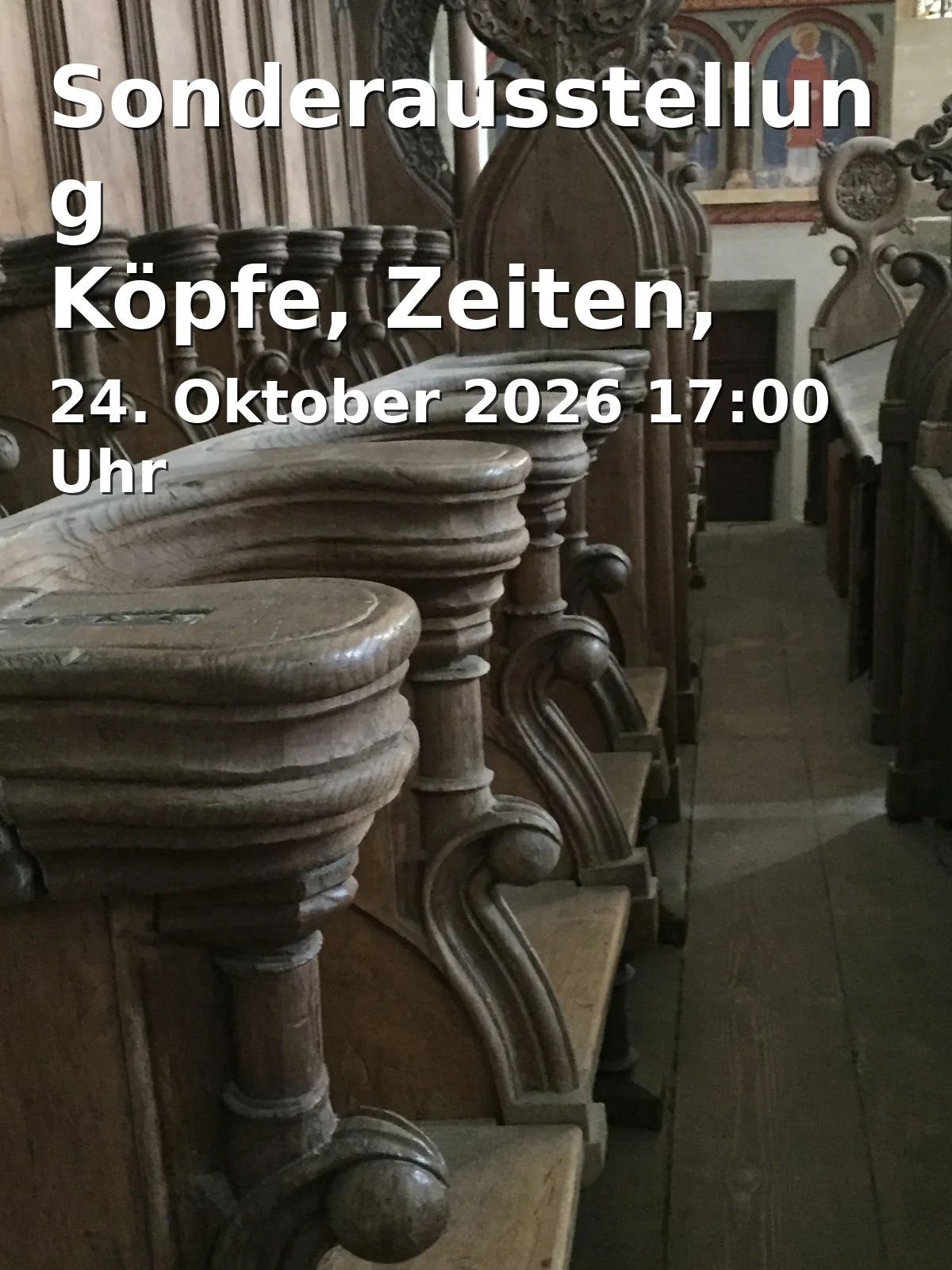
Special Exhibition Heads, Times, Stories – Michael Mathias Prechtl on the 100th Birthday
Art and faith in a special place: The Prechtl exhibition in St. Ägidius Schmidmühlen connects memory, tranquility, and community feeling. 24.10.2026, free admission. #ExperienceCulture
Service in St. Ägidius Schmidmühlen
A quiet moment of faith in St. Ägidius Schmidmühlen: Liturgy, prayer, and community in the heart of the parish. 29.11.2026, 14:00. #Faith
Events at St. Ägidius Parish Church
A place for prayer, peace, and community: Experience the religious event at St. Ägidius Parish Church. 29.11.2026, 14:00. #Faith
Christmas Concert of the Musikverein Vilseck 2026
Festive sound for the 2nd Day of Christmas: The Musikverein Vilseck plays in the St. Ägidius Parish Church. An evening full of warmth, brass music, and contemplation. #ChristmasConcert
Frequently Asked Questions
Reviews
T S
1. July 2018
This church's room shape is not like most, it looks almost like a square and is very open and light. Also, it doesn't have many decorations.
Dominik M Se
22. March 2025
A church that we were able to visit for a baptism in the family circle. I really like the church itself and the benches in the round design. The service overall was nicely arranged.
Christina Feistenauer
25. August 2025
Beautiful church
Mike Mast
1. July 2019
I got to experience a really great, short-lived wedding here.
Sandra Lepke
11. July 2019
Modern church