
Kastl
92280 Kastl-Pfaffenhofen, Deutschland
Pfaffenhofen | History & Attractions
Pfaffenhofen near Kastl is a small but remarkably historic district in the market town of Kastl in the Upper Palatinate. Located west of the main town and connected to the B 299, the village combines rural tranquility with an unusually dense historical backdrop. With around 200 inhabitants, Pfaffenhofen is one of the larger districts of the municipality, but its impact goes far beyond its population: The ruins of Schweppermannsburg, the Church of St. Martin, the inn Zum Schweppermann, and the historical circular hiking trail make the place a destination for culture enthusiasts, hikers, and anyone seeking authentic Upper Palatinate. Those who arrive here do not encounter an interchangeable residential area, but a developed place with medieval depth, a clear village center, and a strong connection to the landscape of the Lauterachtal. This mixture of history, everyday life, and good accessibility continues to shape the image of Pfaffenhofen today. ([kastl.de](https://www.kastl.de/page_5_4.php?druck=1&utm_source=openai))
History and Ruins of Schweppermannsburg in Pfaffenhofen
The history of Pfaffenhofen is closely linked to the former castle of Pfaffenhofen, which later became known as Schweppermannsburg. According to the House of Bavarian History, the complex is mentioned indirectly in sources as early as 1149, when a Henricus de Paphenhove is mentioned in the context of the Counts of Kastl-Habsberg. Through inheritance, the castle came into the possession of the Wittelsbach family in 1305, who used it as a seat of administration and subsequently passed it on to families such as Schmid and Schweppermann. The name Schweppermannsburg refers to Heinrich and Hartung Schweppermann, sons of the famous field captain Seyfried Schweppermann, who served Ludwig the Bavarian. Thus, the castle is not only a local monument but also a piece of territorial and noble history that extends into the broader history of Bavaria. For visitors, it is particularly exciting that the place can still be read today in light of its castle history: The location, the elevation of the complex, and the proximity to the village center make the historical context immediately tangible. ([hdbg.eu](https://hdbg.eu/burgen/detail/burgruine-schweppermannsburg/94))
Equally impressive is the long chain of destruction, reconstruction, and repurposing. In the Landshut Succession War, the castle was destroyed in 1504, heavily damaged again by the Swedes in 1633, and then rebuilt. Until 1825, it served as an administrative seat before gradually becoming a quarry site. Only renovations in the 19th and especially in the 20th century secured its preservation. After extensive restoration by the Bavarian State after 1960, the facility has been managed by the Amberg section of the German Alpine Club since 1965 and is used as a youth and hiking base. A regular castle service ensures that the site remains accessible to the public. This is particularly important for Pfaffenhofen because the castle does not end as a closed ruin but continues to exist as a lively place of encounter. Visitors thus experience not only historical walls but also an example of how monument preservation, volunteer work, and gentle tourism can work together. ([hdbg.eu](https://hdbg.eu/burgen/detail/burgruine-schweppermannsburg/94))
To understand Pfaffenhofen, one should therefore not only read the castle as a sight but as the historical core of the place. It explains why Pfaffenhofen was strategically and ecclesiastically significant for centuries, why the name appears in old documents, and why the place is still perceived beyond regional boundaries today. The combination of high medieval origins, early modern destructions, and modern use gives Schweppermannsburg a rare depth. Particularly in connection with the surrounding village center, a picture emerges that is not found at every corner in the Upper Palatinate: a small place whose identity is significantly derived from its castle landscape. ([hdbg.eu](https://hdbg.eu/burgen/detail/burgruine-schweppermannsburg/94))
Church of St. Martin, Karner, and the Spiritual Roots of the Place
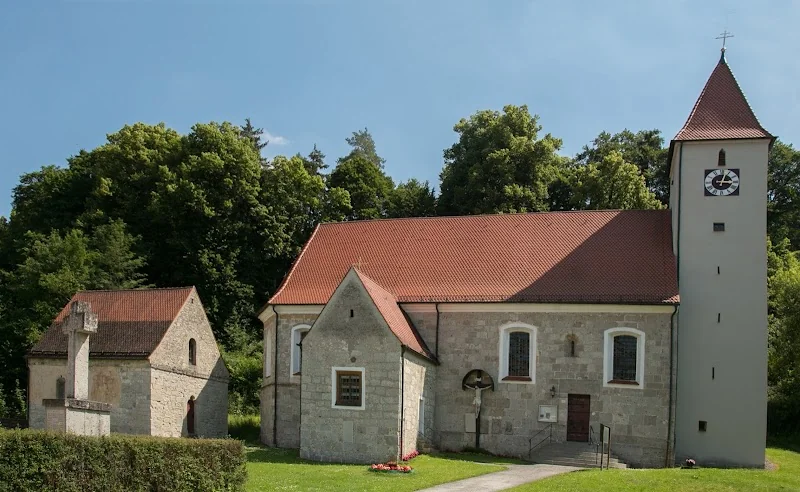
The Church of St. Martin is the second major historical center of Pfaffenhofen and is at least as important for local identity as the castle. On the official historical circular hiking trail of the market town of Kastl, it is described as the original parish of the region. As early as 1102, Pfaffenhofen was mentioned as a parish and had a large church district. According to tradition, the church was consecrated in 1060 by Bishop Konrad of Morsbach along with three chapels in Kastl, thus predating the construction of the monastery church. It was not only a house of worship for the village but for a long time also the mother church of the later market town of Kastl. This early ecclesiastical significance explains why Pfaffenhofen repeatedly appears as a spiritual reference point in regional history. The fact that the church was incorporated into the monastery of Kastl in 1310 without losing its independence as a parish shows its special position within the village landscape and medieval pastoral care. Services, baptisms, weddings, and funerals had to take place in Pfaffenhofen until 1519. This makes it clear how central the place was for the surrounding area. ([kastl.de](https://www.kastl.de/page_15_3.php?druck=1&dummy=0&single_filter=32&utm_source=openai))
Architecturally and culturally, the church also has its own character. The patronage was originally Assumption of Mary, later St. Martin became the defining name. Around 1960, an interior renovation took place that secured the building's use for the present. Particularly interesting is the Karner, which is locally connected to the church. Karners and churches used to have openings or bay windows through which the eternal light fell on the graves and thus served as a blessing for the deceased. Such details make Pfaffenhofen particularly appealing to history enthusiasts: Here, not only building history is visible, but also the medieval understanding of community, death, and prayer. The Church of St. Martin is thus not a side issue but a key to understanding the entire place. It connects religious tradition, village memory, and the self-understanding of the community up to the present day. ([kastl.de](https://www.kastl.de/page_15_3.php?druck=1&dummy=0&single_filter=32&utm_source=openai))
In conjunction with the castle, an unusually clear local dramaturgy emerges: above, the history of the Schweppermannsburg, in the village center the spiritual continuity of the Church of St. Martin. This double logic shapes many old places, but in Pfaffenhofen, it is particularly well readable. Those who stroll here move between the two historical poles of a small but surprisingly significant district. That is why questions about the church, history, and attractions in Pfaffenhofen are not just SEO topics but genuine visitor interests. ([kastl.de](https://www.kastl.de/page_15_3.php?druck=1&dummy=0&single_filter=32&utm_source=openai))
Directions to Pfaffenhofen: B 299, Bus, and Orientation in the Lauterachtal
For traveling to Pfaffenhofen, the location on the B 299 is a central advantage. The market town of Kastl explicitly describes the place as located west of Kastl on this federal road. The inn Zum Schweppermann adds this orientation from the visitor's perspective and describes Pfaffenhofen as a small village in the idyllic Lauterachtal, about one kilometer from Kastl. This location makes the place easy to find and quiet enough to retain its historical character. Those arriving by car can thus reach Pfaffenhofen via a well-recognizable regional axis without having to navigate a complicated inner-city road network. For visitors, this is practical because the castle, church, and inn are in close proximity to each other. This allows for a stay to be organized without long transfers. Especially for a place that serves more as a destination for a half-day trip or a short stop, a clear road connection is a real plus. ([kastl.de](https://www.kastl.de/page_5_4.php?druck=1&utm_source=openai))
Pfaffenhofen is also connected to the region by public transport. In the current VGN timetable for 2026, the stop Pfaffenhofen (Kastl) appears on line 471 Hohenburg - Mühlhausen - Kastl - Ursensollen. Additionally, Pfaffenhofen (Kastl) is listed on line 460E Neumarkt - Lauterhofen - Kastl - Amberg. The documents also mention a call bus system that can be registered via app or phone. For visitors, this means: Even without a car, Pfaffenhofen is fundamentally accessible if one uses the regional timetable information and possibly the demand service. Particularly helpful is that the stops are not only listed abstractly but are part of a network that connects Kastl, Pattershofen, Sankt Lampert, Lauterhofen, Amberg, and other places. Thus, while Pfaffenhofen is rural, it is by no means isolated. The combination of bus lines, call buses, and B 299 very well reflects the structure of the Upper Palatinate region: little urban noise, but still practical mobility. ([kastl.de](https://www.kastl.de/cms_showpdf.php?pdfname=BUS_Fahrplan_2026_02_23))
For practical orientation, it is also worth looking at the immediate surroundings. The official Kastl page points out that public supply facilities can be found in the nearby Kastl, just one kilometer away. So, anyone traveling to Pfaffenhofen can use the village as a quiet starting point while having the main town with its facilities in very short distance. This is particularly useful for hikers, cyclists, and day visitors who want to arrive at a place with a rural atmosphere but do not want to miss out on infrastructure. Pfaffenhofen thus combines a simple location on the road with reasonable regional integration in the bus network. This combination makes the place particularly relevant for inquiries about directions, maps, and orientation. ([kastl.de](https://www.kastl.de/page_5_4.php?druck=1&utm_source=openai))
Parking, Inn Zum Schweppermann, and Overnight Stays in the Village Center
One of the most practical points of contact in Pfaffenhofen is the inn Zum Schweppermann. The official site describes the house as located right in the historical village center, at the foot of Schweppermannsburg and opposite the Romanesque Church of St. Martin. This location already shows how closely gastronomy, history, and the village image are intertwined in Pfaffenhofen. For guests, this is ideal because one does not have to commute between different districts, but finds the castle, church, and dining all in a very compact location. The inn not only offers food and drink but also overnight accommodations, and the official Kastl tourism page mentions 8 beds as well as rooms with shower and toilet, TV, Wi-Fi, beer garden, and parking spaces. This makes the house suitable for day trippers as well as small weekend visits. Those looking for a quiet base for explorations in the area will find here an honest, locally rooted solution with a historical environment. ([schweppermann.com](https://schweppermann.com/))
Particularly the aspect of parking is often decisive in rural places. For Pfaffenhofen, it is important that the inn explicitly mentions parking spaces and that the location on the B 299 facilitates access. This makes the place particularly attractive for guests who want to visit the Schweppermannsburg or the historical village center without having to deal with long walks or difficult parking searches. Even those who only stop briefly in the village benefit from this structure. Moreover, the description of the house shows that Pfaffenhofen is not only a historical place but also a functioning everyday location. The combination of inn, beer garden, and accommodation offerings fits well with a place that does not greet visitors with a tourist grand spectacle but with genuine Upper Palatinate hospitality. This is an important difference: In Pfaffenhofen, no artificially inflated event concept is at the forefront, but a developed village center that has preserved its history in a practical way. ([kastl.de](https://www.kastl.de/page_11_3.php?dummy=0&single_filter=21020&utm_source=openai))
The price and usage information of the house also underscores that Pfaffenhofen is made for simple, down-to-earth stays. The inn Zum Schweppermann appeals with a few rooms and a clear location primarily to travelers seeking regional proximity, tranquility, and direct integration into the village image. In combination with the proximity to Kastl, the bus connections, and the historical attractions, a very compact visit plan can be developed here: Arrival, a short tour of the castle and church, dining at the inn, perhaps an overnight stay, and the next day a walk through the surroundings. This makes Pfaffenhofen surprisingly suitable for such travel patterns. The existing infrastructure is not large but functional and authentic. This makes the place particularly interesting for people who, in their travels, are not looking for urban diversity but for clear, easily readable village images. ([kastl.de](https://www.kastl.de/page_11_3.php?dummy=0&single_filter=21020&utm_source=openai))
Historical Circular Hiking Trail, Pfaffenhofen, and Pattershofen
Pfaffenhofen is not only a destination but also part of a larger cultural-historical network of paths around Kastl. The official historical circular hiking trail of the market town of Kastl describes an extended yellow route with another 18 panels that lead to the monastery castle, into a peripheral area of Kastl, and further to Pfaffenhofen and Pattershofen. This path is particularly valuable for visitors because it does not show the place in isolation but embeds it in a coherent historical landscape. Those who walk the circular trail experience not only individual attractions but the transition between market, monastery castle, peripheral areas, and districts. This is precisely the charm of Pfaffenhofen: The place stands on its own but is also part of a larger medieval-influenced space. The paths make visible how settlement, religious history, and everyday life have intertwined over centuries. The idea of the circular hiking trail also shows that Pfaffenhofen is not a closed monument but a lively part of the community that has been actively integrated into tourist mediation. ([kastl.de](https://www.kastl.de/page_4_11.php?utm_source=openai))
Additionally, the strong local anchoring of the place in community life is significant. The market town of Kastl lists Pfaffenhofen as a district with about 200 inhabitants and as the third-largest place in the municipality. Furthermore, the volunteer fire department of Pfaffenhofen is officially registered with an address in the village, which underscores the vibrant village structure. Such information is important for external perception because it shows that Pfaffenhofen is not just a historical backdrop but an active residential and community place. This makes it interesting for inquiries about population, districts, history, and life on site. In practice, this means: Pfaffenhofen offers a manageable but stable infrastructure, local identity, and a clear integration into the market town of Kastl. Those who come here experience not only attractions but also a functioning village with its own community. ([kastl.de](https://www.kastl.de/page_5_4.php?druck=1&utm_source=openai))
For visitors who want to discover Pfaffenhofen on foot, this mixture is ideal. The circular paths, the historical castle, the church, and the village center are so close together that one can experience the place not hurriedly but consciously. The walk not only conveys information but also atmosphere: the hillside location, the proximity to the Lauterachtal, the quiet village center, and the visible traces of old power and faith history. Those who experience Pfaffenhofen this way get a very clear picture of what makes the place special: not a loud major attraction but a finely woven ensemble of history, landscape, and regional way of life. This quality should remain visible in an SEO description because it best captures the uniqueness of the place. ([kastl.de](https://www.kastl.de/page_4_11.php?utm_source=openai))
Pfaffenhofen Today: Inhabitants, Associations, and Everyday Life
Pfaffenhofen is today a place where the past and present meet very directly. With around 200 inhabitants, the place is small enough to retain its rural character and large enough to be perceived as an independent district. The official classification as the third-largest place in the market town of Kastl shows that Pfaffenhofen plays a relevant role within the municipality. At the same time, the structures remain manageable: There are local associations, an inn as a social meeting point, a church with deep historical roots, and the castle ruins as a cultural landmark. This mixture is what makes up the everyday life of the place. Pfaffenhofen is not a museum, but it is also not an arbitrary residential area. It is a village that visibly preserves its historical imprint while also fulfilling completely normal functions. This makes it interesting for people who, when searching for a place, population, maps, or regional classification, do not just want a dry coordinate but a comprehensible village image. ([kastl.de](https://www.kastl.de/page_5_4.php?druck=1&utm_source=openai))
The integration into the market community of Kastl is also important for today’s life. According to the official Kastl page, public supply facilities are located in Kastl, just one kilometer away. This means for Pfaffenhofen that the place remains quiet and small-scale but still has the necessary proximity to the main municipality. For everyday life, this is a good solution: The residents retain their district character but use the infrastructure of the main town. For visitors, this creates a pleasant contrast between tranquility and accessibility. Those who stay overnight in Pfaffenhofen or start a trip from there benefit from exactly this structure. Additionally, the fire department, associations, and local meeting points ensure that the place remains not only historically but also socially vibrant. Thus, a small point on the map becomes a place with real contours, where the past, infrastructure, and community belong together. ([kastl.de](https://www.kastl.de/page_5_4.php?druck=1&utm_source=openai))
Pfaffenhofen is therefore particularly well suited for people who prefer substantial local stories over mere event backdrops when traveling. The ruins of Schweppermannsburg, the Church of St. Martin, the inn Zum Schweppermann, and the paths through the Lauterachtal together create a very coherent picture. Those who arrive here experience a district with a clear profile, comprehensible history, and an atmosphere that is neither overly staged nor interchangeable. For this reason, Pfaffenhofen is a worthwhile destination for SEO, local content, and real visitor information: The place not only answers the question of where it is located but also why it is worth visiting. ([hdbg.eu](https://hdbg.eu/burgen/detail/burgruine-schweppermannsburg/94))
Sources:
- Market Kastl - Attractions - Schweppermannsburg in Pfaffenhofen
- Market Kastl - Historical Circular Hiking Trail - The Church of St. Martin | The Karner
- Market Kastl - Economy & Living - Building Areas Pfaffenhofen
- Market Kastl - Historical Circular Hiking Trail
- Inn Zum Schweppermann - Official Website
- VGN / Market Kastl - Timetable 2026
Mehr anzeigenWeniger anzeigen
Pfaffenhofen | History & Attractions
Pfaffenhofen near Kastl is a small but remarkably historic district in the market town of Kastl in the Upper Palatinate. Located west of the main town and connected to the B 299, the village combines rural tranquility with an unusually dense historical backdrop. With around 200 inhabitants, Pfaffenhofen is one of the larger districts of the municipality, but its impact goes far beyond its population: The ruins of Schweppermannsburg, the Church of St. Martin, the inn Zum Schweppermann, and the historical circular hiking trail make the place a destination for culture enthusiasts, hikers, and anyone seeking authentic Upper Palatinate. Those who arrive here do not encounter an interchangeable residential area, but a developed place with medieval depth, a clear village center, and a strong connection to the landscape of the Lauterachtal. This mixture of history, everyday life, and good accessibility continues to shape the image of Pfaffenhofen today. ([kastl.de](https://www.kastl.de/page_5_4.php?druck=1&utm_source=openai))
History and Ruins of Schweppermannsburg in Pfaffenhofen
The history of Pfaffenhofen is closely linked to the former castle of Pfaffenhofen, which later became known as Schweppermannsburg. According to the House of Bavarian History, the complex is mentioned indirectly in sources as early as 1149, when a Henricus de Paphenhove is mentioned in the context of the Counts of Kastl-Habsberg. Through inheritance, the castle came into the possession of the Wittelsbach family in 1305, who used it as a seat of administration and subsequently passed it on to families such as Schmid and Schweppermann. The name Schweppermannsburg refers to Heinrich and Hartung Schweppermann, sons of the famous field captain Seyfried Schweppermann, who served Ludwig the Bavarian. Thus, the castle is not only a local monument but also a piece of territorial and noble history that extends into the broader history of Bavaria. For visitors, it is particularly exciting that the place can still be read today in light of its castle history: The location, the elevation of the complex, and the proximity to the village center make the historical context immediately tangible. ([hdbg.eu](https://hdbg.eu/burgen/detail/burgruine-schweppermannsburg/94))
Equally impressive is the long chain of destruction, reconstruction, and repurposing. In the Landshut Succession War, the castle was destroyed in 1504, heavily damaged again by the Swedes in 1633, and then rebuilt. Until 1825, it served as an administrative seat before gradually becoming a quarry site. Only renovations in the 19th and especially in the 20th century secured its preservation. After extensive restoration by the Bavarian State after 1960, the facility has been managed by the Amberg section of the German Alpine Club since 1965 and is used as a youth and hiking base. A regular castle service ensures that the site remains accessible to the public. This is particularly important for Pfaffenhofen because the castle does not end as a closed ruin but continues to exist as a lively place of encounter. Visitors thus experience not only historical walls but also an example of how monument preservation, volunteer work, and gentle tourism can work together. ([hdbg.eu](https://hdbg.eu/burgen/detail/burgruine-schweppermannsburg/94))
To understand Pfaffenhofen, one should therefore not only read the castle as a sight but as the historical core of the place. It explains why Pfaffenhofen was strategically and ecclesiastically significant for centuries, why the name appears in old documents, and why the place is still perceived beyond regional boundaries today. The combination of high medieval origins, early modern destructions, and modern use gives Schweppermannsburg a rare depth. Particularly in connection with the surrounding village center, a picture emerges that is not found at every corner in the Upper Palatinate: a small place whose identity is significantly derived from its castle landscape. ([hdbg.eu](https://hdbg.eu/burgen/detail/burgruine-schweppermannsburg/94))
Church of St. Martin, Karner, and the Spiritual Roots of the Place
The Church of St. Martin is the second major historical center of Pfaffenhofen and is at least as important for local identity as the castle. On the official historical circular hiking trail of the market town of Kastl, it is described as the original parish of the region. As early as 1102, Pfaffenhofen was mentioned as a parish and had a large church district. According to tradition, the church was consecrated in 1060 by Bishop Konrad of Morsbach along with three chapels in Kastl, thus predating the construction of the monastery church. It was not only a house of worship for the village but for a long time also the mother church of the later market town of Kastl. This early ecclesiastical significance explains why Pfaffenhofen repeatedly appears as a spiritual reference point in regional history. The fact that the church was incorporated into the monastery of Kastl in 1310 without losing its independence as a parish shows its special position within the village landscape and medieval pastoral care. Services, baptisms, weddings, and funerals had to take place in Pfaffenhofen until 1519. This makes it clear how central the place was for the surrounding area. ([kastl.de](https://www.kastl.de/page_15_3.php?druck=1&dummy=0&single_filter=32&utm_source=openai))
Architecturally and culturally, the church also has its own character. The patronage was originally Assumption of Mary, later St. Martin became the defining name. Around 1960, an interior renovation took place that secured the building's use for the present. Particularly interesting is the Karner, which is locally connected to the church. Karners and churches used to have openings or bay windows through which the eternal light fell on the graves and thus served as a blessing for the deceased. Such details make Pfaffenhofen particularly appealing to history enthusiasts: Here, not only building history is visible, but also the medieval understanding of community, death, and prayer. The Church of St. Martin is thus not a side issue but a key to understanding the entire place. It connects religious tradition, village memory, and the self-understanding of the community up to the present day. ([kastl.de](https://www.kastl.de/page_15_3.php?druck=1&dummy=0&single_filter=32&utm_source=openai))
In conjunction with the castle, an unusually clear local dramaturgy emerges: above, the history of the Schweppermannsburg, in the village center the spiritual continuity of the Church of St. Martin. This double logic shapes many old places, but in Pfaffenhofen, it is particularly well readable. Those who stroll here move between the two historical poles of a small but surprisingly significant district. That is why questions about the church, history, and attractions in Pfaffenhofen are not just SEO topics but genuine visitor interests. ([kastl.de](https://www.kastl.de/page_15_3.php?druck=1&dummy=0&single_filter=32&utm_source=openai))
Directions to Pfaffenhofen: B 299, Bus, and Orientation in the Lauterachtal
For traveling to Pfaffenhofen, the location on the B 299 is a central advantage. The market town of Kastl explicitly describes the place as located west of Kastl on this federal road. The inn Zum Schweppermann adds this orientation from the visitor's perspective and describes Pfaffenhofen as a small village in the idyllic Lauterachtal, about one kilometer from Kastl. This location makes the place easy to find and quiet enough to retain its historical character. Those arriving by car can thus reach Pfaffenhofen via a well-recognizable regional axis without having to navigate a complicated inner-city road network. For visitors, this is practical because the castle, church, and inn are in close proximity to each other. This allows for a stay to be organized without long transfers. Especially for a place that serves more as a destination for a half-day trip or a short stop, a clear road connection is a real plus. ([kastl.de](https://www.kastl.de/page_5_4.php?druck=1&utm_source=openai))
Pfaffenhofen is also connected to the region by public transport. In the current VGN timetable for 2026, the stop Pfaffenhofen (Kastl) appears on line 471 Hohenburg - Mühlhausen - Kastl - Ursensollen. Additionally, Pfaffenhofen (Kastl) is listed on line 460E Neumarkt - Lauterhofen - Kastl - Amberg. The documents also mention a call bus system that can be registered via app or phone. For visitors, this means: Even without a car, Pfaffenhofen is fundamentally accessible if one uses the regional timetable information and possibly the demand service. Particularly helpful is that the stops are not only listed abstractly but are part of a network that connects Kastl, Pattershofen, Sankt Lampert, Lauterhofen, Amberg, and other places. Thus, while Pfaffenhofen is rural, it is by no means isolated. The combination of bus lines, call buses, and B 299 very well reflects the structure of the Upper Palatinate region: little urban noise, but still practical mobility. ([kastl.de](https://www.kastl.de/cms_showpdf.php?pdfname=BUS_Fahrplan_2026_02_23))
For practical orientation, it is also worth looking at the immediate surroundings. The official Kastl page points out that public supply facilities can be found in the nearby Kastl, just one kilometer away. So, anyone traveling to Pfaffenhofen can use the village as a quiet starting point while having the main town with its facilities in very short distance. This is particularly useful for hikers, cyclists, and day visitors who want to arrive at a place with a rural atmosphere but do not want to miss out on infrastructure. Pfaffenhofen thus combines a simple location on the road with reasonable regional integration in the bus network. This combination makes the place particularly relevant for inquiries about directions, maps, and orientation. ([kastl.de](https://www.kastl.de/page_5_4.php?druck=1&utm_source=openai))
Parking, Inn Zum Schweppermann, and Overnight Stays in the Village Center
One of the most practical points of contact in Pfaffenhofen is the inn Zum Schweppermann. The official site describes the house as located right in the historical village center, at the foot of Schweppermannsburg and opposite the Romanesque Church of St. Martin. This location already shows how closely gastronomy, history, and the village image are intertwined in Pfaffenhofen. For guests, this is ideal because one does not have to commute between different districts, but finds the castle, church, and dining all in a very compact location. The inn not only offers food and drink but also overnight accommodations, and the official Kastl tourism page mentions 8 beds as well as rooms with shower and toilet, TV, Wi-Fi, beer garden, and parking spaces. This makes the house suitable for day trippers as well as small weekend visits. Those looking for a quiet base for explorations in the area will find here an honest, locally rooted solution with a historical environment. ([schweppermann.com](https://schweppermann.com/))
Particularly the aspect of parking is often decisive in rural places. For Pfaffenhofen, it is important that the inn explicitly mentions parking spaces and that the location on the B 299 facilitates access. This makes the place particularly attractive for guests who want to visit the Schweppermannsburg or the historical village center without having to deal with long walks or difficult parking searches. Even those who only stop briefly in the village benefit from this structure. Moreover, the description of the house shows that Pfaffenhofen is not only a historical place but also a functioning everyday location. The combination of inn, beer garden, and accommodation offerings fits well with a place that does not greet visitors with a tourist grand spectacle but with genuine Upper Palatinate hospitality. This is an important difference: In Pfaffenhofen, no artificially inflated event concept is at the forefront, but a developed village center that has preserved its history in a practical way. ([kastl.de](https://www.kastl.de/page_11_3.php?dummy=0&single_filter=21020&utm_source=openai))
The price and usage information of the house also underscores that Pfaffenhofen is made for simple, down-to-earth stays. The inn Zum Schweppermann appeals with a few rooms and a clear location primarily to travelers seeking regional proximity, tranquility, and direct integration into the village image. In combination with the proximity to Kastl, the bus connections, and the historical attractions, a very compact visit plan can be developed here: Arrival, a short tour of the castle and church, dining at the inn, perhaps an overnight stay, and the next day a walk through the surroundings. This makes Pfaffenhofen surprisingly suitable for such travel patterns. The existing infrastructure is not large but functional and authentic. This makes the place particularly interesting for people who, in their travels, are not looking for urban diversity but for clear, easily readable village images. ([kastl.de](https://www.kastl.de/page_11_3.php?dummy=0&single_filter=21020&utm_source=openai))
Historical Circular Hiking Trail, Pfaffenhofen, and Pattershofen
Pfaffenhofen is not only a destination but also part of a larger cultural-historical network of paths around Kastl. The official historical circular hiking trail of the market town of Kastl describes an extended yellow route with another 18 panels that lead to the monastery castle, into a peripheral area of Kastl, and further to Pfaffenhofen and Pattershofen. This path is particularly valuable for visitors because it does not show the place in isolation but embeds it in a coherent historical landscape. Those who walk the circular trail experience not only individual attractions but the transition between market, monastery castle, peripheral areas, and districts. This is precisely the charm of Pfaffenhofen: The place stands on its own but is also part of a larger medieval-influenced space. The paths make visible how settlement, religious history, and everyday life have intertwined over centuries. The idea of the circular hiking trail also shows that Pfaffenhofen is not a closed monument but a lively part of the community that has been actively integrated into tourist mediation. ([kastl.de](https://www.kastl.de/page_4_11.php?utm_source=openai))
Additionally, the strong local anchoring of the place in community life is significant. The market town of Kastl lists Pfaffenhofen as a district with about 200 inhabitants and as the third-largest place in the municipality. Furthermore, the volunteer fire department of Pfaffenhofen is officially registered with an address in the village, which underscores the vibrant village structure. Such information is important for external perception because it shows that Pfaffenhofen is not just a historical backdrop but an active residential and community place. This makes it interesting for inquiries about population, districts, history, and life on site. In practice, this means: Pfaffenhofen offers a manageable but stable infrastructure, local identity, and a clear integration into the market town of Kastl. Those who come here experience not only attractions but also a functioning village with its own community. ([kastl.de](https://www.kastl.de/page_5_4.php?druck=1&utm_source=openai))
For visitors who want to discover Pfaffenhofen on foot, this mixture is ideal. The circular paths, the historical castle, the church, and the village center are so close together that one can experience the place not hurriedly but consciously. The walk not only conveys information but also atmosphere: the hillside location, the proximity to the Lauterachtal, the quiet village center, and the visible traces of old power and faith history. Those who experience Pfaffenhofen this way get a very clear picture of what makes the place special: not a loud major attraction but a finely woven ensemble of history, landscape, and regional way of life. This quality should remain visible in an SEO description because it best captures the uniqueness of the place. ([kastl.de](https://www.kastl.de/page_4_11.php?utm_source=openai))
Pfaffenhofen Today: Inhabitants, Associations, and Everyday Life
Pfaffenhofen is today a place where the past and present meet very directly. With around 200 inhabitants, the place is small enough to retain its rural character and large enough to be perceived as an independent district. The official classification as the third-largest place in the market town of Kastl shows that Pfaffenhofen plays a relevant role within the municipality. At the same time, the structures remain manageable: There are local associations, an inn as a social meeting point, a church with deep historical roots, and the castle ruins as a cultural landmark. This mixture is what makes up the everyday life of the place. Pfaffenhofen is not a museum, but it is also not an arbitrary residential area. It is a village that visibly preserves its historical imprint while also fulfilling completely normal functions. This makes it interesting for people who, when searching for a place, population, maps, or regional classification, do not just want a dry coordinate but a comprehensible village image. ([kastl.de](https://www.kastl.de/page_5_4.php?druck=1&utm_source=openai))
The integration into the market community of Kastl is also important for today’s life. According to the official Kastl page, public supply facilities are located in Kastl, just one kilometer away. This means for Pfaffenhofen that the place remains quiet and small-scale but still has the necessary proximity to the main municipality. For everyday life, this is a good solution: The residents retain their district character but use the infrastructure of the main town. For visitors, this creates a pleasant contrast between tranquility and accessibility. Those who stay overnight in Pfaffenhofen or start a trip from there benefit from exactly this structure. Additionally, the fire department, associations, and local meeting points ensure that the place remains not only historically but also socially vibrant. Thus, a small point on the map becomes a place with real contours, where the past, infrastructure, and community belong together. ([kastl.de](https://www.kastl.de/page_5_4.php?druck=1&utm_source=openai))
Pfaffenhofen is therefore particularly well suited for people who prefer substantial local stories over mere event backdrops when traveling. The ruins of Schweppermannsburg, the Church of St. Martin, the inn Zum Schweppermann, and the paths through the Lauterachtal together create a very coherent picture. Those who arrive here experience a district with a clear profile, comprehensible history, and an atmosphere that is neither overly staged nor interchangeable. For this reason, Pfaffenhofen is a worthwhile destination for SEO, local content, and real visitor information: The place not only answers the question of where it is located but also why it is worth visiting. ([hdbg.eu](https://hdbg.eu/burgen/detail/burgruine-schweppermannsburg/94))
Sources:
- Market Kastl - Attractions - Schweppermannsburg in Pfaffenhofen
- Market Kastl - Historical Circular Hiking Trail - The Church of St. Martin | The Karner
- Market Kastl - Economy & Living - Building Areas Pfaffenhofen
- Market Kastl - Historical Circular Hiking Trail
- Inn Zum Schweppermann - Official Website
- VGN / Market Kastl - Timetable 2026
Pfaffenhofen | History & Attractions
Pfaffenhofen near Kastl is a small but remarkably historic district in the market town of Kastl in the Upper Palatinate. Located west of the main town and connected to the B 299, the village combines rural tranquility with an unusually dense historical backdrop. With around 200 inhabitants, Pfaffenhofen is one of the larger districts of the municipality, but its impact goes far beyond its population: The ruins of Schweppermannsburg, the Church of St. Martin, the inn Zum Schweppermann, and the historical circular hiking trail make the place a destination for culture enthusiasts, hikers, and anyone seeking authentic Upper Palatinate. Those who arrive here do not encounter an interchangeable residential area, but a developed place with medieval depth, a clear village center, and a strong connection to the landscape of the Lauterachtal. This mixture of history, everyday life, and good accessibility continues to shape the image of Pfaffenhofen today. ([kastl.de](https://www.kastl.de/page_5_4.php?druck=1&utm_source=openai))
History and Ruins of Schweppermannsburg in Pfaffenhofen
The history of Pfaffenhofen is closely linked to the former castle of Pfaffenhofen, which later became known as Schweppermannsburg. According to the House of Bavarian History, the complex is mentioned indirectly in sources as early as 1149, when a Henricus de Paphenhove is mentioned in the context of the Counts of Kastl-Habsberg. Through inheritance, the castle came into the possession of the Wittelsbach family in 1305, who used it as a seat of administration and subsequently passed it on to families such as Schmid and Schweppermann. The name Schweppermannsburg refers to Heinrich and Hartung Schweppermann, sons of the famous field captain Seyfried Schweppermann, who served Ludwig the Bavarian. Thus, the castle is not only a local monument but also a piece of territorial and noble history that extends into the broader history of Bavaria. For visitors, it is particularly exciting that the place can still be read today in light of its castle history: The location, the elevation of the complex, and the proximity to the village center make the historical context immediately tangible. ([hdbg.eu](https://hdbg.eu/burgen/detail/burgruine-schweppermannsburg/94))
Equally impressive is the long chain of destruction, reconstruction, and repurposing. In the Landshut Succession War, the castle was destroyed in 1504, heavily damaged again by the Swedes in 1633, and then rebuilt. Until 1825, it served as an administrative seat before gradually becoming a quarry site. Only renovations in the 19th and especially in the 20th century secured its preservation. After extensive restoration by the Bavarian State after 1960, the facility has been managed by the Amberg section of the German Alpine Club since 1965 and is used as a youth and hiking base. A regular castle service ensures that the site remains accessible to the public. This is particularly important for Pfaffenhofen because the castle does not end as a closed ruin but continues to exist as a lively place of encounter. Visitors thus experience not only historical walls but also an example of how monument preservation, volunteer work, and gentle tourism can work together. ([hdbg.eu](https://hdbg.eu/burgen/detail/burgruine-schweppermannsburg/94))
To understand Pfaffenhofen, one should therefore not only read the castle as a sight but as the historical core of the place. It explains why Pfaffenhofen was strategically and ecclesiastically significant for centuries, why the name appears in old documents, and why the place is still perceived beyond regional boundaries today. The combination of high medieval origins, early modern destructions, and modern use gives Schweppermannsburg a rare depth. Particularly in connection with the surrounding village center, a picture emerges that is not found at every corner in the Upper Palatinate: a small place whose identity is significantly derived from its castle landscape. ([hdbg.eu](https://hdbg.eu/burgen/detail/burgruine-schweppermannsburg/94))
Church of St. Martin, Karner, and the Spiritual Roots of the Place
The Church of St. Martin is the second major historical center of Pfaffenhofen and is at least as important for local identity as the castle. On the official historical circular hiking trail of the market town of Kastl, it is described as the original parish of the region. As early as 1102, Pfaffenhofen was mentioned as a parish and had a large church district. According to tradition, the church was consecrated in 1060 by Bishop Konrad of Morsbach along with three chapels in Kastl, thus predating the construction of the monastery church. It was not only a house of worship for the village but for a long time also the mother church of the later market town of Kastl. This early ecclesiastical significance explains why Pfaffenhofen repeatedly appears as a spiritual reference point in regional history. The fact that the church was incorporated into the monastery of Kastl in 1310 without losing its independence as a parish shows its special position within the village landscape and medieval pastoral care. Services, baptisms, weddings, and funerals had to take place in Pfaffenhofen until 1519. This makes it clear how central the place was for the surrounding area. ([kastl.de](https://www.kastl.de/page_15_3.php?druck=1&dummy=0&single_filter=32&utm_source=openai))
Architecturally and culturally, the church also has its own character. The patronage was originally Assumption of Mary, later St. Martin became the defining name. Around 1960, an interior renovation took place that secured the building's use for the present. Particularly interesting is the Karner, which is locally connected to the church. Karners and churches used to have openings or bay windows through which the eternal light fell on the graves and thus served as a blessing for the deceased. Such details make Pfaffenhofen particularly appealing to history enthusiasts: Here, not only building history is visible, but also the medieval understanding of community, death, and prayer. The Church of St. Martin is thus not a side issue but a key to understanding the entire place. It connects religious tradition, village memory, and the self-understanding of the community up to the present day. ([kastl.de](https://www.kastl.de/page_15_3.php?druck=1&dummy=0&single_filter=32&utm_source=openai))
In conjunction with the castle, an unusually clear local dramaturgy emerges: above, the history of the Schweppermannsburg, in the village center the spiritual continuity of the Church of St. Martin. This double logic shapes many old places, but in Pfaffenhofen, it is particularly well readable. Those who stroll here move between the two historical poles of a small but surprisingly significant district. That is why questions about the church, history, and attractions in Pfaffenhofen are not just SEO topics but genuine visitor interests. ([kastl.de](https://www.kastl.de/page_15_3.php?druck=1&dummy=0&single_filter=32&utm_source=openai))
Directions to Pfaffenhofen: B 299, Bus, and Orientation in the Lauterachtal
For traveling to Pfaffenhofen, the location on the B 299 is a central advantage. The market town of Kastl explicitly describes the place as located west of Kastl on this federal road. The inn Zum Schweppermann adds this orientation from the visitor's perspective and describes Pfaffenhofen as a small village in the idyllic Lauterachtal, about one kilometer from Kastl. This location makes the place easy to find and quiet enough to retain its historical character. Those arriving by car can thus reach Pfaffenhofen via a well-recognizable regional axis without having to navigate a complicated inner-city road network. For visitors, this is practical because the castle, church, and inn are in close proximity to each other. This allows for a stay to be organized without long transfers. Especially for a place that serves more as a destination for a half-day trip or a short stop, a clear road connection is a real plus. ([kastl.de](https://www.kastl.de/page_5_4.php?druck=1&utm_source=openai))
Pfaffenhofen is also connected to the region by public transport. In the current VGN timetable for 2026, the stop Pfaffenhofen (Kastl) appears on line 471 Hohenburg - Mühlhausen - Kastl - Ursensollen. Additionally, Pfaffenhofen (Kastl) is listed on line 460E Neumarkt - Lauterhofen - Kastl - Amberg. The documents also mention a call bus system that can be registered via app or phone. For visitors, this means: Even without a car, Pfaffenhofen is fundamentally accessible if one uses the regional timetable information and possibly the demand service. Particularly helpful is that the stops are not only listed abstractly but are part of a network that connects Kastl, Pattershofen, Sankt Lampert, Lauterhofen, Amberg, and other places. Thus, while Pfaffenhofen is rural, it is by no means isolated. The combination of bus lines, call buses, and B 299 very well reflects the structure of the Upper Palatinate region: little urban noise, but still practical mobility. ([kastl.de](https://www.kastl.de/cms_showpdf.php?pdfname=BUS_Fahrplan_2026_02_23))
For practical orientation, it is also worth looking at the immediate surroundings. The official Kastl page points out that public supply facilities can be found in the nearby Kastl, just one kilometer away. So, anyone traveling to Pfaffenhofen can use the village as a quiet starting point while having the main town with its facilities in very short distance. This is particularly useful for hikers, cyclists, and day visitors who want to arrive at a place with a rural atmosphere but do not want to miss out on infrastructure. Pfaffenhofen thus combines a simple location on the road with reasonable regional integration in the bus network. This combination makes the place particularly relevant for inquiries about directions, maps, and orientation. ([kastl.de](https://www.kastl.de/page_5_4.php?druck=1&utm_source=openai))
Parking, Inn Zum Schweppermann, and Overnight Stays in the Village Center
One of the most practical points of contact in Pfaffenhofen is the inn Zum Schweppermann. The official site describes the house as located right in the historical village center, at the foot of Schweppermannsburg and opposite the Romanesque Church of St. Martin. This location already shows how closely gastronomy, history, and the village image are intertwined in Pfaffenhofen. For guests, this is ideal because one does not have to commute between different districts, but finds the castle, church, and dining all in a very compact location. The inn not only offers food and drink but also overnight accommodations, and the official Kastl tourism page mentions 8 beds as well as rooms with shower and toilet, TV, Wi-Fi, beer garden, and parking spaces. This makes the house suitable for day trippers as well as small weekend visits. Those looking for a quiet base for explorations in the area will find here an honest, locally rooted solution with a historical environment. ([schweppermann.com](https://schweppermann.com/))
Particularly the aspect of parking is often decisive in rural places. For Pfaffenhofen, it is important that the inn explicitly mentions parking spaces and that the location on the B 299 facilitates access. This makes the place particularly attractive for guests who want to visit the Schweppermannsburg or the historical village center without having to deal with long walks or difficult parking searches. Even those who only stop briefly in the village benefit from this structure. Moreover, the description of the house shows that Pfaffenhofen is not only a historical place but also a functioning everyday location. The combination of inn, beer garden, and accommodation offerings fits well with a place that does not greet visitors with a tourist grand spectacle but with genuine Upper Palatinate hospitality. This is an important difference: In Pfaffenhofen, no artificially inflated event concept is at the forefront, but a developed village center that has preserved its history in a practical way. ([kastl.de](https://www.kastl.de/page_11_3.php?dummy=0&single_filter=21020&utm_source=openai))
The price and usage information of the house also underscores that Pfaffenhofen is made for simple, down-to-earth stays. The inn Zum Schweppermann appeals with a few rooms and a clear location primarily to travelers seeking regional proximity, tranquility, and direct integration into the village image. In combination with the proximity to Kastl, the bus connections, and the historical attractions, a very compact visit plan can be developed here: Arrival, a short tour of the castle and church, dining at the inn, perhaps an overnight stay, and the next day a walk through the surroundings. This makes Pfaffenhofen surprisingly suitable for such travel patterns. The existing infrastructure is not large but functional and authentic. This makes the place particularly interesting for people who, in their travels, are not looking for urban diversity but for clear, easily readable village images. ([kastl.de](https://www.kastl.de/page_11_3.php?dummy=0&single_filter=21020&utm_source=openai))
Historical Circular Hiking Trail, Pfaffenhofen, and Pattershofen
Pfaffenhofen is not only a destination but also part of a larger cultural-historical network of paths around Kastl. The official historical circular hiking trail of the market town of Kastl describes an extended yellow route with another 18 panels that lead to the monastery castle, into a peripheral area of Kastl, and further to Pfaffenhofen and Pattershofen. This path is particularly valuable for visitors because it does not show the place in isolation but embeds it in a coherent historical landscape. Those who walk the circular trail experience not only individual attractions but the transition between market, monastery castle, peripheral areas, and districts. This is precisely the charm of Pfaffenhofen: The place stands on its own but is also part of a larger medieval-influenced space. The paths make visible how settlement, religious history, and everyday life have intertwined over centuries. The idea of the circular hiking trail also shows that Pfaffenhofen is not a closed monument but a lively part of the community that has been actively integrated into tourist mediation. ([kastl.de](https://www.kastl.de/page_4_11.php?utm_source=openai))
Additionally, the strong local anchoring of the place in community life is significant. The market town of Kastl lists Pfaffenhofen as a district with about 200 inhabitants and as the third-largest place in the municipality. Furthermore, the volunteer fire department of Pfaffenhofen is officially registered with an address in the village, which underscores the vibrant village structure. Such information is important for external perception because it shows that Pfaffenhofen is not just a historical backdrop but an active residential and community place. This makes it interesting for inquiries about population, districts, history, and life on site. In practice, this means: Pfaffenhofen offers a manageable but stable infrastructure, local identity, and a clear integration into the market town of Kastl. Those who come here experience not only attractions but also a functioning village with its own community. ([kastl.de](https://www.kastl.de/page_5_4.php?druck=1&utm_source=openai))
For visitors who want to discover Pfaffenhofen on foot, this mixture is ideal. The circular paths, the historical castle, the church, and the village center are so close together that one can experience the place not hurriedly but consciously. The walk not only conveys information but also atmosphere: the hillside location, the proximity to the Lauterachtal, the quiet village center, and the visible traces of old power and faith history. Those who experience Pfaffenhofen this way get a very clear picture of what makes the place special: not a loud major attraction but a finely woven ensemble of history, landscape, and regional way of life. This quality should remain visible in an SEO description because it best captures the uniqueness of the place. ([kastl.de](https://www.kastl.de/page_4_11.php?utm_source=openai))
Pfaffenhofen Today: Inhabitants, Associations, and Everyday Life
Pfaffenhofen is today a place where the past and present meet very directly. With around 200 inhabitants, the place is small enough to retain its rural character and large enough to be perceived as an independent district. The official classification as the third-largest place in the market town of Kastl shows that Pfaffenhofen plays a relevant role within the municipality. At the same time, the structures remain manageable: There are local associations, an inn as a social meeting point, a church with deep historical roots, and the castle ruins as a cultural landmark. This mixture is what makes up the everyday life of the place. Pfaffenhofen is not a museum, but it is also not an arbitrary residential area. It is a village that visibly preserves its historical imprint while also fulfilling completely normal functions. This makes it interesting for people who, when searching for a place, population, maps, or regional classification, do not just want a dry coordinate but a comprehensible village image. ([kastl.de](https://www.kastl.de/page_5_4.php?druck=1&utm_source=openai))
The integration into the market community of Kastl is also important for today’s life. According to the official Kastl page, public supply facilities are located in Kastl, just one kilometer away. This means for Pfaffenhofen that the place remains quiet and small-scale but still has the necessary proximity to the main municipality. For everyday life, this is a good solution: The residents retain their district character but use the infrastructure of the main town. For visitors, this creates a pleasant contrast between tranquility and accessibility. Those who stay overnight in Pfaffenhofen or start a trip from there benefit from exactly this structure. Additionally, the fire department, associations, and local meeting points ensure that the place remains not only historically but also socially vibrant. Thus, a small point on the map becomes a place with real contours, where the past, infrastructure, and community belong together. ([kastl.de](https://www.kastl.de/page_5_4.php?druck=1&utm_source=openai))
Pfaffenhofen is therefore particularly well suited for people who prefer substantial local stories over mere event backdrops when traveling. The ruins of Schweppermannsburg, the Church of St. Martin, the inn Zum Schweppermann, and the paths through the Lauterachtal together create a very coherent picture. Those who arrive here experience a district with a clear profile, comprehensible history, and an atmosphere that is neither overly staged nor interchangeable. For this reason, Pfaffenhofen is a worthwhile destination for SEO, local content, and real visitor information: The place not only answers the question of where it is located but also why it is worth visiting. ([hdbg.eu](https://hdbg.eu/burgen/detail/burgruine-schweppermannsburg/94))
Sources:
- Market Kastl - Attractions - Schweppermannsburg in Pfaffenhofen
- Market Kastl - Historical Circular Hiking Trail - The Church of St. Martin | The Karner
- Market Kastl - Economy & Living - Building Areas Pfaffenhofen
- Market Kastl - Historical Circular Hiking Trail
- Inn Zum Schweppermann - Official Website
- VGN / Market Kastl - Timetable 2026
Frequently Asked Questions
Reviews
No reviews found