
Nürnberg
Marientorgraben 8, 90402 Nürnberg, Deutschland
Nuremberg Natural History Museum | Opening Hours & Prices
The Nuremberg Natural History Museum is a place for everyone who wants to not only read about nature, research, and cultural history but also experience it vividly. In the Norishalle at Marientorgraben, the museum connects the perspectives of the Nuremberg Natural History Society with an exhibition that ranges from the early collection beginnings in the 19th century to contemporary thematic rooms. Visitors to the museum will find not a silent showcase but a place where geology, prehistory, ethnology, and regional earth history coexist and explain each other. This is precisely what makes this museum appealing: it is compact enough to be well grasped in a single visit, yet thematically so diverse that one can easily linger longer than planned. Its location in downtown Nuremberg makes the visit additionally uncomplicated, as travel, the walk from the main train station, and connections with other city experiences can be easily combined. The official tourism presentation also emphasizes that there is a small but thematically very strong museum here, which goes far beyond a classic tour with its natural and cultural treasures. ([tourismus.nuernberg.de](https://tourismus.nuernberg.de/sehen/sehenswuerdigkeiten/location/naturhistorisches-museum/))
Opening Hours, Admission, and Ticket Planning
The clear opening hours are a great advantage for planning a visit. The Nuremberg Natural History Museum is open from Tuesday to Thursday from 10 AM to 5 PM, on Fridays from 10 AM to 8 PM, on Saturdays from 1 PM to 5 PM, and on Sundays and public holidays from 10 AM to 5 PM. The museum is closed on Mondays. Additionally, the operator points out that it is closed on certain public holidays and that different opening hours may apply during extreme or high heat. Therefore, anyone planning a visit should check the current situation, especially on summer and holiday weekends. Particularly interesting for spontaneous museum lovers is Friday evening, as the half-price admission applies from 5 PM to 8 PM. This makes the late-week appointment an attractive option for working individuals, weekend guests, and anyone who wants to experience Nuremberg culturally after the workday. ([nhg-museum.de](https://www.nhg-museum.de/main.php?page=home_service.php&sprache=de))
The admission prices also remain clear and family-friendly. Adults pay 6 euros, children and teenagers aged 6 to 17 pay 3 euros, and families pay 12 euros. For groups of 10 or more, a reduced price of 3 euros per person applies, while school classes and children's groups pay 1.50 euros per person. Reduced tickets are also available, including for holders of the Nuremberg Pass, students, and severely disabled visitors according to the specified regulations. Additionally, admission is free for members of the Natural History Society, as well as for individuals with a volunteer card. Particularly practical for city guests: with the NÜRNBERG CARD, admission is free. Therefore, those who want to combine their stay with several attractions can easily integrate the museum into a Nuremberg tour. The museum is suitable for both short spontaneous visits and extended family outings, as the pricing structure rewards both individual guests and groups, as well as repeat visitors. ([nhg-museum.de](https://www.nhg-museum.de/main.php?page=home_service.php&sprache=de))
Directions, Parking, and the Way to the Norishalle
The museum's address is Marientorgraben 8, 90402 Nuremberg, placing it very centrally in the city center. For public transport access, the official directions page lists several uncomplicated options. By tram, you can travel to the Marientor stop on line 8, and by subway to the Wöhrder Wiese stop on lines U2 and U3. The museum is about a 5 to 10-minute walk from Nuremberg Central Station, which is especially convenient for train travelers. For those arriving by car, the recommended parking option is the Rosa-Luxemburg-Platz parking garage. This makes the museum not only well embedded in the city center but also easily accessible for visitors from the surrounding area. In practice, this means: you can easily combine a museum visit with a stroll through Nuremberg's old town or an appointment in the city center without having to plan long walks or complicated transfers. ([nhg-museum.de](https://www.nhg-museum.de/main.php?page=home_anfahrt.php&sprache=de))
Museum Plan and Key Exhibition Areas
The museum plan shows how broadly the Nuremberg Natural History Museum is thematically set up. Named areas include the archaeology of Jordan, ethnology, geology, karst and cave studies, ecology, Roma Aeterna, prehistory, and history. This is a clear indication that it is not a museum focused on just one discipline, but rather a place where natural science, archaeology, and cultural history come together. This mixture makes the tour exciting, as the perspective constantly shifts: from rocks and fossils to human traces, from regional finds to global ethnology, from the earth's history of Franconia to archaeological contexts in the Near East. The official museum presentation also emphasizes that the permanent exhibition focuses on the Nuremberg area and surroundings without losing the global perspective. Visitors can thus not only view individual showcases but also understand larger contexts. The structure of the house is didactic but not dry; it invites visitors to discover connections between climate, landscape, material, life, and culture themselves. ([nhg-museum.de](https://www.nhg-museum.de/main.php?page=home_plan.php&sprache=de&utm_source=openai))
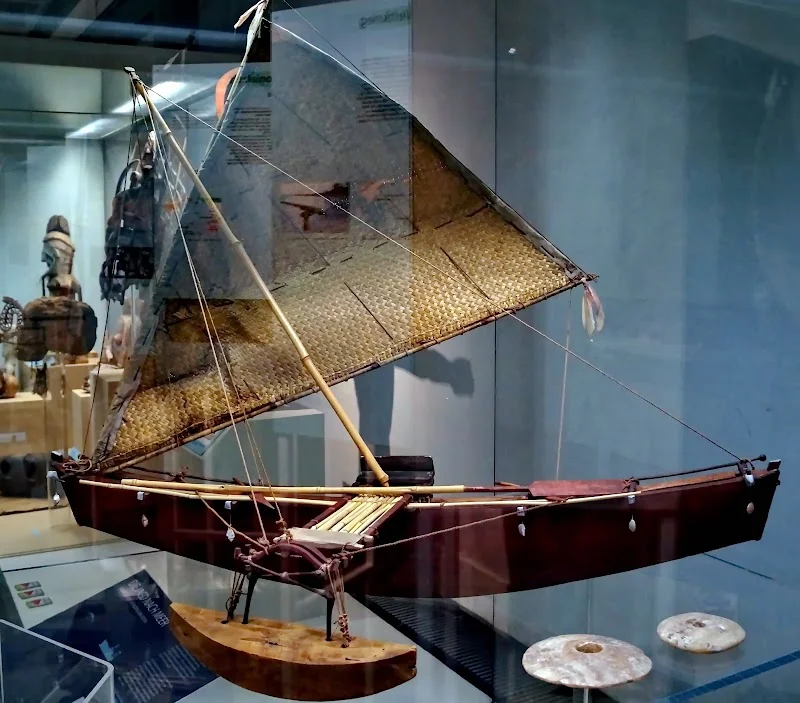
Among the thematic highlights are several exhibits and topics that remain memorable. The museum refers to the largest iron meteorite in Germany, the first dinosaur find on the European mainland, and the skeleton of a cave bear cub. Such pieces are not only spectacular; they also exemplify the breadth of the collection: geology and paleontology are just as present as the earth's history of the region. Additionally, there is a section on the Nabataean culture in Petra, Jordan, which complements the regional profile with an international focus. In ethnology, the exhibitions open up perspectives on four continents, with regional focuses in the South Seas, Sahara, West and Central Africa, Costa Rica, and Siberia. This makes it understandable why the museum is perceived as a versatile institution: it combines regional science with global cultural history and shows that natural history always tells something about people, living spaces, and processes of exchange. ([museen-in-bayern.de](https://museen-in-bayern.de/museen/detailseite-museum/naturhistorisches-museum))
History of the Natural History Museum
The history of the museum begins long before its current location. The Nuremberg Natural History Society was founded in 1801, and soon after, collections began to be built, initially housed in various rooms of members. It was not until 1881 that the establishment of a museum was considered, and in 1884/1885, the house opened its doors in the Blume. At that time, the museum had only two exhibition rooms measuring 50 and 34 square meters. Opening hours were correspondingly limited, but the foundation for a scientifically and publicly usable institution was laid. Even at this early stage, the collections were diverse: anthropology, ethnography, zoology, botany, paleontology, mineralogy, and geology formed a thematic spectrum that remained influential for later development. The history of the museum thus shows not only growth but also an astonishing early versatility. The transformation from a bourgeois collection into a significant institution for nature and culture communication is the result of continuity, collecting passion, and volunteer work. ([nhg-museum.de](https://www.nhg-museum.de/main.php?page=home_gesch.php&sprache=de))
Particularly impressive is the path from the Luitpoldhaus to the current Norishalle. In 1913, the collections were opened to the public in the new Luitpoldhaus, but World War II brought severe losses; the building was destroyed in 1945, although a large part of the collections had been stored elsewhere. After the war, the slow reconstruction began. In 1950, there was a small local exhibition in the basement, which had to close again due to a water ingress. It was not until 1954 that the reconstruction work progressed enough for the museum to be newly arranged, and in 1960 it reopened after years of volunteer work. The further development remained dynamic: in 1976, the geology hall received a completely new look, in 1995, new areas such as Petra and the Neolithic were added, in 1995, the move to the Norishalle was decided, and in 2000, the Natural History Society took up residence there. Later, areas such as Costa Rica and others were added. The current form of the museum is therefore not a coincidence but the result of a long museum biography often supported by volunteer engagement. ([nhg-museum.de](https://www.nhg-museum.de/main.php?page=home_gesch.php&sprache=de))
Guided Tours, Group Offers, and Special Exhibitions
Those who want to experience the Nuremberg Natural History Museum more intensively should take advantage of the guided tours and group offers. The official site explicitly addresses groups of all ages, including associations, families, school classes, friend circles, project days, or birthdays. Individual offers are also made upon request for groups with disabilities and special needs. Content-wise, guided tours and events with thematic focuses can be booked by arrangement, such as in the areas of foreign archaeology, geology, entomology, karst and cave studies, ethnology, and prehistory. This makes the museum particularly interesting for educational contexts, as the communication is not rigid but adaptable to target groups, age, and prior knowledge. This is a clear advantage, especially for schools and families: the museum not only displays exhibits but translates them into learning and experience formats that allow for questions and make connections understandable. Sunday tours and other museum educational offerings are also part of the program, which goes beyond just visiting the exhibitions. ([nhg-museum.de](https://www.nhg-museum.de/main.php?page=gruppen.php&sprache=de&utm_source=openai))
Additionally, the museum focuses on changing and current themes. The exhibition page mentions a mineral show in the geology hall, where 240 minerals and crystals are presented. This form of special presentation shows how the museum continually creates new access points within its established departments. The ethnology department, in turn, is repeatedly thematized in guided tours and programs, such as through family tours, mask workshops, or discovery routes with child-friendly mediation. This results in a museum visit that consists not only of viewing but also of thinking along, trying out, and asking questions. This also fits with the fact that the Natural History Society manages the museum on a voluntary basis. This character shapes the atmosphere and communication: less anonymous than large state museums, but more approachable, personal, and professionally engaged. Therefore, those who value a deeper understanding will find a place here that closely connects research, communication, and civic engagement. ([nhg-museum.de](https://www.nhg-museum.de/main.php?page=home_ausstell.php&sprache=de&utm_source=openai))
Accessibility and Practical Tips for Visiting
For many guests, the question of accessibility is important, and here the museum provides several helpful hints. The city of Nuremberg describes the Nuremberg Natural History Museum as suitable for people in wheelchairs. The Bavaria-wide museum database adds that the house is partially accessible and offers barrier-free access, as well as step-free and threshold-free public areas, an accessible restroom, seating, and welcome assistance dogs. This combination makes it clear that the museum strives to make visits as low-threshold as possible. At the same time, the official museum site points out that dogs are not allowed in the museum out of consideration for exhibits and carpets, with the exception of assistance dogs such as guide dogs. For practical purposes, this is a sensible note, as it prevents misunderstandings before arrival. Those with special needs should briefly inquire about the offers in advance; this is especially sensible for groups or guided tours. Overall, this shows a house that, while architecturally operating within a historical structure, has nonetheless implemented many accessibility elements. ([tourismus.nuernberg.de](https://tourismus.nuernberg.de/sehen/sehenswuerdigkeiten/location/naturhistorisches-museum/))
Also, aside from accessibility, there are a few practical points that make the visit more pleasant. Since the museum is managed by members of the Natural History Society on a voluntary basis, it is worthwhile to ask friendly and directly about special questions; the website also provides contact options and office hours. Those traveling with children benefit from the clear pricing tiers and group offers. Those traveling with the NÜRNBERG CARD can plan admission into their route and use the museum as a fixed program point. Those wanting to visit on a warm summer day should keep an eye on the note regarding extreme heat, as opening hours may change then. And those who prefer a late museum visit will find a particularly relaxed time window on Friday evenings. Overall, this results in a well-organized visit that is attractive for both tourists and Nuremberg residents. The Nuremberg Natural History Museum is thus not only a place for knowledge but also a very practical excursion destination in the middle of the city. ([nhg-museum.de](https://www.nhg-museum.de/main.php?page=home_service.php&sprache=de))
Sources:
- Nuremberg Natural History Museum - Official Homepage
- Nuremberg Natural History Museum - History of the Museum
- Nuremberg Natural History Museum - Directions
- Nuremberg Natural History Museum - Special Exhibition
- Tourism Nuremberg - Nuremberg Natural History Museum
- Museums in Bavaria - Nuremberg Natural History Museum
Mehr anzeigenWeniger anzeigen
Nuremberg Natural History Museum | Opening Hours & Prices
The Nuremberg Natural History Museum is a place for everyone who wants to not only read about nature, research, and cultural history but also experience it vividly. In the Norishalle at Marientorgraben, the museum connects the perspectives of the Nuremberg Natural History Society with an exhibition that ranges from the early collection beginnings in the 19th century to contemporary thematic rooms. Visitors to the museum will find not a silent showcase but a place where geology, prehistory, ethnology, and regional earth history coexist and explain each other. This is precisely what makes this museum appealing: it is compact enough to be well grasped in a single visit, yet thematically so diverse that one can easily linger longer than planned. Its location in downtown Nuremberg makes the visit additionally uncomplicated, as travel, the walk from the main train station, and connections with other city experiences can be easily combined. The official tourism presentation also emphasizes that there is a small but thematically very strong museum here, which goes far beyond a classic tour with its natural and cultural treasures. ([tourismus.nuernberg.de](https://tourismus.nuernberg.de/sehen/sehenswuerdigkeiten/location/naturhistorisches-museum/))
Opening Hours, Admission, and Ticket Planning
The clear opening hours are a great advantage for planning a visit. The Nuremberg Natural History Museum is open from Tuesday to Thursday from 10 AM to 5 PM, on Fridays from 10 AM to 8 PM, on Saturdays from 1 PM to 5 PM, and on Sundays and public holidays from 10 AM to 5 PM. The museum is closed on Mondays. Additionally, the operator points out that it is closed on certain public holidays and that different opening hours may apply during extreme or high heat. Therefore, anyone planning a visit should check the current situation, especially on summer and holiday weekends. Particularly interesting for spontaneous museum lovers is Friday evening, as the half-price admission applies from 5 PM to 8 PM. This makes the late-week appointment an attractive option for working individuals, weekend guests, and anyone who wants to experience Nuremberg culturally after the workday. ([nhg-museum.de](https://www.nhg-museum.de/main.php?page=home_service.php&sprache=de))
The admission prices also remain clear and family-friendly. Adults pay 6 euros, children and teenagers aged 6 to 17 pay 3 euros, and families pay 12 euros. For groups of 10 or more, a reduced price of 3 euros per person applies, while school classes and children's groups pay 1.50 euros per person. Reduced tickets are also available, including for holders of the Nuremberg Pass, students, and severely disabled visitors according to the specified regulations. Additionally, admission is free for members of the Natural History Society, as well as for individuals with a volunteer card. Particularly practical for city guests: with the NÜRNBERG CARD, admission is free. Therefore, those who want to combine their stay with several attractions can easily integrate the museum into a Nuremberg tour. The museum is suitable for both short spontaneous visits and extended family outings, as the pricing structure rewards both individual guests and groups, as well as repeat visitors. ([nhg-museum.de](https://www.nhg-museum.de/main.php?page=home_service.php&sprache=de))
Directions, Parking, and the Way to the Norishalle
The museum's address is Marientorgraben 8, 90402 Nuremberg, placing it very centrally in the city center. For public transport access, the official directions page lists several uncomplicated options. By tram, you can travel to the Marientor stop on line 8, and by subway to the Wöhrder Wiese stop on lines U2 and U3. The museum is about a 5 to 10-minute walk from Nuremberg Central Station, which is especially convenient for train travelers. For those arriving by car, the recommended parking option is the Rosa-Luxemburg-Platz parking garage. This makes the museum not only well embedded in the city center but also easily accessible for visitors from the surrounding area. In practice, this means: you can easily combine a museum visit with a stroll through Nuremberg's old town or an appointment in the city center without having to plan long walks or complicated transfers. ([nhg-museum.de](https://www.nhg-museum.de/main.php?page=home_anfahrt.php&sprache=de))
Museum Plan and Key Exhibition Areas
The museum plan shows how broadly the Nuremberg Natural History Museum is thematically set up. Named areas include the archaeology of Jordan, ethnology, geology, karst and cave studies, ecology, Roma Aeterna, prehistory, and history. This is a clear indication that it is not a museum focused on just one discipline, but rather a place where natural science, archaeology, and cultural history come together. This mixture makes the tour exciting, as the perspective constantly shifts: from rocks and fossils to human traces, from regional finds to global ethnology, from the earth's history of Franconia to archaeological contexts in the Near East. The official museum presentation also emphasizes that the permanent exhibition focuses on the Nuremberg area and surroundings without losing the global perspective. Visitors can thus not only view individual showcases but also understand larger contexts. The structure of the house is didactic but not dry; it invites visitors to discover connections between climate, landscape, material, life, and culture themselves. ([nhg-museum.de](https://www.nhg-museum.de/main.php?page=home_plan.php&sprache=de&utm_source=openai))
Among the thematic highlights are several exhibits and topics that remain memorable. The museum refers to the largest iron meteorite in Germany, the first dinosaur find on the European mainland, and the skeleton of a cave bear cub. Such pieces are not only spectacular; they also exemplify the breadth of the collection: geology and paleontology are just as present as the earth's history of the region. Additionally, there is a section on the Nabataean culture in Petra, Jordan, which complements the regional profile with an international focus. In ethnology, the exhibitions open up perspectives on four continents, with regional focuses in the South Seas, Sahara, West and Central Africa, Costa Rica, and Siberia. This makes it understandable why the museum is perceived as a versatile institution: it combines regional science with global cultural history and shows that natural history always tells something about people, living spaces, and processes of exchange. ([museen-in-bayern.de](https://museen-in-bayern.de/museen/detailseite-museum/naturhistorisches-museum))
History of the Natural History Museum
The history of the museum begins long before its current location. The Nuremberg Natural History Society was founded in 1801, and soon after, collections began to be built, initially housed in various rooms of members. It was not until 1881 that the establishment of a museum was considered, and in 1884/1885, the house opened its doors in the Blume. At that time, the museum had only two exhibition rooms measuring 50 and 34 square meters. Opening hours were correspondingly limited, but the foundation for a scientifically and publicly usable institution was laid. Even at this early stage, the collections were diverse: anthropology, ethnography, zoology, botany, paleontology, mineralogy, and geology formed a thematic spectrum that remained influential for later development. The history of the museum thus shows not only growth but also an astonishing early versatility. The transformation from a bourgeois collection into a significant institution for nature and culture communication is the result of continuity, collecting passion, and volunteer work. ([nhg-museum.de](https://www.nhg-museum.de/main.php?page=home_gesch.php&sprache=de))
Particularly impressive is the path from the Luitpoldhaus to the current Norishalle. In 1913, the collections were opened to the public in the new Luitpoldhaus, but World War II brought severe losses; the building was destroyed in 1945, although a large part of the collections had been stored elsewhere. After the war, the slow reconstruction began. In 1950, there was a small local exhibition in the basement, which had to close again due to a water ingress. It was not until 1954 that the reconstruction work progressed enough for the museum to be newly arranged, and in 1960 it reopened after years of volunteer work. The further development remained dynamic: in 1976, the geology hall received a completely new look, in 1995, new areas such as Petra and the Neolithic were added, in 1995, the move to the Norishalle was decided, and in 2000, the Natural History Society took up residence there. Later, areas such as Costa Rica and others were added. The current form of the museum is therefore not a coincidence but the result of a long museum biography often supported by volunteer engagement. ([nhg-museum.de](https://www.nhg-museum.de/main.php?page=home_gesch.php&sprache=de))
Guided Tours, Group Offers, and Special Exhibitions
Those who want to experience the Nuremberg Natural History Museum more intensively should take advantage of the guided tours and group offers. The official site explicitly addresses groups of all ages, including associations, families, school classes, friend circles, project days, or birthdays. Individual offers are also made upon request for groups with disabilities and special needs. Content-wise, guided tours and events with thematic focuses can be booked by arrangement, such as in the areas of foreign archaeology, geology, entomology, karst and cave studies, ethnology, and prehistory. This makes the museum particularly interesting for educational contexts, as the communication is not rigid but adaptable to target groups, age, and prior knowledge. This is a clear advantage, especially for schools and families: the museum not only displays exhibits but translates them into learning and experience formats that allow for questions and make connections understandable. Sunday tours and other museum educational offerings are also part of the program, which goes beyond just visiting the exhibitions. ([nhg-museum.de](https://www.nhg-museum.de/main.php?page=gruppen.php&sprache=de&utm_source=openai))
Additionally, the museum focuses on changing and current themes. The exhibition page mentions a mineral show in the geology hall, where 240 minerals and crystals are presented. This form of special presentation shows how the museum continually creates new access points within its established departments. The ethnology department, in turn, is repeatedly thematized in guided tours and programs, such as through family tours, mask workshops, or discovery routes with child-friendly mediation. This results in a museum visit that consists not only of viewing but also of thinking along, trying out, and asking questions. This also fits with the fact that the Natural History Society manages the museum on a voluntary basis. This character shapes the atmosphere and communication: less anonymous than large state museums, but more approachable, personal, and professionally engaged. Therefore, those who value a deeper understanding will find a place here that closely connects research, communication, and civic engagement. ([nhg-museum.de](https://www.nhg-museum.de/main.php?page=home_ausstell.php&sprache=de&utm_source=openai))
Accessibility and Practical Tips for Visiting
For many guests, the question of accessibility is important, and here the museum provides several helpful hints. The city of Nuremberg describes the Nuremberg Natural History Museum as suitable for people in wheelchairs. The Bavaria-wide museum database adds that the house is partially accessible and offers barrier-free access, as well as step-free and threshold-free public areas, an accessible restroom, seating, and welcome assistance dogs. This combination makes it clear that the museum strives to make visits as low-threshold as possible. At the same time, the official museum site points out that dogs are not allowed in the museum out of consideration for exhibits and carpets, with the exception of assistance dogs such as guide dogs. For practical purposes, this is a sensible note, as it prevents misunderstandings before arrival. Those with special needs should briefly inquire about the offers in advance; this is especially sensible for groups or guided tours. Overall, this shows a house that, while architecturally operating within a historical structure, has nonetheless implemented many accessibility elements. ([tourismus.nuernberg.de](https://tourismus.nuernberg.de/sehen/sehenswuerdigkeiten/location/naturhistorisches-museum/))
Also, aside from accessibility, there are a few practical points that make the visit more pleasant. Since the museum is managed by members of the Natural History Society on a voluntary basis, it is worthwhile to ask friendly and directly about special questions; the website also provides contact options and office hours. Those traveling with children benefit from the clear pricing tiers and group offers. Those traveling with the NÜRNBERG CARD can plan admission into their route and use the museum as a fixed program point. Those wanting to visit on a warm summer day should keep an eye on the note regarding extreme heat, as opening hours may change then. And those who prefer a late museum visit will find a particularly relaxed time window on Friday evenings. Overall, this results in a well-organized visit that is attractive for both tourists and Nuremberg residents. The Nuremberg Natural History Museum is thus not only a place for knowledge but also a very practical excursion destination in the middle of the city. ([nhg-museum.de](https://www.nhg-museum.de/main.php?page=home_service.php&sprache=de))
Sources:
- Nuremberg Natural History Museum - Official Homepage
- Nuremberg Natural History Museum - History of the Museum
- Nuremberg Natural History Museum - Directions
- Nuremberg Natural History Museum - Special Exhibition
- Tourism Nuremberg - Nuremberg Natural History Museum
- Museums in Bavaria - Nuremberg Natural History Museum
Upcoming Events
No events found
Frequently Asked Questions
Reviews
Dhanushka Bandara
21. March 2026
A great place for a short visit if you are in Nürnberg. The museum isn't really big, you can cover the whole thing in around 2-3 hours. The Geology section and especially the mineral collection is really impressive. The staff were really friendly and helpful (and they speak English). You can tell they love what they do and you can see it in all the exhibits and models (most of them are handmade). I also learned that they work there in a honorary capacity, so thank you for your service!
Kent Routen
2. December 2025
Very good natural history museum about prehistoric findings, Africa and the crystals and fossils are amazing. It's not a big museum so you could spend an hour or two if you take your time.
K W
24. June 2025
The Naturhistorisches Museum is a small yet fascinating museum that's great for all ages. It's packed with engaging exhibits, and the layout makes it easy to explore without feeling overwhelming. The kids especially enjoyed the dazzling gem collection and the impressive dinosaur bones, which sparked their curiosity and imagination. Each section is well-curated, and there’s something for everyone—from geology to zoology. The displays are informative without being too complex, making it perfect for younger visitors. It’s a wonderful spot for families looking for an educational and fun outing. Highly recommend spending an hour or two here while in town.
Michael B
22. February 2026
Small but mighty! They spoke English and explained to us what we will find in there. Interesting ancient world!
Paul Ciprian
12. October 2024
Not a big but an interesting museum. It consists of an ethnological section (dedicated to some exotic parts of the world), an archaeological one and a geological one (a lot of wonderful glowing minerals).