

Amberg
Marktkern, Hauptstraße/B 14, Hahnbach, Amberg
Market Core Hahnbach | Opening Hours & Phone Number
The market core of Hahnbach is not an interchangeable local center, but a historically grown core area in the district of Amberg-Sulzbach, which connects administration, history, and everyday life. Anyone who wants to understand Hahnbach begins right here: at the historic town center along the main street and the B 14, on the Golden Road, which has integrated the town into a larger trade and cultural landscape for centuries. At the same time, the market is clearly tangible through its official figures: 67.41 km² of municipal area, 27 municipal parts, and 5,028 inhabitants as of December 31, 2023. Its location in the upper Vilstal, about 12 kilometers northwest of Amberg and in the Upper Palatinate, not only makes the place geographically well-located but also understandable as an administrative and identity center of an entire community. Thus, the market core is a place where the present of the town hall and the visible traces of history overlap particularly closely. ([hahnbach.de](https://www.hahnbach.de/markt-hahnbach/hahnbach-in-zahlen))
Opening Hours, Phone Number, and Administration
For many people, the first question is quite practical: When is the town hall reachable, and under which number can one quickly get information? The market Hahnbach provides a clear official contact point for this. The town hall is located at Herbert-Falk-Str. 5 in 92256 Hahnbach, the phone number is 09664/9134-0, the fax number is 09664/9134-34, and the email address is markt@hahnbach.de. The opening hours are also specifically published: Mondays from 08:00 to 12:00 and 13:30 to 16:00, Tuesdays from 08:00 to 12:00, Wednesdays from 08:00 to 12:00, Thursdays from 08:00 to 12:00 and 13:30 to 17:00, and Fridays from 08:00 to 12:00. This clarity is important for visitors, citizens, and businesses because it makes the market core visible not only as a historical but also as a functional center. ([hahnbach.de](https://www.hahnbach.de/rathaus/kontakt/oeffnungszeiten))
The administration in Hahnbach is broadly organized on the website and clearly goes beyond mere counter contact. In the town hall area, there are not only contact and opening information but also subpages for the mayor, municipal council, meetings, employees, and various citizen service topics. Additionally, the website offers online forms for the building authority, residents' registration office, trade office, regulatory office, registry office, and traffic office. This is particularly relevant for search queries like market Hahnbach administration because it shows that the place organizes its services in a classic on-site manner while also making them digitally accessible. For visitors, this means: The market core is not only a beautiful historical place but also the administrative contact point where formalities, information, and local concerns can be sensibly bundled. ([hahnbach.de](https://www.hahnbach.de/rathaus))
Location on the Main Street/B 14 and Access
Hahnbach is historically and traffic-wise closely connected to the Golden Road. The official brochure describes that the market is located on the B 14, which has connected Nuremberg with Prague as a west-east trade route since the 14th century. This classification is particularly valuable for the market core because it shows that the current main street is not just a thoroughfare but part of a very old connection space. So, anyone looking for access, location, and connections to Hahnbach quickly ends up at a town center that looks back on a long traffic history. The municipality itself is located in the upper Vilstal, surrounded by valley and river meadows, thus presenting a landscape that makes the historical core spatially open and simultaneously clearly located. The place is also about 12 kilometers northwest of Amberg, which makes orientation easier for visitors from the region. ([hahnbach.de](https://www.hahnbach.de/fileadmin/Dateiverzeichnis/Gemeinde_Hahnbach/Hahnbach/FlyerErlebniswegZille.pdf))
The location on the main street and the B 14 also shapes the perception of the market core. Here, short distances, historical building substance, and municipal accessibility come together. Hahnbach is not an isolated single place but a market community with 27 municipal parts, whose center serves as a reference point for administration, trade, and local identity. The figures also support this central role: The area of 67.41 km² and the 27 municipal parts make it clear that the market core is an anchor of orientation in a comparatively multi-part community. Thus, those who visit the historical town center move not only in a beautiful townscape but also in the midst of a larger municipal context. This is particularly important for search queries regarding Hahnbach address, location, and access because it makes the place immediately comprehensible both in the regional road space and in everyday community life. ([hahnbach.de](https://www.hahnbach.de/markt-hahnbach/hahnbach-in-zahlen))
Historical Town Center, Amberger Gate, and St. James' Church
The historical market core of Hahnbach has a clearly visible landmark: the Amberger Gate. The official sights page describes it as a medieval middle market gate and as a landmark of the place. It was built in the 16th century, and since 1926, there has been a stork's nest there, which has become a symbol for the community over decades. This mixture of defensive architecture, local history, and lived nature observation makes the core area so special. Therefore, when walking through Hahnbach, one sees not only an old gate but a place with cultural memory, regional identity, and a very lively local narrative. The fact that the storks have even spent the winter in the Hahnbach area for several years underscores how closely nature and townscape are intertwined here. ([hahnbach.de](https://www.hahnbach.de/tourismus-freizeit/sehenswuerdigkeiten))
St. James' Church is also one of the most prominent buildings that shape the market core. The official brochure describes it as a widely visible point with a tower about 50 meters high. In the historical classification of the market, it also becomes clear that Hahnbach was documented early on: in 1121, the place first came to light in history with Erchinbertus of Hanbach. Later, Hahnbach was mentioned in connection with the Sulzbachers, the Staufer Empire, and ducal ownership; it is also important for the townscape that the place repeatedly experienced fires, religious upheavals, and political changes in the Middle Ages and early modern times. This historical depth explains why the market core today is more than just a pretty town center. It is the visible result of a long development in which church, market, rule, and everyday life have grown together over centuries. ([hahnbach.de](https://www.hahnbach.de/markt-hahnbach/historisches))
Another characteristic detail is the bicycle carrier monument at the Upper Gate. The official representation tells the story of foreign cyclists who used to carry their bicycles through Hahnbach due to the cobblestone pavement to protect the tires. This everyday scene developed into a local memory culture, which was made visible with the monument from 1994. Such narratives bring the market core to life because they show how traffic, material scarcity, and village life form part of local identity. Together with the Amberger Gate and St. James' Church, an ensemble of building, symbol, and memory is created. For visitors, this means: The historical town center of Hahnbach is not only a backdrop for administrative questions but a walkable history book with very concrete and local signs. ([hahnbach.de](https://www.hahnbach.de/tourismus-freizeit/sehenswuerdigkeiten))
Municipal Parts, Population, and Digital Services
Hahnbach is larger and more diverse as a market community than one might suspect at first glance at the town center. Since the territorial reform in 1972, the municipality has consisted of 27 municipal parts. The official page names Adlholz, Iber, Mimbach, Süß, and Ursulapoppenricht as integrated communities; other districts and municipal areas complete the picture of a widely branched municipality. This structure explains why the market core is so important: It is a reference point for a community that holds together not just a single village but a whole network of places, hamlet structures, and settlement cores. The official statistics underline this with the municipal area of 67.41 km² and the 5,028 inhabitants. These figures help to objectively classify search queries like market Hahnbach or municipal parts Hahnbach. ([hahnbach.de](https://www.hahnbach.de/markt-hahnbach/gemeindeteile?utm_source=openai))
This complexity is also visible in the administration. In the menu of the market community, there are not only classic town hall pages but also topics like citizen service, waste management, BayernPortal, residents' registration and passport office, found animals, fees and charges, primary and secondary schools, kindergartens, churches, municipal heat planning, climate protection network, and numerous online forms. This shows that Hahnbach does not rely solely on presence in the town hall but systematically expands access to administration digitally. Additionally, there are pages for the municipal council, meetings, and employees that make the municipal process transparent. For the market core, this means: It is not only a symbolic center but also the organizational center of a modern community that handles its tasks through both analog and digital means simultaneously. For visitors, this is particularly helpful when they are looking for opening hours, responsibilities, or forms in advance. ([hahnbach.de](https://www.hahnbach.de/rathaus))
Leisure, Nature, and Events Around Hahnbach
The market core of Hahnbach is surrounded by nature and leisure offerings that significantly enhance the townscape. Particularly well-known is the nature experience path, which was established in 2008 and is about 6.1 kilometers long. It aims to bring walkers and cyclists closer to the habitat of the Vils meadows and informs about the peculiarities of the area at ten natural science stations. The route initially runs along the north side of the historic town center, passes the rock cellars, and then opens the way towards Süß and back to the Vils meadows. This connection of the historical center and nature-friendly surroundings makes Hahnbach attractive for people who are not only looking for an administrative place but a place with quality of stay. The official materials also mention beavers, storks, and typical plants of the river meadows, highlighting the special relationship between settlement and landscape. ([hahnbach.de](https://www.hahnbach.de/fileadmin/Dateiverzeichnis/Gemeinde_Hahnbach/Hahnbach/FlyerErlebniswegZille.pdf))
Another defining experience is the Zille ride on the Vils. The market Hahnbach invites you to rides with the Zille from May to October; the small wooden boat accommodates 15 people and has its anchorage at the Vils Bridge. From there, one can sail downstream to Kümmersbuch. The brochure links this leisure activity with the historical core and simultaneously describes the surroundings with their river meadow character. Additionally, there is the Frohnberg with its pilgrimage church, the annual Frohnberg Festival in August, and the market festival in July in the historic market core. This is important for the community because it means that the place is not only perceived as a location for administration and history but also as a lively stage for festivals, pilgrimage movements, nature experiences, and local encounters. This mixture makes Hahnbach unmistakable in the region. ([hahnbach.de](https://www.hahnbach.de/fileadmin/Dateiverzeichnis/Gemeinde_Hahnbach/Hahnbach/FlyerErlebniswegZille.pdf))
Frequently Asked Questions about Market Hahnbach
Where can I find the phone number for Market Hahnbach? The official phone number of the town hall is 09664/9134-0. Additionally, the market also provides the fax number 09664/9134-34 and the email address markt@hahnbach.de. For quick inquiries, this is the central contact point of the municipality. ([hahnbach.de](https://www.hahnbach.de/rathaus/kontakt/oeffnungszeiten))
What are the opening hours of the town hall in Hahnbach? The town hall is open according to the official site on Mondays from 08:00 to 12:00 and 13:30 to 16:00, Tuesdays from 08:00 to 12:00, Wednesdays from 08:00 to 12:00, Thursdays from 08:00 to 12:00 and 13:30 to 17:00, and Fridays from 08:00 to 12:00. Those planning to visit the authorities should plan these times in advance. ([hahnbach.de](https://www.hahnbach.de/rathaus/kontakt/oeffnungszeiten))
Where is the market core of Hahnbach located exactly? The market core is located in the historic town center on the main street and the B 14, which is part of the Golden Road. Hahnbach is located in the district of Amberg-Sulzbach in the Upper Palatinate, about 12 kilometers northwest of Amberg. Thus, the place is both regionally well accessible and historically clearly located. ([hahnbach.de](https://www.hahnbach.de/markt-hahnbach/hahnbach-in-zahlen))
What sights should not be missed in the historical town center? Particularly important are the Amberger Gate as a medieval market gate, St. James' Church with its tall tower, and the bicycle carrier monument at the Upper Gate. Together, these places show how strongly history, narrative, and townscape are interconnected in Hahnbach. ([hahnbach.de](https://www.hahnbach.de/tourismus-freizeit/sehenswuerdigkeiten))
How large is the market community of Hahnbach and what municipal parts belong to it? The market community covers 67.41 km² and has 27 municipal parts. The integrated communities include Adlholz, Iber, Mimbach, Süß, and Ursulapoppenricht; a total of 5,028 people live in the municipality. This makes Hahnbach a multi-part community with a clear center in the market core. ([hahnbach.de](https://www.hahnbach.de/markt-hahnbach/gemeindeteile?utm_source=openai))
What nature and leisure offerings are available around Hahnbach? Particularly well-known are the 6.1-kilometer nature experience path through the Vils meadows and the Zille rides on the Vils between Hahnbach and Kümmersbuch. Additionally, there are the Frohnberg, the Frohnberg Festival, and the market festival in the historic market core, which means that in the place, administration, history, and leisure are concentrated in very short distances. ([hahnbach.de](https://www.hahnbach.de/fileadmin/Dateiverzeichnis/Gemeinde_Hahnbach/Hahnbach/FlyerErlebniswegZille.pdf))
Sources:
Mehr anzeigenWeniger anzeigen
Market Core Hahnbach | Opening Hours & Phone Number
The market core of Hahnbach is not an interchangeable local center, but a historically grown core area in the district of Amberg-Sulzbach, which connects administration, history, and everyday life. Anyone who wants to understand Hahnbach begins right here: at the historic town center along the main street and the B 14, on the Golden Road, which has integrated the town into a larger trade and cultural landscape for centuries. At the same time, the market is clearly tangible through its official figures: 67.41 km² of municipal area, 27 municipal parts, and 5,028 inhabitants as of December 31, 2023. Its location in the upper Vilstal, about 12 kilometers northwest of Amberg and in the Upper Palatinate, not only makes the place geographically well-located but also understandable as an administrative and identity center of an entire community. Thus, the market core is a place where the present of the town hall and the visible traces of history overlap particularly closely. ([hahnbach.de](https://www.hahnbach.de/markt-hahnbach/hahnbach-in-zahlen))
Opening Hours, Phone Number, and Administration
For many people, the first question is quite practical: When is the town hall reachable, and under which number can one quickly get information? The market Hahnbach provides a clear official contact point for this. The town hall is located at Herbert-Falk-Str. 5 in 92256 Hahnbach, the phone number is 09664/9134-0, the fax number is 09664/9134-34, and the email address is markt@hahnbach.de. The opening hours are also specifically published: Mondays from 08:00 to 12:00 and 13:30 to 16:00, Tuesdays from 08:00 to 12:00, Wednesdays from 08:00 to 12:00, Thursdays from 08:00 to 12:00 and 13:30 to 17:00, and Fridays from 08:00 to 12:00. This clarity is important for visitors, citizens, and businesses because it makes the market core visible not only as a historical but also as a functional center. ([hahnbach.de](https://www.hahnbach.de/rathaus/kontakt/oeffnungszeiten))
The administration in Hahnbach is broadly organized on the website and clearly goes beyond mere counter contact. In the town hall area, there are not only contact and opening information but also subpages for the mayor, municipal council, meetings, employees, and various citizen service topics. Additionally, the website offers online forms for the building authority, residents' registration office, trade office, regulatory office, registry office, and traffic office. This is particularly relevant for search queries like market Hahnbach administration because it shows that the place organizes its services in a classic on-site manner while also making them digitally accessible. For visitors, this means: The market core is not only a beautiful historical place but also the administrative contact point where formalities, information, and local concerns can be sensibly bundled. ([hahnbach.de](https://www.hahnbach.de/rathaus))
Location on the Main Street/B 14 and Access
Hahnbach is historically and traffic-wise closely connected to the Golden Road. The official brochure describes that the market is located on the B 14, which has connected Nuremberg with Prague as a west-east trade route since the 14th century. This classification is particularly valuable for the market core because it shows that the current main street is not just a thoroughfare but part of a very old connection space. So, anyone looking for access, location, and connections to Hahnbach quickly ends up at a town center that looks back on a long traffic history. The municipality itself is located in the upper Vilstal, surrounded by valley and river meadows, thus presenting a landscape that makes the historical core spatially open and simultaneously clearly located. The place is also about 12 kilometers northwest of Amberg, which makes orientation easier for visitors from the region. ([hahnbach.de](https://www.hahnbach.de/fileadmin/Dateiverzeichnis/Gemeinde_Hahnbach/Hahnbach/FlyerErlebniswegZille.pdf))
The location on the main street and the B 14 also shapes the perception of the market core. Here, short distances, historical building substance, and municipal accessibility come together. Hahnbach is not an isolated single place but a market community with 27 municipal parts, whose center serves as a reference point for administration, trade, and local identity. The figures also support this central role: The area of 67.41 km² and the 27 municipal parts make it clear that the market core is an anchor of orientation in a comparatively multi-part community. Thus, those who visit the historical town center move not only in a beautiful townscape but also in the midst of a larger municipal context. This is particularly important for search queries regarding Hahnbach address, location, and access because it makes the place immediately comprehensible both in the regional road space and in everyday community life. ([hahnbach.de](https://www.hahnbach.de/markt-hahnbach/hahnbach-in-zahlen))
Historical Town Center, Amberger Gate, and St. James' Church
The historical market core of Hahnbach has a clearly visible landmark: the Amberger Gate. The official sights page describes it as a medieval middle market gate and as a landmark of the place. It was built in the 16th century, and since 1926, there has been a stork's nest there, which has become a symbol for the community over decades. This mixture of defensive architecture, local history, and lived nature observation makes the core area so special. Therefore, when walking through Hahnbach, one sees not only an old gate but a place with cultural memory, regional identity, and a very lively local narrative. The fact that the storks have even spent the winter in the Hahnbach area for several years underscores how closely nature and townscape are intertwined here. ([hahnbach.de](https://www.hahnbach.de/tourismus-freizeit/sehenswuerdigkeiten))
St. James' Church is also one of the most prominent buildings that shape the market core. The official brochure describes it as a widely visible point with a tower about 50 meters high. In the historical classification of the market, it also becomes clear that Hahnbach was documented early on: in 1121, the place first came to light in history with Erchinbertus of Hanbach. Later, Hahnbach was mentioned in connection with the Sulzbachers, the Staufer Empire, and ducal ownership; it is also important for the townscape that the place repeatedly experienced fires, religious upheavals, and political changes in the Middle Ages and early modern times. This historical depth explains why the market core today is more than just a pretty town center. It is the visible result of a long development in which church, market, rule, and everyday life have grown together over centuries. ([hahnbach.de](https://www.hahnbach.de/markt-hahnbach/historisches))
Another characteristic detail is the bicycle carrier monument at the Upper Gate. The official representation tells the story of foreign cyclists who used to carry their bicycles through Hahnbach due to the cobblestone pavement to protect the tires. This everyday scene developed into a local memory culture, which was made visible with the monument from 1994. Such narratives bring the market core to life because they show how traffic, material scarcity, and village life form part of local identity. Together with the Amberger Gate and St. James' Church, an ensemble of building, symbol, and memory is created. For visitors, this means: The historical town center of Hahnbach is not only a backdrop for administrative questions but a walkable history book with very concrete and local signs. ([hahnbach.de](https://www.hahnbach.de/tourismus-freizeit/sehenswuerdigkeiten))
Municipal Parts, Population, and Digital Services
Hahnbach is larger and more diverse as a market community than one might suspect at first glance at the town center. Since the territorial reform in 1972, the municipality has consisted of 27 municipal parts. The official page names Adlholz, Iber, Mimbach, Süß, and Ursulapoppenricht as integrated communities; other districts and municipal areas complete the picture of a widely branched municipality. This structure explains why the market core is so important: It is a reference point for a community that holds together not just a single village but a whole network of places, hamlet structures, and settlement cores. The official statistics underline this with the municipal area of 67.41 km² and the 5,028 inhabitants. These figures help to objectively classify search queries like market Hahnbach or municipal parts Hahnbach. ([hahnbach.de](https://www.hahnbach.de/markt-hahnbach/gemeindeteile?utm_source=openai))
This complexity is also visible in the administration. In the menu of the market community, there are not only classic town hall pages but also topics like citizen service, waste management, BayernPortal, residents' registration and passport office, found animals, fees and charges, primary and secondary schools, kindergartens, churches, municipal heat planning, climate protection network, and numerous online forms. This shows that Hahnbach does not rely solely on presence in the town hall but systematically expands access to administration digitally. Additionally, there are pages for the municipal council, meetings, and employees that make the municipal process transparent. For the market core, this means: It is not only a symbolic center but also the organizational center of a modern community that handles its tasks through both analog and digital means simultaneously. For visitors, this is particularly helpful when they are looking for opening hours, responsibilities, or forms in advance. ([hahnbach.de](https://www.hahnbach.de/rathaus))
Leisure, Nature, and Events Around Hahnbach
The market core of Hahnbach is surrounded by nature and leisure offerings that significantly enhance the townscape. Particularly well-known is the nature experience path, which was established in 2008 and is about 6.1 kilometers long. It aims to bring walkers and cyclists closer to the habitat of the Vils meadows and informs about the peculiarities of the area at ten natural science stations. The route initially runs along the north side of the historic town center, passes the rock cellars, and then opens the way towards Süß and back to the Vils meadows. This connection of the historical center and nature-friendly surroundings makes Hahnbach attractive for people who are not only looking for an administrative place but a place with quality of stay. The official materials also mention beavers, storks, and typical plants of the river meadows, highlighting the special relationship between settlement and landscape. ([hahnbach.de](https://www.hahnbach.de/fileadmin/Dateiverzeichnis/Gemeinde_Hahnbach/Hahnbach/FlyerErlebniswegZille.pdf))
Another defining experience is the Zille ride on the Vils. The market Hahnbach invites you to rides with the Zille from May to October; the small wooden boat accommodates 15 people and has its anchorage at the Vils Bridge. From there, one can sail downstream to Kümmersbuch. The brochure links this leisure activity with the historical core and simultaneously describes the surroundings with their river meadow character. Additionally, there is the Frohnberg with its pilgrimage church, the annual Frohnberg Festival in August, and the market festival in July in the historic market core. This is important for the community because it means that the place is not only perceived as a location for administration and history but also as a lively stage for festivals, pilgrimage movements, nature experiences, and local encounters. This mixture makes Hahnbach unmistakable in the region. ([hahnbach.de](https://www.hahnbach.de/fileadmin/Dateiverzeichnis/Gemeinde_Hahnbach/Hahnbach/FlyerErlebniswegZille.pdf))
Frequently Asked Questions about Market Hahnbach
Where can I find the phone number for Market Hahnbach? The official phone number of the town hall is 09664/9134-0. Additionally, the market also provides the fax number 09664/9134-34 and the email address markt@hahnbach.de. For quick inquiries, this is the central contact point of the municipality. ([hahnbach.de](https://www.hahnbach.de/rathaus/kontakt/oeffnungszeiten))
What are the opening hours of the town hall in Hahnbach? The town hall is open according to the official site on Mondays from 08:00 to 12:00 and 13:30 to 16:00, Tuesdays from 08:00 to 12:00, Wednesdays from 08:00 to 12:00, Thursdays from 08:00 to 12:00 and 13:30 to 17:00, and Fridays from 08:00 to 12:00. Those planning to visit the authorities should plan these times in advance. ([hahnbach.de](https://www.hahnbach.de/rathaus/kontakt/oeffnungszeiten))
Where is the market core of Hahnbach located exactly? The market core is located in the historic town center on the main street and the B 14, which is part of the Golden Road. Hahnbach is located in the district of Amberg-Sulzbach in the Upper Palatinate, about 12 kilometers northwest of Amberg. Thus, the place is both regionally well accessible and historically clearly located. ([hahnbach.de](https://www.hahnbach.de/markt-hahnbach/hahnbach-in-zahlen))
What sights should not be missed in the historical town center? Particularly important are the Amberger Gate as a medieval market gate, St. James' Church with its tall tower, and the bicycle carrier monument at the Upper Gate. Together, these places show how strongly history, narrative, and townscape are interconnected in Hahnbach. ([hahnbach.de](https://www.hahnbach.de/tourismus-freizeit/sehenswuerdigkeiten))
How large is the market community of Hahnbach and what municipal parts belong to it? The market community covers 67.41 km² and has 27 municipal parts. The integrated communities include Adlholz, Iber, Mimbach, Süß, and Ursulapoppenricht; a total of 5,028 people live in the municipality. This makes Hahnbach a multi-part community with a clear center in the market core. ([hahnbach.de](https://www.hahnbach.de/markt-hahnbach/gemeindeteile?utm_source=openai))
What nature and leisure offerings are available around Hahnbach? Particularly well-known are the 6.1-kilometer nature experience path through the Vils meadows and the Zille rides on the Vils between Hahnbach and Kümmersbuch. Additionally, there are the Frohnberg, the Frohnberg Festival, and the market festival in the historic market core, which means that in the place, administration, history, and leisure are concentrated in very short distances. ([hahnbach.de](https://www.hahnbach.de/fileadmin/Dateiverzeichnis/Gemeinde_Hahnbach/Hahnbach/FlyerErlebniswegZille.pdf))
Sources:
Market Core Hahnbach | Opening Hours & Phone Number
The market core of Hahnbach is not an interchangeable local center, but a historically grown core area in the district of Amberg-Sulzbach, which connects administration, history, and everyday life. Anyone who wants to understand Hahnbach begins right here: at the historic town center along the main street and the B 14, on the Golden Road, which has integrated the town into a larger trade and cultural landscape for centuries. At the same time, the market is clearly tangible through its official figures: 67.41 km² of municipal area, 27 municipal parts, and 5,028 inhabitants as of December 31, 2023. Its location in the upper Vilstal, about 12 kilometers northwest of Amberg and in the Upper Palatinate, not only makes the place geographically well-located but also understandable as an administrative and identity center of an entire community. Thus, the market core is a place where the present of the town hall and the visible traces of history overlap particularly closely. ([hahnbach.de](https://www.hahnbach.de/markt-hahnbach/hahnbach-in-zahlen))
Opening Hours, Phone Number, and Administration
For many people, the first question is quite practical: When is the town hall reachable, and under which number can one quickly get information? The market Hahnbach provides a clear official contact point for this. The town hall is located at Herbert-Falk-Str. 5 in 92256 Hahnbach, the phone number is 09664/9134-0, the fax number is 09664/9134-34, and the email address is markt@hahnbach.de. The opening hours are also specifically published: Mondays from 08:00 to 12:00 and 13:30 to 16:00, Tuesdays from 08:00 to 12:00, Wednesdays from 08:00 to 12:00, Thursdays from 08:00 to 12:00 and 13:30 to 17:00, and Fridays from 08:00 to 12:00. This clarity is important for visitors, citizens, and businesses because it makes the market core visible not only as a historical but also as a functional center. ([hahnbach.de](https://www.hahnbach.de/rathaus/kontakt/oeffnungszeiten))
The administration in Hahnbach is broadly organized on the website and clearly goes beyond mere counter contact. In the town hall area, there are not only contact and opening information but also subpages for the mayor, municipal council, meetings, employees, and various citizen service topics. Additionally, the website offers online forms for the building authority, residents' registration office, trade office, regulatory office, registry office, and traffic office. This is particularly relevant for search queries like market Hahnbach administration because it shows that the place organizes its services in a classic on-site manner while also making them digitally accessible. For visitors, this means: The market core is not only a beautiful historical place but also the administrative contact point where formalities, information, and local concerns can be sensibly bundled. ([hahnbach.de](https://www.hahnbach.de/rathaus))
Location on the Main Street/B 14 and Access
Hahnbach is historically and traffic-wise closely connected to the Golden Road. The official brochure describes that the market is located on the B 14, which has connected Nuremberg with Prague as a west-east trade route since the 14th century. This classification is particularly valuable for the market core because it shows that the current main street is not just a thoroughfare but part of a very old connection space. So, anyone looking for access, location, and connections to Hahnbach quickly ends up at a town center that looks back on a long traffic history. The municipality itself is located in the upper Vilstal, surrounded by valley and river meadows, thus presenting a landscape that makes the historical core spatially open and simultaneously clearly located. The place is also about 12 kilometers northwest of Amberg, which makes orientation easier for visitors from the region. ([hahnbach.de](https://www.hahnbach.de/fileadmin/Dateiverzeichnis/Gemeinde_Hahnbach/Hahnbach/FlyerErlebniswegZille.pdf))
The location on the main street and the B 14 also shapes the perception of the market core. Here, short distances, historical building substance, and municipal accessibility come together. Hahnbach is not an isolated single place but a market community with 27 municipal parts, whose center serves as a reference point for administration, trade, and local identity. The figures also support this central role: The area of 67.41 km² and the 27 municipal parts make it clear that the market core is an anchor of orientation in a comparatively multi-part community. Thus, those who visit the historical town center move not only in a beautiful townscape but also in the midst of a larger municipal context. This is particularly important for search queries regarding Hahnbach address, location, and access because it makes the place immediately comprehensible both in the regional road space and in everyday community life. ([hahnbach.de](https://www.hahnbach.de/markt-hahnbach/hahnbach-in-zahlen))
Historical Town Center, Amberger Gate, and St. James' Church
The historical market core of Hahnbach has a clearly visible landmark: the Amberger Gate. The official sights page describes it as a medieval middle market gate and as a landmark of the place. It was built in the 16th century, and since 1926, there has been a stork's nest there, which has become a symbol for the community over decades. This mixture of defensive architecture, local history, and lived nature observation makes the core area so special. Therefore, when walking through Hahnbach, one sees not only an old gate but a place with cultural memory, regional identity, and a very lively local narrative. The fact that the storks have even spent the winter in the Hahnbach area for several years underscores how closely nature and townscape are intertwined here. ([hahnbach.de](https://www.hahnbach.de/tourismus-freizeit/sehenswuerdigkeiten))
St. James' Church is also one of the most prominent buildings that shape the market core. The official brochure describes it as a widely visible point with a tower about 50 meters high. In the historical classification of the market, it also becomes clear that Hahnbach was documented early on: in 1121, the place first came to light in history with Erchinbertus of Hanbach. Later, Hahnbach was mentioned in connection with the Sulzbachers, the Staufer Empire, and ducal ownership; it is also important for the townscape that the place repeatedly experienced fires, religious upheavals, and political changes in the Middle Ages and early modern times. This historical depth explains why the market core today is more than just a pretty town center. It is the visible result of a long development in which church, market, rule, and everyday life have grown together over centuries. ([hahnbach.de](https://www.hahnbach.de/markt-hahnbach/historisches))
Another characteristic detail is the bicycle carrier monument at the Upper Gate. The official representation tells the story of foreign cyclists who used to carry their bicycles through Hahnbach due to the cobblestone pavement to protect the tires. This everyday scene developed into a local memory culture, which was made visible with the monument from 1994. Such narratives bring the market core to life because they show how traffic, material scarcity, and village life form part of local identity. Together with the Amberger Gate and St. James' Church, an ensemble of building, symbol, and memory is created. For visitors, this means: The historical town center of Hahnbach is not only a backdrop for administrative questions but a walkable history book with very concrete and local signs. ([hahnbach.de](https://www.hahnbach.de/tourismus-freizeit/sehenswuerdigkeiten))
Municipal Parts, Population, and Digital Services
Hahnbach is larger and more diverse as a market community than one might suspect at first glance at the town center. Since the territorial reform in 1972, the municipality has consisted of 27 municipal parts. The official page names Adlholz, Iber, Mimbach, Süß, and Ursulapoppenricht as integrated communities; other districts and municipal areas complete the picture of a widely branched municipality. This structure explains why the market core is so important: It is a reference point for a community that holds together not just a single village but a whole network of places, hamlet structures, and settlement cores. The official statistics underline this with the municipal area of 67.41 km² and the 5,028 inhabitants. These figures help to objectively classify search queries like market Hahnbach or municipal parts Hahnbach. ([hahnbach.de](https://www.hahnbach.de/markt-hahnbach/gemeindeteile?utm_source=openai))
This complexity is also visible in the administration. In the menu of the market community, there are not only classic town hall pages but also topics like citizen service, waste management, BayernPortal, residents' registration and passport office, found animals, fees and charges, primary and secondary schools, kindergartens, churches, municipal heat planning, climate protection network, and numerous online forms. This shows that Hahnbach does not rely solely on presence in the town hall but systematically expands access to administration digitally. Additionally, there are pages for the municipal council, meetings, and employees that make the municipal process transparent. For the market core, this means: It is not only a symbolic center but also the organizational center of a modern community that handles its tasks through both analog and digital means simultaneously. For visitors, this is particularly helpful when they are looking for opening hours, responsibilities, or forms in advance. ([hahnbach.de](https://www.hahnbach.de/rathaus))
Leisure, Nature, and Events Around Hahnbach
The market core of Hahnbach is surrounded by nature and leisure offerings that significantly enhance the townscape. Particularly well-known is the nature experience path, which was established in 2008 and is about 6.1 kilometers long. It aims to bring walkers and cyclists closer to the habitat of the Vils meadows and informs about the peculiarities of the area at ten natural science stations. The route initially runs along the north side of the historic town center, passes the rock cellars, and then opens the way towards Süß and back to the Vils meadows. This connection of the historical center and nature-friendly surroundings makes Hahnbach attractive for people who are not only looking for an administrative place but a place with quality of stay. The official materials also mention beavers, storks, and typical plants of the river meadows, highlighting the special relationship between settlement and landscape. ([hahnbach.de](https://www.hahnbach.de/fileadmin/Dateiverzeichnis/Gemeinde_Hahnbach/Hahnbach/FlyerErlebniswegZille.pdf))
Another defining experience is the Zille ride on the Vils. The market Hahnbach invites you to rides with the Zille from May to October; the small wooden boat accommodates 15 people and has its anchorage at the Vils Bridge. From there, one can sail downstream to Kümmersbuch. The brochure links this leisure activity with the historical core and simultaneously describes the surroundings with their river meadow character. Additionally, there is the Frohnberg with its pilgrimage church, the annual Frohnberg Festival in August, and the market festival in July in the historic market core. This is important for the community because it means that the place is not only perceived as a location for administration and history but also as a lively stage for festivals, pilgrimage movements, nature experiences, and local encounters. This mixture makes Hahnbach unmistakable in the region. ([hahnbach.de](https://www.hahnbach.de/fileadmin/Dateiverzeichnis/Gemeinde_Hahnbach/Hahnbach/FlyerErlebniswegZille.pdf))
Frequently Asked Questions about Market Hahnbach
Where can I find the phone number for Market Hahnbach? The official phone number of the town hall is 09664/9134-0. Additionally, the market also provides the fax number 09664/9134-34 and the email address markt@hahnbach.de. For quick inquiries, this is the central contact point of the municipality. ([hahnbach.de](https://www.hahnbach.de/rathaus/kontakt/oeffnungszeiten))
What are the opening hours of the town hall in Hahnbach? The town hall is open according to the official site on Mondays from 08:00 to 12:00 and 13:30 to 16:00, Tuesdays from 08:00 to 12:00, Wednesdays from 08:00 to 12:00, Thursdays from 08:00 to 12:00 and 13:30 to 17:00, and Fridays from 08:00 to 12:00. Those planning to visit the authorities should plan these times in advance. ([hahnbach.de](https://www.hahnbach.de/rathaus/kontakt/oeffnungszeiten))
Where is the market core of Hahnbach located exactly? The market core is located in the historic town center on the main street and the B 14, which is part of the Golden Road. Hahnbach is located in the district of Amberg-Sulzbach in the Upper Palatinate, about 12 kilometers northwest of Amberg. Thus, the place is both regionally well accessible and historically clearly located. ([hahnbach.de](https://www.hahnbach.de/markt-hahnbach/hahnbach-in-zahlen))
What sights should not be missed in the historical town center? Particularly important are the Amberger Gate as a medieval market gate, St. James' Church with its tall tower, and the bicycle carrier monument at the Upper Gate. Together, these places show how strongly history, narrative, and townscape are interconnected in Hahnbach. ([hahnbach.de](https://www.hahnbach.de/tourismus-freizeit/sehenswuerdigkeiten))
How large is the market community of Hahnbach and what municipal parts belong to it? The market community covers 67.41 km² and has 27 municipal parts. The integrated communities include Adlholz, Iber, Mimbach, Süß, and Ursulapoppenricht; a total of 5,028 people live in the municipality. This makes Hahnbach a multi-part community with a clear center in the market core. ([hahnbach.de](https://www.hahnbach.de/markt-hahnbach/gemeindeteile?utm_source=openai))
What nature and leisure offerings are available around Hahnbach? Particularly well-known are the 6.1-kilometer nature experience path through the Vils meadows and the Zille rides on the Vils between Hahnbach and Kümmersbuch. Additionally, there are the Frohnberg, the Frohnberg Festival, and the market festival in the historic market core, which means that in the place, administration, history, and leisure are concentrated in very short distances. ([hahnbach.de](https://www.hahnbach.de/fileadmin/Dateiverzeichnis/Gemeinde_Hahnbach/Hahnbach/FlyerErlebniswegZille.pdf))
Sources:
Upcoming Events
53rd Annual Exhibition of the Amberger Artists Group
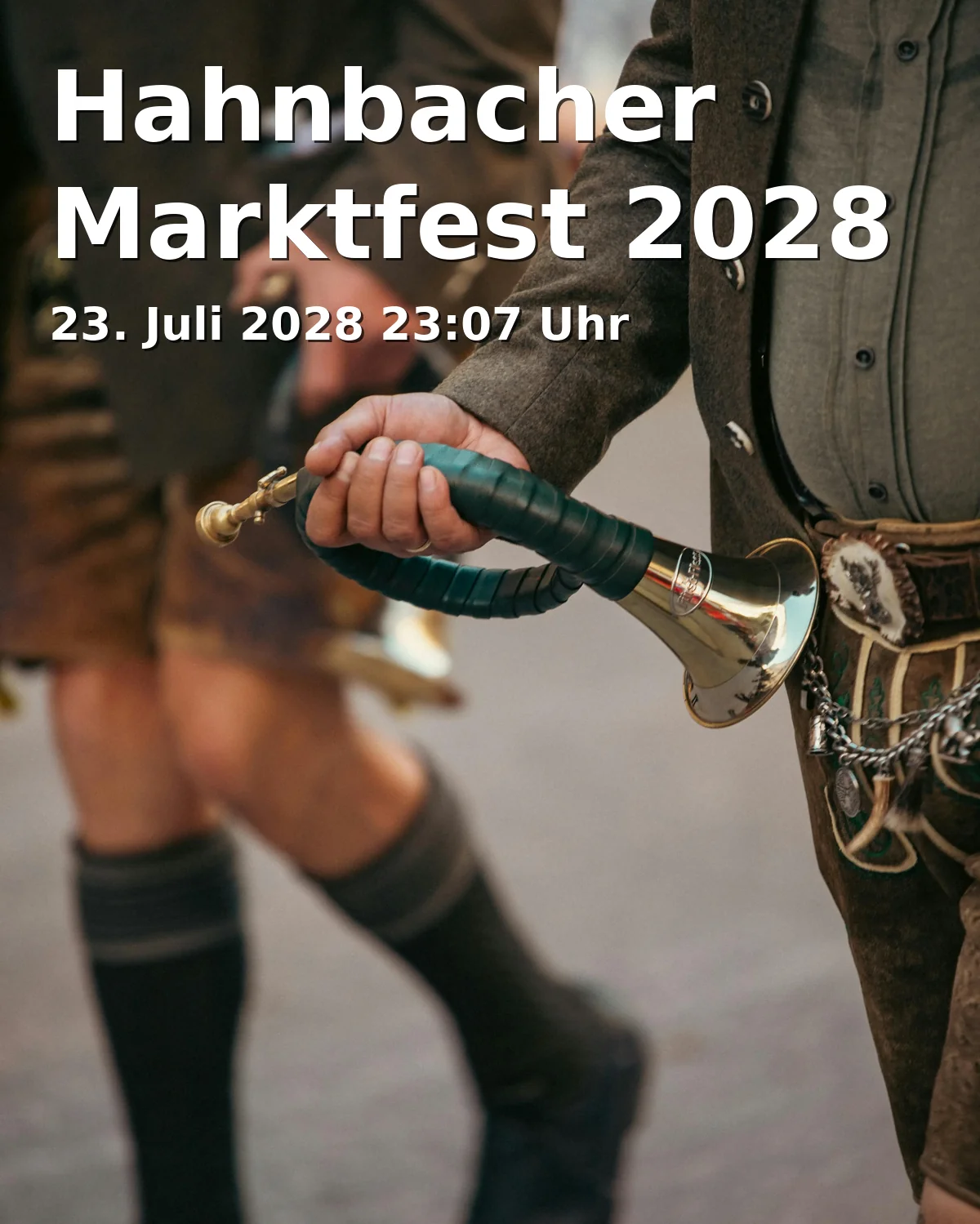
Hahnbacher Market Festival 2028
Jazzarise Conference in Hahnbach
Between Art Reception, Popular Culture and the Myth of Bavaria: Prechtl's Poster for the Exhibition The Isar – A Biography
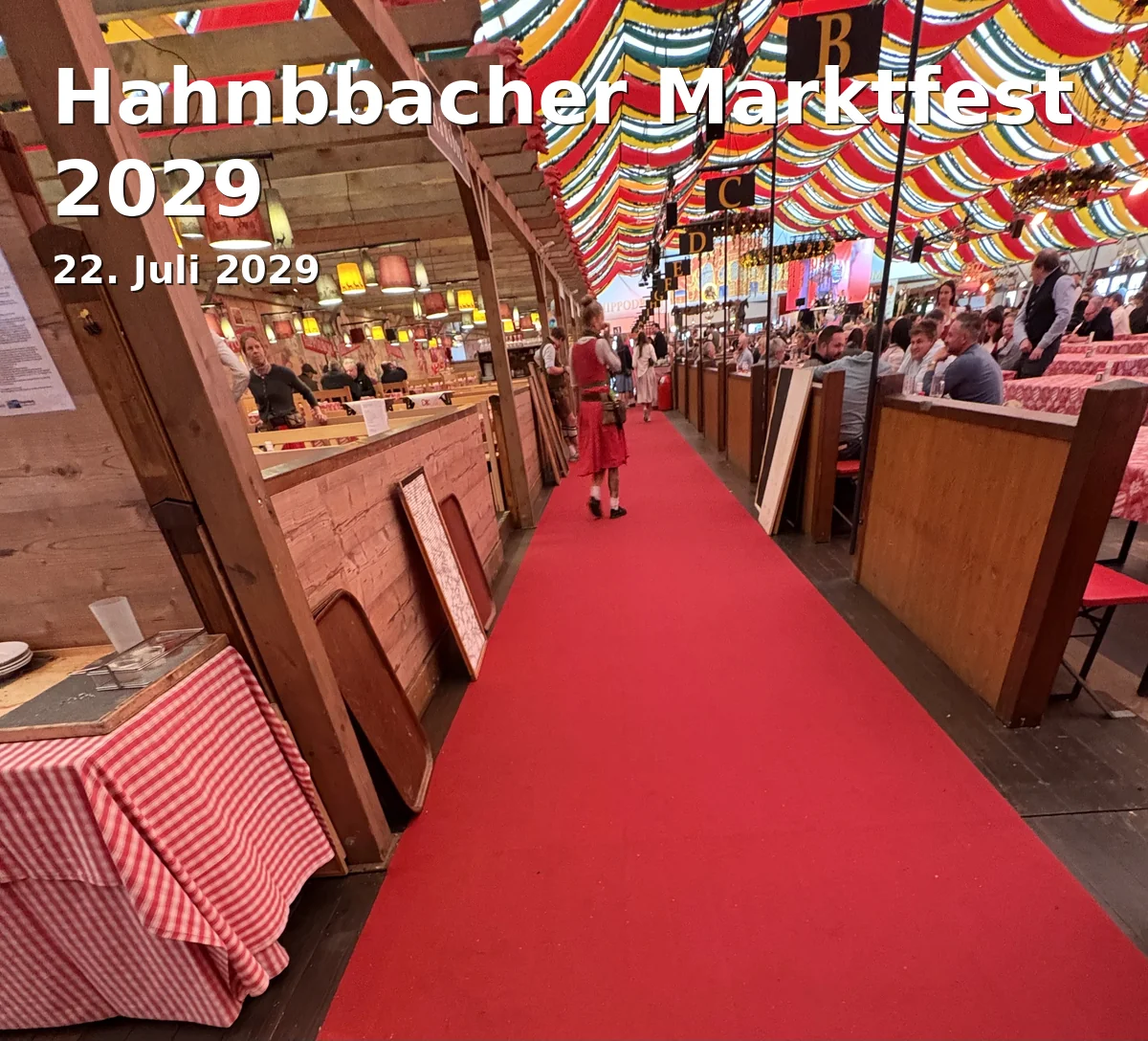
Hahnbacher Market Festival 2029
Rosenberger Nativity Trail in Hahnbach: Reflective Path through the Market Center
The Bakery Brothers in Hahnbach
Soon it will be holy night
Frequently Asked Questions
Reviews
No reviews found