
Seminargasse 2, Amberg
Seminargasse 2, 92224 Amberg, Germany
Maltesergarten Amberg | Parking & Sunday Serenades
The Maltesergarten in Amberg is one of those places that you don't seek out but quickly hold dear. In the middle of the old town lies a green space that unusually harmoniously combines history, tranquility, and culture. Today, it is a public retreat with fountains, green areas, and orchards, but its roots reach deep into the city's history. In the 17th and 18th centuries, the grounds belonged to the Amberg Jesuit College and were previously accessible only to a small circle. That this place can now be experienced as an open city garden is not a matter of course, but the result of a long development and civic responsibility. Therefore, those who visit the Maltesergarten experience not just a park, but a piece of Amberg's identity. Its central location makes it a brief but impactful pause between a stroll through the old town, appointments, city tours, or concert visits. Especially in summer, the place gains an additional dimension when the Sunday serenades transform the garden into a small open-air stage. It is precisely this mix of history, proximity to the city, and quiet atmosphere that makes the Maltesergarten one of the most charming green spaces in the Upper Palatinate. ([ostbayern-tourismus.de](https://www.ostbayern-tourismus.de/region/die-staedte-in-ostbayern/hidden-places/natur/maltesergarten-amberg))
History of the Maltesergarten in Amberg
The historical depth of the Maltesergarten is one of the main reasons why it is so valued in Amberg. The city side to the Malteser building explains that the complex was initially built by the Jesuits after the destructions and reconstructions of the 17th century: Between 1665 and 1669, the core was created, followed later by the gymnasium and congregation hall. After the dissolution of the Jesuit order in 1773, the complex came under the Bavarian tongue of the Order of Malta in 1782 and remained anchored in this environment until the secularization in 1808. For the garden, this means: It is not isolated but part of a developed historical ensemble that makes Amberg's history visible over centuries. The tourism site describes the area as a former garden surrounded by thick walls, which was once accessible only to monks. This closed use explains why the place still radiates a particularly protected, almost monastic character. The history becomes even more exciting in more recent times: The IG Menschengerechte Stadt reminds us that in the 1980s, a multi-story parking garage with eight levels and more than 240 parking spaces was planned here. A large-scale traffic solution was to be created on 1,800 square meters, but a citizens' initiative and residents fought against it with great commitment. In the end, the city decided to preserve the Maltesergarten as an inner-city recreational area. This development is still crucial for the perception of the place today, as it transforms a historical garden into a symbol of urban quality and civic will. Therefore, those who walk through the Maltesergarten today not only feel greenery but also the history of a successful preservation. ([amberg.de](https://amberg.de/kultourismus/heimat-tradition/bauten-denkmaeler/gebaeude/maltesergebaeude))
Sunday Serenades in the Maltesergarten
When music sounds in the Maltesergarten, the effect of the place noticeably changes. The city of Amberg describes the Sunday serenades as a traditional series where the small park becomes an open-air stage on Sunday evenings at 7 p.m. The musical spectrum explicitly ranges from brass bands to local folk bands, appealing to a broad audience that appreciates both classical brass music and sociable, regionally influenced formats. This openness fits excellently with the character of the place: The Maltesergarten is not a large, loud event space but a garden with atmosphere, where music does not dominate but integrates into the surroundings. Particularly attractive for visitors is the free admission. The city also emphasizes that the event is canceled in case of rain, which further underscores the open, summery character of the series. For the current season, the city announces the continuation starting in May or June 2026, so the Maltesergarten will again play an important role as a cultural meeting point this year. The combination of natural space and concert venue is valuable for the city brand Amberg because it shows that culture does not have to take place only in halls, theaters, or auditoriums. In the Maltesergarten, a completely different experience space is created: You hear music outdoors, sit or stand amidst a small park landscape, and experience the old town from a quieter perspective. This makes the Sunday serenades not just an event date but a summer feeling. Those wishing to visit Amberg will find here a place where music, leisure, and historical backdrop merge. ([amberg.de](https://amberg.de/sonntagsserenaden))
Fountains, Green Areas, and Orchards in the Maltesergarten
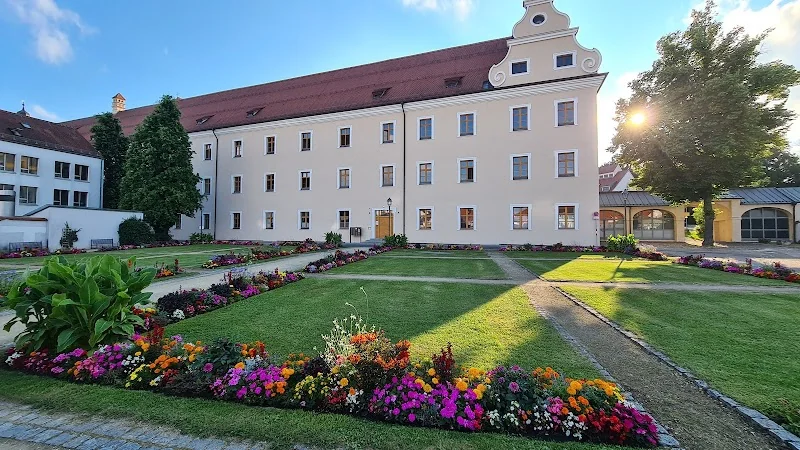
The Maltesergarten thrives not only on its history but especially on its present appearance as a green oasis. The official tourism description emphasizes the fountain, the expansive green areas, and the orchards as central features. These elements ensure that the garden does not appear as a mere leftover space in the city but as a deliberately designed place for relaxation. The fountain creates a calm focal point and gives the facility a classic, almost timeless structure. The open meadow areas, in turn, convey spaciousness, even though you are in the center. The orchards add a natural touch to this picture, which unfolds its effect especially in the bright months. In interplay, a place emerges that invites both short stays and small walks. The city and the tourism association describe the Maltesergarten as a place of peace, strength, and well-being, and that is exactly how you experience it: not as a loud park but as a quiet counterpart to the bustling old town. Its sheltered location behind walls further enhances this impression because the transition from the urban environment to the green inner world feels very immediate. Those who take a break here use the garden not only as a place to stay but also as a counter-movement to the pace of everyday life. Particularly for lunchtime or late afternoon, the park is well-suited because it shows its relaxed character most strongly during these moments. That the Maltesergarten is now publicly accessible and free is a clear gain for the city: It complements the historic center with a place where nature and deceleration stand directly next to culture and urbanity. It is precisely this balance that gives the facility its special charm. ([ostbayern-tourismus.de](https://www.ostbayern-tourismus.de/region/die-staedte-in-ostbayern/hidden-places/natur/maltesergarten-amberg))
Parking and Access in the Amberg Old Town
For many visitors, the question of parking is particularly important, and here the city of Amberg helps with a clear infrastructure. The Maltesergarten is located in the old town, an area where the city provides various parking options and digital payment systems. According to the official parking page, there are 13 disabled parking spaces in the Amberg old town, and designated motorcycle parking spaces are explicitly indicated in the city center, including Malteserplatz. This is especially useful for people who want to visit the old town center flexibly and briefly. In addition, the city offers cashless mobile parking throughout the entire old town area, either via app or SMS. Several parking zones are mentioned, such as Kräuterwiese, Ruoffstraße, Cineplex, Schießstättenweg, and Georg-Grammer-Straße. So, anyone wishing to visit the Maltesergarten can use the nearby old town infrastructure and conveniently combine their stay with a city stroll. The city also explains how SMS parking works: License plate and parking duration are sent to a short number, the ticket comes back digitally, and the control is carried out via the license plate. For visitors, this is practical because the entry into parking remains uncomplicated and no additional preparation with coins is necessary. Even though the official parking page does not mention the Maltesergarten itself as a parking area, it clearly shows that the old town is designed with visitor-friendliness in mind. This is exactly what makes the place so pleasant: You reach the historic garden in the middle of the city and at the same time find a functioning parking logistics in the immediate vicinity. Those who want to inform themselves in advance about free spaces or plan their arrival benefit from the city's parking overview and the clearly described zones. Especially during serenades or city festivals, this orientation is helpful because it keeps the paths short and stress-free. ([amberg.de](https://amberg.de/parken))
The Maltesergarten as a Place of Peace, Excursion Destination, and Part of the Cityscape
The true value of the Maltesergarten perhaps reveals itself most strongly in everyday life. The tourism site describes it as a hidden, green oasis of peace in the heart of the city, and this image captures the essence. The garden is not a place of grand gestures but one of subtle impressions: a protected space for brief interruptions, for conversations, for a slow stroll through the old town, or for a moment alone on the way through Amberg. Its current role as a public recreational area is closely linked to its history because the former closure of the site today translates into a special intimacy of the place. You can feel that this is not just a green space that has been created, but that historical substance, civic engagement, and urban use have been meaningfully connected. This connection makes the Maltesergarten a good example of contemporary urban development: A place that was once intended for other purposes was not built over but preserved as a space for the public. In interplay with the neighboring Malteser building, the old town paths, and the summer serenades, an ensemble emerges that allows visitors very different accesses. Those seeking culture will find concerts. Those seeking relaxation will find greenery. Those interested in urban history will find a vivid example of the change in use and significance. And those simply wandering through the old town will discover a pleasant contrast to the dense historical urban space. For this reason, the Maltesergarten is also excellent as a stopover: before an appointment, after a city stroll, before a concert, or simply as a short break in the green. In an old town that tells much with facades, alleys, and architectural history, this garden is the quiet but very effective complement. ([ostbayern-tourismus.de](https://www.ostbayern-tourismus.de/region/die-staedte-in-ostbayern/hidden-places/natur/maltesergarten-amberg))
Sources:
Mehr anzeigenWeniger anzeigen
Maltesergarten Amberg | Parking & Sunday Serenades
The Maltesergarten in Amberg is one of those places that you don't seek out but quickly hold dear. In the middle of the old town lies a green space that unusually harmoniously combines history, tranquility, and culture. Today, it is a public retreat with fountains, green areas, and orchards, but its roots reach deep into the city's history. In the 17th and 18th centuries, the grounds belonged to the Amberg Jesuit College and were previously accessible only to a small circle. That this place can now be experienced as an open city garden is not a matter of course, but the result of a long development and civic responsibility. Therefore, those who visit the Maltesergarten experience not just a park, but a piece of Amberg's identity. Its central location makes it a brief but impactful pause between a stroll through the old town, appointments, city tours, or concert visits. Especially in summer, the place gains an additional dimension when the Sunday serenades transform the garden into a small open-air stage. It is precisely this mix of history, proximity to the city, and quiet atmosphere that makes the Maltesergarten one of the most charming green spaces in the Upper Palatinate. ([ostbayern-tourismus.de](https://www.ostbayern-tourismus.de/region/die-staedte-in-ostbayern/hidden-places/natur/maltesergarten-amberg))
History of the Maltesergarten in Amberg
The historical depth of the Maltesergarten is one of the main reasons why it is so valued in Amberg. The city side to the Malteser building explains that the complex was initially built by the Jesuits after the destructions and reconstructions of the 17th century: Between 1665 and 1669, the core was created, followed later by the gymnasium and congregation hall. After the dissolution of the Jesuit order in 1773, the complex came under the Bavarian tongue of the Order of Malta in 1782 and remained anchored in this environment until the secularization in 1808. For the garden, this means: It is not isolated but part of a developed historical ensemble that makes Amberg's history visible over centuries. The tourism site describes the area as a former garden surrounded by thick walls, which was once accessible only to monks. This closed use explains why the place still radiates a particularly protected, almost monastic character. The history becomes even more exciting in more recent times: The IG Menschengerechte Stadt reminds us that in the 1980s, a multi-story parking garage with eight levels and more than 240 parking spaces was planned here. A large-scale traffic solution was to be created on 1,800 square meters, but a citizens' initiative and residents fought against it with great commitment. In the end, the city decided to preserve the Maltesergarten as an inner-city recreational area. This development is still crucial for the perception of the place today, as it transforms a historical garden into a symbol of urban quality and civic will. Therefore, those who walk through the Maltesergarten today not only feel greenery but also the history of a successful preservation. ([amberg.de](https://amberg.de/kultourismus/heimat-tradition/bauten-denkmaeler/gebaeude/maltesergebaeude))
Sunday Serenades in the Maltesergarten
When music sounds in the Maltesergarten, the effect of the place noticeably changes. The city of Amberg describes the Sunday serenades as a traditional series where the small park becomes an open-air stage on Sunday evenings at 7 p.m. The musical spectrum explicitly ranges from brass bands to local folk bands, appealing to a broad audience that appreciates both classical brass music and sociable, regionally influenced formats. This openness fits excellently with the character of the place: The Maltesergarten is not a large, loud event space but a garden with atmosphere, where music does not dominate but integrates into the surroundings. Particularly attractive for visitors is the free admission. The city also emphasizes that the event is canceled in case of rain, which further underscores the open, summery character of the series. For the current season, the city announces the continuation starting in May or June 2026, so the Maltesergarten will again play an important role as a cultural meeting point this year. The combination of natural space and concert venue is valuable for the city brand Amberg because it shows that culture does not have to take place only in halls, theaters, or auditoriums. In the Maltesergarten, a completely different experience space is created: You hear music outdoors, sit or stand amidst a small park landscape, and experience the old town from a quieter perspective. This makes the Sunday serenades not just an event date but a summer feeling. Those wishing to visit Amberg will find here a place where music, leisure, and historical backdrop merge. ([amberg.de](https://amberg.de/sonntagsserenaden))
Fountains, Green Areas, and Orchards in the Maltesergarten
The Maltesergarten thrives not only on its history but especially on its present appearance as a green oasis. The official tourism description emphasizes the fountain, the expansive green areas, and the orchards as central features. These elements ensure that the garden does not appear as a mere leftover space in the city but as a deliberately designed place for relaxation. The fountain creates a calm focal point and gives the facility a classic, almost timeless structure. The open meadow areas, in turn, convey spaciousness, even though you are in the center. The orchards add a natural touch to this picture, which unfolds its effect especially in the bright months. In interplay, a place emerges that invites both short stays and small walks. The city and the tourism association describe the Maltesergarten as a place of peace, strength, and well-being, and that is exactly how you experience it: not as a loud park but as a quiet counterpart to the bustling old town. Its sheltered location behind walls further enhances this impression because the transition from the urban environment to the green inner world feels very immediate. Those who take a break here use the garden not only as a place to stay but also as a counter-movement to the pace of everyday life. Particularly for lunchtime or late afternoon, the park is well-suited because it shows its relaxed character most strongly during these moments. That the Maltesergarten is now publicly accessible and free is a clear gain for the city: It complements the historic center with a place where nature and deceleration stand directly next to culture and urbanity. It is precisely this balance that gives the facility its special charm. ([ostbayern-tourismus.de](https://www.ostbayern-tourismus.de/region/die-staedte-in-ostbayern/hidden-places/natur/maltesergarten-amberg))
Parking and Access in the Amberg Old Town
For many visitors, the question of parking is particularly important, and here the city of Amberg helps with a clear infrastructure. The Maltesergarten is located in the old town, an area where the city provides various parking options and digital payment systems. According to the official parking page, there are 13 disabled parking spaces in the Amberg old town, and designated motorcycle parking spaces are explicitly indicated in the city center, including Malteserplatz. This is especially useful for people who want to visit the old town center flexibly and briefly. In addition, the city offers cashless mobile parking throughout the entire old town area, either via app or SMS. Several parking zones are mentioned, such as Kräuterwiese, Ruoffstraße, Cineplex, Schießstättenweg, and Georg-Grammer-Straße. So, anyone wishing to visit the Maltesergarten can use the nearby old town infrastructure and conveniently combine their stay with a city stroll. The city also explains how SMS parking works: License plate and parking duration are sent to a short number, the ticket comes back digitally, and the control is carried out via the license plate. For visitors, this is practical because the entry into parking remains uncomplicated and no additional preparation with coins is necessary. Even though the official parking page does not mention the Maltesergarten itself as a parking area, it clearly shows that the old town is designed with visitor-friendliness in mind. This is exactly what makes the place so pleasant: You reach the historic garden in the middle of the city and at the same time find a functioning parking logistics in the immediate vicinity. Those who want to inform themselves in advance about free spaces or plan their arrival benefit from the city's parking overview and the clearly described zones. Especially during serenades or city festivals, this orientation is helpful because it keeps the paths short and stress-free. ([amberg.de](https://amberg.de/parken))
The Maltesergarten as a Place of Peace, Excursion Destination, and Part of the Cityscape
The true value of the Maltesergarten perhaps reveals itself most strongly in everyday life. The tourism site describes it as a hidden, green oasis of peace in the heart of the city, and this image captures the essence. The garden is not a place of grand gestures but one of subtle impressions: a protected space for brief interruptions, for conversations, for a slow stroll through the old town, or for a moment alone on the way through Amberg. Its current role as a public recreational area is closely linked to its history because the former closure of the site today translates into a special intimacy of the place. You can feel that this is not just a green space that has been created, but that historical substance, civic engagement, and urban use have been meaningfully connected. This connection makes the Maltesergarten a good example of contemporary urban development: A place that was once intended for other purposes was not built over but preserved as a space for the public. In interplay with the neighboring Malteser building, the old town paths, and the summer serenades, an ensemble emerges that allows visitors very different accesses. Those seeking culture will find concerts. Those seeking relaxation will find greenery. Those interested in urban history will find a vivid example of the change in use and significance. And those simply wandering through the old town will discover a pleasant contrast to the dense historical urban space. For this reason, the Maltesergarten is also excellent as a stopover: before an appointment, after a city stroll, before a concert, or simply as a short break in the green. In an old town that tells much with facades, alleys, and architectural history, this garden is the quiet but very effective complement. ([ostbayern-tourismus.de](https://www.ostbayern-tourismus.de/region/die-staedte-in-ostbayern/hidden-places/natur/maltesergarten-amberg))
Sources:
Maltesergarten Amberg | Parking & Sunday Serenades
The Maltesergarten in Amberg is one of those places that you don't seek out but quickly hold dear. In the middle of the old town lies a green space that unusually harmoniously combines history, tranquility, and culture. Today, it is a public retreat with fountains, green areas, and orchards, but its roots reach deep into the city's history. In the 17th and 18th centuries, the grounds belonged to the Amberg Jesuit College and were previously accessible only to a small circle. That this place can now be experienced as an open city garden is not a matter of course, but the result of a long development and civic responsibility. Therefore, those who visit the Maltesergarten experience not just a park, but a piece of Amberg's identity. Its central location makes it a brief but impactful pause between a stroll through the old town, appointments, city tours, or concert visits. Especially in summer, the place gains an additional dimension when the Sunday serenades transform the garden into a small open-air stage. It is precisely this mix of history, proximity to the city, and quiet atmosphere that makes the Maltesergarten one of the most charming green spaces in the Upper Palatinate. ([ostbayern-tourismus.de](https://www.ostbayern-tourismus.de/region/die-staedte-in-ostbayern/hidden-places/natur/maltesergarten-amberg))
History of the Maltesergarten in Amberg
The historical depth of the Maltesergarten is one of the main reasons why it is so valued in Amberg. The city side to the Malteser building explains that the complex was initially built by the Jesuits after the destructions and reconstructions of the 17th century: Between 1665 and 1669, the core was created, followed later by the gymnasium and congregation hall. After the dissolution of the Jesuit order in 1773, the complex came under the Bavarian tongue of the Order of Malta in 1782 and remained anchored in this environment until the secularization in 1808. For the garden, this means: It is not isolated but part of a developed historical ensemble that makes Amberg's history visible over centuries. The tourism site describes the area as a former garden surrounded by thick walls, which was once accessible only to monks. This closed use explains why the place still radiates a particularly protected, almost monastic character. The history becomes even more exciting in more recent times: The IG Menschengerechte Stadt reminds us that in the 1980s, a multi-story parking garage with eight levels and more than 240 parking spaces was planned here. A large-scale traffic solution was to be created on 1,800 square meters, but a citizens' initiative and residents fought against it with great commitment. In the end, the city decided to preserve the Maltesergarten as an inner-city recreational area. This development is still crucial for the perception of the place today, as it transforms a historical garden into a symbol of urban quality and civic will. Therefore, those who walk through the Maltesergarten today not only feel greenery but also the history of a successful preservation. ([amberg.de](https://amberg.de/kultourismus/heimat-tradition/bauten-denkmaeler/gebaeude/maltesergebaeude))
Sunday Serenades in the Maltesergarten
When music sounds in the Maltesergarten, the effect of the place noticeably changes. The city of Amberg describes the Sunday serenades as a traditional series where the small park becomes an open-air stage on Sunday evenings at 7 p.m. The musical spectrum explicitly ranges from brass bands to local folk bands, appealing to a broad audience that appreciates both classical brass music and sociable, regionally influenced formats. This openness fits excellently with the character of the place: The Maltesergarten is not a large, loud event space but a garden with atmosphere, where music does not dominate but integrates into the surroundings. Particularly attractive for visitors is the free admission. The city also emphasizes that the event is canceled in case of rain, which further underscores the open, summery character of the series. For the current season, the city announces the continuation starting in May or June 2026, so the Maltesergarten will again play an important role as a cultural meeting point this year. The combination of natural space and concert venue is valuable for the city brand Amberg because it shows that culture does not have to take place only in halls, theaters, or auditoriums. In the Maltesergarten, a completely different experience space is created: You hear music outdoors, sit or stand amidst a small park landscape, and experience the old town from a quieter perspective. This makes the Sunday serenades not just an event date but a summer feeling. Those wishing to visit Amberg will find here a place where music, leisure, and historical backdrop merge. ([amberg.de](https://amberg.de/sonntagsserenaden))
Fountains, Green Areas, and Orchards in the Maltesergarten
The Maltesergarten thrives not only on its history but especially on its present appearance as a green oasis. The official tourism description emphasizes the fountain, the expansive green areas, and the orchards as central features. These elements ensure that the garden does not appear as a mere leftover space in the city but as a deliberately designed place for relaxation. The fountain creates a calm focal point and gives the facility a classic, almost timeless structure. The open meadow areas, in turn, convey spaciousness, even though you are in the center. The orchards add a natural touch to this picture, which unfolds its effect especially in the bright months. In interplay, a place emerges that invites both short stays and small walks. The city and the tourism association describe the Maltesergarten as a place of peace, strength, and well-being, and that is exactly how you experience it: not as a loud park but as a quiet counterpart to the bustling old town. Its sheltered location behind walls further enhances this impression because the transition from the urban environment to the green inner world feels very immediate. Those who take a break here use the garden not only as a place to stay but also as a counter-movement to the pace of everyday life. Particularly for lunchtime or late afternoon, the park is well-suited because it shows its relaxed character most strongly during these moments. That the Maltesergarten is now publicly accessible and free is a clear gain for the city: It complements the historic center with a place where nature and deceleration stand directly next to culture and urbanity. It is precisely this balance that gives the facility its special charm. ([ostbayern-tourismus.de](https://www.ostbayern-tourismus.de/region/die-staedte-in-ostbayern/hidden-places/natur/maltesergarten-amberg))
Parking and Access in the Amberg Old Town
For many visitors, the question of parking is particularly important, and here the city of Amberg helps with a clear infrastructure. The Maltesergarten is located in the old town, an area where the city provides various parking options and digital payment systems. According to the official parking page, there are 13 disabled parking spaces in the Amberg old town, and designated motorcycle parking spaces are explicitly indicated in the city center, including Malteserplatz. This is especially useful for people who want to visit the old town center flexibly and briefly. In addition, the city offers cashless mobile parking throughout the entire old town area, either via app or SMS. Several parking zones are mentioned, such as Kräuterwiese, Ruoffstraße, Cineplex, Schießstättenweg, and Georg-Grammer-Straße. So, anyone wishing to visit the Maltesergarten can use the nearby old town infrastructure and conveniently combine their stay with a city stroll. The city also explains how SMS parking works: License plate and parking duration are sent to a short number, the ticket comes back digitally, and the control is carried out via the license plate. For visitors, this is practical because the entry into parking remains uncomplicated and no additional preparation with coins is necessary. Even though the official parking page does not mention the Maltesergarten itself as a parking area, it clearly shows that the old town is designed with visitor-friendliness in mind. This is exactly what makes the place so pleasant: You reach the historic garden in the middle of the city and at the same time find a functioning parking logistics in the immediate vicinity. Those who want to inform themselves in advance about free spaces or plan their arrival benefit from the city's parking overview and the clearly described zones. Especially during serenades or city festivals, this orientation is helpful because it keeps the paths short and stress-free. ([amberg.de](https://amberg.de/parken))
The Maltesergarten as a Place of Peace, Excursion Destination, and Part of the Cityscape
The true value of the Maltesergarten perhaps reveals itself most strongly in everyday life. The tourism site describes it as a hidden, green oasis of peace in the heart of the city, and this image captures the essence. The garden is not a place of grand gestures but one of subtle impressions: a protected space for brief interruptions, for conversations, for a slow stroll through the old town, or for a moment alone on the way through Amberg. Its current role as a public recreational area is closely linked to its history because the former closure of the site today translates into a special intimacy of the place. You can feel that this is not just a green space that has been created, but that historical substance, civic engagement, and urban use have been meaningfully connected. This connection makes the Maltesergarten a good example of contemporary urban development: A place that was once intended for other purposes was not built over but preserved as a space for the public. In interplay with the neighboring Malteser building, the old town paths, and the summer serenades, an ensemble emerges that allows visitors very different accesses. Those seeking culture will find concerts. Those seeking relaxation will find greenery. Those interested in urban history will find a vivid example of the change in use and significance. And those simply wandering through the old town will discover a pleasant contrast to the dense historical urban space. For this reason, the Maltesergarten is also excellent as a stopover: before an appointment, after a city stroll, before a concert, or simply as a short break in the green. In an old town that tells much with facades, alleys, and architectural history, this garden is the quiet but very effective complement. ([ostbayern-tourismus.de](https://www.ostbayern-tourismus.de/region/die-staedte-in-ostbayern/hidden-places/natur/maltesergarten-amberg))
Sources:
Upcoming Events

Andreas Königsberger and His Musicians at the Sunday Serenades
Brass music in the green: Andreas Königsberger and his musicians play in Amberg in the Maltesergarten. Free admission, summer evening, and open-air feeling. #Amberg #BrassMusic #Live

Amberg Dance Pavilion in Maltesergarten 2026
Amberg dances in the green: Maltesergarten will become an open summer stage on 25.08.2026. Free, lively, and full of dance culture. #Amberg #DancePavilion
Frequently Asked Questions
Reviews
Alex Bransby
9. May 2022
Pretty garden in the old town, about 10 mins walk from the cathedral. Worth a stop by to admire the flowers especially in spring when the plants are in full bloom!
Neda Mohammadi
22. April 2025
Nice garden near the city center!
Chris Ricks
24. April 2023
Excellent food and great atmosphere.
Dom S
13. June 2018
A small garden, became alive during Alstadt fest with Greek and Turkish food stand.
David Mack
20. June 2017
Greenest spot in the old city, and great sunsets.