
Vilseck
92249 Vilseck, Deutschland
Art Path Vilsaue | Land Art & Tour
The Art Path Vilsaue in Vilseck is not a classic exhibition behind glass, but an open walk through landscape, city history, and contemporary sculpture. Those who walk here experience art directly by the water, embedded in the Vilsauen and right next to the old town. The city describes the area as the green heart of Vilseck; at the same time, visits are possible at any time and are complemented by guided tours. This mixture is what makes it appealing: The place is neither purely museum-like nor just a walking path, but a cultural-historical open space where nature, historical references, and artistic interventions intertwine. Seating ships, seating stones, wooden benches, a viewing platform in the reeds, a natural Kneipp basin, a fitness course, and a pavilion with a barbecue area and toilets provide a high quality of stay for the area. Thus, the Art Path is suitable not only for art enthusiasts but also for families, walkers, cyclists, and day visitors who want to get to know Vilseck in a relaxed and yet content-rich way. ([vilseck.de](https://www.vilseck.de/kunstpfad.php))
Art Path Vilsaue: What makes this walk in Vilseck so special
The special aspect of the Art Path Vilsaue is the close connection between place and message. The city of Vilseck explicitly links the Art Path with the Golden Road, that is, the historical trade route between Nuremberg and Prague, which also passed through Vilseck in the High Middle Ages. According to official representation, this route not only served as a transport route but also as a cultural connection: Travelers brought customs, traditions, art, and crafts, and these influences are still palpable in Vilseck today. The Art Path takes up exactly this idea and translates it into land art and sculpture. It makes history visible not through signs or showcases but through forms, materials, and the dialogue with the landscape. This creates a walk that functions both aesthetically and narratively: One does not only see art, but walks through a spatial concept that intertwines historical paths, river landscapes, and regional identity. ([vilseck.de](https://www.vilseck.de/kunstpfad.php))
The location also contributes to the special effect. The Art Path is located on a section of the old network of paths between Vils and Burg Dagestein and borders directly on the old town of Vilseck. This is practical for visitors because the walk can be combined with a visit to the historic city center, the castle, and other attractions. At the same time, the experience remains calm and close to nature, as the Vilsaue is not a hectic urban space but a wide green belt with water, reeds, meadows, and paths. The official text points out that one can already discover the first artwork in the tower garden through the city wall at the end of Herrengasse. This slow approach creates tension: first the old town, then the transition into the green, then the art as a surprising accent in the landscape. For a location like Vilseck, this is remarkable because the Art Path does not function as an isolated attraction but as part of an urban overall experience. ([vilseck.de](https://www.vilseck.de/kunstpfad.php))
Moreover, the Art Path does not only go back to a single event but to several artistic phases. In 2015, six international artists created works during a symposium under the motto “The Golden Road – Artists Interpret Historical Paths.” In 2019, additional works were added, developed by four female artists as part of Bavarian-Czech cooperation. The Art Path is thus a grown project, not a static individual object. Its significance lies not only in the final result but also in the process: international cooperation, land art workshops, cross-border cultural work, and the conscious integration of the local landscape. For visitors, this means that they are on a walk that brings together European connections, regional memory, and modern art forms in a single route. ([vilseck.de](https://www.vilseck.de/kunstpfad.php))
Golden Road and City History: The Origin of the Art Path
The historical basis of the Art Path is the Golden Road. According to official representation, Vilseck was connected to this trade route in the High Middle Ages due to large iron ore deposits and local smelting. The Golden Road connected Nuremberg and Prague and was not only economically significant during the time of Emperor Charles IV but also culturally formative. This is exactly where the Art Path draws its content depth. The city of Vilseck makes it clear that the influence of travelers on customs, traditions, art, and crafts is still palpable today. The Art Path does not try to illustrate history but to further develop the idea of a connecting route. The artworks remind us of movement, exchange, permeability, and transformation. This conceptual level is central because it transforms the place from a beautiful river landscape into a cultural memory space. ([vilseck.de](https://www.vilseck.de/kunstpfad.php))
The artistic implementation began in 2015 with an international symposium. Six artists developed works from stone, metal, and wood from July 6 to 19, 2015. The project was under the motto of artistically interpreting historical paths and gained regional attention through collaboration with Pilsen, European Capital of Culture 2015. In 2019, the Art Path was supplemented with additional works: Four female artists developed artworks from metal, PET, and wood from June 17 to 30. This second phase was part of a three-year project with partners from Klatovy/Klenová, Schönsee, Pilsen, and Vilseck and was supported by the European Regional Development Fund as well as by Bavaria and the Czech Republic. For visitors, this is important because the installation does not appear as a one-time art import but as an ongoing project that makes the place, the region, and cross-border cooperation visible. ([vilseck.de](https://www.vilseck.de/kunstpfad.php))
Especially in Vilseck, this development is understandable because the Vilsaue itself has already been upgraded as a public, landscape, and social space. The Art Path was not placed on a bare meadow but integrated into an environment shaped by hydraulic, ecological, and recreational measures. This also explains why the place appears so harmonious: The sculptures do not stand isolated but in an area that is already intended as a local recreation area, a place to linger, and a connecting space between city and river. The historical idea of the Golden Road meets a modern understanding of public space here. The result is a place where cultural memory, ecological design, and local identity reinforce each other. ([vilseck.de](https://www.vilseck.de/kunstpfad.php))
Land Art and Sculptures: The Most Important Artworks in the Vilsaue
Those who really want to understand the Art Path should view the works as narratives in material form. A particularly striking example is Message in a Bottle by Herta Wimmer-Knorr. The sculpture consists of metal, light-permeable PET bottles, and a solar lamp that illuminates the object from within at night. Thematically, the work stands for passing on, movement, and responsibility: the message in a bottle symbolically floats over the Vils, Naab, and Danube to the Black Sea and points out that PET is not waste but a recyclable raw material. Similarly complex is Diver by Hanna Regina Uber. The painted oak wood sculpture deals with protection and confinement as well as the question of who we are behind the facade we show outwardly. Both works show that the Art Path does not work decoratively but engages with themes such as change, material cycles, identity, and crossing borders. ([vilseck.de](https://www.vilseck.de/kunstpfad.php))
Quercus & Tilia and Elm also represent this thematic density. In Quercus & Tilia, the artist refers to the Golden Road that passed through Vilseck and connected Europe; the work thus continues the historical connection in an open wooden form. The Elm, in turn, transforms an entire tree body into a condensed form that is embraced by an arborist rope and simultaneously reminds of a threatened, almost extinct shrub. Additionally, Uprooted Vertical I Fallen Vertical, an installation of two steel masts, one standing and the other lying on the ground. The contrast between living forest stock and dead tree torsos becomes the visible image of a changing landscape. What is particularly striking is that the works use different materials but speak a common language: wood, metal, PET, and steel become carriers of landscape memory, ecological reflection, and cultural symbolism. ([vilseck.de](https://www.vilseck.de/kunstpfad.php))
Other notable works include Salt Transport on the Golden Road, River Spirits, Courage, and Fish. Salt Transport shows a salt cart that has strayed off the historical trade route, collapsed under the load, and sank into the mud. The work makes the hardships of transport and the dangers of historical journeys palpable. River Spirits by Stefan Link consists of oak trunks and recalls with fish heads, insects, and quirky figures the mythical creatures from the legends surrounding the Golden Road. Courage by Erwin Regler rises as a scrap metal sculpture into the sky and is read as a symbol of courage and the rising city of Vilseck; the material mainly comes from military scrap from the training area and shows some clear bullet holes. Finally, the fish made of Jura limestone lies near Burg Dagestein on a gravel bank at the shore of the Vils and addresses transience, flooding, and the course of things. Together, these works create a walk that is both visually striking and conceptually coherent. ([vilseck.de](https://www.vilseck.de/kunstpfad.php))
The choice of materials is by no means random. Metal stands for resistance, memory, and transformative power. Wood brings closeness, warmth, and organic form to the walk. PET refers to recycling and sustainability. Jura limestone and quartz sand bring the geology of the region into the picture. Especially in the open landscape of the Vilsaue, these materials create an exciting dialogue with light, water, reeds, and seasons. In sunlight, the sculptures appear clear and present, while in clouds or fog they seem still and almost archaeological, while evening light and the solar lamp of the message in a bottle evoke different moods. The artworks therefore function not only as individual stations but as changing perspectives in a landscape that reveals itself anew with weather, time of day, and perspective. ([vilseck.de](https://www.vilseck.de/kunstpfad.php))
Vilsaue as a Green Oasis: Nature, Water, Seating, and Leisure
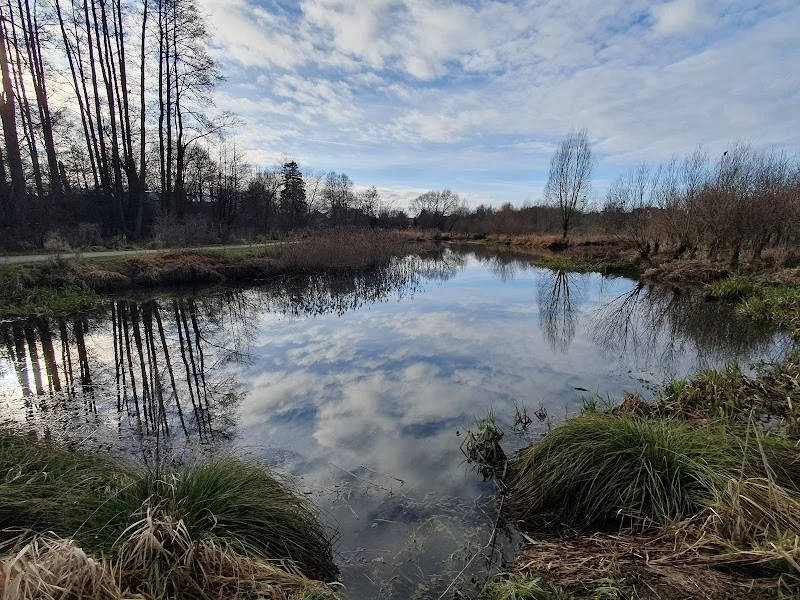
The Vilsaue is more than the backdrop of the Art Path. The city of Vilseck describes it as the green heart of the city, directly adjacent to the old town. The area is a wide green belt with watercourses, shore zones, reeds, and open meadows. It is particularly important that the Vilsaue has been designed not only as a natural space but also as a place to stay. Seating ships, seating stones, and wooden benches invite you to linger, a viewing platform leads into the reeds, there is a natural Kneipp basin at the castle spring, as well as a fitness course and a pavilion with a barbecue area, fire pit, and public toilets. For visitors, this creates a rare combination: Art Path, local recreation, and family space in a compact, walkable environment. The Art Path benefits from this because the sculptures are not limited to a pure transit route but are located in places where one actually stays, looks, and takes time. ([vilseck.de](https://www.vilseck.de/kunstpfad.php))
From the perspective of ecological development, the place is also interesting. According to the Bavarian State Office for the Environment, the measure is close to settlements; the Vilsauen are located northwest of the city center. The upgraded water section is 1.4 kilometers long and was developed between 2009 and 2016, with construction time from 2013 to 2015. The documents mention shallow water areas, shore-adjacent footpaths, seating stones at the shore, a viewing platform in the reed area, as well as the pavilion with barbecue area, the Art Path, and the fitness course as central elements. These details show that the Vilsaue has been consciously designed as a local recreation area. For visitors, this means: One does not only walk from work to work here but through a space that has also been hydraulically and landscape-ecologically upgraded. This enhances the impact of the art because the environment itself is part of the overall experience. ([lfu.bayern.de](https://www.lfu.bayern.de/wasser/freizeit_erholung/erlebnisse_schaffen/praxisbeispiele_sf/doc/vils_steckbrief-ua.pdf))
That is precisely why the Art Path Vilsaue is suitable for slow visits. Those who only have a short time can target individual sculptures and enjoy the view of Vils, reeds, and the old town. Those who stay longer can combine the walk with a break by the water, a small refreshment in the natural Kneipp basin, or a stay in the pavilion. This versatility is a strong argument for the location. The place functions in the everyday life of the city, in the leisure time of families, and also as a destination for guests who do not want to separate culture from outdoor activities. In many places, artworks stand isolated; here they are part of an infrastructure that explicitly considers staying. This results in a pleasant rhythm of walking, looking, lingering, and moving on, making the Art Path attractive for repeated visits. ([vilseck.de](https://www.vilseck.de/kunstpfad.php))
Guided Tours of the Art Path in the Vilsaue: Meeting Point, Duration, and Fees
Those who do not want to explore the Art Path alone can book an official guided tour. On the city's guiding page, “Art Path in the Vilsaue” is listed as a bookable tour. The duration is 1 hour, led by Adolfine Nitschke, and the meeting point is the town hall. The fee is stated as 55 euros per group; additionally, the city mentions 4 euros for adults, 3 euros for students, and free admission for children up to 6 years. For visitors, this information is particularly practical because the Art Path can thus also be planned as an organized program point. Those traveling with a group not only receive a route but also the cultural-historical background. Especially in a place that refers to historical paths, cross-border cooperation, and the symbolism of the Golden Road, a guided tour can help to better understand the many layers of the project. ([vilseck.de](https://vilseck.de/fuehrungen.php))
The official short description of the tour states that one enjoys “Art by the Water” during a walk through the Vils landscape. This is accurate because the route does not just string together individual objects but conveys a coherent impression of landscape, river, and sculpture. In addition, the city emphasizes on the Art Path page that a visit is possible at any time. This means: One is not dependent on a guided tour and can also spontaneously explore the walk. For many guests, this openness is an advantage. Those who are out and about without an appointment can freely visit the area; those who want more background can book the tour. This dual usability makes the offer flexible. It fits both short city visits and consciously planned excursions or club trips. ([vilseck.de](https://www.vilseck.de/kunstpfad.php))
Additionally, there is an important practical point: The entrance to the Art Path is not difficult to find. The city describes that one goes through the city wall at the end of Herrengasse and already discovers the first artwork in the tower garden. Right there, the experience begins with a striking transition from the old town to the floodplain area. Those visiting Vilseck can therefore easily combine the Art Path with a historical city tour. Furthermore, the city refers to the overview plan of the Vilsaue, which visually facilitates the walk. From this information, it can be inferred that the Art Path is also easily usable for first-time visitors: The entrance is urbanly connected, the path is designed as a circular walk, and the landscape itself provides orientation. ([vilseck.de](https://www.vilseck.de/kunstpfad.php))
From the Old Town to Burg Dagestein: How to Ideally Combine the Visit
The Art Path Vilsaue gains additional attractiveness because it is located in the midst of the historical environment of Vilseck. The city points out the proximity to the old town, and on the hiking trails page, it becomes clear that the path runs in the area of the tower garden, just behind the historic city gate tower in Herrengasse. There stands the first artwork made of metal named Courage. In the further course, one reaches the fitness course, the bridge over the Altmühlbach, and the natural Kneipp basin before coming to the bridge over the Vils and seeing River Spirits there. This description shows how closely the Art Path is linked to the local network of paths. For visitors, this means: A walk through the Vilsaue is not just an art visit but also a good introduction to the topography of Vilseck. The old town, river, castle, and green space are in immediate proximity and can be easily combined. ([vilseck.de](https://www.vilseck.de/wanderwege.php))
Burg Dagestein also plays an important role in this. The official Art Path page explicitly names it as a reference point of the old network of paths between Vils and Burg Dagestein, and the hiking trails page mentions Burg Dagestein as well as the First German Tower Museum as attractions. This makes the Art Path part of a larger cultural context. Therefore, those arriving in Vilseck can connect several levels in one day: the historic old town, the castle complex, the Art Path, and the stay in the Vilsaue. This is particularly valuable for travelers who are not just looking for a single attraction but want to experience a cohesive local image. The Art Path serves as a connecting element between architectural culture and nature, between city wall and river, between museum and walking path. ([vilseck.de](https://www.vilseck.de/kunstpfad.php))
Another advantage is the good integration into local circular paths. On the hiking trails page, the Art Path is mentioned in connection with the Hammergutweg. It states that the hiker passes the tower garden just behind the historic city gate tower, sees the artwork Courage, and later encounters River Spirits when crossing the Vils. This makes the Art Path part of a larger hiking experience of about 14 kilometers starting from Vilseck Market Square. So, for those who want to see not only the sculptures but also actively experience the surroundings, this offers a good combination of cultural hiking and nature trail. For a day trip, this is ideal because one can use the Art Path both as a standalone walk and as part of a longer route. ([vilseck.de](https://www.vilseck.de/wanderwege.php))
In the end, what remains is the impression of a place that fulfills multiple expectations simultaneously. The Art Path Vilsaue is calm enough for a relaxed walk, rich enough in content for culture-interested visitors, and attractive enough in landscape for families, photographers, and hikers. The historical narrative of the Golden Road, the contemporary artworks, and the designed floodplain landscape fit together unusually well here. Therefore, those visiting Vilseck should not limit themselves to a quick passage but take time for the interplay of art, water, old town, and castle. This is exactly where the quality of this place lies: It does not appear loud but sustainable. And precisely for this reason, it remains in memory. ([vilseck.de](https://www.vilseck.de/kunstpfad.php))
FAQ about the Art Path Vilsaue in Vilseck
The Art Path Vilsaue is often searched with topics such as location, guided tours, artworks, and connection to the old town. This fits well with a place that is freely accessible on the one hand and pursues a clear historical and design idea on the other. Those who visit the path do not experience a random collection of sculptures but a consciously developed cultural space. The combination of the Golden Road, Vils landscape, international art, and local recreation makes the location particularly diverse. For planning, it is helpful that the most important facts are clearly stated on the city's Art Path page and on the guided tours page. These include visiting hours, meeting point, duration of the tour, and the integration into the Vilsaue as a public green space. ([vilseck.de](https://www.vilseck.de/kunstpfad.php))
The most common visitor questions usually revolve around three things: Where does the walk begin? What artworks can be seen? And how can the visit be incorporated into a day trip? The answers to these questions can be directly derived from the official information. The entrance via Herrengasse, the transition through the city wall, and the proximity to Burg Dagestein make the walk easily accessible. The artworks themselves range from Message in a Bottle to Diver to Courage and River Spirits. And the surroundings offer enough space to stay with seating areas, Kneipp basin, pavilion, and green zones. Thus, the Art Path is not only a destination for art lovers but a versatile place for very different visitor groups. ([vilseck.de](https://www.vilseck.de/kunstpfad.php))
Sources:
Mehr anzeigenWeniger anzeigen
Art Path Vilsaue | Land Art & Tour
The Art Path Vilsaue in Vilseck is not a classic exhibition behind glass, but an open walk through landscape, city history, and contemporary sculpture. Those who walk here experience art directly by the water, embedded in the Vilsauen and right next to the old town. The city describes the area as the green heart of Vilseck; at the same time, visits are possible at any time and are complemented by guided tours. This mixture is what makes it appealing: The place is neither purely museum-like nor just a walking path, but a cultural-historical open space where nature, historical references, and artistic interventions intertwine. Seating ships, seating stones, wooden benches, a viewing platform in the reeds, a natural Kneipp basin, a fitness course, and a pavilion with a barbecue area and toilets provide a high quality of stay for the area. Thus, the Art Path is suitable not only for art enthusiasts but also for families, walkers, cyclists, and day visitors who want to get to know Vilseck in a relaxed and yet content-rich way. ([vilseck.de](https://www.vilseck.de/kunstpfad.php))
Art Path Vilsaue: What makes this walk in Vilseck so special
The special aspect of the Art Path Vilsaue is the close connection between place and message. The city of Vilseck explicitly links the Art Path with the Golden Road, that is, the historical trade route between Nuremberg and Prague, which also passed through Vilseck in the High Middle Ages. According to official representation, this route not only served as a transport route but also as a cultural connection: Travelers brought customs, traditions, art, and crafts, and these influences are still palpable in Vilseck today. The Art Path takes up exactly this idea and translates it into land art and sculpture. It makes history visible not through signs or showcases but through forms, materials, and the dialogue with the landscape. This creates a walk that functions both aesthetically and narratively: One does not only see art, but walks through a spatial concept that intertwines historical paths, river landscapes, and regional identity. ([vilseck.de](https://www.vilseck.de/kunstpfad.php))
The location also contributes to the special effect. The Art Path is located on a section of the old network of paths between Vils and Burg Dagestein and borders directly on the old town of Vilseck. This is practical for visitors because the walk can be combined with a visit to the historic city center, the castle, and other attractions. At the same time, the experience remains calm and close to nature, as the Vilsaue is not a hectic urban space but a wide green belt with water, reeds, meadows, and paths. The official text points out that one can already discover the first artwork in the tower garden through the city wall at the end of Herrengasse. This slow approach creates tension: first the old town, then the transition into the green, then the art as a surprising accent in the landscape. For a location like Vilseck, this is remarkable because the Art Path does not function as an isolated attraction but as part of an urban overall experience. ([vilseck.de](https://www.vilseck.de/kunstpfad.php))
Moreover, the Art Path does not only go back to a single event but to several artistic phases. In 2015, six international artists created works during a symposium under the motto “The Golden Road – Artists Interpret Historical Paths.” In 2019, additional works were added, developed by four female artists as part of Bavarian-Czech cooperation. The Art Path is thus a grown project, not a static individual object. Its significance lies not only in the final result but also in the process: international cooperation, land art workshops, cross-border cultural work, and the conscious integration of the local landscape. For visitors, this means that they are on a walk that brings together European connections, regional memory, and modern art forms in a single route. ([vilseck.de](https://www.vilseck.de/kunstpfad.php))
Golden Road and City History: The Origin of the Art Path
The historical basis of the Art Path is the Golden Road. According to official representation, Vilseck was connected to this trade route in the High Middle Ages due to large iron ore deposits and local smelting. The Golden Road connected Nuremberg and Prague and was not only economically significant during the time of Emperor Charles IV but also culturally formative. This is exactly where the Art Path draws its content depth. The city of Vilseck makes it clear that the influence of travelers on customs, traditions, art, and crafts is still palpable today. The Art Path does not try to illustrate history but to further develop the idea of a connecting route. The artworks remind us of movement, exchange, permeability, and transformation. This conceptual level is central because it transforms the place from a beautiful river landscape into a cultural memory space. ([vilseck.de](https://www.vilseck.de/kunstpfad.php))
The artistic implementation began in 2015 with an international symposium. Six artists developed works from stone, metal, and wood from July 6 to 19, 2015. The project was under the motto of artistically interpreting historical paths and gained regional attention through collaboration with Pilsen, European Capital of Culture 2015. In 2019, the Art Path was supplemented with additional works: Four female artists developed artworks from metal, PET, and wood from June 17 to 30. This second phase was part of a three-year project with partners from Klatovy/Klenová, Schönsee, Pilsen, and Vilseck and was supported by the European Regional Development Fund as well as by Bavaria and the Czech Republic. For visitors, this is important because the installation does not appear as a one-time art import but as an ongoing project that makes the place, the region, and cross-border cooperation visible. ([vilseck.de](https://www.vilseck.de/kunstpfad.php))
Especially in Vilseck, this development is understandable because the Vilsaue itself has already been upgraded as a public, landscape, and social space. The Art Path was not placed on a bare meadow but integrated into an environment shaped by hydraulic, ecological, and recreational measures. This also explains why the place appears so harmonious: The sculptures do not stand isolated but in an area that is already intended as a local recreation area, a place to linger, and a connecting space between city and river. The historical idea of the Golden Road meets a modern understanding of public space here. The result is a place where cultural memory, ecological design, and local identity reinforce each other. ([vilseck.de](https://www.vilseck.de/kunstpfad.php))
Land Art and Sculptures: The Most Important Artworks in the Vilsaue
Those who really want to understand the Art Path should view the works as narratives in material form. A particularly striking example is Message in a Bottle by Herta Wimmer-Knorr. The sculpture consists of metal, light-permeable PET bottles, and a solar lamp that illuminates the object from within at night. Thematically, the work stands for passing on, movement, and responsibility: the message in a bottle symbolically floats over the Vils, Naab, and Danube to the Black Sea and points out that PET is not waste but a recyclable raw material. Similarly complex is Diver by Hanna Regina Uber. The painted oak wood sculpture deals with protection and confinement as well as the question of who we are behind the facade we show outwardly. Both works show that the Art Path does not work decoratively but engages with themes such as change, material cycles, identity, and crossing borders. ([vilseck.de](https://www.vilseck.de/kunstpfad.php))
Quercus & Tilia and Elm also represent this thematic density. In Quercus & Tilia, the artist refers to the Golden Road that passed through Vilseck and connected Europe; the work thus continues the historical connection in an open wooden form. The Elm, in turn, transforms an entire tree body into a condensed form that is embraced by an arborist rope and simultaneously reminds of a threatened, almost extinct shrub. Additionally, Uprooted Vertical I Fallen Vertical, an installation of two steel masts, one standing and the other lying on the ground. The contrast between living forest stock and dead tree torsos becomes the visible image of a changing landscape. What is particularly striking is that the works use different materials but speak a common language: wood, metal, PET, and steel become carriers of landscape memory, ecological reflection, and cultural symbolism. ([vilseck.de](https://www.vilseck.de/kunstpfad.php))
Other notable works include Salt Transport on the Golden Road, River Spirits, Courage, and Fish. Salt Transport shows a salt cart that has strayed off the historical trade route, collapsed under the load, and sank into the mud. The work makes the hardships of transport and the dangers of historical journeys palpable. River Spirits by Stefan Link consists of oak trunks and recalls with fish heads, insects, and quirky figures the mythical creatures from the legends surrounding the Golden Road. Courage by Erwin Regler rises as a scrap metal sculpture into the sky and is read as a symbol of courage and the rising city of Vilseck; the material mainly comes from military scrap from the training area and shows some clear bullet holes. Finally, the fish made of Jura limestone lies near Burg Dagestein on a gravel bank at the shore of the Vils and addresses transience, flooding, and the course of things. Together, these works create a walk that is both visually striking and conceptually coherent. ([vilseck.de](https://www.vilseck.de/kunstpfad.php))
The choice of materials is by no means random. Metal stands for resistance, memory, and transformative power. Wood brings closeness, warmth, and organic form to the walk. PET refers to recycling and sustainability. Jura limestone and quartz sand bring the geology of the region into the picture. Especially in the open landscape of the Vilsaue, these materials create an exciting dialogue with light, water, reeds, and seasons. In sunlight, the sculptures appear clear and present, while in clouds or fog they seem still and almost archaeological, while evening light and the solar lamp of the message in a bottle evoke different moods. The artworks therefore function not only as individual stations but as changing perspectives in a landscape that reveals itself anew with weather, time of day, and perspective. ([vilseck.de](https://www.vilseck.de/kunstpfad.php))
Vilsaue as a Green Oasis: Nature, Water, Seating, and Leisure
The Vilsaue is more than the backdrop of the Art Path. The city of Vilseck describes it as the green heart of the city, directly adjacent to the old town. The area is a wide green belt with watercourses, shore zones, reeds, and open meadows. It is particularly important that the Vilsaue has been designed not only as a natural space but also as a place to stay. Seating ships, seating stones, and wooden benches invite you to linger, a viewing platform leads into the reeds, there is a natural Kneipp basin at the castle spring, as well as a fitness course and a pavilion with a barbecue area, fire pit, and public toilets. For visitors, this creates a rare combination: Art Path, local recreation, and family space in a compact, walkable environment. The Art Path benefits from this because the sculptures are not limited to a pure transit route but are located in places where one actually stays, looks, and takes time. ([vilseck.de](https://www.vilseck.de/kunstpfad.php))
From the perspective of ecological development, the place is also interesting. According to the Bavarian State Office for the Environment, the measure is close to settlements; the Vilsauen are located northwest of the city center. The upgraded water section is 1.4 kilometers long and was developed between 2009 and 2016, with construction time from 2013 to 2015. The documents mention shallow water areas, shore-adjacent footpaths, seating stones at the shore, a viewing platform in the reed area, as well as the pavilion with barbecue area, the Art Path, and the fitness course as central elements. These details show that the Vilsaue has been consciously designed as a local recreation area. For visitors, this means: One does not only walk from work to work here but through a space that has also been hydraulically and landscape-ecologically upgraded. This enhances the impact of the art because the environment itself is part of the overall experience. ([lfu.bayern.de](https://www.lfu.bayern.de/wasser/freizeit_erholung/erlebnisse_schaffen/praxisbeispiele_sf/doc/vils_steckbrief-ua.pdf))
That is precisely why the Art Path Vilsaue is suitable for slow visits. Those who only have a short time can target individual sculptures and enjoy the view of Vils, reeds, and the old town. Those who stay longer can combine the walk with a break by the water, a small refreshment in the natural Kneipp basin, or a stay in the pavilion. This versatility is a strong argument for the location. The place functions in the everyday life of the city, in the leisure time of families, and also as a destination for guests who do not want to separate culture from outdoor activities. In many places, artworks stand isolated; here they are part of an infrastructure that explicitly considers staying. This results in a pleasant rhythm of walking, looking, lingering, and moving on, making the Art Path attractive for repeated visits. ([vilseck.de](https://www.vilseck.de/kunstpfad.php))
Guided Tours of the Art Path in the Vilsaue: Meeting Point, Duration, and Fees
Those who do not want to explore the Art Path alone can book an official guided tour. On the city's guiding page, “Art Path in the Vilsaue” is listed as a bookable tour. The duration is 1 hour, led by Adolfine Nitschke, and the meeting point is the town hall. The fee is stated as 55 euros per group; additionally, the city mentions 4 euros for adults, 3 euros for students, and free admission for children up to 6 years. For visitors, this information is particularly practical because the Art Path can thus also be planned as an organized program point. Those traveling with a group not only receive a route but also the cultural-historical background. Especially in a place that refers to historical paths, cross-border cooperation, and the symbolism of the Golden Road, a guided tour can help to better understand the many layers of the project. ([vilseck.de](https://vilseck.de/fuehrungen.php))
The official short description of the tour states that one enjoys “Art by the Water” during a walk through the Vils landscape. This is accurate because the route does not just string together individual objects but conveys a coherent impression of landscape, river, and sculpture. In addition, the city emphasizes on the Art Path page that a visit is possible at any time. This means: One is not dependent on a guided tour and can also spontaneously explore the walk. For many guests, this openness is an advantage. Those who are out and about without an appointment can freely visit the area; those who want more background can book the tour. This dual usability makes the offer flexible. It fits both short city visits and consciously planned excursions or club trips. ([vilseck.de](https://www.vilseck.de/kunstpfad.php))
Additionally, there is an important practical point: The entrance to the Art Path is not difficult to find. The city describes that one goes through the city wall at the end of Herrengasse and already discovers the first artwork in the tower garden. Right there, the experience begins with a striking transition from the old town to the floodplain area. Those visiting Vilseck can therefore easily combine the Art Path with a historical city tour. Furthermore, the city refers to the overview plan of the Vilsaue, which visually facilitates the walk. From this information, it can be inferred that the Art Path is also easily usable for first-time visitors: The entrance is urbanly connected, the path is designed as a circular walk, and the landscape itself provides orientation. ([vilseck.de](https://www.vilseck.de/kunstpfad.php))
From the Old Town to Burg Dagestein: How to Ideally Combine the Visit
The Art Path Vilsaue gains additional attractiveness because it is located in the midst of the historical environment of Vilseck. The city points out the proximity to the old town, and on the hiking trails page, it becomes clear that the path runs in the area of the tower garden, just behind the historic city gate tower in Herrengasse. There stands the first artwork made of metal named Courage. In the further course, one reaches the fitness course, the bridge over the Altmühlbach, and the natural Kneipp basin before coming to the bridge over the Vils and seeing River Spirits there. This description shows how closely the Art Path is linked to the local network of paths. For visitors, this means: A walk through the Vilsaue is not just an art visit but also a good introduction to the topography of Vilseck. The old town, river, castle, and green space are in immediate proximity and can be easily combined. ([vilseck.de](https://www.vilseck.de/wanderwege.php))
Burg Dagestein also plays an important role in this. The official Art Path page explicitly names it as a reference point of the old network of paths between Vils and Burg Dagestein, and the hiking trails page mentions Burg Dagestein as well as the First German Tower Museum as attractions. This makes the Art Path part of a larger cultural context. Therefore, those arriving in Vilseck can connect several levels in one day: the historic old town, the castle complex, the Art Path, and the stay in the Vilsaue. This is particularly valuable for travelers who are not just looking for a single attraction but want to experience a cohesive local image. The Art Path serves as a connecting element between architectural culture and nature, between city wall and river, between museum and walking path. ([vilseck.de](https://www.vilseck.de/kunstpfad.php))
Another advantage is the good integration into local circular paths. On the hiking trails page, the Art Path is mentioned in connection with the Hammergutweg. It states that the hiker passes the tower garden just behind the historic city gate tower, sees the artwork Courage, and later encounters River Spirits when crossing the Vils. This makes the Art Path part of a larger hiking experience of about 14 kilometers starting from Vilseck Market Square. So, for those who want to see not only the sculptures but also actively experience the surroundings, this offers a good combination of cultural hiking and nature trail. For a day trip, this is ideal because one can use the Art Path both as a standalone walk and as part of a longer route. ([vilseck.de](https://www.vilseck.de/wanderwege.php))
In the end, what remains is the impression of a place that fulfills multiple expectations simultaneously. The Art Path Vilsaue is calm enough for a relaxed walk, rich enough in content for culture-interested visitors, and attractive enough in landscape for families, photographers, and hikers. The historical narrative of the Golden Road, the contemporary artworks, and the designed floodplain landscape fit together unusually well here. Therefore, those visiting Vilseck should not limit themselves to a quick passage but take time for the interplay of art, water, old town, and castle. This is exactly where the quality of this place lies: It does not appear loud but sustainable. And precisely for this reason, it remains in memory. ([vilseck.de](https://www.vilseck.de/kunstpfad.php))
FAQ about the Art Path Vilsaue in Vilseck
The Art Path Vilsaue is often searched with topics such as location, guided tours, artworks, and connection to the old town. This fits well with a place that is freely accessible on the one hand and pursues a clear historical and design idea on the other. Those who visit the path do not experience a random collection of sculptures but a consciously developed cultural space. The combination of the Golden Road, Vils landscape, international art, and local recreation makes the location particularly diverse. For planning, it is helpful that the most important facts are clearly stated on the city's Art Path page and on the guided tours page. These include visiting hours, meeting point, duration of the tour, and the integration into the Vilsaue as a public green space. ([vilseck.de](https://www.vilseck.de/kunstpfad.php))
The most common visitor questions usually revolve around three things: Where does the walk begin? What artworks can be seen? And how can the visit be incorporated into a day trip? The answers to these questions can be directly derived from the official information. The entrance via Herrengasse, the transition through the city wall, and the proximity to Burg Dagestein make the walk easily accessible. The artworks themselves range from Message in a Bottle to Diver to Courage and River Spirits. And the surroundings offer enough space to stay with seating areas, Kneipp basin, pavilion, and green zones. Thus, the Art Path is not only a destination for art lovers but a versatile place for very different visitor groups. ([vilseck.de](https://www.vilseck.de/kunstpfad.php))
Sources:
Art Path Vilsaue | Land Art & Tour
The Art Path Vilsaue in Vilseck is not a classic exhibition behind glass, but an open walk through landscape, city history, and contemporary sculpture. Those who walk here experience art directly by the water, embedded in the Vilsauen and right next to the old town. The city describes the area as the green heart of Vilseck; at the same time, visits are possible at any time and are complemented by guided tours. This mixture is what makes it appealing: The place is neither purely museum-like nor just a walking path, but a cultural-historical open space where nature, historical references, and artistic interventions intertwine. Seating ships, seating stones, wooden benches, a viewing platform in the reeds, a natural Kneipp basin, a fitness course, and a pavilion with a barbecue area and toilets provide a high quality of stay for the area. Thus, the Art Path is suitable not only for art enthusiasts but also for families, walkers, cyclists, and day visitors who want to get to know Vilseck in a relaxed and yet content-rich way. ([vilseck.de](https://www.vilseck.de/kunstpfad.php))
Art Path Vilsaue: What makes this walk in Vilseck so special
The special aspect of the Art Path Vilsaue is the close connection between place and message. The city of Vilseck explicitly links the Art Path with the Golden Road, that is, the historical trade route between Nuremberg and Prague, which also passed through Vilseck in the High Middle Ages. According to official representation, this route not only served as a transport route but also as a cultural connection: Travelers brought customs, traditions, art, and crafts, and these influences are still palpable in Vilseck today. The Art Path takes up exactly this idea and translates it into land art and sculpture. It makes history visible not through signs or showcases but through forms, materials, and the dialogue with the landscape. This creates a walk that functions both aesthetically and narratively: One does not only see art, but walks through a spatial concept that intertwines historical paths, river landscapes, and regional identity. ([vilseck.de](https://www.vilseck.de/kunstpfad.php))
The location also contributes to the special effect. The Art Path is located on a section of the old network of paths between Vils and Burg Dagestein and borders directly on the old town of Vilseck. This is practical for visitors because the walk can be combined with a visit to the historic city center, the castle, and other attractions. At the same time, the experience remains calm and close to nature, as the Vilsaue is not a hectic urban space but a wide green belt with water, reeds, meadows, and paths. The official text points out that one can already discover the first artwork in the tower garden through the city wall at the end of Herrengasse. This slow approach creates tension: first the old town, then the transition into the green, then the art as a surprising accent in the landscape. For a location like Vilseck, this is remarkable because the Art Path does not function as an isolated attraction but as part of an urban overall experience. ([vilseck.de](https://www.vilseck.de/kunstpfad.php))
Moreover, the Art Path does not only go back to a single event but to several artistic phases. In 2015, six international artists created works during a symposium under the motto “The Golden Road – Artists Interpret Historical Paths.” In 2019, additional works were added, developed by four female artists as part of Bavarian-Czech cooperation. The Art Path is thus a grown project, not a static individual object. Its significance lies not only in the final result but also in the process: international cooperation, land art workshops, cross-border cultural work, and the conscious integration of the local landscape. For visitors, this means that they are on a walk that brings together European connections, regional memory, and modern art forms in a single route. ([vilseck.de](https://www.vilseck.de/kunstpfad.php))
Golden Road and City History: The Origin of the Art Path
The historical basis of the Art Path is the Golden Road. According to official representation, Vilseck was connected to this trade route in the High Middle Ages due to large iron ore deposits and local smelting. The Golden Road connected Nuremberg and Prague and was not only economically significant during the time of Emperor Charles IV but also culturally formative. This is exactly where the Art Path draws its content depth. The city of Vilseck makes it clear that the influence of travelers on customs, traditions, art, and crafts is still palpable today. The Art Path does not try to illustrate history but to further develop the idea of a connecting route. The artworks remind us of movement, exchange, permeability, and transformation. This conceptual level is central because it transforms the place from a beautiful river landscape into a cultural memory space. ([vilseck.de](https://www.vilseck.de/kunstpfad.php))
The artistic implementation began in 2015 with an international symposium. Six artists developed works from stone, metal, and wood from July 6 to 19, 2015. The project was under the motto of artistically interpreting historical paths and gained regional attention through collaboration with Pilsen, European Capital of Culture 2015. In 2019, the Art Path was supplemented with additional works: Four female artists developed artworks from metal, PET, and wood from June 17 to 30. This second phase was part of a three-year project with partners from Klatovy/Klenová, Schönsee, Pilsen, and Vilseck and was supported by the European Regional Development Fund as well as by Bavaria and the Czech Republic. For visitors, this is important because the installation does not appear as a one-time art import but as an ongoing project that makes the place, the region, and cross-border cooperation visible. ([vilseck.de](https://www.vilseck.de/kunstpfad.php))
Especially in Vilseck, this development is understandable because the Vilsaue itself has already been upgraded as a public, landscape, and social space. The Art Path was not placed on a bare meadow but integrated into an environment shaped by hydraulic, ecological, and recreational measures. This also explains why the place appears so harmonious: The sculptures do not stand isolated but in an area that is already intended as a local recreation area, a place to linger, and a connecting space between city and river. The historical idea of the Golden Road meets a modern understanding of public space here. The result is a place where cultural memory, ecological design, and local identity reinforce each other. ([vilseck.de](https://www.vilseck.de/kunstpfad.php))
Land Art and Sculptures: The Most Important Artworks in the Vilsaue
Those who really want to understand the Art Path should view the works as narratives in material form. A particularly striking example is Message in a Bottle by Herta Wimmer-Knorr. The sculpture consists of metal, light-permeable PET bottles, and a solar lamp that illuminates the object from within at night. Thematically, the work stands for passing on, movement, and responsibility: the message in a bottle symbolically floats over the Vils, Naab, and Danube to the Black Sea and points out that PET is not waste but a recyclable raw material. Similarly complex is Diver by Hanna Regina Uber. The painted oak wood sculpture deals with protection and confinement as well as the question of who we are behind the facade we show outwardly. Both works show that the Art Path does not work decoratively but engages with themes such as change, material cycles, identity, and crossing borders. ([vilseck.de](https://www.vilseck.de/kunstpfad.php))
Quercus & Tilia and Elm also represent this thematic density. In Quercus & Tilia, the artist refers to the Golden Road that passed through Vilseck and connected Europe; the work thus continues the historical connection in an open wooden form. The Elm, in turn, transforms an entire tree body into a condensed form that is embraced by an arborist rope and simultaneously reminds of a threatened, almost extinct shrub. Additionally, Uprooted Vertical I Fallen Vertical, an installation of two steel masts, one standing and the other lying on the ground. The contrast between living forest stock and dead tree torsos becomes the visible image of a changing landscape. What is particularly striking is that the works use different materials but speak a common language: wood, metal, PET, and steel become carriers of landscape memory, ecological reflection, and cultural symbolism. ([vilseck.de](https://www.vilseck.de/kunstpfad.php))
Other notable works include Salt Transport on the Golden Road, River Spirits, Courage, and Fish. Salt Transport shows a salt cart that has strayed off the historical trade route, collapsed under the load, and sank into the mud. The work makes the hardships of transport and the dangers of historical journeys palpable. River Spirits by Stefan Link consists of oak trunks and recalls with fish heads, insects, and quirky figures the mythical creatures from the legends surrounding the Golden Road. Courage by Erwin Regler rises as a scrap metal sculpture into the sky and is read as a symbol of courage and the rising city of Vilseck; the material mainly comes from military scrap from the training area and shows some clear bullet holes. Finally, the fish made of Jura limestone lies near Burg Dagestein on a gravel bank at the shore of the Vils and addresses transience, flooding, and the course of things. Together, these works create a walk that is both visually striking and conceptually coherent. ([vilseck.de](https://www.vilseck.de/kunstpfad.php))
The choice of materials is by no means random. Metal stands for resistance, memory, and transformative power. Wood brings closeness, warmth, and organic form to the walk. PET refers to recycling and sustainability. Jura limestone and quartz sand bring the geology of the region into the picture. Especially in the open landscape of the Vilsaue, these materials create an exciting dialogue with light, water, reeds, and seasons. In sunlight, the sculptures appear clear and present, while in clouds or fog they seem still and almost archaeological, while evening light and the solar lamp of the message in a bottle evoke different moods. The artworks therefore function not only as individual stations but as changing perspectives in a landscape that reveals itself anew with weather, time of day, and perspective. ([vilseck.de](https://www.vilseck.de/kunstpfad.php))
Vilsaue as a Green Oasis: Nature, Water, Seating, and Leisure
The Vilsaue is more than the backdrop of the Art Path. The city of Vilseck describes it as the green heart of the city, directly adjacent to the old town. The area is a wide green belt with watercourses, shore zones, reeds, and open meadows. It is particularly important that the Vilsaue has been designed not only as a natural space but also as a place to stay. Seating ships, seating stones, and wooden benches invite you to linger, a viewing platform leads into the reeds, there is a natural Kneipp basin at the castle spring, as well as a fitness course and a pavilion with a barbecue area, fire pit, and public toilets. For visitors, this creates a rare combination: Art Path, local recreation, and family space in a compact, walkable environment. The Art Path benefits from this because the sculptures are not limited to a pure transit route but are located in places where one actually stays, looks, and takes time. ([vilseck.de](https://www.vilseck.de/kunstpfad.php))
From the perspective of ecological development, the place is also interesting. According to the Bavarian State Office for the Environment, the measure is close to settlements; the Vilsauen are located northwest of the city center. The upgraded water section is 1.4 kilometers long and was developed between 2009 and 2016, with construction time from 2013 to 2015. The documents mention shallow water areas, shore-adjacent footpaths, seating stones at the shore, a viewing platform in the reed area, as well as the pavilion with barbecue area, the Art Path, and the fitness course as central elements. These details show that the Vilsaue has been consciously designed as a local recreation area. For visitors, this means: One does not only walk from work to work here but through a space that has also been hydraulically and landscape-ecologically upgraded. This enhances the impact of the art because the environment itself is part of the overall experience. ([lfu.bayern.de](https://www.lfu.bayern.de/wasser/freizeit_erholung/erlebnisse_schaffen/praxisbeispiele_sf/doc/vils_steckbrief-ua.pdf))
That is precisely why the Art Path Vilsaue is suitable for slow visits. Those who only have a short time can target individual sculptures and enjoy the view of Vils, reeds, and the old town. Those who stay longer can combine the walk with a break by the water, a small refreshment in the natural Kneipp basin, or a stay in the pavilion. This versatility is a strong argument for the location. The place functions in the everyday life of the city, in the leisure time of families, and also as a destination for guests who do not want to separate culture from outdoor activities. In many places, artworks stand isolated; here they are part of an infrastructure that explicitly considers staying. This results in a pleasant rhythm of walking, looking, lingering, and moving on, making the Art Path attractive for repeated visits. ([vilseck.de](https://www.vilseck.de/kunstpfad.php))
Guided Tours of the Art Path in the Vilsaue: Meeting Point, Duration, and Fees
Those who do not want to explore the Art Path alone can book an official guided tour. On the city's guiding page, “Art Path in the Vilsaue” is listed as a bookable tour. The duration is 1 hour, led by Adolfine Nitschke, and the meeting point is the town hall. The fee is stated as 55 euros per group; additionally, the city mentions 4 euros for adults, 3 euros for students, and free admission for children up to 6 years. For visitors, this information is particularly practical because the Art Path can thus also be planned as an organized program point. Those traveling with a group not only receive a route but also the cultural-historical background. Especially in a place that refers to historical paths, cross-border cooperation, and the symbolism of the Golden Road, a guided tour can help to better understand the many layers of the project. ([vilseck.de](https://vilseck.de/fuehrungen.php))
The official short description of the tour states that one enjoys “Art by the Water” during a walk through the Vils landscape. This is accurate because the route does not just string together individual objects but conveys a coherent impression of landscape, river, and sculpture. In addition, the city emphasizes on the Art Path page that a visit is possible at any time. This means: One is not dependent on a guided tour and can also spontaneously explore the walk. For many guests, this openness is an advantage. Those who are out and about without an appointment can freely visit the area; those who want more background can book the tour. This dual usability makes the offer flexible. It fits both short city visits and consciously planned excursions or club trips. ([vilseck.de](https://www.vilseck.de/kunstpfad.php))
Additionally, there is an important practical point: The entrance to the Art Path is not difficult to find. The city describes that one goes through the city wall at the end of Herrengasse and already discovers the first artwork in the tower garden. Right there, the experience begins with a striking transition from the old town to the floodplain area. Those visiting Vilseck can therefore easily combine the Art Path with a historical city tour. Furthermore, the city refers to the overview plan of the Vilsaue, which visually facilitates the walk. From this information, it can be inferred that the Art Path is also easily usable for first-time visitors: The entrance is urbanly connected, the path is designed as a circular walk, and the landscape itself provides orientation. ([vilseck.de](https://www.vilseck.de/kunstpfad.php))
From the Old Town to Burg Dagestein: How to Ideally Combine the Visit
The Art Path Vilsaue gains additional attractiveness because it is located in the midst of the historical environment of Vilseck. The city points out the proximity to the old town, and on the hiking trails page, it becomes clear that the path runs in the area of the tower garden, just behind the historic city gate tower in Herrengasse. There stands the first artwork made of metal named Courage. In the further course, one reaches the fitness course, the bridge over the Altmühlbach, and the natural Kneipp basin before coming to the bridge over the Vils and seeing River Spirits there. This description shows how closely the Art Path is linked to the local network of paths. For visitors, this means: A walk through the Vilsaue is not just an art visit but also a good introduction to the topography of Vilseck. The old town, river, castle, and green space are in immediate proximity and can be easily combined. ([vilseck.de](https://www.vilseck.de/wanderwege.php))
Burg Dagestein also plays an important role in this. The official Art Path page explicitly names it as a reference point of the old network of paths between Vils and Burg Dagestein, and the hiking trails page mentions Burg Dagestein as well as the First German Tower Museum as attractions. This makes the Art Path part of a larger cultural context. Therefore, those arriving in Vilseck can connect several levels in one day: the historic old town, the castle complex, the Art Path, and the stay in the Vilsaue. This is particularly valuable for travelers who are not just looking for a single attraction but want to experience a cohesive local image. The Art Path serves as a connecting element between architectural culture and nature, between city wall and river, between museum and walking path. ([vilseck.de](https://www.vilseck.de/kunstpfad.php))
Another advantage is the good integration into local circular paths. On the hiking trails page, the Art Path is mentioned in connection with the Hammergutweg. It states that the hiker passes the tower garden just behind the historic city gate tower, sees the artwork Courage, and later encounters River Spirits when crossing the Vils. This makes the Art Path part of a larger hiking experience of about 14 kilometers starting from Vilseck Market Square. So, for those who want to see not only the sculptures but also actively experience the surroundings, this offers a good combination of cultural hiking and nature trail. For a day trip, this is ideal because one can use the Art Path both as a standalone walk and as part of a longer route. ([vilseck.de](https://www.vilseck.de/wanderwege.php))
In the end, what remains is the impression of a place that fulfills multiple expectations simultaneously. The Art Path Vilsaue is calm enough for a relaxed walk, rich enough in content for culture-interested visitors, and attractive enough in landscape for families, photographers, and hikers. The historical narrative of the Golden Road, the contemporary artworks, and the designed floodplain landscape fit together unusually well here. Therefore, those visiting Vilseck should not limit themselves to a quick passage but take time for the interplay of art, water, old town, and castle. This is exactly where the quality of this place lies: It does not appear loud but sustainable. And precisely for this reason, it remains in memory. ([vilseck.de](https://www.vilseck.de/kunstpfad.php))
FAQ about the Art Path Vilsaue in Vilseck
The Art Path Vilsaue is often searched with topics such as location, guided tours, artworks, and connection to the old town. This fits well with a place that is freely accessible on the one hand and pursues a clear historical and design idea on the other. Those who visit the path do not experience a random collection of sculptures but a consciously developed cultural space. The combination of the Golden Road, Vils landscape, international art, and local recreation makes the location particularly diverse. For planning, it is helpful that the most important facts are clearly stated on the city's Art Path page and on the guided tours page. These include visiting hours, meeting point, duration of the tour, and the integration into the Vilsaue as a public green space. ([vilseck.de](https://www.vilseck.de/kunstpfad.php))
The most common visitor questions usually revolve around three things: Where does the walk begin? What artworks can be seen? And how can the visit be incorporated into a day trip? The answers to these questions can be directly derived from the official information. The entrance via Herrengasse, the transition through the city wall, and the proximity to Burg Dagestein make the walk easily accessible. The artworks themselves range from Message in a Bottle to Diver to Courage and River Spirits. And the surroundings offer enough space to stay with seating areas, Kneipp basin, pavilion, and green zones. Thus, the Art Path is not only a destination for art lovers but a versatile place for very different visitor groups. ([vilseck.de](https://www.vilseck.de/kunstpfad.php))
Sources:
Upcoming Events
No events found
Frequently Asked Questions
Reviews
No reviews found