
Amberg
Portnerstraße 1, 92245 Kümmersbruck, Deutschland
Cultural Castle Theuern | Photos & Reviews
Those who want to experience industrial history and celebrate in a historic setting will find a rare combination of museum, authentic technical monuments, and modern event location at the Cultural Castle Theuern in Kümmersbruck near Amberg. The hammer castle from 1781 houses the Mining and Industrial Museum of Eastern Bavaria, complemented by an iron hammer works, glass grinding and polishing works, a conveyor tower with a machine house, and the Electricity Museum of Eastern Bavaria. At the same time, flexible spaces are available for concerts, cabaret, conferences, or private celebrations. For visitors who want to get an initial impression, the topics of photos and reviews are particularly relevant: impressions from the castle, insights into exhibitions, and moods from the Great Hall convey what makes the location special. Practical information such as directions, parking, opening hours, admission prices, capacity, and technology assist in concrete planning. This overview consolidates the most important facts and links them with common search interests, so you can quickly move from inspiration to booking or visiting the museum.
Photos and Impressions from the Castle, Museum, and Outdoor Areas
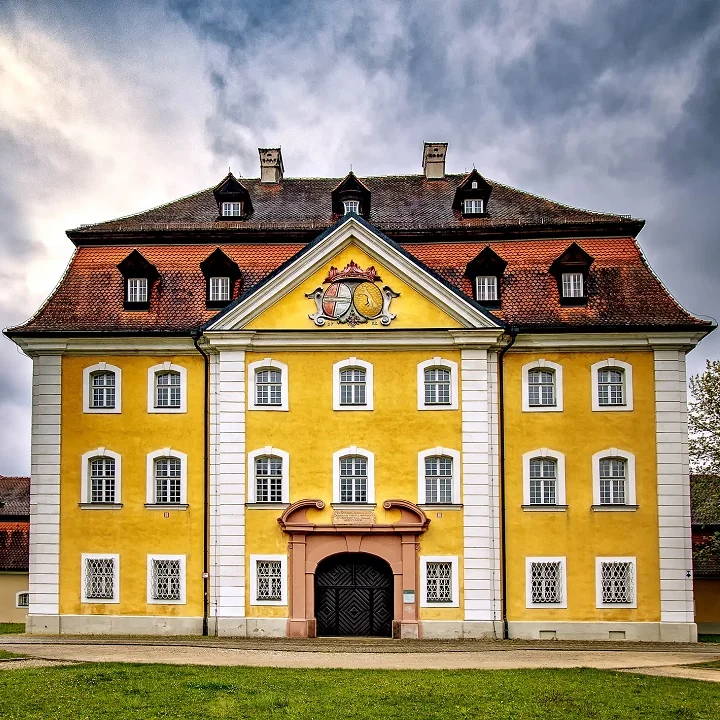
Pictures often say more than words, especially at a location that combines historical substance with modern cultural work. The Cultural Castle Theuern offers plenty of photogenic motifs: the representative facade of the hammer castle with its characteristic portal, the spacious courtyard for atmospheric outdoor shots, the Great Hall with visible wooden beams, generous room height, and a changeable lighting concept, as well as the craft-oriented ambiance of the Small Hall. For museum fans, the technical monuments are particularly exciting. The iron hammer works illustrates the metalworking tradition, while the glass grinding and polishing works showcases a regional specialty. Another eye-catcher is the conveyor tower with a machine house, which makes the mining history of Eastern Bavaria visible. The Electricity Museum of Eastern Bavaria in the area of the glass grinding and polishing works complements these impressions with exhibits on the history of electricity. Those looking for photo series for the current season will regularly find them in the news and program section of the institution, as the house announces concerts, cabaret evenings, readings, and special exhibitions there and illustrates these contributions. This way, the institution can already be experienced digitally before changing perspectives on-site. A tip for anyone checking photos for an event idea: the Great Hall appears particularly atmospheric when the lighting moods created by accent lights on the ceiling and floor are utilized. For banquets, the contrasting wood and stone surfaces provide a grateful backdrop, while in lecture or concert seating, the clear lines of the hall, the stage, and the projection technology dominate. During daytime events, window areas and warm wood provide natural colors in pictures; in the evening, lighting design and stage design come to the fore. Strong motifs also arise around the castle: visitor paths, watercourses in the vicinity, and the location in the village of Theuern frame the hammer castle. Since the museum's external sites are open on weekends and holidays, one can combine visits and photo appointments if one wants to capture the lively environment – such as the hammer works or glass grinding – pictorially. Those who want to clarify image rights for their own publications should contact the institution directly; for private memory photos, the usual visitor rules generally apply.
Reviews and Visitor Experiences: What Guests Particularly Appreciate
Reviews provide orientation before booking admission or planning an event. At the Cultural Castle Theuern, reports reflect different perspectives: families praise the illustrative presentation in the Mining and Industrial Museum of Eastern Bavaria, especially the connection between regional history and tangible technical exhibits. Culture enthusiasts highlight the varied annual program, which ranges from cabaret to concerts to readings and makes the historical ambiance tangible. Organizers, in turn, emphasize the good accessibility via the highway and the numerous parking options directly at the site. This aligns with the official framework conditions: with over 500 parking spaces in the immediate vicinity, time-consuming parking searches are eliminated. For public transport arrivals, the Theuern Castle stop is the nearby entry point, connected with a short walk. Many feedbacks highlight the atmosphere of the Great Hall: visible wooden beams, clear lines, and a flexible lighting concept create a stage for a variety of formats. The variable seating allows cabaret evenings, concerts, or conferences to be visually and acoustically set up appropriately. The technical equipment, such as sound system, mixing console, wireless microphones, conference technology, and video mixer for live streaming, is prominently featured in the profile of the location and is positively mentioned in reviews when clear speech, reliable sound, and good sightlines are required. Visitors to the museum often report that a detour to the external sites is worthwhile. The iron hammer works and the glass grinding and polishing works – the latter since 1996 also the location of the Electricity Museum of Eastern Bavaria – expand the exhibition with authentic workplaces. The conveyor tower with a machine house makes the industrial landscape of Eastern Bavaria tangible. For special exhibitions, the house has repeatedly curated themes in recent years that connect regional traditions and current issues. This creates a vivid picture: here, historical building substance meets contemporary culture, and this tension field attracts visitors. Those reading reviews should pay attention to whether assessments relate to museum visits, event experiences, or rentals; this way, expectations can be adjusted concretely.
Directions and Parking: How to Arrive Relaxed
The Cultural Castle Theuern is well connected to the road network. The easiest route is via the A6 highway. Take exit 66 Amberg-Süd/Kümmersbruck and follow the signs to Theuern from there. In the village, directional signs show the way to the parking lots and the castle. The complete address for the navigation device is: Portnerstraße 1, 92245 Kümmersbruck. An advantage for event visitors is the high number of parking spaces: over 500 parking spaces are available in the immediate vicinity; additional parking options can be found on Castnerstraße towards the cemetery. It is important for a smooth process to only park in designated areas. There is a parking ban on the access roads to the castle as well as on the lawns in front of the main building. For guests who prefer public transport, the timetable information from the regional transport association website is recommended. The nearest stop is called Theuern Castle; from there, it is about 300 meters on foot. This short walking minute is particularly convenient if you are traveling with a stroller or light luggage. Those traveling with groups can plan the sequence so that bus and walking time fit together. For suppliers or technical crews setting up events, the proximity of the parking areas offers logistical advantages; details regarding delivery and any access regulations should be coordinated directly with the house by the organizers. The location near Amberg is also interesting for guests from outside the region who want to explore the cultural region of Upper Palatinate. Many combine a visit to the museum with a walk around the hammer castle or a quick visit to the external sites on weekends. Since the program regularly offers events in the evening, the uncomplicated departure via the A6 is a practical plus, especially when arriving and departing from the direction of Nuremberg, Regensburg, or the Upper Palatinate.
Opening Hours, Admission, and Guided Tours: Planning with Reliable Numbers
Those who structure their visit save time and get more out of their stay. The regular opening hours of the Mining and Industrial Museum of Eastern Bavaria are Tuesday to Saturday from 9:00 AM to 5:00 PM and on Sundays and public holidays from 10:00 AM to 5:00 PM. The external sites of the museum are accessible on weekends and public holidays. A winter break is planned for the cold season: from December 15, 2025, to February 28, 2026, the museum is closed for individual visitors; group tours are still possible during this period with prior registration. The admission prices are very family-friendly. Adults pay 2.00 euros for admission. For students and youth groups, a reduced rate of 1.00 euro applies, while for students and people with disabilities, the admission fee is 1.50 euros. Groups of 20 or more also pay 1.50 euros per person. Guided tours, which cost 30.00 euros per group and are organized upon request, are particularly worthwhile. This allows for a focus on specific topics – such as mining history, energy transition in a historical context, or the development of glass and porcelain processing in Eastern Bavaria. Those planning a day trip can combine the regular opening hours with the program offerings: cabaret evenings, concerts, and lectures often take place in the evening and are summarized in the annual flyer. For the external sites, it is worth taking a look at the weekend planning so that the hammer works, glass grinding, and electricity museum can be visited after the museum visit. Tickets for evening events are handled differently depending on the format and provider; the institution's own notices link to advance sales or organizers. For groups, schools, or associations, early inquiries are recommended, as dates for guided tours and rentals are quickly booked. The contact details are easy to remember: phone 09621 39-7930, email to the official museum address. This leaves enough room to coordinate the duration of the stay, thematic focuses, and possible breaks in the foyer or courtyard.
Halls, Capacity, and Technology: Flexible for 150 to 400 People
In addition to the museum operation, the Cultural Castle Theuern is a capable event location. The centerpiece is the Great Hall. It accommodates up to 400 people and offers various seating arrangements from rows to banquets to mixed forms on 386 square meters. The expandable stage and the well-thought-out lighting concept highlight the architecture with its visible wooden beams and allow for atmospheric scene changes. For musical formats, a Steinway concert grand piano is available. Technically, the hall is equipped with stage technology, projector, and screen; sound and image can be transmitted to the Small Hall. The Small Hall is suitable for up to 150 people on 184 square meters, ideal for seminars, smaller concerts, workshops, or accompanying formats within larger events. Here, too, projectors, screens, and speakers are available, including room-to-room transmission. The space offering is complemented by a foyer and cloakroom with 124 square meters, which are suitable for standing receptions and exhibitions; modern sanitary facilities are located on the ground floor, and the foyer is accessible via stairs and elevator. For professional productions, comprehensive media technology is available: motorized curtain, dimmable lighting, colored spotlights, sound system with mixing console, wireless microphones and headsets, wired microphones, Bluetooth and audio inputs for laptops and smartphones, internet via LAN and WLAN, as well as a video mixer for projectors and live streaming. A conference system with speaking points and motorized cameras supports hybrid formats. A special advantage is the ability to mirror sound and image between the halls, allowing plenary and breakout situations to seamlessly integrate. The inventory of banquet chairs and tables is generous, enabling banquets, fairs, or exhibitions to be realized without extensive external rentals. For calculation, in addition to the rental fee, technology flat rates and services such as media technicians, caretakers, security services, cleaning, and waste disposal should be considered. The institution points out that the rental period always includes setup and dismantling as well as cleaning; in the months from October to March, heating must be factored in. Those planning a wedding, ball, or conference benefit from the short distances between halls, foyer, and courtyard. With the many parking spaces directly at the house, stress-free arrival is possible even at high occupancy. Thanks to the combination of historical backdrop and modern infrastructure, events are not only atmospheric but also technically reliable.
History, Collection, and Special Features: Discover Eastern Bavaria's Industrial Worlds
The Hammer Castle Theuern was built in 1781 and today houses the Mining and Industrial Museum of Eastern Bavaria. The institution was founded in 1972 by the Amberg-Sulzbach district to research, document, and vividly present the history of mining and industry in Eastern Bavaria. The special feature is the connection of the castle, exhibition rooms, and authentic outdoor facilities. Regionally typical industrial monuments have been transferred to Theuern and form a compact ensemble on-site: the iron hammer works as a testimony to early metalworking processes; a glass grinding and polishing works that makes the refinement of glass tangible and has housed the Electricity Museum of Eastern Bavaria since 1996; and a conveyor tower with a machine house that makes mining history visible. This constellation provides ideal conditions for showcasing historical working worlds not only in showcases but at original locations. The exhibitions address themes that have shaped the region, including glass and porcelain production, mining history, energy supply, and mobility. Special exhibitions connect the view back with questions of the present and future. The mediation is complemented by a scientifically supervised library and an archive that gathers extensive writings on the mining and industrial history of the Bavarian region. Research is possible on-site by appointment during museum hours. The offerings of guided tours, which can be thematically deepened, are suitable for school classes, associations, and specialized groups. The external sites are open on weekends and public holidays and expand the museum visit with impressive places where the history of technology comes to life. In sum, a learning and experience place emerges that brings together cultural history, technology, and contemporary culture. The offerings are rounded off by an annually changing event program that connects cabaret, concerts, and readings in the halls of the castle with the flair of historical architecture. Visitors comparing images and reviews quickly discover that the house is not just a museum but a vibrant cultural place that unites research, education, and entertainment under one roof. Those who want to delve deeper can use the museum's contact options for individual tours, program information, or rental inquiries.
Sources:
- Cultural Castle Theuern – Official Website
- Cultural Castle Theuern – Directions and Public Transport
- Cultural Castle Theuern – Parking on Site
- Cultural Castle Theuern – Great Hall Data and Technology
- Cultural Castle Theuern – Small Hall Capacity
- Cultural Castle Theuern – Celebrations and Meetings Overview
- Mining and Industrial Museum of Eastern Bavaria – Library and Archive
- Cultural Castle Theuern – English Information with Opening Hours
Show moreShow less
Cultural Castle Theuern | Photos & Reviews
Those who want to experience industrial history and celebrate in a historic setting will find a rare combination of museum, authentic technical monuments, and modern event location at the Cultural Castle Theuern in Kümmersbruck near Amberg. The hammer castle from 1781 houses the Mining and Industrial Museum of Eastern Bavaria, complemented by an iron hammer works, glass grinding and polishing works, a conveyor tower with a machine house, and the Electricity Museum of Eastern Bavaria. At the same time, flexible spaces are available for concerts, cabaret, conferences, or private celebrations. For visitors who want to get an initial impression, the topics of photos and reviews are particularly relevant: impressions from the castle, insights into exhibitions, and moods from the Great Hall convey what makes the location special. Practical information such as directions, parking, opening hours, admission prices, capacity, and technology assist in concrete planning. This overview consolidates the most important facts and links them with common search interests, so you can quickly move from inspiration to booking or visiting the museum.
Photos and Impressions from the Castle, Museum, and Outdoor Areas
Pictures often say more than words, especially at a location that combines historical substance with modern cultural work. The Cultural Castle Theuern offers plenty of photogenic motifs: the representative facade of the hammer castle with its characteristic portal, the spacious courtyard for atmospheric outdoor shots, the Great Hall with visible wooden beams, generous room height, and a changeable lighting concept, as well as the craft-oriented ambiance of the Small Hall. For museum fans, the technical monuments are particularly exciting. The iron hammer works illustrates the metalworking tradition, while the glass grinding and polishing works showcases a regional specialty. Another eye-catcher is the conveyor tower with a machine house, which makes the mining history of Eastern Bavaria visible. The Electricity Museum of Eastern Bavaria in the area of the glass grinding and polishing works complements these impressions with exhibits on the history of electricity. Those looking for photo series for the current season will regularly find them in the news and program section of the institution, as the house announces concerts, cabaret evenings, readings, and special exhibitions there and illustrates these contributions. This way, the institution can already be experienced digitally before changing perspectives on-site. A tip for anyone checking photos for an event idea: the Great Hall appears particularly atmospheric when the lighting moods created by accent lights on the ceiling and floor are utilized. For banquets, the contrasting wood and stone surfaces provide a grateful backdrop, while in lecture or concert seating, the clear lines of the hall, the stage, and the projection technology dominate. During daytime events, window areas and warm wood provide natural colors in pictures; in the evening, lighting design and stage design come to the fore. Strong motifs also arise around the castle: visitor paths, watercourses in the vicinity, and the location in the village of Theuern frame the hammer castle. Since the museum's external sites are open on weekends and holidays, one can combine visits and photo appointments if one wants to capture the lively environment – such as the hammer works or glass grinding – pictorially. Those who want to clarify image rights for their own publications should contact the institution directly; for private memory photos, the usual visitor rules generally apply.
Reviews and Visitor Experiences: What Guests Particularly Appreciate
Reviews provide orientation before booking admission or planning an event. At the Cultural Castle Theuern, reports reflect different perspectives: families praise the illustrative presentation in the Mining and Industrial Museum of Eastern Bavaria, especially the connection between regional history and tangible technical exhibits. Culture enthusiasts highlight the varied annual program, which ranges from cabaret to concerts to readings and makes the historical ambiance tangible. Organizers, in turn, emphasize the good accessibility via the highway and the numerous parking options directly at the site. This aligns with the official framework conditions: with over 500 parking spaces in the immediate vicinity, time-consuming parking searches are eliminated. For public transport arrivals, the Theuern Castle stop is the nearby entry point, connected with a short walk. Many feedbacks highlight the atmosphere of the Great Hall: visible wooden beams, clear lines, and a flexible lighting concept create a stage for a variety of formats. The variable seating allows cabaret evenings, concerts, or conferences to be visually and acoustically set up appropriately. The technical equipment, such as sound system, mixing console, wireless microphones, conference technology, and video mixer for live streaming, is prominently featured in the profile of the location and is positively mentioned in reviews when clear speech, reliable sound, and good sightlines are required. Visitors to the museum often report that a detour to the external sites is worthwhile. The iron hammer works and the glass grinding and polishing works – the latter since 1996 also the location of the Electricity Museum of Eastern Bavaria – expand the exhibition with authentic workplaces. The conveyor tower with a machine house makes the industrial landscape of Eastern Bavaria tangible. For special exhibitions, the house has repeatedly curated themes in recent years that connect regional traditions and current issues. This creates a vivid picture: here, historical building substance meets contemporary culture, and this tension field attracts visitors. Those reading reviews should pay attention to whether assessments relate to museum visits, event experiences, or rentals; this way, expectations can be adjusted concretely.
Directions and Parking: How to Arrive Relaxed
The Cultural Castle Theuern is well connected to the road network. The easiest route is via the A6 highway. Take exit 66 Amberg-Süd/Kümmersbruck and follow the signs to Theuern from there. In the village, directional signs show the way to the parking lots and the castle. The complete address for the navigation device is: Portnerstraße 1, 92245 Kümmersbruck. An advantage for event visitors is the high number of parking spaces: over 500 parking spaces are available in the immediate vicinity; additional parking options can be found on Castnerstraße towards the cemetery. It is important for a smooth process to only park in designated areas. There is a parking ban on the access roads to the castle as well as on the lawns in front of the main building. For guests who prefer public transport, the timetable information from the regional transport association website is recommended. The nearest stop is called Theuern Castle; from there, it is about 300 meters on foot. This short walking minute is particularly convenient if you are traveling with a stroller or light luggage. Those traveling with groups can plan the sequence so that bus and walking time fit together. For suppliers or technical crews setting up events, the proximity of the parking areas offers logistical advantages; details regarding delivery and any access regulations should be coordinated directly with the house by the organizers. The location near Amberg is also interesting for guests from outside the region who want to explore the cultural region of Upper Palatinate. Many combine a visit to the museum with a walk around the hammer castle or a quick visit to the external sites on weekends. Since the program regularly offers events in the evening, the uncomplicated departure via the A6 is a practical plus, especially when arriving and departing from the direction of Nuremberg, Regensburg, or the Upper Palatinate.
Opening Hours, Admission, and Guided Tours: Planning with Reliable Numbers
Those who structure their visit save time and get more out of their stay. The regular opening hours of the Mining and Industrial Museum of Eastern Bavaria are Tuesday to Saturday from 9:00 AM to 5:00 PM and on Sundays and public holidays from 10:00 AM to 5:00 PM. The external sites of the museum are accessible on weekends and public holidays. A winter break is planned for the cold season: from December 15, 2025, to February 28, 2026, the museum is closed for individual visitors; group tours are still possible during this period with prior registration. The admission prices are very family-friendly. Adults pay 2.00 euros for admission. For students and youth groups, a reduced rate of 1.00 euro applies, while for students and people with disabilities, the admission fee is 1.50 euros. Groups of 20 or more also pay 1.50 euros per person. Guided tours, which cost 30.00 euros per group and are organized upon request, are particularly worthwhile. This allows for a focus on specific topics – such as mining history, energy transition in a historical context, or the development of glass and porcelain processing in Eastern Bavaria. Those planning a day trip can combine the regular opening hours with the program offerings: cabaret evenings, concerts, and lectures often take place in the evening and are summarized in the annual flyer. For the external sites, it is worth taking a look at the weekend planning so that the hammer works, glass grinding, and electricity museum can be visited after the museum visit. Tickets for evening events are handled differently depending on the format and provider; the institution's own notices link to advance sales or organizers. For groups, schools, or associations, early inquiries are recommended, as dates for guided tours and rentals are quickly booked. The contact details are easy to remember: phone 09621 39-7930, email to the official museum address. This leaves enough room to coordinate the duration of the stay, thematic focuses, and possible breaks in the foyer or courtyard.
Halls, Capacity, and Technology: Flexible for 150 to 400 People
In addition to the museum operation, the Cultural Castle Theuern is a capable event location. The centerpiece is the Great Hall. It accommodates up to 400 people and offers various seating arrangements from rows to banquets to mixed forms on 386 square meters. The expandable stage and the well-thought-out lighting concept highlight the architecture with its visible wooden beams and allow for atmospheric scene changes. For musical formats, a Steinway concert grand piano is available. Technically, the hall is equipped with stage technology, projector, and screen; sound and image can be transmitted to the Small Hall. The Small Hall is suitable for up to 150 people on 184 square meters, ideal for seminars, smaller concerts, workshops, or accompanying formats within larger events. Here, too, projectors, screens, and speakers are available, including room-to-room transmission. The space offering is complemented by a foyer and cloakroom with 124 square meters, which are suitable for standing receptions and exhibitions; modern sanitary facilities are located on the ground floor, and the foyer is accessible via stairs and elevator. For professional productions, comprehensive media technology is available: motorized curtain, dimmable lighting, colored spotlights, sound system with mixing console, wireless microphones and headsets, wired microphones, Bluetooth and audio inputs for laptops and smartphones, internet via LAN and WLAN, as well as a video mixer for projectors and live streaming. A conference system with speaking points and motorized cameras supports hybrid formats. A special advantage is the ability to mirror sound and image between the halls, allowing plenary and breakout situations to seamlessly integrate. The inventory of banquet chairs and tables is generous, enabling banquets, fairs, or exhibitions to be realized without extensive external rentals. For calculation, in addition to the rental fee, technology flat rates and services such as media technicians, caretakers, security services, cleaning, and waste disposal should be considered. The institution points out that the rental period always includes setup and dismantling as well as cleaning; in the months from October to March, heating must be factored in. Those planning a wedding, ball, or conference benefit from the short distances between halls, foyer, and courtyard. With the many parking spaces directly at the house, stress-free arrival is possible even at high occupancy. Thanks to the combination of historical backdrop and modern infrastructure, events are not only atmospheric but also technically reliable.
History, Collection, and Special Features: Discover Eastern Bavaria's Industrial Worlds
The Hammer Castle Theuern was built in 1781 and today houses the Mining and Industrial Museum of Eastern Bavaria. The institution was founded in 1972 by the Amberg-Sulzbach district to research, document, and vividly present the history of mining and industry in Eastern Bavaria. The special feature is the connection of the castle, exhibition rooms, and authentic outdoor facilities. Regionally typical industrial monuments have been transferred to Theuern and form a compact ensemble on-site: the iron hammer works as a testimony to early metalworking processes; a glass grinding and polishing works that makes the refinement of glass tangible and has housed the Electricity Museum of Eastern Bavaria since 1996; and a conveyor tower with a machine house that makes mining history visible. This constellation provides ideal conditions for showcasing historical working worlds not only in showcases but at original locations. The exhibitions address themes that have shaped the region, including glass and porcelain production, mining history, energy supply, and mobility. Special exhibitions connect the view back with questions of the present and future. The mediation is complemented by a scientifically supervised library and an archive that gathers extensive writings on the mining and industrial history of the Bavarian region. Research is possible on-site by appointment during museum hours. The offerings of guided tours, which can be thematically deepened, are suitable for school classes, associations, and specialized groups. The external sites are open on weekends and public holidays and expand the museum visit with impressive places where the history of technology comes to life. In sum, a learning and experience place emerges that brings together cultural history, technology, and contemporary culture. The offerings are rounded off by an annually changing event program that connects cabaret, concerts, and readings in the halls of the castle with the flair of historical architecture. Visitors comparing images and reviews quickly discover that the house is not just a museum but a vibrant cultural place that unites research, education, and entertainment under one roof. Those who want to delve deeper can use the museum's contact options for individual tours, program information, or rental inquiries.
Sources:
- Cultural Castle Theuern – Official Website
- Cultural Castle Theuern – Directions and Public Transport
- Cultural Castle Theuern – Parking on Site
- Cultural Castle Theuern – Great Hall Data and Technology
- Cultural Castle Theuern – Small Hall Capacity
- Cultural Castle Theuern – Celebrations and Meetings Overview
- Mining and Industrial Museum of Eastern Bavaria – Library and Archive
- Cultural Castle Theuern – English Information with Opening Hours
Cultural Castle Theuern | Photos & Reviews
Those who want to experience industrial history and celebrate in a historic setting will find a rare combination of museum, authentic technical monuments, and modern event location at the Cultural Castle Theuern in Kümmersbruck near Amberg. The hammer castle from 1781 houses the Mining and Industrial Museum of Eastern Bavaria, complemented by an iron hammer works, glass grinding and polishing works, a conveyor tower with a machine house, and the Electricity Museum of Eastern Bavaria. At the same time, flexible spaces are available for concerts, cabaret, conferences, or private celebrations. For visitors who want to get an initial impression, the topics of photos and reviews are particularly relevant: impressions from the castle, insights into exhibitions, and moods from the Great Hall convey what makes the location special. Practical information such as directions, parking, opening hours, admission prices, capacity, and technology assist in concrete planning. This overview consolidates the most important facts and links them with common search interests, so you can quickly move from inspiration to booking or visiting the museum.
Photos and Impressions from the Castle, Museum, and Outdoor Areas
Pictures often say more than words, especially at a location that combines historical substance with modern cultural work. The Cultural Castle Theuern offers plenty of photogenic motifs: the representative facade of the hammer castle with its characteristic portal, the spacious courtyard for atmospheric outdoor shots, the Great Hall with visible wooden beams, generous room height, and a changeable lighting concept, as well as the craft-oriented ambiance of the Small Hall. For museum fans, the technical monuments are particularly exciting. The iron hammer works illustrates the metalworking tradition, while the glass grinding and polishing works showcases a regional specialty. Another eye-catcher is the conveyor tower with a machine house, which makes the mining history of Eastern Bavaria visible. The Electricity Museum of Eastern Bavaria in the area of the glass grinding and polishing works complements these impressions with exhibits on the history of electricity. Those looking for photo series for the current season will regularly find them in the news and program section of the institution, as the house announces concerts, cabaret evenings, readings, and special exhibitions there and illustrates these contributions. This way, the institution can already be experienced digitally before changing perspectives on-site. A tip for anyone checking photos for an event idea: the Great Hall appears particularly atmospheric when the lighting moods created by accent lights on the ceiling and floor are utilized. For banquets, the contrasting wood and stone surfaces provide a grateful backdrop, while in lecture or concert seating, the clear lines of the hall, the stage, and the projection technology dominate. During daytime events, window areas and warm wood provide natural colors in pictures; in the evening, lighting design and stage design come to the fore. Strong motifs also arise around the castle: visitor paths, watercourses in the vicinity, and the location in the village of Theuern frame the hammer castle. Since the museum's external sites are open on weekends and holidays, one can combine visits and photo appointments if one wants to capture the lively environment – such as the hammer works or glass grinding – pictorially. Those who want to clarify image rights for their own publications should contact the institution directly; for private memory photos, the usual visitor rules generally apply.
Reviews and Visitor Experiences: What Guests Particularly Appreciate
Reviews provide orientation before booking admission or planning an event. At the Cultural Castle Theuern, reports reflect different perspectives: families praise the illustrative presentation in the Mining and Industrial Museum of Eastern Bavaria, especially the connection between regional history and tangible technical exhibits. Culture enthusiasts highlight the varied annual program, which ranges from cabaret to concerts to readings and makes the historical ambiance tangible. Organizers, in turn, emphasize the good accessibility via the highway and the numerous parking options directly at the site. This aligns with the official framework conditions: with over 500 parking spaces in the immediate vicinity, time-consuming parking searches are eliminated. For public transport arrivals, the Theuern Castle stop is the nearby entry point, connected with a short walk. Many feedbacks highlight the atmosphere of the Great Hall: visible wooden beams, clear lines, and a flexible lighting concept create a stage for a variety of formats. The variable seating allows cabaret evenings, concerts, or conferences to be visually and acoustically set up appropriately. The technical equipment, such as sound system, mixing console, wireless microphones, conference technology, and video mixer for live streaming, is prominently featured in the profile of the location and is positively mentioned in reviews when clear speech, reliable sound, and good sightlines are required. Visitors to the museum often report that a detour to the external sites is worthwhile. The iron hammer works and the glass grinding and polishing works – the latter since 1996 also the location of the Electricity Museum of Eastern Bavaria – expand the exhibition with authentic workplaces. The conveyor tower with a machine house makes the industrial landscape of Eastern Bavaria tangible. For special exhibitions, the house has repeatedly curated themes in recent years that connect regional traditions and current issues. This creates a vivid picture: here, historical building substance meets contemporary culture, and this tension field attracts visitors. Those reading reviews should pay attention to whether assessments relate to museum visits, event experiences, or rentals; this way, expectations can be adjusted concretely.
Directions and Parking: How to Arrive Relaxed
The Cultural Castle Theuern is well connected to the road network. The easiest route is via the A6 highway. Take exit 66 Amberg-Süd/Kümmersbruck and follow the signs to Theuern from there. In the village, directional signs show the way to the parking lots and the castle. The complete address for the navigation device is: Portnerstraße 1, 92245 Kümmersbruck. An advantage for event visitors is the high number of parking spaces: over 500 parking spaces are available in the immediate vicinity; additional parking options can be found on Castnerstraße towards the cemetery. It is important for a smooth process to only park in designated areas. There is a parking ban on the access roads to the castle as well as on the lawns in front of the main building. For guests who prefer public transport, the timetable information from the regional transport association website is recommended. The nearest stop is called Theuern Castle; from there, it is about 300 meters on foot. This short walking minute is particularly convenient if you are traveling with a stroller or light luggage. Those traveling with groups can plan the sequence so that bus and walking time fit together. For suppliers or technical crews setting up events, the proximity of the parking areas offers logistical advantages; details regarding delivery and any access regulations should be coordinated directly with the house by the organizers. The location near Amberg is also interesting for guests from outside the region who want to explore the cultural region of Upper Palatinate. Many combine a visit to the museum with a walk around the hammer castle or a quick visit to the external sites on weekends. Since the program regularly offers events in the evening, the uncomplicated departure via the A6 is a practical plus, especially when arriving and departing from the direction of Nuremberg, Regensburg, or the Upper Palatinate.
Opening Hours, Admission, and Guided Tours: Planning with Reliable Numbers
Those who structure their visit save time and get more out of their stay. The regular opening hours of the Mining and Industrial Museum of Eastern Bavaria are Tuesday to Saturday from 9:00 AM to 5:00 PM and on Sundays and public holidays from 10:00 AM to 5:00 PM. The external sites of the museum are accessible on weekends and public holidays. A winter break is planned for the cold season: from December 15, 2025, to February 28, 2026, the museum is closed for individual visitors; group tours are still possible during this period with prior registration. The admission prices are very family-friendly. Adults pay 2.00 euros for admission. For students and youth groups, a reduced rate of 1.00 euro applies, while for students and people with disabilities, the admission fee is 1.50 euros. Groups of 20 or more also pay 1.50 euros per person. Guided tours, which cost 30.00 euros per group and are organized upon request, are particularly worthwhile. This allows for a focus on specific topics – such as mining history, energy transition in a historical context, or the development of glass and porcelain processing in Eastern Bavaria. Those planning a day trip can combine the regular opening hours with the program offerings: cabaret evenings, concerts, and lectures often take place in the evening and are summarized in the annual flyer. For the external sites, it is worth taking a look at the weekend planning so that the hammer works, glass grinding, and electricity museum can be visited after the museum visit. Tickets for evening events are handled differently depending on the format and provider; the institution's own notices link to advance sales or organizers. For groups, schools, or associations, early inquiries are recommended, as dates for guided tours and rentals are quickly booked. The contact details are easy to remember: phone 09621 39-7930, email to the official museum address. This leaves enough room to coordinate the duration of the stay, thematic focuses, and possible breaks in the foyer or courtyard.
Halls, Capacity, and Technology: Flexible for 150 to 400 People
In addition to the museum operation, the Cultural Castle Theuern is a capable event location. The centerpiece is the Great Hall. It accommodates up to 400 people and offers various seating arrangements from rows to banquets to mixed forms on 386 square meters. The expandable stage and the well-thought-out lighting concept highlight the architecture with its visible wooden beams and allow for atmospheric scene changes. For musical formats, a Steinway concert grand piano is available. Technically, the hall is equipped with stage technology, projector, and screen; sound and image can be transmitted to the Small Hall. The Small Hall is suitable for up to 150 people on 184 square meters, ideal for seminars, smaller concerts, workshops, or accompanying formats within larger events. Here, too, projectors, screens, and speakers are available, including room-to-room transmission. The space offering is complemented by a foyer and cloakroom with 124 square meters, which are suitable for standing receptions and exhibitions; modern sanitary facilities are located on the ground floor, and the foyer is accessible via stairs and elevator. For professional productions, comprehensive media technology is available: motorized curtain, dimmable lighting, colored spotlights, sound system with mixing console, wireless microphones and headsets, wired microphones, Bluetooth and audio inputs for laptops and smartphones, internet via LAN and WLAN, as well as a video mixer for projectors and live streaming. A conference system with speaking points and motorized cameras supports hybrid formats. A special advantage is the ability to mirror sound and image between the halls, allowing plenary and breakout situations to seamlessly integrate. The inventory of banquet chairs and tables is generous, enabling banquets, fairs, or exhibitions to be realized without extensive external rentals. For calculation, in addition to the rental fee, technology flat rates and services such as media technicians, caretakers, security services, cleaning, and waste disposal should be considered. The institution points out that the rental period always includes setup and dismantling as well as cleaning; in the months from October to March, heating must be factored in. Those planning a wedding, ball, or conference benefit from the short distances between halls, foyer, and courtyard. With the many parking spaces directly at the house, stress-free arrival is possible even at high occupancy. Thanks to the combination of historical backdrop and modern infrastructure, events are not only atmospheric but also technically reliable.
History, Collection, and Special Features: Discover Eastern Bavaria's Industrial Worlds
The Hammer Castle Theuern was built in 1781 and today houses the Mining and Industrial Museum of Eastern Bavaria. The institution was founded in 1972 by the Amberg-Sulzbach district to research, document, and vividly present the history of mining and industry in Eastern Bavaria. The special feature is the connection of the castle, exhibition rooms, and authentic outdoor facilities. Regionally typical industrial monuments have been transferred to Theuern and form a compact ensemble on-site: the iron hammer works as a testimony to early metalworking processes; a glass grinding and polishing works that makes the refinement of glass tangible and has housed the Electricity Museum of Eastern Bavaria since 1996; and a conveyor tower with a machine house that makes mining history visible. This constellation provides ideal conditions for showcasing historical working worlds not only in showcases but at original locations. The exhibitions address themes that have shaped the region, including glass and porcelain production, mining history, energy supply, and mobility. Special exhibitions connect the view back with questions of the present and future. The mediation is complemented by a scientifically supervised library and an archive that gathers extensive writings on the mining and industrial history of the Bavarian region. Research is possible on-site by appointment during museum hours. The offerings of guided tours, which can be thematically deepened, are suitable for school classes, associations, and specialized groups. The external sites are open on weekends and public holidays and expand the museum visit with impressive places where the history of technology comes to life. In sum, a learning and experience place emerges that brings together cultural history, technology, and contemporary culture. The offerings are rounded off by an annually changing event program that connects cabaret, concerts, and readings in the halls of the castle with the flair of historical architecture. Visitors comparing images and reviews quickly discover that the house is not just a museum but a vibrant cultural place that unites research, education, and entertainment under one roof. Those who want to delve deeper can use the museum's contact options for individual tours, program information, or rental inquiries.
Sources:
- Cultural Castle Theuern – Official Website
- Cultural Castle Theuern – Directions and Public Transport
- Cultural Castle Theuern – Parking on Site
- Cultural Castle Theuern – Great Hall Data and Technology
- Cultural Castle Theuern – Small Hall Capacity
- Cultural Castle Theuern – Celebrations and Meetings Overview
- Mining and Industrial Museum of Eastern Bavaria – Library and Archive
- Cultural Castle Theuern – English Information with Opening Hours
Upcoming Events
No events found
Frequently Asked Questions
Reviews
Dr. Franziska Schneider
21. September 2025
Extensive, versatile, and attractively designed exhibition. Interesting for kids too, with interactive activities. Be sure to visit the external sites during your visit. Especially the mirror glass loop with the mill is worth seeing.
soraya S
28. July 2025
It's very nice in the newly renovated castle, but: 1. Poor info on where to go next, doors closed... should we guess? Then you look, oh.. another exhibition.. upstairs and downstairs, no guidance signs 2. Sorry, everything is new now… and the tech? More than half of the audio guides in the exhibition didn’t work! And then… yes… VR glasses… we thought it was great… and?! "Out of order"?! BOTH! No, what’s that about? Everything renovated with a lot of taxpayer money, which is good, but then it has to be "functional"!!! We were really disappointed! And… just a side note… pay attention to the names when you mention company owners/founders ;)
B. Arnold
28. April 2025
Highly interesting! The staff was also extremely friendly, showed us everything, and even turned off the old machines just for us. Every department is worth it. Whether it's the Mining and Industrial Museum of East Bavaria, the Electricity Museum, the Hammer Works, the Mirror Glass Loop and polishing works, the mineral exhibition, or the glass and porcelain exhibition, everything was very informative.
Bifi LaG
28. November 2025
★☆☆☆☆ – Our wedding at the Cultural Castle Theuern: a disappointment no couple wishes for. We celebrated our church wedding at the Cultural Castle Theuern in July – a day we had been looking forward to for months. Unfortunately, the hoped-for and advertised dream location turned into a huge disappointment that tainted our experience. One of the main reasons we chose this location was the initially advertised state-of-the-art ventilation system, which was supposed to provide a pleasant room climate even in summer temperatures, as we were aware that it can get hot in July. Unfortunately, during the preparations, two days before the celebration, no effect was noticeable. We pointed this out to the staff multiple times – but nothing happened. No solution, no visible effort, no communication - just shrugs. On the day of the wedding, the festival hall had borderline 28 °C. The ventilation system was supposedly running, but there was no noticeable improvement in the room climate. With 130 guests present, the heat quickly became oppressive, and many kept seeking fresh air outside. It was simply unbearable, especially for many older guests. That such an obvious underdimensioning or incorrect setting of the ventilation system may have been present is incomprehensible for an event of this significance. We are talking about a once-in-a-lifetime event that was significantly affected. In retrospect, given the disappointing experience that day, we withheld a mid-three-digit amount from the total bill (in the mid-four-digit range) – from our perspective, more than fair. The responsible manager even confirmed over the phone that this was generally understandable, but explained that "the bill had already been issued" and therefore could not be changed. Such an attitude seems extremely unfriendly, unprofessional, and inflexible to us. Conclusion: The Cultural Castle Theuern may look beautiful in photos – but those expecting reliability, a responsible approach to problems, and the motto "the customer is king" will be disappointed here. Our special day was massively affected by heat, lack of response, and lack of goodwill. We cannot recommend this location, especially not for events where everything should run smoothly. In hindsight, we would certainly have chosen another location that would have matched its price appropriately and been staffed with solution-oriented personnel.
Jana Scherm
5. November 2025
Small but nice, the Cultural Castle Theuern impresses with a modern exhibition concept. After the museum, the external sites should definitely be visited. In addition to technical demonstrations of old craftsmanship, you get an insight into past living conditions and can take a journey through the development of electricity. The staff was consistently very accommodating.