
Portnerstraße 1, Kümmersbruck-Theuern
Portnerstraße 1, 92245 Kümmersbruck, Germany
Cultural Castle Theuern | Program & Tours
Cultural Castle Theuern is a special place in the Upper Palatinate, where castle history, industrial culture, and event usage impressively connect. The historic hammer lord's castle in Kümmersbruck-Theuern is home to the Mining and Industrial Museum of Eastern Bavaria and is also a sought-after address for celebrations, conferences, concerts, and cultural programs. Those looking for Theuern often expect a classic museum experience, but here they find much more: an ensemble of history, outdoor monuments, flexible spaces, and a program that offers both knowledge and experience. The grounds are not only interesting for museum visits but also for private and business events with character. Especially valuable is the combination of authentic historical architecture and modern usable halls. At the same time, it is important to note that due to ongoing renovation and construction work, the visit is currently changing, and some areas are only partially accessible. This makes clear, current orientation important for visitors, organizers, and families. Those looking for a location with a regional profile, good accessibility, and real content will find in Cultural Castle Theuern an address with depth, atmosphere, and a very distinctive profile.
Program, Events, and Tours at Cultural Castle Theuern
The most common interest in the location clearly revolves around the program, and that is understandable. Cultural Castle Theuern is not just a museum, but also a cultural venue with a changing event calendar. The official website publishes dates, flyers, and special formats, including music, lectures, and thematic offerings that keep the house lively beyond the classic museum operation. For 2026, the website explicitly points out a varied annual program, and already in February 2026, despite the regular winter break, music and lecture evenings were offered. This shows that the house remains an active event venue even outside regular exhibition times. Tours play a central role in this. They can be arranged at any time with prior registration and can include both the departments in the hammer lord's castle and the external sites. These include the hammer mill, the glass grinding shop, the mill, and the power museum. Particularly interesting is that tours can be content-adaptable: Focuses can be set, and the content can be tailored to the age of the group. This makes the offer attractive for school classes as well as for clubs, family groups, or professional visitors. Additionally, there are public tours where admission is already included. For visitors who want to delve deeper, this is an important advantage because the historical contexts become not only explained but also comprehensible on-site. However, since April 2026, it should be noted that the exhibitions are only accessible as part of tours due to renovations. This means for planning: Those who truly want to experience the house and its contents should think of the visit more as a guided format. The external sites are also a highlight because they make the industrial past of the region visible with original technical installations. This is precisely where the strength of this place lies: The program is not interchangeable but closely linked to the character of the museum and the castle. As a result, every event, every tour, and every special format appears credible, location-bound, and rich in content. Therefore, for inquiries about programs, event dates, and tours, Cultural Castle Theuern is a location with real added value and a very clear thematic identity.
Directions, Parking, and Opening Hours for Your Visit
For many visitors, practical questions are almost as important as the program itself when planning: How do I get there, where do I park, and when is Cultural Castle Theuern open? The answer is pleasantly concrete. The easiest access is via the A6 motorway. Those coming from the direction of Amberg take the exit Amberg-South or Kümmersbruck and follow the signs to Theuern. In the town itself, the signs continue to the parking areas at the castle. For public transport, the website mentions the stop Theuern Castle. Buses from Amberg, Kümmersbruck, Schmidmühlen, and Emhof go there. From the stop, it is about 300 meters on foot to the castle. This is a clear advantage for a rural cultural destination, as both drivers and public transport users receive reliable orientation. The location also scores points when it comes to parking: Over 500 parking spaces are available in the immediate vicinity. This is particularly pleasant for events, larger tours, and family visits. However, it is important to note the clear regulation that parking is only allowed in designated areas. Parking is prohibited on the access roads to the castle, as well as on the lawns in front of the main building. This information is crucial for event guests, weddings, and conferences because it keeps the process relaxed and orderly. The opening hours are also straightforward: Tuesday to Saturday from 9 am to 5 pm, Sundays and public holidays from 10 am to 5 pm. The external sites are open on weekends and public holidays. Additionally, there is an important current note that the main building and exhibitions have only been accessible as part of tours since April 2026 due to renovations. Anyone planning a free museum visit should definitely take this point into account. Admission prices are kept deliberately low, making the visit attractive for families and groups. Adults pay 2.00 euros, students and youth groups 1.00 euro, groups of 20 or more, as well as people with disabilities and students, 1.50 euros. Special prices apply for private and public tours. Overall, the arrival and visit situation is very well structured: Those who plan in advance will find a place with good accessibility, sufficient parking space, and clear time windows for the visit.
Large Hall, Small Hall, and Outdoor Area for Celebrations and Conferences
As an event venue, Cultural Castle Theuern shows perhaps its greatest strength: the diversity of spaces. The Large Hall is the centerpiece of the ensemble and can accommodate up to 400 people. With 386 square meters, high room height, wooden visible beams, a refined lighting concept, and an expandable stage, it is suitable for receptions, concerts, weddings, celebrations, seminars, and conferences. This hall is particularly interesting for events with a representative claim because it combines historical atmosphere with modern use. The technical equipment includes stage technology, a projector, a screen, and a concert grand piano by Steinway. Audio and video transmissions to the Small Hall are possible. So if you are planning an event that requires both musical and communicative elements, you will find a very flexible solution here. The Small Hall ideally complements the offer. Depending on the seating arrangement, it accommodates up to 150 people, measures 184 square meters, and is particularly suitable for seminars, small conferences, standing receptions, and smaller celebrations. Daylight windows, visible beams, half-timbering, and rubble stone walls create a warm and rather intimate atmosphere. Thus, this room is the right choice for formats that do not need a large stage but still require a characterful setting. Between the two halls lies the foyer, which, with 124 square meters, can be used as a generous space for standing receptions, exhibitions, or the reception of guests. It is accessible via stairs and an elevator and has modern toilet facilities on the ground floor. Additionally, there is a kitchen with a pass-through to the Large Hall, equipped with a coffee machine, dishwasher, and cooling compartments. This is a significant advantage for catering, buffets, or break supplies. The outdoor area or courtyard makes a special impression. It is surrounded on four sides and creates a protected atmosphere for standing receptions, celebrations, and concerts. According to the website, the courtyard is suitable for a maximum of 1200 people. However, due to construction work, the outdoor area cannot currently be rented. Such details are important for organizers because they make planning realistic. The place thus offers a clear tiering of room sizes and usage options: large hall for representative formats, small hall for focused events, foyer for transitions and reception, kitchen for supplies, outdoor area for large events as soon as it becomes available again. Additionally, the advantage is that the rental period also includes setup and cleanup. For celebrations and conferences, this is a location that not only looks beautiful but is also functionally thought out.
The Mining and Industrial Museum of Eastern Bavaria in Theuern
Those visiting Cultural Castle Theuern not only enter a castle but also an important memorial site of Eastern Bavaria's industrial history. The Mining and Industrial Museum of Eastern Bavaria was founded in 1972 by the district of Amberg-Sulzbach and opened in 1978. Its central task is to research, document, and present mining and industry throughout the entire Eastern Bavarian region. Thus, it is much more than a local heritage museum. It sees itself as a supra-regional place of mediation where economic development, working world, and technical change become comprehensible. The museum is located in the hammer lord's castle built in 1781 in Theuern, a building with significant historical weight and a suitable environment for the themes presented here. Particularly impressive are the external sites that have been transferred to Theuern: an iron hammer mill, a glass grinding and polishing plant, which has also housed the Power Museum of Eastern Bavaria since 1996, as well as a shaft facility with a hoisting tower and machine house. These original facilities make the museum visit vivid because here not only objects stand behind glass, but industrial working and production forms become spatially tangible. The hammer mill recalls the early connection between hydropower and iron processing. The glass grinding and polishing facility shows how a former mill became a refinement operation. The shaft facility refers to the advanced mining of the 20th century with powerful hoisting machines and stable scaffolding. The Power Museum, in turn, bridges the historical electrification to today's energy world. Particularly interesting is the didactic strength of the house: Topics such as miners' life, mineral resources, industrialization, and electricity history can not only be explained abstractly but experienced at concrete locations. Families and children also benefit because the content is presented vividly and often interactively. Visitor feedback also reflects a very diverse, informative exhibition and engaged staff. Therefore, for inquiries about the Mining and Industrial Museum of Eastern Bavaria, Theuern is a very strong hit because history, technology, and mediation come together in one place. The combination of castle, museums, and outdoor facilities makes the location unmistakable and regionally significant.
History of the Manor and Castle Theuern
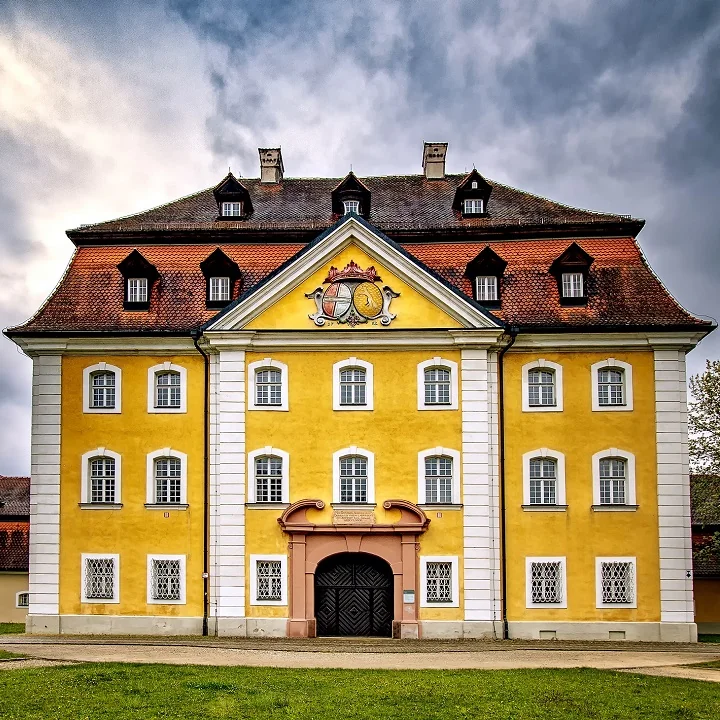
The historical depth of the place begins long before today's museum operation. A family from Theuern can be traced back to the end of the 11th century, and in 1482, a source first mentions a castle. A hammer mill likely existed in Theuern since the late 15th century. In the early 16th century, the Portner family acquired the hammer mill and manor, and in the early 18th century, the ownership passed to the von Lochner family of Hüttenbach. Joseph Christian von Lochner had the present castle built for his son Friedrich Ferdinand starting in 1780. The construction was an enormous financial burden at 20,000 guilders. The history of the castle is also a story of power, representation, and regional economy. On August 25, 1780, the foundation stone for the hammer castle was laid. Integrated into the new building was a hunting lodge built in 1682 by Johann Georg Portner. Wolfgang Diller from Amberg acted as the master builder. Already in the 1770s, economic buildings such as stables and sheds had been constructed, forming a four-winged complex around a closed inner courtyard. This remains characteristic of the place to this day. Inside, remnants of the former room decoration include the staircase with richly carved railing and a salon on the first floor with carved Rococo doors. The late Baroque building, along with the Rococo elements, shows an interesting stylistic phase at the transition to the time of antiquity as a model. This mixture of late Baroque elegance and functional manor character gives the castle its special appeal. The connection with industrial culture is also important: The original hammer mill was located outside the castle complex on the Vils. Castle and production were thus closely linked but not identical. This spatial and historical separation helps today to understand the place as a whole system. Those interested in regional history will find here not only beautiful architecture but a genuine lesson about nobility, technology, labor, and economic development in Eastern Bavaria. This makes Castle Theuern not just a backdrop but a historical document that remains very lively in the interplay of building, museum, and outdoor facilities.
Prices, Visiting Tips, and Current Notices
For practical planning, it is worth taking a look at prices, accessibility, and current notices. Admission to the museum is deliberately inexpensive: Adults pay 2.00 euros, students and youth groups pay 1.00 euro, groups of 20 or more, as well as people with disabilities and students, pay 1.50 euros. A public tour costs 6.00 euros per person, including admission. Private tours cost 50.00 euros for 1 to 15 participants and 65.00 euros for 16 to 25 participants. This makes the place attractive for excursions, clubs, school classes, and small groups. Those traveling with a larger group also benefit from the many parking spaces and clear traffic guidance. Another plus is the good structure of the grounds. The foyer is accessible via stairs and an elevator, the restrooms are located on the ground floor, and the kitchen can be used for events. This creates a professional environment that works even for longer stays. However, for visitors who come specifically for the exhibition and external sites, it is currently important that the situation has changed. Since April 2026, the exhibitions are only accessible as part of tours due to renovations. The external sites are open on weekends and public holidays, making a visit particularly well-combined with a tour. Those planning the place as an event location should also know that the outdoor area is currently not rentable. The Large Hall and the Small Hall, on the other hand, remain important options for celebrations, conferences, and cultural formats. For weddings or larger receptions, the Large Hall with its stage, technical equipment, and distinctive room height is especially interesting. For smaller, quieter formats, the Small Hall offers a suitable alternative with a lot of charm. A sensible visiting tip is therefore: Before arriving, be sure to check the current schedule, the availability of tours, and possible restrictions due to renovations. Those who do this will experience a place with a lot of substance and a strong overall package. Cultural Castle Theuern is not just any excursion destination, but a historically grown ensemble with a clear identity. That is why it remains equally exciting for culturally interested visitors, organizers, and families.
Sources:
- Official Website Cultural Castle Theuern
- History of the Manor
- History of the Castle
- Opening Hours and Prices
- Directions
- Parking Spaces
- Tours
- Large Hall
- Small Hall
- Foyer & Cloakroom
- Kitchen
- Outdoor Area
- Permanent Exhibition
- Outdoor Facilities
Mehr anzeigenWeniger anzeigen
Cultural Castle Theuern | Program & Tours
Cultural Castle Theuern is a special place in the Upper Palatinate, where castle history, industrial culture, and event usage impressively connect. The historic hammer lord's castle in Kümmersbruck-Theuern is home to the Mining and Industrial Museum of Eastern Bavaria and is also a sought-after address for celebrations, conferences, concerts, and cultural programs. Those looking for Theuern often expect a classic museum experience, but here they find much more: an ensemble of history, outdoor monuments, flexible spaces, and a program that offers both knowledge and experience. The grounds are not only interesting for museum visits but also for private and business events with character. Especially valuable is the combination of authentic historical architecture and modern usable halls. At the same time, it is important to note that due to ongoing renovation and construction work, the visit is currently changing, and some areas are only partially accessible. This makes clear, current orientation important for visitors, organizers, and families. Those looking for a location with a regional profile, good accessibility, and real content will find in Cultural Castle Theuern an address with depth, atmosphere, and a very distinctive profile.
Program, Events, and Tours at Cultural Castle Theuern
The most common interest in the location clearly revolves around the program, and that is understandable. Cultural Castle Theuern is not just a museum, but also a cultural venue with a changing event calendar. The official website publishes dates, flyers, and special formats, including music, lectures, and thematic offerings that keep the house lively beyond the classic museum operation. For 2026, the website explicitly points out a varied annual program, and already in February 2026, despite the regular winter break, music and lecture evenings were offered. This shows that the house remains an active event venue even outside regular exhibition times. Tours play a central role in this. They can be arranged at any time with prior registration and can include both the departments in the hammer lord's castle and the external sites. These include the hammer mill, the glass grinding shop, the mill, and the power museum. Particularly interesting is that tours can be content-adaptable: Focuses can be set, and the content can be tailored to the age of the group. This makes the offer attractive for school classes as well as for clubs, family groups, or professional visitors. Additionally, there are public tours where admission is already included. For visitors who want to delve deeper, this is an important advantage because the historical contexts become not only explained but also comprehensible on-site. However, since April 2026, it should be noted that the exhibitions are only accessible as part of tours due to renovations. This means for planning: Those who truly want to experience the house and its contents should think of the visit more as a guided format. The external sites are also a highlight because they make the industrial past of the region visible with original technical installations. This is precisely where the strength of this place lies: The program is not interchangeable but closely linked to the character of the museum and the castle. As a result, every event, every tour, and every special format appears credible, location-bound, and rich in content. Therefore, for inquiries about programs, event dates, and tours, Cultural Castle Theuern is a location with real added value and a very clear thematic identity.
Directions, Parking, and Opening Hours for Your Visit
For many visitors, practical questions are almost as important as the program itself when planning: How do I get there, where do I park, and when is Cultural Castle Theuern open? The answer is pleasantly concrete. The easiest access is via the A6 motorway. Those coming from the direction of Amberg take the exit Amberg-South or Kümmersbruck and follow the signs to Theuern. In the town itself, the signs continue to the parking areas at the castle. For public transport, the website mentions the stop Theuern Castle. Buses from Amberg, Kümmersbruck, Schmidmühlen, and Emhof go there. From the stop, it is about 300 meters on foot to the castle. This is a clear advantage for a rural cultural destination, as both drivers and public transport users receive reliable orientation. The location also scores points when it comes to parking: Over 500 parking spaces are available in the immediate vicinity. This is particularly pleasant for events, larger tours, and family visits. However, it is important to note the clear regulation that parking is only allowed in designated areas. Parking is prohibited on the access roads to the castle, as well as on the lawns in front of the main building. This information is crucial for event guests, weddings, and conferences because it keeps the process relaxed and orderly. The opening hours are also straightforward: Tuesday to Saturday from 9 am to 5 pm, Sundays and public holidays from 10 am to 5 pm. The external sites are open on weekends and public holidays. Additionally, there is an important current note that the main building and exhibitions have only been accessible as part of tours since April 2026 due to renovations. Anyone planning a free museum visit should definitely take this point into account. Admission prices are kept deliberately low, making the visit attractive for families and groups. Adults pay 2.00 euros, students and youth groups 1.00 euro, groups of 20 or more, as well as people with disabilities and students, 1.50 euros. Special prices apply for private and public tours. Overall, the arrival and visit situation is very well structured: Those who plan in advance will find a place with good accessibility, sufficient parking space, and clear time windows for the visit.
Large Hall, Small Hall, and Outdoor Area for Celebrations and Conferences
As an event venue, Cultural Castle Theuern shows perhaps its greatest strength: the diversity of spaces. The Large Hall is the centerpiece of the ensemble and can accommodate up to 400 people. With 386 square meters, high room height, wooden visible beams, a refined lighting concept, and an expandable stage, it is suitable for receptions, concerts, weddings, celebrations, seminars, and conferences. This hall is particularly interesting for events with a representative claim because it combines historical atmosphere with modern use. The technical equipment includes stage technology, a projector, a screen, and a concert grand piano by Steinway. Audio and video transmissions to the Small Hall are possible. So if you are planning an event that requires both musical and communicative elements, you will find a very flexible solution here. The Small Hall ideally complements the offer. Depending on the seating arrangement, it accommodates up to 150 people, measures 184 square meters, and is particularly suitable for seminars, small conferences, standing receptions, and smaller celebrations. Daylight windows, visible beams, half-timbering, and rubble stone walls create a warm and rather intimate atmosphere. Thus, this room is the right choice for formats that do not need a large stage but still require a characterful setting. Between the two halls lies the foyer, which, with 124 square meters, can be used as a generous space for standing receptions, exhibitions, or the reception of guests. It is accessible via stairs and an elevator and has modern toilet facilities on the ground floor. Additionally, there is a kitchen with a pass-through to the Large Hall, equipped with a coffee machine, dishwasher, and cooling compartments. This is a significant advantage for catering, buffets, or break supplies. The outdoor area or courtyard makes a special impression. It is surrounded on four sides and creates a protected atmosphere for standing receptions, celebrations, and concerts. According to the website, the courtyard is suitable for a maximum of 1200 people. However, due to construction work, the outdoor area cannot currently be rented. Such details are important for organizers because they make planning realistic. The place thus offers a clear tiering of room sizes and usage options: large hall for representative formats, small hall for focused events, foyer for transitions and reception, kitchen for supplies, outdoor area for large events as soon as it becomes available again. Additionally, the advantage is that the rental period also includes setup and cleanup. For celebrations and conferences, this is a location that not only looks beautiful but is also functionally thought out.
The Mining and Industrial Museum of Eastern Bavaria in Theuern
Those visiting Cultural Castle Theuern not only enter a castle but also an important memorial site of Eastern Bavaria's industrial history. The Mining and Industrial Museum of Eastern Bavaria was founded in 1972 by the district of Amberg-Sulzbach and opened in 1978. Its central task is to research, document, and present mining and industry throughout the entire Eastern Bavarian region. Thus, it is much more than a local heritage museum. It sees itself as a supra-regional place of mediation where economic development, working world, and technical change become comprehensible. The museum is located in the hammer lord's castle built in 1781 in Theuern, a building with significant historical weight and a suitable environment for the themes presented here. Particularly impressive are the external sites that have been transferred to Theuern: an iron hammer mill, a glass grinding and polishing plant, which has also housed the Power Museum of Eastern Bavaria since 1996, as well as a shaft facility with a hoisting tower and machine house. These original facilities make the museum visit vivid because here not only objects stand behind glass, but industrial working and production forms become spatially tangible. The hammer mill recalls the early connection between hydropower and iron processing. The glass grinding and polishing facility shows how a former mill became a refinement operation. The shaft facility refers to the advanced mining of the 20th century with powerful hoisting machines and stable scaffolding. The Power Museum, in turn, bridges the historical electrification to today's energy world. Particularly interesting is the didactic strength of the house: Topics such as miners' life, mineral resources, industrialization, and electricity history can not only be explained abstractly but experienced at concrete locations. Families and children also benefit because the content is presented vividly and often interactively. Visitor feedback also reflects a very diverse, informative exhibition and engaged staff. Therefore, for inquiries about the Mining and Industrial Museum of Eastern Bavaria, Theuern is a very strong hit because history, technology, and mediation come together in one place. The combination of castle, museums, and outdoor facilities makes the location unmistakable and regionally significant.
History of the Manor and Castle Theuern
The historical depth of the place begins long before today's museum operation. A family from Theuern can be traced back to the end of the 11th century, and in 1482, a source first mentions a castle. A hammer mill likely existed in Theuern since the late 15th century. In the early 16th century, the Portner family acquired the hammer mill and manor, and in the early 18th century, the ownership passed to the von Lochner family of Hüttenbach. Joseph Christian von Lochner had the present castle built for his son Friedrich Ferdinand starting in 1780. The construction was an enormous financial burden at 20,000 guilders. The history of the castle is also a story of power, representation, and regional economy. On August 25, 1780, the foundation stone for the hammer castle was laid. Integrated into the new building was a hunting lodge built in 1682 by Johann Georg Portner. Wolfgang Diller from Amberg acted as the master builder. Already in the 1770s, economic buildings such as stables and sheds had been constructed, forming a four-winged complex around a closed inner courtyard. This remains characteristic of the place to this day. Inside, remnants of the former room decoration include the staircase with richly carved railing and a salon on the first floor with carved Rococo doors. The late Baroque building, along with the Rococo elements, shows an interesting stylistic phase at the transition to the time of antiquity as a model. This mixture of late Baroque elegance and functional manor character gives the castle its special appeal. The connection with industrial culture is also important: The original hammer mill was located outside the castle complex on the Vils. Castle and production were thus closely linked but not identical. This spatial and historical separation helps today to understand the place as a whole system. Those interested in regional history will find here not only beautiful architecture but a genuine lesson about nobility, technology, labor, and economic development in Eastern Bavaria. This makes Castle Theuern not just a backdrop but a historical document that remains very lively in the interplay of building, museum, and outdoor facilities.
Prices, Visiting Tips, and Current Notices
For practical planning, it is worth taking a look at prices, accessibility, and current notices. Admission to the museum is deliberately inexpensive: Adults pay 2.00 euros, students and youth groups pay 1.00 euro, groups of 20 or more, as well as people with disabilities and students, pay 1.50 euros. A public tour costs 6.00 euros per person, including admission. Private tours cost 50.00 euros for 1 to 15 participants and 65.00 euros for 16 to 25 participants. This makes the place attractive for excursions, clubs, school classes, and small groups. Those traveling with a larger group also benefit from the many parking spaces and clear traffic guidance. Another plus is the good structure of the grounds. The foyer is accessible via stairs and an elevator, the restrooms are located on the ground floor, and the kitchen can be used for events. This creates a professional environment that works even for longer stays. However, for visitors who come specifically for the exhibition and external sites, it is currently important that the situation has changed. Since April 2026, the exhibitions are only accessible as part of tours due to renovations. The external sites are open on weekends and public holidays, making a visit particularly well-combined with a tour. Those planning the place as an event location should also know that the outdoor area is currently not rentable. The Large Hall and the Small Hall, on the other hand, remain important options for celebrations, conferences, and cultural formats. For weddings or larger receptions, the Large Hall with its stage, technical equipment, and distinctive room height is especially interesting. For smaller, quieter formats, the Small Hall offers a suitable alternative with a lot of charm. A sensible visiting tip is therefore: Before arriving, be sure to check the current schedule, the availability of tours, and possible restrictions due to renovations. Those who do this will experience a place with a lot of substance and a strong overall package. Cultural Castle Theuern is not just any excursion destination, but a historically grown ensemble with a clear identity. That is why it remains equally exciting for culturally interested visitors, organizers, and families.
Sources:
- Official Website Cultural Castle Theuern
- History of the Manor
- History of the Castle
- Opening Hours and Prices
- Directions
- Parking Spaces
- Tours
- Large Hall
- Small Hall
- Foyer & Cloakroom
- Kitchen
- Outdoor Area
- Permanent Exhibition
- Outdoor Facilities
Cultural Castle Theuern | Program & Tours
Cultural Castle Theuern is a special place in the Upper Palatinate, where castle history, industrial culture, and event usage impressively connect. The historic hammer lord's castle in Kümmersbruck-Theuern is home to the Mining and Industrial Museum of Eastern Bavaria and is also a sought-after address for celebrations, conferences, concerts, and cultural programs. Those looking for Theuern often expect a classic museum experience, but here they find much more: an ensemble of history, outdoor monuments, flexible spaces, and a program that offers both knowledge and experience. The grounds are not only interesting for museum visits but also for private and business events with character. Especially valuable is the combination of authentic historical architecture and modern usable halls. At the same time, it is important to note that due to ongoing renovation and construction work, the visit is currently changing, and some areas are only partially accessible. This makes clear, current orientation important for visitors, organizers, and families. Those looking for a location with a regional profile, good accessibility, and real content will find in Cultural Castle Theuern an address with depth, atmosphere, and a very distinctive profile.
Program, Events, and Tours at Cultural Castle Theuern
The most common interest in the location clearly revolves around the program, and that is understandable. Cultural Castle Theuern is not just a museum, but also a cultural venue with a changing event calendar. The official website publishes dates, flyers, and special formats, including music, lectures, and thematic offerings that keep the house lively beyond the classic museum operation. For 2026, the website explicitly points out a varied annual program, and already in February 2026, despite the regular winter break, music and lecture evenings were offered. This shows that the house remains an active event venue even outside regular exhibition times. Tours play a central role in this. They can be arranged at any time with prior registration and can include both the departments in the hammer lord's castle and the external sites. These include the hammer mill, the glass grinding shop, the mill, and the power museum. Particularly interesting is that tours can be content-adaptable: Focuses can be set, and the content can be tailored to the age of the group. This makes the offer attractive for school classes as well as for clubs, family groups, or professional visitors. Additionally, there are public tours where admission is already included. For visitors who want to delve deeper, this is an important advantage because the historical contexts become not only explained but also comprehensible on-site. However, since April 2026, it should be noted that the exhibitions are only accessible as part of tours due to renovations. This means for planning: Those who truly want to experience the house and its contents should think of the visit more as a guided format. The external sites are also a highlight because they make the industrial past of the region visible with original technical installations. This is precisely where the strength of this place lies: The program is not interchangeable but closely linked to the character of the museum and the castle. As a result, every event, every tour, and every special format appears credible, location-bound, and rich in content. Therefore, for inquiries about programs, event dates, and tours, Cultural Castle Theuern is a location with real added value and a very clear thematic identity.
Directions, Parking, and Opening Hours for Your Visit
For many visitors, practical questions are almost as important as the program itself when planning: How do I get there, where do I park, and when is Cultural Castle Theuern open? The answer is pleasantly concrete. The easiest access is via the A6 motorway. Those coming from the direction of Amberg take the exit Amberg-South or Kümmersbruck and follow the signs to Theuern. In the town itself, the signs continue to the parking areas at the castle. For public transport, the website mentions the stop Theuern Castle. Buses from Amberg, Kümmersbruck, Schmidmühlen, and Emhof go there. From the stop, it is about 300 meters on foot to the castle. This is a clear advantage for a rural cultural destination, as both drivers and public transport users receive reliable orientation. The location also scores points when it comes to parking: Over 500 parking spaces are available in the immediate vicinity. This is particularly pleasant for events, larger tours, and family visits. However, it is important to note the clear regulation that parking is only allowed in designated areas. Parking is prohibited on the access roads to the castle, as well as on the lawns in front of the main building. This information is crucial for event guests, weddings, and conferences because it keeps the process relaxed and orderly. The opening hours are also straightforward: Tuesday to Saturday from 9 am to 5 pm, Sundays and public holidays from 10 am to 5 pm. The external sites are open on weekends and public holidays. Additionally, there is an important current note that the main building and exhibitions have only been accessible as part of tours since April 2026 due to renovations. Anyone planning a free museum visit should definitely take this point into account. Admission prices are kept deliberately low, making the visit attractive for families and groups. Adults pay 2.00 euros, students and youth groups 1.00 euro, groups of 20 or more, as well as people with disabilities and students, 1.50 euros. Special prices apply for private and public tours. Overall, the arrival and visit situation is very well structured: Those who plan in advance will find a place with good accessibility, sufficient parking space, and clear time windows for the visit.
Large Hall, Small Hall, and Outdoor Area for Celebrations and Conferences
As an event venue, Cultural Castle Theuern shows perhaps its greatest strength: the diversity of spaces. The Large Hall is the centerpiece of the ensemble and can accommodate up to 400 people. With 386 square meters, high room height, wooden visible beams, a refined lighting concept, and an expandable stage, it is suitable for receptions, concerts, weddings, celebrations, seminars, and conferences. This hall is particularly interesting for events with a representative claim because it combines historical atmosphere with modern use. The technical equipment includes stage technology, a projector, a screen, and a concert grand piano by Steinway. Audio and video transmissions to the Small Hall are possible. So if you are planning an event that requires both musical and communicative elements, you will find a very flexible solution here. The Small Hall ideally complements the offer. Depending on the seating arrangement, it accommodates up to 150 people, measures 184 square meters, and is particularly suitable for seminars, small conferences, standing receptions, and smaller celebrations. Daylight windows, visible beams, half-timbering, and rubble stone walls create a warm and rather intimate atmosphere. Thus, this room is the right choice for formats that do not need a large stage but still require a characterful setting. Between the two halls lies the foyer, which, with 124 square meters, can be used as a generous space for standing receptions, exhibitions, or the reception of guests. It is accessible via stairs and an elevator and has modern toilet facilities on the ground floor. Additionally, there is a kitchen with a pass-through to the Large Hall, equipped with a coffee machine, dishwasher, and cooling compartments. This is a significant advantage for catering, buffets, or break supplies. The outdoor area or courtyard makes a special impression. It is surrounded on four sides and creates a protected atmosphere for standing receptions, celebrations, and concerts. According to the website, the courtyard is suitable for a maximum of 1200 people. However, due to construction work, the outdoor area cannot currently be rented. Such details are important for organizers because they make planning realistic. The place thus offers a clear tiering of room sizes and usage options: large hall for representative formats, small hall for focused events, foyer for transitions and reception, kitchen for supplies, outdoor area for large events as soon as it becomes available again. Additionally, the advantage is that the rental period also includes setup and cleanup. For celebrations and conferences, this is a location that not only looks beautiful but is also functionally thought out.
The Mining and Industrial Museum of Eastern Bavaria in Theuern
Those visiting Cultural Castle Theuern not only enter a castle but also an important memorial site of Eastern Bavaria's industrial history. The Mining and Industrial Museum of Eastern Bavaria was founded in 1972 by the district of Amberg-Sulzbach and opened in 1978. Its central task is to research, document, and present mining and industry throughout the entire Eastern Bavarian region. Thus, it is much more than a local heritage museum. It sees itself as a supra-regional place of mediation where economic development, working world, and technical change become comprehensible. The museum is located in the hammer lord's castle built in 1781 in Theuern, a building with significant historical weight and a suitable environment for the themes presented here. Particularly impressive are the external sites that have been transferred to Theuern: an iron hammer mill, a glass grinding and polishing plant, which has also housed the Power Museum of Eastern Bavaria since 1996, as well as a shaft facility with a hoisting tower and machine house. These original facilities make the museum visit vivid because here not only objects stand behind glass, but industrial working and production forms become spatially tangible. The hammer mill recalls the early connection between hydropower and iron processing. The glass grinding and polishing facility shows how a former mill became a refinement operation. The shaft facility refers to the advanced mining of the 20th century with powerful hoisting machines and stable scaffolding. The Power Museum, in turn, bridges the historical electrification to today's energy world. Particularly interesting is the didactic strength of the house: Topics such as miners' life, mineral resources, industrialization, and electricity history can not only be explained abstractly but experienced at concrete locations. Families and children also benefit because the content is presented vividly and often interactively. Visitor feedback also reflects a very diverse, informative exhibition and engaged staff. Therefore, for inquiries about the Mining and Industrial Museum of Eastern Bavaria, Theuern is a very strong hit because history, technology, and mediation come together in one place. The combination of castle, museums, and outdoor facilities makes the location unmistakable and regionally significant.
History of the Manor and Castle Theuern
The historical depth of the place begins long before today's museum operation. A family from Theuern can be traced back to the end of the 11th century, and in 1482, a source first mentions a castle. A hammer mill likely existed in Theuern since the late 15th century. In the early 16th century, the Portner family acquired the hammer mill and manor, and in the early 18th century, the ownership passed to the von Lochner family of Hüttenbach. Joseph Christian von Lochner had the present castle built for his son Friedrich Ferdinand starting in 1780. The construction was an enormous financial burden at 20,000 guilders. The history of the castle is also a story of power, representation, and regional economy. On August 25, 1780, the foundation stone for the hammer castle was laid. Integrated into the new building was a hunting lodge built in 1682 by Johann Georg Portner. Wolfgang Diller from Amberg acted as the master builder. Already in the 1770s, economic buildings such as stables and sheds had been constructed, forming a four-winged complex around a closed inner courtyard. This remains characteristic of the place to this day. Inside, remnants of the former room decoration include the staircase with richly carved railing and a salon on the first floor with carved Rococo doors. The late Baroque building, along with the Rococo elements, shows an interesting stylistic phase at the transition to the time of antiquity as a model. This mixture of late Baroque elegance and functional manor character gives the castle its special appeal. The connection with industrial culture is also important: The original hammer mill was located outside the castle complex on the Vils. Castle and production were thus closely linked but not identical. This spatial and historical separation helps today to understand the place as a whole system. Those interested in regional history will find here not only beautiful architecture but a genuine lesson about nobility, technology, labor, and economic development in Eastern Bavaria. This makes Castle Theuern not just a backdrop but a historical document that remains very lively in the interplay of building, museum, and outdoor facilities.
Prices, Visiting Tips, and Current Notices
For practical planning, it is worth taking a look at prices, accessibility, and current notices. Admission to the museum is deliberately inexpensive: Adults pay 2.00 euros, students and youth groups pay 1.00 euro, groups of 20 or more, as well as people with disabilities and students, pay 1.50 euros. A public tour costs 6.00 euros per person, including admission. Private tours cost 50.00 euros for 1 to 15 participants and 65.00 euros for 16 to 25 participants. This makes the place attractive for excursions, clubs, school classes, and small groups. Those traveling with a larger group also benefit from the many parking spaces and clear traffic guidance. Another plus is the good structure of the grounds. The foyer is accessible via stairs and an elevator, the restrooms are located on the ground floor, and the kitchen can be used for events. This creates a professional environment that works even for longer stays. However, for visitors who come specifically for the exhibition and external sites, it is currently important that the situation has changed. Since April 2026, the exhibitions are only accessible as part of tours due to renovations. The external sites are open on weekends and public holidays, making a visit particularly well-combined with a tour. Those planning the place as an event location should also know that the outdoor area is currently not rentable. The Large Hall and the Small Hall, on the other hand, remain important options for celebrations, conferences, and cultural formats. For weddings or larger receptions, the Large Hall with its stage, technical equipment, and distinctive room height is especially interesting. For smaller, quieter formats, the Small Hall offers a suitable alternative with a lot of charm. A sensible visiting tip is therefore: Before arriving, be sure to check the current schedule, the availability of tours, and possible restrictions due to renovations. Those who do this will experience a place with a lot of substance and a strong overall package. Cultural Castle Theuern is not just any excursion destination, but a historically grown ensemble with a clear identity. That is why it remains equally exciting for culturally interested visitors, organizers, and families.
Sources:
- Official Website Cultural Castle Theuern
- History of the Manor
- History of the Castle
- Opening Hours and Prices
- Directions
- Parking Spaces
- Tours
- Large Hall
- Small Hall
- Foyer & Cloakroom
- Kitchen
- Outdoor Area
- Permanent Exhibition
- Outdoor Facilities

Frequently Asked Questions
Reviews
Dr. Franziska Schneider
21. September 2025
A comprehensive, diverse, and attractively designed exhibition. Interesting for children too, with hands-on activities. Be sure to visit the satellite locations as well. The mirror glass grinding workshop with its mill is particularly worth seeing.
B. Arnold
28. April 2025
Extremely interesting! The staff were also extremely friendly, showed us everything, and even switched on the old machines just for us. Every department is worth a visit. Whether it's the Mining and Industry Museum of Eastern Bavaria, the Electricity Museum, the Hammer Mill, the Mirror Glass Grinding and Polishing Shop, the Mineral Exhibition, or the Glass and Porcelain Exhibition, everything was very informative.
Bifi LaG
28. November 2025
★☆☆☆☆ – Our Wedding at Theuern Castle: A Disappointment No Couple Should Have to Experience. We celebrated our church wedding at Theuern Castle in July – a day we had been eagerly anticipating for months. Unfortunately, the much-anticipated and highly touted dream location turned into a huge disappointment that significantly marred our experience. One of the main reasons we chose this venue was the advertised state-of-the-art ventilation system, which was supposed to ensure a comfortable indoor climate even in summer temperatures, as we were well aware that July can be quite hot. Unfortunately, even during the preparations, just two days before the celebration, there was no noticeable effect. We pointed this out to the staff several times – but nothing was done. No solution, no apparent effort, no communication – just shrugs. On the wedding day, the ballroom was a borderline unbearable 28°C (82°F). The ventilation system was supposedly running, but there was no noticeable improvement in the indoor climate. With 130 guests present, the heat quickly became oppressive, and many repeatedly sought fresh air outside. It was simply unbearable, especially for many of the older guests. That such an obvious undersizing or incorrect setting of the ventilation system might have been the cause is incomprehensible for an event of this importance. We are talking about a once-in-a-lifetime event that was significantly impacted. In light of the disappointing experience that day, we subsequently withheld a mid-three-figure sum from the total bill (in the mid-four-figure range) – in our view, more than fair. The responsible administrator even confirmed by telephone that this was understandable in principle, but explained that "the invoice has already been issued" and therefore cannot be changed. Such a stance strikes us as extremely customer-unfriendly, unprofessional, and inflexible. Conclusion: Theuern Castle may look beautiful in photos – but anyone expecting reliability, a responsible approach to problems, and the motto "the customer is king" will be disappointed. Our special day was severely impacted by the heat, a lack of responsiveness, and a lack of goodwill. We cannot recommend this venue, especially not for events where everything needs to run smoothly. In hindsight, we would certainly have chosen a different venue that offered a fair price and had solution-oriented staff.
soraya S
28. July 2025
The newly renovated castle is very beautiful in itself, but: 1. Poor signage indicating where to go next, doors closed… are we supposed to guess? Then you look around, oh… another exhibition… upstairs and downstairs, no tour guides. 2. Sorry, everything's new now… but what about the technology? More than half of the audio guides in the exhibition didn't work! And then… yes… VR glasses… great, we thought… and then?! “Out of order”?! BOTH OF THEM! No, what's the point? Everything was renovated and refurbished with a lot of taxpayer money, which is great, but then it has to actually work!!! We were really disappointed! And… just a side note… pay attention to the names when you list company owners/founders ;)
Barbara Furthmüller
26. June 2025
I was there in the summer of 2020. (Review was deleted, now restored.) The baroque Theuern Castle, once home to a hammer mill owner, along with two nearby buildings, houses the Mining and Industry Museum of Eastern Bavaria and, with its exhibits, is part of the Northern Bavarian Industrial Route. The mirror glass grinding workshop is also impressive; the lady on site gave a superb explanation, as seen in the last photo.