
Ebermannsdorf
Kirchberg 4, 92263 Ebermannsdorf, Deutschland
Johanneskirche Ebermannsdorf | History & 360° Virtual Tour
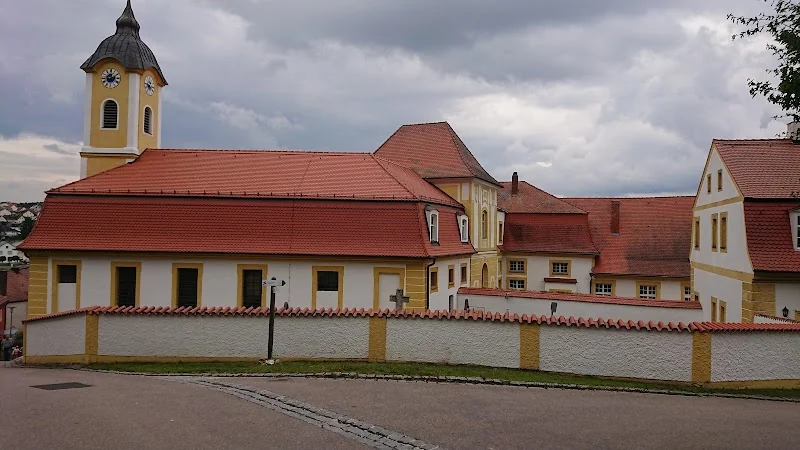
The Johanneskirche in Ebermannsdorf is much more than a historic place of worship. Together with the castle and the keep, it forms one of the most prominent ensembles in the area and is visibly located above the village center on Kirchberg. The community presents it as a sight to see, while the parish offers its own detailed pages, a 360° virtual tour, and historical information. This is particularly interesting for visitors because architecture, local history, faith, and monument preservation overlap in a confined space here. Anyone wanting to understand Ebermannsdorf encounters not only a baroque building at this site but also a place that shapes identity, where the development of the village, church use, and the elaborate restoration of recent years can be directly read. The Johanneskirche thus serves as a landmark, a place of remembrance, and an expression of a vibrant local culture. ([ebermannsdorf.de](https://www.ebermannsdorf.de/sehenswertes/))
History and Restoration of the Johanneskirche Ebermannsdorf
The history of the Johanneskirche is closely linked to the history of Ebermannsdorf Castle. Sources describe it as a former castle church and as a baroque building from the early 18th century. The official Bavarian account states that the filial church of St. John the Baptist was built in the 1720s and is located south of the castle. The KEB Amberg-Sulzbach specifies that the current church was created in 1721/22 as the first work of the Munich master mason Ignaz Anton Gunetzrhainer. Thus, it belongs to the remarkable sacred buildings of the Upper Palatinate because it shows the early handwriting of a significant master builder and simultaneously preserves a piece of noble castle history. The fact that the building is based on older wall remains and a predecessor church shows how deep the history of this place goes and how many layers overlap in its masonry. ([bayern.de](https://www.bayern.de/140-000-euro-fuer-sanierung-der-kirche-st-johannes-der-taeufer-in-ebermannsdorf-kunstminister-dr-spaenle-bewilligt-mittel-aus-entschaedigungsfonds-fuer-instandsetzung-des-baudenkmals-aus-dem-1/))
Particularly impressive is the recent restoration history. The parish reports on a comprehensive overall restoration that took several years and was successfully completed after four years. As early as 2010, the decision was made for a fundamental exterior and interior restoration, in 2016 the exterior restoration began with the uncovering of the foundation, and in 2018 the interior restoration started. The work revealed not only technical challenges such as rotten beams, damaged roof structures, and a compromised building substance but also archaeological and architectural historical findings. The result was so convincing that the responsible parties and monument preservation described the project as exceptionally successful. Financially, the measure was also significant: the restoration cost around 1.5 million euros in total and was funded by donations, own funds, the Diocese of Regensburg, and other public and private entities. For Ebermannsdorf, this restoration is more than a structural renewal; it is a visible sign that the community actively protects and carries forward its historical heritage. ([pfarrei-theuern-eb-pi.de](https://www.pfarrei-theuern-eb-pi.de/index.php/download_file/view/943/313))
Architecture, Altarpiece, and Baroque Furnishings
Architecturally, the Johanneskirche impresses with its baroque basic form and its characteristic roof silhouette. The Bavarian state description mentions the rectangular nave, the remaining wall structures of a predecessor building, and the large mansard roof as defining features of the exterior. This roof is typical for the baroque style, but rare in the Upper Palatinate, which gives the church a special regional character. The KEB also describes the church as a building that, together with the adjacent castle, presents an outstanding ensemble of French baroque classicism. This is complemented by high-quality furnishing elements from the circle of Munich court art, which make the interior not only decorative but also art-historically significant. This is important for visitors because the Johanneskirche is not a stark sacred space but a carefully composed total work of art made up of architecture, spatial effect, and pictorial program. ([bayern.de](https://www.bayern.de/140-000-euro-fuer-sanierung-der-kirche-st-johannes-der-taeufer-in-ebermannsdorf-kunstminister-dr-spaenle-bewilligt-mittel-aus-entschaedigungsfonds-fuer-instandsetzung-des-baudenkmals-aus-dem-1/))
Among the central works of art is the almost full-height altarpiece depicting the baptism of Jesus in the Jordan. The restoration reports describe the deplorable condition of the painting before the restoration: the canvas was damaged, the paint layer was blistered, and a darkened varnish had severely impaired the effect of the image. After scientific examination, extensive conservation, and almost a thousand hours of restoration, the work could be reintegrated into the church space. The KEB also refers to three altarpieces by Johann Adam Müller as well as numerous other details that are vividly explained by the church tour. It is precisely here that the special quality of the Johanneskirche is revealed: it is not only a beautifully restored house of worship but a place with a densely furnished art-historical context, where painting, stucco, spatial staging, and liturgical function interact. Therefore, anyone entering the church encounters not only the baroque style but also a carefully preserved world of images and devotion that tells of the builder's will and the art culture of the time. ([pfarrei-theuern-eb-pi.de](https://www.pfarrei-theuern-eb-pi.de/index.php/download_file/view/942/313))
Monument of National Importance and Restoration Details
The Johanneskirche is explicitly described as a monument of national importance in several sources. This classification is not an empty label but follows from the combination of historical substance, artistic furnishings, and the rare, almost completely restored architectural form. During the restoration, numerous building-time details came to light: old window glasses, coal sketches, the reconstructed floor structures, and the once again visible color and form coatings of the ceiling and wall surfaces. The tower also regained its building-time color. Such measures show how demanding monument preservation work is in a baroque sacred building. Not mere renewal was the focus, but the precise uncovering, securing, complementing, and restoring of historical forms. This created the impression that the house of worship was not modernized after the interventions but rather historically condensed and simultaneously stabilized. ([pfarrei-theuern-eb-pi.de](https://www.pfarrei-theuern-eb-pi.de/index.php/download_file/view/943/313))
The content classification by the parish also underscores the significance of the building. Official reports emphasize that the Johanneskirche, as the oldest and former castle church, is an important part of local identity. The church guide, which is available in the foyer, refers to the rooms, furnishings, and works of art and also explains the special spiritual concern of the builder. This is not only about architectural history but also about the interpretation of a place that has taken on new roles in various epochs: representative castle church, filial church, monument, object of guidance, and again used liturgical space. For visitors, this connection between material preservation and spiritual content is worthwhile. The church has not merely been restored to look beautiful but to make its historical and religious message legible again. This makes its monument character so convincing and explains why it is perceived today as an example of successful monument preservation far beyond Ebermannsdorf. ([ebermannsdorf.de](https://www.ebermannsdorf.de/wp-content/uploads/2020/12/Gemeindeblatt-Ebermannsdorf_NR87-Juli2021_REDUZ.pdf))
Opening Hours, Tours, and 360° Virtual Tour
Anyone wanting to get to know the Johanneskirche better will find a particularly practical entry point on the parish page: it explicitly refers to a 360° virtual tour, historical information, and a dedicated subpage for the Johanneskirche. The community also points to this detailed information from its side. For the digital preparation of a visit, this is valuable because the impression of the interior, the furnishings, and the spatial effect can already be grasped in advance. Especially for a monument that does not function like a classic museum with fixed visiting hours, such online access is very helpful. It allows one to understand the architectural structure, discover details, and contextualize the significance of the place before ascending the Kirchberg oneself. ([pfarrei-theuern-eb-pi.de](https://www.pfarrei-theuern-eb-pi.de/index.php/kirchen/ebermannsdorf-1/johanneskirche/sanierung-johanneskirche))
The historical notes on usage also show that the church has repeatedly been made accessible for openings and tours in the past. The KEB Amberg-Sulzbach announced tours with Christine Schormüller in 2021 and also mentioned the Day of Open Monuments and other dates throughout the year. At that time, the community newsletter also mentioned Sunday openings and individual inquiries through local heritage preservation. These sources primarily demonstrate one thing: the Johanneskirche is not treated as a silent object but as a place that one wants to explain, explore, and experience together. For interested parties, this practically means that current opening or tour dates should always be checked on the official pages of the parish and the community. This combination of online tour, church guide, historical tours, and local contacts makes access to the Johanneskirche pleasant and low-threshold, without losing its worthiness of protection. ([ebermannsdorf.de](https://www.ebermannsdorf.de/wp-content/uploads/2020/12/Gemeindeblatt-Ebermannsdorf_NR87-Juli2021_REDUZ.pdf))
Location on Kirchberg, Castle Ensemble, and Access
The Johanneskirche is located on Kirchberg above Ebermannsdorf and is already visible from the passage through the village. The community describes the castle ensemble as sunny yellow and white, situated above the village; the Johanneskirche is one of the two local churches that are part of this ensemble. This is helpful for orientation because the location should be understood less as a classic city center and more as a historically grown hillside and castle area. Therefore, anyone wanting to go to the church should best follow the address Kirchberg in Ebermannsdorf and orient themselves to the castle grounds. The local references mentioned in the events confirm exactly this topography: Kirchberg is the central destination address for the district on the hill. ([ebermannsdorf.de](https://www.ebermannsdorf.de/sehenswertes/))
It is also important to embed it in a residential castle area. The community points out that the castle itself cannot be visited because it is still inhabited. This means for visitors that the Johanneskirche should not be understood as an isolated tourism tract but as part of a lively, private, and culturally relevant complex. This is precisely why the location and architecture appear so harmonious: church, castle, keep, and local history form a coherent picture. For access, it is advisable to pay attention to local signage and the information from the parish or the organizers, as access may be organized differently depending on the occasion for services, tours, or festivals. The location above the village is not a disadvantage but part of the charm: even the way up clarifies why the Johanneskirche has been perceived as a distinctive landmark of Ebermannsdorf for generations. ([ebermannsdorf.de](https://www.ebermannsdorf.de/sehenswertes/))
Services, Festivals, and Role in Local Life
The Johanneskirche is, despite its historical significance, not merely a monument behind glass but continues to be part of church and social life in Ebermannsdorf. The parish newsletter pages regularly show services, May devotions, and liturgical celebrations in the Johanneskirche, and the historical reports on the reopening after the restoration also make it clear that it is to be filled with life again. In recent years, the church has been the site for the festive service for the feast of St. John the Baptist, for May devotions, and for other community occasions. As a result, it remains not only a place of remembrance but also a space for faith and community. For a village of this size, this is remarkable because such a building does not slip into pure monument or museum logic but remains anchored in everyday life. ([ebermannsdorf.de](https://www.ebermannsdorf.de/wp-content/uploads/2020/12/Gemeindeblatt-Ebermannsdorf_NR87-Juli2021_REDUZ.pdf))
Local remembrance also finds a place here. In 2023, the Mittelbayerische reported on the return of a historical plaque to the Johanneskirche, dedicated to the fallen and missing of World War II. The Historical Association had secured it during the renovation period, had it restored, and returned it to its original location. Such occurrences show that the Johanneskirche embodies not only stony history but also a place of collective memory. For visitors, this creates a very dense experience: architecture, faith, music, patronage, village customs, and memory culture intertwine. This complexity makes the Johanneskirche Ebermannsdorf so exciting and explains why it appears in sources as a landmark, cultural monument, and living place at the same time. Therefore, anyone interested in baroque churches, local history, or church culture in the Amberg-Sulzbach district will find here a particularly characterful place with a strong regional profile. ([mittelbayerische.de](https://www.mittelbayerische.de/lokales/stadt-amberg-und-landkreis-amberg-sulzbach/eine-historische-tafel-erstrahlt-in-der-johanneskirche-in-ebermannsdorf-in-neuem-glanz-14688225?utm_source=openai))
Sources:
- Community Ebermannsdorf – Sights: Johanneskirche
- Parish Theuern-Ebermannsdorf-Pittersberg – Restoration Johanneskirche
- Bavarian State Portal – Restoration of St. John the Baptist in Ebermannsdorf
- KEB Amberg-Sulzbach – Church and Tavern 2020 (Johanneskirche Ebermannsdorf)
- Mittelbayerische – Historical Plaque in the Johanneskirche Ebermannsdorf (29.10.2023)
Show moreShow less
Johanneskirche Ebermannsdorf | History & 360° Virtual Tour
The Johanneskirche in Ebermannsdorf is much more than a historic place of worship. Together with the castle and the keep, it forms one of the most prominent ensembles in the area and is visibly located above the village center on Kirchberg. The community presents it as a sight to see, while the parish offers its own detailed pages, a 360° virtual tour, and historical information. This is particularly interesting for visitors because architecture, local history, faith, and monument preservation overlap in a confined space here. Anyone wanting to understand Ebermannsdorf encounters not only a baroque building at this site but also a place that shapes identity, where the development of the village, church use, and the elaborate restoration of recent years can be directly read. The Johanneskirche thus serves as a landmark, a place of remembrance, and an expression of a vibrant local culture. ([ebermannsdorf.de](https://www.ebermannsdorf.de/sehenswertes/))
History and Restoration of the Johanneskirche Ebermannsdorf
The history of the Johanneskirche is closely linked to the history of Ebermannsdorf Castle. Sources describe it as a former castle church and as a baroque building from the early 18th century. The official Bavarian account states that the filial church of St. John the Baptist was built in the 1720s and is located south of the castle. The KEB Amberg-Sulzbach specifies that the current church was created in 1721/22 as the first work of the Munich master mason Ignaz Anton Gunetzrhainer. Thus, it belongs to the remarkable sacred buildings of the Upper Palatinate because it shows the early handwriting of a significant master builder and simultaneously preserves a piece of noble castle history. The fact that the building is based on older wall remains and a predecessor church shows how deep the history of this place goes and how many layers overlap in its masonry. ([bayern.de](https://www.bayern.de/140-000-euro-fuer-sanierung-der-kirche-st-johannes-der-taeufer-in-ebermannsdorf-kunstminister-dr-spaenle-bewilligt-mittel-aus-entschaedigungsfonds-fuer-instandsetzung-des-baudenkmals-aus-dem-1/))
Particularly impressive is the recent restoration history. The parish reports on a comprehensive overall restoration that took several years and was successfully completed after four years. As early as 2010, the decision was made for a fundamental exterior and interior restoration, in 2016 the exterior restoration began with the uncovering of the foundation, and in 2018 the interior restoration started. The work revealed not only technical challenges such as rotten beams, damaged roof structures, and a compromised building substance but also archaeological and architectural historical findings. The result was so convincing that the responsible parties and monument preservation described the project as exceptionally successful. Financially, the measure was also significant: the restoration cost around 1.5 million euros in total and was funded by donations, own funds, the Diocese of Regensburg, and other public and private entities. For Ebermannsdorf, this restoration is more than a structural renewal; it is a visible sign that the community actively protects and carries forward its historical heritage. ([pfarrei-theuern-eb-pi.de](https://www.pfarrei-theuern-eb-pi.de/index.php/download_file/view/943/313))
Architecture, Altarpiece, and Baroque Furnishings
Architecturally, the Johanneskirche impresses with its baroque basic form and its characteristic roof silhouette. The Bavarian state description mentions the rectangular nave, the remaining wall structures of a predecessor building, and the large mansard roof as defining features of the exterior. This roof is typical for the baroque style, but rare in the Upper Palatinate, which gives the church a special regional character. The KEB also describes the church as a building that, together with the adjacent castle, presents an outstanding ensemble of French baroque classicism. This is complemented by high-quality furnishing elements from the circle of Munich court art, which make the interior not only decorative but also art-historically significant. This is important for visitors because the Johanneskirche is not a stark sacred space but a carefully composed total work of art made up of architecture, spatial effect, and pictorial program. ([bayern.de](https://www.bayern.de/140-000-euro-fuer-sanierung-der-kirche-st-johannes-der-taeufer-in-ebermannsdorf-kunstminister-dr-spaenle-bewilligt-mittel-aus-entschaedigungsfonds-fuer-instandsetzung-des-baudenkmals-aus-dem-1/))
Among the central works of art is the almost full-height altarpiece depicting the baptism of Jesus in the Jordan. The restoration reports describe the deplorable condition of the painting before the restoration: the canvas was damaged, the paint layer was blistered, and a darkened varnish had severely impaired the effect of the image. After scientific examination, extensive conservation, and almost a thousand hours of restoration, the work could be reintegrated into the church space. The KEB also refers to three altarpieces by Johann Adam Müller as well as numerous other details that are vividly explained by the church tour. It is precisely here that the special quality of the Johanneskirche is revealed: it is not only a beautifully restored house of worship but a place with a densely furnished art-historical context, where painting, stucco, spatial staging, and liturgical function interact. Therefore, anyone entering the church encounters not only the baroque style but also a carefully preserved world of images and devotion that tells of the builder's will and the art culture of the time. ([pfarrei-theuern-eb-pi.de](https://www.pfarrei-theuern-eb-pi.de/index.php/download_file/view/942/313))
Monument of National Importance and Restoration Details
The Johanneskirche is explicitly described as a monument of national importance in several sources. This classification is not an empty label but follows from the combination of historical substance, artistic furnishings, and the rare, almost completely restored architectural form. During the restoration, numerous building-time details came to light: old window glasses, coal sketches, the reconstructed floor structures, and the once again visible color and form coatings of the ceiling and wall surfaces. The tower also regained its building-time color. Such measures show how demanding monument preservation work is in a baroque sacred building. Not mere renewal was the focus, but the precise uncovering, securing, complementing, and restoring of historical forms. This created the impression that the house of worship was not modernized after the interventions but rather historically condensed and simultaneously stabilized. ([pfarrei-theuern-eb-pi.de](https://www.pfarrei-theuern-eb-pi.de/index.php/download_file/view/943/313))
The content classification by the parish also underscores the significance of the building. Official reports emphasize that the Johanneskirche, as the oldest and former castle church, is an important part of local identity. The church guide, which is available in the foyer, refers to the rooms, furnishings, and works of art and also explains the special spiritual concern of the builder. This is not only about architectural history but also about the interpretation of a place that has taken on new roles in various epochs: representative castle church, filial church, monument, object of guidance, and again used liturgical space. For visitors, this connection between material preservation and spiritual content is worthwhile. The church has not merely been restored to look beautiful but to make its historical and religious message legible again. This makes its monument character so convincing and explains why it is perceived today as an example of successful monument preservation far beyond Ebermannsdorf. ([ebermannsdorf.de](https://www.ebermannsdorf.de/wp-content/uploads/2020/12/Gemeindeblatt-Ebermannsdorf_NR87-Juli2021_REDUZ.pdf))
Opening Hours, Tours, and 360° Virtual Tour
Anyone wanting to get to know the Johanneskirche better will find a particularly practical entry point on the parish page: it explicitly refers to a 360° virtual tour, historical information, and a dedicated subpage for the Johanneskirche. The community also points to this detailed information from its side. For the digital preparation of a visit, this is valuable because the impression of the interior, the furnishings, and the spatial effect can already be grasped in advance. Especially for a monument that does not function like a classic museum with fixed visiting hours, such online access is very helpful. It allows one to understand the architectural structure, discover details, and contextualize the significance of the place before ascending the Kirchberg oneself. ([pfarrei-theuern-eb-pi.de](https://www.pfarrei-theuern-eb-pi.de/index.php/kirchen/ebermannsdorf-1/johanneskirche/sanierung-johanneskirche))
The historical notes on usage also show that the church has repeatedly been made accessible for openings and tours in the past. The KEB Amberg-Sulzbach announced tours with Christine Schormüller in 2021 and also mentioned the Day of Open Monuments and other dates throughout the year. At that time, the community newsletter also mentioned Sunday openings and individual inquiries through local heritage preservation. These sources primarily demonstrate one thing: the Johanneskirche is not treated as a silent object but as a place that one wants to explain, explore, and experience together. For interested parties, this practically means that current opening or tour dates should always be checked on the official pages of the parish and the community. This combination of online tour, church guide, historical tours, and local contacts makes access to the Johanneskirche pleasant and low-threshold, without losing its worthiness of protection. ([ebermannsdorf.de](https://www.ebermannsdorf.de/wp-content/uploads/2020/12/Gemeindeblatt-Ebermannsdorf_NR87-Juli2021_REDUZ.pdf))
Location on Kirchberg, Castle Ensemble, and Access
The Johanneskirche is located on Kirchberg above Ebermannsdorf and is already visible from the passage through the village. The community describes the castle ensemble as sunny yellow and white, situated above the village; the Johanneskirche is one of the two local churches that are part of this ensemble. This is helpful for orientation because the location should be understood less as a classic city center and more as a historically grown hillside and castle area. Therefore, anyone wanting to go to the church should best follow the address Kirchberg in Ebermannsdorf and orient themselves to the castle grounds. The local references mentioned in the events confirm exactly this topography: Kirchberg is the central destination address for the district on the hill. ([ebermannsdorf.de](https://www.ebermannsdorf.de/sehenswertes/))
It is also important to embed it in a residential castle area. The community points out that the castle itself cannot be visited because it is still inhabited. This means for visitors that the Johanneskirche should not be understood as an isolated tourism tract but as part of a lively, private, and culturally relevant complex. This is precisely why the location and architecture appear so harmonious: church, castle, keep, and local history form a coherent picture. For access, it is advisable to pay attention to local signage and the information from the parish or the organizers, as access may be organized differently depending on the occasion for services, tours, or festivals. The location above the village is not a disadvantage but part of the charm: even the way up clarifies why the Johanneskirche has been perceived as a distinctive landmark of Ebermannsdorf for generations. ([ebermannsdorf.de](https://www.ebermannsdorf.de/sehenswertes/))
Services, Festivals, and Role in Local Life
The Johanneskirche is, despite its historical significance, not merely a monument behind glass but continues to be part of church and social life in Ebermannsdorf. The parish newsletter pages regularly show services, May devotions, and liturgical celebrations in the Johanneskirche, and the historical reports on the reopening after the restoration also make it clear that it is to be filled with life again. In recent years, the church has been the site for the festive service for the feast of St. John the Baptist, for May devotions, and for other community occasions. As a result, it remains not only a place of remembrance but also a space for faith and community. For a village of this size, this is remarkable because such a building does not slip into pure monument or museum logic but remains anchored in everyday life. ([ebermannsdorf.de](https://www.ebermannsdorf.de/wp-content/uploads/2020/12/Gemeindeblatt-Ebermannsdorf_NR87-Juli2021_REDUZ.pdf))
Local remembrance also finds a place here. In 2023, the Mittelbayerische reported on the return of a historical plaque to the Johanneskirche, dedicated to the fallen and missing of World War II. The Historical Association had secured it during the renovation period, had it restored, and returned it to its original location. Such occurrences show that the Johanneskirche embodies not only stony history but also a place of collective memory. For visitors, this creates a very dense experience: architecture, faith, music, patronage, village customs, and memory culture intertwine. This complexity makes the Johanneskirche Ebermannsdorf so exciting and explains why it appears in sources as a landmark, cultural monument, and living place at the same time. Therefore, anyone interested in baroque churches, local history, or church culture in the Amberg-Sulzbach district will find here a particularly characterful place with a strong regional profile. ([mittelbayerische.de](https://www.mittelbayerische.de/lokales/stadt-amberg-und-landkreis-amberg-sulzbach/eine-historische-tafel-erstrahlt-in-der-johanneskirche-in-ebermannsdorf-in-neuem-glanz-14688225?utm_source=openai))
Sources:
- Community Ebermannsdorf – Sights: Johanneskirche
- Parish Theuern-Ebermannsdorf-Pittersberg – Restoration Johanneskirche
- Bavarian State Portal – Restoration of St. John the Baptist in Ebermannsdorf
- KEB Amberg-Sulzbach – Church and Tavern 2020 (Johanneskirche Ebermannsdorf)
- Mittelbayerische – Historical Plaque in the Johanneskirche Ebermannsdorf (29.10.2023)
Johanneskirche Ebermannsdorf | History & 360° Virtual Tour
The Johanneskirche in Ebermannsdorf is much more than a historic place of worship. Together with the castle and the keep, it forms one of the most prominent ensembles in the area and is visibly located above the village center on Kirchberg. The community presents it as a sight to see, while the parish offers its own detailed pages, a 360° virtual tour, and historical information. This is particularly interesting for visitors because architecture, local history, faith, and monument preservation overlap in a confined space here. Anyone wanting to understand Ebermannsdorf encounters not only a baroque building at this site but also a place that shapes identity, where the development of the village, church use, and the elaborate restoration of recent years can be directly read. The Johanneskirche thus serves as a landmark, a place of remembrance, and an expression of a vibrant local culture. ([ebermannsdorf.de](https://www.ebermannsdorf.de/sehenswertes/))
History and Restoration of the Johanneskirche Ebermannsdorf
The history of the Johanneskirche is closely linked to the history of Ebermannsdorf Castle. Sources describe it as a former castle church and as a baroque building from the early 18th century. The official Bavarian account states that the filial church of St. John the Baptist was built in the 1720s and is located south of the castle. The KEB Amberg-Sulzbach specifies that the current church was created in 1721/22 as the first work of the Munich master mason Ignaz Anton Gunetzrhainer. Thus, it belongs to the remarkable sacred buildings of the Upper Palatinate because it shows the early handwriting of a significant master builder and simultaneously preserves a piece of noble castle history. The fact that the building is based on older wall remains and a predecessor church shows how deep the history of this place goes and how many layers overlap in its masonry. ([bayern.de](https://www.bayern.de/140-000-euro-fuer-sanierung-der-kirche-st-johannes-der-taeufer-in-ebermannsdorf-kunstminister-dr-spaenle-bewilligt-mittel-aus-entschaedigungsfonds-fuer-instandsetzung-des-baudenkmals-aus-dem-1/))
Particularly impressive is the recent restoration history. The parish reports on a comprehensive overall restoration that took several years and was successfully completed after four years. As early as 2010, the decision was made for a fundamental exterior and interior restoration, in 2016 the exterior restoration began with the uncovering of the foundation, and in 2018 the interior restoration started. The work revealed not only technical challenges such as rotten beams, damaged roof structures, and a compromised building substance but also archaeological and architectural historical findings. The result was so convincing that the responsible parties and monument preservation described the project as exceptionally successful. Financially, the measure was also significant: the restoration cost around 1.5 million euros in total and was funded by donations, own funds, the Diocese of Regensburg, and other public and private entities. For Ebermannsdorf, this restoration is more than a structural renewal; it is a visible sign that the community actively protects and carries forward its historical heritage. ([pfarrei-theuern-eb-pi.de](https://www.pfarrei-theuern-eb-pi.de/index.php/download_file/view/943/313))
Architecture, Altarpiece, and Baroque Furnishings
Architecturally, the Johanneskirche impresses with its baroque basic form and its characteristic roof silhouette. The Bavarian state description mentions the rectangular nave, the remaining wall structures of a predecessor building, and the large mansard roof as defining features of the exterior. This roof is typical for the baroque style, but rare in the Upper Palatinate, which gives the church a special regional character. The KEB also describes the church as a building that, together with the adjacent castle, presents an outstanding ensemble of French baroque classicism. This is complemented by high-quality furnishing elements from the circle of Munich court art, which make the interior not only decorative but also art-historically significant. This is important for visitors because the Johanneskirche is not a stark sacred space but a carefully composed total work of art made up of architecture, spatial effect, and pictorial program. ([bayern.de](https://www.bayern.de/140-000-euro-fuer-sanierung-der-kirche-st-johannes-der-taeufer-in-ebermannsdorf-kunstminister-dr-spaenle-bewilligt-mittel-aus-entschaedigungsfonds-fuer-instandsetzung-des-baudenkmals-aus-dem-1/))
Among the central works of art is the almost full-height altarpiece depicting the baptism of Jesus in the Jordan. The restoration reports describe the deplorable condition of the painting before the restoration: the canvas was damaged, the paint layer was blistered, and a darkened varnish had severely impaired the effect of the image. After scientific examination, extensive conservation, and almost a thousand hours of restoration, the work could be reintegrated into the church space. The KEB also refers to three altarpieces by Johann Adam Müller as well as numerous other details that are vividly explained by the church tour. It is precisely here that the special quality of the Johanneskirche is revealed: it is not only a beautifully restored house of worship but a place with a densely furnished art-historical context, where painting, stucco, spatial staging, and liturgical function interact. Therefore, anyone entering the church encounters not only the baroque style but also a carefully preserved world of images and devotion that tells of the builder's will and the art culture of the time. ([pfarrei-theuern-eb-pi.de](https://www.pfarrei-theuern-eb-pi.de/index.php/download_file/view/942/313))
Monument of National Importance and Restoration Details
The Johanneskirche is explicitly described as a monument of national importance in several sources. This classification is not an empty label but follows from the combination of historical substance, artistic furnishings, and the rare, almost completely restored architectural form. During the restoration, numerous building-time details came to light: old window glasses, coal sketches, the reconstructed floor structures, and the once again visible color and form coatings of the ceiling and wall surfaces. The tower also regained its building-time color. Such measures show how demanding monument preservation work is in a baroque sacred building. Not mere renewal was the focus, but the precise uncovering, securing, complementing, and restoring of historical forms. This created the impression that the house of worship was not modernized after the interventions but rather historically condensed and simultaneously stabilized. ([pfarrei-theuern-eb-pi.de](https://www.pfarrei-theuern-eb-pi.de/index.php/download_file/view/943/313))
The content classification by the parish also underscores the significance of the building. Official reports emphasize that the Johanneskirche, as the oldest and former castle church, is an important part of local identity. The church guide, which is available in the foyer, refers to the rooms, furnishings, and works of art and also explains the special spiritual concern of the builder. This is not only about architectural history but also about the interpretation of a place that has taken on new roles in various epochs: representative castle church, filial church, monument, object of guidance, and again used liturgical space. For visitors, this connection between material preservation and spiritual content is worthwhile. The church has not merely been restored to look beautiful but to make its historical and religious message legible again. This makes its monument character so convincing and explains why it is perceived today as an example of successful monument preservation far beyond Ebermannsdorf. ([ebermannsdorf.de](https://www.ebermannsdorf.de/wp-content/uploads/2020/12/Gemeindeblatt-Ebermannsdorf_NR87-Juli2021_REDUZ.pdf))
Opening Hours, Tours, and 360° Virtual Tour
Anyone wanting to get to know the Johanneskirche better will find a particularly practical entry point on the parish page: it explicitly refers to a 360° virtual tour, historical information, and a dedicated subpage for the Johanneskirche. The community also points to this detailed information from its side. For the digital preparation of a visit, this is valuable because the impression of the interior, the furnishings, and the spatial effect can already be grasped in advance. Especially for a monument that does not function like a classic museum with fixed visiting hours, such online access is very helpful. It allows one to understand the architectural structure, discover details, and contextualize the significance of the place before ascending the Kirchberg oneself. ([pfarrei-theuern-eb-pi.de](https://www.pfarrei-theuern-eb-pi.de/index.php/kirchen/ebermannsdorf-1/johanneskirche/sanierung-johanneskirche))
The historical notes on usage also show that the church has repeatedly been made accessible for openings and tours in the past. The KEB Amberg-Sulzbach announced tours with Christine Schormüller in 2021 and also mentioned the Day of Open Monuments and other dates throughout the year. At that time, the community newsletter also mentioned Sunday openings and individual inquiries through local heritage preservation. These sources primarily demonstrate one thing: the Johanneskirche is not treated as a silent object but as a place that one wants to explain, explore, and experience together. For interested parties, this practically means that current opening or tour dates should always be checked on the official pages of the parish and the community. This combination of online tour, church guide, historical tours, and local contacts makes access to the Johanneskirche pleasant and low-threshold, without losing its worthiness of protection. ([ebermannsdorf.de](https://www.ebermannsdorf.de/wp-content/uploads/2020/12/Gemeindeblatt-Ebermannsdorf_NR87-Juli2021_REDUZ.pdf))
Location on Kirchberg, Castle Ensemble, and Access
The Johanneskirche is located on Kirchberg above Ebermannsdorf and is already visible from the passage through the village. The community describes the castle ensemble as sunny yellow and white, situated above the village; the Johanneskirche is one of the two local churches that are part of this ensemble. This is helpful for orientation because the location should be understood less as a classic city center and more as a historically grown hillside and castle area. Therefore, anyone wanting to go to the church should best follow the address Kirchberg in Ebermannsdorf and orient themselves to the castle grounds. The local references mentioned in the events confirm exactly this topography: Kirchberg is the central destination address for the district on the hill. ([ebermannsdorf.de](https://www.ebermannsdorf.de/sehenswertes/))
It is also important to embed it in a residential castle area. The community points out that the castle itself cannot be visited because it is still inhabited. This means for visitors that the Johanneskirche should not be understood as an isolated tourism tract but as part of a lively, private, and culturally relevant complex. This is precisely why the location and architecture appear so harmonious: church, castle, keep, and local history form a coherent picture. For access, it is advisable to pay attention to local signage and the information from the parish or the organizers, as access may be organized differently depending on the occasion for services, tours, or festivals. The location above the village is not a disadvantage but part of the charm: even the way up clarifies why the Johanneskirche has been perceived as a distinctive landmark of Ebermannsdorf for generations. ([ebermannsdorf.de](https://www.ebermannsdorf.de/sehenswertes/))
Services, Festivals, and Role in Local Life
The Johanneskirche is, despite its historical significance, not merely a monument behind glass but continues to be part of church and social life in Ebermannsdorf. The parish newsletter pages regularly show services, May devotions, and liturgical celebrations in the Johanneskirche, and the historical reports on the reopening after the restoration also make it clear that it is to be filled with life again. In recent years, the church has been the site for the festive service for the feast of St. John the Baptist, for May devotions, and for other community occasions. As a result, it remains not only a place of remembrance but also a space for faith and community. For a village of this size, this is remarkable because such a building does not slip into pure monument or museum logic but remains anchored in everyday life. ([ebermannsdorf.de](https://www.ebermannsdorf.de/wp-content/uploads/2020/12/Gemeindeblatt-Ebermannsdorf_NR87-Juli2021_REDUZ.pdf))
Local remembrance also finds a place here. In 2023, the Mittelbayerische reported on the return of a historical plaque to the Johanneskirche, dedicated to the fallen and missing of World War II. The Historical Association had secured it during the renovation period, had it restored, and returned it to its original location. Such occurrences show that the Johanneskirche embodies not only stony history but also a place of collective memory. For visitors, this creates a very dense experience: architecture, faith, music, patronage, village customs, and memory culture intertwine. This complexity makes the Johanneskirche Ebermannsdorf so exciting and explains why it appears in sources as a landmark, cultural monument, and living place at the same time. Therefore, anyone interested in baroque churches, local history, or church culture in the Amberg-Sulzbach district will find here a particularly characterful place with a strong regional profile. ([mittelbayerische.de](https://www.mittelbayerische.de/lokales/stadt-amberg-und-landkreis-amberg-sulzbach/eine-historische-tafel-erstrahlt-in-der-johanneskirche-in-ebermannsdorf-in-neuem-glanz-14688225?utm_source=openai))
Sources:
- Community Ebermannsdorf – Sights: Johanneskirche
- Parish Theuern-Ebermannsdorf-Pittersberg – Restoration Johanneskirche
- Bavarian State Portal – Restoration of St. John the Baptist in Ebermannsdorf
- KEB Amberg-Sulzbach – Church and Tavern 2020 (Johanneskirche Ebermannsdorf)
- Mittelbayerische – Historical Plaque in the Johanneskirche Ebermannsdorf (29.10.2023)
Frequently Asked Questions
Reviews
No reviews found