
Sulzbach-Rosenberg
Im Hag 5, 92237 Sulzbach-Rosenberg, Deutschland
Gasthaus Zur Landkutsche | Beer Garden & Events
The Gasthaus Zur Landkutsche in Sulzbach-Rosenberg is much more than just an address for good food or a quick stop. Current sources show a place where history, Bavarian inn culture, a lively beer garden, and regular music events come together. The address Im Hag 5 is anchored in official and regional directories, the building is listed as a monument, and events in the beer garden are again documented for 2026. Thus, the Landkutsche is suitable not only for those looking for a traditional inn but also for visitors wanting to experience a special atmosphere with regional character. Those looking for photos, opening hours, directions, parking, or current events will find a house with a clear identity, strong local ties, and a reputation that has grown over the years as a meeting point for locals and guests from the region. ([geodaten.bayern.de](https://geodaten.bayern.de/denkmal_static_data/externe_denkmalliste/pdf/denkmalliste_merge_371151.pdf))
History and Monument Status of the Gasthaus Zur Landkutsche
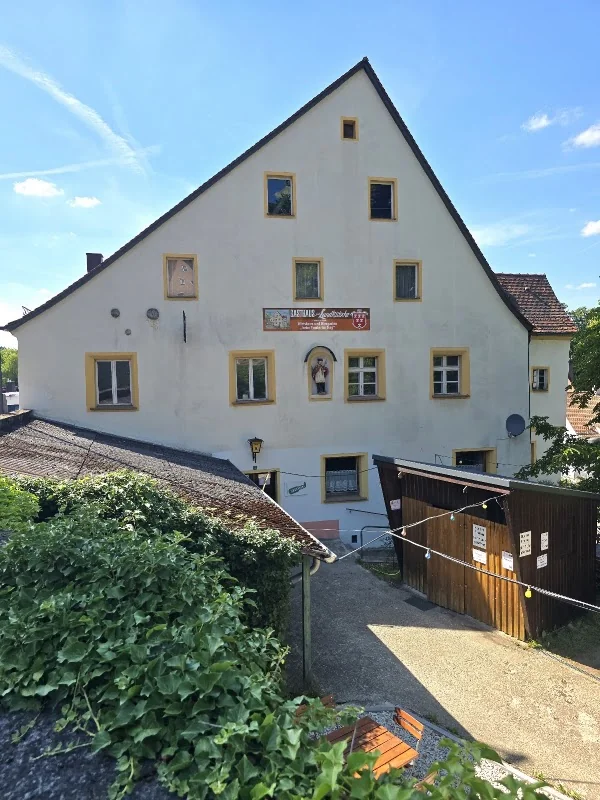
The historical core of the Landkutsche is one of the main reasons why this inn stands out in the urban landscape of Sulzbach-Rosenberg. The entry in the Bavarian monument register describes the building at Im Hag 5 as a two-story, plastered solid construction at a corner location with a gable roof, marked with the year 1400 and likely originating from the 17th century. Additionally, there is a house figure of St. John of Nepomuk and furnishings that emphasize its monument character. For those seeking history, old buildings, tradition, or special features, this is a strong signal: This is not just any gastronomic establishment, but a structure with a grown, urban identity. The Landkutsche is thus an example of those inns that not only serve food but carry stories and shape a neighborhood over generations. ([geodaten.bayern.de](https://geodaten.bayern.de/denkmal_static_data/externe_denkmalliste/pdf/denkmalliste_merge_371151.pdf))
Additionally, a regional history page describes the inn in Hag as probably one of the oldest inns in Sulzbach-Rosenberg and refers to traditions stating that the inn was destroyed during the Landshut War of Succession and rebuilt at the end of the 16th century. This account is formulated as a tradition and should be read as such, but it shows very well how strongly the Landkutsche is connected to the city's history. Equally important is the reference to its location on the old Nuremberg road and near the former cobblestone toll house. So, those searching for historical routes, the Golden Road, or traditional inns will find a place that is interesting not only architecturally but also in terms of transport and cultural history. This explains why the Landkutsche is not simply perceived as a restaurant, but as a true piece of local memory culture. ([feuerhof.de](https://www.feuerhof.de/landkutsche.html))
Beer Garden and Landkutschen Music Summer
The Landkutsche is particularly strong when the beer garden becomes a meeting point for music and sociability. Several current event pages from the city and the regional portal show concerts in the beer garden of the Landkutsche for 2026, including the Birgländer Musikanten on June 19, DUK3S on June 20, and Stefan Sommer & The Southside Ramblers on July 10. The wording on the pages is clear: It is about free admission, free seating, no reservations, and the classic hat for voluntary donations. This mix is precisely what makes it appealing, as it transforms the inn into an open, approachable cultural venue. The audience comes not only for the food but for the atmosphere, the music, and the shared summer evening. For SEO inquiries such as events, program, music summer, or beer garden, this is a particularly strong thematic field because it positions the Landkutsche as a vibrant event location. ([oberpfalz.de](https://www.oberpfalz.de/veranstaltungen/birglaender-musikanten-im-biergarten-der-landkutsche/?utm_source=openai))
The descriptions of the events also provide practical details that are important for visitors. The Birgländer Musikanten, according to the event text, perform as a guest in the beer garden every year; the Landkutschen team provides guests with classics from the grill and drinks, and the beer garden opens at 5 PM, while the music starts at 7 PM. For DUK3S, it is additionally emphasized that most of the set consists of original compositions, stylistically combining folk rock, acoustic pop, country, and Irish folk. Stefan Sommer & The Southside Ramblers, in turn, bring Americana, singer-songwriter, and blues, complemented by Bavarian dialect. From an SEO perspective, this diversity is important: The Landkutsche is not a specialized venue for a single format, but a stage for different accents between folk music, acoustic, folk, and regionally influenced live culture. So, those searching for a program, open-air atmosphere, or a summer concert evening in Sulzbach-Rosenberg are likely to land at this house. ([oberpfalz.de](https://www.oberpfalz.de/veranstaltungen/birglaender-musikanten-im-biergarten-der-landkutsche/?utm_source=openai))
Opening Hours, Reservations, and Visiting Times
When planning a visit, the question of opening hours is particularly important. According to the industry directory Cylex, the Gasthaus Zur Landkutsche is open on Fridays from 5:00 PM to 11:00 PM, while Saturday to Thursday is listed as closed; this information was updated on May 11, 2026. This also aligns with recurring notes from the regional presentation, which describes the house as a rather exclusive, almost mysterious Friday location. For people specifically looking for opening hours, evening appointments, or the right day of the week, this is very clear information. The Landkutsche is thus not a daily standard operation, but a place with consciously limited opening hours, which further shapes the character of the house. This rarity can be attractive to visitors, as it makes the visit to the Landkutsche feel not everyday, but deliberately planned. ([web2.cylex.de](https://web2.cylex.de/firma-home/gasthaus-zur-landkutsche-11751116.html?utm_source=openai))
Especially relevant are the reservation rules on event days. On the official city page, it states for current beer garden concerts: free seating, no reservations. Additionally, the beer garden opens at 5 PM, while the concert starts at 7 PM. For anyone looking for tickets, presale, or fixed seating, this is important, as these events work deliberately differently than classic hall events. There is no complex seating plan logic, but a relaxed beer garden atmosphere with open access, outdoor character, and spontaneous mood. So, those searching for information on reservations, entry, or procedures should read the specific event texts, as they clearly state the rules on site. For the SEO context, this means: Terms like reservation, free seats, entry, beer garden opening, and evening program are among the strongest practical search intentions related to the Landkutsche. ([suro.city](https://www.suro.city/veranstaltung/stefan-sommer-the-southside-ramblers-im-biergarten-der-landkutsche/))
Address, Directions, and Parking at Im Hag
The address of the Landkutsche is clear: Im Hag 5, 92237 Sulzbach-Rosenberg. This information appears in the monument list, on the official event page of the city, in regional business directories, and on restaurant pages. This consistency is important for users looking for directions, route descriptions, or location in the urban area. Additionally, there is the historical local reference: The regional history presentation refers to the old Nuremberg road and the proximity to the former cobblestone toll house. Thus, the approach is not only practical but also historically interesting, as the location on an old traffic axis explains why the house has been so present for centuries. Those searching for terms like directions, location, address, or route description will find clear orientation here at a place that connects city history and everyday use. ([geodaten.bayern.de](https://geodaten.bayern.de/denkmal_static_data/externe_denkmalliste/pdf/denkmalliste_merge_371151.pdf))
Regarding parking, the researched city map and business sources at least provide useful hints for the surrounding area. The city map from meinestadt.de describes the area Im Hag as a place where parking spaces, recreational opportunities, restaurants, and other services can be found nearby, and lists the Gasthaus Zur Landkutsche directly in the section of local restaurants. For visitors, this means: The view of the surroundings of Im Hag is worthwhile, even if no own, officially designated large parking lot directly at the house is mentioned in the checked sources. It is also practical that the district remains manageable within the city structure and the Landkutsche is listed as a well-known point of contact. So, whether arriving by car or on foot, one should understand the location not just as an address but as a small hub in the historical city area. SEO-relevant search terms like parking lot, parking, directions, and route description are particularly useful here, as they directly support the visit planning. ([meinestadt.de](https://www.meinestadt.de/sulzbach-rosenberg/stadtplan/strasse/im%2Bhag))
Regional Cuisine and Rustic Atmosphere
Even though the Landkutsche stands out mainly through its history and events, the gastronomic part of the house is an essential component of the overall picture. Speisekarte.de assigns the operation to regional cuisine, which is particularly important for many search queries related to Bavarian, regional, inn, or traditional cuisine. This fits with the description from the regional platform Feuerhof, which speaks of a rustic, cozy atmosphere, traditional Bavarian flair, and charming nostalgia. In front of the inn, there is a beautiful beer garden under chestnut trees, and inside, a picture of King Ludwig shapes the atmosphere. Such details make it understandable why the Landkutsche is perceived not only as a restaurant but as an emotional place. Those looking for a traditional inn with character do not expect smooth event gastronomy here, but a house with corners, history, and palpable identity. ([speisekarte.de](https://www.speisekarte.de/sulzbach-rosenberg/restaurant/heiss_gehard_gasthaus_zur_landkutsche))
The current event description complements this picture beautifully, as it mentions the Landkutsche team providing guests with classics from the grill and drinks. This clearly shows that the kitchen and the beer garden are not to be understood separately from the culture but together form the profile of the place. For visitors, this is attractive because one does not just get a meal here, but experiences an evening with atmosphere, music, and uncomplicated service. Especially in summer, this creates a format that is situated between inn, beer garden, and a small open-air stage. This is relevant for search terms like regional cuisine, grilled dishes, beer garden, inn, and rustic atmosphere. Thus, those visiting the Landkutsche often seek not gourmet staging but authenticity, regional connection, and a place where one still feels that hospitality and neighborhood belong together. ([suro.city](https://www.suro.city/veranstaltung/stefan-sommer-the-southside-ramblers-im-biergarten-der-landkutsche/))
Photos, Reviews, and the Typical Impression on Site
Those searching for photos or images of the Landkutsche will find public image references to the building in Wikimedia Commons as well as image and placeholder areas in business directories. The Commons file explicitly shows the Gasthaus Zur Landkutsche in Sulzbach-Rosenberg at Im Hag 5, and such visual hits are important for users who want to get an impression of the house in advance. From an SEO perspective, this is highly relevant, as many search queries are formulated not only by the name of the inn but also by images, photos, or pictures of Gasthaus Zur Landkutsche. The object appears architecturally clear as an old building with a corner location, gable roof, and historical substance, which further strengthens its visual recognizability. So, those researching in advance not only get an address but also a first impression of how strongly the house is tied to its street and its past. ([commons.wikimedia.org](https://commons.wikimedia.org/wiki/File%3ASulzbach_326_Im_Hag_5_Nbg_Str_Gasth_z_Landkutsche.jpg?utm_source=openai))
The typical impression on site is surprisingly uniform in the found descriptions: rustic, cozy, nostalgic, and very locally anchored. The regional history page emphasizes the relaxed, charming atmosphere and describes the inn as a place where time seems to have almost stood still. The event pages complement the picture with the summer beer garden and concert atmosphere, which is particularly effective when visitors sit together at free admission, grilled dishes, and music. For reviews, the provided location data also indicates a very positive image with 4.8 stars from 44 reviews, which further supports the good first impression. Together, this creates a coherent profile: The Landkutsche is not an anonymous gastronomic operation but a small, characterful place with regional cuisine, lively summer evenings, and a history that one can not only read but also feel during a visit. This is exactly what makes it so interesting for those searching for photos, reviews, and authentic impressions. ([feuerhof.de](https://www.feuerhof.de/landkutsche.html))
Sources:
- City of Sulzbach-Rosenberg - Events
- City of Sulzbach-Rosenberg - Stefan Sommer & The Southside Ramblers in the Beer Garden of the Landkutsche
- Bavarian State Office for Monument Preservation - Monument List
- Cylex - Gasthaus Zur Landkutsche Sulzbach-Rosenberg
- Feuerhof - Zur Landkutsche
- meinestadt.de - Im Hag, Sulzbach-Rosenberg
- Wikimedia Commons - Gasthof Zur Landkutsche
- speisekarte.de - Heiß Gehard Gasthaus zur Landkutsche
Mehr anzeigenWeniger anzeigen
Gasthaus Zur Landkutsche | Beer Garden & Events
The Gasthaus Zur Landkutsche in Sulzbach-Rosenberg is much more than just an address for good food or a quick stop. Current sources show a place where history, Bavarian inn culture, a lively beer garden, and regular music events come together. The address Im Hag 5 is anchored in official and regional directories, the building is listed as a monument, and events in the beer garden are again documented for 2026. Thus, the Landkutsche is suitable not only for those looking for a traditional inn but also for visitors wanting to experience a special atmosphere with regional character. Those looking for photos, opening hours, directions, parking, or current events will find a house with a clear identity, strong local ties, and a reputation that has grown over the years as a meeting point for locals and guests from the region. ([geodaten.bayern.de](https://geodaten.bayern.de/denkmal_static_data/externe_denkmalliste/pdf/denkmalliste_merge_371151.pdf))
History and Monument Status of the Gasthaus Zur Landkutsche
The historical core of the Landkutsche is one of the main reasons why this inn stands out in the urban landscape of Sulzbach-Rosenberg. The entry in the Bavarian monument register describes the building at Im Hag 5 as a two-story, plastered solid construction at a corner location with a gable roof, marked with the year 1400 and likely originating from the 17th century. Additionally, there is a house figure of St. John of Nepomuk and furnishings that emphasize its monument character. For those seeking history, old buildings, tradition, or special features, this is a strong signal: This is not just any gastronomic establishment, but a structure with a grown, urban identity. The Landkutsche is thus an example of those inns that not only serve food but carry stories and shape a neighborhood over generations. ([geodaten.bayern.de](https://geodaten.bayern.de/denkmal_static_data/externe_denkmalliste/pdf/denkmalliste_merge_371151.pdf))
Additionally, a regional history page describes the inn in Hag as probably one of the oldest inns in Sulzbach-Rosenberg and refers to traditions stating that the inn was destroyed during the Landshut War of Succession and rebuilt at the end of the 16th century. This account is formulated as a tradition and should be read as such, but it shows very well how strongly the Landkutsche is connected to the city's history. Equally important is the reference to its location on the old Nuremberg road and near the former cobblestone toll house. So, those searching for historical routes, the Golden Road, or traditional inns will find a place that is interesting not only architecturally but also in terms of transport and cultural history. This explains why the Landkutsche is not simply perceived as a restaurant, but as a true piece of local memory culture. ([feuerhof.de](https://www.feuerhof.de/landkutsche.html))
Beer Garden and Landkutschen Music Summer
The Landkutsche is particularly strong when the beer garden becomes a meeting point for music and sociability. Several current event pages from the city and the regional portal show concerts in the beer garden of the Landkutsche for 2026, including the Birgländer Musikanten on June 19, DUK3S on June 20, and Stefan Sommer & The Southside Ramblers on July 10. The wording on the pages is clear: It is about free admission, free seating, no reservations, and the classic hat for voluntary donations. This mix is precisely what makes it appealing, as it transforms the inn into an open, approachable cultural venue. The audience comes not only for the food but for the atmosphere, the music, and the shared summer evening. For SEO inquiries such as events, program, music summer, or beer garden, this is a particularly strong thematic field because it positions the Landkutsche as a vibrant event location. ([oberpfalz.de](https://www.oberpfalz.de/veranstaltungen/birglaender-musikanten-im-biergarten-der-landkutsche/?utm_source=openai))
The descriptions of the events also provide practical details that are important for visitors. The Birgländer Musikanten, according to the event text, perform as a guest in the beer garden every year; the Landkutschen team provides guests with classics from the grill and drinks, and the beer garden opens at 5 PM, while the music starts at 7 PM. For DUK3S, it is additionally emphasized that most of the set consists of original compositions, stylistically combining folk rock, acoustic pop, country, and Irish folk. Stefan Sommer & The Southside Ramblers, in turn, bring Americana, singer-songwriter, and blues, complemented by Bavarian dialect. From an SEO perspective, this diversity is important: The Landkutsche is not a specialized venue for a single format, but a stage for different accents between folk music, acoustic, folk, and regionally influenced live culture. So, those searching for a program, open-air atmosphere, or a summer concert evening in Sulzbach-Rosenberg are likely to land at this house. ([oberpfalz.de](https://www.oberpfalz.de/veranstaltungen/birglaender-musikanten-im-biergarten-der-landkutsche/?utm_source=openai))
Opening Hours, Reservations, and Visiting Times
When planning a visit, the question of opening hours is particularly important. According to the industry directory Cylex, the Gasthaus Zur Landkutsche is open on Fridays from 5:00 PM to 11:00 PM, while Saturday to Thursday is listed as closed; this information was updated on May 11, 2026. This also aligns with recurring notes from the regional presentation, which describes the house as a rather exclusive, almost mysterious Friday location. For people specifically looking for opening hours, evening appointments, or the right day of the week, this is very clear information. The Landkutsche is thus not a daily standard operation, but a place with consciously limited opening hours, which further shapes the character of the house. This rarity can be attractive to visitors, as it makes the visit to the Landkutsche feel not everyday, but deliberately planned. ([web2.cylex.de](https://web2.cylex.de/firma-home/gasthaus-zur-landkutsche-11751116.html?utm_source=openai))
Especially relevant are the reservation rules on event days. On the official city page, it states for current beer garden concerts: free seating, no reservations. Additionally, the beer garden opens at 5 PM, while the concert starts at 7 PM. For anyone looking for tickets, presale, or fixed seating, this is important, as these events work deliberately differently than classic hall events. There is no complex seating plan logic, but a relaxed beer garden atmosphere with open access, outdoor character, and spontaneous mood. So, those searching for information on reservations, entry, or procedures should read the specific event texts, as they clearly state the rules on site. For the SEO context, this means: Terms like reservation, free seats, entry, beer garden opening, and evening program are among the strongest practical search intentions related to the Landkutsche. ([suro.city](https://www.suro.city/veranstaltung/stefan-sommer-the-southside-ramblers-im-biergarten-der-landkutsche/))
Address, Directions, and Parking at Im Hag
The address of the Landkutsche is clear: Im Hag 5, 92237 Sulzbach-Rosenberg. This information appears in the monument list, on the official event page of the city, in regional business directories, and on restaurant pages. This consistency is important for users looking for directions, route descriptions, or location in the urban area. Additionally, there is the historical local reference: The regional history presentation refers to the old Nuremberg road and the proximity to the former cobblestone toll house. Thus, the approach is not only practical but also historically interesting, as the location on an old traffic axis explains why the house has been so present for centuries. Those searching for terms like directions, location, address, or route description will find clear orientation here at a place that connects city history and everyday use. ([geodaten.bayern.de](https://geodaten.bayern.de/denkmal_static_data/externe_denkmalliste/pdf/denkmalliste_merge_371151.pdf))
Regarding parking, the researched city map and business sources at least provide useful hints for the surrounding area. The city map from meinestadt.de describes the area Im Hag as a place where parking spaces, recreational opportunities, restaurants, and other services can be found nearby, and lists the Gasthaus Zur Landkutsche directly in the section of local restaurants. For visitors, this means: The view of the surroundings of Im Hag is worthwhile, even if no own, officially designated large parking lot directly at the house is mentioned in the checked sources. It is also practical that the district remains manageable within the city structure and the Landkutsche is listed as a well-known point of contact. So, whether arriving by car or on foot, one should understand the location not just as an address but as a small hub in the historical city area. SEO-relevant search terms like parking lot, parking, directions, and route description are particularly useful here, as they directly support the visit planning. ([meinestadt.de](https://www.meinestadt.de/sulzbach-rosenberg/stadtplan/strasse/im%2Bhag))
Regional Cuisine and Rustic Atmosphere
Even though the Landkutsche stands out mainly through its history and events, the gastronomic part of the house is an essential component of the overall picture. Speisekarte.de assigns the operation to regional cuisine, which is particularly important for many search queries related to Bavarian, regional, inn, or traditional cuisine. This fits with the description from the regional platform Feuerhof, which speaks of a rustic, cozy atmosphere, traditional Bavarian flair, and charming nostalgia. In front of the inn, there is a beautiful beer garden under chestnut trees, and inside, a picture of King Ludwig shapes the atmosphere. Such details make it understandable why the Landkutsche is perceived not only as a restaurant but as an emotional place. Those looking for a traditional inn with character do not expect smooth event gastronomy here, but a house with corners, history, and palpable identity. ([speisekarte.de](https://www.speisekarte.de/sulzbach-rosenberg/restaurant/heiss_gehard_gasthaus_zur_landkutsche))
The current event description complements this picture beautifully, as it mentions the Landkutsche team providing guests with classics from the grill and drinks. This clearly shows that the kitchen and the beer garden are not to be understood separately from the culture but together form the profile of the place. For visitors, this is attractive because one does not just get a meal here, but experiences an evening with atmosphere, music, and uncomplicated service. Especially in summer, this creates a format that is situated between inn, beer garden, and a small open-air stage. This is relevant for search terms like regional cuisine, grilled dishes, beer garden, inn, and rustic atmosphere. Thus, those visiting the Landkutsche often seek not gourmet staging but authenticity, regional connection, and a place where one still feels that hospitality and neighborhood belong together. ([suro.city](https://www.suro.city/veranstaltung/stefan-sommer-the-southside-ramblers-im-biergarten-der-landkutsche/))
Photos, Reviews, and the Typical Impression on Site
Those searching for photos or images of the Landkutsche will find public image references to the building in Wikimedia Commons as well as image and placeholder areas in business directories. The Commons file explicitly shows the Gasthaus Zur Landkutsche in Sulzbach-Rosenberg at Im Hag 5, and such visual hits are important for users who want to get an impression of the house in advance. From an SEO perspective, this is highly relevant, as many search queries are formulated not only by the name of the inn but also by images, photos, or pictures of Gasthaus Zur Landkutsche. The object appears architecturally clear as an old building with a corner location, gable roof, and historical substance, which further strengthens its visual recognizability. So, those researching in advance not only get an address but also a first impression of how strongly the house is tied to its street and its past. ([commons.wikimedia.org](https://commons.wikimedia.org/wiki/File%3ASulzbach_326_Im_Hag_5_Nbg_Str_Gasth_z_Landkutsche.jpg?utm_source=openai))
The typical impression on site is surprisingly uniform in the found descriptions: rustic, cozy, nostalgic, and very locally anchored. The regional history page emphasizes the relaxed, charming atmosphere and describes the inn as a place where time seems to have almost stood still. The event pages complement the picture with the summer beer garden and concert atmosphere, which is particularly effective when visitors sit together at free admission, grilled dishes, and music. For reviews, the provided location data also indicates a very positive image with 4.8 stars from 44 reviews, which further supports the good first impression. Together, this creates a coherent profile: The Landkutsche is not an anonymous gastronomic operation but a small, characterful place with regional cuisine, lively summer evenings, and a history that one can not only read but also feel during a visit. This is exactly what makes it so interesting for those searching for photos, reviews, and authentic impressions. ([feuerhof.de](https://www.feuerhof.de/landkutsche.html))
Sources:
- City of Sulzbach-Rosenberg - Events
- City of Sulzbach-Rosenberg - Stefan Sommer & The Southside Ramblers in the Beer Garden of the Landkutsche
- Bavarian State Office for Monument Preservation - Monument List
- Cylex - Gasthaus Zur Landkutsche Sulzbach-Rosenberg
- Feuerhof - Zur Landkutsche
- meinestadt.de - Im Hag, Sulzbach-Rosenberg
- Wikimedia Commons - Gasthof Zur Landkutsche
- speisekarte.de - Heiß Gehard Gasthaus zur Landkutsche
Gasthaus Zur Landkutsche | Beer Garden & Events
The Gasthaus Zur Landkutsche in Sulzbach-Rosenberg is much more than just an address for good food or a quick stop. Current sources show a place where history, Bavarian inn culture, a lively beer garden, and regular music events come together. The address Im Hag 5 is anchored in official and regional directories, the building is listed as a monument, and events in the beer garden are again documented for 2026. Thus, the Landkutsche is suitable not only for those looking for a traditional inn but also for visitors wanting to experience a special atmosphere with regional character. Those looking for photos, opening hours, directions, parking, or current events will find a house with a clear identity, strong local ties, and a reputation that has grown over the years as a meeting point for locals and guests from the region. ([geodaten.bayern.de](https://geodaten.bayern.de/denkmal_static_data/externe_denkmalliste/pdf/denkmalliste_merge_371151.pdf))
History and Monument Status of the Gasthaus Zur Landkutsche
The historical core of the Landkutsche is one of the main reasons why this inn stands out in the urban landscape of Sulzbach-Rosenberg. The entry in the Bavarian monument register describes the building at Im Hag 5 as a two-story, plastered solid construction at a corner location with a gable roof, marked with the year 1400 and likely originating from the 17th century. Additionally, there is a house figure of St. John of Nepomuk and furnishings that emphasize its monument character. For those seeking history, old buildings, tradition, or special features, this is a strong signal: This is not just any gastronomic establishment, but a structure with a grown, urban identity. The Landkutsche is thus an example of those inns that not only serve food but carry stories and shape a neighborhood over generations. ([geodaten.bayern.de](https://geodaten.bayern.de/denkmal_static_data/externe_denkmalliste/pdf/denkmalliste_merge_371151.pdf))
Additionally, a regional history page describes the inn in Hag as probably one of the oldest inns in Sulzbach-Rosenberg and refers to traditions stating that the inn was destroyed during the Landshut War of Succession and rebuilt at the end of the 16th century. This account is formulated as a tradition and should be read as such, but it shows very well how strongly the Landkutsche is connected to the city's history. Equally important is the reference to its location on the old Nuremberg road and near the former cobblestone toll house. So, those searching for historical routes, the Golden Road, or traditional inns will find a place that is interesting not only architecturally but also in terms of transport and cultural history. This explains why the Landkutsche is not simply perceived as a restaurant, but as a true piece of local memory culture. ([feuerhof.de](https://www.feuerhof.de/landkutsche.html))
Beer Garden and Landkutschen Music Summer
The Landkutsche is particularly strong when the beer garden becomes a meeting point for music and sociability. Several current event pages from the city and the regional portal show concerts in the beer garden of the Landkutsche for 2026, including the Birgländer Musikanten on June 19, DUK3S on June 20, and Stefan Sommer & The Southside Ramblers on July 10. The wording on the pages is clear: It is about free admission, free seating, no reservations, and the classic hat for voluntary donations. This mix is precisely what makes it appealing, as it transforms the inn into an open, approachable cultural venue. The audience comes not only for the food but for the atmosphere, the music, and the shared summer evening. For SEO inquiries such as events, program, music summer, or beer garden, this is a particularly strong thematic field because it positions the Landkutsche as a vibrant event location. ([oberpfalz.de](https://www.oberpfalz.de/veranstaltungen/birglaender-musikanten-im-biergarten-der-landkutsche/?utm_source=openai))
The descriptions of the events also provide practical details that are important for visitors. The Birgländer Musikanten, according to the event text, perform as a guest in the beer garden every year; the Landkutschen team provides guests with classics from the grill and drinks, and the beer garden opens at 5 PM, while the music starts at 7 PM. For DUK3S, it is additionally emphasized that most of the set consists of original compositions, stylistically combining folk rock, acoustic pop, country, and Irish folk. Stefan Sommer & The Southside Ramblers, in turn, bring Americana, singer-songwriter, and blues, complemented by Bavarian dialect. From an SEO perspective, this diversity is important: The Landkutsche is not a specialized venue for a single format, but a stage for different accents between folk music, acoustic, folk, and regionally influenced live culture. So, those searching for a program, open-air atmosphere, or a summer concert evening in Sulzbach-Rosenberg are likely to land at this house. ([oberpfalz.de](https://www.oberpfalz.de/veranstaltungen/birglaender-musikanten-im-biergarten-der-landkutsche/?utm_source=openai))
Opening Hours, Reservations, and Visiting Times
When planning a visit, the question of opening hours is particularly important. According to the industry directory Cylex, the Gasthaus Zur Landkutsche is open on Fridays from 5:00 PM to 11:00 PM, while Saturday to Thursday is listed as closed; this information was updated on May 11, 2026. This also aligns with recurring notes from the regional presentation, which describes the house as a rather exclusive, almost mysterious Friday location. For people specifically looking for opening hours, evening appointments, or the right day of the week, this is very clear information. The Landkutsche is thus not a daily standard operation, but a place with consciously limited opening hours, which further shapes the character of the house. This rarity can be attractive to visitors, as it makes the visit to the Landkutsche feel not everyday, but deliberately planned. ([web2.cylex.de](https://web2.cylex.de/firma-home/gasthaus-zur-landkutsche-11751116.html?utm_source=openai))
Especially relevant are the reservation rules on event days. On the official city page, it states for current beer garden concerts: free seating, no reservations. Additionally, the beer garden opens at 5 PM, while the concert starts at 7 PM. For anyone looking for tickets, presale, or fixed seating, this is important, as these events work deliberately differently than classic hall events. There is no complex seating plan logic, but a relaxed beer garden atmosphere with open access, outdoor character, and spontaneous mood. So, those searching for information on reservations, entry, or procedures should read the specific event texts, as they clearly state the rules on site. For the SEO context, this means: Terms like reservation, free seats, entry, beer garden opening, and evening program are among the strongest practical search intentions related to the Landkutsche. ([suro.city](https://www.suro.city/veranstaltung/stefan-sommer-the-southside-ramblers-im-biergarten-der-landkutsche/))
Address, Directions, and Parking at Im Hag
The address of the Landkutsche is clear: Im Hag 5, 92237 Sulzbach-Rosenberg. This information appears in the monument list, on the official event page of the city, in regional business directories, and on restaurant pages. This consistency is important for users looking for directions, route descriptions, or location in the urban area. Additionally, there is the historical local reference: The regional history presentation refers to the old Nuremberg road and the proximity to the former cobblestone toll house. Thus, the approach is not only practical but also historically interesting, as the location on an old traffic axis explains why the house has been so present for centuries. Those searching for terms like directions, location, address, or route description will find clear orientation here at a place that connects city history and everyday use. ([geodaten.bayern.de](https://geodaten.bayern.de/denkmal_static_data/externe_denkmalliste/pdf/denkmalliste_merge_371151.pdf))
Regarding parking, the researched city map and business sources at least provide useful hints for the surrounding area. The city map from meinestadt.de describes the area Im Hag as a place where parking spaces, recreational opportunities, restaurants, and other services can be found nearby, and lists the Gasthaus Zur Landkutsche directly in the section of local restaurants. For visitors, this means: The view of the surroundings of Im Hag is worthwhile, even if no own, officially designated large parking lot directly at the house is mentioned in the checked sources. It is also practical that the district remains manageable within the city structure and the Landkutsche is listed as a well-known point of contact. So, whether arriving by car or on foot, one should understand the location not just as an address but as a small hub in the historical city area. SEO-relevant search terms like parking lot, parking, directions, and route description are particularly useful here, as they directly support the visit planning. ([meinestadt.de](https://www.meinestadt.de/sulzbach-rosenberg/stadtplan/strasse/im%2Bhag))
Regional Cuisine and Rustic Atmosphere
Even though the Landkutsche stands out mainly through its history and events, the gastronomic part of the house is an essential component of the overall picture. Speisekarte.de assigns the operation to regional cuisine, which is particularly important for many search queries related to Bavarian, regional, inn, or traditional cuisine. This fits with the description from the regional platform Feuerhof, which speaks of a rustic, cozy atmosphere, traditional Bavarian flair, and charming nostalgia. In front of the inn, there is a beautiful beer garden under chestnut trees, and inside, a picture of King Ludwig shapes the atmosphere. Such details make it understandable why the Landkutsche is perceived not only as a restaurant but as an emotional place. Those looking for a traditional inn with character do not expect smooth event gastronomy here, but a house with corners, history, and palpable identity. ([speisekarte.de](https://www.speisekarte.de/sulzbach-rosenberg/restaurant/heiss_gehard_gasthaus_zur_landkutsche))
The current event description complements this picture beautifully, as it mentions the Landkutsche team providing guests with classics from the grill and drinks. This clearly shows that the kitchen and the beer garden are not to be understood separately from the culture but together form the profile of the place. For visitors, this is attractive because one does not just get a meal here, but experiences an evening with atmosphere, music, and uncomplicated service. Especially in summer, this creates a format that is situated between inn, beer garden, and a small open-air stage. This is relevant for search terms like regional cuisine, grilled dishes, beer garden, inn, and rustic atmosphere. Thus, those visiting the Landkutsche often seek not gourmet staging but authenticity, regional connection, and a place where one still feels that hospitality and neighborhood belong together. ([suro.city](https://www.suro.city/veranstaltung/stefan-sommer-the-southside-ramblers-im-biergarten-der-landkutsche/))
Photos, Reviews, and the Typical Impression on Site
Those searching for photos or images of the Landkutsche will find public image references to the building in Wikimedia Commons as well as image and placeholder areas in business directories. The Commons file explicitly shows the Gasthaus Zur Landkutsche in Sulzbach-Rosenberg at Im Hag 5, and such visual hits are important for users who want to get an impression of the house in advance. From an SEO perspective, this is highly relevant, as many search queries are formulated not only by the name of the inn but also by images, photos, or pictures of Gasthaus Zur Landkutsche. The object appears architecturally clear as an old building with a corner location, gable roof, and historical substance, which further strengthens its visual recognizability. So, those researching in advance not only get an address but also a first impression of how strongly the house is tied to its street and its past. ([commons.wikimedia.org](https://commons.wikimedia.org/wiki/File%3ASulzbach_326_Im_Hag_5_Nbg_Str_Gasth_z_Landkutsche.jpg?utm_source=openai))
The typical impression on site is surprisingly uniform in the found descriptions: rustic, cozy, nostalgic, and very locally anchored. The regional history page emphasizes the relaxed, charming atmosphere and describes the inn as a place where time seems to have almost stood still. The event pages complement the picture with the summer beer garden and concert atmosphere, which is particularly effective when visitors sit together at free admission, grilled dishes, and music. For reviews, the provided location data also indicates a very positive image with 4.8 stars from 44 reviews, which further supports the good first impression. Together, this creates a coherent profile: The Landkutsche is not an anonymous gastronomic operation but a small, characterful place with regional cuisine, lively summer evenings, and a history that one can not only read but also feel during a visit. This is exactly what makes it so interesting for those searching for photos, reviews, and authentic impressions. ([feuerhof.de](https://www.feuerhof.de/landkutsche.html))
Sources:
- City of Sulzbach-Rosenberg - Events
- City of Sulzbach-Rosenberg - Stefan Sommer & The Southside Ramblers in the Beer Garden of the Landkutsche
- Bavarian State Office for Monument Preservation - Monument List
- Cylex - Gasthaus Zur Landkutsche Sulzbach-Rosenberg
- Feuerhof - Zur Landkutsche
- meinestadt.de - Im Hag, Sulzbach-Rosenberg
- Wikimedia Commons - Gasthof Zur Landkutsche
- speisekarte.de - Heiß Gehard Gasthaus zur Landkutsche
Upcoming Events

Phil Seccer Band: Acoustic-Vintage Evening at the Landkutsche
Free summer evening at the Landkutsche: The Phil Seccer Band brings Acoustic Vintage, rock, and blues to Sulzbach-Rosenberg. #LiveMusic
Rosenberger Nativity Trail 2026
A winter walk full of light and tradition: The Rosenberger Nativity Trail in Rosenberg delights with 36 stations and a peaceful Advent atmosphere. #Advent
Frequently Asked Questions
Reviews
Jens Grawe
6. April 2026
Great service. Nice location, would love to come back again.
Heike Graf
9. February 2022
Quaint pub with friendly service and great hosts.
Jürgen Mei
25. October 2025
Charming inn. Everything was perfect.
Daniel Nelles
17. March 2024
A wonderfully quaint tavern, very centrally located. The relatively young hosts and the rest of the team on site are doing a great job. Keep it up.
Casablonga
24. March 2023
Best inn in the area! Super nice, friendly staff, charming atmosphere, good & affordable drinks. Always happy to come back!