
Schnaittach
Simonshofer Str., 91220 Schnaittach, Deutschland
Festival Ground at Bürgerweiher | Events & Tickets
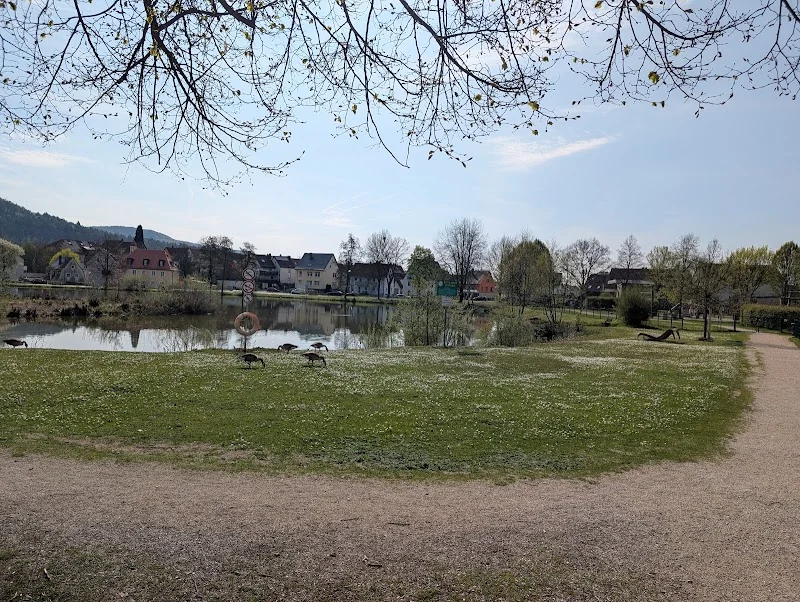
The festival ground at Bürgerweiher in Schnaittach is a public event space with a strong local connection and a clear focus on festivals, markets, and seasonal formats. The market of Schnaittach lists the Bürgerweiher in its statutes as a public institution; in the budget documents, there is also a specific section for the festival ground at Bürgerweiher, which underscores the municipal significance of the place. Practically, this means: Those looking for events, tickets, or directions will not find a classic concert hall with fixed seating here, but an open area used for church fairs, market events, and other outdoor activities. This very mix is what makes it appealing. The place is not just a functional area but part of everyday life and festival culture in Schnaittach. ([schnaittach.de](https://www.schnaittach.de/Satzung-ueber-die-Benutzung-der-oeffentlichen-Plaetze-Gruenanlagen-und-Spielplaetze.o804.html))
The location also tells a lot about its use. The Bürgerweiher has long been recognized in Schnaittach as a prominent place; the market describes it as picturesque and connects it with a view of the Rothenberg fortress. In winter, ice skating is even possible there, making the area a year-round meeting point. For visitors, this is helpful because the festival ground at Bürgerweiher should not be viewed in isolation: It belongs to a larger local space of ponds, townscape, festival tradition, and public use. Those looking for an uncomplicated, approachable, and at the same time traditional venue will find a place with genuine Schnaittacher character here. ([schnaittach.de](https://www.schnaittach.de/index.php?id=191))
Events at the Festival Ground at Bürgerweiher
The most important search intention behind the location is clear: What events take place here? The sources primarily show two formats. First, the Schnaittach church fair, which is visible in municipal documents and regional reporting. Second, flea and antique markets, for which the festival ground is used as an open area. This is a strong signal for the relevance of the place to search engines and users, as the area does not limit itself to a single event type but serves multiple occasions. Especially for a festival ground, this flexibility is important: The area must serve as a market on some days, as a church fair area on others, and as an alternative space when needed. This multiple use explains why the place is present in local perception, even though it is not a classic multipurpose hall. ([nn.de](https://www.nn.de/region/nuernberger-land/nach-verregnetem-auftakt-zweimal-kirchweih-in-schnaittach-mit-guter-stimmung-1.14344159))
The church fair is particularly formative. In the retrospective of the market of Schnaittach, it is stated that the beer garden of the church fair at Bürgerweiher has been redesigned. This is more than just a detail from an administrative report, as it shows that the place is actively maintained and further developed for festival operations. The regional press described the festival ground at Bürgerweiher in 2023 and 2024 as the center of the Schnaittacher church fair, sometimes even as a huge beer garden that filled up until Monday evening. Such descriptions are valuable for visitors because they make the atmosphere tangible: It is not just about a date on the calendar, but about a lively festival area with family afternoons, music, and local encounters. This makes it clear why the festival ground at Bürgerweiher frequently appears in search queries like events or program. ([schnaittach.de](https://www.schnaittach.de/rueckblick-aus-dem-rathaus-auf-2025))
The municipality itself also indirectly indicates that organized, recurring events take place here. The budget documents list revenues from stand fees and charges for the church fair operations for the festival ground at Bürgerweiher. This suggests that the place is not only passively available as a space but is actively managed for event purposes. For visitors, this means: Around the festival ground, appointments, stand setups, and organizational requirements can be expected, which may vary depending on the event. Therefore, those looking for the current program should always check with the respective organizers or the market's calendars. This structure is typical for municipal festival grounds and makes the site particularly relevant for search queries related to events. ([schnaittach.de](https://www.schnaittach.de/verwaltungshaushalt-2026?utm_source=openai))
Church Fair at Bürgerweiher: Tradition, Beer Garden, and Family Program
The church fair is the emotional heart of this place. Several sources show that the festival ground at Bürgerweiher is closely linked to the Schnaittacher church fair. The regional reporting describes the area as a place with much activity until the evening, while the market of Schnaittach explicitly mentions the redesigned beer garden of the church fair at Bürgerweiher in its retrospective. From an SEO perspective, this is a strong thematic field because users are not only searching for the bare location but also for events, atmosphere, and tradition. Therefore, those visiting the church fair at Bürgerweiher do not expect just any street festival, but a recurring event rooted in Schnaittach with a clear local identity. ([schnaittach.de](https://www.schnaittach.de/rueckblick-aus-dem-rathaus-auf-2025))
Interestingly, the church fair does not necessarily have to be characterized by a large festival tent. A report from 2023 describes how the festival ground at Bürgerweiher transformed into a huge beer garden by the end of the church fair, and this was done without a festival tent. This is important information for visitors because it shows that the use of the space flexibly responds to the respective edition of the church fair. For the quality of the experience, this can even be an advantage: open, airy, direct, with a stronger connection to the outside space. The reporting also mentions music from solo entertainers to DJs and Monday afternoons as family time. This creates the image of a festival that does not only rely on rides or gastronomy but also on communal quality of stay. ([nn.de](https://www.nn.de/region/nuernberger-land/kirwa-spass-in-schnaittach-auch-ohne-grosses-festzelt-1.13411050))
For the local profile, it is also important that the church fair at Bürgerweiher does not take place in an anonymous event space but in a location with recognizable community ties. The market of Schnaittach lists the festival ground in its budget plans as part of public institutions, and in the parking situation of the swimming pool, the area is explicitly mentioned as an alternative parking lot, although not during the church fair from July 10 to 13, 2026. This shows how closely festival operations, traffic management, and municipal planning are intertwined. For the search intention of church fair Schnaittach, this is invaluable: The user receives not only the date character of the place but also practical information about the area itself. ([schnaittach.de](https://www.schnaittach.de/verwaltungshaushalt-2026?utm_source=openai))
Those who want to describe the church fair from an SEO perspective should therefore combine three aspects: tradition, atmosphere, and organization. Tradition here means the recurring festival use in Schnaittach; atmosphere refers to the open beer garden character, the family elements, and the proximity to the Bürgerweiher; organization relates to stand fees, municipal management, and traffic notices. This combination is understandable for visitors and at the same time relevant for search engines because it serves multiple search motives simultaneously. Precisely for this reason, the festival ground at Bürgerweiher fits so well with search terms like church fair, events, program, and directions. The area stands not only for a date but for a recurring local experience with a clear identity. ([schnaittach.de](https://www.schnaittach.de/verwaltungshaushalt-2026?utm_source=openai))
Flea Market, Antique Flea Market, and Open Area
A second, very relevant thematic block is flea markets and antique flea markets. The marketcom event for the festival ground at Bürgerweiher explicitly names the place as an open area and lists an antique flea market with the address Simonshofer Straße, 91220 Schnaittach for October 25, 2026. This is important for search logic because it provides a specific type of event that goes beyond mere church fair use. Users searching for Schnaittach flea market or antique flea market Schnaittach usually expect practical information about date, location, and process. The event format of the festival ground provides this information particularly well because it is open, easily accessible, and suitable for market stalls. ([marktcom.de](https://www.marktcom.de/veranstaltung/festplatz-am-buergerweiher-in-91220-schnaittach))
That the area is classified as an open space is not just a formal indication but also explains the nature of its use. An open area functions differently than a hall or a venue: there is no fixed stage architecture, no rigid seating plan, and no permanently defined interior logic. Instead, stalls, walkways, and areas for staying can be adjusted depending on the event. This is ideal for flea markets and seasonal sales formats. The marketcom page also contains a clear note that the area may not be accessed by vehicles before the event. Such notices are typical for open market areas where logistics, setup and takedown, and visitor flow must be clearly separated. For visitors, this is an important practical point because it means that access and stopping should always take place within the framework of the event regulations. ([marktcom.de](https://www.marktcom.de/veranstaltung/festplatz-am-buergerweiher-in-91220-schnaittach))
The municipal side also supports the idea of a lively market and event location. In the market of Schnaittach, the festival ground Bürgerweiher appears in the administration budget with stand fees and church fair operations; in the public calendar and other appointment notices, it becomes clear that the place is used repeatedly. The combination of municipal management and private event organization makes the area attractive for markets because it is reliably located and can be flexibly utilized. For visitors, this means that they can often expect uncomplicated outdoor conditions for flea and antique market dates, but they must also observe clear rules regarding access, parking, and vehicle setup. This is typical for larger market areas and at the same time an important SEO feature because searchers often ask for these practical details. ([schnaittach.de](https://www.schnaittach.de/verwaltungshaushalt-2026?utm_source=openai))
For content planning, the keyword field around flea markets is particularly valuable. It connects the location with a specific search intention and brings additional reach because people often search for dates, addresses, directions, parking, and setup at outdoor and flea market events. The festival ground at Bürgerweiher meets all these expectations without needing its own ticket architecture. This is particularly helpful for the site structure: Instead of writing about seat selection or hall plans, the focus should be on market formats, times, sales stands, and traffic rules. This makes the content not only more useful but also closer to the actual use of the place. ([marktcom.de](https://www.marktcom.de/veranstaltung/festplatz-am-buergerweiher-in-91220-schnaittach))
Directions and Parking at the Festival Ground at Bürgerweiher
For an open festival ground, directions and parking are usually just as important as the program itself. There are several reliable indications regarding the festival ground at Bürgerweiher. The market of Schnaittach names the area in an information document about the parking situation of the swimming pool as an alternative parking area; at the same time, it is explicitly noted that the festival ground will not be available as a parking area from July 10 to 13, 2026, due to the church fair. This is a very concrete, practical piece of information and shows that the area is considered in traffic planning. Therefore, those traveling near the Bürgerweiher should not only pay attention to the address but also to event dates and possible closures. ([schnaittach.de](https://www.schnaittach.de/parksituation-freibad-schnaittach-2))
Additionally, the event page for the antique flea market makes an important rule clear: The area may not be accessed by vehicles before the event. This sounds simple but has significant practical implications. It means that visitors, vendors, and suppliers should not block access or use it for spontaneous stops. Such rules are common at open area events because they protect safety, setup and takedown, and ensure smooth visitor flow. For the search phrase parking festival ground at Bürgerweiher, the central answer is: Yes, parking may be possible depending on the event, but only within the framework of the current municipal or organizational regulations. There is no blanket approval regardless of the event. ([marktcom.de](https://www.marktcom.de/veranstaltung/festplatz-am-buergerweiher-in-91220-schnaittach))
The official statute of the market of Schnaittach classifies places, green areas, and the Bürgerweiher as public institutions. This makes it clear that the location is not just a private event space but part of municipal infrastructure. This classification is important because it explains why traffic and usage rules are formulated so clearly. Public areas need protection, care, and coordinated use. For visitors, this means: Please approach with respect for signage and event logistics, and in case of uncertainty, check the official notices from the market or the respective organizer. Those using a GPS should set Simonshofer Straße in Schnaittach as their destination, but always pay attention to the marked traffic flow on-site. ([schnaittach.de](https://www.schnaittach.de/Satzung-ueber-die-Benutzung-der-oeffentlichen-Plaetze-Gruenanlagen-und-Spielplaetze.o804.html))
Another practical point is the proximity to other municipal areas, such as the swimming pool or the cemetery, which are also mentioned in the parking situation. The market of Schnaittach points out alternative areas but also specifies clear prohibitions for sidewalks, unpaved green areas, and unmarked zones. Even though these notices do not directly relate to every event at the festival ground, they show the general approach of the municipality regarding traffic around the Bürgerweiher. For visitors, this is a good orientation: it is better to use officially designated areas than improvised solutions. This is not only proper but also helps avoid conflicts on busy days. ([schnaittach.de](https://www.schnaittach.de/parksituation-freibad-schnaittach-2))
Tickets, Registration, and Practical Information for Visitors
The search query tickets is a good example of how user expectations can differ from actual use at the festival ground at Bürgerweiher. In the researched sources, there is no general central ticket shop for the festival ground itself. Instead, event-related information appears, such as for the church fair or the antique flea market. This is typical for an open festival ground: The location does not sell tickets like a theater but is used by respective organizers who bring their own access or organizational rules. Therefore, the most sensible answer to the ticket question is: Tickets, if they are needed at all, depend on the respective event and should be checked with the organizer. ([marktcom.de](https://www.marktcom.de/veranstaltung/festplatz-am-buergerweiher-in-91220-schnaittach))
Particularly important in this context are stand fees and organizational rules. The budget documents of the market of Schnaittach show revenues from stand fees and similar charges for the church fair operations at the festival ground Bürgerweiher. This is a clear indication that for certain formats, vendor and organizer structures are primarily in focus. Therefore, visitors do not necessarily need a classic entrance ticket but rather current information about opening hours, event times, and possible fees for individual offers. Especially at outdoor and market events, this distinction is important because the search intention often leans towards the word tickets, but the reality is more shaped by organizer systems and market stalls. ([schnaittach.de](https://www.schnaittach.de/verwaltungshaushalt-2026?utm_source=openai))
For practical visit planning, it is also worthwhile to look at appointment patterns. The church fair took place in 2024 at the festival ground at Bürgerweiher with good attendance; the market of Schnaittach even explicitly notes the exception regarding parking during the church fair for 2026. For flea and antique markets, marketcom lists a specific date in October 2026. This gives visitors a clear recommendation: Not only search for the place name but always also look for the specific date of the event. Especially at a multifunctional festival ground, the same area can have completely different roles depending on the week. This flexibility makes the place interesting but also requires attention when planning. ([nn.de](https://www.nn.de/region/nuernberger-land/nach-verregnetem-auftakt-zweimal-kirchweih-in-schnaittach-mit-guter-stimmung-1.14344159))
From an SEO perspective, the topic of tickets is still meaningful because many users search specifically for this. The right content should not build a false ticket promise but reflect the reality of the place: open area, changing formats, event-related organization, and no classic season ticket. This transparency builds trust and improves the usability of the site. For the festival ground at Bürgerweiher, this means that visitor information, date details, parking notices, and organizer references are more important than a general ticket purchase. If admission or registration is needed, it should always be in the context of the respective event. ([marktcom.de](https://www.marktcom.de/veranstaltung/festplatz-am-buergerweiher-in-91220-schnaittach))
Bürgerweiher: Public Place with Winter Character
The Bürgerweiher itself is as important for the overall picture of the location as the festival ground. The market of Schnaittach describes the Bürgerweiher as picturesque and connects it with a view of the Rothenberg fortress. In winter, one can even go ice skating there. This information is not just a nice local color but shows that the area around the festival ground is not only relevant during events. It is part of a public space that allows for different uses in various seasons. For the content strategy, this is valuable because it emotionally charges the location while also being factually grounded. ([schnaittach.de](https://www.schnaittach.de/index.php?id=191))
The municipality itself also emphasizes the public and communal dimension of the place. In the statute on public places, green areas, and playgrounds, the places as well as the Bürgerweiher are referred to as public institutions of the market of Schnaittach. This makes it clear that events take place here, but also municipal responsibility, maintenance, and rule-setting come into play. Such places thrive on consideration, clear signage, and respectful interaction with the environment. This explains, among other things, why there are special rules for dogs in and around the Bürgerweiher and why certain areas cannot simply be used arbitrarily. For visitors, this is not a restriction but an orientation that keeps the place attractive in the long term. ([schnaittach.de](https://www.schnaittach.de/Satzung-ueber-die-Benutzung-der-oeffentlichen-Plaetze-Gruenanlagen-und-Spielplaetze.o804.html))
Also interesting is the seasonal change. While in summer, the church fair, beer garden, and market activities are in the spotlight, the perception of the place changes significantly in winter. The official page for ice skating makes this change very vivid. This multi-year use also strengthens the location in the SEO context because searchers are not only looking for an event but for a place with identity and recognizability. The festival ground at Bürgerweiher benefits from this because the name is immediately associated with the pond, festival culture, and the townscape of Schnaittach. This is an advantage over anonymous event spaces without local anchoring. ([schnaittach.de](https://www.schnaittach.de/index.php?id=191))
For visitor communication, a clear message can be derived from this: The festival ground at Bürgerweiher is more than just an event address. It is part of a public, vibrant space where community, tradition, and leisure intersect. Those who visit it experience not just a single event but a place that shows different faces throughout the year. This multifacetedness is the actual SEO value of the location because it brings together multiple search motives: events, church fair, flea market, directions, parking, tickets, and the special atmosphere of the Bürgerweiher. ([schnaittach.de](https://www.schnaittach.de/Satzung-ueber-die-Benutzung-der-oeffentlichen-Plaetze-Gruenanlagen-und-Spielplaetze.o804.html))
Sources:
- Market Schnaittach - Parking Situation Swimming Pool Schnaittach
- Market Schnaittach - Statute on the Use of Public Places, Green Areas, and Playgrounds
- Market Schnaittach - Retrospective from the Town Hall on 2025
- Market Schnaittach - Ice Skating
- NN - Kirwa Fun in Schnaittach even without a large festival tent, 10.07.2023
- NN - After a rainy start: Twice church fair in Schnaittach with good atmosphere, 14.07.2024
- marketcom - Festival Ground at Bürgerweiher on Sun. 25.10.2026
Mehr anzeigenWeniger anzeigen
Festival Ground at Bürgerweiher | Events & Tickets
The festival ground at Bürgerweiher in Schnaittach is a public event space with a strong local connection and a clear focus on festivals, markets, and seasonal formats. The market of Schnaittach lists the Bürgerweiher in its statutes as a public institution; in the budget documents, there is also a specific section for the festival ground at Bürgerweiher, which underscores the municipal significance of the place. Practically, this means: Those looking for events, tickets, or directions will not find a classic concert hall with fixed seating here, but an open area used for church fairs, market events, and other outdoor activities. This very mix is what makes it appealing. The place is not just a functional area but part of everyday life and festival culture in Schnaittach. ([schnaittach.de](https://www.schnaittach.de/Satzung-ueber-die-Benutzung-der-oeffentlichen-Plaetze-Gruenanlagen-und-Spielplaetze.o804.html))
The location also tells a lot about its use. The Bürgerweiher has long been recognized in Schnaittach as a prominent place; the market describes it as picturesque and connects it with a view of the Rothenberg fortress. In winter, ice skating is even possible there, making the area a year-round meeting point. For visitors, this is helpful because the festival ground at Bürgerweiher should not be viewed in isolation: It belongs to a larger local space of ponds, townscape, festival tradition, and public use. Those looking for an uncomplicated, approachable, and at the same time traditional venue will find a place with genuine Schnaittacher character here. ([schnaittach.de](https://www.schnaittach.de/index.php?id=191))
Events at the Festival Ground at Bürgerweiher
The most important search intention behind the location is clear: What events take place here? The sources primarily show two formats. First, the Schnaittach church fair, which is visible in municipal documents and regional reporting. Second, flea and antique markets, for which the festival ground is used as an open area. This is a strong signal for the relevance of the place to search engines and users, as the area does not limit itself to a single event type but serves multiple occasions. Especially for a festival ground, this flexibility is important: The area must serve as a market on some days, as a church fair area on others, and as an alternative space when needed. This multiple use explains why the place is present in local perception, even though it is not a classic multipurpose hall. ([nn.de](https://www.nn.de/region/nuernberger-land/nach-verregnetem-auftakt-zweimal-kirchweih-in-schnaittach-mit-guter-stimmung-1.14344159))
The church fair is particularly formative. In the retrospective of the market of Schnaittach, it is stated that the beer garden of the church fair at Bürgerweiher has been redesigned. This is more than just a detail from an administrative report, as it shows that the place is actively maintained and further developed for festival operations. The regional press described the festival ground at Bürgerweiher in 2023 and 2024 as the center of the Schnaittacher church fair, sometimes even as a huge beer garden that filled up until Monday evening. Such descriptions are valuable for visitors because they make the atmosphere tangible: It is not just about a date on the calendar, but about a lively festival area with family afternoons, music, and local encounters. This makes it clear why the festival ground at Bürgerweiher frequently appears in search queries like events or program. ([schnaittach.de](https://www.schnaittach.de/rueckblick-aus-dem-rathaus-auf-2025))
The municipality itself also indirectly indicates that organized, recurring events take place here. The budget documents list revenues from stand fees and charges for the church fair operations for the festival ground at Bürgerweiher. This suggests that the place is not only passively available as a space but is actively managed for event purposes. For visitors, this means: Around the festival ground, appointments, stand setups, and organizational requirements can be expected, which may vary depending on the event. Therefore, those looking for the current program should always check with the respective organizers or the market's calendars. This structure is typical for municipal festival grounds and makes the site particularly relevant for search queries related to events. ([schnaittach.de](https://www.schnaittach.de/verwaltungshaushalt-2026?utm_source=openai))
Church Fair at Bürgerweiher: Tradition, Beer Garden, and Family Program
The church fair is the emotional heart of this place. Several sources show that the festival ground at Bürgerweiher is closely linked to the Schnaittacher church fair. The regional reporting describes the area as a place with much activity until the evening, while the market of Schnaittach explicitly mentions the redesigned beer garden of the church fair at Bürgerweiher in its retrospective. From an SEO perspective, this is a strong thematic field because users are not only searching for the bare location but also for events, atmosphere, and tradition. Therefore, those visiting the church fair at Bürgerweiher do not expect just any street festival, but a recurring event rooted in Schnaittach with a clear local identity. ([schnaittach.de](https://www.schnaittach.de/rueckblick-aus-dem-rathaus-auf-2025))
Interestingly, the church fair does not necessarily have to be characterized by a large festival tent. A report from 2023 describes how the festival ground at Bürgerweiher transformed into a huge beer garden by the end of the church fair, and this was done without a festival tent. This is important information for visitors because it shows that the use of the space flexibly responds to the respective edition of the church fair. For the quality of the experience, this can even be an advantage: open, airy, direct, with a stronger connection to the outside space. The reporting also mentions music from solo entertainers to DJs and Monday afternoons as family time. This creates the image of a festival that does not only rely on rides or gastronomy but also on communal quality of stay. ([nn.de](https://www.nn.de/region/nuernberger-land/kirwa-spass-in-schnaittach-auch-ohne-grosses-festzelt-1.13411050))
For the local profile, it is also important that the church fair at Bürgerweiher does not take place in an anonymous event space but in a location with recognizable community ties. The market of Schnaittach lists the festival ground in its budget plans as part of public institutions, and in the parking situation of the swimming pool, the area is explicitly mentioned as an alternative parking lot, although not during the church fair from July 10 to 13, 2026. This shows how closely festival operations, traffic management, and municipal planning are intertwined. For the search intention of church fair Schnaittach, this is invaluable: The user receives not only the date character of the place but also practical information about the area itself. ([schnaittach.de](https://www.schnaittach.de/verwaltungshaushalt-2026?utm_source=openai))
Those who want to describe the church fair from an SEO perspective should therefore combine three aspects: tradition, atmosphere, and organization. Tradition here means the recurring festival use in Schnaittach; atmosphere refers to the open beer garden character, the family elements, and the proximity to the Bürgerweiher; organization relates to stand fees, municipal management, and traffic notices. This combination is understandable for visitors and at the same time relevant for search engines because it serves multiple search motives simultaneously. Precisely for this reason, the festival ground at Bürgerweiher fits so well with search terms like church fair, events, program, and directions. The area stands not only for a date but for a recurring local experience with a clear identity. ([schnaittach.de](https://www.schnaittach.de/verwaltungshaushalt-2026?utm_source=openai))
Flea Market, Antique Flea Market, and Open Area
A second, very relevant thematic block is flea markets and antique flea markets. The marketcom event for the festival ground at Bürgerweiher explicitly names the place as an open area and lists an antique flea market with the address Simonshofer Straße, 91220 Schnaittach for October 25, 2026. This is important for search logic because it provides a specific type of event that goes beyond mere church fair use. Users searching for Schnaittach flea market or antique flea market Schnaittach usually expect practical information about date, location, and process. The event format of the festival ground provides this information particularly well because it is open, easily accessible, and suitable for market stalls. ([marktcom.de](https://www.marktcom.de/veranstaltung/festplatz-am-buergerweiher-in-91220-schnaittach))
That the area is classified as an open space is not just a formal indication but also explains the nature of its use. An open area functions differently than a hall or a venue: there is no fixed stage architecture, no rigid seating plan, and no permanently defined interior logic. Instead, stalls, walkways, and areas for staying can be adjusted depending on the event. This is ideal for flea markets and seasonal sales formats. The marketcom page also contains a clear note that the area may not be accessed by vehicles before the event. Such notices are typical for open market areas where logistics, setup and takedown, and visitor flow must be clearly separated. For visitors, this is an important practical point because it means that access and stopping should always take place within the framework of the event regulations. ([marktcom.de](https://www.marktcom.de/veranstaltung/festplatz-am-buergerweiher-in-91220-schnaittach))
The municipal side also supports the idea of a lively market and event location. In the market of Schnaittach, the festival ground Bürgerweiher appears in the administration budget with stand fees and church fair operations; in the public calendar and other appointment notices, it becomes clear that the place is used repeatedly. The combination of municipal management and private event organization makes the area attractive for markets because it is reliably located and can be flexibly utilized. For visitors, this means that they can often expect uncomplicated outdoor conditions for flea and antique market dates, but they must also observe clear rules regarding access, parking, and vehicle setup. This is typical for larger market areas and at the same time an important SEO feature because searchers often ask for these practical details. ([schnaittach.de](https://www.schnaittach.de/verwaltungshaushalt-2026?utm_source=openai))
For content planning, the keyword field around flea markets is particularly valuable. It connects the location with a specific search intention and brings additional reach because people often search for dates, addresses, directions, parking, and setup at outdoor and flea market events. The festival ground at Bürgerweiher meets all these expectations without needing its own ticket architecture. This is particularly helpful for the site structure: Instead of writing about seat selection or hall plans, the focus should be on market formats, times, sales stands, and traffic rules. This makes the content not only more useful but also closer to the actual use of the place. ([marktcom.de](https://www.marktcom.de/veranstaltung/festplatz-am-buergerweiher-in-91220-schnaittach))
Directions and Parking at the Festival Ground at Bürgerweiher
For an open festival ground, directions and parking are usually just as important as the program itself. There are several reliable indications regarding the festival ground at Bürgerweiher. The market of Schnaittach names the area in an information document about the parking situation of the swimming pool as an alternative parking area; at the same time, it is explicitly noted that the festival ground will not be available as a parking area from July 10 to 13, 2026, due to the church fair. This is a very concrete, practical piece of information and shows that the area is considered in traffic planning. Therefore, those traveling near the Bürgerweiher should not only pay attention to the address but also to event dates and possible closures. ([schnaittach.de](https://www.schnaittach.de/parksituation-freibad-schnaittach-2))
Additionally, the event page for the antique flea market makes an important rule clear: The area may not be accessed by vehicles before the event. This sounds simple but has significant practical implications. It means that visitors, vendors, and suppliers should not block access or use it for spontaneous stops. Such rules are common at open area events because they protect safety, setup and takedown, and ensure smooth visitor flow. For the search phrase parking festival ground at Bürgerweiher, the central answer is: Yes, parking may be possible depending on the event, but only within the framework of the current municipal or organizational regulations. There is no blanket approval regardless of the event. ([marktcom.de](https://www.marktcom.de/veranstaltung/festplatz-am-buergerweiher-in-91220-schnaittach))
The official statute of the market of Schnaittach classifies places, green areas, and the Bürgerweiher as public institutions. This makes it clear that the location is not just a private event space but part of municipal infrastructure. This classification is important because it explains why traffic and usage rules are formulated so clearly. Public areas need protection, care, and coordinated use. For visitors, this means: Please approach with respect for signage and event logistics, and in case of uncertainty, check the official notices from the market or the respective organizer. Those using a GPS should set Simonshofer Straße in Schnaittach as their destination, but always pay attention to the marked traffic flow on-site. ([schnaittach.de](https://www.schnaittach.de/Satzung-ueber-die-Benutzung-der-oeffentlichen-Plaetze-Gruenanlagen-und-Spielplaetze.o804.html))
Another practical point is the proximity to other municipal areas, such as the swimming pool or the cemetery, which are also mentioned in the parking situation. The market of Schnaittach points out alternative areas but also specifies clear prohibitions for sidewalks, unpaved green areas, and unmarked zones. Even though these notices do not directly relate to every event at the festival ground, they show the general approach of the municipality regarding traffic around the Bürgerweiher. For visitors, this is a good orientation: it is better to use officially designated areas than improvised solutions. This is not only proper but also helps avoid conflicts on busy days. ([schnaittach.de](https://www.schnaittach.de/parksituation-freibad-schnaittach-2))
Tickets, Registration, and Practical Information for Visitors
The search query tickets is a good example of how user expectations can differ from actual use at the festival ground at Bürgerweiher. In the researched sources, there is no general central ticket shop for the festival ground itself. Instead, event-related information appears, such as for the church fair or the antique flea market. This is typical for an open festival ground: The location does not sell tickets like a theater but is used by respective organizers who bring their own access or organizational rules. Therefore, the most sensible answer to the ticket question is: Tickets, if they are needed at all, depend on the respective event and should be checked with the organizer. ([marktcom.de](https://www.marktcom.de/veranstaltung/festplatz-am-buergerweiher-in-91220-schnaittach))
Particularly important in this context are stand fees and organizational rules. The budget documents of the market of Schnaittach show revenues from stand fees and similar charges for the church fair operations at the festival ground Bürgerweiher. This is a clear indication that for certain formats, vendor and organizer structures are primarily in focus. Therefore, visitors do not necessarily need a classic entrance ticket but rather current information about opening hours, event times, and possible fees for individual offers. Especially at outdoor and market events, this distinction is important because the search intention often leans towards the word tickets, but the reality is more shaped by organizer systems and market stalls. ([schnaittach.de](https://www.schnaittach.de/verwaltungshaushalt-2026?utm_source=openai))
For practical visit planning, it is also worthwhile to look at appointment patterns. The church fair took place in 2024 at the festival ground at Bürgerweiher with good attendance; the market of Schnaittach even explicitly notes the exception regarding parking during the church fair for 2026. For flea and antique markets, marketcom lists a specific date in October 2026. This gives visitors a clear recommendation: Not only search for the place name but always also look for the specific date of the event. Especially at a multifunctional festival ground, the same area can have completely different roles depending on the week. This flexibility makes the place interesting but also requires attention when planning. ([nn.de](https://www.nn.de/region/nuernberger-land/nach-verregnetem-auftakt-zweimal-kirchweih-in-schnaittach-mit-guter-stimmung-1.14344159))
From an SEO perspective, the topic of tickets is still meaningful because many users search specifically for this. The right content should not build a false ticket promise but reflect the reality of the place: open area, changing formats, event-related organization, and no classic season ticket. This transparency builds trust and improves the usability of the site. For the festival ground at Bürgerweiher, this means that visitor information, date details, parking notices, and organizer references are more important than a general ticket purchase. If admission or registration is needed, it should always be in the context of the respective event. ([marktcom.de](https://www.marktcom.de/veranstaltung/festplatz-am-buergerweiher-in-91220-schnaittach))
Bürgerweiher: Public Place with Winter Character
The Bürgerweiher itself is as important for the overall picture of the location as the festival ground. The market of Schnaittach describes the Bürgerweiher as picturesque and connects it with a view of the Rothenberg fortress. In winter, one can even go ice skating there. This information is not just a nice local color but shows that the area around the festival ground is not only relevant during events. It is part of a public space that allows for different uses in various seasons. For the content strategy, this is valuable because it emotionally charges the location while also being factually grounded. ([schnaittach.de](https://www.schnaittach.de/index.php?id=191))
The municipality itself also emphasizes the public and communal dimension of the place. In the statute on public places, green areas, and playgrounds, the places as well as the Bürgerweiher are referred to as public institutions of the market of Schnaittach. This makes it clear that events take place here, but also municipal responsibility, maintenance, and rule-setting come into play. Such places thrive on consideration, clear signage, and respectful interaction with the environment. This explains, among other things, why there are special rules for dogs in and around the Bürgerweiher and why certain areas cannot simply be used arbitrarily. For visitors, this is not a restriction but an orientation that keeps the place attractive in the long term. ([schnaittach.de](https://www.schnaittach.de/Satzung-ueber-die-Benutzung-der-oeffentlichen-Plaetze-Gruenanlagen-und-Spielplaetze.o804.html))
Also interesting is the seasonal change. While in summer, the church fair, beer garden, and market activities are in the spotlight, the perception of the place changes significantly in winter. The official page for ice skating makes this change very vivid. This multi-year use also strengthens the location in the SEO context because searchers are not only looking for an event but for a place with identity and recognizability. The festival ground at Bürgerweiher benefits from this because the name is immediately associated with the pond, festival culture, and the townscape of Schnaittach. This is an advantage over anonymous event spaces without local anchoring. ([schnaittach.de](https://www.schnaittach.de/index.php?id=191))
For visitor communication, a clear message can be derived from this: The festival ground at Bürgerweiher is more than just an event address. It is part of a public, vibrant space where community, tradition, and leisure intersect. Those who visit it experience not just a single event but a place that shows different faces throughout the year. This multifacetedness is the actual SEO value of the location because it brings together multiple search motives: events, church fair, flea market, directions, parking, tickets, and the special atmosphere of the Bürgerweiher. ([schnaittach.de](https://www.schnaittach.de/Satzung-ueber-die-Benutzung-der-oeffentlichen-Plaetze-Gruenanlagen-und-Spielplaetze.o804.html))
Sources:
- Market Schnaittach - Parking Situation Swimming Pool Schnaittach
- Market Schnaittach - Statute on the Use of Public Places, Green Areas, and Playgrounds
- Market Schnaittach - Retrospective from the Town Hall on 2025
- Market Schnaittach - Ice Skating
- NN - Kirwa Fun in Schnaittach even without a large festival tent, 10.07.2023
- NN - After a rainy start: Twice church fair in Schnaittach with good atmosphere, 14.07.2024
- marketcom - Festival Ground at Bürgerweiher on Sun. 25.10.2026
Frequently Asked Questions
Reviews
No reviews found