

Amberg
Burghof, nicht bekannt, Amberg, Amberg
Burghof Amberg | Castle near Amberg & Castle Ruin
Burghof Amberg is a term that can be very well located in the historical center of the city: between the medieval old town, city fortifications, the former castle site on the Ammenberg, and the current cultural life around the city theater. Amberg itself is described by the Tourist Information as a city where tradition and progress, medieval charm and modernity come together. This is exactly what gives this search term its special strength. Those searching for Castle near Amberg, Castle close to Amberg, or Castle Ruin Amberg-Sulzbach usually mean not just a single sight but a whole historical experience: walls, towers, churches, squares, walking paths, and venues that are closely situated and continue to shape the city to this day. The historical old town of Amberg, with its city wall, renovated buildings, and the unmistakable Amberger Ei, provides the perfect backdrop for this. Culturally, the environment is also vibrant, as the city theater is located right in the heart of the old town, complementing the medieval atmosphere with contemporary stage art. For visitors, this is ideal because history, architecture, events, and practical routes can be very well connected. Those who understand Burghof Amberg as a starting point discover not just a place but an entire urban space with identity, charm, and recognizability. ([tourismus.amberg.de](https://tourismus.amberg.de/))
Castle near Amberg and the historical trace on the Ammenberg
The most important historical trace for all those searching for a castle near Amberg leads to the Mariahilfberg church. The city of Amberg explicitly states there that the tower of the former castle on the Ammenberg was converted into the chapel and that the current pilgrimage church was built from 1697 in place of the predecessor church that burned down in 1646. The construction plans come from Wolfgang Dientzenhofer, and the building could only be completed in 1711 due to the War of the Spanish Succession. The historical context is particularly impressive: The largest mountain pilgrimage in the Upper Palatinate arose during the plague in 1634, in a phase where faith, the search for protection, and regional identity were closely intertwined. This makes the place not only architecturally interesting but also culturally significant. For people researching Castle Amberg or Castle close to Amberg, this connection between the former castle site and the later pilgrimage church is a central anchor. The church's furnishings are also noteworthy, as Cosmas Damian Asam created the ceiling frescoes while Paul d’Aglio and Johann Baptist Carlone designed the stucco. Thus, the place is not a classic ruin but a developed memory space where medieval, baroque, and religious layers overlap. Those visiting Amberg particularly understand how a former castle site has become a significant pilgrimage and viewpoint to this day. ([amberg.de](https://amberg.de/kultourismus/heimat-tradition/bauten-denkmaeler/kirchen/mariahilfbergkirche))
Especially for SEO search queries like Castle near Amberg or castle close to Amberg, it is important not to simplify the historical context. In Amberg, it is not about a single, touristically staged castle complex in the classical sense, but about traces of a very long city history. The former castle on the Ammenberg, the pilgrimage church Mariahilf, the old town wall, and the city theater together form an ensemble that conveys the impression of a castle and fortress city, even if many structural functions are different today. The Tourist Information emphasizes that Amberg offers over 1000 years of history and that the historical old town with its city wall, renovated buildings, and recreational area along the Vils is closely connected. This mix makes the city attractive for culture-interested guests. Those who search out of curiosity for Castle Ruin near Amberg or Castle Ruin Amberg-Sulzbach will be richly rewarded in the region, as the Amberg-Sulzbach area is considered particularly rich in castles according to the official overview of castles and palaces. The memory of the castle site on the mountain, the presence of the pilgrimage church, and the strong historical identity of the city make the term Burghof Amberg a meaningful entry point into the history of the entire region. ([tourismus.amberg.de](https://tourismus.amberg.de/))
Castle Ruin near Amberg: City fortifications, walls, and the Amberger Ei
Anyone searching for a castle ruin near Amberg should definitely take a look at the city fortifications. The city of Amberg explains on its official page that the oldest fortification on the left Vils side probably dates back to the 12th century along the Spitalgraben. In 1326, the construction of the late medieval city fortifications began, which included the Georgsvorstadt and the hospital in the wall ring. This resulted in the unmistakable oval shape that the Amberg residents affectionately call Amberger Ei. This information is very valuable for visitors because it explains why Amberg still feels so closed and medieval today. The five gates of the city, namely Nabburger Tor, Ziegeltor, Vilstor, Georgenstor, and Wingershofer Tor, can already be traced back to the 14th century. In the 15th century, the Wingershofer Tor was relocated due to the castle-like expansion of the palace, and in the 17th century, the baroque fortification was built. Despite the de-fortification at the beginning of the 19th century, the city fortifications have been largely preserved. For all those who love historical structures, this is almost as exciting as a ruin, as it visibly shows how defensiveness and urban development have changed over centuries. The result is not a lost remnant but an astonishingly well-readable historical image that has rarely been preserved in such density in Germany. Amberg is thus an excellent starting point for all those who want to connect castle ruins, fortifications, and historical cityscapes. ([amberg.de](https://amberg.de/kultourismus/heimat-tradition/bauten-denkmaeler/stadttore/stadtbefestigung))
The official overview of castles and palaces for the Amberg-Sulzbach area also shows why the region is so attractive for search queries about Castle Ruin Amberg-Sulzbach. The brochure explicitly describes the Upper Palatinate as a land of castles and even mentions the highest density of castles in Germany. At the same time, it makes clear that there are numerous castles, palaces, and other noble seats in the Amberg-Sulzbach area that testify to a tumultuous past. This is particularly relevant from an SEO perspective because the search intent behind terms like castle ruin near Amberg usually does not target a single address but rather a destination area with multiple excursion options. The brochure therefore collects castles, palaces, tours, guided tours, and experiences and makes it clear that the enumeration cannot be complete due to the multitude. For visitors, this means: Amberg is not only historically strong itself but also the gateway to an entire landscape full of fortifications and noble seats. Combined with the old town image of the city, a very convincing cultural destination emerges for day trips, weekend visits, and thematic routes. Therefore, those researching Burghof Amberg quickly land in a region where castle history is not an exception but the norm. This is what makes the area so unique and well-suited for thematic visitor guidance. ([tourismus.amberg.de](https://tourismus.amberg.de/wp-content/uploads/2026/01/Burgen-und-Schloesser_WEB.pdf))
Access and parking around the Burghof in the Amberg old town
For practical planning, the topic of parking in Amberg old town is particularly important. The city points out on its official parking page that there are 13 disabled parking spaces in the Amberg old town and several motorcycle parking spaces have been designated in the city center, including at Hallplatz, at Schrannenplatz opposite the city theater, and at other central points. For guests arriving by car, the parking options close to the old town are particularly interesting. The parking garage at Ziegeltor offers 257 parking spaces and has an entrance height of 2.10 meters. The parking garage at Kurfürstenbad on the entrance Schießstätteweg has 242 parking spaces and also has an entrance height of 2.10 meters. The old town garage has 191 parking spaces, the theater garage has 112 parking spaces, and the parking garage Marienstraße with entrances via Emailfabrikstraße and Regensburger Straße even offers 860 parking spaces. Additionally, there is the parking deck Kräuterwiese with 285 parking spaces. These numbers are useful for visitors as they show that the Amberg old town is well connected despite its historical density. Especially during events at the city theater or a stroll around the Burghof, the parking situation is much more relaxed than in many other historical cities. Those interested in parking in Amberg can also conveniently purchase a parking ticket via app or SMS. In the old town zone, specific time windows are set for SMS parking duration, and the city offers monthly and annual parking permits for commuters. This makes the visit flexible and practical. ([amberg.de](https://amberg.de/parken))
Particularly relevant for the Burghof and theater context is the theater garage. It is located in Mühlgasse and, with 112 parking spaces, is the nearest solution for visitors to the city theater. This also logically fits with the location of the theater in the heart of the old town. So if you are looking for access and parking in connection with Burghof Amberg, the combination of theater garage, old town garage, and Kurfürstenbad is a very practical approach. The city of Amberg also mentions 636 paid parking spaces in the old town, which are especially suitable for shorter stays. For everyday mobility, it is also relevant that mobile parking works with PayByPhone or via SMS, and the city explicitly points out that no subscription or contractual obligation is incurred. This is convenient, especially for a spontaneous cultural evening or a guided old town visit. Visitors who do not want to deal with coins therefore benefit from a simple digital solution. Overall, the official parking overview shows that Amberg connects its historical structure very well with modern infrastructure. For SEO terms like parking Amberg old town, theater garage Amberg, or Kurfürstenbad parking garage, this is a strong practical argument because the city offers concrete, reliable, and nearby parking options. ([amberg.de](https://amberg.de/parken))
City Theater Amberg and cultural events in the vicinity
The cultural environment is an essential part of the Burghof-Amberg feeling. The Tourist Information describes the City Theater Amberg as one of the most beautiful small theaters in Germany. It dates back to the 19th century, and theater has been performed in this historical site since then. The program is particularly strong: there are over 100 events annually, including children's theater, family concerts, modern classics, contemporary plays, musicals, comedies, dance theater, classical concerts, and music from jazz to Latin. The theater is thus not only geographically but also content-wise at the center of urban cultural life. The official theater history complements this picture: The building was part of a Franciscan monastery as a church in the 15th century, was secularized for the first time in 1555, used again by Franciscans in 1626, converted into a theater within six months in 1803, and taken over by the city in 1872. After a fire wall problem, theater operations ended in 1953, before the space was turned in the 1970s and one of the most beautiful small theaters in Germany was created between 1975 and 1978. Between 2008 and 2010, the technology was renewed for over 2.5 million euros. This history is remarkable because it shows how a religious building has become a modern cultural venue without losing its historical core. For visitors searching for Burghof Amberg or City Theater Amberg, this is the perfect connection of old town, history, and vibrant stage. ([tourismus.amberg.de](https://tourismus.amberg.de/stadttheater/))
The city's event formats also make it clear why the surroundings are so attractive. The Amberg Summer Festival uses the romantic courtyard of the city library as an open-air stage. The city describes the festival as a place for music, encounters, and summer atmosphere, and tickets are assigned with fixed seat numbers. In case of bad weather, the events are moved to the city theater, which underscores the close connection between open-air culture and theater house. This is exactly where the strength of the search term Burghof Amberg lies: those using it are usually looking for a historical and at the same time culturally usable place. The city of Amberg meets this need with a dense cultural calendar, a clearly organized ticket sales system, and a theater system that has been used for events of various genres for years. The Tourist Information explicitly recommends that visitors check the event calendar or the webshop and pay attention to the respective information on ticket sales. This is also useful for SEO because search queries like program Amberg, tickets Amberg, City Theater Amberg, or events old town Amberg are content-wise related. The Burghof is thus understandable not only as a historical memorial site but also as an anchor point for culture, encounters, and urban experiences. This mix makes the location so strong. ([amberg.de](https://amberg.de/kultourismus/news/30-amberger-sommerfestival-startet-am-197?utm_source=openai))
Tickets, seating plan, and practical visitor questions
When visiting the area around Burghof Amberg, practical details play a significant role. The ticket page of the city theater clearly states that tickets can be purchased online in the webshop or at the Tourist Information at Hallplatz. The box office opens one hour before the performance begins. The same page also refers to the seating plan, which is important for anyone who wants to check the location of their seats in advance. Additionally, the theater mentions a wheelchair space in the middle of the parterre and points out that the building is only partially accessible. The maximum load of the lift is 300 kilograms, and the platform dimensions are precisely specified. This is helpful for visitors as they can better plan their arrival and seat selection. Especially for sold-out or in-demand performances, looking at the seating plan can be crucial to secure the desired view or proximity to the stage. The opening hours of the Tourist Information are also relevant for planning: Monday to Friday from 9 am to 5 pm, Saturday from 10 am to 1 pm, and additionally partially on Sundays in summer. So if you are searching for tickets Amberg, seating plan Amberg, or City Theater Amberg, you will find a reliable and practical structure here. For the Burghof context, this is particularly useful because cultural visits are usually combined with other old town activities. A clear ticket path, well-regulated opening hours, and a comprehensible seat organization significantly increase visitor friendliness. ([stadttheater.amberg.de](https://stadttheater.amberg.de/ticketkauf/?utm_source=openai))
The official information also helps with the question of the best time to visit. The city theater not only offers classic evening performances but also family formats, school performances, and guided tours. This means that the place is used differently during the day and evening, making it interesting for various target groups. For those who come mainly for the historical aspect, a combination of a stroll through the old town, a look at the city fortifications, and a subsequent theater visit is worthwhile. Those who focus on the city's history can complement the Mariahilfberg church as a trace of the former castle site and the city fortifications with the preserved gates and walls. Conversely, those seeking culture, music, and stage benefit from the high event density of the city theater and the seasonal formats in the city. For search queries like castle Amberg, castle near Amberg, or castle ruin near Amberg, this combination of history and present is particularly strong because it offers not just an object but a whole visitor experience. Burghof Amberg thus becomes a term under which historical substance, current event culture, and practical visitor guidance can be very well bundled. This is ideal from an SEO perspective: a place that can not only be described but also experienced. ([tourismus.amberg.de](https://tourismus.amberg.de/stadttheater/))
Why Burghof Amberg fits so well as a search term for Amberg-Sulzbach
The search terms castle near Amberg, castle close to Amberg, castle ruin near Amberg, and castle ruin Amberg-Sulzbach show that many users do not ask an exact address question but are looking for a historical excursion destination with atmosphere. This is exactly where Amberg fits in excellently. The Tourist Information describes the city as a lived connection between tradition and progress, with a historical old town, city wall, recreational area along the Vils, and a rich cultural offering. The Amberg-Sulzbach area complements this urban identity with a remarkable density of castles and palaces. The official brochure emphasizes that the Upper Palatinate is a true land of castles and mentions a variety of facilities suitable for tours and discoveries. For visitors, this means: A stay in Amberg is not just a city visit but an entry into an entire landscape of castles. So those searching for a Burghof in Amberg often follow this pattern: first the old town, then history, then castle and ruin feeling in the region. The strength of the city lies in its ability to bring these themes together seamlessly. The medieval walls, the pilgrimage church on the former castle site, the city theater with its long history, and the easily accessible parking options make the city particularly accessible. This is a compelling overall picture for day guests, weekend visitors, and culture enthusiasts alike. In an SEO context, this thematic breadth is an advantage because it brings together various search intentions without being dishonest. ([tourismus.amberg.de](https://tourismus.amberg.de/))
Therefore, anyone who wants to seriously optimize the term Burghof Amberg should not only think of a single sight but of a network of history, culture, and visitor logic. The Mariahilfberg church tells of the former castle site and the baroque development of the place. The city fortifications explain the medieval cityscape with its gates and walls. The city theater brings over 100 events a year, guided tours, family offerings, and a long construction and usage history. The parking infrastructure makes visiting the historical center practical, and the Amberg-Sulzbach area expands the perspective on castles, palaces, and ruins in the vicinity. This combination is attractive for users who do not want to choose between romantic castle references, cultural-historical walks, and practical event visits. This is why Burghof Amberg is such a strong SEO topic: the term connects a local search interest with a regional cultural space. Those searching for a castle ruin near Amberg get not just a collection of old stones but a vibrant historical city with understandable infrastructure and real visitor occasions. This is the kind of place that stays in memory and is particularly well-suited for a high-quality, search engine-friendly presentation. ([amberg.de](https://amberg.de/kultourismus/heimat-tradition/bauten-denkmaeler/kirchen/mariahilfbergkirche))
Sources:
- City of Amberg – Mariahilfberg Church ([amberg.de](https://amberg.de/kultourismus/heimat-tradition/bauten-denkmaeler/kirchen/mariahilfbergkirche))
- City of Amberg – City Fortifications ([amberg.de](https://amberg.de/kultourismus/heimat-tradition/bauten-denkmaeler/stadttore/stadtbefestigung))
- City of Amberg – Car Parking ([amberg.de](https://amberg.de/parken))
- City Theater Amberg – History ([stadttheater.amberg.de](https://stadttheater.amberg.de/geschichte/?utm_source=openai))
- Tourist Information Amberg – City Theater ([tourismus.amberg.de](https://tourismus.amberg.de/stadttheater/))
- City Theater Amberg – Ticket Purchase ([stadttheater.amberg.de](https://stadttheater.amberg.de/ticketkauf/?utm_source=openai))
- City of Amberg – Amberger Summer Festival ([amberg.de](https://amberg.de/kultourismus/news/30-amberger-sommerfestival-startet-am-197?utm_source=openai))
- District Amberg-Sulzbach – Castles and Palaces ([tourismus.amberg.de](https://tourismus.amberg.de/wp-content/uploads/2026/01/Burgen-und-Schloesser_WEB.pdf))
Show moreShow less
Burghof Amberg | Castle near Amberg & Castle Ruin
Burghof Amberg is a term that can be very well located in the historical center of the city: between the medieval old town, city fortifications, the former castle site on the Ammenberg, and the current cultural life around the city theater. Amberg itself is described by the Tourist Information as a city where tradition and progress, medieval charm and modernity come together. This is exactly what gives this search term its special strength. Those searching for Castle near Amberg, Castle close to Amberg, or Castle Ruin Amberg-Sulzbach usually mean not just a single sight but a whole historical experience: walls, towers, churches, squares, walking paths, and venues that are closely situated and continue to shape the city to this day. The historical old town of Amberg, with its city wall, renovated buildings, and the unmistakable Amberger Ei, provides the perfect backdrop for this. Culturally, the environment is also vibrant, as the city theater is located right in the heart of the old town, complementing the medieval atmosphere with contemporary stage art. For visitors, this is ideal because history, architecture, events, and practical routes can be very well connected. Those who understand Burghof Amberg as a starting point discover not just a place but an entire urban space with identity, charm, and recognizability. ([tourismus.amberg.de](https://tourismus.amberg.de/))
Castle near Amberg and the historical trace on the Ammenberg
The most important historical trace for all those searching for a castle near Amberg leads to the Mariahilfberg church. The city of Amberg explicitly states there that the tower of the former castle on the Ammenberg was converted into the chapel and that the current pilgrimage church was built from 1697 in place of the predecessor church that burned down in 1646. The construction plans come from Wolfgang Dientzenhofer, and the building could only be completed in 1711 due to the War of the Spanish Succession. The historical context is particularly impressive: The largest mountain pilgrimage in the Upper Palatinate arose during the plague in 1634, in a phase where faith, the search for protection, and regional identity were closely intertwined. This makes the place not only architecturally interesting but also culturally significant. For people researching Castle Amberg or Castle close to Amberg, this connection between the former castle site and the later pilgrimage church is a central anchor. The church's furnishings are also noteworthy, as Cosmas Damian Asam created the ceiling frescoes while Paul d’Aglio and Johann Baptist Carlone designed the stucco. Thus, the place is not a classic ruin but a developed memory space where medieval, baroque, and religious layers overlap. Those visiting Amberg particularly understand how a former castle site has become a significant pilgrimage and viewpoint to this day. ([amberg.de](https://amberg.de/kultourismus/heimat-tradition/bauten-denkmaeler/kirchen/mariahilfbergkirche))
Especially for SEO search queries like Castle near Amberg or castle close to Amberg, it is important not to simplify the historical context. In Amberg, it is not about a single, touristically staged castle complex in the classical sense, but about traces of a very long city history. The former castle on the Ammenberg, the pilgrimage church Mariahilf, the old town wall, and the city theater together form an ensemble that conveys the impression of a castle and fortress city, even if many structural functions are different today. The Tourist Information emphasizes that Amberg offers over 1000 years of history and that the historical old town with its city wall, renovated buildings, and recreational area along the Vils is closely connected. This mix makes the city attractive for culture-interested guests. Those who search out of curiosity for Castle Ruin near Amberg or Castle Ruin Amberg-Sulzbach will be richly rewarded in the region, as the Amberg-Sulzbach area is considered particularly rich in castles according to the official overview of castles and palaces. The memory of the castle site on the mountain, the presence of the pilgrimage church, and the strong historical identity of the city make the term Burghof Amberg a meaningful entry point into the history of the entire region. ([tourismus.amberg.de](https://tourismus.amberg.de/))
Castle Ruin near Amberg: City fortifications, walls, and the Amberger Ei
Anyone searching for a castle ruin near Amberg should definitely take a look at the city fortifications. The city of Amberg explains on its official page that the oldest fortification on the left Vils side probably dates back to the 12th century along the Spitalgraben. In 1326, the construction of the late medieval city fortifications began, which included the Georgsvorstadt and the hospital in the wall ring. This resulted in the unmistakable oval shape that the Amberg residents affectionately call Amberger Ei. This information is very valuable for visitors because it explains why Amberg still feels so closed and medieval today. The five gates of the city, namely Nabburger Tor, Ziegeltor, Vilstor, Georgenstor, and Wingershofer Tor, can already be traced back to the 14th century. In the 15th century, the Wingershofer Tor was relocated due to the castle-like expansion of the palace, and in the 17th century, the baroque fortification was built. Despite the de-fortification at the beginning of the 19th century, the city fortifications have been largely preserved. For all those who love historical structures, this is almost as exciting as a ruin, as it visibly shows how defensiveness and urban development have changed over centuries. The result is not a lost remnant but an astonishingly well-readable historical image that has rarely been preserved in such density in Germany. Amberg is thus an excellent starting point for all those who want to connect castle ruins, fortifications, and historical cityscapes. ([amberg.de](https://amberg.de/kultourismus/heimat-tradition/bauten-denkmaeler/stadttore/stadtbefestigung))
The official overview of castles and palaces for the Amberg-Sulzbach area also shows why the region is so attractive for search queries about Castle Ruin Amberg-Sulzbach. The brochure explicitly describes the Upper Palatinate as a land of castles and even mentions the highest density of castles in Germany. At the same time, it makes clear that there are numerous castles, palaces, and other noble seats in the Amberg-Sulzbach area that testify to a tumultuous past. This is particularly relevant from an SEO perspective because the search intent behind terms like castle ruin near Amberg usually does not target a single address but rather a destination area with multiple excursion options. The brochure therefore collects castles, palaces, tours, guided tours, and experiences and makes it clear that the enumeration cannot be complete due to the multitude. For visitors, this means: Amberg is not only historically strong itself but also the gateway to an entire landscape full of fortifications and noble seats. Combined with the old town image of the city, a very convincing cultural destination emerges for day trips, weekend visits, and thematic routes. Therefore, those researching Burghof Amberg quickly land in a region where castle history is not an exception but the norm. This is what makes the area so unique and well-suited for thematic visitor guidance. ([tourismus.amberg.de](https://tourismus.amberg.de/wp-content/uploads/2026/01/Burgen-und-Schloesser_WEB.pdf))
Access and parking around the Burghof in the Amberg old town
For practical planning, the topic of parking in Amberg old town is particularly important. The city points out on its official parking page that there are 13 disabled parking spaces in the Amberg old town and several motorcycle parking spaces have been designated in the city center, including at Hallplatz, at Schrannenplatz opposite the city theater, and at other central points. For guests arriving by car, the parking options close to the old town are particularly interesting. The parking garage at Ziegeltor offers 257 parking spaces and has an entrance height of 2.10 meters. The parking garage at Kurfürstenbad on the entrance Schießstätteweg has 242 parking spaces and also has an entrance height of 2.10 meters. The old town garage has 191 parking spaces, the theater garage has 112 parking spaces, and the parking garage Marienstraße with entrances via Emailfabrikstraße and Regensburger Straße even offers 860 parking spaces. Additionally, there is the parking deck Kräuterwiese with 285 parking spaces. These numbers are useful for visitors as they show that the Amberg old town is well connected despite its historical density. Especially during events at the city theater or a stroll around the Burghof, the parking situation is much more relaxed than in many other historical cities. Those interested in parking in Amberg can also conveniently purchase a parking ticket via app or SMS. In the old town zone, specific time windows are set for SMS parking duration, and the city offers monthly and annual parking permits for commuters. This makes the visit flexible and practical. ([amberg.de](https://amberg.de/parken))
Particularly relevant for the Burghof and theater context is the theater garage. It is located in Mühlgasse and, with 112 parking spaces, is the nearest solution for visitors to the city theater. This also logically fits with the location of the theater in the heart of the old town. So if you are looking for access and parking in connection with Burghof Amberg, the combination of theater garage, old town garage, and Kurfürstenbad is a very practical approach. The city of Amberg also mentions 636 paid parking spaces in the old town, which are especially suitable for shorter stays. For everyday mobility, it is also relevant that mobile parking works with PayByPhone or via SMS, and the city explicitly points out that no subscription or contractual obligation is incurred. This is convenient, especially for a spontaneous cultural evening or a guided old town visit. Visitors who do not want to deal with coins therefore benefit from a simple digital solution. Overall, the official parking overview shows that Amberg connects its historical structure very well with modern infrastructure. For SEO terms like parking Amberg old town, theater garage Amberg, or Kurfürstenbad parking garage, this is a strong practical argument because the city offers concrete, reliable, and nearby parking options. ([amberg.de](https://amberg.de/parken))
City Theater Amberg and cultural events in the vicinity
The cultural environment is an essential part of the Burghof-Amberg feeling. The Tourist Information describes the City Theater Amberg as one of the most beautiful small theaters in Germany. It dates back to the 19th century, and theater has been performed in this historical site since then. The program is particularly strong: there are over 100 events annually, including children's theater, family concerts, modern classics, contemporary plays, musicals, comedies, dance theater, classical concerts, and music from jazz to Latin. The theater is thus not only geographically but also content-wise at the center of urban cultural life. The official theater history complements this picture: The building was part of a Franciscan monastery as a church in the 15th century, was secularized for the first time in 1555, used again by Franciscans in 1626, converted into a theater within six months in 1803, and taken over by the city in 1872. After a fire wall problem, theater operations ended in 1953, before the space was turned in the 1970s and one of the most beautiful small theaters in Germany was created between 1975 and 1978. Between 2008 and 2010, the technology was renewed for over 2.5 million euros. This history is remarkable because it shows how a religious building has become a modern cultural venue without losing its historical core. For visitors searching for Burghof Amberg or City Theater Amberg, this is the perfect connection of old town, history, and vibrant stage. ([tourismus.amberg.de](https://tourismus.amberg.de/stadttheater/))
The city's event formats also make it clear why the surroundings are so attractive. The Amberg Summer Festival uses the romantic courtyard of the city library as an open-air stage. The city describes the festival as a place for music, encounters, and summer atmosphere, and tickets are assigned with fixed seat numbers. In case of bad weather, the events are moved to the city theater, which underscores the close connection between open-air culture and theater house. This is exactly where the strength of the search term Burghof Amberg lies: those using it are usually looking for a historical and at the same time culturally usable place. The city of Amberg meets this need with a dense cultural calendar, a clearly organized ticket sales system, and a theater system that has been used for events of various genres for years. The Tourist Information explicitly recommends that visitors check the event calendar or the webshop and pay attention to the respective information on ticket sales. This is also useful for SEO because search queries like program Amberg, tickets Amberg, City Theater Amberg, or events old town Amberg are content-wise related. The Burghof is thus understandable not only as a historical memorial site but also as an anchor point for culture, encounters, and urban experiences. This mix makes the location so strong. ([amberg.de](https://amberg.de/kultourismus/news/30-amberger-sommerfestival-startet-am-197?utm_source=openai))
Tickets, seating plan, and practical visitor questions
When visiting the area around Burghof Amberg, practical details play a significant role. The ticket page of the city theater clearly states that tickets can be purchased online in the webshop or at the Tourist Information at Hallplatz. The box office opens one hour before the performance begins. The same page also refers to the seating plan, which is important for anyone who wants to check the location of their seats in advance. Additionally, the theater mentions a wheelchair space in the middle of the parterre and points out that the building is only partially accessible. The maximum load of the lift is 300 kilograms, and the platform dimensions are precisely specified. This is helpful for visitors as they can better plan their arrival and seat selection. Especially for sold-out or in-demand performances, looking at the seating plan can be crucial to secure the desired view or proximity to the stage. The opening hours of the Tourist Information are also relevant for planning: Monday to Friday from 9 am to 5 pm, Saturday from 10 am to 1 pm, and additionally partially on Sundays in summer. So if you are searching for tickets Amberg, seating plan Amberg, or City Theater Amberg, you will find a reliable and practical structure here. For the Burghof context, this is particularly useful because cultural visits are usually combined with other old town activities. A clear ticket path, well-regulated opening hours, and a comprehensible seat organization significantly increase visitor friendliness. ([stadttheater.amberg.de](https://stadttheater.amberg.de/ticketkauf/?utm_source=openai))
The official information also helps with the question of the best time to visit. The city theater not only offers classic evening performances but also family formats, school performances, and guided tours. This means that the place is used differently during the day and evening, making it interesting for various target groups. For those who come mainly for the historical aspect, a combination of a stroll through the old town, a look at the city fortifications, and a subsequent theater visit is worthwhile. Those who focus on the city's history can complement the Mariahilfberg church as a trace of the former castle site and the city fortifications with the preserved gates and walls. Conversely, those seeking culture, music, and stage benefit from the high event density of the city theater and the seasonal formats in the city. For search queries like castle Amberg, castle near Amberg, or castle ruin near Amberg, this combination of history and present is particularly strong because it offers not just an object but a whole visitor experience. Burghof Amberg thus becomes a term under which historical substance, current event culture, and practical visitor guidance can be very well bundled. This is ideal from an SEO perspective: a place that can not only be described but also experienced. ([tourismus.amberg.de](https://tourismus.amberg.de/stadttheater/))
Why Burghof Amberg fits so well as a search term for Amberg-Sulzbach
The search terms castle near Amberg, castle close to Amberg, castle ruin near Amberg, and castle ruin Amberg-Sulzbach show that many users do not ask an exact address question but are looking for a historical excursion destination with atmosphere. This is exactly where Amberg fits in excellently. The Tourist Information describes the city as a lived connection between tradition and progress, with a historical old town, city wall, recreational area along the Vils, and a rich cultural offering. The Amberg-Sulzbach area complements this urban identity with a remarkable density of castles and palaces. The official brochure emphasizes that the Upper Palatinate is a true land of castles and mentions a variety of facilities suitable for tours and discoveries. For visitors, this means: A stay in Amberg is not just a city visit but an entry into an entire landscape of castles. So those searching for a Burghof in Amberg often follow this pattern: first the old town, then history, then castle and ruin feeling in the region. The strength of the city lies in its ability to bring these themes together seamlessly. The medieval walls, the pilgrimage church on the former castle site, the city theater with its long history, and the easily accessible parking options make the city particularly accessible. This is a compelling overall picture for day guests, weekend visitors, and culture enthusiasts alike. In an SEO context, this thematic breadth is an advantage because it brings together various search intentions without being dishonest. ([tourismus.amberg.de](https://tourismus.amberg.de/))
Therefore, anyone who wants to seriously optimize the term Burghof Amberg should not only think of a single sight but of a network of history, culture, and visitor logic. The Mariahilfberg church tells of the former castle site and the baroque development of the place. The city fortifications explain the medieval cityscape with its gates and walls. The city theater brings over 100 events a year, guided tours, family offerings, and a long construction and usage history. The parking infrastructure makes visiting the historical center practical, and the Amberg-Sulzbach area expands the perspective on castles, palaces, and ruins in the vicinity. This combination is attractive for users who do not want to choose between romantic castle references, cultural-historical walks, and practical event visits. This is why Burghof Amberg is such a strong SEO topic: the term connects a local search interest with a regional cultural space. Those searching for a castle ruin near Amberg get not just a collection of old stones but a vibrant historical city with understandable infrastructure and real visitor occasions. This is the kind of place that stays in memory and is particularly well-suited for a high-quality, search engine-friendly presentation. ([amberg.de](https://amberg.de/kultourismus/heimat-tradition/bauten-denkmaeler/kirchen/mariahilfbergkirche))
Sources:
- City of Amberg – Mariahilfberg Church ([amberg.de](https://amberg.de/kultourismus/heimat-tradition/bauten-denkmaeler/kirchen/mariahilfbergkirche))
- City of Amberg – City Fortifications ([amberg.de](https://amberg.de/kultourismus/heimat-tradition/bauten-denkmaeler/stadttore/stadtbefestigung))
- City of Amberg – Car Parking ([amberg.de](https://amberg.de/parken))
- City Theater Amberg – History ([stadttheater.amberg.de](https://stadttheater.amberg.de/geschichte/?utm_source=openai))
- Tourist Information Amberg – City Theater ([tourismus.amberg.de](https://tourismus.amberg.de/stadttheater/))
- City Theater Amberg – Ticket Purchase ([stadttheater.amberg.de](https://stadttheater.amberg.de/ticketkauf/?utm_source=openai))
- City of Amberg – Amberger Summer Festival ([amberg.de](https://amberg.de/kultourismus/news/30-amberger-sommerfestival-startet-am-197?utm_source=openai))
- District Amberg-Sulzbach – Castles and Palaces ([tourismus.amberg.de](https://tourismus.amberg.de/wp-content/uploads/2026/01/Burgen-und-Schloesser_WEB.pdf))
Burghof Amberg | Castle near Amberg & Castle Ruin
Burghof Amberg is a term that can be very well located in the historical center of the city: between the medieval old town, city fortifications, the former castle site on the Ammenberg, and the current cultural life around the city theater. Amberg itself is described by the Tourist Information as a city where tradition and progress, medieval charm and modernity come together. This is exactly what gives this search term its special strength. Those searching for Castle near Amberg, Castle close to Amberg, or Castle Ruin Amberg-Sulzbach usually mean not just a single sight but a whole historical experience: walls, towers, churches, squares, walking paths, and venues that are closely situated and continue to shape the city to this day. The historical old town of Amberg, with its city wall, renovated buildings, and the unmistakable Amberger Ei, provides the perfect backdrop for this. Culturally, the environment is also vibrant, as the city theater is located right in the heart of the old town, complementing the medieval atmosphere with contemporary stage art. For visitors, this is ideal because history, architecture, events, and practical routes can be very well connected. Those who understand Burghof Amberg as a starting point discover not just a place but an entire urban space with identity, charm, and recognizability. ([tourismus.amberg.de](https://tourismus.amberg.de/))
Castle near Amberg and the historical trace on the Ammenberg
The most important historical trace for all those searching for a castle near Amberg leads to the Mariahilfberg church. The city of Amberg explicitly states there that the tower of the former castle on the Ammenberg was converted into the chapel and that the current pilgrimage church was built from 1697 in place of the predecessor church that burned down in 1646. The construction plans come from Wolfgang Dientzenhofer, and the building could only be completed in 1711 due to the War of the Spanish Succession. The historical context is particularly impressive: The largest mountain pilgrimage in the Upper Palatinate arose during the plague in 1634, in a phase where faith, the search for protection, and regional identity were closely intertwined. This makes the place not only architecturally interesting but also culturally significant. For people researching Castle Amberg or Castle close to Amberg, this connection between the former castle site and the later pilgrimage church is a central anchor. The church's furnishings are also noteworthy, as Cosmas Damian Asam created the ceiling frescoes while Paul d’Aglio and Johann Baptist Carlone designed the stucco. Thus, the place is not a classic ruin but a developed memory space where medieval, baroque, and religious layers overlap. Those visiting Amberg particularly understand how a former castle site has become a significant pilgrimage and viewpoint to this day. ([amberg.de](https://amberg.de/kultourismus/heimat-tradition/bauten-denkmaeler/kirchen/mariahilfbergkirche))
Especially for SEO search queries like Castle near Amberg or castle close to Amberg, it is important not to simplify the historical context. In Amberg, it is not about a single, touristically staged castle complex in the classical sense, but about traces of a very long city history. The former castle on the Ammenberg, the pilgrimage church Mariahilf, the old town wall, and the city theater together form an ensemble that conveys the impression of a castle and fortress city, even if many structural functions are different today. The Tourist Information emphasizes that Amberg offers over 1000 years of history and that the historical old town with its city wall, renovated buildings, and recreational area along the Vils is closely connected. This mix makes the city attractive for culture-interested guests. Those who search out of curiosity for Castle Ruin near Amberg or Castle Ruin Amberg-Sulzbach will be richly rewarded in the region, as the Amberg-Sulzbach area is considered particularly rich in castles according to the official overview of castles and palaces. The memory of the castle site on the mountain, the presence of the pilgrimage church, and the strong historical identity of the city make the term Burghof Amberg a meaningful entry point into the history of the entire region. ([tourismus.amberg.de](https://tourismus.amberg.de/))
Castle Ruin near Amberg: City fortifications, walls, and the Amberger Ei
Anyone searching for a castle ruin near Amberg should definitely take a look at the city fortifications. The city of Amberg explains on its official page that the oldest fortification on the left Vils side probably dates back to the 12th century along the Spitalgraben. In 1326, the construction of the late medieval city fortifications began, which included the Georgsvorstadt and the hospital in the wall ring. This resulted in the unmistakable oval shape that the Amberg residents affectionately call Amberger Ei. This information is very valuable for visitors because it explains why Amberg still feels so closed and medieval today. The five gates of the city, namely Nabburger Tor, Ziegeltor, Vilstor, Georgenstor, and Wingershofer Tor, can already be traced back to the 14th century. In the 15th century, the Wingershofer Tor was relocated due to the castle-like expansion of the palace, and in the 17th century, the baroque fortification was built. Despite the de-fortification at the beginning of the 19th century, the city fortifications have been largely preserved. For all those who love historical structures, this is almost as exciting as a ruin, as it visibly shows how defensiveness and urban development have changed over centuries. The result is not a lost remnant but an astonishingly well-readable historical image that has rarely been preserved in such density in Germany. Amberg is thus an excellent starting point for all those who want to connect castle ruins, fortifications, and historical cityscapes. ([amberg.de](https://amberg.de/kultourismus/heimat-tradition/bauten-denkmaeler/stadttore/stadtbefestigung))
The official overview of castles and palaces for the Amberg-Sulzbach area also shows why the region is so attractive for search queries about Castle Ruin Amberg-Sulzbach. The brochure explicitly describes the Upper Palatinate as a land of castles and even mentions the highest density of castles in Germany. At the same time, it makes clear that there are numerous castles, palaces, and other noble seats in the Amberg-Sulzbach area that testify to a tumultuous past. This is particularly relevant from an SEO perspective because the search intent behind terms like castle ruin near Amberg usually does not target a single address but rather a destination area with multiple excursion options. The brochure therefore collects castles, palaces, tours, guided tours, and experiences and makes it clear that the enumeration cannot be complete due to the multitude. For visitors, this means: Amberg is not only historically strong itself but also the gateway to an entire landscape full of fortifications and noble seats. Combined with the old town image of the city, a very convincing cultural destination emerges for day trips, weekend visits, and thematic routes. Therefore, those researching Burghof Amberg quickly land in a region where castle history is not an exception but the norm. This is what makes the area so unique and well-suited for thematic visitor guidance. ([tourismus.amberg.de](https://tourismus.amberg.de/wp-content/uploads/2026/01/Burgen-und-Schloesser_WEB.pdf))
Access and parking around the Burghof in the Amberg old town
For practical planning, the topic of parking in Amberg old town is particularly important. The city points out on its official parking page that there are 13 disabled parking spaces in the Amberg old town and several motorcycle parking spaces have been designated in the city center, including at Hallplatz, at Schrannenplatz opposite the city theater, and at other central points. For guests arriving by car, the parking options close to the old town are particularly interesting. The parking garage at Ziegeltor offers 257 parking spaces and has an entrance height of 2.10 meters. The parking garage at Kurfürstenbad on the entrance Schießstätteweg has 242 parking spaces and also has an entrance height of 2.10 meters. The old town garage has 191 parking spaces, the theater garage has 112 parking spaces, and the parking garage Marienstraße with entrances via Emailfabrikstraße and Regensburger Straße even offers 860 parking spaces. Additionally, there is the parking deck Kräuterwiese with 285 parking spaces. These numbers are useful for visitors as they show that the Amberg old town is well connected despite its historical density. Especially during events at the city theater or a stroll around the Burghof, the parking situation is much more relaxed than in many other historical cities. Those interested in parking in Amberg can also conveniently purchase a parking ticket via app or SMS. In the old town zone, specific time windows are set for SMS parking duration, and the city offers monthly and annual parking permits for commuters. This makes the visit flexible and practical. ([amberg.de](https://amberg.de/parken))
Particularly relevant for the Burghof and theater context is the theater garage. It is located in Mühlgasse and, with 112 parking spaces, is the nearest solution for visitors to the city theater. This also logically fits with the location of the theater in the heart of the old town. So if you are looking for access and parking in connection with Burghof Amberg, the combination of theater garage, old town garage, and Kurfürstenbad is a very practical approach. The city of Amberg also mentions 636 paid parking spaces in the old town, which are especially suitable for shorter stays. For everyday mobility, it is also relevant that mobile parking works with PayByPhone or via SMS, and the city explicitly points out that no subscription or contractual obligation is incurred. This is convenient, especially for a spontaneous cultural evening or a guided old town visit. Visitors who do not want to deal with coins therefore benefit from a simple digital solution. Overall, the official parking overview shows that Amberg connects its historical structure very well with modern infrastructure. For SEO terms like parking Amberg old town, theater garage Amberg, or Kurfürstenbad parking garage, this is a strong practical argument because the city offers concrete, reliable, and nearby parking options. ([amberg.de](https://amberg.de/parken))
City Theater Amberg and cultural events in the vicinity
The cultural environment is an essential part of the Burghof-Amberg feeling. The Tourist Information describes the City Theater Amberg as one of the most beautiful small theaters in Germany. It dates back to the 19th century, and theater has been performed in this historical site since then. The program is particularly strong: there are over 100 events annually, including children's theater, family concerts, modern classics, contemporary plays, musicals, comedies, dance theater, classical concerts, and music from jazz to Latin. The theater is thus not only geographically but also content-wise at the center of urban cultural life. The official theater history complements this picture: The building was part of a Franciscan monastery as a church in the 15th century, was secularized for the first time in 1555, used again by Franciscans in 1626, converted into a theater within six months in 1803, and taken over by the city in 1872. After a fire wall problem, theater operations ended in 1953, before the space was turned in the 1970s and one of the most beautiful small theaters in Germany was created between 1975 and 1978. Between 2008 and 2010, the technology was renewed for over 2.5 million euros. This history is remarkable because it shows how a religious building has become a modern cultural venue without losing its historical core. For visitors searching for Burghof Amberg or City Theater Amberg, this is the perfect connection of old town, history, and vibrant stage. ([tourismus.amberg.de](https://tourismus.amberg.de/stadttheater/))
The city's event formats also make it clear why the surroundings are so attractive. The Amberg Summer Festival uses the romantic courtyard of the city library as an open-air stage. The city describes the festival as a place for music, encounters, and summer atmosphere, and tickets are assigned with fixed seat numbers. In case of bad weather, the events are moved to the city theater, which underscores the close connection between open-air culture and theater house. This is exactly where the strength of the search term Burghof Amberg lies: those using it are usually looking for a historical and at the same time culturally usable place. The city of Amberg meets this need with a dense cultural calendar, a clearly organized ticket sales system, and a theater system that has been used for events of various genres for years. The Tourist Information explicitly recommends that visitors check the event calendar or the webshop and pay attention to the respective information on ticket sales. This is also useful for SEO because search queries like program Amberg, tickets Amberg, City Theater Amberg, or events old town Amberg are content-wise related. The Burghof is thus understandable not only as a historical memorial site but also as an anchor point for culture, encounters, and urban experiences. This mix makes the location so strong. ([amberg.de](https://amberg.de/kultourismus/news/30-amberger-sommerfestival-startet-am-197?utm_source=openai))
Tickets, seating plan, and practical visitor questions
When visiting the area around Burghof Amberg, practical details play a significant role. The ticket page of the city theater clearly states that tickets can be purchased online in the webshop or at the Tourist Information at Hallplatz. The box office opens one hour before the performance begins. The same page also refers to the seating plan, which is important for anyone who wants to check the location of their seats in advance. Additionally, the theater mentions a wheelchair space in the middle of the parterre and points out that the building is only partially accessible. The maximum load of the lift is 300 kilograms, and the platform dimensions are precisely specified. This is helpful for visitors as they can better plan their arrival and seat selection. Especially for sold-out or in-demand performances, looking at the seating plan can be crucial to secure the desired view or proximity to the stage. The opening hours of the Tourist Information are also relevant for planning: Monday to Friday from 9 am to 5 pm, Saturday from 10 am to 1 pm, and additionally partially on Sundays in summer. So if you are searching for tickets Amberg, seating plan Amberg, or City Theater Amberg, you will find a reliable and practical structure here. For the Burghof context, this is particularly useful because cultural visits are usually combined with other old town activities. A clear ticket path, well-regulated opening hours, and a comprehensible seat organization significantly increase visitor friendliness. ([stadttheater.amberg.de](https://stadttheater.amberg.de/ticketkauf/?utm_source=openai))
The official information also helps with the question of the best time to visit. The city theater not only offers classic evening performances but also family formats, school performances, and guided tours. This means that the place is used differently during the day and evening, making it interesting for various target groups. For those who come mainly for the historical aspect, a combination of a stroll through the old town, a look at the city fortifications, and a subsequent theater visit is worthwhile. Those who focus on the city's history can complement the Mariahilfberg church as a trace of the former castle site and the city fortifications with the preserved gates and walls. Conversely, those seeking culture, music, and stage benefit from the high event density of the city theater and the seasonal formats in the city. For search queries like castle Amberg, castle near Amberg, or castle ruin near Amberg, this combination of history and present is particularly strong because it offers not just an object but a whole visitor experience. Burghof Amberg thus becomes a term under which historical substance, current event culture, and practical visitor guidance can be very well bundled. This is ideal from an SEO perspective: a place that can not only be described but also experienced. ([tourismus.amberg.de](https://tourismus.amberg.de/stadttheater/))
Why Burghof Amberg fits so well as a search term for Amberg-Sulzbach
The search terms castle near Amberg, castle close to Amberg, castle ruin near Amberg, and castle ruin Amberg-Sulzbach show that many users do not ask an exact address question but are looking for a historical excursion destination with atmosphere. This is exactly where Amberg fits in excellently. The Tourist Information describes the city as a lived connection between tradition and progress, with a historical old town, city wall, recreational area along the Vils, and a rich cultural offering. The Amberg-Sulzbach area complements this urban identity with a remarkable density of castles and palaces. The official brochure emphasizes that the Upper Palatinate is a true land of castles and mentions a variety of facilities suitable for tours and discoveries. For visitors, this means: A stay in Amberg is not just a city visit but an entry into an entire landscape of castles. So those searching for a Burghof in Amberg often follow this pattern: first the old town, then history, then castle and ruin feeling in the region. The strength of the city lies in its ability to bring these themes together seamlessly. The medieval walls, the pilgrimage church on the former castle site, the city theater with its long history, and the easily accessible parking options make the city particularly accessible. This is a compelling overall picture for day guests, weekend visitors, and culture enthusiasts alike. In an SEO context, this thematic breadth is an advantage because it brings together various search intentions without being dishonest. ([tourismus.amberg.de](https://tourismus.amberg.de/))
Therefore, anyone who wants to seriously optimize the term Burghof Amberg should not only think of a single sight but of a network of history, culture, and visitor logic. The Mariahilfberg church tells of the former castle site and the baroque development of the place. The city fortifications explain the medieval cityscape with its gates and walls. The city theater brings over 100 events a year, guided tours, family offerings, and a long construction and usage history. The parking infrastructure makes visiting the historical center practical, and the Amberg-Sulzbach area expands the perspective on castles, palaces, and ruins in the vicinity. This combination is attractive for users who do not want to choose between romantic castle references, cultural-historical walks, and practical event visits. This is why Burghof Amberg is such a strong SEO topic: the term connects a local search interest with a regional cultural space. Those searching for a castle ruin near Amberg get not just a collection of old stones but a vibrant historical city with understandable infrastructure and real visitor occasions. This is the kind of place that stays in memory and is particularly well-suited for a high-quality, search engine-friendly presentation. ([amberg.de](https://amberg.de/kultourismus/heimat-tradition/bauten-denkmaeler/kirchen/mariahilfbergkirche))
Sources:
- City of Amberg – Mariahilfberg Church ([amberg.de](https://amberg.de/kultourismus/heimat-tradition/bauten-denkmaeler/kirchen/mariahilfbergkirche))
- City of Amberg – City Fortifications ([amberg.de](https://amberg.de/kultourismus/heimat-tradition/bauten-denkmaeler/stadttore/stadtbefestigung))
- City of Amberg – Car Parking ([amberg.de](https://amberg.de/parken))
- City Theater Amberg – History ([stadttheater.amberg.de](https://stadttheater.amberg.de/geschichte/?utm_source=openai))
- Tourist Information Amberg – City Theater ([tourismus.amberg.de](https://tourismus.amberg.de/stadttheater/))
- City Theater Amberg – Ticket Purchase ([stadttheater.amberg.de](https://stadttheater.amberg.de/ticketkauf/?utm_source=openai))
- City of Amberg – Amberger Summer Festival ([amberg.de](https://amberg.de/kultourismus/news/30-amberger-sommerfestival-startet-am-197?utm_source=openai))
- District Amberg-Sulzbach – Castles and Palaces ([tourismus.amberg.de](https://tourismus.amberg.de/wp-content/uploads/2026/01/Burgen-und-Schloesser_WEB.pdf))
Upcoming Events
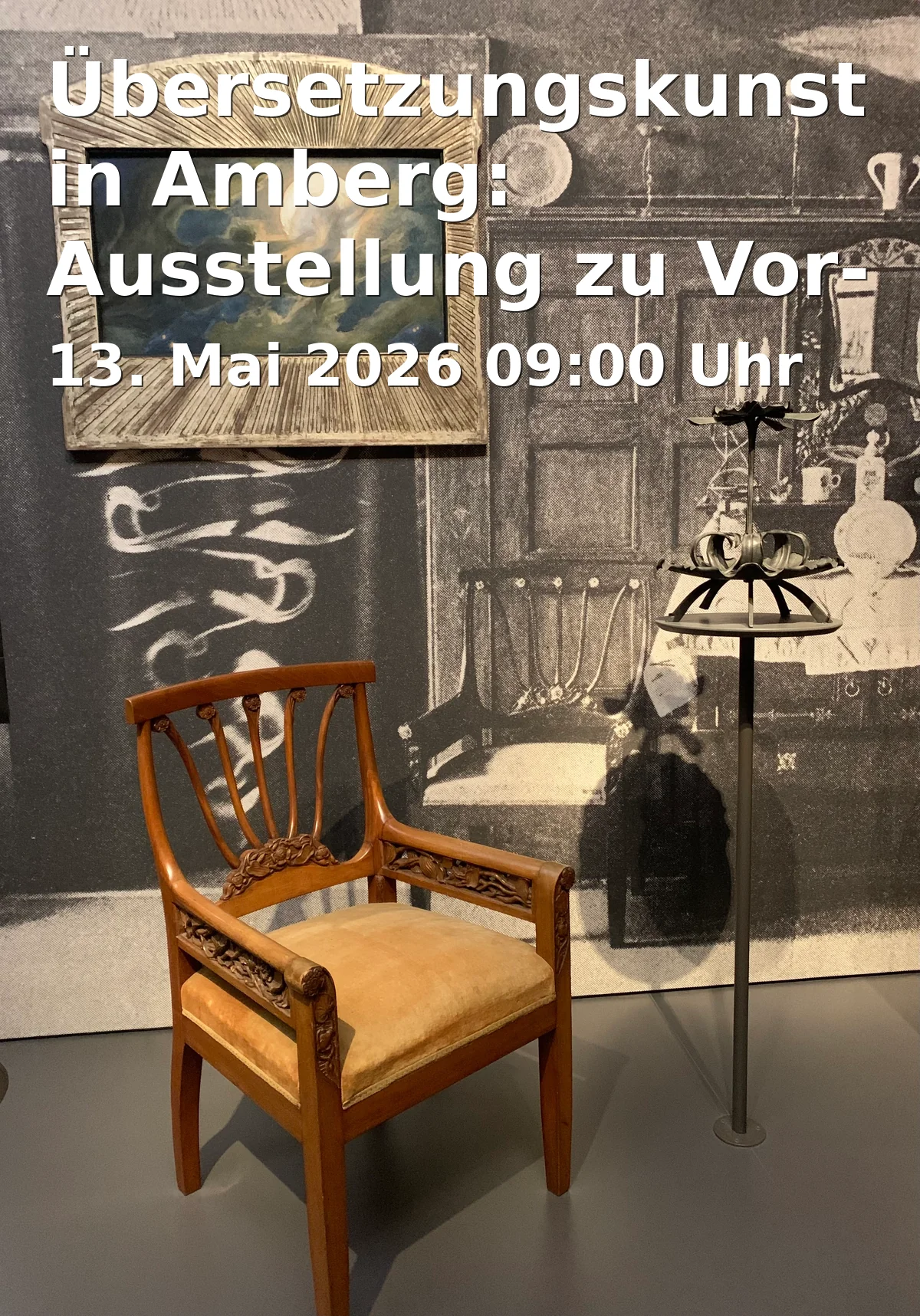
The Art of Translation in Amberg: Exhibition on Estates and Bequests until September 2026
Translation as a Cultural Bridge: In Amberg, the exhibition shows how linguistic art keeps literature alive. Free admission until September 2026. #Literature
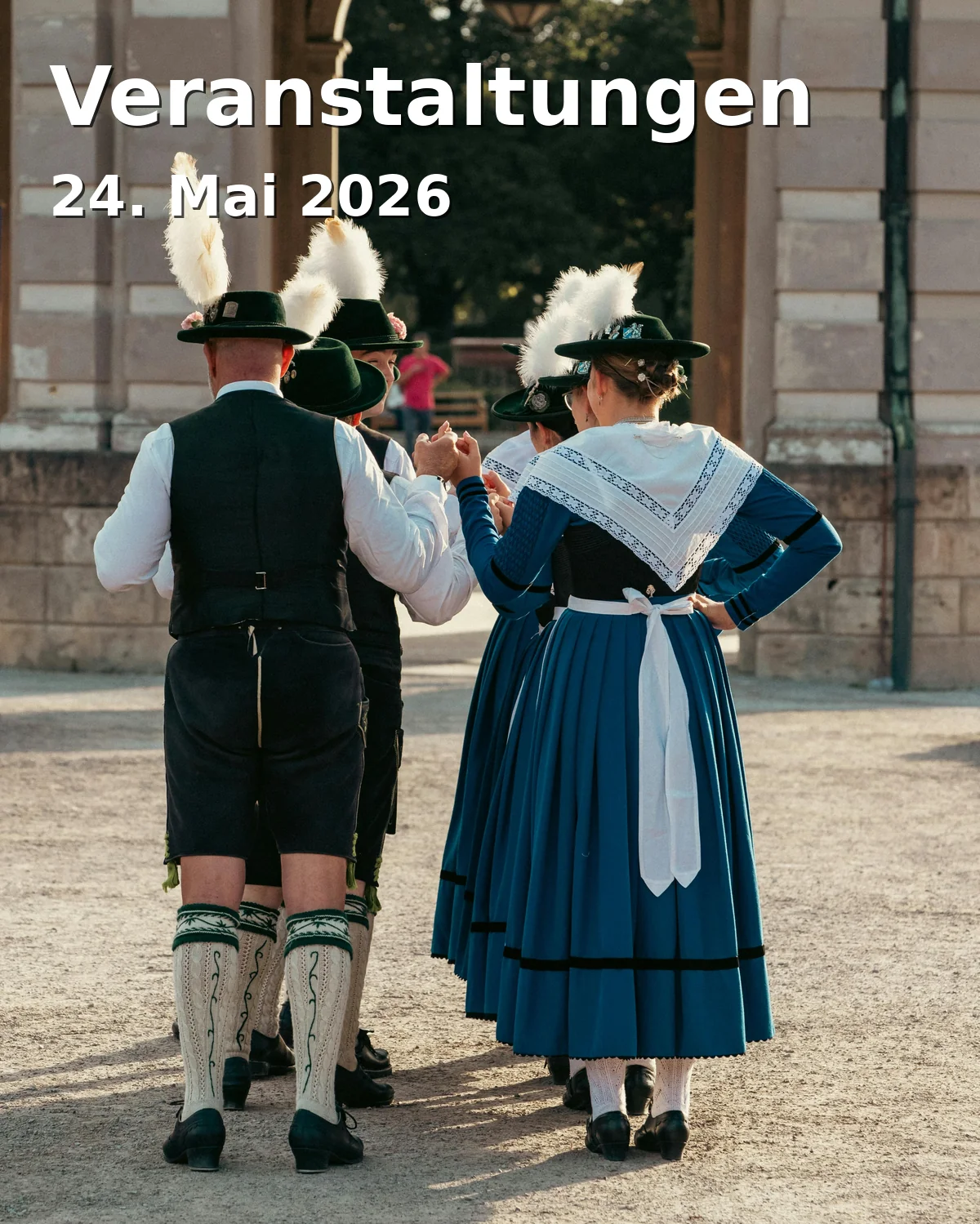
Events
Amberg Dult - Colorful, fast and traditional! Twice a year, during Pentecost and Michaeli in autumn, the traditional Dult in Amberg invites you to stroll, have fun, and enjoy. Dult means pure atmosphere with a beautifully decorated festival tent, music, culinary delights, and many diverse rides. Enjoyment in the best tradition A successful combination of traditional fair atmosphere and modern entertainment for young and old. Numerous showmen and M...
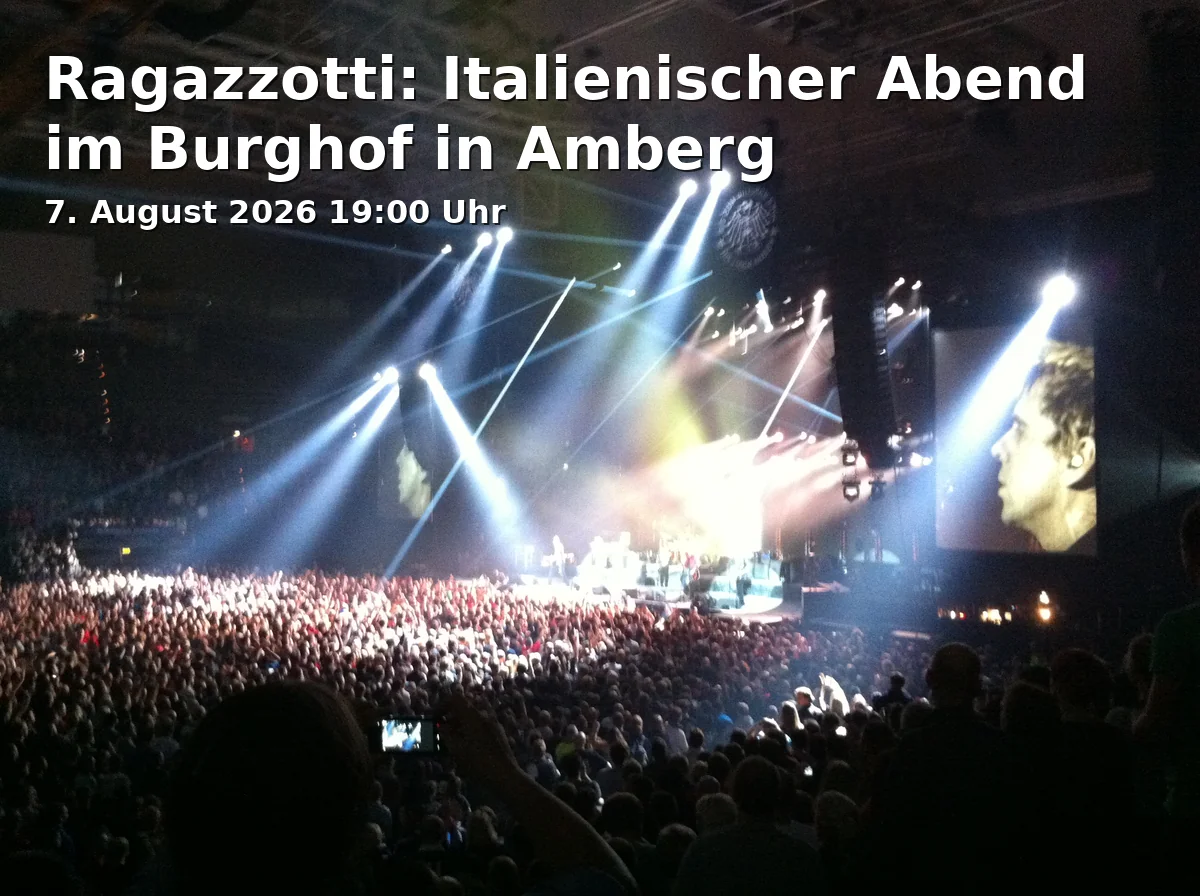
Ragazzotti: Italian Evening at Burghof in Amberg
Italian flair, live music, and summer enjoyment in Amberg: Ragazzotti performs at Burghof, accompanied by wine, cocktails, and pizza. An evening to enjoy! #Amberg #LiveMusic
Frequently Asked Questions
Reviews
No reviews found