
Sulzbach-Rosenberg
Annabergweg, 92237 Sulzbach-Rosenberg, Deutschland
Annaberg | Pilgrimage Church & Annaberg Festival
The Annaberg in Sulzbach-Rosenberg is one of those places that impress not only through its location but especially through its history. At 501 meters, it is the highest elevation in the Sulzbacher Land and has been a destination for pilgrims, walkers, and visitors seeking a place with a tranquil aura for centuries. The hill connects the districts, opens the view far over the surrounding area, and shapes the image of Sulzbach-Rosenberg like few other places. Those who visit the Annaberg therefore experience not just a viewpoint, but a developed ensemble of pilgrimage church, Loreto chapel, Stations of the Cross, festival tradition, and scenic expansiveness. The tourist information describes the Annaberg as a link between the two districts, and you can feel that on-site: Here, faith, regional history, nature, and urban identity come together in a small space. ([st-marien-sulzbach.de](https://st-marien-sulzbach.de/annabergfest-wallfahrt-sulzbach-rosenberg.html))
Particularly defining is the pilgrimage church of St. Anna, which visibly forms the center of the entire area on the Annaberg. Its history reaches deep into the early pilgrimage tradition, which has been documented since the 14th century and was revived in the 17th century. From a simple wooden chapel, a church with baroque and rococo furnishings, an extended nave, a tower, and intricate details developed over the centuries. In addition, there are the Loreto chapel, the Lourdes grotto, and the Stations of the Cross that complete the religious ensemble. At the same time, the Annaberg is a place of encounter: During the Annaberg festival week, the square fills with life, music, conversations, and regional delicacies. This creates a rare interplay of quiet devotion and vibrant festival culture. ([tourismus.suro.city](https://tourismus.suro.city/wallfahrtskirche-st-anna/))
Pilgrimage Church of St. Anna and the Long Pilgrimage Tradition
The history of the Annaberg is closely linked to the pilgrimage to Saint Anna. According to the city and the parish, the veneration in the Sulzbacher Land has been documented as early as the 14th century; a chapel in the Peutental was officially consecrated to Saint Anna in 1387. With the Reformation, this pilgrimage initially came to a halt, but the miraculous image of Anna Selbdritt was preserved and kept in the Sulzbacher Castle. It was not until 1656 that Count Palatine Christian August, after converting to the Catholic faith, resumed the tradition and had a wooden chapel built on the then Kastenbühl, today’s Annaberg. This marked the beginning of the new history of the place as a pilgrimage site, which continues to this day. ([st-marien-sulzbach.de](https://www.st-marien-sulzbach.de/kirchen-st-anna-sulzbach-rosenberg.html))
Shortly thereafter, the wooden chapel was no longer sufficient. In 1676, it was replaced by a stone church, for which stones from the former chapel in the Peutental were used. The construction of the Italian-influenced central space is attributed to the master builder Johann Rampino. At the end of the 18th century, further expansion followed as the flow of pilgrims steadily increased: In 1787/88, the new nave was built, with the eastern part of the old central building preserved as the choir. In 1827, the church received a tower, which later acquired the visible baroque onion dome during the expansion in 1903/04. These construction phases clearly show that the Annaberg was never a static place but continually responded to the growing significance of pilgrimage. This is a crucial part of its impact: The place tells not only the history of piety but also the history of the city, architecture, and culture in a compact ensemble. ([tourismus.suro.city](https://tourismus.suro.city/wallfahrtskirche-st-anna/))
Particularly remarkable is how early the pilgrimage was institutionally and spatially established. Today’s sources not only mention the individual construction phases but also the religious occasions that repeatedly led to expansion. The church became the center of a constantly growing pilgrimage movement, and its location on the highest elevation of the Sulzbacher Land further enhanced this significance. From below, the church appears as a focal point above the town; from above, the view opens over the old town, Rosenberg, and the vast surroundings. This dual role as a spiritual place and landscape landmark is typical for the Annaberg. It is not merely a monument of the past but a living part of the present, where liturgical forms, city history, and everyday paths continue to intertwine. ([st-marien-sulzbach.de](https://st-marien-sulzbach.de/annabergfest-wallfahrt-sulzbach-rosenberg.html))
Interior, Baroque and Rococo on the Annaberg
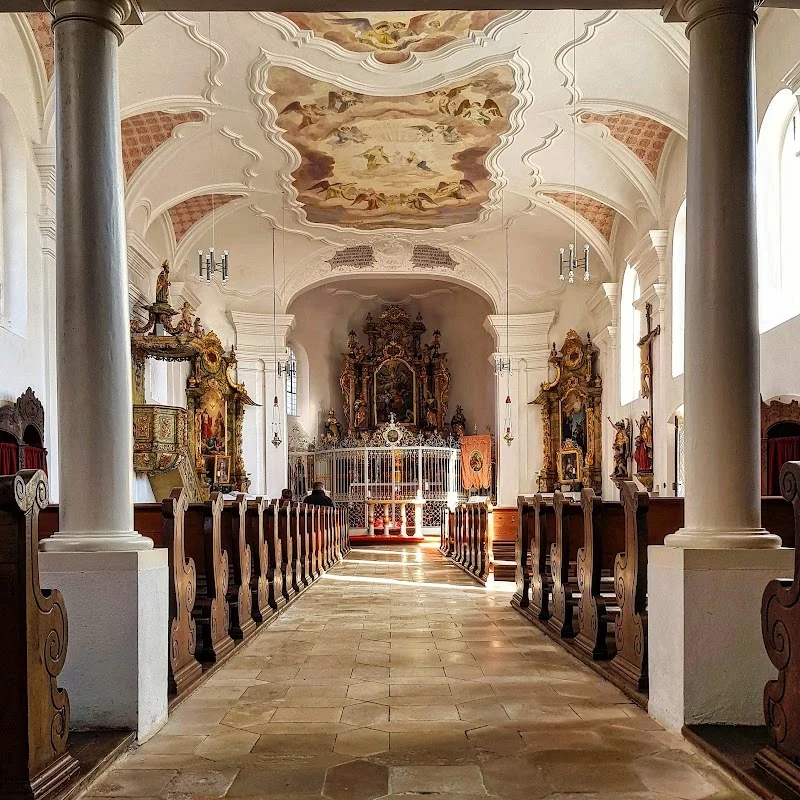
Upon entering the pilgrimage church of St. Anna, one experiences a surprisingly rich ensemble from various epochs. The tourist information describes the eastern part of the church as an impressive rococo ensemble, and indeed the space is characterized by numerous artistic details. The wrought-iron choir screen with foliage and leaf motifs, created by master blacksmith Johann Häberle, separates the choir area without obstructing the view of the altar. This mixture of separation and openness is typical for the church space: One senses the devotion while still maintaining a complete view of the liturgical center. Above the choir arch is a stucco relief of the founder Christian August, and the ceiling painting by Josef Wittmann from 1956 also fits into the overall message of the space with its symbolism of Mary, Anna, and angels. ([tourismus.suro.city](https://tourismus.suro.city/wallfahrtskirche-st-anna/))
Other furnishings include two side altars from 1788 and 1789, which, despite their late date of origin, still clearly reference baroque and rococo forms. The southern side altar depicts Ignatius and Francis Xavier, while the northern one shows the Holy Trinity; both altars are part of the artistic profile of the church. Additionally, there is the pulpit with acanthus carvings, created around 1700 and later supplemented with early classicist elements around 1790, as well as the organ by Elias Hößler from 1731/32. The figures in the nave, including baroque bishop figures, a late Gothic James, and other saint representations, also demonstrate how different art forms were brought together over centuries. This is precisely what makes the charm of the interior: It is not uniform from one epoch but a developed testimony of faith, endowments, and ongoing care by the community. ([tourismus.suro.city](https://tourismus.suro.city/wallfahrtskirche-st-anna/))
Another important aspect is the Lourdes grotto in the basement of the tower, which was established in 1856 on the occasion of the 200th anniversary of the pilgrimage. It extends the church space into the symbolic realm and shows how the Annaberg tradition also developed in the 19th century. The church also includes a historical hermitage, which was later replaced by the current sacristan's house. These additions are more than just architectural appendages; they illustrate that the Annaberg was always conceived as an ensemble and is not just comprised of the actual church. Those who visit the site quickly understand that a complete place of devotion has grown here over generations, where the interior, exterior, and processional path are interrelated. The official brochure also mentions that the church is open during the day up to the choir screen, making the place easily accessible even outside of festival days. ([tourismus.suro.city](https://tourismus.suro.city/wallfahrtskirche-st-anna/))
Annaberg Festival: The Spiritual Week Around July 26
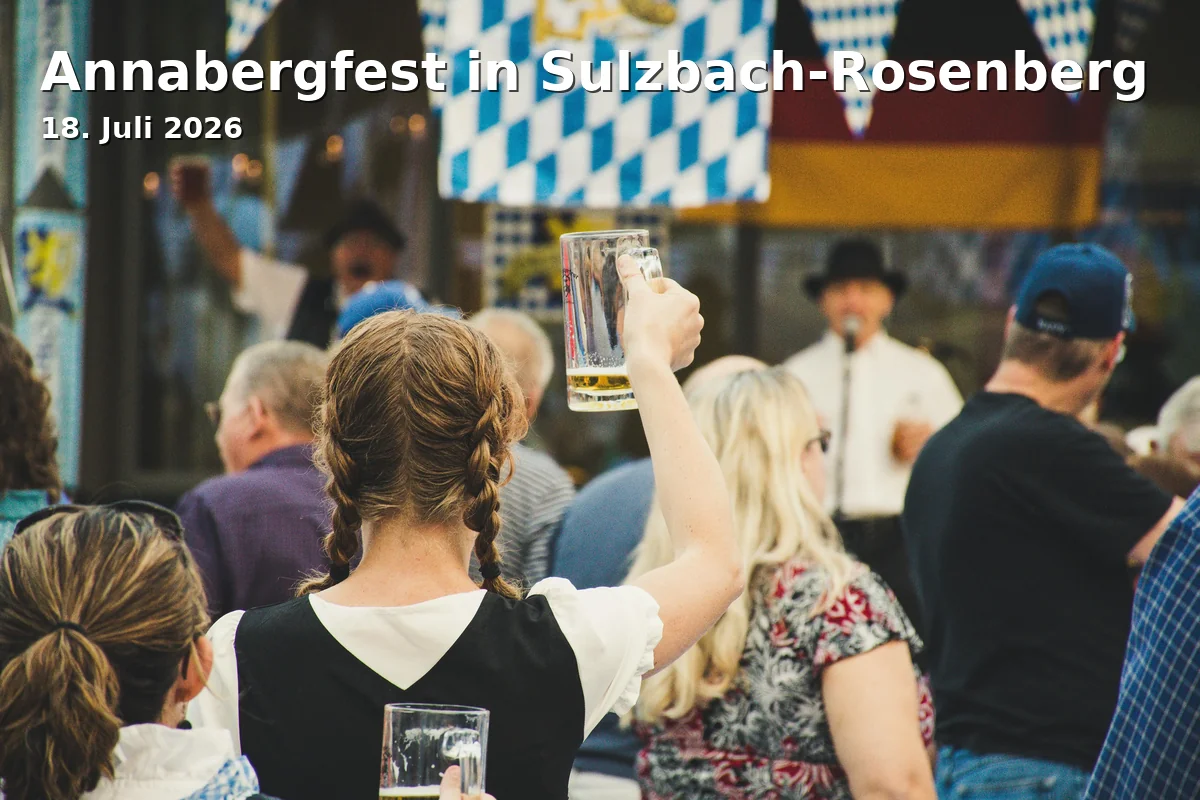
The Annaberg Festival is the event that gives the place special visibility every year. The tourist information explains that the pilgrimage has been documented since the 14th century and that today’s festival has developed from it. Originally, only the feast day of Saint Anna was celebrated with a procession and service. From 1740, the celebration was expanded into an Anna Octave by including the Sundays before and after the feast. Since 1942, the entire week has been observed as a spiritual week. Thus, the Annaberg Festival is not simply a folk festival in the usual sense but a mix of religious tradition, regional meeting point, and summer festival culture. This connection makes it particularly attractive to many people because here the spiritual is not separated from everyday life but stands right in the midst of it. ([tourismus.suro.city](https://tourismus.suro.city/annabergfest/))
The official site lists the period from July 18 to July 26 for 2026. During this time, benches will be set up around the festival booths where visitors can sit comfortably, taste beers from various breweries, and enjoy Upper Palatinate delicacies. For families, the northern slope of the Annaberg is particularly interesting, serving as a playground during the festival week and providing children with plenty of space under parental supervision. This description shows that the Annaberg Festival not only has a liturgical core time but is also a social place where generations meet. The Annaberg becomes a space in this week where quiet reflection and sociable gatherings do not contradict but complement each other. Especially in a region with a strong sense of tradition, this is an important part of identity. ([tourismus.suro.city](https://tourismus.suro.city/annabergfest/))
Moreover, there is an outward effect. The parish describes the Annaberg as a prominent landmark that is visible from a distance and offers a rewarding view in all directions. The festival enhances this perception by bringing the mountain into the center of public interest. At the same time, the festival remains closely connected to its religious origins: Pilgrims, churchgoers, and guests from the city share the same place but not necessarily the same motives. This is precisely where the special atmosphere arises. Those who experience the festival week quickly understand why the Annaberg has been so deeply rooted in Sulzbach-Rosenberg for centuries. The festival is not just an event but an annual proof that tradition is not merely preserved in a museum-like manner but is celebrated vibrantly. ([tourismus.suro.city](https://tourismus.suro.city/annabergfest/))
Loreto Chapel, Stations of the Cross, and the View Over Sulzbach-Rosenberg
Just below the pilgrimage church stands the Loreto chapel, a small but historically significant building. It was commissioned in 1753 by Elisabeth Auguste, the first wife of the later Bavarian Elector Karl Theodor, on the occasion of the 100th anniversary of the pilgrimage. The chapel refers in its form to the House of Loreto and thus belongs to that baroque landscape of piety, where replicas of holy places were created as signs of special veneration. The official texts emphasize that the chapel is not permanently accessible inside and can usually only be visited during the Annaberg Festival. This limited accessibility enhances its special character: It is not an everyday side room but a protected memorial site within the ensemble. ([tourismus.suro.city](https://tourismus.suro.city/loretokapelle/))
The Annaberg also includes the Stations of the Cross with its stations leading up from the town. An official hiking route mentions the Stations of the Cross Avenue and refers to the historical connection between the pilgrimage path and the pilgrimage. The parish also mentions that the Stations of the Cross Avenue was established in 1754. These paths make it clear how strongly the ascent to the Annaberg is embedded in the religious experience. The path is not merely functional access but part of the meaning. The ensemble is completed by the Calvary group from 1706, which forms the conclusion of the Stations of the Cross, as well as the Lourdes grotto in the tower. This creates a coherent image of path, destination, devotion, and memory that allows the Annaberg to be recognized as a multifaceted sacred space. ([tourismus.suro.city](https://tourismus.suro.city/wallfahrtskirche-st-anna/))
The view also plays a special role. The parish describes the Annaberg as a place with a wide view in all directions. From there, the view extends east to Mariahilfberg, south to the ruins of Lichtenegg, north to Rauhen Kulm, and west over the old town of Sulzbach with its church towers, the ducal castle, and St. Anna Hospital. In the south, the view also opens up to Rosenberg with the former blast furnaces of Maxhütte and the renovated slag hill. This view anchors the Annaberg in the landscape and at the same time in the industrial and urban history. Hardly any other point connects the religious tradition so directly with the topography and historical development of the city. Those who stand here not only see far but also better understand how closely Sulzbach-Rosenberg, its districts, and its surroundings are intertwined. ([st-marien-sulzbach.de](https://st-marien-sulzbach.de/annabergfest-wallfahrt-sulzbach-rosenberg.html))
Hiking to the Annaberg: Paths, Stations, and Accessibility
The Annaberg is not only a destination for pilgrims but also a well-integrated point in the urban hiking and walking path network. The tourist information lists several routes including the Annaberg path, the southern slope of the Annaberg, the northern slope of the Annaberg, as well as the pilgrimage church of St. Anna and the Loreto chapel as stations. Particularly route No. 5, approximately 11 kilometers long, leads from Luitpoldplatz via Hagtor, Allee, and Annabergweg to the pilgrimage church, the Loreto chapel, the forest cemetery, and further stations back to the city. Another tour describes the Annaberg as part of the Erzweg: From the train station, it goes through the old town and the Rosenberg ascent to the Annaberg, past the Loreto chapel, the Annaberg church, and the southern viewpoint with a view of the headframe of the decommissioned Anna shaft facility. This makes the Annaberg also tangible as an interface between urban walking, industrial history, and nature experience. ([tourismus.suro.city](https://tourismus.suro.city/staedtische-wanderwege/))
These paths particularly enhance the appeal of the journey. Those who come on foot experience the Annaberg not as an isolated hill but as part of a developed network of historical axes, viewpoints, and transitions between the districts. The Stations of the Cross Avenue and the Annaberg path are not only name givers but also historical traces that structure the ascent. The official hiking map also shows how strongly the Annaberg is connected with other attractions. For visitors who prefer to arrive by car, it is advisable to look at the city’s parking options: The city mentions public P & R parking spaces at the municipal festival site between Sulzbach and Rosenberg as well as additional parking options in the old town. For a visit to the Annaberg, this is practical because the mountain can be easily combined with a short walk or a small hike. This keeps the journey flexible without losing the historical character of the place. ([suro.city](https://www.suro.city/buergerservice/wichtige-informationen/parken/?utm_source=openai))
For guests who want to combine attractions specifically, the Annaberg is an ideal building block. The city brochure describes it as a link between the districts, and this gives it practical value for city explorations. One can combine the visit with the old town, the castle hill, the Rosenberg side, or the mining trail. The location is so convenient that the Annaberg is suitable for both short excursions and longer circular routes. Those who want to experience the church, the Loreto chapel, and the viewpoint in one day do not need complicated planning but primarily some time and good shoes. The Annaberg rewards this effort with tranquility, wide views, and a very compact historical experience space. ([tourismus.suro.city](https://tourismus.suro.city/wp-content/uploads/2023/05/stadt-sulzbach-rosenberg-broschuere-sehenswert.pdf))
Why the Annaberg is the Landmark of Sulzbach-Rosenberg
The Annaberg is more than a beautiful hill with a church. It is an identity-forming place for Sulzbach-Rosenberg because several layers overlap here: the early pilgrimage tradition, the Catholic renewal of the 17th century, the construction history of the church, the festival culture of the 20th and 21st centuries, as well as the landscape location above the town. The parish calls the church on the Annaberg a prominent landmark that is visible from a distance. The tourist information, in turn, describes the Annaberg as a link between the two districts. Both perspectives make it clear that the place acts as a connector both symbolically and spatially. It does not stand at the edge of the city’s history but right in the middle of it. ([st-marien-sulzbach.de](https://st-marien-sulzbach.de/annabergfest-wallfahrt-sulzbach-rosenberg.html))
Moreover, there is an unusual density of significance in a small space. Hardly any other place in Sulzbach-Rosenberg unites so many elements: a pilgrimage church with artworks from several centuries, a Loreto chapel, a Lourdes grotto, a Stations of the Cross, various viewpoints, and an annually recurring festival week. All this is located in a place that is both topographically prominent and historically charged. This enables the Annaberg to function not only as a destination but also as a narrative space. Those who stand there can almost read the history of the city: from the medieval origin of the pilgrimage through the baroque period to the modern care of the tradition. This readability makes it so valuable for visitors interested in culture, religion, and regional identity. ([tourismus.suro.city](https://tourismus.suro.city/wallfahrtskirche-st-anna/))
In the end, the impression remains of a place that derives its impact not from size but from density. The Annaberg is not a loud place. It does not attract with spectacular staging but with history, views, and credible continuity. This is precisely what makes it so important for Sulzbach-Rosenberg. Whether one comes for the pilgrimage church, the festival week, the hiking paths, or simply for the view over the town and surroundings: The Annaberg gives every visit a clear form and a strong connection to the region. It is a place where one not only sees but also understands why this mountain plays a special role for the city to this day. ([st-marien-sulzbach.de](https://st-marien-sulzbach.de/annabergfest-wallfahrt-sulzbach-rosenberg.html))
Sources:
- Tourist Information Sulzbach-Rosenberg - Pilgrimage Church St. Anna ([tourismus.suro.city](https://tourismus.suro.city/wallfahrtskirche-st-anna/))
- Tourist Information Sulzbach-Rosenberg - Annaberg Festival ([tourismus.suro.city](https://tourismus.suro.city/annabergfest/))
- Parish St. Marien - Churches St. Anna ([st-marien-sulzbach.de](https://www.st-marien-sulzbach.de/kirchen-st-anna-sulzbach-rosenberg.html))
- Tourist Information Sulzbach-Rosenberg - Hiking on the Erzweg: Wagensaß, 7 Springs and Annaberg ([tourismus.suro.city](https://tourismus.suro.city/wanderung-auf-dem-erzweg-wagensass-7-quellen-und-annaberg/))
- City of Sulzbach-Rosenberg - Parking ([suro.city](https://www.suro.city/buergerservice/wichtige-informationen/parken/?utm_source=openai))
- Tourist Information Sulzbach-Rosenberg - Worth Seeing: History & Attractions ([tourismus.suro.city](https://tourismus.suro.city/wp-content/uploads/2023/05/stadt-sulzbach-rosenberg-broschuere-sehenswert.pdf))
Mehr anzeigenWeniger anzeigen
Annaberg | Pilgrimage Church & Annaberg Festival
The Annaberg in Sulzbach-Rosenberg is one of those places that impress not only through its location but especially through its history. At 501 meters, it is the highest elevation in the Sulzbacher Land and has been a destination for pilgrims, walkers, and visitors seeking a place with a tranquil aura for centuries. The hill connects the districts, opens the view far over the surrounding area, and shapes the image of Sulzbach-Rosenberg like few other places. Those who visit the Annaberg therefore experience not just a viewpoint, but a developed ensemble of pilgrimage church, Loreto chapel, Stations of the Cross, festival tradition, and scenic expansiveness. The tourist information describes the Annaberg as a link between the two districts, and you can feel that on-site: Here, faith, regional history, nature, and urban identity come together in a small space. ([st-marien-sulzbach.de](https://st-marien-sulzbach.de/annabergfest-wallfahrt-sulzbach-rosenberg.html))
Particularly defining is the pilgrimage church of St. Anna, which visibly forms the center of the entire area on the Annaberg. Its history reaches deep into the early pilgrimage tradition, which has been documented since the 14th century and was revived in the 17th century. From a simple wooden chapel, a church with baroque and rococo furnishings, an extended nave, a tower, and intricate details developed over the centuries. In addition, there are the Loreto chapel, the Lourdes grotto, and the Stations of the Cross that complete the religious ensemble. At the same time, the Annaberg is a place of encounter: During the Annaberg festival week, the square fills with life, music, conversations, and regional delicacies. This creates a rare interplay of quiet devotion and vibrant festival culture. ([tourismus.suro.city](https://tourismus.suro.city/wallfahrtskirche-st-anna/))
Pilgrimage Church of St. Anna and the Long Pilgrimage Tradition
The history of the Annaberg is closely linked to the pilgrimage to Saint Anna. According to the city and the parish, the veneration in the Sulzbacher Land has been documented as early as the 14th century; a chapel in the Peutental was officially consecrated to Saint Anna in 1387. With the Reformation, this pilgrimage initially came to a halt, but the miraculous image of Anna Selbdritt was preserved and kept in the Sulzbacher Castle. It was not until 1656 that Count Palatine Christian August, after converting to the Catholic faith, resumed the tradition and had a wooden chapel built on the then Kastenbühl, today’s Annaberg. This marked the beginning of the new history of the place as a pilgrimage site, which continues to this day. ([st-marien-sulzbach.de](https://www.st-marien-sulzbach.de/kirchen-st-anna-sulzbach-rosenberg.html))
Shortly thereafter, the wooden chapel was no longer sufficient. In 1676, it was replaced by a stone church, for which stones from the former chapel in the Peutental were used. The construction of the Italian-influenced central space is attributed to the master builder Johann Rampino. At the end of the 18th century, further expansion followed as the flow of pilgrims steadily increased: In 1787/88, the new nave was built, with the eastern part of the old central building preserved as the choir. In 1827, the church received a tower, which later acquired the visible baroque onion dome during the expansion in 1903/04. These construction phases clearly show that the Annaberg was never a static place but continually responded to the growing significance of pilgrimage. This is a crucial part of its impact: The place tells not only the history of piety but also the history of the city, architecture, and culture in a compact ensemble. ([tourismus.suro.city](https://tourismus.suro.city/wallfahrtskirche-st-anna/))
Particularly remarkable is how early the pilgrimage was institutionally and spatially established. Today’s sources not only mention the individual construction phases but also the religious occasions that repeatedly led to expansion. The church became the center of a constantly growing pilgrimage movement, and its location on the highest elevation of the Sulzbacher Land further enhanced this significance. From below, the church appears as a focal point above the town; from above, the view opens over the old town, Rosenberg, and the vast surroundings. This dual role as a spiritual place and landscape landmark is typical for the Annaberg. It is not merely a monument of the past but a living part of the present, where liturgical forms, city history, and everyday paths continue to intertwine. ([st-marien-sulzbach.de](https://st-marien-sulzbach.de/annabergfest-wallfahrt-sulzbach-rosenberg.html))
Interior, Baroque and Rococo on the Annaberg
Upon entering the pilgrimage church of St. Anna, one experiences a surprisingly rich ensemble from various epochs. The tourist information describes the eastern part of the church as an impressive rococo ensemble, and indeed the space is characterized by numerous artistic details. The wrought-iron choir screen with foliage and leaf motifs, created by master blacksmith Johann Häberle, separates the choir area without obstructing the view of the altar. This mixture of separation and openness is typical for the church space: One senses the devotion while still maintaining a complete view of the liturgical center. Above the choir arch is a stucco relief of the founder Christian August, and the ceiling painting by Josef Wittmann from 1956 also fits into the overall message of the space with its symbolism of Mary, Anna, and angels. ([tourismus.suro.city](https://tourismus.suro.city/wallfahrtskirche-st-anna/))
Other furnishings include two side altars from 1788 and 1789, which, despite their late date of origin, still clearly reference baroque and rococo forms. The southern side altar depicts Ignatius and Francis Xavier, while the northern one shows the Holy Trinity; both altars are part of the artistic profile of the church. Additionally, there is the pulpit with acanthus carvings, created around 1700 and later supplemented with early classicist elements around 1790, as well as the organ by Elias Hößler from 1731/32. The figures in the nave, including baroque bishop figures, a late Gothic James, and other saint representations, also demonstrate how different art forms were brought together over centuries. This is precisely what makes the charm of the interior: It is not uniform from one epoch but a developed testimony of faith, endowments, and ongoing care by the community. ([tourismus.suro.city](https://tourismus.suro.city/wallfahrtskirche-st-anna/))
Another important aspect is the Lourdes grotto in the basement of the tower, which was established in 1856 on the occasion of the 200th anniversary of the pilgrimage. It extends the church space into the symbolic realm and shows how the Annaberg tradition also developed in the 19th century. The church also includes a historical hermitage, which was later replaced by the current sacristan's house. These additions are more than just architectural appendages; they illustrate that the Annaberg was always conceived as an ensemble and is not just comprised of the actual church. Those who visit the site quickly understand that a complete place of devotion has grown here over generations, where the interior, exterior, and processional path are interrelated. The official brochure also mentions that the church is open during the day up to the choir screen, making the place easily accessible even outside of festival days. ([tourismus.suro.city](https://tourismus.suro.city/wallfahrtskirche-st-anna/))
Annaberg Festival: The Spiritual Week Around July 26
The Annaberg Festival is the event that gives the place special visibility every year. The tourist information explains that the pilgrimage has been documented since the 14th century and that today’s festival has developed from it. Originally, only the feast day of Saint Anna was celebrated with a procession and service. From 1740, the celebration was expanded into an Anna Octave by including the Sundays before and after the feast. Since 1942, the entire week has been observed as a spiritual week. Thus, the Annaberg Festival is not simply a folk festival in the usual sense but a mix of religious tradition, regional meeting point, and summer festival culture. This connection makes it particularly attractive to many people because here the spiritual is not separated from everyday life but stands right in the midst of it. ([tourismus.suro.city](https://tourismus.suro.city/annabergfest/))
The official site lists the period from July 18 to July 26 for 2026. During this time, benches will be set up around the festival booths where visitors can sit comfortably, taste beers from various breweries, and enjoy Upper Palatinate delicacies. For families, the northern slope of the Annaberg is particularly interesting, serving as a playground during the festival week and providing children with plenty of space under parental supervision. This description shows that the Annaberg Festival not only has a liturgical core time but is also a social place where generations meet. The Annaberg becomes a space in this week where quiet reflection and sociable gatherings do not contradict but complement each other. Especially in a region with a strong sense of tradition, this is an important part of identity. ([tourismus.suro.city](https://tourismus.suro.city/annabergfest/))
Moreover, there is an outward effect. The parish describes the Annaberg as a prominent landmark that is visible from a distance and offers a rewarding view in all directions. The festival enhances this perception by bringing the mountain into the center of public interest. At the same time, the festival remains closely connected to its religious origins: Pilgrims, churchgoers, and guests from the city share the same place but not necessarily the same motives. This is precisely where the special atmosphere arises. Those who experience the festival week quickly understand why the Annaberg has been so deeply rooted in Sulzbach-Rosenberg for centuries. The festival is not just an event but an annual proof that tradition is not merely preserved in a museum-like manner but is celebrated vibrantly. ([tourismus.suro.city](https://tourismus.suro.city/annabergfest/))
Loreto Chapel, Stations of the Cross, and the View Over Sulzbach-Rosenberg
Just below the pilgrimage church stands the Loreto chapel, a small but historically significant building. It was commissioned in 1753 by Elisabeth Auguste, the first wife of the later Bavarian Elector Karl Theodor, on the occasion of the 100th anniversary of the pilgrimage. The chapel refers in its form to the House of Loreto and thus belongs to that baroque landscape of piety, where replicas of holy places were created as signs of special veneration. The official texts emphasize that the chapel is not permanently accessible inside and can usually only be visited during the Annaberg Festival. This limited accessibility enhances its special character: It is not an everyday side room but a protected memorial site within the ensemble. ([tourismus.suro.city](https://tourismus.suro.city/loretokapelle/))
The Annaberg also includes the Stations of the Cross with its stations leading up from the town. An official hiking route mentions the Stations of the Cross Avenue and refers to the historical connection between the pilgrimage path and the pilgrimage. The parish also mentions that the Stations of the Cross Avenue was established in 1754. These paths make it clear how strongly the ascent to the Annaberg is embedded in the religious experience. The path is not merely functional access but part of the meaning. The ensemble is completed by the Calvary group from 1706, which forms the conclusion of the Stations of the Cross, as well as the Lourdes grotto in the tower. This creates a coherent image of path, destination, devotion, and memory that allows the Annaberg to be recognized as a multifaceted sacred space. ([tourismus.suro.city](https://tourismus.suro.city/wallfahrtskirche-st-anna/))
The view also plays a special role. The parish describes the Annaberg as a place with a wide view in all directions. From there, the view extends east to Mariahilfberg, south to the ruins of Lichtenegg, north to Rauhen Kulm, and west over the old town of Sulzbach with its church towers, the ducal castle, and St. Anna Hospital. In the south, the view also opens up to Rosenberg with the former blast furnaces of Maxhütte and the renovated slag hill. This view anchors the Annaberg in the landscape and at the same time in the industrial and urban history. Hardly any other point connects the religious tradition so directly with the topography and historical development of the city. Those who stand here not only see far but also better understand how closely Sulzbach-Rosenberg, its districts, and its surroundings are intertwined. ([st-marien-sulzbach.de](https://st-marien-sulzbach.de/annabergfest-wallfahrt-sulzbach-rosenberg.html))
Hiking to the Annaberg: Paths, Stations, and Accessibility
The Annaberg is not only a destination for pilgrims but also a well-integrated point in the urban hiking and walking path network. The tourist information lists several routes including the Annaberg path, the southern slope of the Annaberg, the northern slope of the Annaberg, as well as the pilgrimage church of St. Anna and the Loreto chapel as stations. Particularly route No. 5, approximately 11 kilometers long, leads from Luitpoldplatz via Hagtor, Allee, and Annabergweg to the pilgrimage church, the Loreto chapel, the forest cemetery, and further stations back to the city. Another tour describes the Annaberg as part of the Erzweg: From the train station, it goes through the old town and the Rosenberg ascent to the Annaberg, past the Loreto chapel, the Annaberg church, and the southern viewpoint with a view of the headframe of the decommissioned Anna shaft facility. This makes the Annaberg also tangible as an interface between urban walking, industrial history, and nature experience. ([tourismus.suro.city](https://tourismus.suro.city/staedtische-wanderwege/))
These paths particularly enhance the appeal of the journey. Those who come on foot experience the Annaberg not as an isolated hill but as part of a developed network of historical axes, viewpoints, and transitions between the districts. The Stations of the Cross Avenue and the Annaberg path are not only name givers but also historical traces that structure the ascent. The official hiking map also shows how strongly the Annaberg is connected with other attractions. For visitors who prefer to arrive by car, it is advisable to look at the city’s parking options: The city mentions public P & R parking spaces at the municipal festival site between Sulzbach and Rosenberg as well as additional parking options in the old town. For a visit to the Annaberg, this is practical because the mountain can be easily combined with a short walk or a small hike. This keeps the journey flexible without losing the historical character of the place. ([suro.city](https://www.suro.city/buergerservice/wichtige-informationen/parken/?utm_source=openai))
For guests who want to combine attractions specifically, the Annaberg is an ideal building block. The city brochure describes it as a link between the districts, and this gives it practical value for city explorations. One can combine the visit with the old town, the castle hill, the Rosenberg side, or the mining trail. The location is so convenient that the Annaberg is suitable for both short excursions and longer circular routes. Those who want to experience the church, the Loreto chapel, and the viewpoint in one day do not need complicated planning but primarily some time and good shoes. The Annaberg rewards this effort with tranquility, wide views, and a very compact historical experience space. ([tourismus.suro.city](https://tourismus.suro.city/wp-content/uploads/2023/05/stadt-sulzbach-rosenberg-broschuere-sehenswert.pdf))
Why the Annaberg is the Landmark of Sulzbach-Rosenberg
The Annaberg is more than a beautiful hill with a church. It is an identity-forming place for Sulzbach-Rosenberg because several layers overlap here: the early pilgrimage tradition, the Catholic renewal of the 17th century, the construction history of the church, the festival culture of the 20th and 21st centuries, as well as the landscape location above the town. The parish calls the church on the Annaberg a prominent landmark that is visible from a distance. The tourist information, in turn, describes the Annaberg as a link between the two districts. Both perspectives make it clear that the place acts as a connector both symbolically and spatially. It does not stand at the edge of the city’s history but right in the middle of it. ([st-marien-sulzbach.de](https://st-marien-sulzbach.de/annabergfest-wallfahrt-sulzbach-rosenberg.html))
Moreover, there is an unusual density of significance in a small space. Hardly any other place in Sulzbach-Rosenberg unites so many elements: a pilgrimage church with artworks from several centuries, a Loreto chapel, a Lourdes grotto, a Stations of the Cross, various viewpoints, and an annually recurring festival week. All this is located in a place that is both topographically prominent and historically charged. This enables the Annaberg to function not only as a destination but also as a narrative space. Those who stand there can almost read the history of the city: from the medieval origin of the pilgrimage through the baroque period to the modern care of the tradition. This readability makes it so valuable for visitors interested in culture, religion, and regional identity. ([tourismus.suro.city](https://tourismus.suro.city/wallfahrtskirche-st-anna/))
In the end, the impression remains of a place that derives its impact not from size but from density. The Annaberg is not a loud place. It does not attract with spectacular staging but with history, views, and credible continuity. This is precisely what makes it so important for Sulzbach-Rosenberg. Whether one comes for the pilgrimage church, the festival week, the hiking paths, or simply for the view over the town and surroundings: The Annaberg gives every visit a clear form and a strong connection to the region. It is a place where one not only sees but also understands why this mountain plays a special role for the city to this day. ([st-marien-sulzbach.de](https://st-marien-sulzbach.de/annabergfest-wallfahrt-sulzbach-rosenberg.html))
Sources:
- Tourist Information Sulzbach-Rosenberg - Pilgrimage Church St. Anna ([tourismus.suro.city](https://tourismus.suro.city/wallfahrtskirche-st-anna/))
- Tourist Information Sulzbach-Rosenberg - Annaberg Festival ([tourismus.suro.city](https://tourismus.suro.city/annabergfest/))
- Parish St. Marien - Churches St. Anna ([st-marien-sulzbach.de](https://www.st-marien-sulzbach.de/kirchen-st-anna-sulzbach-rosenberg.html))
- Tourist Information Sulzbach-Rosenberg - Hiking on the Erzweg: Wagensaß, 7 Springs and Annaberg ([tourismus.suro.city](https://tourismus.suro.city/wanderung-auf-dem-erzweg-wagensass-7-quellen-und-annaberg/))
- City of Sulzbach-Rosenberg - Parking ([suro.city](https://www.suro.city/buergerservice/wichtige-informationen/parken/?utm_source=openai))
- Tourist Information Sulzbach-Rosenberg - Worth Seeing: History & Attractions ([tourismus.suro.city](https://tourismus.suro.city/wp-content/uploads/2023/05/stadt-sulzbach-rosenberg-broschuere-sehenswert.pdf))
Annaberg | Pilgrimage Church & Annaberg Festival
The Annaberg in Sulzbach-Rosenberg is one of those places that impress not only through its location but especially through its history. At 501 meters, it is the highest elevation in the Sulzbacher Land and has been a destination for pilgrims, walkers, and visitors seeking a place with a tranquil aura for centuries. The hill connects the districts, opens the view far over the surrounding area, and shapes the image of Sulzbach-Rosenberg like few other places. Those who visit the Annaberg therefore experience not just a viewpoint, but a developed ensemble of pilgrimage church, Loreto chapel, Stations of the Cross, festival tradition, and scenic expansiveness. The tourist information describes the Annaberg as a link between the two districts, and you can feel that on-site: Here, faith, regional history, nature, and urban identity come together in a small space. ([st-marien-sulzbach.de](https://st-marien-sulzbach.de/annabergfest-wallfahrt-sulzbach-rosenberg.html))
Particularly defining is the pilgrimage church of St. Anna, which visibly forms the center of the entire area on the Annaberg. Its history reaches deep into the early pilgrimage tradition, which has been documented since the 14th century and was revived in the 17th century. From a simple wooden chapel, a church with baroque and rococo furnishings, an extended nave, a tower, and intricate details developed over the centuries. In addition, there are the Loreto chapel, the Lourdes grotto, and the Stations of the Cross that complete the religious ensemble. At the same time, the Annaberg is a place of encounter: During the Annaberg festival week, the square fills with life, music, conversations, and regional delicacies. This creates a rare interplay of quiet devotion and vibrant festival culture. ([tourismus.suro.city](https://tourismus.suro.city/wallfahrtskirche-st-anna/))
Pilgrimage Church of St. Anna and the Long Pilgrimage Tradition
The history of the Annaberg is closely linked to the pilgrimage to Saint Anna. According to the city and the parish, the veneration in the Sulzbacher Land has been documented as early as the 14th century; a chapel in the Peutental was officially consecrated to Saint Anna in 1387. With the Reformation, this pilgrimage initially came to a halt, but the miraculous image of Anna Selbdritt was preserved and kept in the Sulzbacher Castle. It was not until 1656 that Count Palatine Christian August, after converting to the Catholic faith, resumed the tradition and had a wooden chapel built on the then Kastenbühl, today’s Annaberg. This marked the beginning of the new history of the place as a pilgrimage site, which continues to this day. ([st-marien-sulzbach.de](https://www.st-marien-sulzbach.de/kirchen-st-anna-sulzbach-rosenberg.html))
Shortly thereafter, the wooden chapel was no longer sufficient. In 1676, it was replaced by a stone church, for which stones from the former chapel in the Peutental were used. The construction of the Italian-influenced central space is attributed to the master builder Johann Rampino. At the end of the 18th century, further expansion followed as the flow of pilgrims steadily increased: In 1787/88, the new nave was built, with the eastern part of the old central building preserved as the choir. In 1827, the church received a tower, which later acquired the visible baroque onion dome during the expansion in 1903/04. These construction phases clearly show that the Annaberg was never a static place but continually responded to the growing significance of pilgrimage. This is a crucial part of its impact: The place tells not only the history of piety but also the history of the city, architecture, and culture in a compact ensemble. ([tourismus.suro.city](https://tourismus.suro.city/wallfahrtskirche-st-anna/))
Particularly remarkable is how early the pilgrimage was institutionally and spatially established. Today’s sources not only mention the individual construction phases but also the religious occasions that repeatedly led to expansion. The church became the center of a constantly growing pilgrimage movement, and its location on the highest elevation of the Sulzbacher Land further enhanced this significance. From below, the church appears as a focal point above the town; from above, the view opens over the old town, Rosenberg, and the vast surroundings. This dual role as a spiritual place and landscape landmark is typical for the Annaberg. It is not merely a monument of the past but a living part of the present, where liturgical forms, city history, and everyday paths continue to intertwine. ([st-marien-sulzbach.de](https://st-marien-sulzbach.de/annabergfest-wallfahrt-sulzbach-rosenberg.html))
Interior, Baroque and Rococo on the Annaberg
Upon entering the pilgrimage church of St. Anna, one experiences a surprisingly rich ensemble from various epochs. The tourist information describes the eastern part of the church as an impressive rococo ensemble, and indeed the space is characterized by numerous artistic details. The wrought-iron choir screen with foliage and leaf motifs, created by master blacksmith Johann Häberle, separates the choir area without obstructing the view of the altar. This mixture of separation and openness is typical for the church space: One senses the devotion while still maintaining a complete view of the liturgical center. Above the choir arch is a stucco relief of the founder Christian August, and the ceiling painting by Josef Wittmann from 1956 also fits into the overall message of the space with its symbolism of Mary, Anna, and angels. ([tourismus.suro.city](https://tourismus.suro.city/wallfahrtskirche-st-anna/))
Other furnishings include two side altars from 1788 and 1789, which, despite their late date of origin, still clearly reference baroque and rococo forms. The southern side altar depicts Ignatius and Francis Xavier, while the northern one shows the Holy Trinity; both altars are part of the artistic profile of the church. Additionally, there is the pulpit with acanthus carvings, created around 1700 and later supplemented with early classicist elements around 1790, as well as the organ by Elias Hößler from 1731/32. The figures in the nave, including baroque bishop figures, a late Gothic James, and other saint representations, also demonstrate how different art forms were brought together over centuries. This is precisely what makes the charm of the interior: It is not uniform from one epoch but a developed testimony of faith, endowments, and ongoing care by the community. ([tourismus.suro.city](https://tourismus.suro.city/wallfahrtskirche-st-anna/))
Another important aspect is the Lourdes grotto in the basement of the tower, which was established in 1856 on the occasion of the 200th anniversary of the pilgrimage. It extends the church space into the symbolic realm and shows how the Annaberg tradition also developed in the 19th century. The church also includes a historical hermitage, which was later replaced by the current sacristan's house. These additions are more than just architectural appendages; they illustrate that the Annaberg was always conceived as an ensemble and is not just comprised of the actual church. Those who visit the site quickly understand that a complete place of devotion has grown here over generations, where the interior, exterior, and processional path are interrelated. The official brochure also mentions that the church is open during the day up to the choir screen, making the place easily accessible even outside of festival days. ([tourismus.suro.city](https://tourismus.suro.city/wallfahrtskirche-st-anna/))
Annaberg Festival: The Spiritual Week Around July 26
The Annaberg Festival is the event that gives the place special visibility every year. The tourist information explains that the pilgrimage has been documented since the 14th century and that today’s festival has developed from it. Originally, only the feast day of Saint Anna was celebrated with a procession and service. From 1740, the celebration was expanded into an Anna Octave by including the Sundays before and after the feast. Since 1942, the entire week has been observed as a spiritual week. Thus, the Annaberg Festival is not simply a folk festival in the usual sense but a mix of religious tradition, regional meeting point, and summer festival culture. This connection makes it particularly attractive to many people because here the spiritual is not separated from everyday life but stands right in the midst of it. ([tourismus.suro.city](https://tourismus.suro.city/annabergfest/))
The official site lists the period from July 18 to July 26 for 2026. During this time, benches will be set up around the festival booths where visitors can sit comfortably, taste beers from various breweries, and enjoy Upper Palatinate delicacies. For families, the northern slope of the Annaberg is particularly interesting, serving as a playground during the festival week and providing children with plenty of space under parental supervision. This description shows that the Annaberg Festival not only has a liturgical core time but is also a social place where generations meet. The Annaberg becomes a space in this week where quiet reflection and sociable gatherings do not contradict but complement each other. Especially in a region with a strong sense of tradition, this is an important part of identity. ([tourismus.suro.city](https://tourismus.suro.city/annabergfest/))
Moreover, there is an outward effect. The parish describes the Annaberg as a prominent landmark that is visible from a distance and offers a rewarding view in all directions. The festival enhances this perception by bringing the mountain into the center of public interest. At the same time, the festival remains closely connected to its religious origins: Pilgrims, churchgoers, and guests from the city share the same place but not necessarily the same motives. This is precisely where the special atmosphere arises. Those who experience the festival week quickly understand why the Annaberg has been so deeply rooted in Sulzbach-Rosenberg for centuries. The festival is not just an event but an annual proof that tradition is not merely preserved in a museum-like manner but is celebrated vibrantly. ([tourismus.suro.city](https://tourismus.suro.city/annabergfest/))
Loreto Chapel, Stations of the Cross, and the View Over Sulzbach-Rosenberg
Just below the pilgrimage church stands the Loreto chapel, a small but historically significant building. It was commissioned in 1753 by Elisabeth Auguste, the first wife of the later Bavarian Elector Karl Theodor, on the occasion of the 100th anniversary of the pilgrimage. The chapel refers in its form to the House of Loreto and thus belongs to that baroque landscape of piety, where replicas of holy places were created as signs of special veneration. The official texts emphasize that the chapel is not permanently accessible inside and can usually only be visited during the Annaberg Festival. This limited accessibility enhances its special character: It is not an everyday side room but a protected memorial site within the ensemble. ([tourismus.suro.city](https://tourismus.suro.city/loretokapelle/))
The Annaberg also includes the Stations of the Cross with its stations leading up from the town. An official hiking route mentions the Stations of the Cross Avenue and refers to the historical connection between the pilgrimage path and the pilgrimage. The parish also mentions that the Stations of the Cross Avenue was established in 1754. These paths make it clear how strongly the ascent to the Annaberg is embedded in the religious experience. The path is not merely functional access but part of the meaning. The ensemble is completed by the Calvary group from 1706, which forms the conclusion of the Stations of the Cross, as well as the Lourdes grotto in the tower. This creates a coherent image of path, destination, devotion, and memory that allows the Annaberg to be recognized as a multifaceted sacred space. ([tourismus.suro.city](https://tourismus.suro.city/wallfahrtskirche-st-anna/))
The view also plays a special role. The parish describes the Annaberg as a place with a wide view in all directions. From there, the view extends east to Mariahilfberg, south to the ruins of Lichtenegg, north to Rauhen Kulm, and west over the old town of Sulzbach with its church towers, the ducal castle, and St. Anna Hospital. In the south, the view also opens up to Rosenberg with the former blast furnaces of Maxhütte and the renovated slag hill. This view anchors the Annaberg in the landscape and at the same time in the industrial and urban history. Hardly any other point connects the religious tradition so directly with the topography and historical development of the city. Those who stand here not only see far but also better understand how closely Sulzbach-Rosenberg, its districts, and its surroundings are intertwined. ([st-marien-sulzbach.de](https://st-marien-sulzbach.de/annabergfest-wallfahrt-sulzbach-rosenberg.html))
Hiking to the Annaberg: Paths, Stations, and Accessibility
The Annaberg is not only a destination for pilgrims but also a well-integrated point in the urban hiking and walking path network. The tourist information lists several routes including the Annaberg path, the southern slope of the Annaberg, the northern slope of the Annaberg, as well as the pilgrimage church of St. Anna and the Loreto chapel as stations. Particularly route No. 5, approximately 11 kilometers long, leads from Luitpoldplatz via Hagtor, Allee, and Annabergweg to the pilgrimage church, the Loreto chapel, the forest cemetery, and further stations back to the city. Another tour describes the Annaberg as part of the Erzweg: From the train station, it goes through the old town and the Rosenberg ascent to the Annaberg, past the Loreto chapel, the Annaberg church, and the southern viewpoint with a view of the headframe of the decommissioned Anna shaft facility. This makes the Annaberg also tangible as an interface between urban walking, industrial history, and nature experience. ([tourismus.suro.city](https://tourismus.suro.city/staedtische-wanderwege/))
These paths particularly enhance the appeal of the journey. Those who come on foot experience the Annaberg not as an isolated hill but as part of a developed network of historical axes, viewpoints, and transitions between the districts. The Stations of the Cross Avenue and the Annaberg path are not only name givers but also historical traces that structure the ascent. The official hiking map also shows how strongly the Annaberg is connected with other attractions. For visitors who prefer to arrive by car, it is advisable to look at the city’s parking options: The city mentions public P & R parking spaces at the municipal festival site between Sulzbach and Rosenberg as well as additional parking options in the old town. For a visit to the Annaberg, this is practical because the mountain can be easily combined with a short walk or a small hike. This keeps the journey flexible without losing the historical character of the place. ([suro.city](https://www.suro.city/buergerservice/wichtige-informationen/parken/?utm_source=openai))
For guests who want to combine attractions specifically, the Annaberg is an ideal building block. The city brochure describes it as a link between the districts, and this gives it practical value for city explorations. One can combine the visit with the old town, the castle hill, the Rosenberg side, or the mining trail. The location is so convenient that the Annaberg is suitable for both short excursions and longer circular routes. Those who want to experience the church, the Loreto chapel, and the viewpoint in one day do not need complicated planning but primarily some time and good shoes. The Annaberg rewards this effort with tranquility, wide views, and a very compact historical experience space. ([tourismus.suro.city](https://tourismus.suro.city/wp-content/uploads/2023/05/stadt-sulzbach-rosenberg-broschuere-sehenswert.pdf))
Why the Annaberg is the Landmark of Sulzbach-Rosenberg
The Annaberg is more than a beautiful hill with a church. It is an identity-forming place for Sulzbach-Rosenberg because several layers overlap here: the early pilgrimage tradition, the Catholic renewal of the 17th century, the construction history of the church, the festival culture of the 20th and 21st centuries, as well as the landscape location above the town. The parish calls the church on the Annaberg a prominent landmark that is visible from a distance. The tourist information, in turn, describes the Annaberg as a link between the two districts. Both perspectives make it clear that the place acts as a connector both symbolically and spatially. It does not stand at the edge of the city’s history but right in the middle of it. ([st-marien-sulzbach.de](https://st-marien-sulzbach.de/annabergfest-wallfahrt-sulzbach-rosenberg.html))
Moreover, there is an unusual density of significance in a small space. Hardly any other place in Sulzbach-Rosenberg unites so many elements: a pilgrimage church with artworks from several centuries, a Loreto chapel, a Lourdes grotto, a Stations of the Cross, various viewpoints, and an annually recurring festival week. All this is located in a place that is both topographically prominent and historically charged. This enables the Annaberg to function not only as a destination but also as a narrative space. Those who stand there can almost read the history of the city: from the medieval origin of the pilgrimage through the baroque period to the modern care of the tradition. This readability makes it so valuable for visitors interested in culture, religion, and regional identity. ([tourismus.suro.city](https://tourismus.suro.city/wallfahrtskirche-st-anna/))
In the end, the impression remains of a place that derives its impact not from size but from density. The Annaberg is not a loud place. It does not attract with spectacular staging but with history, views, and credible continuity. This is precisely what makes it so important for Sulzbach-Rosenberg. Whether one comes for the pilgrimage church, the festival week, the hiking paths, or simply for the view over the town and surroundings: The Annaberg gives every visit a clear form and a strong connection to the region. It is a place where one not only sees but also understands why this mountain plays a special role for the city to this day. ([st-marien-sulzbach.de](https://st-marien-sulzbach.de/annabergfest-wallfahrt-sulzbach-rosenberg.html))
Sources:
- Tourist Information Sulzbach-Rosenberg - Pilgrimage Church St. Anna ([tourismus.suro.city](https://tourismus.suro.city/wallfahrtskirche-st-anna/))
- Tourist Information Sulzbach-Rosenberg - Annaberg Festival ([tourismus.suro.city](https://tourismus.suro.city/annabergfest/))
- Parish St. Marien - Churches St. Anna ([st-marien-sulzbach.de](https://www.st-marien-sulzbach.de/kirchen-st-anna-sulzbach-rosenberg.html))
- Tourist Information Sulzbach-Rosenberg - Hiking on the Erzweg: Wagensaß, 7 Springs and Annaberg ([tourismus.suro.city](https://tourismus.suro.city/wanderung-auf-dem-erzweg-wagensass-7-quellen-und-annaberg/))
- City of Sulzbach-Rosenberg - Parking ([suro.city](https://www.suro.city/buergerservice/wichtige-informationen/parken/?utm_source=openai))
- Tourist Information Sulzbach-Rosenberg - Worth Seeing: History & Attractions ([tourismus.suro.city](https://tourismus.suro.city/wp-content/uploads/2023/05/stadt-sulzbach-rosenberg-broschuere-sehenswert.pdf))
Upcoming Events
Annaberg Festival in Sulzbach-Rosenberg
Pilgrimage, mountain views, and Upper Palatinate delicacies: The Annaberg Festival in Sulzbach-Rosenberg invites you to nine days of festival culture. #UpperPalatinate

Annabergfest 2026 in Sulzbach-Rosenberg
Pilgrimage, view, and festive atmosphere: The Annabergfest 2026 on the Sulzbach Annaberg connects tradition, enjoyment, and community. Free admission. #Annabergfest

Winter Anna-Fest in Sulzbach-Rosenberg
Advent magic over Sulzbach-Rosenberg: The Winter Anna-Fest at Annaberg combines lights, enjoyment, and tradition. #Advent #MarketLife
Winter-Anna-Festival at Annaberg
Advent in its quietest form: The Winter-Anna-Festival at Annaberg combines pilgrimage, music, and community. A special mountain full of contemplation. #Advent #Pilgrimage
Rosenberger Nativity Trail 2026/27
A winter nativity trail full of light and local feeling in Rosenberg: 35+ stations, tradition, and quiet Advent magic. Experience for free. #Advent
Frequently Asked Questions
Reviews
No reviews found