
Galgenbergweg 3, Amberg
Galgenbergweg 3, 92224 Amberg, Germany
Amberger Kaolinbahn e.V. | Turntable & Museum
The Amberger Kaolinbahn e.V. stands in Amberg for living railway history, voluntary commitment, and a place where technical monuments are not only preserved but gradually made experienceable again. On the site at Galgenbergweg 3, the Upper Palatinate Industrial and Local Railway Museum is being created, a museum and experience location that deals with the railway, industrial, and local railway history of the Upper Palatinate. Particularly defining are the historic locomotive shed, the restored turntable, the open-air area with vehicles, and the close connection to the local railway Amberg–Schnaittenbach. The association was founded in 2010 and has since pursued the goal of securing the railway depot and its facilities in the long term and making them accessible to visitors. At the same time, a place is growing on the site where exhibits from the mining region, vehicles, and historical technology are placed in a larger context. ([amberger-kaolinbahn.de](https://amberger-kaolinbahn.de/verein/))
Directions to Amberger Kaolinbahn e.V. at Galgenbergweg 3
Those looking for the Amberger Kaolinbahn e.V. will find the official address at Galgenbergweg 3 in 92224 Amberg. This address is mentioned both on the association's page and on the museum's visitor page. This makes orientation simple: The site is located in the area of the former railway depot, thus at a place that is historically directly connected to railway operations in Amberg. Therefore, anyone searching for the address, directions, or the museum in Amberg will land here at the right point. Particularly helpful is that the website clearly names the location as a starting point for the visit and makes the connection between the association, museum, and site clear. This is important because the location is not just a postal address, but a developed area with multiple functions: club house, restoration site, exhibition space, and future museum. ([amberger-kaolinbahn.de](https://amberger-kaolinbahn.de/anfahrt/))
For visitors, this means: The Amberger Kaolinbahn is not a classic theater or concert hall with a fixed seating plan, but a historic place where access varies depending on the project status and event. The OIL-M page explicitly points out that there are currently no fixed prices and opening hours because the museum is still under construction. At the same time, the homepage announces a gradual opening starting in 2026. This makes the journey particularly relevant, as interested parties should always check the current information on the website before a visit. Therefore, those searching for Amberger Kaolinbahn address, opening hours, or museum Amberg will find here not only a location but a developing project that is being prepared for visitors with growing substance and clear structure. ([oil-m.de](https://www.oil-m.de/?utm_source=openai))
This mixture of historical substance and ongoing expansion gives the place a special charm. Many location searches today are no longer just about pure event spaces, but about experience places with character, identity, and comprehensible history. Exactly that is offered by the site at the Galgenbergweg address: a visible piece of Amberg industrial history, which is supported by an association and further developed with a lot of voluntary work. So, anyone interested in an authentic place with a railway connection will find here not just a sign by the road, but a whole ensemble of locomotive shed, turntable, vehicles, and museum construction. The clear address indication and the historical context make the Amberger Kaolinbahn e.V. particularly easy to find and at the same time unusually distinctive for seekers. ([amberger-kaolinbahn.de](https://amberger-kaolinbahn.de/anfahrt/))
Locomotive Shed and Turntable: the Historical Centerpiece
The strongest technical and historical argument of the Amberger Kaolinbahn e.V. is the locomotive shed with its turntable. On the association's page, the locomotive shed is described as the external branch of the railway depot Amberg. Its history dates back to the time when the main railway connection via Amberg was opened in 1859 and a locomotive depot already existed in the station area. Later, the area became too small due to the growing number of branch lines, so a new location was found at Galgenbergweg. Between 1918 and 1923, a five-stall locomotive shed was built there as an emergency measure immediately after World War I. This makes the place not only architecturally interesting but also significant in terms of urban and industrial history. The locomotive shed is not a decorative accessory but the core of a functional railway depot, whose structure has remained visible to this day. ([amberger-kaolinbahn.de](https://amberger-kaolinbahn.de/der-lokschuppen/))
The turntable serves as the technical counterpart. It was installed in Amberg in 1940, is 23 meters long, and has a load capacity of 168 tons. According to the association's page, the platform was used when it came from Regensburg to Amberg, after it was originally built in 1914 for the railway depot there. It is remarkable that the turntable was not only restored but also made operational again in 2014. Thus, today it is more than just an exhibit: it can move vehicles and access the individual stalls of the ring locomotive shed. For visitors, this is particularly illustrative because the turntable explains the old logic of railway operations. Locomotives had to be turned, prepared, and brought into the correct driving direction. This function makes the technical monument so impressive. It connects pure mechanics with real operational history. ([amberger-kaolinbahn.de](https://amberger-kaolinbahn.de/drehscheibe/))
The special status of the locomotive shed in the Upper Palatinate is also a strong search and theme feature. The association states that it is the only locomotive shed in the Upper Palatinate that has been preserved in its original condition. Additionally, it is noted that the turntable played a central role in the operation of the branch lines and later also for heavy freight locomotives of the mining industry. Such facts are relevant for SEO not only because they cover the topic of locomotive shed Amberg and turntable Amberg, but also because they highlight the uniqueness of the location. Anyone looking for a place with a real historical core will find here not a backdrop but an authentic technical facility whose components were actually used in railway operations for decades. ([amberger-kaolinbahn.de](https://amberger-kaolinbahn.de/der-lokschuppen/))
The Local Railway Amberg–Schnaittenbach and the Kaolin Story
The Amberger Kaolinbahn is not named by chance. The association is closely connected with the local railway Amberg–Schnaittenbach, which is also referred to as Hirschauer Bockl on the association's page. There, the line is described as a 22-kilometer branch line that was opened on October 8, 1898. This line is crucial for the history of the site, as it is still part of the industrial memory of the region. The page also explains that there are still three significant kaolin mines in Schnaittenbach that secured the railway's survival. This makes it clear why the term kaolin railway is much more than just an association name: it refers to a real economic basis, to the transport of a raw material, and to the connection between railway, industry, and landscape. ([amberger-kaolinbahn.de](https://amberger-kaolinbahn.de/lokalbahn-2/lokalbahn/))
Historically, the railway also plays an important role for the railway depot Amberg. The locomotive shed was built because the railway lines and the associated locomotives needed their own maintenance facility. The locomotive shed page explains that initially, the line to Schnaittenbach was added, followed by the lines to Lauterhofen and Schmidmühlen, and the old station area thus reached its limits. This explains the move to Galgenbergweg and the need for a larger depot. For visitors, this is exciting because it shows well how infrastructure arises from economic necessity and how it is used over decades. The site is therefore not just any museum area, but a place where the development of branch lines in the Upper Palatinate remains spatially comprehensible. ([amberger-kaolinbahn.de](https://amberger-kaolinbahn.de/der-lokschuppen/))
The long-term significance of kaolin and mining traffic is also repeatedly visible on the official pages. According to its own representation, the museum sees itself as a place that takes on the historical processing and presentation of railway technical exhibits from the Upper Palatinate mining region. This includes not only vehicles but also objects from former railway life and the mediation of the working world at the railway. Exactly at this point, the local railway Amberg–Schnaittenbach receives its museum dimension: it is not just a line but a key to understanding regional industrial development. Those searching for local railway Amberg Schnaittenbach or kaolin railway Amberg are usually interested in this connection of raw material, transport, and technology. The association responds with historical depth and a clear, comprehensible narrative. ([amberger-kaolinbahn.de](https://amberger-kaolinbahn.de/lokalbahn-2/lokalbahn/))
OIL-M, Exhibits, and Museum Development
With the Upper Palatinate Industrial and Local Railway Museum, a new museum concept is being created on the site of the Amberger Kaolinbahn e.V. The museum page describes that since 2010, some railway enthusiasts have been working to develop a museum from the old railway depot in Amberg. The focus is on the historical processing and presentation of railway technical exhibits from the Upper Palatinate mining region. This is important because the museum does not only want to show rail vehicles but also objects from former railway life, such as tools, documents, equipment, and all the things that made everyday life at the railway. The changing exhibitions in the former social rooms of the railway depot ensure that the place does not appear static but is thought of in themes. This mixture of technology, space, and history makes OIL-M particularly relevant for search queries like museum Amberg, railway museum Upper Palatinate, or OIL-M Amberg. ([oil-m.de](https://www.oil-m.de/museum/))
According to the museum description, the locomotive shed and the open-air area are also used as exhibition areas. There, vehicles from different industrial sectors are to be protected from decay and made accessible to visitors. The page explicitly states that some locomotives and wagons have already been restored. Additionally, there is a field railway track where it is explained at several stations how work was done in the past. This is a strong signal for visitor friendliness because one does not only see objects but understands connections. Especially in a museum area that is still developing, this mediation is crucial: the exhibits tell of mining, work traffic, freight transport, and the role of the railway in the Upper Palatinate. The site thus becomes a walkable learning place that makes the past not abstract but immediately experienceable. ([oil-m.de](https://www.oil-m.de/museum/))
The current project status is transparently communicated. The homepage of OIL-M announces a gradual opening starting in 2026, while the visitor page continues to point out that the museum is still under construction and that there are no fixed prices and opening hours yet. This openness is important for visitors because it clearly manages expectations. Instead of a fully completed museum, one gets a real glimpse into a growing project that is becoming larger and richer in content piece by piece. Along the same lines are further current reports about newly added exhibits, restorations, and transports. Thus, it becomes clear: OIL-M is not a finished product but a living collection and development project that openly communicates its development and makes the path there part of the experience. ([oil-m.de](https://www.oil-m.de/?utm_source=openai))
Turntable Festival, Tours, and Family Experience
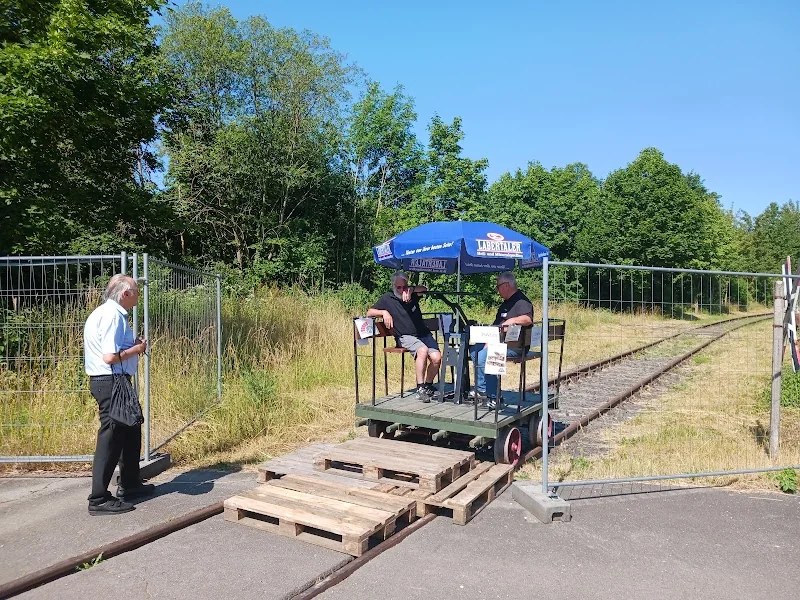
A central event format on the site is the turntable festival. The official contributions for the 2025 edition show very well what visitors can expect there: railway exhibition, turntable, draisine, and field railway rides, a garden railway, a model railway layout, and catering in the beer garden or catering area. For families, railway fans, and day-trippers, this is a strong argument because technology does not disappear into showcases here but can be experienced in motion. The contributions also mention that in 2025, the extension of the locomotive shed was publicly accessible for the first time, and exhibitions on the branch lines from Amberg to Lauterhofen, Schmidmühlen, and Schnaittenbach were shown there. Such program points make the turntable festival a place where history, volunteer work, and experience come together. ([oil-m.de](https://www.oil-m.de/drehscheibenfest/?utm_source=openai))
Especially attractive for visitors is the practical experience character. The official contributions mention rides with the hand-operated draisine, the field railway, and the garden railway. Additionally, there are demonstrations of the turntable and guided tours through various driver's cabs, such as those of locomotives and shunting vehicles. This creates closeness to the technology and appeals not only to a specialist audience. Families with children, school classes, railway photographers, and club friends are offered different levels of access. This is particularly important for a location like the Amberger Kaolinbahn because the appeal lies not only in nostalgia but in the real functionality of some facilities. A technical monument is not hidden behind barriers here but is actively used, explained, and experienced together. This is a particularly strong unique selling point for a museum and event site. ([amberger-kaolinbahn.de](https://amberger-kaolinbahn.de/2025/07/drehscheibenfest-2025-2/))
The atmosphere also plays a significant role. The reports on the turntable festival speak of good attendance, friendly helpers, clean organization, and fair prices for food and drinks. Such details may not be classic architectural facts, but they significantly shape the perception of the place in practice. For the SEO side, they are relevant because they fill the user search term event Amberg or family festival railway with real content. Additionally, the turntable festival does not appear as an isolated festival but as a showcase of the ongoing museum project. Thus, those visiting the Amberger Kaolinbahn experience not only a festival but also the progress at the locomotive shed, turntable, exhibition, and open-air area. This connection of event and development makes the location so special. ([amberger-kaolinbahn.de](https://amberger-kaolinbahn.de/2025/06/drehscheibenfest-2025/?utm_source=openai))
The Association, Cooperation, and Collecting Railway History
The Amberger Kaolinbahn e.V. is structurally a classic support and friends' association that arose from a concrete passion for railway history. According to the association's page, it was founded on January 11, 2010, at the Altstadthotel Amberg to preserve the historic locomotive shed and the railway technical facilities. This includes the turntable, tracks, signals, and other components of the former railway depot. The history of the association shows that success did not come spontaneously but arose from patience, conversations, and long-term work. Gradually, the team was able to move its club house to the current location and obtain a permit for the restoration of the turntable. Later, vehicles, exhibits, and documents followed, which were added to the collection. This development makes the association a central actor for the cultural memory of the city and the region. ([amberger-kaolinbahn.de](https://amberger-kaolinbahn.de/verein/))
Important is also the cooperation with the RSWE, i.e., the Regensburg Street, Walhall, and Railway Friends. According to the association's page, a close collaboration developed after the lease agreement, through which vehicles from the Regensburg colleagues could be accommodated in Amberg after they had to leave their previous parking space in the Regensburg harbor. The fleet page also describes that not only the treasures of the association are located on the site, but also numerous vehicles from the inventory of the partner association. This cooperation significantly expands the content horizon of the location. Visitors thus see not only local Amberg history but also a broader range of vehicles and railway objects from various contexts. This strengthens the character of the site as a collection and preservation place beyond the city limits. ([amberger-kaolinbahn.de](https://amberger-kaolinbahn.de/verein/))
The association's work also includes publications, collections, and restorations. The website contains information on books and specialist publications on the railway and industrial history of the region, as well as on vehicles and machines that are being gradually processed. Examples include shunting locomotives, rail vehicles, construction machines, and museum objects, all of which have a connection to the industrial use of the railway. This is particularly valuable for search queries with terms like Amberger Kaolinbahn, railway experience, locomotive shed, or museum because it does not reduce the place to a single object. The location thrives on the fact that many things come together here: historical research, practical restoration, museum concept, event work, and club life. This multi-layeredness makes the Amberger Kaolinbahn e.V. an unusually strong place for visitors seeking real substance. ([amberger-kaolinbahn.de](https://amberger-kaolinbahn.de/unsere-baumaschinen/?utm_source=openai))
Sources:
Mehr anzeigenWeniger anzeigen
Amberger Kaolinbahn e.V. | Turntable & Museum
The Amberger Kaolinbahn e.V. stands in Amberg for living railway history, voluntary commitment, and a place where technical monuments are not only preserved but gradually made experienceable again. On the site at Galgenbergweg 3, the Upper Palatinate Industrial and Local Railway Museum is being created, a museum and experience location that deals with the railway, industrial, and local railway history of the Upper Palatinate. Particularly defining are the historic locomotive shed, the restored turntable, the open-air area with vehicles, and the close connection to the local railway Amberg–Schnaittenbach. The association was founded in 2010 and has since pursued the goal of securing the railway depot and its facilities in the long term and making them accessible to visitors. At the same time, a place is growing on the site where exhibits from the mining region, vehicles, and historical technology are placed in a larger context. ([amberger-kaolinbahn.de](https://amberger-kaolinbahn.de/verein/))
Directions to Amberger Kaolinbahn e.V. at Galgenbergweg 3
Those looking for the Amberger Kaolinbahn e.V. will find the official address at Galgenbergweg 3 in 92224 Amberg. This address is mentioned both on the association's page and on the museum's visitor page. This makes orientation simple: The site is located in the area of the former railway depot, thus at a place that is historically directly connected to railway operations in Amberg. Therefore, anyone searching for the address, directions, or the museum in Amberg will land here at the right point. Particularly helpful is that the website clearly names the location as a starting point for the visit and makes the connection between the association, museum, and site clear. This is important because the location is not just a postal address, but a developed area with multiple functions: club house, restoration site, exhibition space, and future museum. ([amberger-kaolinbahn.de](https://amberger-kaolinbahn.de/anfahrt/))
For visitors, this means: The Amberger Kaolinbahn is not a classic theater or concert hall with a fixed seating plan, but a historic place where access varies depending on the project status and event. The OIL-M page explicitly points out that there are currently no fixed prices and opening hours because the museum is still under construction. At the same time, the homepage announces a gradual opening starting in 2026. This makes the journey particularly relevant, as interested parties should always check the current information on the website before a visit. Therefore, those searching for Amberger Kaolinbahn address, opening hours, or museum Amberg will find here not only a location but a developing project that is being prepared for visitors with growing substance and clear structure. ([oil-m.de](https://www.oil-m.de/?utm_source=openai))
This mixture of historical substance and ongoing expansion gives the place a special charm. Many location searches today are no longer just about pure event spaces, but about experience places with character, identity, and comprehensible history. Exactly that is offered by the site at the Galgenbergweg address: a visible piece of Amberg industrial history, which is supported by an association and further developed with a lot of voluntary work. So, anyone interested in an authentic place with a railway connection will find here not just a sign by the road, but a whole ensemble of locomotive shed, turntable, vehicles, and museum construction. The clear address indication and the historical context make the Amberger Kaolinbahn e.V. particularly easy to find and at the same time unusually distinctive for seekers. ([amberger-kaolinbahn.de](https://amberger-kaolinbahn.de/anfahrt/))
Locomotive Shed and Turntable: the Historical Centerpiece
The strongest technical and historical argument of the Amberger Kaolinbahn e.V. is the locomotive shed with its turntable. On the association's page, the locomotive shed is described as the external branch of the railway depot Amberg. Its history dates back to the time when the main railway connection via Amberg was opened in 1859 and a locomotive depot already existed in the station area. Later, the area became too small due to the growing number of branch lines, so a new location was found at Galgenbergweg. Between 1918 and 1923, a five-stall locomotive shed was built there as an emergency measure immediately after World War I. This makes the place not only architecturally interesting but also significant in terms of urban and industrial history. The locomotive shed is not a decorative accessory but the core of a functional railway depot, whose structure has remained visible to this day. ([amberger-kaolinbahn.de](https://amberger-kaolinbahn.de/der-lokschuppen/))
The turntable serves as the technical counterpart. It was installed in Amberg in 1940, is 23 meters long, and has a load capacity of 168 tons. According to the association's page, the platform was used when it came from Regensburg to Amberg, after it was originally built in 1914 for the railway depot there. It is remarkable that the turntable was not only restored but also made operational again in 2014. Thus, today it is more than just an exhibit: it can move vehicles and access the individual stalls of the ring locomotive shed. For visitors, this is particularly illustrative because the turntable explains the old logic of railway operations. Locomotives had to be turned, prepared, and brought into the correct driving direction. This function makes the technical monument so impressive. It connects pure mechanics with real operational history. ([amberger-kaolinbahn.de](https://amberger-kaolinbahn.de/drehscheibe/))
The special status of the locomotive shed in the Upper Palatinate is also a strong search and theme feature. The association states that it is the only locomotive shed in the Upper Palatinate that has been preserved in its original condition. Additionally, it is noted that the turntable played a central role in the operation of the branch lines and later also for heavy freight locomotives of the mining industry. Such facts are relevant for SEO not only because they cover the topic of locomotive shed Amberg and turntable Amberg, but also because they highlight the uniqueness of the location. Anyone looking for a place with a real historical core will find here not a backdrop but an authentic technical facility whose components were actually used in railway operations for decades. ([amberger-kaolinbahn.de](https://amberger-kaolinbahn.de/der-lokschuppen/))
The Local Railway Amberg–Schnaittenbach and the Kaolin Story
The Amberger Kaolinbahn is not named by chance. The association is closely connected with the local railway Amberg–Schnaittenbach, which is also referred to as Hirschauer Bockl on the association's page. There, the line is described as a 22-kilometer branch line that was opened on October 8, 1898. This line is crucial for the history of the site, as it is still part of the industrial memory of the region. The page also explains that there are still three significant kaolin mines in Schnaittenbach that secured the railway's survival. This makes it clear why the term kaolin railway is much more than just an association name: it refers to a real economic basis, to the transport of a raw material, and to the connection between railway, industry, and landscape. ([amberger-kaolinbahn.de](https://amberger-kaolinbahn.de/lokalbahn-2/lokalbahn/))
Historically, the railway also plays an important role for the railway depot Amberg. The locomotive shed was built because the railway lines and the associated locomotives needed their own maintenance facility. The locomotive shed page explains that initially, the line to Schnaittenbach was added, followed by the lines to Lauterhofen and Schmidmühlen, and the old station area thus reached its limits. This explains the move to Galgenbergweg and the need for a larger depot. For visitors, this is exciting because it shows well how infrastructure arises from economic necessity and how it is used over decades. The site is therefore not just any museum area, but a place where the development of branch lines in the Upper Palatinate remains spatially comprehensible. ([amberger-kaolinbahn.de](https://amberger-kaolinbahn.de/der-lokschuppen/))
The long-term significance of kaolin and mining traffic is also repeatedly visible on the official pages. According to its own representation, the museum sees itself as a place that takes on the historical processing and presentation of railway technical exhibits from the Upper Palatinate mining region. This includes not only vehicles but also objects from former railway life and the mediation of the working world at the railway. Exactly at this point, the local railway Amberg–Schnaittenbach receives its museum dimension: it is not just a line but a key to understanding regional industrial development. Those searching for local railway Amberg Schnaittenbach or kaolin railway Amberg are usually interested in this connection of raw material, transport, and technology. The association responds with historical depth and a clear, comprehensible narrative. ([amberger-kaolinbahn.de](https://amberger-kaolinbahn.de/lokalbahn-2/lokalbahn/))
OIL-M, Exhibits, and Museum Development
With the Upper Palatinate Industrial and Local Railway Museum, a new museum concept is being created on the site of the Amberger Kaolinbahn e.V. The museum page describes that since 2010, some railway enthusiasts have been working to develop a museum from the old railway depot in Amberg. The focus is on the historical processing and presentation of railway technical exhibits from the Upper Palatinate mining region. This is important because the museum does not only want to show rail vehicles but also objects from former railway life, such as tools, documents, equipment, and all the things that made everyday life at the railway. The changing exhibitions in the former social rooms of the railway depot ensure that the place does not appear static but is thought of in themes. This mixture of technology, space, and history makes OIL-M particularly relevant for search queries like museum Amberg, railway museum Upper Palatinate, or OIL-M Amberg. ([oil-m.de](https://www.oil-m.de/museum/))
According to the museum description, the locomotive shed and the open-air area are also used as exhibition areas. There, vehicles from different industrial sectors are to be protected from decay and made accessible to visitors. The page explicitly states that some locomotives and wagons have already been restored. Additionally, there is a field railway track where it is explained at several stations how work was done in the past. This is a strong signal for visitor friendliness because one does not only see objects but understands connections. Especially in a museum area that is still developing, this mediation is crucial: the exhibits tell of mining, work traffic, freight transport, and the role of the railway in the Upper Palatinate. The site thus becomes a walkable learning place that makes the past not abstract but immediately experienceable. ([oil-m.de](https://www.oil-m.de/museum/))
The current project status is transparently communicated. The homepage of OIL-M announces a gradual opening starting in 2026, while the visitor page continues to point out that the museum is still under construction and that there are no fixed prices and opening hours yet. This openness is important for visitors because it clearly manages expectations. Instead of a fully completed museum, one gets a real glimpse into a growing project that is becoming larger and richer in content piece by piece. Along the same lines are further current reports about newly added exhibits, restorations, and transports. Thus, it becomes clear: OIL-M is not a finished product but a living collection and development project that openly communicates its development and makes the path there part of the experience. ([oil-m.de](https://www.oil-m.de/?utm_source=openai))
Turntable Festival, Tours, and Family Experience
A central event format on the site is the turntable festival. The official contributions for the 2025 edition show very well what visitors can expect there: railway exhibition, turntable, draisine, and field railway rides, a garden railway, a model railway layout, and catering in the beer garden or catering area. For families, railway fans, and day-trippers, this is a strong argument because technology does not disappear into showcases here but can be experienced in motion. The contributions also mention that in 2025, the extension of the locomotive shed was publicly accessible for the first time, and exhibitions on the branch lines from Amberg to Lauterhofen, Schmidmühlen, and Schnaittenbach were shown there. Such program points make the turntable festival a place where history, volunteer work, and experience come together. ([oil-m.de](https://www.oil-m.de/drehscheibenfest/?utm_source=openai))
Especially attractive for visitors is the practical experience character. The official contributions mention rides with the hand-operated draisine, the field railway, and the garden railway. Additionally, there are demonstrations of the turntable and guided tours through various driver's cabs, such as those of locomotives and shunting vehicles. This creates closeness to the technology and appeals not only to a specialist audience. Families with children, school classes, railway photographers, and club friends are offered different levels of access. This is particularly important for a location like the Amberger Kaolinbahn because the appeal lies not only in nostalgia but in the real functionality of some facilities. A technical monument is not hidden behind barriers here but is actively used, explained, and experienced together. This is a particularly strong unique selling point for a museum and event site. ([amberger-kaolinbahn.de](https://amberger-kaolinbahn.de/2025/07/drehscheibenfest-2025-2/))
The atmosphere also plays a significant role. The reports on the turntable festival speak of good attendance, friendly helpers, clean organization, and fair prices for food and drinks. Such details may not be classic architectural facts, but they significantly shape the perception of the place in practice. For the SEO side, they are relevant because they fill the user search term event Amberg or family festival railway with real content. Additionally, the turntable festival does not appear as an isolated festival but as a showcase of the ongoing museum project. Thus, those visiting the Amberger Kaolinbahn experience not only a festival but also the progress at the locomotive shed, turntable, exhibition, and open-air area. This connection of event and development makes the location so special. ([amberger-kaolinbahn.de](https://amberger-kaolinbahn.de/2025/06/drehscheibenfest-2025/?utm_source=openai))
The Association, Cooperation, and Collecting Railway History
The Amberger Kaolinbahn e.V. is structurally a classic support and friends' association that arose from a concrete passion for railway history. According to the association's page, it was founded on January 11, 2010, at the Altstadthotel Amberg to preserve the historic locomotive shed and the railway technical facilities. This includes the turntable, tracks, signals, and other components of the former railway depot. The history of the association shows that success did not come spontaneously but arose from patience, conversations, and long-term work. Gradually, the team was able to move its club house to the current location and obtain a permit for the restoration of the turntable. Later, vehicles, exhibits, and documents followed, which were added to the collection. This development makes the association a central actor for the cultural memory of the city and the region. ([amberger-kaolinbahn.de](https://amberger-kaolinbahn.de/verein/))
Important is also the cooperation with the RSWE, i.e., the Regensburg Street, Walhall, and Railway Friends. According to the association's page, a close collaboration developed after the lease agreement, through which vehicles from the Regensburg colleagues could be accommodated in Amberg after they had to leave their previous parking space in the Regensburg harbor. The fleet page also describes that not only the treasures of the association are located on the site, but also numerous vehicles from the inventory of the partner association. This cooperation significantly expands the content horizon of the location. Visitors thus see not only local Amberg history but also a broader range of vehicles and railway objects from various contexts. This strengthens the character of the site as a collection and preservation place beyond the city limits. ([amberger-kaolinbahn.de](https://amberger-kaolinbahn.de/verein/))
The association's work also includes publications, collections, and restorations. The website contains information on books and specialist publications on the railway and industrial history of the region, as well as on vehicles and machines that are being gradually processed. Examples include shunting locomotives, rail vehicles, construction machines, and museum objects, all of which have a connection to the industrial use of the railway. This is particularly valuable for search queries with terms like Amberger Kaolinbahn, railway experience, locomotive shed, or museum because it does not reduce the place to a single object. The location thrives on the fact that many things come together here: historical research, practical restoration, museum concept, event work, and club life. This multi-layeredness makes the Amberger Kaolinbahn e.V. an unusually strong place for visitors seeking real substance. ([amberger-kaolinbahn.de](https://amberger-kaolinbahn.de/unsere-baumaschinen/?utm_source=openai))
Sources:
Amberger Kaolinbahn e.V. | Turntable & Museum
The Amberger Kaolinbahn e.V. stands in Amberg for living railway history, voluntary commitment, and a place where technical monuments are not only preserved but gradually made experienceable again. On the site at Galgenbergweg 3, the Upper Palatinate Industrial and Local Railway Museum is being created, a museum and experience location that deals with the railway, industrial, and local railway history of the Upper Palatinate. Particularly defining are the historic locomotive shed, the restored turntable, the open-air area with vehicles, and the close connection to the local railway Amberg–Schnaittenbach. The association was founded in 2010 and has since pursued the goal of securing the railway depot and its facilities in the long term and making them accessible to visitors. At the same time, a place is growing on the site where exhibits from the mining region, vehicles, and historical technology are placed in a larger context. ([amberger-kaolinbahn.de](https://amberger-kaolinbahn.de/verein/))
Directions to Amberger Kaolinbahn e.V. at Galgenbergweg 3
Those looking for the Amberger Kaolinbahn e.V. will find the official address at Galgenbergweg 3 in 92224 Amberg. This address is mentioned both on the association's page and on the museum's visitor page. This makes orientation simple: The site is located in the area of the former railway depot, thus at a place that is historically directly connected to railway operations in Amberg. Therefore, anyone searching for the address, directions, or the museum in Amberg will land here at the right point. Particularly helpful is that the website clearly names the location as a starting point for the visit and makes the connection between the association, museum, and site clear. This is important because the location is not just a postal address, but a developed area with multiple functions: club house, restoration site, exhibition space, and future museum. ([amberger-kaolinbahn.de](https://amberger-kaolinbahn.de/anfahrt/))
For visitors, this means: The Amberger Kaolinbahn is not a classic theater or concert hall with a fixed seating plan, but a historic place where access varies depending on the project status and event. The OIL-M page explicitly points out that there are currently no fixed prices and opening hours because the museum is still under construction. At the same time, the homepage announces a gradual opening starting in 2026. This makes the journey particularly relevant, as interested parties should always check the current information on the website before a visit. Therefore, those searching for Amberger Kaolinbahn address, opening hours, or museum Amberg will find here not only a location but a developing project that is being prepared for visitors with growing substance and clear structure. ([oil-m.de](https://www.oil-m.de/?utm_source=openai))
This mixture of historical substance and ongoing expansion gives the place a special charm. Many location searches today are no longer just about pure event spaces, but about experience places with character, identity, and comprehensible history. Exactly that is offered by the site at the Galgenbergweg address: a visible piece of Amberg industrial history, which is supported by an association and further developed with a lot of voluntary work. So, anyone interested in an authentic place with a railway connection will find here not just a sign by the road, but a whole ensemble of locomotive shed, turntable, vehicles, and museum construction. The clear address indication and the historical context make the Amberger Kaolinbahn e.V. particularly easy to find and at the same time unusually distinctive for seekers. ([amberger-kaolinbahn.de](https://amberger-kaolinbahn.de/anfahrt/))
Locomotive Shed and Turntable: the Historical Centerpiece
The strongest technical and historical argument of the Amberger Kaolinbahn e.V. is the locomotive shed with its turntable. On the association's page, the locomotive shed is described as the external branch of the railway depot Amberg. Its history dates back to the time when the main railway connection via Amberg was opened in 1859 and a locomotive depot already existed in the station area. Later, the area became too small due to the growing number of branch lines, so a new location was found at Galgenbergweg. Between 1918 and 1923, a five-stall locomotive shed was built there as an emergency measure immediately after World War I. This makes the place not only architecturally interesting but also significant in terms of urban and industrial history. The locomotive shed is not a decorative accessory but the core of a functional railway depot, whose structure has remained visible to this day. ([amberger-kaolinbahn.de](https://amberger-kaolinbahn.de/der-lokschuppen/))
The turntable serves as the technical counterpart. It was installed in Amberg in 1940, is 23 meters long, and has a load capacity of 168 tons. According to the association's page, the platform was used when it came from Regensburg to Amberg, after it was originally built in 1914 for the railway depot there. It is remarkable that the turntable was not only restored but also made operational again in 2014. Thus, today it is more than just an exhibit: it can move vehicles and access the individual stalls of the ring locomotive shed. For visitors, this is particularly illustrative because the turntable explains the old logic of railway operations. Locomotives had to be turned, prepared, and brought into the correct driving direction. This function makes the technical monument so impressive. It connects pure mechanics with real operational history. ([amberger-kaolinbahn.de](https://amberger-kaolinbahn.de/drehscheibe/))
The special status of the locomotive shed in the Upper Palatinate is also a strong search and theme feature. The association states that it is the only locomotive shed in the Upper Palatinate that has been preserved in its original condition. Additionally, it is noted that the turntable played a central role in the operation of the branch lines and later also for heavy freight locomotives of the mining industry. Such facts are relevant for SEO not only because they cover the topic of locomotive shed Amberg and turntable Amberg, but also because they highlight the uniqueness of the location. Anyone looking for a place with a real historical core will find here not a backdrop but an authentic technical facility whose components were actually used in railway operations for decades. ([amberger-kaolinbahn.de](https://amberger-kaolinbahn.de/der-lokschuppen/))
The Local Railway Amberg–Schnaittenbach and the Kaolin Story
The Amberger Kaolinbahn is not named by chance. The association is closely connected with the local railway Amberg–Schnaittenbach, which is also referred to as Hirschauer Bockl on the association's page. There, the line is described as a 22-kilometer branch line that was opened on October 8, 1898. This line is crucial for the history of the site, as it is still part of the industrial memory of the region. The page also explains that there are still three significant kaolin mines in Schnaittenbach that secured the railway's survival. This makes it clear why the term kaolin railway is much more than just an association name: it refers to a real economic basis, to the transport of a raw material, and to the connection between railway, industry, and landscape. ([amberger-kaolinbahn.de](https://amberger-kaolinbahn.de/lokalbahn-2/lokalbahn/))
Historically, the railway also plays an important role for the railway depot Amberg. The locomotive shed was built because the railway lines and the associated locomotives needed their own maintenance facility. The locomotive shed page explains that initially, the line to Schnaittenbach was added, followed by the lines to Lauterhofen and Schmidmühlen, and the old station area thus reached its limits. This explains the move to Galgenbergweg and the need for a larger depot. For visitors, this is exciting because it shows well how infrastructure arises from economic necessity and how it is used over decades. The site is therefore not just any museum area, but a place where the development of branch lines in the Upper Palatinate remains spatially comprehensible. ([amberger-kaolinbahn.de](https://amberger-kaolinbahn.de/der-lokschuppen/))
The long-term significance of kaolin and mining traffic is also repeatedly visible on the official pages. According to its own representation, the museum sees itself as a place that takes on the historical processing and presentation of railway technical exhibits from the Upper Palatinate mining region. This includes not only vehicles but also objects from former railway life and the mediation of the working world at the railway. Exactly at this point, the local railway Amberg–Schnaittenbach receives its museum dimension: it is not just a line but a key to understanding regional industrial development. Those searching for local railway Amberg Schnaittenbach or kaolin railway Amberg are usually interested in this connection of raw material, transport, and technology. The association responds with historical depth and a clear, comprehensible narrative. ([amberger-kaolinbahn.de](https://amberger-kaolinbahn.de/lokalbahn-2/lokalbahn/))
OIL-M, Exhibits, and Museum Development
With the Upper Palatinate Industrial and Local Railway Museum, a new museum concept is being created on the site of the Amberger Kaolinbahn e.V. The museum page describes that since 2010, some railway enthusiasts have been working to develop a museum from the old railway depot in Amberg. The focus is on the historical processing and presentation of railway technical exhibits from the Upper Palatinate mining region. This is important because the museum does not only want to show rail vehicles but also objects from former railway life, such as tools, documents, equipment, and all the things that made everyday life at the railway. The changing exhibitions in the former social rooms of the railway depot ensure that the place does not appear static but is thought of in themes. This mixture of technology, space, and history makes OIL-M particularly relevant for search queries like museum Amberg, railway museum Upper Palatinate, or OIL-M Amberg. ([oil-m.de](https://www.oil-m.de/museum/))
According to the museum description, the locomotive shed and the open-air area are also used as exhibition areas. There, vehicles from different industrial sectors are to be protected from decay and made accessible to visitors. The page explicitly states that some locomotives and wagons have already been restored. Additionally, there is a field railway track where it is explained at several stations how work was done in the past. This is a strong signal for visitor friendliness because one does not only see objects but understands connections. Especially in a museum area that is still developing, this mediation is crucial: the exhibits tell of mining, work traffic, freight transport, and the role of the railway in the Upper Palatinate. The site thus becomes a walkable learning place that makes the past not abstract but immediately experienceable. ([oil-m.de](https://www.oil-m.de/museum/))
The current project status is transparently communicated. The homepage of OIL-M announces a gradual opening starting in 2026, while the visitor page continues to point out that the museum is still under construction and that there are no fixed prices and opening hours yet. This openness is important for visitors because it clearly manages expectations. Instead of a fully completed museum, one gets a real glimpse into a growing project that is becoming larger and richer in content piece by piece. Along the same lines are further current reports about newly added exhibits, restorations, and transports. Thus, it becomes clear: OIL-M is not a finished product but a living collection and development project that openly communicates its development and makes the path there part of the experience. ([oil-m.de](https://www.oil-m.de/?utm_source=openai))
Turntable Festival, Tours, and Family Experience
A central event format on the site is the turntable festival. The official contributions for the 2025 edition show very well what visitors can expect there: railway exhibition, turntable, draisine, and field railway rides, a garden railway, a model railway layout, and catering in the beer garden or catering area. For families, railway fans, and day-trippers, this is a strong argument because technology does not disappear into showcases here but can be experienced in motion. The contributions also mention that in 2025, the extension of the locomotive shed was publicly accessible for the first time, and exhibitions on the branch lines from Amberg to Lauterhofen, Schmidmühlen, and Schnaittenbach were shown there. Such program points make the turntable festival a place where history, volunteer work, and experience come together. ([oil-m.de](https://www.oil-m.de/drehscheibenfest/?utm_source=openai))
Especially attractive for visitors is the practical experience character. The official contributions mention rides with the hand-operated draisine, the field railway, and the garden railway. Additionally, there are demonstrations of the turntable and guided tours through various driver's cabs, such as those of locomotives and shunting vehicles. This creates closeness to the technology and appeals not only to a specialist audience. Families with children, school classes, railway photographers, and club friends are offered different levels of access. This is particularly important for a location like the Amberger Kaolinbahn because the appeal lies not only in nostalgia but in the real functionality of some facilities. A technical monument is not hidden behind barriers here but is actively used, explained, and experienced together. This is a particularly strong unique selling point for a museum and event site. ([amberger-kaolinbahn.de](https://amberger-kaolinbahn.de/2025/07/drehscheibenfest-2025-2/))
The atmosphere also plays a significant role. The reports on the turntable festival speak of good attendance, friendly helpers, clean organization, and fair prices for food and drinks. Such details may not be classic architectural facts, but they significantly shape the perception of the place in practice. For the SEO side, they are relevant because they fill the user search term event Amberg or family festival railway with real content. Additionally, the turntable festival does not appear as an isolated festival but as a showcase of the ongoing museum project. Thus, those visiting the Amberger Kaolinbahn experience not only a festival but also the progress at the locomotive shed, turntable, exhibition, and open-air area. This connection of event and development makes the location so special. ([amberger-kaolinbahn.de](https://amberger-kaolinbahn.de/2025/06/drehscheibenfest-2025/?utm_source=openai))
The Association, Cooperation, and Collecting Railway History
The Amberger Kaolinbahn e.V. is structurally a classic support and friends' association that arose from a concrete passion for railway history. According to the association's page, it was founded on January 11, 2010, at the Altstadthotel Amberg to preserve the historic locomotive shed and the railway technical facilities. This includes the turntable, tracks, signals, and other components of the former railway depot. The history of the association shows that success did not come spontaneously but arose from patience, conversations, and long-term work. Gradually, the team was able to move its club house to the current location and obtain a permit for the restoration of the turntable. Later, vehicles, exhibits, and documents followed, which were added to the collection. This development makes the association a central actor for the cultural memory of the city and the region. ([amberger-kaolinbahn.de](https://amberger-kaolinbahn.de/verein/))
Important is also the cooperation with the RSWE, i.e., the Regensburg Street, Walhall, and Railway Friends. According to the association's page, a close collaboration developed after the lease agreement, through which vehicles from the Regensburg colleagues could be accommodated in Amberg after they had to leave their previous parking space in the Regensburg harbor. The fleet page also describes that not only the treasures of the association are located on the site, but also numerous vehicles from the inventory of the partner association. This cooperation significantly expands the content horizon of the location. Visitors thus see not only local Amberg history but also a broader range of vehicles and railway objects from various contexts. This strengthens the character of the site as a collection and preservation place beyond the city limits. ([amberger-kaolinbahn.de](https://amberger-kaolinbahn.de/verein/))
The association's work also includes publications, collections, and restorations. The website contains information on books and specialist publications on the railway and industrial history of the region, as well as on vehicles and machines that are being gradually processed. Examples include shunting locomotives, rail vehicles, construction machines, and museum objects, all of which have a connection to the industrial use of the railway. This is particularly valuable for search queries with terms like Amberger Kaolinbahn, railway experience, locomotive shed, or museum because it does not reduce the place to a single object. The location thrives on the fact that many things come together here: historical research, practical restoration, museum concept, event work, and club life. This multi-layeredness makes the Amberger Kaolinbahn e.V. an unusually strong place for visitors seeking real substance. ([amberger-kaolinbahn.de](https://amberger-kaolinbahn.de/unsere-baumaschinen/?utm_source=openai))
Sources:
Upcoming Events
No events found
Frequently Asked Questions
Reviews
Thomas Krug
25. June 2023
Wonderful festival, first-class organization. All attractions and routes were clearly signposted. Fair prices for food and drinks. Super friendly club members and helpers. Amazing what you all put together!! It got crowded from midday onwards. Lots of families with children. Everything was perfect. Kudos also to the fantastic model railway in the engine shed.
Michel H. (Hirsch)
26. March 2023
The old railway turntable is amazing. The site is located near the railway line. A must-see for railway enthusiasts. The turntable festival is in June 2023.
Mike S.
16. June 2024
We were here for the Drehscheibenfest (a local festival). The organization was fantastic, with lots of different attractions and super friendly staff. The prices are also perfectly reasonable for today's standards. We'd love to come back.
BlackDiamond 80
27. December 2023
The turntable festival was very nice. You could ride the narrow-gauge railway and the handcar. The turntable could be ridden on the hour. There was a guided tour of the hall and a model railway as well.
Sebastian Wiesgickl
26. June 2022
A great little festival at the turntable. Just the thing for railway enthusiasts. You can even ride on the turntable.