
Rudolf Tarnow
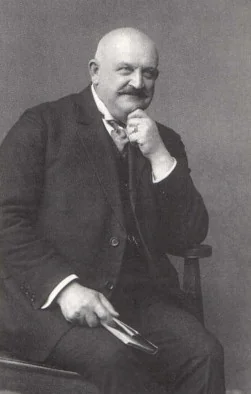
Image from Wikipedia
Image from Wikipedia
Rudolf Tarnow – A People’s Master of Low German Storytelling
A Low German classic whose humor and understanding of people still resonate today
Rudolf Heinrich Wilhelm Tarnow shaped Low German literature in the early 20th century with disarming humor, keen observational skills, and precise everyday language. Born on February 25, 1867, in Parchim and died on May 19, 1933, on Sachsenberg near Schwerin, he combined pointed social studies, folk wisdom, and a stage presence as a performer that made his work popular from the start. His artistic development transitioned from a career in commerce and the military to an independent voice in Low German literature, whose "Burrkäwers," children's books, and epics are still read, quoted, and performed on stages today.
He did not have a career in music in the strict sense; however, Tarnow belongs to the broader soundscape of North German recitation art, where recitation, the rhythm of language, metrics, and melodic speech play a role. His compositional hand is evident in terms of language composition, arrangement of punchlines, and dramatic sharpness, which made his texts particularly suited for readings. Many streets and schools in Mecklenburg-Vorpommern bear his name today, a testament to his cultural anchoring and lasting impact.
Early Years: From Parchim to the World of Stories
Growing up as the eldest son of a shoemaker, Tarnow attended middle school in Parchim from 1873 to 1881 and then completed a commercial apprenticeship in a cloth factory. His sense of order, discipline, and observation of people matured in the everyday life of a small town—experiences that later reflected in character sketches and Low German character studies. Even in his youth, he was deeply influenced by the vibrant folk culture of Mecklenburg: village conversations, church events, and market activities provided him with a repertoire of motifs, roles, and expressions that became the foundation of his literature. This level of experience created the grounding of his tone: winking humor, lovingly critical, always close to the lived reality of the "lütten Lüü."
Military Service and Professional Life: Discipline Meets Joy of Storytelling
Drafted for military service in 1887, Tarnow served in the Dragoon Regiment, was transferred to the Life Company in Schwerin in 1889, and was appointed as a paymaster’s assistant in Ludwigslust in 1894. His attempt to become a paymaster failed due to the required bond—a biographical detail that sharpened his awareness of social barriers. In 1906, he transitioned to become a business inspector at the Sachsenberg mental health facility near Schwerin. The professional routine in the administrative apparatus, dealing with hierarchies, and observing human breaks broadened his perspective. This proximity to experience later fed into the narrative confidence with which he portrayed officials, clergymen, teachers, farmers, and craftsmen in comic friction.
The Artistic Development: From Festive Poetry to the "Burrkäwers"
Around 1910, on the occasion of the 100th birthday of Fritz Reuter, Tarnow began his Low German publications. His festive poem for the laying of the cornerstone of the Reuter Monument in Stavenhagen marked the start of a productive phase in which his voice gained definition. Between 1911 and 1918, the six volumes of the "Burrkäwers" were published—folk-comical witty poems that exhibited everyday situations as miniatures of social choreography. The collection combined sharp observation, tight timing, and a kind of linguistic composition: punchline, cadence, refrain of recurring humor. This series made Tarnow one of the most popular Low German folk poets of his time.
Works and Extended Discography: Bibliography, Stage Presence, and Recitation Art
Tarnow’s "discography" can be read as a bibliography and performance history: in 1921, the rural school teacher epic "Köster Klickermann" was published, in 1924 the children's book "Rüter-Püter," in 1927 the poetry collection "Ringelranken," and the autobiographically tinted memories "Mein sogenannter Werdegang." The text architecture often resembles a careful arrangement: strophic patterns, recurring linguistic signals, and a feel for meter and rhythm structure the comic twists. His recitation tours and the popularity of his readings significantly contributed to his dissemination. Later recordings and stage programs reflected this recitation style—an indication of how performative Tarnow's literature was.
"Mötst di nich argern": An Evergreen of Low German Recitation Art
The poem "Mötst di nich argern," from "Ringelranken," achieved extraordinary popularity and became a popular saying in North German households. Publishers produced decorative sheets in large quantities; to this day, the text is part of the standard repertoire of Low German recitation art. In literary-critical terms, one could say: The poem balances life philosophy and everyday wit, employing rhyme, meter, and repetition as melodic elements—a sound speech that composes its own "earworm" from language. In cultural practice, "Mötst di nich argern" became a motto of relaxed resistance against the little tribulations of everyday life.
Children's Literature, Epic, Comedy: Genre Variety and Compositional Precision
"Rüter-Püter" and "Ringelranken" document Tarnow's special closeness to the world of children. The characters speak in a natural tone, the scenes carry manageable conflicts, and yet a poetic condensation emerges from this. "Köster Klickermann" unfolds—similar to a suite—episodes around school and church: motifs recur, characters vary, and the drama intensifies. The "Burrkäwers" work with the classic comedic principle: exposition, complication, surprising punchline. Composition and arrangement always remain focused on clarity and rhythmic precision—a reason why the texts work so well live.
Reception, Editions, and Cultural Echo
During his lifetime, Tarnow achieved widespread popularity, and his books had significant print runs. His success was based on a dense connection between life proximity, humor, and linguistic sensitivity. The Hinstorff Verlag preserved and disseminated his work for decades, significantly contributing to its canonization through editions and audio productions. Even in schools and cultural institutions, his name remained present; the naming of streets and schools in Mecklenburg-Vorpommern documents his regional anchoring. To this day, recitation programs featuring Tarnow's texts are performed—a vibrant legacy in the North.
Ambivalences of the Time: Patriotism and Political Stance
Critical contextualization is essential to the credibility of any artist biography. Tarnow’s texts from the time of World War I exhibit traits of a jingoistic patriotism, and New Year poems contain passages that call for an authoritarian leader figure for Germany. In 1933, he welcomed Adolf Hitler's rise to power. These findings mark a problematic side of his biography, which is clearly addressed in historical-critical reception. At the same time, this aspect neither diminishes his linguistic mastery nor the documentary value of his social depictions; it contextualizes them and calls for a nuanced reading.
Style and Language: Low German as an Expression of Closeness and Nuance
Tarnow's art thrives on the idiomatic character of Low German. The sounds, alliterations, word games, and proverbs convey not only humor but also social music: tones of the North, rhythms of the village community, speaking pauses. In music-ethical metaphor, one could say: His prose and poetry resonate like an ensemble of everyday voices, with solo performances of rural types and a choir of shared sayings. This “sound speech” makes the texts comprehensible even beyond the dialectical realm, as it translates life wisdom and human kindness into a universal register.
End of Life, Memory Culture, and Places
After his retirement as Senior Inspector in June 1932, Tarnow died in 1933 due to heart disease and was buried in the cemetery of the facility on Sachsenberg. The grave is one of the few preserved resting places on the grounds and marks a memorial site of Low German literature. The preservation of his memory is taken on by museums, publishers, schools, and local cultural institutions that initiate readings, editions, and educational offerings. That his work continues to be suitable for readings is evidenced by its lasting presence in programs of regional stages and literary circles.
Conclusion: Why Rudolf Tarnow Is Still Important Today
Rudolf Tarnow impresses with experience from life, linguistic expertise, and an authority that arises from the audience's resonance. His "Burrkäwers," "Köster Klickermann," "Rüter-Püter," and "Ringelranken" combine comedy, laconicism, and empathy—a blend that remains in memory. Anyone wanting to experience the interplay of Low German sound speech, finely composed punchlines, and loving satire should not only read Tarnow but also listen: at readings, in audiobooks, and in live performances in Low German. His work invites a fresh look at everyday actions—with humor, respect, and keen humanity.
Call to Action: Experience the artistic development and stage presence of Tarnow’s texts live—the best way to discover his linguistic melody, wit, and human kindness.
Official Channels of Rudolf Tarnow:
- Instagram: No official profile found
- Facebook: No official profile found
- YouTube: No official profile found
- Spotify: No official profile found
- TikTok: No official profile found
Sources:
- Wikipedia – Rudolf Tarnow
- Hinstorff Verlag – Author Page Rudolf Tarnow
- Fritz-Reuter-Literature Museum – About Rudolf Tarnow
- German Biography – Tarnow, Rudolf Heinrich Wilhelm
- Wikipedia – Cemetery auf dem Sachsenberg (Schwerin)
- Rudolf-Tarnow-Straße, Schwerin – Onlinestreet (Example of Naming)
- Wikipedia: Image and text sources
Upcoming Events
A Rudolf-Tarnow-Evening
Hafenklang - live music with NOW
Hafenklang - live music with NOW
Hafenklang – live music with "NOW"
Hafenklang - live music with NOW in Duisburg