
Rudolf Steiner
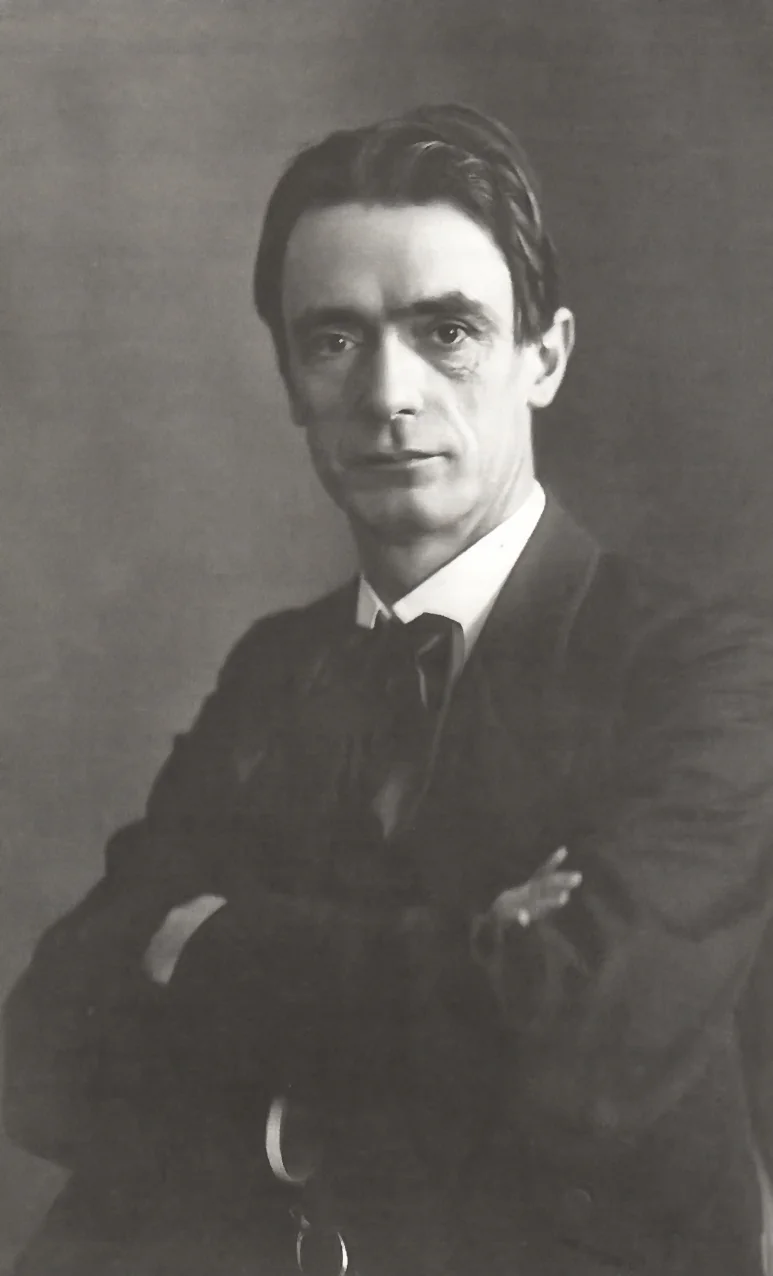
Image from Wikipedia
Image from Wikipedia
Rudolf Steiner – The Artistic Impulse Behind Eurythmy, Sound Culture, and Waldorf Education
An Artist of the Spirit: How Rudolf Steiner Combined Music, Movement, and Education into a Unique Stage Aesthetics
Rudolf Joseph Lorenz Steiner (1861–1925) shaped a broad cultural field as a writer, theosophist, and founder of anthroposophy, extending far beyond philosophy and pedagogy into music culture. His music career in the narrower sense did not exist, but his artistic development gave rise to eurythmy, an independent art form that connects music, language, composition, and movement into a holistic expression. Based on his spiritual-scientific research, he generated ideas that continue to inspire musicians, educators, researchers, and ensembles to this day. The name Rudolf Steiner thus stands for an interdisciplinary understanding of art that expands the perception of sound, body, and space.
Influenced early on by Goethe's natural science and aesthetics, Steiner developed his understanding of form, rhythm, and the inner laws of the living. This perspective flows into his artistic work: music appears as a soulful-spiritual movement that becomes visible in eurythmy and matures into a methodical experiential space for children and adolescents within educational contexts. Through Waldorf education, eurythmy, anthroposophical architecture, and medicine, he established new fields of practice, often centered around sound, rhythm, and performative principles.
His legacy remains vibrant: editions of his works, stage projects at the Goetheanum, and numerous educational and cultural initiatives continue to deepen the dialogue between music, movement, and consciousness. This contribution focuses on Steiner's influence related to art and music—as a portrait of a thinker who elevated music to the visible language of humanity.
Biography and Artistic Development: From Goethe's Science to “Visible Music”
Steiner was born in 1861 in present-day Croatia and died in 1925 in Dornach, Switzerland. His early career took him through Vienna and Weimar, where he edited Goethe's scientific writings and presented philosophical works. This work deepened his understanding of form and shape: in Goethe's thoughts on metamorphosis, polarity, and enhancement, he recognized laws that he later applied to art, music, and education. From 1900 onwards, he developed the foundations of his anthroposophy in Berlin, digesting theosophical sources while forming an independent Western-Christian esotericism.
Between 1904 and 1910, Steiner unfolded his system of fundamental writings and public lectures, from which artistic methods arose. Central to this is eurythmy, which began to emerge as a stage and movement art from 1912: sounds, intervals, and speech sounds receive a visible gesture, the choreography of which is both composition and interpretation. Thus, Steiner's stage presence is not concentrated in personal concert activity but in artistic leadership, dramatic impulses, and training methods that are still passed down in ensembles today.
The artistic development is based on an idea of music as the “movement of the soulful-spiritual.” This gives rise to a practice in which sound qualities, harmonic progressions, dynamics, and rhythm are translated into body gestures. The stage becomes a resonance chamber for musical structures, while educational applications—such as in Waldorf schools—combine musical education with motor, social, and aesthetic experiences.
Eurythmy: Stage Art Between Composition, Arrangement, and Movement
Eurythmy is Steiner's most distinctive artistic contribution: it unites the logic of musical form with choreographed gesture. In it, compositional parameters—pitch, interval, time signature, phrasing—act as dramatic vectors that transition into spatial lines, forms, and gestures. This creates a “visible music” that extends traditional concert formats and reconfigures hearing and seeing. The ensemble becomes a polyphonic instrument that makes harmonic progressions sensually tangible.
In artistic practice, eurythmy is curated like a concert: works from music history, linguistic art, and new compositions are arranged, dramaturgically contrasted, and linked to plastic forms of the stage space. This connection of arrangement, movement, and sound sensitizes one to timbre, articulation, and musical semantics. The performance practice thrives on the interplay between precise depiction of musical shape and improvisational fine-tuning within the space.
Even today, new programs emerge that creatively further develop Steiner's eurythmic impulses. At the Goetheanum, eurythmy continues as ensemble art with current compositional references, literary textures, and thematic cycles. This reveals a vibrant tradition that connects historical substance with contemporary stage aesthetics and deepens the reception of music performatively.
Waldorf Education and Music: Sound Education as a Holistic Experience
With Waldorf education, Steiner shaped a culture of education where music is not merely a subject but a path of experience. From singing and elemental instrumental play to ensemble work and eurythmy, the focus is on rhythmic stability, breath control, social coordination, and aesthetic judgment. Music becomes the medium that integrates cognition, motor skills, and feeling, thereby creating a sustainable learning environment for children and adolescents.
In the curriculum, music-making, movement, and speech formation are intertwined. Educational phases target age-appropriate challenges: from fundamental rhythm and sound perception to polyphony, harmony, and improvisation. This creates a progression where listening ability, intonation, ensemble culture, and stage presence grow. This approach extends into music therapy, class orchestras, and stage work, generating a school culture that socially anchors musical practice.
The artistic development of students is expressed in performances, annual projects, and festival formats. Music is therefore not taught as an isolated subject but as a structural experience that enhances language perception, movement security, and aesthetic judgment—a fundamental element of Steiner's cultural impulse.
Works, Editions, and Edition History: The “Complete Edition” as a Source Foundation
Although Steiner did not leave behind a musical discography in the narrower sense, his artistic influence resides in numerous lecture cycles and writings that encapsulate aesthetic, pedagogical, and spiritual-scientific questions. Central to this is the ongoing development of the Complete Edition (GA), which makes his lectures, courses, and writings editorially accessible. This edition history serves musicians, educators, and stage artists as a primary source for interpretative practice and methodological deepening.
In the work of editions, lecture courses on eurythmy, speech formation, and artistic-pedagogical topics are continuously being processed. New editions, revised volumes, and editorial supplements facilitate the research practice in teaching, ensemble leadership, and dramaturgy. This provides the current scene with a reliable textual foundation that historically informs artistic decisions while simultaneously opening them for contemporary contexts.
The dynamics of the editions—through projects aimed at completion, revised editions, and planned volumes—demonstrate how present Steiner's work remains in today's discourse. For music and stage practice, this creates a reliable source that nourishes performance, training, and reflection alike.
Current Stage and Cultural Work: Programs, Anniversaries, and Research
One hundred years after Steiner's death, a dense cultural program is developing that translates his impulses into contemporary practices. Stage ensembles present new eurythmy productions that intertwine texts and music pieces in thematic compositions and address questions of perception, life processes, and artistic transformation. Such programs illustrate how Steiner's impulses influence today's music education and performance art.
Around the anniversary year, institutions and venues gather for symposiums, memorial events, and curated series. This framework opens spaces for research, edition projects, and discussions about the relevance of Steiner's understanding of art. At the same time, it strengthens networks among stage artists, educators, and publishers who collaboratively develop repertoire, methodology, and didactics.
The diversity ranges from artistic premieres to colloquia and publication initiatives. Thus, the exchange between stage, research, and education remains vibrant and underpins artistic practice with a reflective theory—in Steiner's sense of a conscious, experiential approach to creating art.
Style, Aesthetics, and Historical Context of Music
Steiner's concept of style rests on the idea that artistic form expresses spiritual laws. In music, this means that harmony and rhythm can be not only sensibly perceived but consciously grasped—as an inner movement that becomes visible in eurythmy. In this respect, his approach is aligned with romantic and idealistic currents that understood sound as a symbol of spiritual order, and it continues them performatively.
Historically, Steiner's impulse positions itself alongside reform movements of the 20th century that reconfigured concert culture, dance, and performing arts. The idea of “visible music” corresponds with developments in expressive dance, movement choir, scenic cantata, and experimental music pedagogy. Steiner's contribution lies in translating these tendencies into a consistent, pedagogically founded system.
Technically speaking, eurythmic practice requires precise hearing of intervals, time signatures, and phrases. Movement responds to musical parameters: articulation becomes gesture, dynamics turn into spatial density, and form becomes directional pathways on stage. This arrangement between sound and body makes eurythmy a school of perception—and an artistic discipline that redefines interpretation.
Cultural Influence and Reception: Between Stage, School, and Public
Steiner's cultural influence is evident where music becomes a social experiential space: on stages, in school concerts, at festivals, and in curated series. Ensembles and educational institutions use eurythmic methods to sharpen aesthetic feeling, ensemble capability, and stage presence. In this way, a generation of musicians and educators is emerging who understands sound as a process of consciousness formation.
The reception encompasses both support and critique. From the perspective of established sciences, central claims of anthroposophy are considered unverifiable; nevertheless, the artistic practices unfold an independent field of impact that concretely shapes performance and education. This tension is part of the cultural-historical context of Steiner's work and calls for nuanced consideration—between artistic evidence and scientific methodology.
In sum, this results in a sustainable contribution to music and movement culture: the connection of composition, arrangement, production, and performative interpretation creates experiential spaces that integratively link listening, seeing, and moving. This approach acts precisely because it is not exhausted in sound recordings but realizes itself in the living moment of performance.
Conclusion: Why Rudolf Steiner Remains Relevant to Music Lovers Today
Rudolf Steiner remains intriguing because he understood music as an experiential science of the soul and from that developed a stage art that makes sound both audible and visible. Eurythmy broadens the perspective on composition and interpretation, while Waldorf education establishes a music education that equally unfolds body, feeling, and thinking. This impulse continues to thrive in the artistic development of ensembles, schools, and festivals—with new programs, editions, and discourses.
For those who wish to experience music not only aurally but also physically and spatially, Steiner's approach offers an inspiring expansion. His work invites exploration of one's perception, discovery of the stage as a resonance space, and translation of the grammar of music into movement. The best way to experience this remains the live performance: where sound, gesture, and space merge into a whole, Steiner's artistic idea becomes immediately tangible.
Official Channels of Rudolf Steiner:
- Instagram: No official profile found
- Facebook: No official profile found
- YouTube: No official profile found
- Spotify: No official profile found
- TikTok: No official profile found
Sources:
Upcoming Events
Workgroup Anthroposophy: Rhythms in Life – Texts, Lecture and Discussion
Member Activities of the Anthroposophical Society Bayreuth
Member Work of the Anthroposophical Society Bayreuth