
Riccardo Zandonai
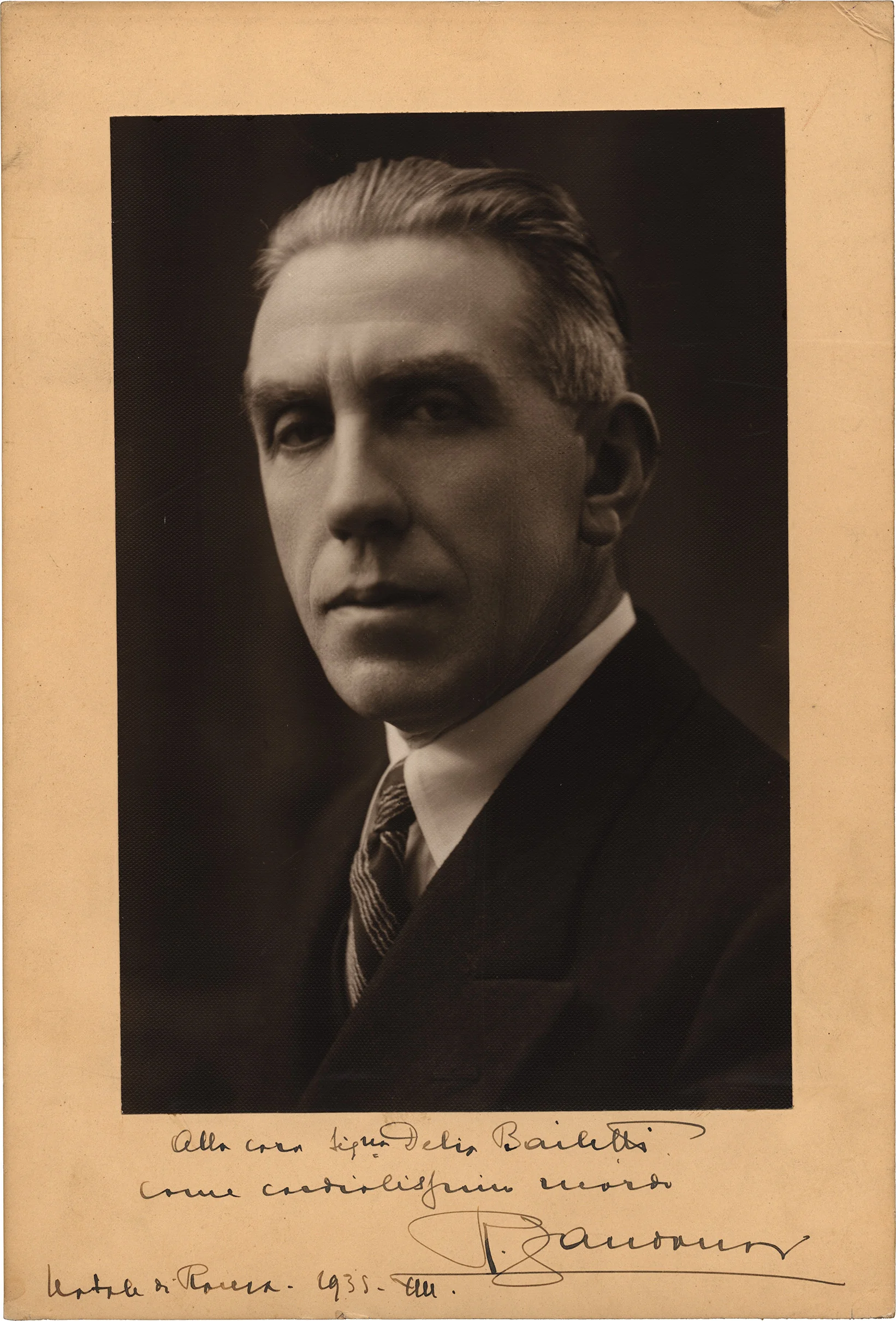
Image from Wikipedia
Image from Wikipedia
Riccardo Zandonai – Italy's Shining Late Verismo Between D’Annunzio and Modernity
Passion, Color, Orchestral Fantasy: How Zandonai Made Opera History with “Francesca da Rimini” and Beyond
Riccardo Zandonai (1883–1944) embodies that exciting transitional period of Italian opera, during which Verismo experienced its final bloom while simultaneously opening up new sound horizons. Born in Borgo Sacco near Rovereto and trained at the Conservatorio in Pesaro, he developed an independent musical language early on: sensory-driven, text-conscious, and orchestrally refined. As a composer and conductor, he combined dramatic instinctual certainty with color-saturated orchestration artistry – qualities that shaped his music career and keep his presence alive as an opera composer to this day.
His artistic breakthrough came with Conchita (1911) and culminated in Francesca da Rimini (1914), a milestone of 20th-century Italian opera. Zandonai’s artistic development also led to works such as Giulietta e Romeo (1922), I cavalieri di Ekebù (1925), and La farsa amorosa (1933). As the head of the conservatory in Pesaro (from 1940), he remained a significant educator. Despite the chaos of the era, he left behind a diverse discography and a body of work rooted in the music history of Late Verismo, Symbolism, and modern orchestral sensibility.
Biography: Early Years Between Rovereto and Pesaro
Hailing from a northern Italian border area, Zandonai displayed compositional talent early on. At the Liceo Musicale “Rossini” in Pesaro, he completed the regular nine-year program in a remarkably short time. One of his most important teachers was Pietro Mascagni, who vigorously encouraged the young composer’s talent. During this formative period, vocal works and orchestral pieces emerged that revealed a secure sense of form, melodic elegance, and an affinity for dramatic intensity.
Early contacts in Milan – through publishing houses and impresarios – opened the doors to the professional stage for Zandonai. His music-dramatic instinct, literary taste, and a tendency towards theatrical color play quickly made him a promising hope in Italian opera life. As a conductor, he simultaneously sharpened his sensitivity to sound balance, the breath of the scene, and singer-friendly arrangements.
Career Progression: From Debut to Breakthrough
With Il grillo del focolare (1908/1909), Zandonai demonstrated his first full-evening format, but the real breakthrough to a wider public came with Conchita (premiered in 1911 in Milan). The subject, based on Pierre Louÿs, provided an opportunity to infuse Spanish color, dance rhythms, and vocal cantilena into a dense theatrical form. The score already exhibits that mix of melodramatic energy and finely nuanced orchestral palette that marks Zandonai’s signature.
The breakthrough to opera history occurred with Francesca da Rimini (1914), a “Tragedia” based on Gabriele D’Annunzio, with a libretto by Tito Ricordi. The premiere at the Teatro Regio in Turin marked the peak of his early career. In this work, Zandonai unfolds a grand arc that transforms words into music, giving space to the singers' voices while embedding them in a luminous, sometimes iridescent tapestry of orchestration.
Francesca da Rimini: Dramaturgy, Orchestral Colors, Vocal Lines
Francesca da Rimini condenses literary symbolism and Italian singing tradition into a distinctive stage poetry. The composition thrives on arioso lines, intricate motif interweavings, and kaleidoscopic sound colors – with influences that in scholarly literature sometimes recall Debussy, Wagner, or Strauss. Nevertheless, Zandonai’s musical language remains Italian: breathing melodics, clear diction, a dramatic architecture that transitions scenes organically.
The orchestration – rich in woodwind colors, muted brass choruses, shimmering string textures, and harp-encircled interludes – carries the emotions. The vocal parts demand both lyrical warmth and dramatic attack. This “composition as direction” makes Francesca a work that continuously challenges and inspires conductors, directors, and singers alike.
Other Stage Works: Between Shakespeare, Lagerlöf, and Comedy
With Giulietta e Romeo (1922), Zandonai created a Shakespeare adaptation that seeks psychological depth and orchestral richness rather than mere Verismo sharpness. The premiere in Rome added an Italian late-romantic voice to the canon of “Romeo and Juliet” adaptations. I cavalieri di Ekebù (1925), based on Selma Lagerlöf’s “Gösta Berlings Saga,” captivates with Nordic flair, choral tableaux, and dramaturgically expansive scenes.
In La farsa amorosa (1933), Zandonai turned to a lighter form – a rare but revealing shift that showcases his spectrum: characters close to folk theater, pointed ensemble work, and lively dialogue. His bibliography also includes symphonic works, chamber music, and vocal cycles – among them Serenata medioevale, Concerto romantico for violin (1919), as well as color-rich symphonic poems.
Style and Categorization: Late Verismo, Post-Verismo, Sound Color
Zandonai’s style can be characterized as a late-Verismo development with post-Verismo features. He adopts the dramatic directness of Verismo but avoids superficial effects. Instead, he cultivates a finely graded interpretation of text: word accents are translated into melodic motion, psychological nuances appear as orchestral colors. Composition and arrangement serve the overall stage picture – always closely intertwined with the libretto.
He writes his music history in dialogue with Europe: French sound magic, German motivic technique, and Italian cantability create a stylistically confident mosaic. The scores showcase high production quality: structural clarity, balanced form parts, careful register dramaturgy. Thus, music emerges that supports singers while making the orchestra a narrative protagonist.
Reception, Performance History, and Critiques
Francesca da Rimini was early recognized as Zandonai's most performed work – featuring prominent interpreters of the 20th century and important revivals on international stages. Critics highlight the “hothouse” atmosphere, the nuanced orchestration, and the scenic coherence. In recent productions, the score is often praised as a cleverly constructed, text-sensitive music theater that goes far beyond mere effect music.
The rediscovery of rare titles such as I cavalieri di Ekebù or La farsa amorosa reflects the ongoing curiosity of opera houses about Zandonai’s catalog. Historical and current reviews emphasize the versatility of his musical language and the theatrical efficiency of his scene structure – characteristics that allow his work to step out of the shadow of his prominent contemporaries.
Discography and Overview of Works: Key Operas and Recordings
The discography encompasses historical live recordings, studio productions, and DVDs/Blu-rays. Central to it are Francesca da Rimini, Conchita, Giulietta e Romeo, I cavalieri di Ekebù, and La farsa amorosa. Additionally, orchestral pieces, suites, and vocal works are available in collections and anthologies. Streaming platforms and specialized labels today facilitate access – a catalyst for the reception beyond individual stage events.
For categorization, it is worthwhile to focus on recordings that emphasize Zandonai’s orchestral texture and treatment of words. Conducting that takes into account breath, tempo feeling, and dynamic terracing brings forth that colorful dramaturgy that enhances the singers' voices and avoids dramaturgical breaks.
Cultural Context: Rovereto, Turin, Pesaro – Places of an Artist's Biography
Zandonai’s name shapes his home region: The Teatro Zandonai in Rovereto commemorates the composer and his close ties to the city. In Turin, at the Teatro Regio, the success story of Francesca da Rimini began in 1914 – a stage that also shaped Zandonai's standing in the Italian repertoire. Pesaro, in turn, the city of his training and later teaching, connects his artistic development with institutional responsibility.
Research institutions, editions, and libraries today illuminate manuscripts, correspondences, and performance traditions. Biographical reference works and thematic catalogs provide the factual basis for a historically informed reception – a foundation that serves the reliability and verifiability of information.
Current Projects and Performances (2024–2026): Living Heritage on Today’s Stages
Zandonai's music remains present in theater schedules and visible in discourse. A milestone of recent times: The return of Francesca da Rimini to the Teatro Regio in Turin for the season opening 2025/26 on October 10, 2025 – just at the house where the premiere took place in 1914. New directorial manuscripts and updated interpretations ensure the work's current relevance.
His name also lives on in talent promotion: The International Singing Competition “Riccardo Zandonai” in Riva del Garda attracts young opera voices annually. The 2025 edition continues the tradition of awarding outstanding interpretations of his repertoire with a dedicated Zandonai Prize. Regional cultural programs and theater projects in Trentino also honor his legacy with concerts, lectures, and thematic focuses.
Why Discover Zandonai Today? Sound Direction, Text Intelligence, Scenic Energy
Zandonai's work captivates through the synthesis of melodic flow, instrumental narrative power, and dramatic precision. His operas breathe theater: role portraits are drawn with compositional finesse, ensemble scenes gain profile through rhythmic impulses and tonal contrasts. The voices find support and brilliance in the scores, while the orchestra carries, comments, and anticipates.
For those looking to discover Italian opera beyond the well-trodden paths, Zandonai offers a repertoire that preserves tradition while allowing space for modern sound fantasy. The “artistic development” of his style – from color-saturated Verismo heritage to subtle text interpretation – makes his scores appealing to today’s performers as well as to a curious audience.
Conclusion: Hearing Zandonai – Experiencing Opera
Riccardo Zandonai is the composer for opera lovers who appreciate both emotional directness and tonal delicacy. His discography and the enduring stage presence of Francesca da Rimini, Giulietta e Romeo, I cavalieri di Ekebù, and La farsa amorosa demonstrate the lasting impact of his music. Those who experience Zandonai live hear an opera that breathes, tells stories, and moves – it’s time to rediscover this Italian poet of sound.
Official Channels of Riccardo Zandonai:
- Instagram: No official profile found
- Facebook: No official profile found
- YouTube: No official profile found
- Spotify: No official profile found
- TikTok: No official profile found
Sources:
- Treccani – Biographical Dictionary: Riccardo Zandonai
- Teatro Regio Torino – Press Release Francesca da Rimini (Season 2025/26)
- Teatro Regio Torino – Press Release: Inauguration 2025/26
- MusicaRiva – International Competition “Riccardo Zandonai”
- Wikipedia (en) – Riccardo Zandonai
- Wikipedia (de) – Francesca da Rimini
- Teatro Zandonai Rovereto – Historical Notes
- Teatro Zandonai Rovereto – Riccardo Zandonai
- Apple Music Classical – Riccardo Zandonai
- Neue musikzeitung – Review: Francesca da Rimini (Deutsche Oper Berlin)
- Das Orchester – Review: Francesca da Rimini
- Teatro Grattacielo – Giulietta e Romeo (Premiere February 14, 1922)
- Wikipedia (en) – I cavalieri di Ekebù
- Wikipedia (en) – La farsa amorosa
- Wikipedia: Image and text source
Upcoming Events
Premiere: Romeo and Juliet – Opera by Riccardo Zandonai