
Regina Frank
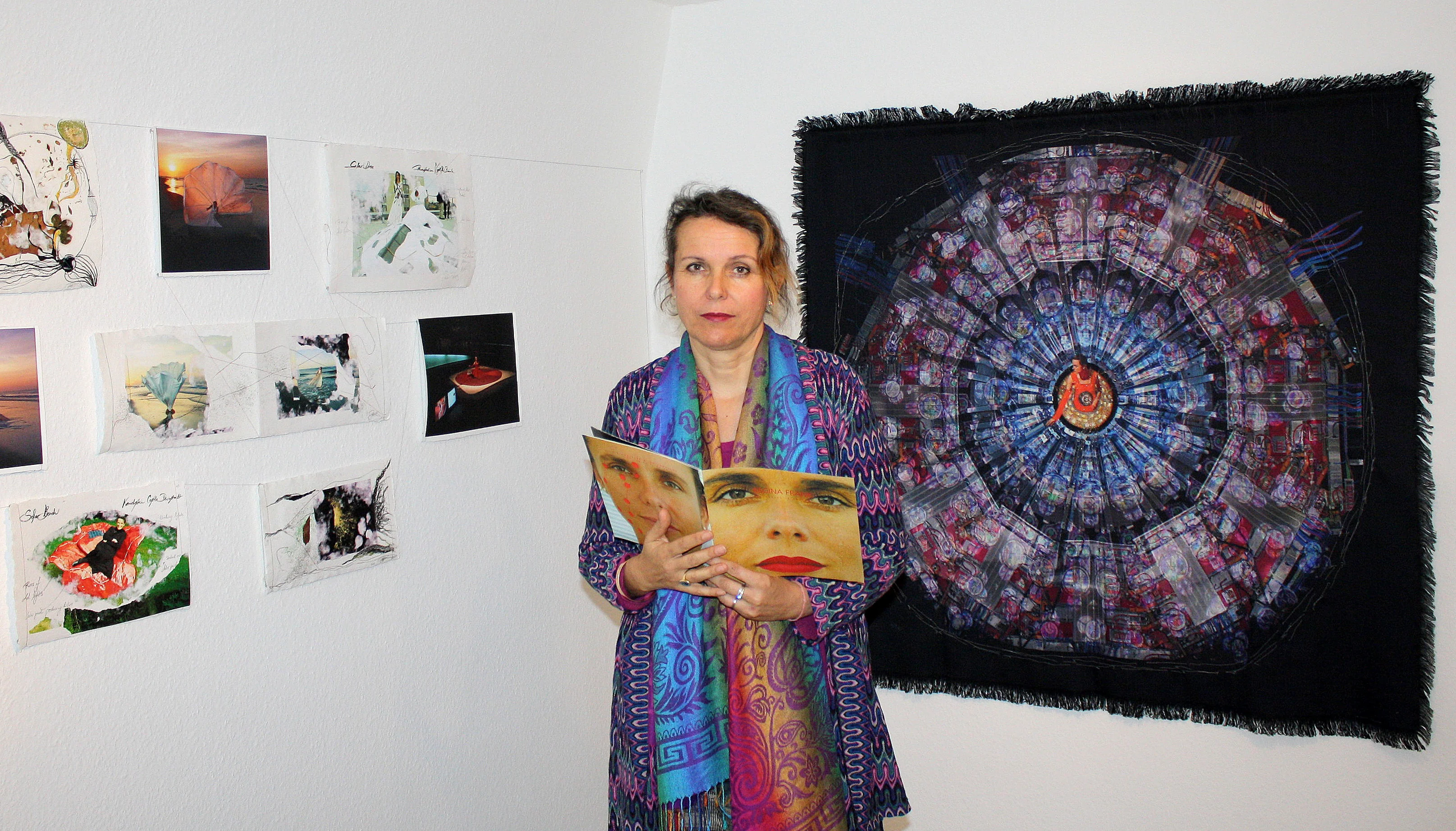
Image from Wikipedia
Image from Wikipedia
Regina Frank: The Pioneer Between Performance, Internet Art, and Textile Thinking
An artist who condenses digital media, craftsmanship, and social issues into a distinctive visual language
Regina Frank, born in 1965 in Meßkirch, is one of the defining voices in an art form that has interwoven performance, the internet, and textile methods early and consistently. Since 1992, she has been a pioneer of performance art that integrates the internet and interactive software installations. Her works combine digital media with traditional craftsmanship, text, and textiles, addressing social and politically relevant themes with great consistency. ([de.wikipedia.org](https://de.wikipedia.org/wiki/Regina_Frank))
Biographical Roots and Artistic Influence
Frank studied from 1989 to 1995 at the University of the Arts Berlin and was a master student of Katharina Sieverding. Even during this phase, she developed an attitude that thinks of artistic practice, political positioning, and technological curiosity as interconnected. As a tutor, she worked in photography and printmaking, organizing numerous artist talks, including conversations with Marina Abramović, John Cage, Joan Jonas, Alfredo Jaar, Joseph Kosuth, and Nan Goldin. ([de.wikipedia.org](https://de.wikipedia.org/wiki/Regina_Frank))
Her early engagement with equality and student self-organization shaped her artistic language, just as her interest in public spaces did. She was a founding member of the student organization Interflugs and advocated with her colleagues for a higher representation of women in professorial positions. In retrospect, this stance appears as an important part of her artistic authority: Frank never thinks of art in isolation, but always as a social act. ([de.wikipedia.org](https://de.wikipedia.org/wiki/Regina_Frank))
The Breakthrough with "The Artist Is Present"
Since 1989, Regina Frank has worked internationally under the title "The Artist is Present" in museums and public spaces. Under this name, she published her first book in 1999; further publications followed. The title marked not only a series of works but an artistic foundational idea: presence as a performative form, as a relationship between body, audience, and space. ([de.wikipedia.org](https://de.wikipedia.org/wiki/Regina_Frank))
Particularly significant is her approach to the tension between analog and digital. In works like "Glasperlenspiel," the audience could contribute to an installation via the internet by generating virtual beads from texts and poems. With this, Frank created a space without winners and losers, where presence is organized as a collective experience. This combination of participatory structure, meditative gesture, and technical mediation forms the core of her early media art. ([de.wikipedia.org](https://de.wikipedia.org/wiki/Regina_Frank))
Internet Art, Textiles, and the Poetic Logic of Material
Between 1995 and 1999, Frank developed works such as "A-dress," where text, website, garment, and performative gesture overlap. In Winnipeg, she wrote a letter to her dress every day for 97 days; the texts were made accessible on a website and simultaneously visible as material within the dress itself. This created a connection between address, identity, and body, translating digital communication into a tactile format. ([de.wikipedia.org](https://de.wikipedia.org/wiki/Regina_Frank))
Her treatment of textiles is never decorative, but rather conceptual. Clothing becomes a vessel for data, a medium for discussion, and a vehicle for social visibility. Works like "The Art Is Present" and "The HeArt Is Present" utilize textile surfaces, embroidery, tapestry, and collage to bring complex questions about the environment, memory, technology, and spirituality into a readable form. ([de.wikipedia.org](https://de.wikipedia.org/wiki/Regina_Frank))
International Exhibitions and Institutional Presence
Regina Frank has showcased her works in numerous significant institutions across Europe, the USA, and Asia, including the New Museum of Contemporary Art in New York, the Serpentine Gallery in London, MOCA in Los Angeles, the Spiral Wacoal Art Center in Tokyo, the Museum of Modern Art in Sapporo, the San Diego Museum of Art, and exhibitions as part of Expo 2000 in Hanover. This institutional presence underscores the international scope of her work and its relevance to the history of media and performance art. ([de.wikipedia.org](https://de.wikipedia.org/wiki/Regina_Frank))
Additionally, she has held teaching positions and given lectures at renowned institutions such as Central Saint Martins College of Art and Design, New York University, the Metropolitan Museum of Art, the Bronx Museum of the Arts, the Art Institute of Chicago, and MIT. These stations demonstrate that Frank not only exhibits but also educates: her practice is part of the discussion on how art knowledge is passed on, reflected upon, and translated into new contexts. ([de.wikipedia.org](https://de.wikipedia.org/wiki/Regina_Frank))
“The HeArt Is Present”: Maturity, Attitude, and Expansion of Work
After decades of work under "The Artist is Present," Frank transformed her motto into "The HeArt is Present." This shift marks not just a renaming but a change in perspective: towards heart, presence, empathy, and an expanded understanding of art as an energetic and social state. On her official page, she describes that her works connect various media from Augmented Reality to tapestry to painting and sculpture. ([theartispresent.com](https://www.theartispresent.com/about.html?utm_source=openai))
Particularly impressive is the series iLAND, a long-term project focusing on environmental issues, landscape, climate change, and the planet's imbalances. According to her official representation, iLAND has been shown for over a decade in museums, fairs, and public spaces in numerous countries. The work translates ecological crises into textile collages, aerial images, and performative forms that are both poetically and politically readable. ([regina-frank.de](https://www.regina-frank.de/?utm_source=openai))
Current Projects and Ongoing Artistic Work
Her recent works include projects like iLAND in various forms as well as thematic developments around climate, sustainability, social software, and environmental communication. The official site also documents exhibitions and interventions up to the recent past, including presentations at MAAT in Lisbon, the Web Summit, MUHNAC, and projects in Hanover and Seoul. This illustrates an artist whose work seems not completed but continues as an open process. ([regina-frank.de](https://www.regina-frank.de/?utm_source=openai))
Her thematic breadth remains remarkable. Frank works with history, information processing, speed, sustainability, and the question of how art transforms societal perception. This is precisely where her relevance lies: her performances do not create distance, but proximity, transforming complex debates into physically experienceable images. ([thesculpturefactory.org](https://thesculpturefactory.org/pdf/ReginaFrankCV.pdf))
Style, Reception, and Cultural Impact
Regina Frank’s style is characterized by a rare combination of conceptual art, craftsmanship, and technological openness. She works with tapestry, painting, sculpture, installation, collage, and performance, bringing these media into a productive tension. The official website emphasizes the connection between technology and handcraft, while press statements have placed her works in art magazines, newspapers, and even in titles like Vogue, Harper’s, Parade, and Cosmopolitan since the early 1990s. ([regina-frank.de](https://www.regina-frank.de/?utm_source=openai))
Her cultural impact primarily lies in her early recognition of how the internet, software, and textile practice can together create a new form of performative public. She treats the body as a carrier of information, the garment as a repository, and the installation as a space for social resonance. Regina Frank thus belongs to those artists who understand media art not as a technical spectacle, but as a humane, political, and sensual practice. ([de.wikipedia.org](https://de.wikipedia.org/wiki/Regina_Frank))
Conclusion: Why Regina Frank Continues to Fascinate
Regina Frank is an artist of extraordinary consistency. She does not have a music career, yet her art possesses rhythm, dramaturgy, and stage presence in the best sense: as controlled movement, as concentrated gesture, as dialogical performance. Anyone viewing her works experiences not merely an exhibition, but a space for thought where presence, body, and society play anew together. ([de.wikipedia.org](https://de.wikipedia.org/wiki/Regina_Frank))
This is precisely why her work remains exciting: because it brings contemporary history, media transformation, and textile intelligence into a distinctive artistic form. Regina Frank demonstrates how art makes social questions visible without losing its poetic power. Those who have the opportunity should experience her works live, for only in space does the full energy of this performative art unfold. ([regina-frank.de](https://www.regina-frank.de/?utm_source=openai))
Official Channels of Regina Frank:
- Instagram: no official profile found
- Facebook: no official profile found
- YouTube: no official profile found
- Spotify: no official profile found
- TikTok: no official profile found
Sources:
- Wikipedia – Regina Frank
- Regina Frank – Official Project Site "The HeArt is Present / iLAND"
- The HeArt Is Present – Official Artist Page
- The HeArt Is Present – About / Biography
- Regina Frank – Biography / CV (PDF)
- Fresh Art International – Regina Frank on Performing at the Intersection of Art and Technology
- CPS – Regina Frank: The Other Side of The Screen
- CPS – Regina Frank
- Grube Messel – Forest Art / Regina Frank
- Wikipedia: Image and text source