
Queen (Band)
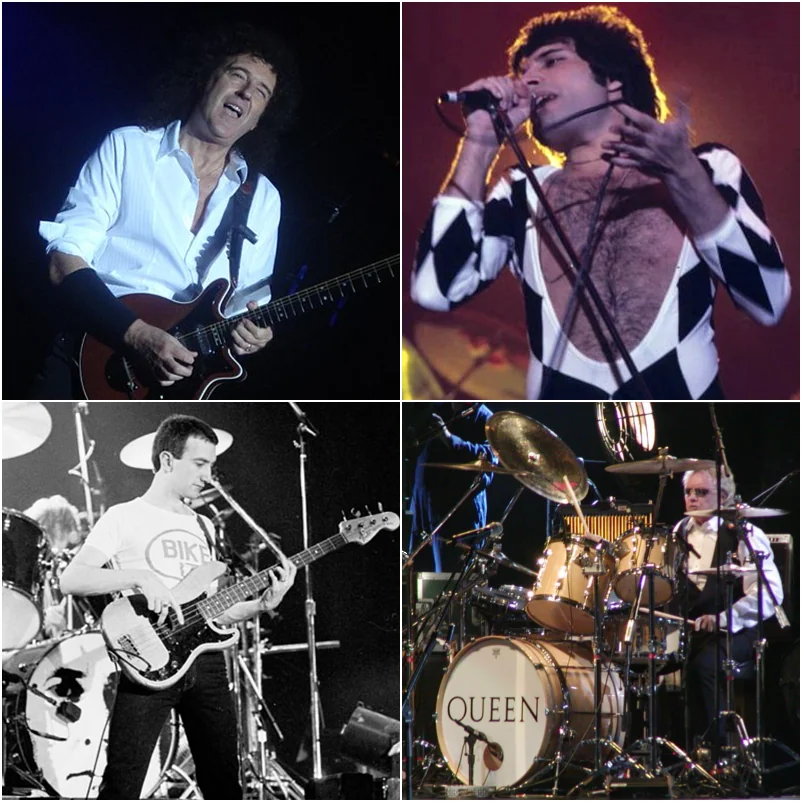
Image from Wikipedia
Image from Wikipedia
Queen (Band) – The Crown of Rock: Vision, Virtuosity and a Cultural History in Anthems
From "Keep Yourself Alive" to "The Show Must Go On" – Why Queen Shaped the DNA of Popular Music
Founded in London in 1970, Queen combines compositional finesse, theatrical stage presence, and an artistic evolution that redefined pop, hard rock, opera drama, and stadium anthems. The classic lineup – Freddie Mercury (vocals, piano), Brian May (guitar), Roger Taylor (drums), and John Deacon (bass) – remained unchanged until 1991, setting standards in songwriting, production, and live performance. With hits like Bohemian Rhapsody, We Will Rock You, We Are the Champions, Another One Bites the Dust, and Radio Ga Ga, the band created a canon of global evergreen songs that connect generations and resonate in sports arenas, charts, and cultural history. ([en.wikipedia.org](https://en.wikipedia.org/wiki/Queen_%28band%29))
Queen's discography is not only commercially outstanding but also a textbook of modern studio artistry: complex arrangements, multi-layered vocals, Brian May's Red Special as a signature sound, and bold genre crossovers. This musical career illustrates how playful boundary crossing becomes a defining language – from progressive art and glam rock to stadium aesthetics. The live myth reached its zenith with the benefit concert Live Aid on July 13, 1985: 20 magical minutes where Freddie Mercury conducted the audience like an orchestra, cementing Queen's status as the "band of bands." ([history.com](https://www.history.com/articles/freddie-mercury-queen-live-aid-performance-1985?utm_source=openai))
Biography: Beginnings, Albums, Exceptional Moments
In the early 1970s, May and Taylor formed a unit with Mercury and later joined by John Deacon after the precursor project Smile, imagining music and performance as a whole. Queen’s debut album (1973) and its successor Queen II (1974) revealed their signature sound: dynamic structural dramaturgy, sophisticated vocal overdubs, and lyrical imagery between fantasy and pathos. A Night at the Opera (1975) turned Queen into a global brand – Bohemian Rhapsody set audiovisual benchmarks with its operatic structure and one of the earliest, defining music videos. ([en.wikipedia.org](https://en.wikipedia.org/wiki/Queen_%28band%29))
The 1970s and 1980s were marked by artistic leaps: from Sheer Heart Attack and News of the World (featuring We Will Rock You / We Are the Champions) to Jazz and The Game, culminating in the late masterpiece Innuendo (1991). Queen's stage presence expanded to stadium dimensions – over 700 concerts documented a live aesthetic that put interaction and collective feeling at its center. After Freddie Mercury's death on November 24, 1991, May and Taylor maintained the legacy, curating reissues, special releases, and continuing to tour in various formats. ([en.wikipedia.org](https://en.wikipedia.org/wiki/Queen_%28band%29))
Career Highlights: Live Aid, Anthems, and Milestones
Live Aid 1985 at Wembley is considered by many to be the greatest rock performance of all time. The set – from a compact Bohemian Rhapsody exposition through Radio Ga Ga to the double finale We Will Rock You / We Are the Champions – showcased perfect dramaturgy, timing, and the dialogic energy between band and audience. Brian May later described "goosebump" moments when 100,000 people clapped in sync. These 20 minutes distilled the essence of Queen: virtuosity in service of the song and maximum audience engagement. ([history.com](https://www.history.com/articles/freddie-mercury-queen-live-aid-performance-1985?utm_source=openai))
On the recording side, Queen dominated record charts: Greatest Hits (1981) is the best-selling album in UK history – a long-seller with a historic 7-million mark in UK chart "Sales" and over 1,000 weeks in the charts. Bohemian Rhapsody became the first song by a British band to be awarded Diamond (10× Platinum) by the RIAA – a testament that radical composition and mass appeal can coexist. ([guinnessworldrecords.com](https://www.guinnessworldrecords.com/world-records/70137-best-selling-album-in-the-uk?utm_source=openai))
Current Projects (2024–2026): Archive Treasures, Editions, Awards
Recent highlights include the Polar Music Prize 2025 – one of the most prestigious international awards. The justification praised Queen's intergenerational influence, the extraordinary compositional achievements of all four members, and their cultural footprint in pop and rock history. Brian May and Roger Taylor accepted the award on May 27, 2025, in Stockholm. ([polarmusicprize.org](https://www.polarmusicprize.org/laureates/queen/?utm_source=openai))
In spring 2026, the focus will return to the early work: Queen II will receive an extensive Collector’s Edition (5CD+2LP, among others), including a new 2026 mix of the album, unreleased outtakes, BBC sessions, "fly-on-the-wall" studio audio, and a coffee table book. As a harbinger, the 2026 mix of Seven Seas of Rhye was released on February 27, 2026 – a sonic update that sharpens production details and projects the energy of the original arrangements into the present. ([yahoo.com](https://www.yahoo.com/entertainment/music/articles/queen-announces-expanded-reissue-sophomore-161500590.html?utm_source=openai))
Economically, Queen also made history recently: in 2024, numerous industry media reported on the sale of catalog and subsidiary rights to Sony for approximately $1.27 billion – the largest known sum to date for an artist's repertoire. This underscores the enduring appeal of Queen's song corpus and the significance of their brand universe from audio to moving image. ([au.variety.com](https://au.variety.com/2024/music/news/queen-catalog-acquired-by-sony-music-1-billion-15158/?utm_source=openai))
Discography and Chart Resonance
Queen's studio albums – from Queen (1973) and Queen II (1974) to A Night at the Opera (1975), News of the World (1977), The Game (1980), and Innuendo (1991) – form a seamless evolution curve. This is complemented by live classics like Live Killers, curated compilations (Greatest Hits I–III), and rich deluxe editions. On the single front, hits such as Somebody to Love, Don’t Stop Me Now, Under Pressure (with David Bowie), and I Want to Break Free are lined up; Another One Bites the Dust became the best-selling Queen single and redefined the connection between funk groove and rock attitude. ([en.wikipedia.org](https://en.wikipedia.org/wiki/Queen_%28band%29))
In the UK charts, Greatest Hits marked several record thresholds (6 million, later 7 million "Chart Sales") and is the best-selling album in the country – a status that even the newer streaming era has not shaken. The catalog remains omnipresent in playlists, radio rotations, and major events; Queen's music consolidates its "long tail" relevance in the digital age. ([officialcharts.com](https://www.officialcharts.com/chart-news/queens-greatest-hits-becomes-first-album-to-sell-6-million-in-the-uk__3758/?utm_source=openai))
Style and Sound: Composition, Arrangement, Production
Queen combined harmonic boldness with melodic catchiness: modulated key changes, operatic vocal stacking, call-and-response hooks, and contrapuntal guitar and vocal lines. The production emphasized multi-tracked choirs, dense guitar orchestrations featuring May's Red Special, and sound-dramatic architecture – from delicate ragtime touches to massive hard rock cadences. This versatility drew from rock 'n' roll, opera, music hall, folk, gospel, and disco – always bundled in song-serving dramaturgy. ([en.wikipedia.org](https://en.wikipedia.org/wiki/Queen_%28band%29))
The stage was Queen's extended studio: interaction, timing, dynamics. Mercury's conducting gestures and May's narrative guitar lines merged with Taylor's percussive precision and Deacon's economical bass playing. The result was a live "production" that managed without safety nets yet felt like a comprehensive artwork – a hallmark that became the blueprint for stadium dramaturgy at Live Aid 1985. ([history.com](https://www.history.com/articles/freddie-mercury-queen-live-aid-performance-1985?utm_source=openai))
Cultural Influence: Between Stadium Anthem and Film History
Queen serves as a blueprint for arena rock and collective participation. We Will Rock You and We Are the Champions function like global rituals; Bohemian Rhapsody has long become the grammar of pop culture – quoted, parodied, and reinterpreted. The Oscar-winning film Bohemian Rhapsody (2018) sparked a reception among a new generation; streaming statistics and chart "Sales" prove the enduring resonance. Queen's work shows how musical identity becomes a cultural signature. ([officialcharts.com](https://www.officialcharts.com/albums/queen-greatest-hits/?utm_source=openai))
At the same time, the band remains a reference point for musicians of all genres – from art rock to metal, from singer-songwriter to EDM. Their influence extends into compositional craft (hook creation, structural dramaturgy), sound design (choir production, guitar stacking), and performance (audience interaction). The fact that industry awards and prestigious honors continue through 2025/2026 is not a nostalgia effect but an expression of a vibrant, constantly rediscovered body of work. ([polarmusicprize.org](https://www.polarmusicprize.org/laureates/queen/?utm_source=openai))
Voices of the Fans
Fan reactions clearly show: Queen inspires people worldwide. On YouTube, comments on new mixes and reissues range from technical enthusiasm to pure emotion – from awe over revealed arrangements to confessions that these songs are the "soundtrack of life." This echo underscores how production updates can deepen the understanding of composition and performance. ([youtube.com](https://www.youtube.com/%40queen))
On Facebook, intergenerational memories reflect: stadium concerts, first encounters via parents' records, goosebump moments during collective Radio Ga Ga clapping. The vibrant archive of concert recordings, photos, and memorabilia serves as a collective chronicle of one of the greatest rock bands of all time. ([facebook.com](https://www.facebook.com/Queen/))
Conclusion: Why Queen Continues to Set Standards
Queen unites artistic boldness, technical mastery, and audience-oriented dramaturgy. Their discography is a compendium of modern pop and rock history; their stage presence remains a lesson in timing and charisma; their cultural influence is felt in the present and future – whether in reissues like the Queen II Collector's Edition (releases around February/March 2026) or honors such as the Polar Music Prize 2025. Those who wish to understand the full power should not only listen to the band stories but also "experience" them – live, in cinematic format, or with high-quality editions that shed new light on production, arrangement, and composition. Queen remains an invitation to feel great music in great spaces. ([queenonline.com](https://www.queenonline.com/))
Official Channels of Queen:
- Instagram: No official profile found
- Facebook: https://www.facebook.com/Queen/
- YouTube: https://www.youtube.com/@queen
- Spotify: https://open.spotify.com/artist/1dfeR4HaWDbWqFHLkxsg1d
- TikTok: No official profile found
Sources:
- QueenOnline – The Official Queen Website (News & Projects, March 2026)
- Polar Music Prize – Laureates 2025: Queen
- Official Charts Company – Greatest Hits: 7 Million UK "Chart Sales"
- Variety – Queen Catalog to Be Acquired by Sony Music (June 2024)
- Euronews – Queen catalog to be acquired by Sony (20.06.2024)
- Wikipedia – Queen (Band) [Fact Check, Discography, History]
- MusicRadar – Brian May on Queen II Reissue (February 2026)
- Rock Cellar Magazine – Queen II Collector’s Edition (2026)
- Wikipedia – Bohemian Rhapsody (RIAA Diamond)
- Facebook – Queen (official page)
- YouTube – Queen Official