
Melanie Bong
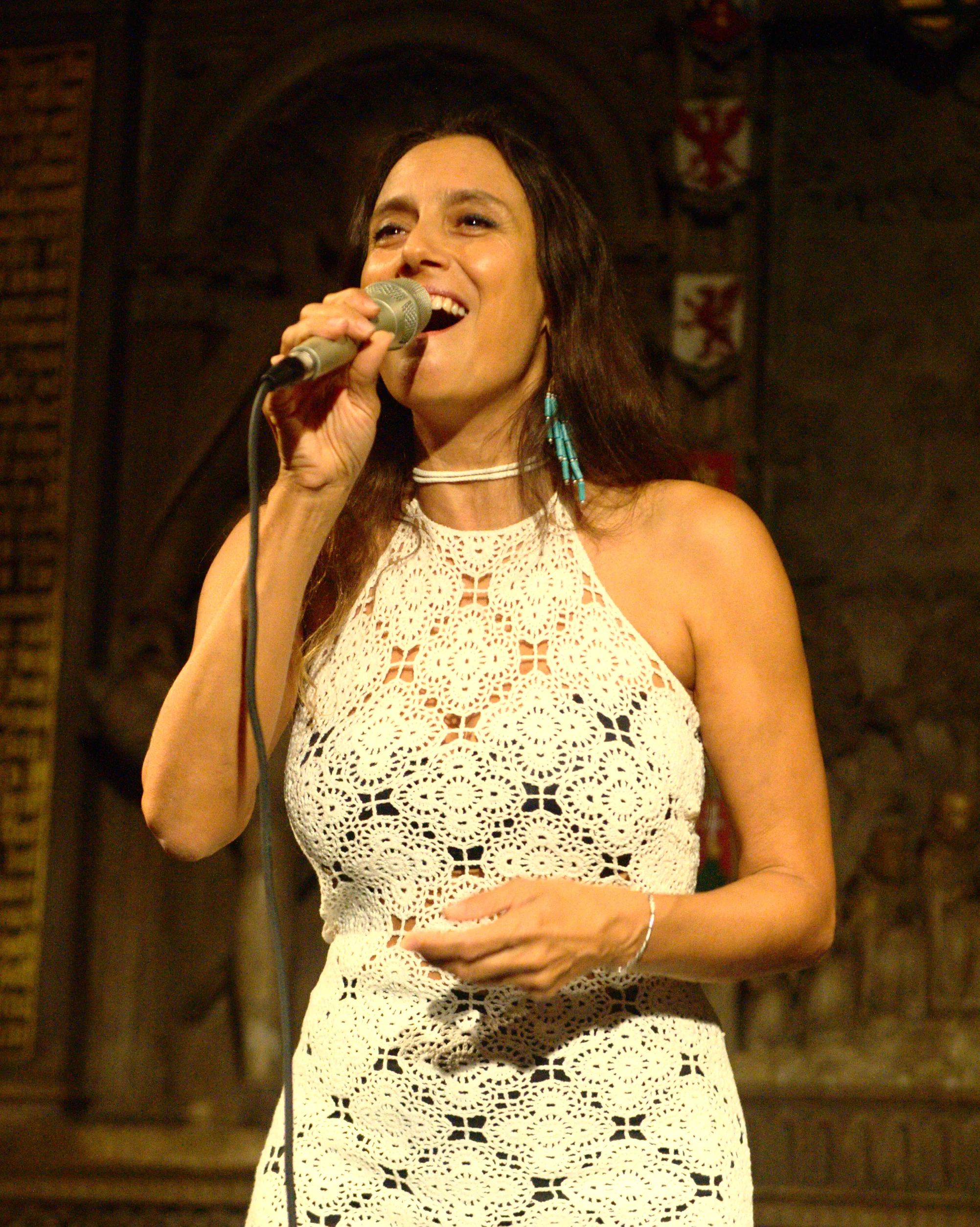
Image from Wikipedia
Image from Wikipedia
Melanie Bong – Jazz Voice with Depth, Timing, and Temperament
A Voice Between Jazz Tradition, Latin Pulse, and Timeless Elegance
Melanie Bong represents vocal jazz with a distinctive timbre, a music career that springs from intense artistic development, international training, and a vibrant stage presence. Born in Munich, she was early on influenced by encounters with great jazz voices and the charm of Latin jazz. Today, she impresses as a style-conscious interpreter and composer, whose repertoire confidently oscillates between jazz standards, Bossa Nova, Samba, and her own songwriting. Those who listen to her recordings and concerts experience a singer who phrases melodic lines with a fine sense of timing, accents rhythmically precise, and conveys emotions without pathos, but with great warmth.
Her artistic path was shaped by her training at the University of Music and Performing Arts in Graz: There, legends like Sheila Jordan, Mark Murphy, and Andy Bey influenced her vocal technique, improvisational culture, and understanding of sound dramaturgy. This well-founded basis is audible in her productions – from orchestrated ballads to airy Latin grooves – making Bong a voice that sounds unmistakable in German-language jazz.
Early Years and Education: Graz as a Laboratory of Artistic Development
Coming from Munich, Melanie Bong sought early on to jump into an international jazz environment. In Graz, she deepened her vocal technique, stage work, and improvisation – a phase of intense artistic development. Under the tutelage of Sheila Jordan, Mark Murphy, and Andy Bey, she refined her vocal control, timing, scat phrasing, and harmonic listening. This trio of mentors exemplifies different vocal aesthetics: jazz-poetic immediacy (Jordan), narrative elegance (Murphy), and soulful warmth (Bey) – influences that productively overlap in Bong's authentic vocal signature.
The years of study were also her springboard into an independent music career. A study trip to New York widened her stylistic horizon, refined her ear for ensemble sound and groove, and strengthened the artistic sovereignty with which she today reinterprets standards and structures her own compositions. This biographical axis of Munich–Graz–New York underpins the range of her music: European sound culture, American jazz tradition, and Latin American rhythm.
Teaching Activity and Pedagogical Profile: Passing on Knowledge, Shaping Voices
Parallel to her stage work, Melanie Bong began early to systematically pass on her knowledge – at the Anton Bruckner Privatuniversität as well as at the Conservatory in Innsbruck. There, she developed a didactic profile that treats breathing, articulation, register balance, and stylistics equally. She works with young singers on tone production, text declamation, and dynamic form building – always with an eye on stage presence and musical independence. This dual expertise – as a performer and educator – gives her artistic presence authority and depth.
In workshops and masterclasses, Bong also imparts ensemble competence: How does the rhythm section accompany a vocal line? How does one interact in real-time with piano voicings, bass lines, or intricate guitar figures? This practical perspective also shapes her own productions, where arrangement and interplay intertwine audibly.
Ensembles, Collaborations, and Tours: Networks of Jazz
For many years, Melanie Bong contributed to the Maximilian-Geller-Quintet, with which she released several albums. Here, she sharpened her understanding of her role as the front voice in small group jazz – both catalyzing for the band and focused on the story of the song. A tour in France with the Memorial Orchestra under Bob Lanese expanded the orchestral radius: Ballads as narrative arcs, Latin numbers as driving forces for tonal colors and rhythmic accents.
With guitarist Fernando Corrêa, Bong created a vibrant dialogue between voice and strings in the project Caminhos Cruzados: Brazilian-influenced harmonies, fine syncopations, melodic arabesques. This dialogue – with the voice as an “additional” melodic line within the band framework – gives her concerts a bright transparency, carried by the pulse of the rhythm section.
Discography: From Fantásia to Gypsy Fire
Her debut album "Fantásia" (2002) marks the starting point of an independent discography. The band features prominent musicians from the European jazz scene; the repertoire combines song miniatures with lyrical improvisations. "gypsy dream" (2005) establishes the connection between jazz and gypsy-inspired colors even more clearly: buoyant tempos, modal shades, a singing style that spans between intimacy and expansiveness. With "Gypsy Fire" (2019) – in collaboration with Lulo Reinhardt – Bong sharpens the Latin and Sinti jazz axis: intricate guitar figures, dancing offbeats, and a voice that merges groove with narrative warmth.
These three pillars demonstrate a continuous artistic development: from collaborative focus on timbre and text to rhythmically invigorated gypsy influences and mature Latin grooves that extend the live feeling into the studio space. Production and arrangement remain consistently lean enough to allow the vocal line to breathe – a trademark of Bong's discography.
Style, Technique, and Sound Language: Where Jazz Ballad Meets Bossa
Melanie Bong's singing is characterized by a warm middle range, clear syllable articulation, and nuanced vibrato culture. In ballads, she builds long arcs, uses pauses dramaturgically, and shapes phrases with smooth legato artistry. In Bossa and Samba pieces, she relies on buoyant timing – micro-rhythmic anticipations, subtle offbeats, airy articulation – thereby achieving a flow that oscillates between lightness and inner tension.
In her improvisation, she prefers melodic variations and small gestural motifs over virtuosic display. Her scat lines pay attention to timbre and syllable rhythm, often dialogically intertwined with guitar or saxophone. This stylistic understatement contributes to the authenticity: The song remains the center, the voice tells – with jazz as grammar, not as an end in itself.
Cultural Context: German-Language Jazz in International Discourse
As a musician who absorbed impulses between Munich, Graz, and New York, Bong embodies a European jazz biography in which international influences are organically integrated. Her work confirms that vocal jazz from the German-speaking world not only preserves tradition but also sets its own accents: Latin affinity, chamber music transparency, a tendency towards poetic textures. In this way, she joins a generation that connects jazz preservation, composition, and pedagogy – a model that mutually strengthens the scene, youth work, and concert life.
The collaboration with guitarists – from modern-lyrical to gypsy-inspired – and with established rhythm teams also points to an ensemble understanding that does not elevate the voice but rather sees it as an integral sound body. This perspective makes her productions durable and live adaptable.
Reception and Recognition: Between Critical Acclaim and Scene Network
In press reports and label texts, Bong's timbre is often described as warm, smooth, and narratively precise; particular emphasis is placed on intonation, text declamation, and the cultivation of Latin American grooves in the jazz context. Acknowledgments from renowned vocal jazz greats highlight her musicality and the ability to shape touching developments from simple motifs. Her work is documented in catalogs and music services – an indicator of visibility in the international niche of vocal jazz.
Even without striking chart references, her discography has a sustainable impact: in programs of jazz clubs and festivals, in playlists, and in the educational scene. This form of resonance is typical of modern jazz, where long-term impact, stage reputation, and pedagogical authority count more than short-term rankings.
Stage Presence and Live Aesthetics
Live, Melanie Bong combines interactive lightness with formal discipline. Her stage presence is built on proximity to the audience, clear set dramaturgies, and dynamic flexibility. In quartet or quintet formation, she allows space for instrumental solos, reflects the motifs of her bandmates in her voice, and subtly varies tempos to model energy flows. This creates the concert flow that makes jazz an experiential art form.
In Latin idioms, she relies on percussive articulation and airy phrasing in singing; in ballads, she opts for patient crescendos. These contrasts carry her concerts and create moments where voice, guitar, piano, bass, and drums merge into a breathing organism.
Conclusion: Why You Should Listen to and Experience Melanie Bong Live
Melanie Bong unites profound jazz expertise, stylistic openness, and mature artistic development. Her work shows how voice in jazz can be both a narrative core and a mobile sound body – from the intimate light of ballads to the sun-drenched Bossa. If you seek vocal jazz with character, you will find in Bong a singer who combines melodic elegance, rhythmic finesse, and organic ensemble play. Listen to her albums in sequence – and experience the music on stage, where her singing, the band's communication, and the dramaturgical design unfold their full effect.
Official Channels of Melanie Bong:
- Instagram: No official profile found
- Facebook: No official profile found
- YouTube: No official profile found
- Spotify: No official profile found
- TikTok: No official profile found
Sources:
- Wikipedia (DE) – Melanie Bong
- Wikipedia (EN) – Melanie Bong
- Apple Music – Melanie Bong (Artist Page)
- AllMusic – Fantásia (2002)
- Hoanzl – Gypsy Fire (with Lulo Reinhardt)
- Melanie Nini Bong – Biography (Official Biography Page)
- GLM Music – Context on the Maximilian-Geller Ensemble
- Austria-Forum – Melanie Bong (taken from Wikipedia)
- Wikipedia: Image and text source
Upcoming Events
modoolarT – Opening Event & Jazz Concert with Melanie Bong
modoolarT - Would you like to change art yourself?
Jazz Duo Concert with Melanie Bong & Peter Cudek (Bass & Voice) at Schloss Kempfenhausen on Lake Starnberg