
Malte Kreutzfeldt (Journalist)
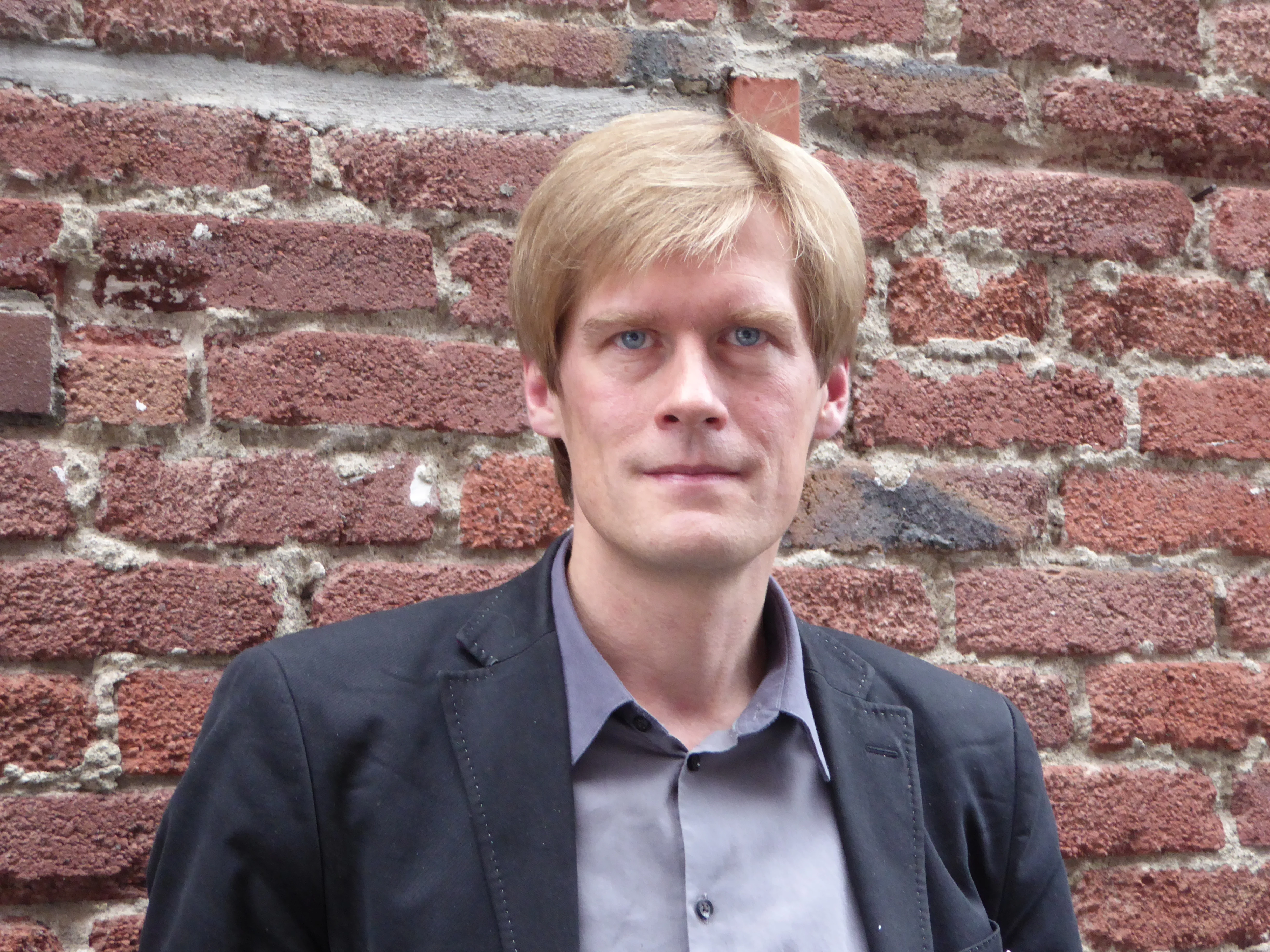
Image from Wikipedia
Image from Wikipedia
Malte Kreutzfeldt – Investigative Journalist, Energy and Economic Expert
A precise researcher with impact: How Malte Kreutzfeldt has analytically and assertively accompanied Germany's climate, energy, and economic policy for decades
Malte Kreutzfeldt, born in 1971 in Hildesheim, is one of the prominent voices in German-speaking quality journalism. His journalistic career took him from early positions in local and university press to the economics and environment desk at tageszeitung in Berlin, and now to Table.Media, where he covers energy and economic policy as well as the party Bündnis 90/Die Grünen. Kreutzfeldt combines analytical sharpness, fact-based research, and a keen sense of the political and economic levers behind the energy transition. His primary focus: the major structural issues – climate protection, electricity markets, industrial policy, regulation, and budget logic – distilled into clear, accessible journalism for a broad yet discerning audience.
Early Years and Education: A Foundation for a Fact-Based Career
Even as a student and later at the University of Göttingen, Kreutzfeldt was involved in editorial work, learning about layout, topic guidance, and journalistic craftsmanship from close up. An interdisciplinary study in biology, politics, and English – supplemented by study visits in Berkeley – provided him with the natural and social science tools to analyze ecological, economic, and political contexts rigorously. This artistic development in terms of a journalistic signature – fact-oriented, explanatory, pointed – continues to shape his journalistic work to this day.
After several years as a freelancer and an internship at the Hessische/Niedersächsische Allgemeine, he embarked on his first professional roles in political and economic departments. Early experiences with press work in civil society contexts further sharpened his sensitivity to lobby strategies, narratives, and the tactics of actors who want to influence public debates on environmental, climate, or health issues.
The taz Years: Topic Guidance Between Economy and Environment
From 2007 to 2022, Kreutzfeldt shaped the economic and environmental reporting of tageszeitung. There, he combined expertise in energy and climate policy with a sober, data-driven writing style that makes complex political mechanisms understandable. Whether it was electricity price signals, grid expansion, emissions trading, or industrial policy: he guided readers through the technical details of regulation and market mechanics – always with an eye on societal consequences, democratic negotiation processes, and transparency.
As a correspondent in the taz parliamentary office, he also observed the strategic communication of factions and ministries. His articles illustrated how power issues are decided within the fine print of legislation, how coalition logics overshadow professional policy lines, and how supposed constraints remain negotiable once numbers and assumptions are thoroughly checked.
Research Success 2019: The Nitrogen Dioxide and Fine Dust Debate – A Lesson in Evidence-Based Public Discourse
In February 2019, Kreutzfeldt's research on the criticism of some lung doctors regarding air pollutant thresholds gained nationwide attention. He reconstructed calculation methods, uncovered central numerical errors and fallacies, and thereby shifted the public focus back to epidemiological evidence and international standards. This work exemplified what investigative journalism accomplishes: careful source criticism, calculation verification, and methodological transparency expose supposedly “spectacular” theses as not mathematically sustainable – creating space for a factual debate about health protection, mobility, and urban quality of life.
The response was correspondingly large: leading media outlets picked up his findings, contextualized them scientifically, and highlighted the contribution of fact-based research to the democratic discourse. For this achievement, he received the award for “Science Journalist of the Year” from Medium Magazin in 2019 – a signal for quality standards in a polarized environmental and climate debate.
Transition to Table.Media: Deep Journalism for Key Political Decision-Makers (since 2022)
Since October 2022, Kreutzfeldt has reported for Table.Media – specifically for Berlin.Table – on energy and economic policy, the federal budget, industrial transformation, and the Greens. The briefing format is aimed at decision-makers in politics, administration, associations, and businesses. Here, he condenses current affairs, backgrounds, exclusive interviews, and analyses into pointed, value-driven dossiers. His musical career in a metaphorical sense – the ongoing refinement of rhythm, timing, and dramaturgy in his texts – is particularly reflected in this publication form: clear structure, well-placed priorities, and straightforward language.
Current projects for the years 2024 and 2025 include ongoing reporting on electricity market and grid policy, the “Grid Package,” the dynamics of renewable expansion, the consequences of geopolitical upheavals for energy prices, and the fiscal frameworks of budget and subsidy policy. Interviews with leaders from business and politics connect market logic, regulation, and the real economy.
Style, Method, and Signature: Data, Debates, Interpretation
Readers of Kreutzfeldt observe three constants: firstly, a precise, primary-source oriented research; secondly, the ability to translate complex regulations and market designs into understandable narratives; and thirdly, a clear, argumentatively robust contextualization. His texts avoid alarmism, rely on evidence, and present political promises, fiscal leeways, and technical constraints soberly. This editorial arrangement ensures transparency: numbers and studies serve as a score, politics and industry provide the motifs, and the journalistic text acts as a composition, harmonizing the voices into a coherent whole.
The production logic of his contributions – topic identification, source criticism, fact-checking, counter-research – reflects professionalism. Interviews and background discussions do not serve as a stage for assertions but as a testing ground for numbers and arguments. This stage presence of the journalist arises from the sovereignty with which he seemingly transforms technical details into societal relevance.
Publications, Book Work, and Awards: Impact Beyond the Day
In addition to up-to-date pieces and analyses, Kreutzfeldt repeatedly engages with long formats that unravel political and economic trends. His book publication on electricity prices and energy policy sheds light on mechanisms shaping price perception, subsidy architectures, and political communication – a contribution to the debate about fairness, cost efficiency, and acceptance of the energy transition. The recognition as “Science Journalist of the Year” 2019 underlines the authority with which he presents scientific evidence for a broad audience and corrects misconceptions.
This discography in a metaphorical sense – an overview of works comprising research, analyses, columns, and longer presentations – demonstrates consistency: energy and environmental policy are not considered in isolation but in their interplay with financial policy, industrial interests, law, and institutions. Thus, a canon of journalistic work emerges that endures beyond current relevance.
Classification and Influence: Journalism as Infrastructure for Democratic Understanding
Kreutzfeldt's writings have an impact on multiple levels: They provide decision-making templates for political bodies, offer guidance for businesses and civil society in volatile markets, and enhance the understanding of the scientific foundations of political measures. In doing so, he promotes a culture of responsibility in media and politics – highlighting why fact-based journalism is an indispensable resource, especially during times of accelerated transformation processes in energy, industry, and state budgets.
His expertise contributes to the credibility of journalistic institutions: When numbers, methods, and sources are disclosed, and calculation paths are made transparent, comprehensibility arises. This professionalism forms the basis for public discourse, oversight by the public, and for political decisions that possess legitimacy because they are rationally substantiated.
Work Style Between Timeliness and Depth: Editorial Excellence as a Quality Promise
In the daily flow of news, Kreutzfeldt relies on Deep Journalism: short paths to primary documents, structured analyses, interviews with decision-makers, and the diligent contextualization of data. Where heated debates threaten to make broad generalizations from individual examples, he works with data series, comparative timeframes, and methodological precision – a style that combines the pace of the news day with the accuracy of long-term observation.
This approach creates reliability for readers who need to make decisions: in ministries, parliaments, associations, businesses, or NGOs. It demonstrates how investigative journalism, analytical commentary, and comprehensible presentation intertwine when it comes to energy supply, security of supply, competitiveness, and climate goals.
Conclusion: Why Read – and Experience Live – Malte Kreutzfeldt?
Those who want to understand the energy transition, industrial policy, and budget debates need reliable, well-curated information. This is where Malte Kreutzfeldt excels: His journalistic work combines experience, expertise, authority, and trustworthiness. He turns numbers into stories, politics into mechanics, and complexity into clarity. This captivates not only industry insiders but also all those seeking informed guidance. Recommendation: Follow his analyses regularly – and experience him live at public debates, panels, or interviews when political strategies, market logic, and climate goals collide.
Official Channels of Malte Kreutzfeldt:
- Instagram: No official profile found
- Facebook: No official profile found
- YouTube: No official profile found
- Spotify: No official profile found
- TikTok: No official profile found
Sources:
- Wikipedia – Malte Kreutzfeldt (Journalist)
- taz – Author Page Malte Kreutzfeldt
- taz – Personal Guidance: Portrait of Malte Kreutzfeldt
- Table.Media – Profile Malte Kreutzfeldt (Berlin.Table)
- Table.Media – Berlin.Table (Professional Briefing)
- Deutschlandfunk – Debate on Thresholds: Background to Kreutzfeldt's Research (14.02.2019)
- Deutschlandfunk – Nitrogen Dioxide Thresholds: Lung Doctors Have Made Calculation Errors (2019)
- BILDBlog – Contextualization of the Threshold Debate Referencing taz Research (14.02.2019)
- taz – “The Errors of Dr. Köhler” (PDF, Calculation Reconstruction, 15.02.2019)
- Medium Magazin – “Journalists of the Year 2019”: Video (Science Journalist of the Year)
- kress – Profile of Malte Kreutzfeldt
- taz – Note on Book Presentation “The Electricity Price Conspiracy” (2014)
- Wikipedia: Image and Text Source