
Louis Spohr
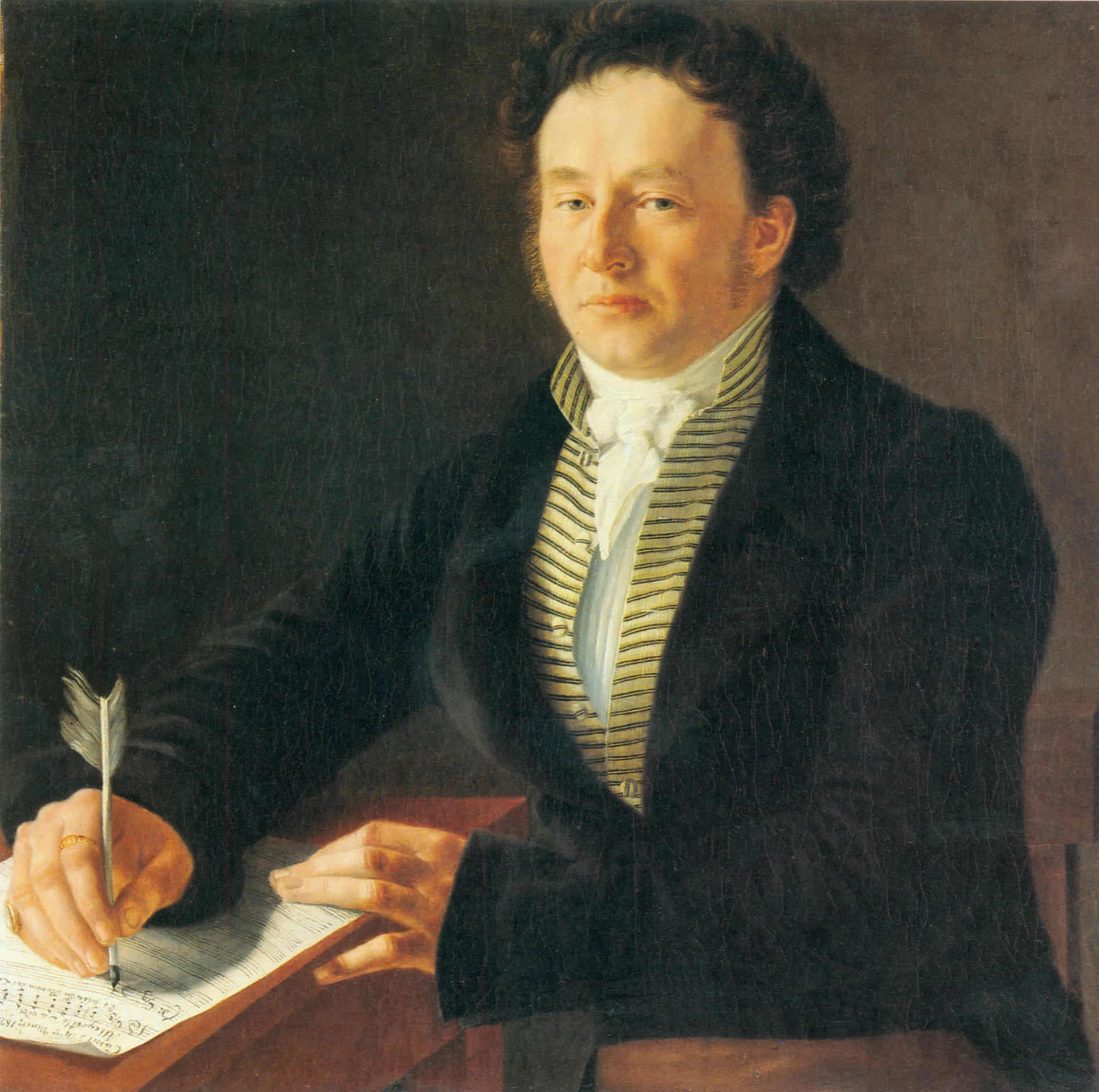
Image from Wikipedia
Image from Wikipedia
Louis Spohr – Composer, Violin Virtuoso and Pioneer of Orchestral Culture
A Composer Between Classical and Romantic: Why Louis Spohr Continues to Fascinate Today
Louis Spohr was one of the most influential musicians of the 19th century: a German composer, conductor, vocal pedagogue, and internationally celebrated violinist who, alongside Niccolò Paganini, is counted among the greatest violinists of his time. Born on April 5, 1784, in Braunschweig and died on October 22, 1859, in Cassel, Spohr significantly shaped the artistic development of early Romanticism. His contemporaries admired his stage presence, his elegant tone production, and his meticulous compositions that combined melodic inventiveness with structured form. Spanning the era from Carl Maria von Weber and Ludwig van Beethoven to the rise of Mendelssohn, Schubert, and Schumann, he was at times regarded as the most significant living German composer.
Origins, Education, and Early Music Career
As the eldest child of a medical councilor in Braunschweig, Spohr showed exceptional musical talent from an early age. A solid education in violin and the fundamentals of composition laid the groundwork for his rapidly advancing career. At fifteen, he was appointed chamber musician at the Braunschweig court, traveled to Russia with violinist Franz Eck, and met influential virtuosos like Pierre Rode. These years sharpened his stylistic profile: French elegance and Italian lyricism merged in his playing and composition method with German-influenced formal discipline.
Breakthrough as Virtuoso and Composer in Gotha (1805–1813)
His first major career phase took him as concertmaster to the court of Gotha. Here, he produced early violin concertos, chamber music, and the first clarinet concerto, showcasing his mastery in composition and arrangement. Performances at the Gewandhaus in Leipzig and positive reviews in contemporary music press solidified his reputation. In Gotha, Spohr developed a distinctive sound language: cantabile themes, chromatic transitions, subtle orchestration, and a theatrical proximity already hinting at the dramatic breath of his later operas.
Vienna Years, Encounters with Beethoven, and the Focus on Opera
In 1813, Spohr moved to the Theater an der Wien as concertmaster, working in Beethoven's circle and experiencing Viennese music life up close. His artistic development accelerated: as a conductor, violinist, and composer, he explored new dramatic and symphonic ideas while maintaining the lyrical essence of his style. The Viennese stage became a testing ground for his operatic aesthetics; concurrently, his orchestral approach matured, which he later brought to fruition as court conductor.
Frankfurt: Opera Successes and Artistic Authority
In 1817, Spohr assumed the opera direction in Frankfurt and led the orchestra of the Museumsgesellschaft. Here, he celebrated great public successes with the operas "Faust" (conceived in 1818/1813, later revised) and "Zemire und Azor" (1819). In these works, he fused melodic nobility with characterful instrumentation and a logic of scenes that propelled the musical drama of Romanticism. His sensitivity for vocal line management, motivic development, and transparent ensemble leadership imparted dramatic tension and a distinctive lyrical aura to the scores.
Kassel: Court Conductor, Conducting Culture, and Music Life at a European Level
In January 1822, Spohr took up the post of court conductor in Kassel – the central station of his music career. Here, he professionalized orchestral work, established choral institutions for oratorio practice, and cultivated a rehearsal culture that combined precision with expressiveness. As a pioneer of modern conducting practice, he early on began using the baton and shaped a sound culture that paved the way for the symphonic developments of the 1830s and 1840s. Despite political tensions in the late 1840s, Spohr remained an artistic authority; in 1857, he was retired against his will, yet he was regarded as a figure of general reverence until his death.
Pedagogue, Violin School, and Technical Innovations
Spohr's pedagogical achievements stand on par with his compositional ones. His "Violin School" (published 1833) is still regarded as a standard work that systematically addresses playing posture, bowing technique, shifting positions, and musical expression. In it, he also describes the chin rest he introduced, which significantly improved the stability and mobility of the instrument and became established worldwide. With this practical invention and his meticulous rehearsal work, along with the use of the baton, Spohr played a decisive role in shaping modern performance practice.
Works, Discography, and Repertoire Focus
The composer left an extensive oeuvre of around 280 works. Central to his catalog are the 15 violin concertos – including the famous eighth "in the form of a song scene" – as well as ten symphonies that bridge classical form and romantic expression. Operas such as "Faust," "Zemire und Azor," and "Jessonda" testify to his affinity for theater, while oratorios like "The Last Things" reveal his spiritual musical language. In chamber music – duos, quartets, nonets – he combines supple melodies with finely balanced writing and colorful harmonies. The discography features numerous landmark recordings: complete cycles of symphonies and violin concertos, reference recordings of operatic overtures and concertante works, as well as new editions of his songs that shed new light on Spohr's vocal handwriting in the romantic song tradition.
Style, Composition, and Aesthetics Between Classical and Early Romanticism
Spohr's music breathes a balance of formal awareness and lyrical sentiment. His thematic development prefers long, singing lines; the harmony is rich in modulation without undermining tonality. In orchestration, he emphasizes clarity, dialogues among woodwinds, and warm, grounded string choirs. Characteristic contributions in genres – such as the "Historical Symphony" or the four clarinet concertos – display compositional curiosity in dealing with programmata, form types, and tonal colors. As a violinist, he wrote idiomatically: double stops, widely spaced phrases, finely differentiated dynamics, and bel canto arches characterize the solo parts, without descending into mere virtuoso brilliance.
Cultural Influence, Students, and European Outreach
Spohr established a widely regarded violin school, which included notable violinists and composers. His orchestral work set standards in intonation, articulation, and ensemble balance. Through his oratorios, he promoted choral culture in the German-speaking world; as an organizer of music festivals, he connected singers, orchestras, and audiences. His operatic aesthetics – lyrical, noble, dramatically concentrated – continue to resonate in repertoire maintenance, while the symphonies, with programmatic imagination and formal discipline, form an important bridge from Classicism to High Romanticism.
Current Reception, Editions, and Performances (2024–2025)
Even in the 21st century, Spohr remains present. Festivals, foundations, and ensembles continue to uphold his repertoire, while new editions of his songs and orchestral works deepen musicological discourse. In 2024/2025, concert series and choirs will focus on his oratorio "The Last Things," while orchestras and chamber ensembles interpret his symphonic and concertante works with historically informed freshness or modern sound aesthetics. Labels and distributors offer extensive discographies, including complete cycles of symphonies and violin concertos as well as special recordings of concertante rarities. Current awards and concert projects surrounding the music prize named after him, along with foundation activities, show how strongly his name remains associated with artistic excellence, preservation of music history, and vibrant performance tradition.
Critical Reception and Rediscovery on Recordings
Since the late 1990s, specialized labels have systematically documented Spohr's work – from operatic overtures to chamber music and songs. Critics highlight his compositional signature: lyrical melodies, colorful orchestration, clear formal relations, and elegant, never mannered virtuosity. The recent discography also illustrates the diversity of his works beyond the well-known violin concertos: concertantes for two violins, clarinet works, and characteristic symphonic pieces whose programmatic ideas come vividly to life through careful production and sonic intricacy.
Placement in Music History and Performance Practice
Historically, Spohr marks a junction: he integrates classical formal thinking into a romantic tonal language with heightened expressivity. His work as a conductor – rehearsal culture, use of the baton, refinement of orchestral discipline – facilitated the professionalization of ensembles. His "Violin School" strengthened the technical foundation of performers and shaped the repertoire and practice materials for generations of violinists. Spohr's invention of the chin rest fundamentally changed playing posture and allowed for a more stable, differentiated tone in high positions and with intense vibrato – an example of realized artistic development from practice to practice.
Conclusion: Why Listen to Louis Spohr – and Experience It Live?
Louis Spohr combines lyrical beauty with architectural clarity – music that appeals to both heart and mind. His symphonies and concertos open up the sound space between Classicism and Romanticism, while his operas and oratorios reveal dramatic intensity and noble expression. Those who experience Spohr live feel the energy of a composer and conductor who helped to establish modern orchestral culture and continues to offer inspiration – for performers, ensembles, and an audience curious about musical discoveries.
Official Channels of Louis Spohr:
- Instagram: No official profile found
- Facebook: No official profile found
- YouTube: No official profile found
- Spotify: No official profile found
- TikTok: No official profile found
Sources:
- Wikipedia – Louis Spohr (Biography, Works Catalog, Context)
- Louis-Spohr-Stiftung Kassel – Events and Activities
- Louis-Spohr-Stiftung – Program Preview 2025 (PDF)
- Berliner Singakademie – Program Booklet "The Last Things," March 23, 2025 (PDF)
- ClassicsToday – Review: Spohr Concertantes (Critical Reception)
- Presto Music – Composer Guide: Louis Spohr
- Die Musikforschung – Essay: Louis Spohr and the Chin Rest (Research)
- English Wikipedia – Louis Spohr (Positions in Vienna/Frankfurt, Opera References)
- City of Braunschweig – Louis Spohr Music Prize 2025 (Current Reception)
- Louis-Spohr.com – Works Catalog (Supplementary Reference)
- Wikipedia: Image and Text Source
Upcoming Events
Where the Music Plays
Where the Music Plays
Where the Music Plays
Where the Music Plays
Where the Music Plays
Where the Music Plays
Where the Music Plays
Where the Music Plays
Where the Music Plays – Kassel's Concert Venues in Transformation