
Lars Reichow
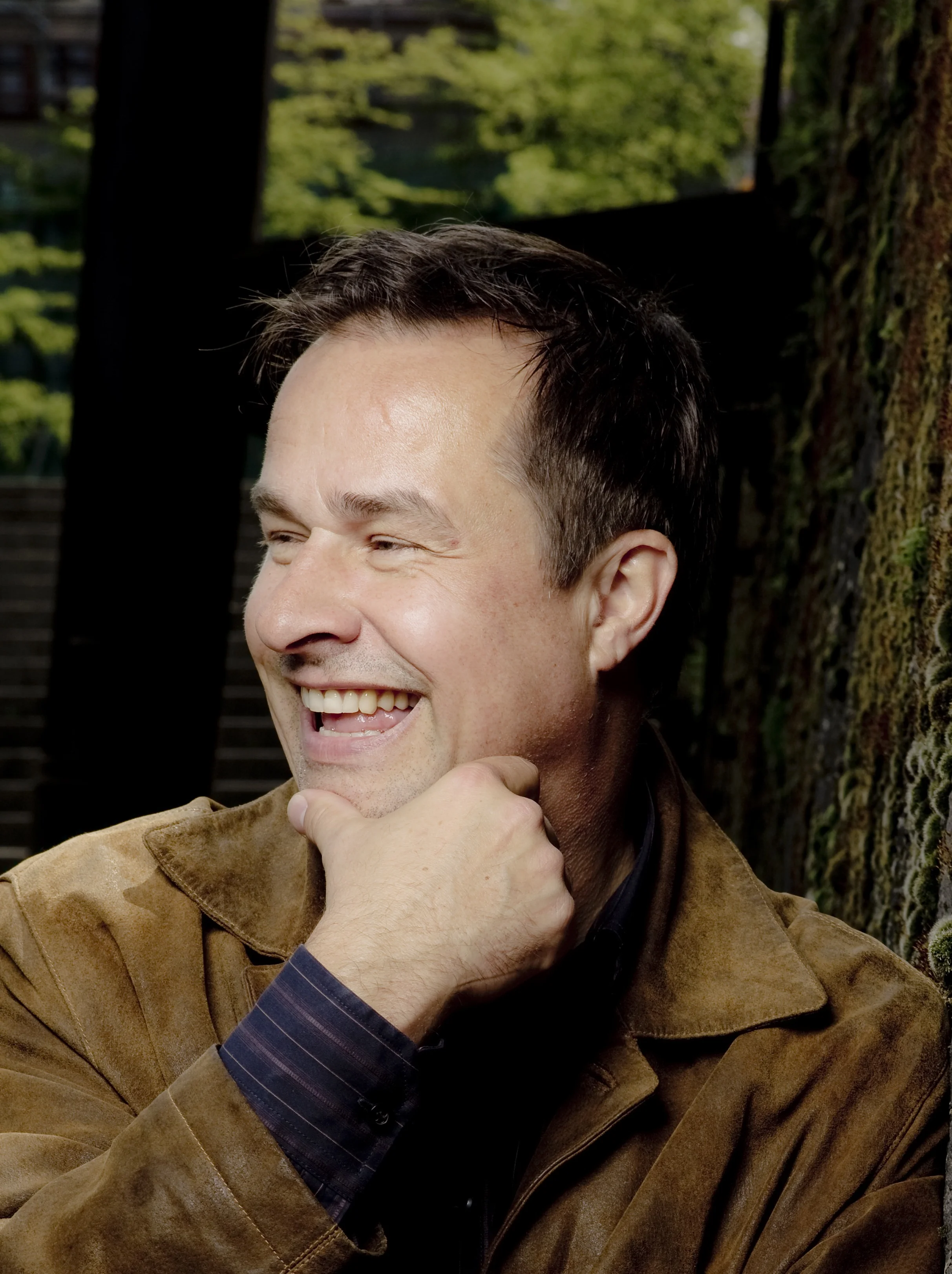
Image from Wikipedia
Image from Wikipedia
Lars Reichow – The "Klaviator" Between Cabaret, Composition, and Cultural Critique
An Artist Portrait That Moves: From Mainz Talent to a Defining Voice of German Music Cabaret
Lars Reichow has the stage in his blood: Born in Mainz in 1964, he grew up in a musical family and learned guitar, piano, and trombone at an early age. This solid musical training continues to influence his music career, stage presence, and artistic development. With a keen eye on society and politics, the musical cabaret artist combines precise punchlines with sensitive composition, chanson craftsmanship, and pianistic elegance. His nickname "Der Klaviator" is programmatic: Reichow arranges words and music so that small concert experiences emerge from cabaret – energetic, poetic, and always precise in timing.
As an entertainer, singer, pianist, composer, and moderator, Reichow has been working for decades across theater, television, and radio. The mix of satirical analysis, musical wit, and melancholic warmth makes him a distinctive voice. Awards like the Deutscher Kleinkunstpreis and numerous festival and cabaret accolades underscore his authority – and his audience thanks him with sold-out evenings, radio ratings, and loyal followings. His recent stage programs show: Reichow remains closely connected to the pulse of the times while being firmly rooted in the tradition of political cabaret.
Biographical Beginnings: Jazz School, Family, and Early Stage Craft
Reichow's musical socialization began at home: At 16, he was already performing with his father's "Bernd Reichow Jazz Formation." Two years later, in 1982, he went on his first tour with cabaret icon Hanns Dieter Hüsch – a formative school of literary cabaret that profoundly shaped his stage presence. In 1985, he played as a trombonist in the Landes-Jugend-Jazz-Orchester Hessen, which sharpened his improvisational confidence and sense of ensemble sound. At the same time, he studied music and German studies, took acting lessons, and worked on his own style between song cabaret, satire, and poetic spoken art. In 1992, he premiered his first solo program "Ich bin auf jeden Fall da!" – the start of a career that defined German-speaking music cabaret.
An important milestone was his performance at the Mainz Unterhaus, a traditional venue for small art. From there, Reichow embarked on a nationwide tour, firmly establishing his name in the small art calendar. His unique language, marked by concise punchlines, melodic textures, and spoken-singing finesse, quickly became his trademark. During this phase, he also established a signature sound at the piano: delicate left-hand bass lines, harmonically fluid chord voicings, precise rubatos – and above them, texts that alternate between political observation and everyday comedy.
Career on Multiple Stages: Stage, Television, Radio
Reichow early on expanded the platforms of his artistic work. On television, he hosted formats such as "Spätschicht – Die Comedy Bühne" (SWR) and "Kunscht! – Culture in the Southwest," where his sense of dramaturgy, conversation management, and program curation became visible. He regularly appears in "Mainz bleibt Mainz, wie es singt und lacht" on the carnival stage, delivering the satirical "carnival themes" – musically condensed, politically sharpened, and pointed in delivery. On radio, he created a format with the "Musikalische Monatsrevue" on SWR Kultur that combines cabaret comments, music analyses, and a specially composed "Song of the Month" section. This multi-faceted approach – stage, TV, radio – explains his reach and ongoing presence in cultural discourse.
His special strength remains the musical condensation of social diagnoses. When Reichow scrutinizes political situations, media rhetoric, or generational debates, he links the critique to melodic motifs, refrains, and recurring leitmotifs. In doing so, he creates memorable themes – both in a music-theoretical and public sense.
Programs with Profile: From "Ich" to "Boomerland"
His programs form recurring arcs of the private, political, and poetic. "Ich" presents the mirror cabinet of self-presentation – a cabinet piece about vanity, everyday rituals, and the pull of self-promotion, shown multiple times as a livestream and TV version. The production demonstrated how Reichow transforms arrangements, monologues, and satirical vignettes into a dramaturgically cohesive concert cabaret.
Currently, "Boomerland" shapes his tours: an ironically affectionate look at the boomer generation and their values, bridging to millennials and Gen Z. The program tours through renowned venues – from Berlin's (Die Wühlmäuse) to festival and city hall stages – positioning Reichow as a chronicler of a shared present: critical, connecting, musically brilliant. Concurrently, TV specials such as "Comedy vom Rhein – Spezial mit Lars Reichow" capture his oeuvre atmospherically live and document his repertoire between chanson, satire, and piano pop.
Discography and Musical Signature
Reichow's discography spans three decades: early key works such as "Allerhöchste Tastenzeit" (1995), "Der Klaviator" (1997), and "Der King kommt!" (2000) mark the birth of his stage persona at the piano. Albums like "Glücklich in Deutschland" (2005) and "Wie schön Du bist" (2009) sharpen the connection between chanson aesthetics and political commentary. "Goldfinger" (2011) condenses the sound language, while "Freiheit!" (2015) makes great societal concepts vocally and pianistically experienceable. "Wunschkonzert" (2017) and "Lust" (2018) refine his interactive play with the audience and the curation of his repertoire.
With "Ich" (2020) and "Boomerland" (2024), Reichow continues to advance his composition and arrangement strategies: clear hooklines, modulated metric changes, pointed coda placements. Songs like "Mainz" have become regional anthems with a broad reach; satirical numbers like "Der General" showcase his feeling for role lyrics and musical character studies. His albums are less chart vehicles than stage scores that reveal their full impact live – a conscious commitment to the performative art form of cabaret.
Style, Genre, and Artistic Development
At the center is a musical narrative stance: Reichow composes with an eye on text comprehensibility, prosody, and piano sound. His arrangements employ dynamic terraces, dotted phrases, and song-like AABA forms that he breaks for satirical contrasts. Genre references range from chanson to jazz nuances to pop ballads; at times, he resorts to spoken singing with harmonic support in the left hand, which rhythmically carries the punchline. The interplay of rhyme structure, internal rhyme, and metric shift brings his texts to swing – a technique known from classical couplets, here taken further in a contemporary context.
In his artistic development, the focus shifted from number revues to thematically cohesive programs that rhythmically explore a common thread. This dramaturgical strength – the composition of the evening as a unit – distinguishes Reichow from purely punchline-driven formats. He remains open to collaborations with ensembles and TV productions that translate his songs into new sound spaces.
Moderator, Media Presence, and Authority
As a moderator, Reichow shows a sense of timing and tone. "Spätschicht – Die Comedy Bühne" positioned him as the host of a nationally relevant stage for satire and stand-up; "Kunscht!" demonstrated cultural journalistic expertise and curiosity. In the "Musikalischen Monatsrevue," he bundles experiences from composition, production, and arrangement into an acoustic feuilleton – including his own songs. These formats strengthen his authority in cultural journalism and anchor his perspective in the discourse on music, society, and media.
TV specials like "Comedy vom Rhein" and appearances in ARD/ZDF formats authentically convey his live qualities – precise punchlines, detailed character work, musically fine transitions. This media presence substantiates Reichow's reliability as a stage personality that lends substance and publicity to small art.
Awards and Reputation
Reichow has been honored with prestigious awards, including the Deutscher Kleinkunstpreis, the Gaul from Niedersachsen, the Tuttlinger Krähe, and the Berliner Kabarettpreis. These accolades reflect the recognition within the scene and affirm the sustainability of his work. The press praises his "smoothness" and "sharpness," the ability to modulate from the personal to the grand political without sacrificing musical quality for quick effects. From this recognition arises a vote of confidence: When Reichow takes a stand, it is well-founded – professionally, poetically, and richly experienced.
Additionally, collaborations with cultural institutions, festivals, and editorial offices shape his profile. He maintains a consistent touring practice and establishes close connections to venues like the Mainz Unterhaus and renowned cabaret stages. The sharpened relationship with organizers, editorial offices, and audiences explains why his programs remain long-lasting while being adaptable and relevant.
Recent Activities: "Boomerland," TV Specials, and Monthly Review
With "Boomerland," since 2024, Reichow presents a generational mirror on stage that works with irony and empathy, bridging to the present. Guest performances in Berlin, Hamburg, Osnabrück, and other venues document his unbroken live energy. Concurrently, TV productions like "Comedy vom Rhein – Spezial" from 2025 accompany his current artistic mode: songs that capture biographical motifs, challenge societal self-descriptions, and weld together in the refrain what discourses separate.
The "Musikalische Monatsrevue" continues to be a fixed date on the last Saturday of the month on SWR Kultur. This recurring stage for musical observations provides Reichow the resonant space to further explore current topics in compositions and comments. The synergy of tour, TV, and radio solidifies his standing as a voice with experience, expertise, and reliability.
Cultural Influence and Relevance
Reichow belongs to that generation of musical cabaret artists who have modernized the genre: He intertwines text critique with harmony, uses sonic metaphors for political tensions, and models a cabaret that takes seriously what it satirically addresses. His work strengthens the idea that culture is part of the societal glue – an experience that is especially valuable in times of crisis. When he emphasizes the value of cultural funding, live encounters, and aesthetic education in interviews and discussions, he speaks not only as an artist but as a culturally-minded practitioner.
His influence is also evident in the reception of individual pieces: Local anthems like "Mainz" or character songs like "Der General" circulate in media archives, concert halls, and online media libraries. Thus, Reichow's work becomes a reference for a form of music cabaret that organically merges sound, comedy, and commentary – a model that subsequent stage authors can orient themselves to.
Conclusion: Why Experience Lars Reichow Now?
Reichow combines music and opinion into an evening that entertains and resonates. His compositions are more than accompaniment: They carry the satire, rhythm the text, and open emotional spaces. Those who love cabaret as concert, chanson as feuilleton, and humor as a means of insight will find in Reichow an artist with attitude, skill, and heart. His art impacts most intensely when the punchline falls on the chord, the refrain consolidates the argument, and the applause becomes the rhythm of the community. A compelling reason to experience him in "Boomerland," in "Wunschkonzert," or in the "Musikalischen Monatsrevue."
Official Channels of Lars Reichow:
- Instagram: No official profile found
- Facebook: No official profile found
- YouTube: No official profile found
- Spotify: No official profile found
- TikTok: No official profile found
Sources:
- Wikipedia – Lars Reichow
- Lars Reichow – Official Website
- Die Wühlmäuse Berlin – Boomerland (Schedule/Info)
- visitBerlin – Lars Reichow: New Program
- ARD Mediathek – Comedy vom Rhein Spezial mit Lars Reichow (Part 1), 14.01.2025
- ARD Mediathek – Comedy vom Rhein Spezial mit Lars Reichow (Part 2), 29.04.2025
- ARD Mediathek – Comedy vom Rhein Spezial mit Lars Reichow (Part 3), 20.05.2025
- 3sat – Lars Reichow: ICH! (Festival Recording)
- Deutschlandfunk – "A Man at the Piano: The Convicted Boomer Lars Reichow," 03.12.2025
- Apple Music – Lars Reichow (Artist Profile)
- jpc – Lars Reichow: "Freiheit!" (CD)
- fernsehserien.de – Lars Reichow: ICH! (TV Special)
- Shazam – Lars Reichow (Tracks/Profile)
- ProTicket – Lars Reichow (Program Note)
- Wikipedia: Image and Text Source
Upcoming Events
Lars Reichow at the Kurtheater Bad Kissingen
Lars Reichow live at the Kurtheater Bad Kissingen
Lars Reichow – Boomerland
Cabaret Subscription 2026-27
Lars Reichow – Cabaret Evening at the Kurtheater Bad Kissingen
Lars Reichow – BOOMERLAND
Lars Reichow – Boomerland
Lars Reichow - Boomerland
Lars Reichow with Boomerland in Koblenz