
Karlheinz Wagner
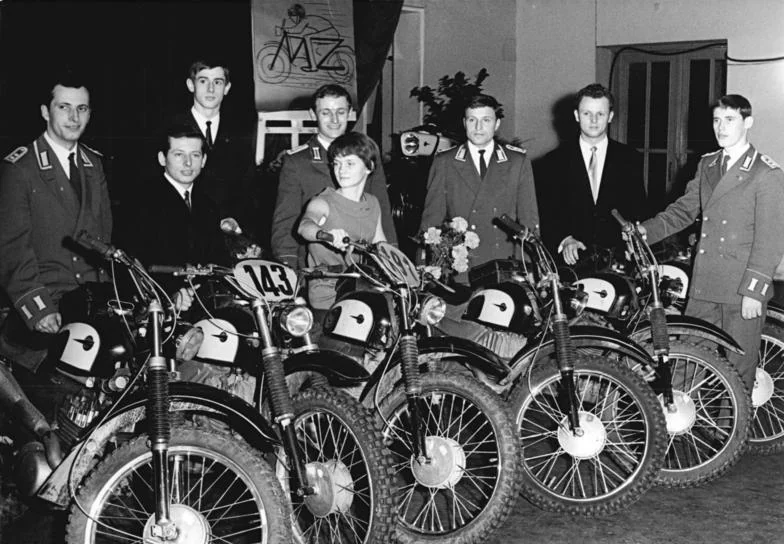
Image from Wikipedia
Image from Wikipedia
Karlheinz Wagner – Enduro Legend from the Erzgebirge
From the Erzgebirge to the Global Stage of Enduro: The Defining Career of the GDR Works Rider
Karlheinz Wagner (July 21, 1938, Borstendorf – May 30, 2019) defined an era as an enduro athlete from the GDR, where technology, team spirit, and iron discipline determined victories. The Erzgebirge native won the International Six Days Trial (ISDT) four times with the GDR Trophy team, setting standards in off-road sports. As a factory rider for the renowned motorcycle manufacturers from Zschopau (MZ), he combined precise riding technique, tactical cleverness, and robust machine control into a musical career of motorsport – a stage where his stage presence excelled in the grueling challenges of international competitions. His artistic development as an athlete progressed from national podiums to the absolute world elite of enduro.
Wagner embodied the school of GDR off-road sports: consistent training, meticulous preparation, and the synergy between rider and machine as a coherent arrangement. His career includes gold medals at the ISDT, the GDR championship title in 1969, successes in the European Cup, and memorable moments at prestigious events like "Rund um Zschopau." This musicality of riding – precise line selection, clean tempo, secure navigation through special stages – made him a reference figure in the scene.
Early Years and Rise: From GST Team to Factory Rider
Wagner's sporting biography begins in the GST core team: in 1962, he finished third in the GDR Championship, establishing himself as a reliable point-gatherer. In 1963, he debuted at the International Six Days Trial in the Silver Vase team, gaining valuable experience in the tough terrain and reliability tests. In 1964, he shone with the MZ quartet, finishing second, a harbinger of his upcoming triumphs.
The breakthrough came in 1965: Wagner advanced to the GDR Trophy team as a factory rider – a step that clearly showcased his expertise and authority in international comparison. On the 250cc MZ, he won a gold medal in England, the only one in his class, laying the foundation for the famous winning streak of the GDR team. His artistic development was reflected in a consistently balanced combination of controlled risk, mechanical understanding, and physical strength. ([de.wikipedia.org](https://de.wikipedia.org/wiki/Karlheinz_Wagner?utm_source=openai))
Triple Triumph and Titles 1965–1967: The Golden Era
In 1965, 1966, and 1967, the GDR Trophy team achieved historic milestones: three consecutive overall victories at the ISDT. Wagner was a vital part of this success chain, which brought immense international reputation to the GDR. His reliable performance in time controls, special stages, and daily stages under the most adverse conditions posed permanently unsolvable challenges to the competition.
The GDR team was honored as "Athlete of the Year" for their triumph in 1967 – an award that underscores the cultural significance of enduro sports at that time and clearly marks Wagner's role in the ensemble. This recognition was also reflected in the media's reception, establishing the GDR as a benchmark in Trophy rankings. ([de.wikipedia.org](https://de.wikipedia.org/wiki/Peter_Uhlig_%28Motorsportler%29?utm_source=openai))
The Fourth Victory in 1969: World-Class in West Germany
After a fourth place in 1968, the GDR returned to the top podium in 1969. In West Germany, the Trophy team won again – and Wagner was once more part of the winning team. Images from that ISDT show him on the 350cc MZ: focused, physically present, technically precise. This season highlighted his adaptability across multiple displacement classes and his understanding of the interplay between suspension travel, gear ratios, and tire choice in changing terrain. ([speedtracktales.com](https://speedtracktales.com/index-of-isdt-events/isdt-1969-w-germany/?utm_source=openai))
National Champion and European Cup Winner: The Soloist in the Ensemble
Alongside team successes, Wagner also made solo achievements. In 1967, he won the European Cup – the precursor to the European Championship – in the class up to 350cc on an MZ. Two years later, he crowned his musical career in motorsport with the GDR championship title in 1969. These titles confirm his versatility: he could read races, economically maneuver the machine in long special stages, and simultaneously attack aggressively in key moments. ([de.wikipedia.org](https://de.wikipedia.org/wiki/Karlheinz_Wagner?utm_source=openai))
He had already secured the vice-title in the national championship in 1965 and 1968; in 1970, he rode his last Six Days trial again achieving gold. This consistent level of performance over an entire decade underscores his professionalism, technical expertise, and mental stability, which are crucial in enduro – unlike the sprint format of motocross, it is tested over hours and days. ([de.wikipedia.org](https://de.wikipedia.org/wiki/Karlheinz_Wagner?utm_source=openai))
Rund um Zschopau and Alpine Tour: Testing Stones of Mastery
"Rund um Zschopau" was one of the toughest tests on the international calendar. In 1966, Wagner won his class – a prestigious victory in front of a home crowd, where local track knowledge coincided with cool-headed performance. Shortly after, he scored the most good points at the International Austrian Alpine Tour and received the traditional "Edelweiß." These successes document his ability to "orchestrate" very different profiles – from narrow forest paths to alpine gravel stages. ([de.wikipedia.org](https://de.wikipedia.org/wiki/Karlheinz_Wagner?utm_source=openai))
The event in Zschopau later became one of the most attended motorsport events in Saxony. Wagner’s legacy remains present to this day – not only in statistics but also in the collective memory of the scene, for which "Zschopau" remains a formative school of off-road sports. ([de.wikipedia.org](https://de.wikipedia.org/wiki/Rund_um_Zschopau?utm_source=openai))
Technique, Style, and Production Culture: Why MZ and Wagner Were a Good Match
Wagner's expertise lay in the sensitive handling of the machine: clean corner management, economical throttle response, precise clutch sensitivity in steep sections. He implemented this technique on MZ two-strokes into an efficient arrangement of torque utilization, rhythmic gear selection, and material-conserving lines. In special stages, this meant: minimal time loss during braking, maximum traction at corner exits, and consistent pulse control – the essence of the enduro "groove."
This school shaped his artistic development as an athlete and simultaneously reflected the production culture in Zschopau: robust aggregates, practical setups, easy field maintenance. The factory team focused on drivable performance, not just peak output – a philosophy in which Wagner became the ideal interpreter. His understanding of composition and arrangement in chassis tuning allowed him to make up time during long stages without overextending the machine. ([de.wikipedia.org](https://de.wikipedia.org/wiki/Karlheinz_Wagner?utm_source=openai))
Award and Responsibility: From Active Athlete to Department Head
In 1970, Wagner received the Patriotic Order of Merit – a state honor that officially recognized the significance of his achievements for GDR sports. This recognition also marked the transition from active performer to mentor and driving force behind the scenes. ([de.wikipedia.org](https://de.wikipedia.org/wiki/Karlheinz_Wagner?utm_source=openai))
Between 1986 and 1990, he led the MZ sports department. His management combined experiential knowledge from the track with the authority of a team leader. In 1987, he celebrated another Six Days success as a non-active participant – evidence that the training and production culture he helped shape had a lasting impact. In this phase, Wagner acted like a producer, bringing together the right talents, setups, and strategies to create a harmonious overall work on the stage of enduro sports. ([de.wikipedia.org](https://de.wikipedia.org/wiki/Karlheinz_Wagner?utm_source=openai))
Placement in Enduro History: The GDR as a Pacesetter
The 1960s are considered a decade of rapid development in enduro – technically, tactically, and organizationally. The GDR team dominated the Trophy standings with a density that was rare before. Overviews of international winners' lists confirm the GDR's status as a global pacesetter during this era; Wagner was one of the prominent voices of this "orchestra." His role in the team was that of a reliable rhythm provider, ensuring team success through consistency and technical precision. ([sport-komplett.de](https://www.sport-komplett.de/sport-komplett/sportarten/m/motorradsport/hst/27.html?utm_source=openai))
Among the canon of great GDR enduros – from Peter Uhlig to Klaus Halser to Hans Weber – Wagner holds a central position. The team of 1967 was an all-star formation in which Wagner's harmonious line selection, his material awareness, and his mental calm precisely created the balance that championship teams need. ([de.wikipedia.org](https://de.wikipedia.org/wiki/Peter_Uhlig_%28Motorsportler%29?utm_source=openai))
Legacy and Cultural Influence
Wagner's legacy continues in enduro culture: in training methods, in the appreciation of material-conserving riding styles, and in the idea of the team as an organic whole. For the Erzgebirge region and the MZ city of Zschopau, his name remains associated with great home victories and sustainable youth work. The scene remembers an athlete who prioritized technique and timing over speed, much like a musical conductor.
The fact that Zschopau remains a magnet for enduro fans and professionals today is rooted in this tradition. The event history, which resumed international finals after pandemic-related cancellations, shows: The quality of off-road sports shaped by Wagner still provides the resonance space where new generations find their own voice. ([de.wikipedia.org](https://de.wikipedia.org/wiki/Rund_um_Zschopau?utm_source=openai))
Conclusion: Why Karlheinz Wagner Fascinates
Karlheinz Wagner fascinates because he embodied enduro riding as an art of economy, precision, and endurance. His discography of motorsport – ISDT triumphs from 1965 to 1967, the Trophy victory in 1969, the European Cup in 1967, and the GDR title in 1969 – still resonates today. Those who look at his career recognize an artistic evolution from a resilient team rider to a strategic designer. His message to the present is clear: Enduro is more than speed – it is the finely tuned arrangement of man, machine, and terrain. Those who want to feel Wagner's spirit should experience "Rund um Zschopau" live – where the music of enduro sports plays the loudest. ([de.wikipedia.org](https://de.wikipedia.org/wiki/Karlheinz_Wagner?utm_source=openai))
Official Channels of Karlheinz Wagner:
- Instagram: No official profile found
- Facebook: No official profile found
- YouTube: No official profile found
- Spotify: No official profile found
- TikTok: No official profile found
Sources:
- Wikipedia – Karlheinz Wagner
- sport-komplett.de – International Six Days Trial, Winner Lists
- Speed Track Tales – ISDT 1969 W Germany
- Red Bull – ISDE History and Champions
- Wikipedia – Rund um Zschopau
- Wikipedia – Peter Uhlig (Context: Trophy Team 1967)
- Wikipedia – Klaus Halser (Context: GDR Trophy Team)
- Wikipedia: Image and Text Source