
Karl Valentin
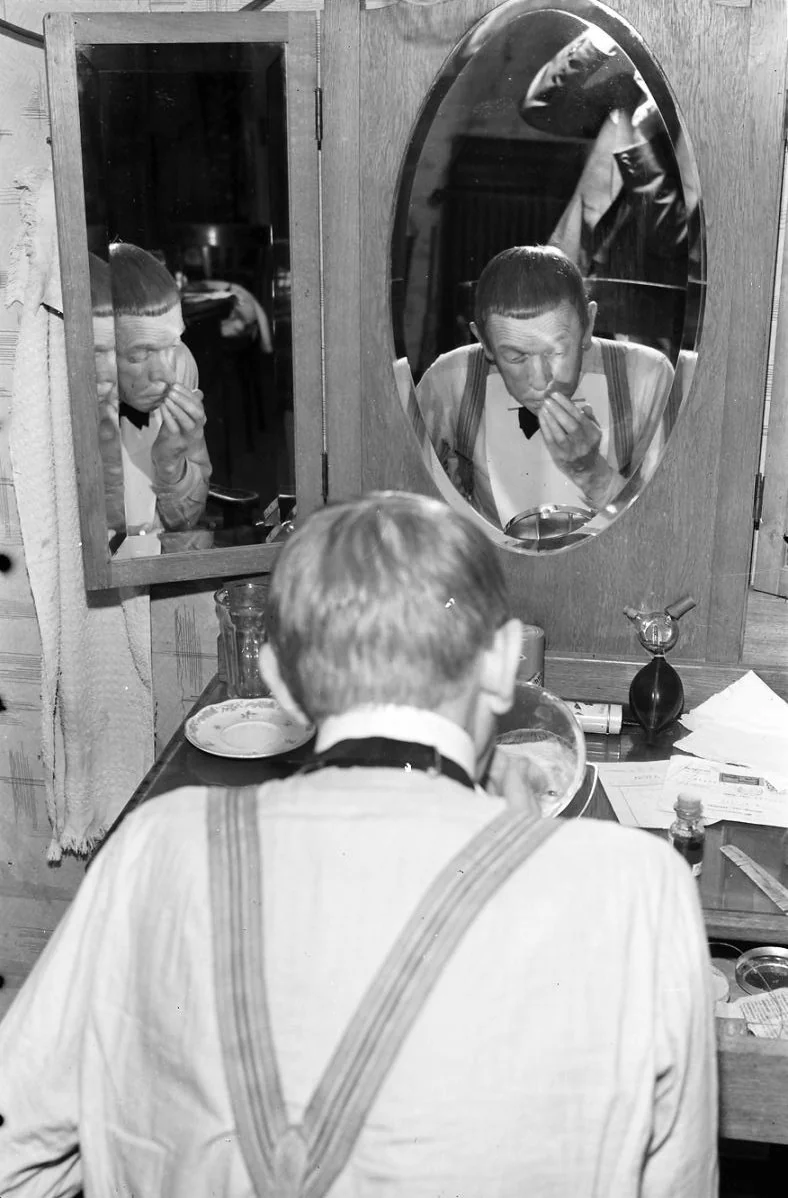
Image from Wikipedia
Image from Wikipedia
Karl Valentin
The Word Wizard from Munich: How Karl Valentin Shaped Generations with Linguistic Acrobatics, Slapstick, and Dark Humor
Karl Valentin, born Valentin Ludwig Fey on June 4, 1882, in Munich and died on February 9, 1948, in Planegg, is one of the most distinctive voices in German-speaking entertainment arts. As a comedian, folk singer, author, actor, filmmaker, and producer, he combined Munich's local color with avant-garde humor, sharp linguistic critique, and an unmistakable stage presence. His music career as a folk singer, his theater works, and short films made cultural history; his influence stretches from Bertolt Brecht to Loriot. Valentin's artistic development reflects a restless inventive spirit across cabaret, film, radio, and collection work—an all-around craftsman of comedy who helped shape the 20th century.
Even his contemporaries celebrated him as a "word acrobat"; his sketches became modern classics. Between Dadaism, New Objectivity, and biting observations of everyday life, Valentin developed an aesthetic program that tightly interwove slapstick, punchline composition, and meticulous arrangement of props. Being referred to as "Germany's Charlie Chaplin" hints at his international comparability—but his tone, pace, and melancholic undertone remain unmistakably Bavarian and radically unique.
Early Years: Craftsmanship, Hard Times, and the Birth of the Stage Character
Trained as a carpenter, Valentin first appeared as a "club humorist" at the end of the 19th century. After family upheavals and economically uncertain years, he started looking for professional stages in 1902, attended a comedy school, and experimented with mechanical music devices like his "Living Orchestrion." Setbacks and failures shaped the artist: He honed his timing, body language, and the principle of failed communication, which would govern his comedic universe henceforth. When Valentin returned to Munich in 1907, a phase of continuous artistic intensification began, from which the first successful monologues emerged.
The experiences from his craftsmanship remained visible in his artistic development: Valentin's props, stage settings, and his detailed handling of objects resemble a workshop of comedy. His humor grew from precise observation, from the resistance of things against humans—a core motif that he varied in monologues, songs, and later in film.
The Congenial Partnership with Liesl Karlstadt
In 1911, Valentin met the versatile artist Liesl Karlstadt. What followed is among the most fruitful duos in German-speaking stage and film history. Karlstadt was more than just a prompt-giver: She sharpened the rhythm, counterpoint, and role-playing of the arrangements, contributing significantly to production, dramaturgy, and audience impact. Together, they developed programs like "Tingeltangel," where linguistic games, musical numbers, grotesque slapstick interludes, and theatrical effects interlock.
This collaboration also became biographically shaping and experienced crises, particularly in the mid-1930s, when financial burdens and the pressure of the times put their partnership to the test. Nevertheless, Valentin's artistic profile is hardly imaginable without Karlstadt: Together they created a new form of cabaret performance, where "malfunction"—misunderstandings, slips of the tongue, disturbances—becomes the engine of comedic events.
Filmic Works: From Silent Film to Sound Film Satire
As a film comedian, Valentin was early in front of the camera, often in short pieces developed from stage sketches. This media translation increased his reach and solidified his authority as an innovator of language and slapstick. Particularly notable is the interplay with the aesthetic movements of the Weimar period: Surreal placements, alienated everyday spaces, and the meticulous disassembly of routine actions lend the films a modernist touch.
A highlight of this phase is the production "Mysterien eines Frisiersalons" (1922/23) in the environment of Bertolt Brecht. Today, the work is considered a significant reference point of the film avant-garde of those years. Simultaneously, Valentin established film adaptations of his stage miniatures, such as "Im Schallplattenladen" (1934) or "Der Zithervirtuose" (1934), where expert terms, consumer objects, and musicality are comically inverted.
The Conflict with Censorship: "Die Erbschaft" and the Shadow of Time
The establishment of the Nazi regime marked a turning point. Valentin's observations of everyday life infused with tragicomedy did not fit into the dictated ideal image, and censorship measures struck his work with full force. The short film "Die Erbschaft" (1936) became particularly famous after being banned by the authorities due to its "tendencies towards misery." The satire on poverty and social hardships was only allowed to premiere in 1976—a delayed echo of the explosive power of his realism and the political urgency of his comedy.
The years of repression forced Valentin into retreats and experiments away from the grand stage. His "Ritterspelunke," a mixture of theater, pub, and panopticon, reflects the desire to create his own production spaces. At the same time, economic conditions deteriorated, and psychological burdens in his surroundings affected his output and collaborations.
Voice, Sound, Recording: Valentin on Record and Radio
A considerable discography emerged alongside the stage, featuring monologues, couplets, and dialogues. As early as the late 1920s, Valentin released recordings that documented his wordplay, rhythmic articulation, and the precise arrangement of pauses. The studio work demonstrates his competence in composing and producing comedic forms: figures of repetition, speech syncopations, the calculated "misfire" of terms—all artfully realized.
Radio also became a medium for Valentin: After 1945, he attempted to re-establish his own series, but the post-war atmosphere contradicted his dark humor. As a lasting legacy, editions are available that consolidate the range of sound recordings and make historical recording techniques, overtones, and nuances of articulation audible. Thus, Valentin's voice—precise, brittle, musically structured—remains a key to understanding his art.
Style and Artistic Development: Linguistic Critique as a Principle of Composition
Valentin understood comedy as craftsmanship and analysis. His "arrangement" of words and things disassembles routines of speaking and acting until meanings tilt. He often builds on simple misunderstandings that gnaw through the scene until language becomes audible in its components. This technique, akin to Dada and New Objectivity, along with an affinity for the grotesque and economy of expression, creates an art where every detail—tone, gaze, object—is functionally set.
In his stage presence, slapstick merges with philosophical skepticism: Humanity fails against forms, norms, objects, and this very failure becomes the music of the scene. This aesthetic stance explains the lasting influence on theater, film, television, and cabaret to this day—a school of precision where timing, articulation, and pause dramaturgy mature into mastery.
Influences and Legacy: From Brecht to Loriot
Valentin's influence is well documented: Brecht's closeness to his play with alienation, Samuel Beckett's austerity and absurd constellations, the refined dissection of everyday life by Loriot, or the Bavarian-based grotesque in the works of Gerhard Polt and Helge Schneider—all point to Valentin's laboratory of comedy. His artistic authority is fed by documented collaborations, aesthetic innovations, and his afterlife in archives, museums, and editions.
The reception by the music and cultural press often highlights the power of language: the "disassembling" of words, the wit of accuracy, the exploitation of the seemingly banal—a school of attention that simultaneously challenges and liberates the audience. Valentin’s work remains a touchstone for artists who take comedy seriously.
Years of Crisis, Withdrawal, and Late Appearances
The 1930s brought tension, censorship, and financial straits. Projects failed, stage venues closed, partnerships came under pressure. In 1940, he made a preliminary farewell to the stage, followed by years of silence and writing. His return to the stage shortly before his death was marked by fragility—a last flicker of the familiar timing that has survived the times.
Valentin died in 1948, malnourished and in poor health. He left behind sketches, films, sound recordings, letters, collections, and stage plans—material from a media craftsman who anticipated the archive. From this workshop perspective, his posthumous survival is explained: as substance, as practice, as a school of careful observation and listening.
Memory Culture: Musäum, Archives, and Research
The lively preservation of his legacy is part of Valentin's cultural impact. In Munich, a dedicated house focuses on his work and that of Liesl Karlstadt, where research meets popular dissemination. Sound and film documents, props, programs, letters, and photographs make work processes visible. Special exhibitions, guided tours, and collection access show how closely Valentin's art intertwines with the city's history, media history, and the history of Munich's folk singers.
The film and museum landscape also continually documents and re-contextualizes: exhibitions, online dossiers, and curated film selections provide sources, analyses, and classifications. Thus, Valentin's work remains productive: for comedy research, theater and media studies, music and sound studies, as well as the practice of today's cabaret and performing arts.
Discography and Media: Editions, Classics, Sound Form
Valentin's discography gathers monologues and dialogues from the years 1928 to the post-war period. Numerous titles—"Das Aquarium," "Der Zufall," "Der hohle Zahn," "Übertragung aus der Hölle"—create a panorama of his themes: bureaucracy, technology, body, music, misunderstanding. Modern compilations editorially unveil these recordings and make the transition from live atmosphere to studio intimacy audible.
In conjunction with his film works ("Im Schallplattenladen," "Der Zithervirtuose," "Die Erbschaft"), a complete picture of the production emerges: stage ideas migrate between media, are newly arranged, mounted, condensed. For collectors and researchers, editions offer not only nostalgia but also acoustic documents of precise composing with language.
Current Projects and Present-Day Outreach
Even decades after his death, Karl Valentin remains present—through exhibitions, digital collections, and the further development of museum spaces. Ongoing curatorial work in Munich, including temporary closures, new setups, and planned reopenings, reflects the ambition to convey Valentin and Karlstadt in a contemporary way. Tours, courtyard exhibitions, and program focuses connect the public and research.
These activities underscore Valentin's enduring cultural value: His work serves as a mirror of social and media practices, as a lesson in language, sound, and body on stage—and as a reminder of how sharply comedy can think. Institutional care ensures that new generations retain access to sources, contexts, and interpretations.
Conclusion: Why Karl Valentin Resonates Today
Karl Valentin remains compelling because his comedy works with precision: it exposes the fault lines of everyday life, uncovers language as a construction site, and transforms disturbances into art. His artistic journey from folk singer to stage and film reflects a consistent spirit of exploration. Those who listen to his recordings discover the timing-exact "arrangement" of the punchline; those who watch his films recognize the architecture of misunderstanding; those who read his texts feel the analytical sharpness. Valentin's authority is grounded in documented successes, collaborations, and a reception that continues to resonate in contemporary art, television, and cabaret.
Today, Valentin can experience live in curated film series, readings, and exhibitions—where voice, gaze, and object come together again. It is worthwhile to approach his work anew: in the city that shaped him, in archives, and on records. Those who laugh listen more closely—and those who listen more closely discover in Valentin's comedy a school of thought.
Official Channels of Karl Valentin:
- Instagram: No official profile found
- Facebook: No official profile found
- YouTube: No official profile found
- Spotify: No official profile found
- TikTok: No official profile found
Sources:
- Valentin-Karlstadt-Musäum – Karl Valentin (Exhibition Portrait)
- Valentin-Karlstadt-Musäum – The Musäum (History and Profile)
- Valentin-Karlstadt-Musäum – Homepage (Current Information and Reopening)
- German Historical Museum – LeMO: Biography Karl Valentin
- DFF – Karl Valentin: Film Pioneer and Media Craftsman (Context and Filmography Selection)
- Wikipedia – Karl Valentin
- Wikipedia – Die Erbschaft (1936)
- Valentin-Karlstadt-Musäum – Collection: Die Erbschaft (Censorship and Premiere)
- Valentin-Karlstadt-Musäum – Collection: Die Erbschaft (Bailiff)
- German Digital Library – Mysterien eines Frisiersalons (Stills/Details)
- Wikipedia – Im Schallplattenladen (1934)
- Wikipedia – Der Zithervirtuose (1934)
- Music Collector – Karl Valentin: Complete Edition Sound 1928–1947 (Tracklist/Edition)
- BR24 – Word Wizards: Absurd, Grotesque, Tragic (Style Analysis)
- IMDb – Biography Karl Valentin
- Wikipedia: Image and Text Source
Upcoming Events
New Valentinades - Reading with Music in Salzstadel Landshut
Reading about Karl Valentin in Erding
Karl Valentin and the Old Knights
Karl Valentin and Liesl Karlstadt: Homeless
Karl Valentin and Liesl Karlstadt: Homeless
Karl Valentin and the Old Knights
Karl Valentin - The Future Was Better Before
Small Theater – The Best of Karl Valentin
Karl Valentin Monologues in the Hain